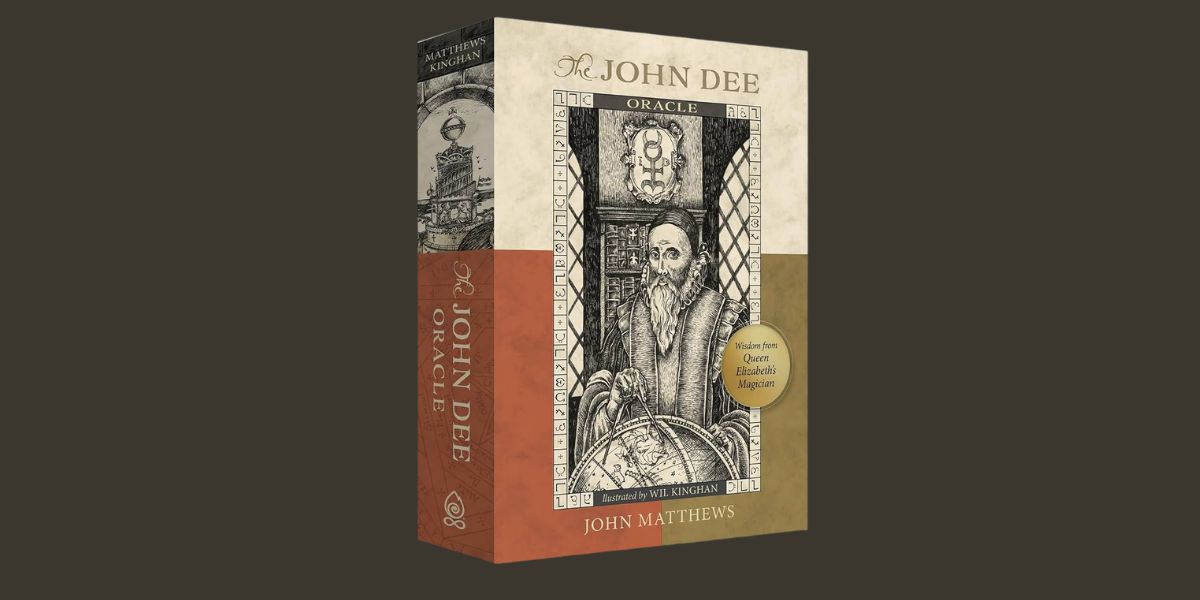
The John Dee Oracle: Wisdom from Queen Elizabeth’s Magician, by John Matthews with illustrations by Will Kinghan
REDFeather, 0764369768, 112 pages, 29 cards, September 2025
John Matthews’ The John Dee Oracle: Wisdom from Queen Elizabeth’s Magician, illustrated by Will Kinghan, is a fascinating and highly specialized divinatory work that draws readers into the intellectual, magical, and symbolic universe of one of the Renaissance’s most enigmatic figures. John Dee—astrologer, mathematician, alchemist, historian, advisor to Queen Elizabeth I, and architect of a vast esoteric system—has long occupied a singular place in Western occult history. This oracle seeks to translate that world into a modern tool for contemplation and guidance, and in many respects, it succeeds admirably.
From the outset, this set distinguishes itself through atmosphere and scholarship. The presentation is elegant and historically evocative with a handsome box design that reflects the Renaissance palette of parchment, crimson, and gold. Included with the deck is a folded reading diagram based on the four watchtowers, a visual element that immediately signals that this is not a casual or generic oracle, but one grounded in a very specific magical worldview. The accompanying guidebook further reinforces this impression, offering not only card meanings but substantial historical and symbolic context.
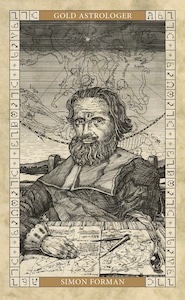
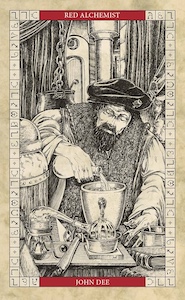
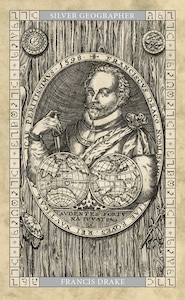
The cards themselves are beautifully produced. Each image is framed by the Enochian alphabet, instantly establishing the deck’s connection to Dee’s angelic and ceremonial system. At the center of each card is a richly detailed illustration rendered in a woodcut inspired style that feels entirely appropriate to the period being invoked. The artwork by Will Kinghan captures the texture of Renaissance engraving and manuscript illustration while remaining clear and readable for modern users. There is a gravity to these images— an atmosphere of libraries, observatories, hidden chambers, royal courts, and sacred diagrams.
One of the deck’s greatest strengths is the density of symbolism embedded in its design. Planetary magic, alchemical process, sacred hierarchy, and esoteric correspondences are woven throughout the imagery and structure of the cards. Readers with a background in ceremonial magic, astrology, Renaissance occult philosophy, or Western esotericism will find layer upon layer to appreciate. This is not symbolism added for decoration; it is integral to the architecture of the oracle itself.
Matthews also deserves praise for the scholarly dimension of the guidebook. His historical treatment of John Dee and the figures surrounding him adds depth and humanity to what could otherwise remain abstract. The presence of Queen Elizabeth I—Gloriana within the deck’s symbolic language—along with other notable historical personalities, gives the oracle a lived historical texture. Rather than presenting Dee as a mythic stereotype, the book situates him within the political, intellectual, and spiritual currents of his time.
Especially noteworthy is the inclusion of Dee’s original Enochian Calls in a new translation by Matthews. This alone gives the set value beyond divination. Readers interested in primary-source inspired esotericism, textual history, or ceremonial tradition will find this material deeply engaging. Matthews has long been respected for his work with mythic and magical source texts, and that experience is evident here.
Where this oracle may divide readers is in its practical accessibility. Unlike many modern oracle decks that encourage broad intuitive use through multiple layouts and flexible daily draws, The John Dee Oracle is more precise and structured in its application. Its method of consultation is rooted in the logic of Dee’s own system, where order, placement, hierarchy, and timing matter. Contextually, this makes complete sense. Dee’s world was not one of casual inspiration cards, but of disciplined inquiry into cosmic law and divine intelligence.
However, for the average everyday user seeking a quick, fluid, or emotionally oriented oracle experience, the deck may feel more formal and less immediately adaptable. Its use is better compared to consulting a specialized instrument than pulling a daily affirmation card. This is a deck one reaches for with intention during significant questions, crossroads, periods of study, or moments requiring careful reflection. In that sense, it mirrors how Queen Elizabeth herself might have sought Dee’s counsel: not constantly, but strategically.
That limitation, however, is also part of the deck’s integrity. It does not dilute its source material in order to become universally marketable. Instead, it remains true to the spirit of Renaissance magic: exacting, symbolic, hierarchical, and profound. Readers willing to meet it on those terms will be richly rewarded.
Overall, The John Dee Oracle is an impressive achievement. It is beautiful, intellectually serious, historically rich, and spiritually distinctive. While it may not become an everyday deck for all readers, it stands as an exceptional collector’s piece and a deeply rewarding oracle for those drawn to alchemy, astrology, ceremonial magic, and the hidden traditions of the Renaissance. For students of John Dee and lovers of Western esotericism, it is not merely recommended, it is indispensable.

Brett d’Arras is an astrologer, tarot reader, and educator with over 30 years of experience in metaphysical sciences. Specializing in astrology and astro-herbalism, he blends planetary wisdom with holistic practices to guide clients and students. A dedicated writer and content creator, he has spent over 15 years crafting educational materials on astrology, tarot, and spiritual development. He also hosts Beyond the Zodiac, a podcast and YouTube channel exploring astrology, herbalism, and cosmic insights for personal and professional growth.