
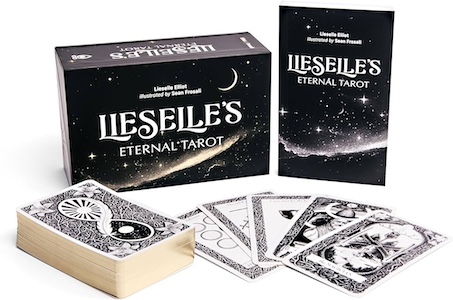
Lieselle’s’ Eternal Tarot: Trust Your Voice and Then Learn to Trust the Journey, by Lieselle Elliot and Sean Frosali
REDFeather, 076436975X, 224 pages, 78 cards, September 2025
With countless tarot decks now in circulation, each offering new themes, artwork, and layers of symbolism, it can be easy to forget the quiet power of returning to the basics. There is something enduring about a deck that honors tarot’s foundational structure, where meanings are clear, imagery is intentional, and the essence of each card is distilled rather than overcomplicated. In this simplicity, readings often become sharper and more resonant, allowing intuition to speak without distraction. Lieselle’s Eternal Tarot: Trust Your Voice and Then Learn to Trust the Journey is just this type of deck, reminding readers that when the core of tarot is respected, its wisdom remains timeless and deeply effective.
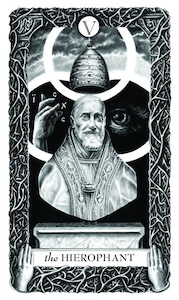
Created by Lieselle Elliot, a tarot reader with over 20 years of experience reading for clients, this deck taps into the heart of tarot’s eternal nature. Likewise, Sean Frosali’s illustrations capture the essence of each card’s rich symbolism and history. Together, their intention for this classic deck is “empowering you and nurturing your intuitive abilities.”1
The first thing I enjoyed about this deck is the hardy box with a lid that gently folds back to reveal the cards inside. This is one of the best exterior deck designs I’ve ever seen. The cards are slim but sturdy, making it easy to shuffle. And the gilded edges certainly add a nice touch to the overall aesthetic.
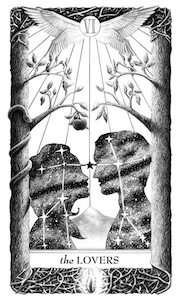
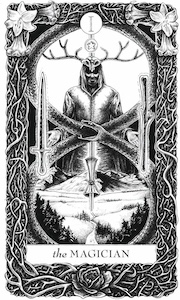
The inspiration from the traditional Rider-Waite-Smith (RWS) deck in the Major Arcana is present, but each card is definitely imbued with the creators’ unique perspective on the cards. For instance, The Fool features a faceless jack-in-the-box floating in water, featuring a leashed dog and flowers as the design of the box. Above the sun illuminates the scene. Meanwhile, The Star shows a woman looking down into her cupped hands, which are submerged in water and holding a star. Above her seven other stars shine and there’s a vessel on each side at the top. With the imagery alone, readers familiar with the RWS would definitely be able to figure out the card. Though, each card is also labeled at the bottom and numbered at the time.
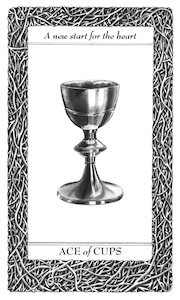
The Minor Arcana is designed in Pips style, only showing the suit symbols and no scenic artwork, with the name of the card at the bottom. To some degree, this design means the reader must know the interpretations of each card when doing a reading or be prepared to look it up in the guidebook, as there are no visual clues. However, there is a mantra at the top of each Minor Arcana card that does give some insight into the overall meaning of the card.
Reading in a Pip-style system definitely requires a different kind of engagement with the cards, and I appreciated the opportunity to try it out since it’s not my usual deck style. Without visual narratives to guide interpretation, I noticed I had to rely more on number, suit, elemental energy, and inner knowing to shape the message.
This absence of imagery strips the reading down to its basics, asking the reader to meet the cards halfway and participate actively in meaning-making rather than passively receiving it. While this approach can feel challenging at first, in the end, I felt it resulted in clearer, more precise readings, as the symbolism is distilled to its core and my own inner voice becomes an essential part of the divinatory process.
And this said, the guidebook is also a wonderful reference. It begins with a message from the creators, a brief history of tarot, and overview of numerology, sharing the numerology meaning and tarot application for numbers 1-14. There’s also a few pages on the elements of the four suits, covering the associated qualities and symbolism in tarot for each one. Initially, I was surprised there was no guidance about spreads, but later on I did find a few suggested ones at the very end of the guidebook. So take note, if you’re someone who likes to use the spread suggested by the author, that it’s in the back.
The guidebook information differs for the Major and Minor Arcana. For the Major Arcana, Elliot provides information on the card’s imagery, noting the key symbolism, and then shares the card’s meaning with a list of interpretations for its significance. There’s also an overview at the end as well as a reversed meaning provided. For the Minor Arcana, there’s the same style of providing the meaning with a list of interpretations, the numerological significance, and the overall meaning for both upright and reversed.
I really like how the guidebook is styled for the most part. Elliot makes use of bold text to emphasize key interpretations and then further explains them. All of the explanations are pretty by-the-book common interpretations, but it’s formatted in a way that makes it easy to absorb the meaning of the card. It’s for this reason, I think the guidebook is PERFECT for tarot beginners. It lays out the message of each card with precision, making the esoteric very accessible.
The only downside of the guidebook’s format is each card entry begins on the page right where the other one left off. This makes it a bit tricky to look up the card as you kind of need to flip through to see where it’s at. I definitely prefer when an entry for a card begins on a new page, so this took some getting used to when reading.
Overall, Lieselle’s Eternal Tarot is a powerful tool for connecting with the foundations of tarot. The charcoal imagery lays the symbolism bare, allowing one’s attention to focus on the essentials. There’s no extra fluff in both the artistry and the guidebook definitions, making this a wonderful resource for those who are seeking sleek and refined readings.
I recommend working with this deck when seeking clarity. Just like the King of Swords, this deck “signifies authority, intellectual power, and the ability to lead with truth and integrity.”2 Those who enjoy the traditional RWS but are looking for a modern twist will most appreciate this deck.

Alanna Kali is an astrologer, numerologist, and pioneer spirit that loves to explore life through the lens of depth psychology. She has a passion for studying the humanities and social trends. Her academic work is centered upon reuniting body, mind, and spirit through eco-psychology. She loves reading, spending time in nature, and travel.