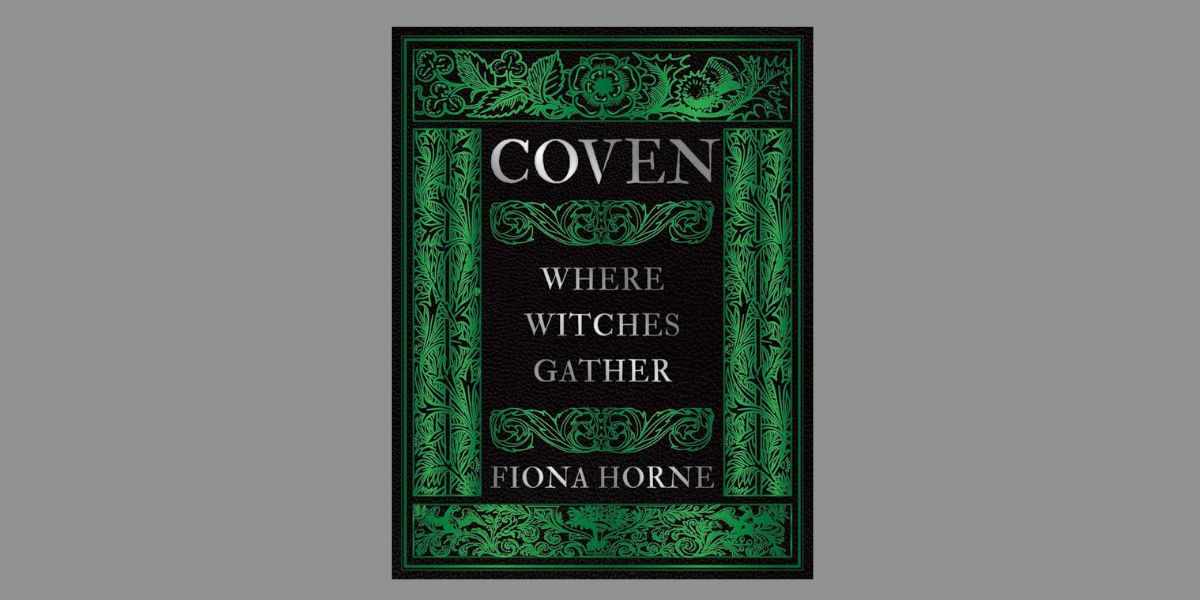
Coven: Where Witches Gather, by Fiona Horne
Rockpool Publishing, 1923208462, 272 pages, March 2026
For many witches, the path begins in solitude – a quiet unfolding of intuition, ritual, and personal power. Yet there is a different kind of magic that awakens when practice becomes shared. Being part of a coven offers more than companionship; it creates a living current of collective energy where wisdom is exchanged, strengths are amplified, and individual blind spots are gently illuminated. Within a trusted circle, ritual deepens, accountability strengthens intention, and transformation becomes both witnessed and supported. Coven: Where Witches Gather by Fiona Horne explores how magic can be enhanced through group relationship, becoming shared sacred work, and offers guidance for creating or finding your own magical community.
Author Fiona Horne is an Australian witch, author, musician and teacher who emerged publicly in the 1990s as one of the first modern practitioners to openly identify as a witch in mainstream media. Raised with an early interest in mysticism and the occult, she later helped popularize contemporary witchcraft through bestselling books that reframed it as a nature-honoring, self-empowered spiritual path rather than something secretive or sensationalized. Over the decades, her work has focused on making witchcraft accessible, community-oriented, and aligned with modern life, encouraging practitioners to claim their identity openly and practice with confidence. This book is a revised and updated version of her previous publication The Coven: Making Magick Together (2003).
I was immediately impressed with the smooth texture of this book and gilded green edges. Though light in weight, there is a feeling of spiritual significance that comes through the book’s design. There’s a sensory elegance to it; the surface feels deliberately textured with care, as if it was made to be handled slowly. Instantly, I recognized this as a potent grimoire.
Peeking inside, I noticed the enchanting design continues within too. The interior pages all have an intricate border design, adding a feeling of elegance. The text is well structured and neatly organized with plenty of headings, bullet points, and different size and style of fonts. There’s also a nice ribbon for bookmarking your place. All throughout illuminating black and white images that contribute to the magical resonance, infusing the text with visual prompts too.
As for the content, Horne begins with a chapter introducing witchcraft, including what witches believe and laws of witchcraft (many from traditional Wicca), followed by a chapter on witchcraft in the past, present, and future. The information in these sections sufficiently grounds readers in the wider context of witchcraft, a base from which they can then go and explore covencraft.
“A coven is a sacred space – but it’s also a shared space, and that means it comes with all the beauty and complexity of human interaction.”1
There’s so many elements to a coven, and Horne covers the different aspects and layers of this joint interaction in the following chapters. From the get-go she distinguishes the type of coven this book is aimed for is different from traditional Gardnerian and Alexandrian witchcraft ones. Some of the differences in modern covens that Horne values are things such as shared leadership, inclusivity, environmental focuses, and rapid adaptation and flexibility. Meanwhile, she also shares different types of covens, ranging from eclectic ones with members who have a mixture of magical backgrounds to “working” covens that are more focused on learning and discussion, and noting how some covens meet in-person while others are virtual. The main emphasis is on the variety of ways a coven can exist, giving readers plenty of room to feel into what would be best suited for them.
As for actually forming or finding a coven, Horne provides plenty of advice for where one might connect with other like-minded souls, even providing an attraction spell. She also shares how to know if someone is a good fit for a coven. Once the group is established, Horne guides readers through the process of establishing responsibilities, picking deities, naming the coven and choosing a magical name for one’s self, and deciding where to gather. She also covers topics such as choosing which tools to use within the coven as well as wardrobe when gathering, noting the financial element of these decisions too. All of these small decisions laid out clearly provide a good roadmap for beginning a coven’s journey.
Horne has a whole chapter dedicated to how to run a coven meeting, including preparation, casting a circle, element invocation, inviting the deities,raising energy, and closing the circle. This chapter is a great resource for those familiarizing themselves with group magic. Subsequent chapters then cover topics such as sabbats, spellwork, group meditation, magickal gathering (open to those outside the coven too), sacred play, sex within the craft, and healthy living.
One chapter that I think is very valuable is “The Art of Coven Keeping” because I’ve seen SO many covens fall apart from disagreements, gossip, jealousies, misunderstandings, and simple lack of energy or interest in maintaining them. There’s usually a potent energy at the formation of a coven, but sustaining this energy takes work. In addition to this information in this chapter, Horne also has created an oracle deck, Coven Oracle, to provide insight into group dynamics that I think is a great tool for any group work.
I really resonated with her approach to covens, making it feel much more accessible than the traditional, “hidden” covens that require much more rigid adherence to a belief system and thorough initiation. In fact, Horne’s approach to the coven dispelled many long-standing beliefs I had about covens. For the first time, I believed it was possible I could create my own or find an aligned magical community. Not only does Horne provide an overview of how to do this, but she leaves so much room for personalization, especially considering every coven will have unique energies. I enjoy how she honors the art of covencrafting, rather than trying to make it fit in specific and outdated boxes.
At the same time, Horne takes a very practical approach to covens. The chapter dedicated to legally incorporating a coven as a spiritual organization was all novel for me. I had never really thought about this approach, but it makes sense in that the organization becomes tax exempt and is eligible for grants. I appreciate how Horne offers this, in addition to all her magical advice, because it grounds the potential of each coven in our structured reality.
“Because beneath the hashtags and highlight reels there is still a living, breathing mystery – a sacred, subversive truth that belongs to witches; a truth about power, connection, and the unseen forces that shape our world. This book isn’t just a how-to. It’s a lived testament to community, courage, and the magick we create when we gather in trust and intention.”2
Overall, Coven stands out as a thoughtful and practical resource for witches drawn to group magical working. Horne offers meaningful insight into not only how to form a coven, but how to nurture, protect, and sustain its energetic integrity over time. By weaving foundational witchcraft principles with guidance on leadership, harmony, and shared intention, she creates a framework that feels both accessible and purposeful. For those seeking to move beyond solitary practice and into the alchemy of collective magic, this book serves as a steady and encouraging guide. There’s so much to explore within a group witchcraft practice, and Horne has truly provided the community with a valuable tool for navigating this special type of magic.

Alanna Kali is an astrologer, numerologist, and pioneer spirit that loves to explore life through the lens of depth psychology. She has a passion for studying the humanities and social trends. Her academic work is centered upon reuniting body, mind, and spirit through eco-psychology. She loves reading, spending time in nature, and travel.