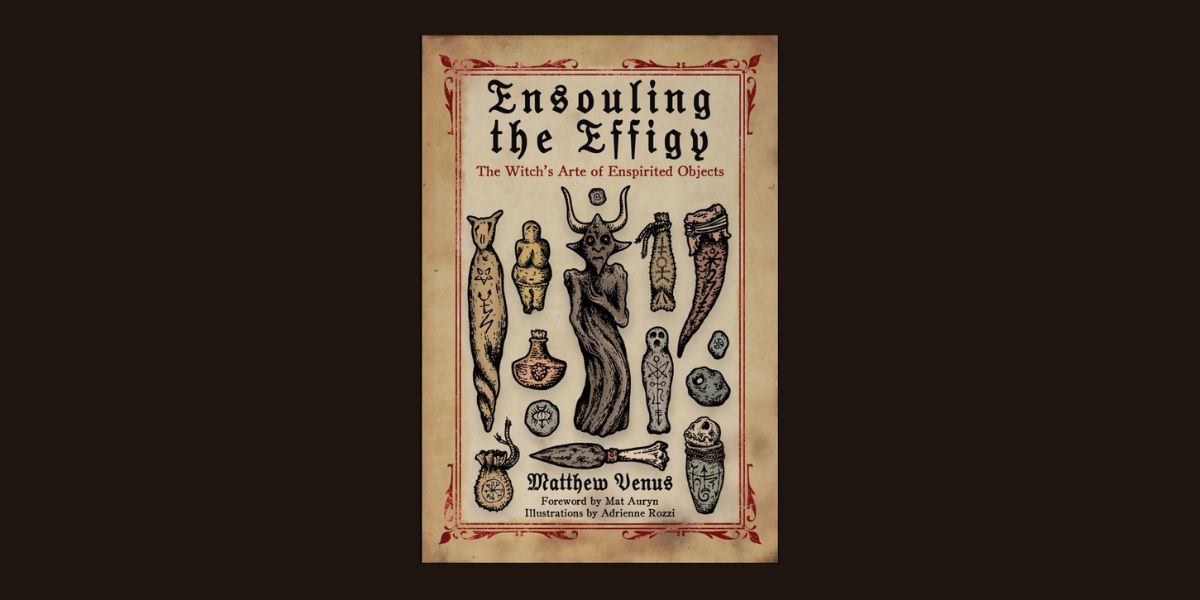
Ensouling the Effigy: The Witch’s Arte of Enspirited Objects, by Matthew Venus
Crossed Crow Books, 978-1964537030, 420 pages, October 2025
“There is a crimson thread sewn through the diverse and rich spiritual and magical traditions humanity has crafted throughout our history, A thread drawn through conjuring lips and hallowed by the breath of life that stitches together the embodied realm and the Otherworld and binds both spirit and body by acts of devotion, desire and demand. This vivifying thread is, of course, the arte of crafting and working with enspirited objects, or what many refer to as spirit vessels.”1
Ensouling the Effigy: The Witch’s Arte of Enspirited Objects by Matthew Venus is a book that has within it a breath of life that inspires and encourages the practitioner to push a little further than what they may have considered as a means of deepening their connection to the work of the witch. Working with magical objects and empowering them is not a foreign concept to those engaged in the sacred arts, but maximizing the use and specifics of such tools is one often overlooked at worst and given a cursory glance at best. Venus brings this practice to the forefront as not only a viable methodology but also as the natural support towards successful workings.
Ensouling the Effigy is a 420-page tome that is impressive in that fact alone. Not many newer works are this lengthy and often just skim the surface of what is possible within their content. This is definitely not the case in this writing, while also not adding anything extraneous or unintentional in its material. The title is organized into twelve chapters, contained within three parts. “Part Four: A Book of Secrets” provides the reader with a grimoire of sorts containing recipes, sigils and selected ritual workings. And, given the size of this title, there is thankfully a glossary, bibliography, and index for quick search.
Scattered throughout are many praxis (practical application) opportunities and the overall style of the book is one of having opened the pages to a book written long ago and imbued with the formal structure of academia and concise focus. Many of the chapters conclude with a recommended reading list which provides the opportunity for further study and research for those so inclined. I particularly appreciated a specific inclusion within the introduction about general advice and precautions:
“As with most things worth doing, Witchcraft is not free from risk. Whenever engaging in magical work, particularly when working with spirits, there exists a possibility for delusion, obsession, or any number of other adverse situations to arise. Though I have included many warnings and instructions throughout this work regarding establishing protections and exercising discernment, the reader is encouraged, as much as possible, to approach this work from a place of preexisting stability in their life situations, and mental health. If you find that engaging in this work, or magical work in general, begins to cause imbalance in your life, you should seek the aid and counsel of spiritual elders, trusted and objective peers, and medical professionals, as needed.”2
“Part One: On An Inspirited World” contains five chapters that in and of themselves could be the content of a singular title on the nuances, realms, and workings of the witch and the spirits that are called to aid in their workings. The material contained provides the reader with a clear picture and understanding of who and what “spirits” are, the identification and workings of a “witch”, ethics of magical work, tools of creation of sacred space, communication with spirits and more.
Having laid the foundations of what the work of engaging spirits, “Part Two: On Inspirited Objects” dives right into the use of objects as ensouled allies for magic. Concise information is given about the various types and uses of ensouled objects such as spirit vessels, effigies, poppets etc. The history of such items is of particular interest in bringing their use from a place of archaic relegation into the modern world and practice of witchcraft.
“Part Three: Ensouling the Effigy” gets to the meat and bones (no pun intended) of bringing life to the tools of working and the use of breath:
“One of the threads woven through the binding of this book is the idea that breath is the primary vehicle for spirit. As we have seen, the spiritus, the breath , is found both at the literal and mythological birth of humanity. It is the whisper that inspires us to create new forms. It is the vox magica that speaks desire into form and chants, charms, and conjures the spirits. Air, breath, and voice are inseparable from our understanding of spirits and spirit work. And, it is through the breath that we will ensoul the effigy.”3
The chapters contained therein, provide specific instructions, practices and considerations for the reader, if they choose to actualize this work and incorporate into their magical system. A variety of breath work practices are offered in “Chapter Ten: Spiritus Vitae: On the Arte and Act of Enspiriting Objects”. These praxes and the author shares his methodical and step-by-step approach in the act of ensouling.
And, in living no stone unturned and accountable, the concluding portion of the final chapter of “Part Two”, discusses release of bonds, exorcism, and banishment of those spirits and tools you no longer wish to engage with. Three praxis rituals are provided in detail to provide clean and effective disengagement.
“Part Four: A Book of Secrets” offers a robust conclusion to the works contained within Ensouling the Effigy. Included within is a section of recipes and correlating sigils for botanical allies. Incense recipes include protection, cleansing, exorcism, evocation, and others. Each is concise including both botanical and commonly used names of the botanicals, as well as instructions for creating and best practices for use.
The second offering of “Part Four: A Book of Secrets” is a selection of workings. Venus writes:
“The following operations bring together many of the approaches explored throughout this book’s work. They are presented so the reader might perform them as written, or make judicious alterations as best suits their own craft. It is my hope in sharing them here that they may give a good illustration of the manner in which such workings as are implied throughout the course of this book may be crafted and formatted to suit your own work.”4
The book concludes with six appendices that provide the reader with additional supports and tools of working that include planetary correspondences and magic squares (App. 1); the use of color (App. 2); the basics of crafting consecrated water (App. 3); a ritual for creating sacred space (App. 4); consecration of your blade of Arte as a working tool dedicated to spirit workings (APP. 5); and an Example of a Formal Written Pact, a necessity for clear and clean spirit engagement (App. 6). The Glossary and Index provide easier navigation through topics and nomenclature not traditionally used in your lighter offerings of text on this subject.
Would I Recommend?
Ensouling the Effigy by Matthew Venus is a title that has been carefully crafted and well researched in a way that is appealing both to seasoned practitioners and those new to the craft of the witch. This work is truly one that will take its place among the classic compendiums of magical work that are the foundation for informed and deep magic.
It is not by any means a “light” read, nor should it be given the subject matter, and will require time, effort and methodical building of your specific work in this art, but the results and general expansion of those who choose to approach this subject in this way, will carry far and deeply into all of your practice. In the words of Venus:
“It is my hope that the spirit of this book has perhaps “breathed into” you in some small or significant way and that my efforts here will have enriched both your arte and arte going forward. If this tome has served in extending a witching hand across to the Otherworld and opened some eyes a bit wider around our ideas concerning spirits, personhood, and bodies, I will be quite pleased. If it has inspired you to move more consciously and actively enspirit, and in turn be enspirited by the world around you, and to perhaps take up this arte more actively, then it will have done its work, and I will be grateful to have aided in its creation.”5
About the Author: Matthew Venus
Matthew Venus is an artist, folk magician, and witch in Salem, Massachusetts. His craft centers on animism and ancestral, land-based traditions. His practice is enriched as Tata Ndenge in a lineage of Kimbanda Angola and his experiences as an Aborisha in the Lucumí Orisha tradition. For over two decades, Matthew has shared his teachings worldwide through courses on witchcraft and folk magical traditions.
Matthew owns the apothecary of Spiritus Arcanum, a shop that specializes in handcrafted incense, oils, and talismanic art. He cofounded the Salem Witchcraft and Folklore Festival, which hosts events around magical education, community building, and activism.
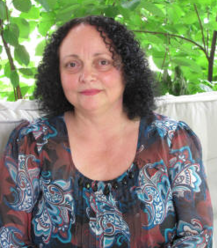
Robin Fennelly is an Elder within the Assembly of the Sacred Wheel Tradition [www.sacredwheel.org]. She is a dancer, teacher, astrologer, author, ritualist and seeker of all things of a spiritual nature. Her writings and classes incorporate a deep understanding of Eastern practice and Western Hermetics and bring a unique perspective towards integration and synthesis of the Divine and Mundane natures of our being. She is a mother of five and lives in Eastern PA with her husband of 45+ years.