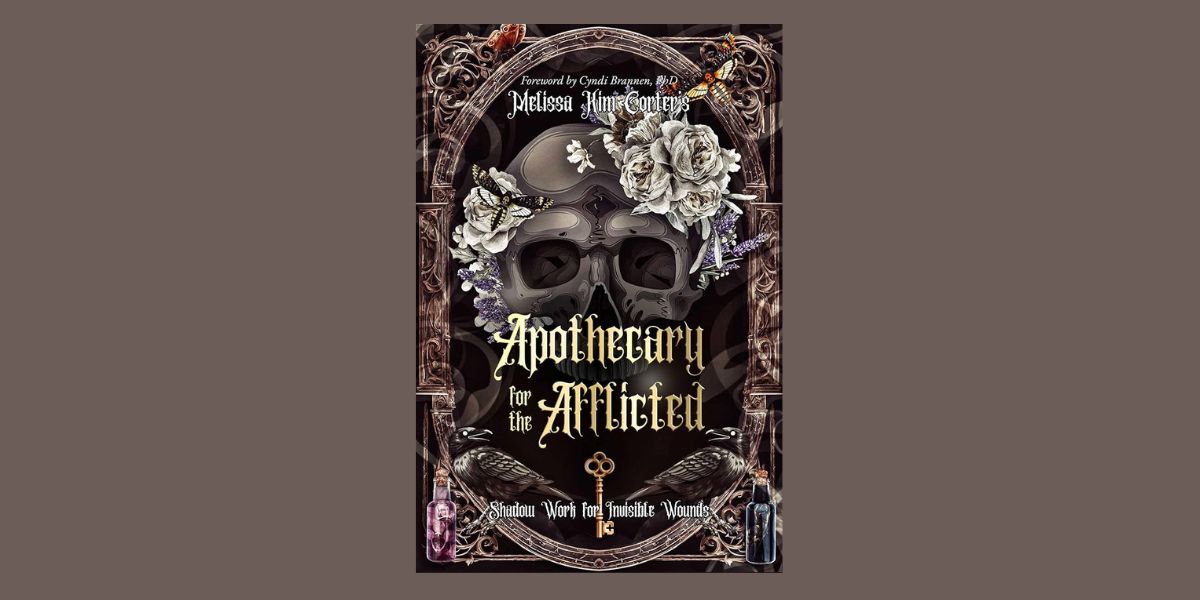
Apothecary for the Afflicted: Shadow Work for Invisible Wounds, by Dr. Melissa Kim Corter with illustrations by Stephanie Wicker-Campbell
Muse Oracle Press, 1763586952, 200 pages, November 2025
Shadow work is a core yet often misunderstood part of the spiritual journey. It asks us to turn toward the parts of ourselves we’ve been taught to hide: the fears, desires, wounds, and contradictions that live beneath our curated identities. Rather than something to be conquered or purified away, the shadow is a repository of truth. When approached with curiosity and compassion, it becomes a source of power, creativity, and self-knowledge. To engage in shadow work is to move beyond spiritual bypassing and into an honest relationship with the full spectrum of who you are.
Apothecary for the Afflicted: Shadow Work for Invisible Wounds by Dr. Melissia Kim Corter with illustrations by Stephanie Wicker-Campbell is an engaging read to explore the shadow within. Rooted in Jungian psychology, Dr. Corter has created a guide for readers to learn about shadow work and then confront and heal their own psychological wounds that are unconscious, repressed, or difficult to articulate. She blends depth psychology, archetypal energies of fairy tales, and thoughtful writing prompts to lead readers through eight motifs while delving into the underworld of psyche.
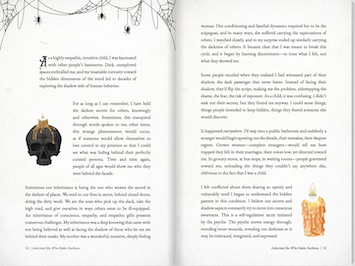
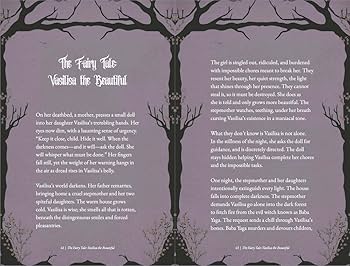
The chapters are structured in a way that moves readers through learning about the type of situations that often lead to an aspect of oneself being shadowed, reading a fairy tale that highlights the aspect of shadow, and presenting reflective questions at the end. Dr. Corter lays out the underpinning psychology in a way that makes it accessible to readers, acknowledging things like coping strategies, trauma responses, Jungian terms like “projection,” while also considering a broader viewpoint of shamanism, anthropology, and somatic techniques as well.
“We cannot transmute what we are not willing to witness. Nightmares, resistance, and the body all point to the buried consciousness, darkness as a form of invisible light. We are suppressing by intentionally stifling unmet needs and unfelt feelings. The shadow contains these suppressed aspects until they are dealt with.”1
Shadow work is tough. Not only can it be mentally, emotionally, psychically, and spiritually draining, it also isn’t always easy to find an access point into our own internal darkness; we’re keeping it neatly tucked away and buried for a reason! However, Dr. Corter’s approach brings readers right to the threshold and then holds their hands as they take a brave step into the liminal space of their psyche. She’s done a wonderful job of synthesizing information about the shadow to give readers the background needed to understand the shadow work process, while also crafting a creative way for readers to engage with the material presented.
One thing I really enjoy about the book is how Dr. Corter blends her professional background in both depth psychology and as Certified Medicolegal Death Investigator. The names of the chapters (“Dismemebred”, “Poisoned”, “Decomposed”) reminded me of the reality of the physical aspects of death we often tend to look away from, just like it’s common to turn away from the darkness of the shadow. Thinking about how Dr. Corter has the courage to go into violent, tragic scenes somehow gave me the courage to face my own darkness, gruesome as that might be!
I also love the layout and illustrations done by Wicker-Campbell. The material can definitely get a bit heavy, bringing up past memories or fears held deep within, but the little skulls, candles, cobwebs and spiders throughout remind me that I’m wading into a realm of death in order to become more fully alive. The illustrations help ground abstract psychological work are an invitation to slow down, digest, and sit with complex emotional material. Additionally, the fairy tales being white text on a darker page helps me to switch my mindset when reading, making me more receptive to the story.
At the beginning of the book, Dr. Corter suggests creating a darkness journal to record your unfiltered, uncensored thoughts and feelings. While I journal a lot, specifically having a space for this writing feels like the invitation I needed to give more attention to what’s really going on within my psyche. And for those who aren’t ready to start their own darkness journal, there is plenty of space for journaling within the book itself in the section of writing prompts.
I was really moved by the “Numb: She Who Is Frozen”, which I happened to read in the midst of a blizzard (an apt reflection in nature). Sure, I would admit I’m not the most emotional person, but I often blame that on my Aquarian nature. But reading this chapter awoke a deeper part of me that realized it has been stuck in time, encased in ice, and unwilling to connect with others for fear of rejection. Dr. Corter’s identification of how this pattern often shows up, “these individuals are incredibly strong outwardly, yet the continued failed needs never being met and expressions never being honored wears them down, and they collapse within themselves”2 helped me to recognize these shadow traits.
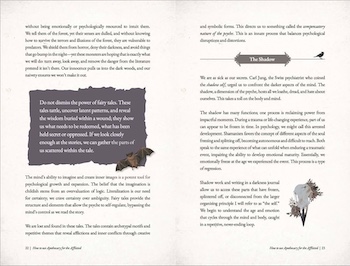
The fairy tale for this section is Sleepy Beauty, and I resonated with Dr. Corter’s explanation for how this story is a reflection of the deeper wounding that occurs when we go numb, or put certain puts of ourselves to sleep for too long. After years of feeling silence was protecting me, I realized it was mostly a defense from acknowledging a deeper hurt. Dr. Corter’s words were a potent reminder of the need to speak out and honestly address where I’ve been hiding my true needs and feelings:
“Silence can be a form of numbness, a paralysis of the voice, the expression, and our authentic nature. The shadow of the things we could not, cannot, or refuse to express. Whether through force or choice, the restriction of the authentic voice is liberated as we reclaim what was silent or silenced.”3
This is definitely a book one can come back to time and again, as the form our shadow takes changes and there’s unexpected initiations that life presents sometimes that require having a tool kit to wade into the murkier parts of our inner world. I’m looking forward to exploring each chapter’s fairy tale more in-depth too, noticing ways they act as a mirror for the psyche to work with the shadow in a symbolic way and my reactions to the characters that disturb, enchant, or feel uncomfortably familiar, hinting at the part of myself seeking recognition.
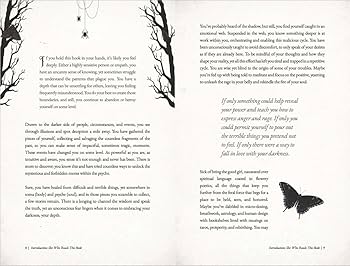
Overall, Apothecary for the Afflicted for those looking for an entry point into shadow work. Dr. Corter’s background in Jungian psychology is a very grounding approach to a sensitive subject. Her approach invites creative, experiential engagement with the shadow rather than an analytical or clinical self-help methodology. This grounded guide encourages deep, symbolic exploration of unconscious wounds and transformative self-reflection, serving as a meaningful companion for those ready to engage with inner darkness and reclaim hidden parts of the psyche.
I highly recommend this book to those drawn to Jungian psychology and symbolic interpretation of fairy tales, those pursuing deep psychological and emotional introspection, and those who are looking to excavate their psyche to discover more of their authentic nature. This book is sure to begin to uncover readers’ hidden beliefs, unmet needs, and buried strengths, in which reclaiming lost or fragmented parts of the self becomes not only possible, but transformative.

Alanna Kali is an astrologer, numerologist, and pioneer spirit that loves to explore life through the lens of depth psychology. She has a passion for studying the humanities and social trends. Her academic work is centered upon reuniting body, mind, and spirit through eco-psychology. She loves reading, spending time in nature, and travel.