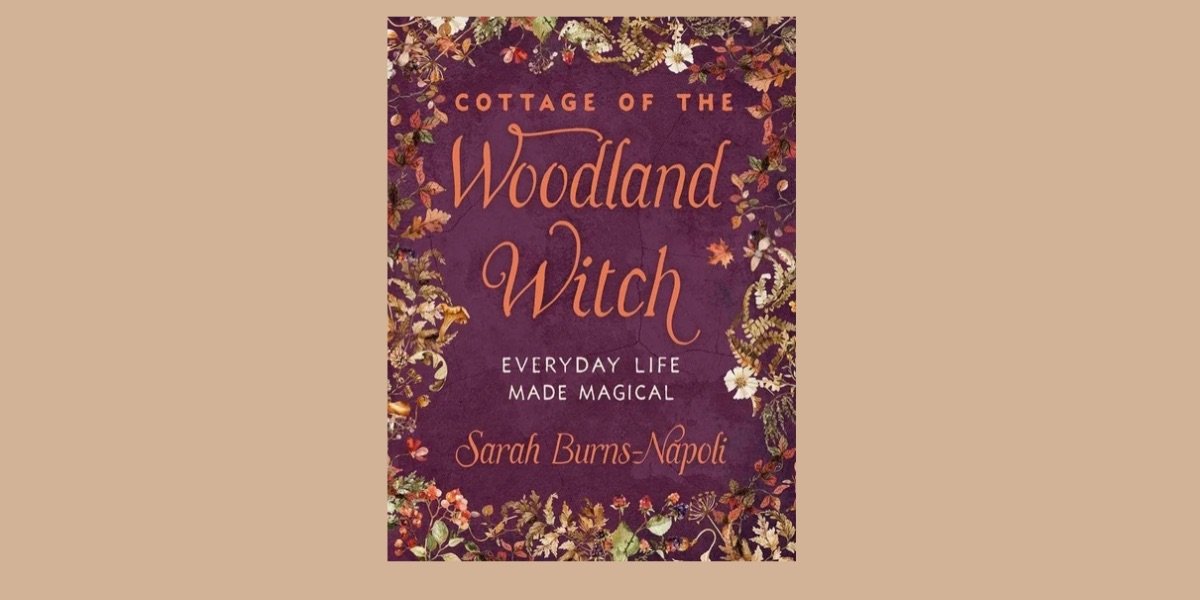
Cottage of the Woodland Witch: Everyday Life Made Magical, by Sarah Burns-Napoli
Weiser Books, 1578639123, 208 pages, October 2026
What does it mean to live a magical life? Is it the spells we cast, the rituals we perform, or the tools we collect? Or is magic something much more intimate, woven into the everyday rhythms of our lives? In Cottage of the Woodland Witch: Everyday Life Made Magical, Sarah Burns-Napoli invites readers to discover the enchantment already present within their homes, transforming ordinary activities into meaningful expressions of their spiritual practice.
Known as The Woodland Witch, Burns-Napoli is a practicing house witch, herbalist, and folk practitioner living in the White Mountains of New Hampshire. Drawing upon her experiences as a mother, homemaker, and business owner, she shares an approachable perspective on integrating witchcraft into everyday life. Her philosophy centers on the idea that magic doesn’t need to be elaborate, expensive, or time-consuming to be meaningful. Instead, it can flourish through small acts of intention, care, and connection.
“This is the cottage witch way: Taking a task that is minimal or full at best and transforming it into something that can be infused with greater purpose. Tasks such as these tend to make this sort of crafting very accessible as well. Many of these tasks are things we are already doing each and every day. Why not make them more enchanted? That adds a bit of whimsy to the monotonous day-to-day duties, doesn’t it?”1
Divided into two parts, “Part 1: The Hearth and the Craft” and “Part 2: The Cottage Witch’s Spell Book”, this book is a nice mixture of practical wisdom and hands-on magic. Within the first section, Burns-Napoli gives an overview of various aspects of cottage witchcraft: creating sacred space, needlework and textile craft, green witchery, kitchen magic, housekeeping, and more. There’s a nice range here, from advice on paint colors for interior design magic to spiritual hygiene, there’s plenty of sage advice written in a gentle, grounded tone.
One thing I especially enjoyed is the exploration of animism, particularly the idea that our homes possess a spiritual presence worthy of acknowledgment and respect. Rather than viewing the home simply as a backdrop for magical workings, Burns-Napoli invites readers to cultivate a reciprocal relationship with the space itself. Through honoring household spirits, tending sacred spaces, and developing personal rituals, readers are encouraged to experience their homes as living environments with which they can actively engage.
Her perspective brings an additional layer of depth to the practice of domestic witchcraft. The home becomes more than a place where magic happens; it becomes an active participant in the practitioner’s spiritual life. This invitation to foster a relationship with one’s surroundings also encourages a greater appreciation for the everyday objects, seasonal traditions, and routines that shape our experience of belonging.
And while many books cover similar themes, I do feel Burns-Napoli offers her own spin on things. For instance, this was the first time I ever read about a kitchen witch doll, which she explains “are thought to be good luck and protection against kitchen mishaps, ensuring all meals and bakes in the kitchen are successful.”2 I am moving to a new home in a few weeks, and this is definitely something I will be adding to our space.
Beyond the magic, Burns-Napoli also gives suggestions for tending to both our homes and selves practically too. She gives guidance on establishing a housekeeping routine, moving through periods of lack of inspiration, and preventing burnout. In this way, she honors the home and body as both physical sanctuary and a sacred space, worthy of our tending.
“Part 2: The Cottage Witch’s Spell Book” provides plenty of inspiration for bringing these concepts into daily life with spells, rituals, recipes, and incantations. This section feels like a cozy grimoire, great to have on hand for when you want to add a sprinkle of magic to your day.
Burns-Napoli has spells for beauty and self-care, edibles (my favorite as a foodie), protection and blessing, house cleansers and potions, and seasonal blessings. There’s also an index, so readers can quickly browse the spells to find what they’re looking for. Some of the ones I’m more excited to try are Brown Sugar Coffee Body Scrub, Autumnal Abundance Tea Cake, Cleansing and Protection Fabric Home Spray, and Loving Home Simmer Pot Potion, and Self-Sweetening Honey Vanilla Face Mask. I know these are going to be so good for smoothing my family’s transition to our new home and bringing in welcoming, warm energy!
And for those who are budget conscious such as myself, all the spells are quite accessible to do with ingredients you most likely have on hand. In alignment with the spirit of cottage witchcraft, the spells demonstrate that items available within our homes can become powerful magical tools. And, as a result, this approach also leaves room for creativity and individuality. Rather than presenting rigid formulas for practices, Burns-Napoli encourages readers to adapt their magical lives to their personal circumstances. A small apartment can be just as sacred as a woodland cottage, and a brief moment of intention can be just as meaningful as an elaborate ceremony.
I would recommend this book to those interested in kitchen witchcraft, folk traditions, animism, and nature-based spirituality. Beginners will find an accessible introduction to developing a home-centered magical practice, while experienced witches may appreciate the encouragement to reconnect with the simpler, more intimate dimensions of their craft. I mean who doesn’t need a little magical encouragement to get the household chores done?
Ultimately, Cottage of the Woodland Witch is an invitation to slow down and recognize the beauty of the life already unfolding around us. Burns-Napoli encourages readers to reconsider their relationship with their living environments, approaching household responsibilities as opportunities for spiritual connection. Cooking a nourishing meal, sweeping the floors, tending to an altar, or preparing for the changing seasons can all become magical practices when approached with awareness and intention.
For anyone longing to cultivate a deeper sense of enchantment without adding more obligations to an already busy life, Cottage of the Woodland Witch offers a comforting perspective: Magic isn’t necessarily something we need to make time for; it can easily be woven into the day to day rhythm of our lives.

Alanna Kali is an astrologer, numerologist, and pioneer spirit that loves to explore life through the lens of depth psychology. She has a passion for studying the humanities and social trends. Her academic work is centered upon reuniting body, mind, and spirit through eco-psychology. She loves reading, spending time in nature, and travel.