The Beginner’s Guide to Divination: How to reveal the future, from crystal balls and palm reading to tarot, runes, tea leaves, and more, by Kirsten Riddle
CICO Books, 1800655908, 144 pages, February 2026
Ever feel like you have intuitive abilities or psychic sensitivity but aren’t sure how to start developing these traits? The Beginner’s Guide to Divination by Kirsten Riddle is perfect for this, providing a visually appealing, novice-friendly survey of divination systems. Think of this book as a special roadmap into the variety of ways you can hone your divination skills, intended to spark curiosity and build confidence on your magical path.
Riddle begins the book with the basics of energy work. She teaches readers how to build their psychic workspace, read for themselves and others, and tune into energy. The main divination covered in this chapter is the pendulum which can be used for yes or no answers as well as clearing energetic space.
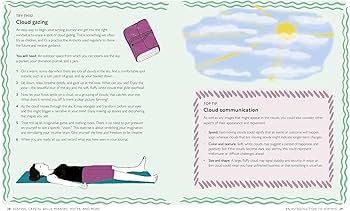
The next chapter covers scrying, or casting your gaze into something to see what emerges while in a meditative state. Riddle covers scrying all types of objects: clouds, nature, crystal balls, mirror, smoke, and even ink! All throughout she provides tips to enhance your technique, answers common questions, and provides clear step-by-step instructions for each process.
The following chapter delves into cleromancy, which is when items are cast for divination. Riddle details the most popular items used to cast a divinatory read: runes, sticks, charms, and dice. For each rune, there is a visual of the symbol and a short description of the meaning. Riddle even shares instructions for making your own runes! I especially found the stick throwing section interesting, as this was one I hadn’t heard of before. As with the runes, Riddle shares how to make your own sticks and shares a graphic about different tree energies.
After this, Riddle moves onto body reading, writing “Each individual is unique, so it makes sense that their physical makeup could reveal facts about their personality, traits, and gifts, and also their approach to life.”1 Despite my years of magical study, this is an area of divination I know almost nothing about, so I was quite excited to dive in. The types of readings covered—all with amazing graphics!—include palmistry (the lines and mounts of the hand), solestry (foot shape and size, including what the toes can reveal), and aura reading. I’m going to be putting my new skills to use this summer once everyone’s feet come out in their sandals! Lol.
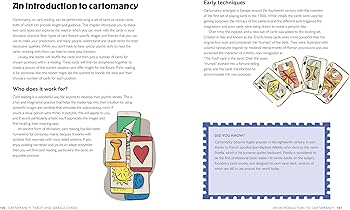
The next chapter focuses on cartomancy, divination with cards. While playing cards can be used, Riddle focuses specifically on tarot and oracle cards in this section. She offers a quick meaning for every single tarot card as well as guidance on how to do a three-card spread and manifest with tarot cards too. As for oracle cards, she offers step-by-step instructions for reading them and how to create your own oracle deck.
The final chapter covers tasseomancy, or divination with coffee and tea leaves. Riddle once again offers instructions to perform this type of divination, as well as offering how to do it with herbs rather than coffee or tea, if it’s not your thing. This was definitely something I’d never heard of being done before, so I appreciated this useful alternative approach. There’s a list of possible symbols one might see in their reading and the meaning of each.
Throughout the book, Riddle shares important techniques for doing this type of work, including grounding, breathing, and protection rituals. She also offers the ancient history of each divination technique, which is nice because it gives perspective about how long these forms of fortune-telling have existed. While each section is short, there’s a broad spectrum covered, which allows readers to dip their toes in and see what method calls out to them for further study.
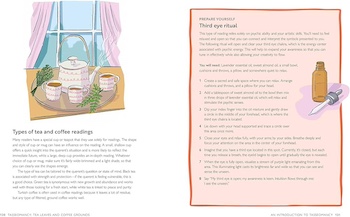
Riddle’s writing style is gentle and encouraging, presenting information clearly and directly. And her text is also greatly aided visually by the illustrations in this book. The variety of colorful text boxes, designs, and figure drawings help to absorb the material presented. The aesthetic keeps the reading light, even though it’s quite descriptive content.
Overall, I’d recommend The Beginner’s Guide to Divination for beginners unsure where to start, those going through an intuitive awakening that want to learn more about different divination modalities, and people interested in casual spiritual learning. This entry-level spiritual guidebook could be likened to a “sampler platter” of divination arts, providing readers enough to get a taste of multiple methodologies for a varied and engaging practice.

Alanna Kali is an astrologer, numerologist, and pioneer spirit that loves to explore life through the lens of depth psychology. She has a passion for studying the humanities and social trends. Her academic work is centered upon reuniting body, mind, and spirit through eco-psychology. She loves reading, spending time in nature, and travel.