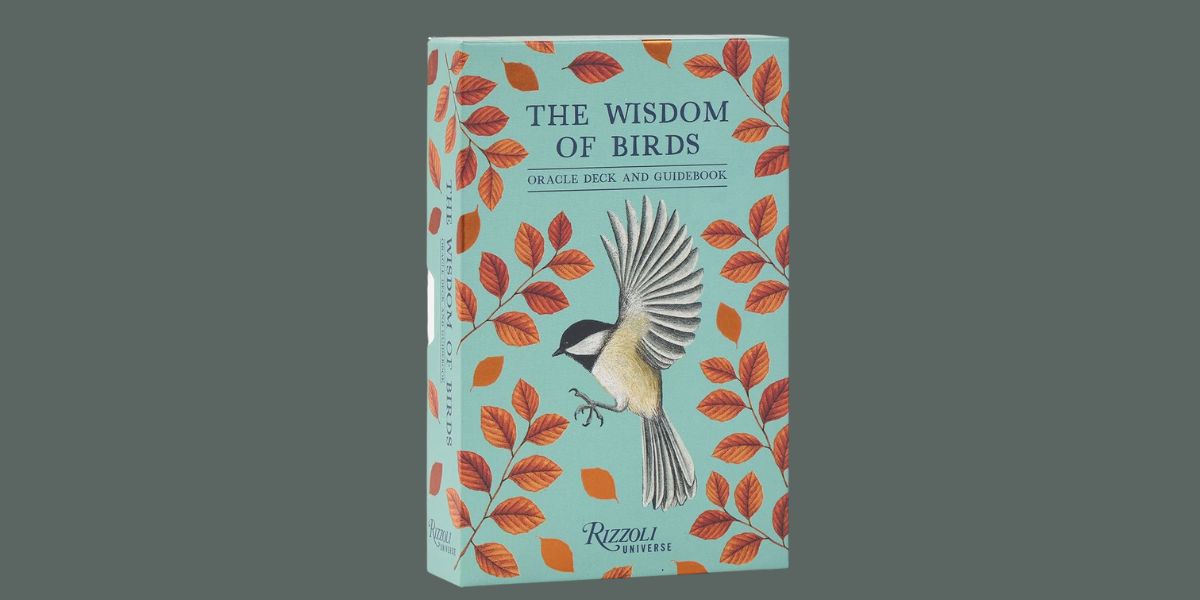
The Wisdom of Birds, by Raxenne Maniquiz
Rizzoli Universe, 0789346311, 96 pages, 40 cards, March 2026
There’s no shortage of animal-based oracle decks, and birds are a popular choice. They carry centuries of symbolism — omens, messengers, watchers between worlds. Most modern decks lean hard into that without much restraint, layering atmosphere on top of atmosphere until the cards become more mood than tool.
The Wisdom of Birds, illustrated by Raxenne Maniquiz and published by Rizzoli Universe, takes a different approach. It keeps things simple, visual, and accessible.
About the Creator and Publisher
Raxenne Maniquiz is a Filipino illustrator with a background in editorial and book illustration, and that background is visible on every card. Rizzoli is not a small esoteric press; it’s a major art-book publisher, which shows in the production values. The result is a deck that feels like a designed object first and a divination tool second. That framing matters when you sit down to use it — the deck is asking to be looked at, not decoded.
First Impressions and Physical Feel
You get 40 cards and a guidebook in a sturdy lift-top box. Card stock is solid — heavier than the bendy mass-market tarot you sometimes encounter, lighter than premium indie stock. The matte finish handles regular shuffling without warping or curling. Card size sits comfortably in the hand for someone with average reach, which matters more than people admit when you’re using a deck daily.
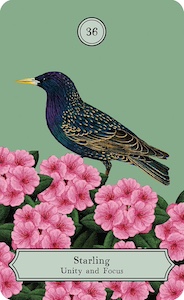
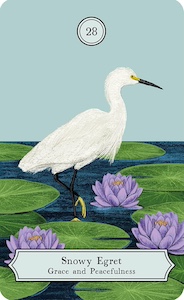
The artwork is the strength here. Clean, stylized, and consistent. It avoids the usual fog of “mystical atmosphere” and instead lands closer to modern editorial illustration: flat color, deliberate composition, and birds rendered with enough botanical and ornithological accuracy to feel recognizable rather than generic.
It looks like something you’ll actually pick up, not something that sits on a shelf waiting for the right mood.
Structure and Use
40 cards is a manageable system. Each card carries a single, focused idea: awareness, adaptability, communication, patience. The guidebook supports that without over-explaining. No long-winded metaphysics. No forced depth.
This is not a system you study. It’s a tool you use. Pull a card, get the meaningful message, reflect on the answer, and move on.
For daily-draw practice, that focus is a feature, offering a message for both upright and reversed pulls. For someone wanting layered nuance — multiple symbolic axes per card, planetary or elemental correspondences, anything resembling a defined system — there’s not much to dig into.
Symbolism — Clean but Limited
The deck draws on familiar bird associations:
- owl → perception
- hawk → focus
- crow → transformation
It keeps interpretations readable and direct, which is useful, but also means it stays on the surface. There’s no underlying scaffolding, and it does not draw from a defined classical tradition. It’s a curated set of associations rendered in beautiful art.
If you come from a traditional background — astrology, horary, classical omen literature — you’ll notice the ceiling pretty quickly. The bird-as-messenger lineage is ancient and layered; this deck doesn’t engage with most of it. The owl, for instance, is rendered straightforwardly as perception, with none of the funerary or threshold associations you’d find in the older sources.
That’s not a flaw. It’s a design choice. The deck is aimed at modern readers who want clarity, not initiates who want depth. Just know what you’re working with.
The Energy in Practice
The deck’s energy is steady and quiet. It doesn’t push or interrupt. It nudges. That tracks with the visual style — no aggressive colors, no jagged compositions, nothing designed to startle. It’s a deck that asks you to slow down rather than one that grabs the wheel.
The most interesting part of working with it didn’t happen in the cards. It happened outside.
After a few days of using it, I started noticing birds in my backyard I hadn’t been paying attention to before. Native species, nothing exotic, but their timing stood out. There were moments where I’d sit with a question, pull a card, and later that same day a particular bird would show up, often matching the tone of what I was dealing with. A quiet, solitary bird when the situation called for patience. More active, vocal ones when something needed to move or be said.
I’m not quick to label things as signs. But what the deck did was sharpen attention. It pulled the symbolism off the card and into the environment.
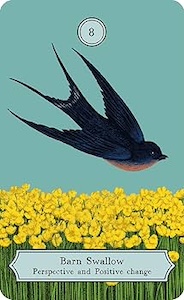
That’s where it becomes useful. Not as a system of answers, but as a way of noticing.
Who This Is For
This deck makes sense for:
- beginners drawn to bird symbolism
- daily pulls and morning practice
- journaling and reflection
- visual learners and people who respond to design-forward decks
- anyone wanting a reset from heavy esoteric systems
Less useful for:
- traditional practitioners
- structured divination work
- anyone needing precision, depth, or a defined symbolic framework
Final Take
The Wisdom of Birds is a well-made, visually strong oracle deck that does what it claims: provide oracle insight. It’s not a complex system. It won’t replace anything with structure behind it. But it will get you to pay attention. And in practice, that’s where its value shows up.
For its target audience, that’s plenty.

Ken is a professional Writer and Astrologer who was born in New York, went to school in the Berkshires, found his soul in Seattle, and now lives in Santa Ana, CA with his husband of 11 years and their two dogs, Pooh-Behr and Mr. FancyPants.
Ken’s passion for Astrology began in the mid-1970s and has only grown deeper throughout the decades. With a wealth of knowledge in Traditional techniques and methodologies, he offers insightful and accurate services through 4phases.com.