✨ A Gathering Place for Magical Readers and Writers ✨

Author Archives: Holly

About Holly

Holly is a witch, photographer, tarot reader, artist, and freelance writer from Appalachia. She's driven by her passion and stubbornness to follow her dreams of becoming a successful artist and writer. She can be found on Instagram under @hermitwitchholly.

Odin, by L. Dean Lee and The Saxon Storyteller

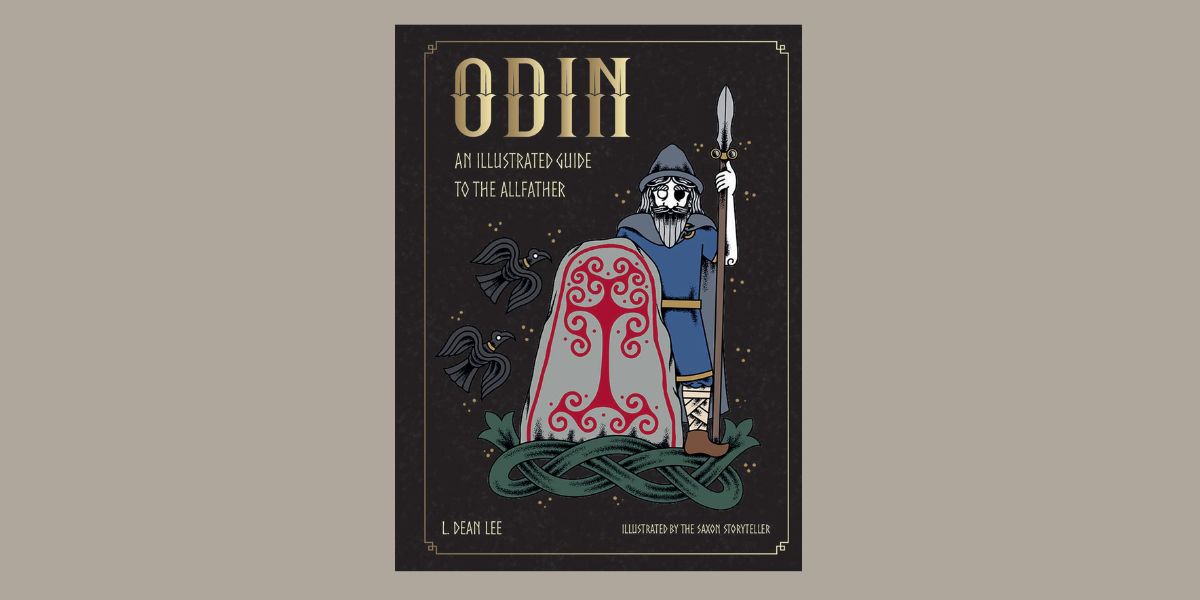
Odin: An Illustrated Guide to the Allfather, by L. Dean Lee with illustrations by The Saxon Storyteller
Red Wheel, 1590035755, 128 pages, April 2025

Odin: An Illustrated Guide to the Allfather is illustrated by The Saxon Storyteller and written by L. Dean Lee. This book is extremely beginner-friendly and very helpful for learning about Odin.

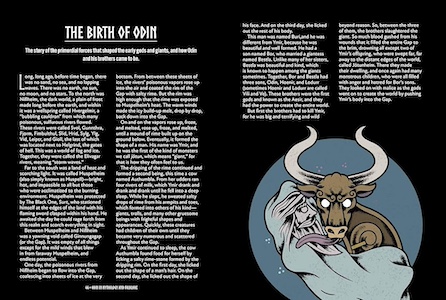
As I said in my other review on a book in this series, Loki, I absolutely loved and adored the illustrations by The Saxon Storyteller. This book is full of magnificent artwork ranging from Odin, to ravens and objects, as well as creatures representative of Odin, the rune-carver and chief of the Aesir. Every illustration in this book is just really too cool, especially all of the raven imagery; each chapter has a raven with the face of Odin drawn on their body. I just can’t get over how fitting The Saxton Storyteller’s artistic style is for these books. My favorite depiction of Odin has to be on page 94–he really, truly is giving cowboy vibes.

In chapter one, Lee gives us a solid introduction and a great description of who Odin is. The head of the gods is known by many names, but he is best known as Odin. The Norse people recognized Odin for war, leadership, wisdom, and honor. But he’s more than just that, and as you learn about him, you’ll recognize his other qualities more. Another part of Odin is the madman, and you will also come to find out more about this in the book too.

After the introduction, Lee teaches the purpose of folklore and mythology, which goes over the different sources of Norse mythology. Then we learn about how to define a “God” before diving into the Norse Cosmos and discussing the nine realms of the world tree Yggdrasil. Now that brings us to Valhalla and Asgard. Valhalla is Odin’s hall, located in the home of the gods, Asgard. Valhalla is where warriors who meet their fate in battle get carried off to by the valkyries. To end this chapter, Lee lists various Norse entities, explaining their significance.

Now this brings us to the nitty gritty of who exactly Odin is in chapter two. We first start by learning how he got the name he has along with his other known names and their meanings. We also learn more about Odin’s personality: curious, wise, fatherly, and duplicitous. These are most definitely very fitting for Odin. Lee also explains Odin’s characteristics, in which we learn he is a master of disguise and a wanderer. As for his appearance, Lee describes how Odin has two ravens as familiars known as Huginn and Muninn, which mean Thought and Memory, respectively. To note, there’s an awesome depiction of Odin hanging from Yggdrasil on page 27.

This chapter also covers Odin’s other associations. Yes, of course, ravens are one of the most popular and well-known associations, but some of my favorite associations of Odin are madness, magic, and poetry.
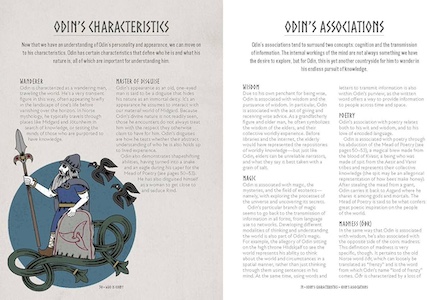
Next up on our knowledge quest of Odin, we now find ourselves at a marvelously illustrated depiction of Odin’s family tree. We get a brief description of each family member. Outside of the two ravens Odin has, thanks to this book, I now know that he has two wolves named Geri and Freiki, whose names mean “the greedy one” and “the ravenous one”.

Now we move on to chapter three, which is Odin in mythology and folklore. Lee dives into many stories: the Birth of Odin, the time Odin stole the Mead of Poetry, Odin sacrificing himself upon the World tree, and even the one time that Odin disguised himself as a ferryman to annoy his son Thor, all the way up to Ragnarok.

The next chapter brings us knowledge on Odin and his relationship to the world. First, Lee explores Odin during the Viking age. Then he moves into Odin in modern times, covering Europe and America specifically, along with his role in pop culture.

That now brings us to chapter five which talks about venerating Odin. Lee teaches how to establish a working relationship with Odin. He suggests building an altar for him and sharing Blót, or offerings. He even notes what Odin’s favorite offerings are.
Then we have a few pages that teach us about runes–Odin’s gift to humanity. There is a guide teaching you the meaning of each rune, which is awesome to have on hand, and it’s also accurate! Outside of the handy guide, you are also taught how to create a bind rune in this neat section as well. After this, we come to learn about Odin’s special days. Lastly, Lee teaches how to communicate with the Allfather via different methods of communication like divination, clairsenses, and through synchronicities.

For anyone seeking knowledge on the Norse gods and goddesses, Odin is definitely made for the beginner. To those who just want to brush up on their knowledge, this book is a quick and knowledgeable read. I recommend it for all of those looking to connect more with Odin, especially if you enjoy descriptive artwork and not just a bunch of text in a book.

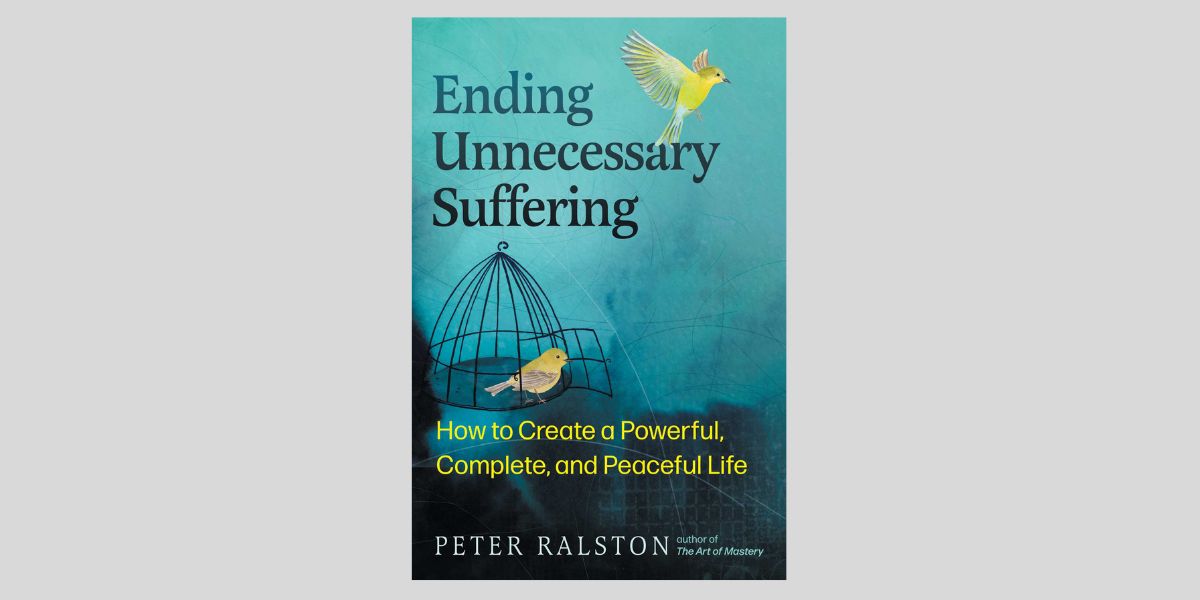
Ending Unnecessary Suffering, by Peter Ralston

Ending Unnecessary Suffering: How to Create a Powerful, Complete, and Peaceful Life, by Peter Ralston
Park Street Press, 979-8888501184, 256 pages, March 2025

Ending Unnecessary Suffering by Peter Ralston is a book that makes you think; this book genuinely provokes the mind. Admittedly, I had to put down this book a few times to let sink in what I was reading. This book has made me think about my life more positively, and I also feel like I understand my brain and emotions a lot better now.

I have been through a great deal of struggle in my life, and I’ve dealt with a great deal of negativity for some time. I thought this book was a perfect fit to guide me on my journey. I have to say that this book has been extremely helpful and encouraging–it’s been a very insightful read. I’ve learned a lot from this book, and I wish I had found this book sooner, as I’ve been applying what I’ve been reading into my life, and I feel like I’ve been improving each day.

In this book, Ralston helps guide you through this journey of understanding concepts and emotions. He references his other work throughout; plus here and there, he throws in quotes from some exceptional individuals, from Albert Einstein to Nelson Mandela. What you’ll get out of this book is learning about the root of unnecessary suffering and how you can overcome the suffering in your daily life.

For example, dissatisfaction and shame are two forms of unnecessary suffering that Ralston teaches you how to combat. His writing is very raw, to the point, and straightforward. This book is truly realistic, and I appreciate how Ralston almost writes as if you are a friend in a way.

In the beginning of the book, Ralston brings up how essentially a three-legged dog isn’t affected negatively by this problem, it continues life as if nothing is wrong. This struck me because he is most utterly correct. He shed a lot of light on how to look at things from another perspective, things we don’t typically think about such as the three legged dog.

Ending Unnecessary Suffering will absolutely be a real eye-opener for some. The advice given in this book has been truly solid and helpful in so many ways. I feel like those who are struggling with a heavily negative mind will benefit greatly. He reminds us of how animals don’t think of these greater deals around them, they don’t contemplate like we do, and they don’t think of future events that may never happen like we do. He writes:

“These simpler creatures don’t worry or fret like we do, or fear the future, or crave anything not available. They don’t imagine that they are somehow flawed or less than they should be. Have you ever seen a three-legged dog? They don’t seem to have any disturbance at all because of it.”1

This book also gives great examples of dealing with and handling certain things emotionally. A good example Ralston gives is laughing at your own folly. Another favorite of mine that I learned from this book is switching between emotions. When you’re feeling one emotion, in that moment, you may not want to experience it, so you switch to another emotion, and then another, and maybe another emotion. I’ve been trying this one when I start to worry too much or when I’m angry.

Lastly, one more thing I took away from this book is the example of freeing experience from past connections. All of these have been insightful on how I can better control my emotions. As you continue to essentially reprogram your brain with these exercises, you find it getting easier and easier as you continue to utilize what you are being taught.

I learned a lot about conceptual thinking from this book, which I was very unfamiliar with, but Ralston explained it in a way that I could understand immediately. (If you don’t know what conceptual thinking is, conceptual thinking is the ability to understand complex ideas by identifying connections and patterns.) As I kept reading this book, it all just kept clicking for me. I appreciated how he worded and explained everything. He made it extremely easy to comprehend and understand.

Throughout the book there are a decent amount of exercises to try out, as well. Once again, a lot of these were easy to understand and fun to do. My favorite one is the mastering emotions exercise. What you do is feel whatever emotion you feel grabs your attention the most, and then you will question the emotion: why it’s there, why it exists, and so on. Once the purpose that drives the emotion is found, you essentially have a better shot at mastering it. I’ve been doing this in my free time, and it is a different and helpful way to fully understand your emotions.

In conclusion, I highly recommend giving Ending Unnecessary Suffering a read, even if you’re not even remotely interested in these types of books. I firmly believe that any reader can finish this book and walk away with something new, whether this be in terms of knowledge or in terms of attitude and mentality. But now, if you are genuinely seeking to end your unnecessary suffering, this book is a good start in reaching that point. This book will help guide you in reading a more peaceful life. I can personally attest that this book has helped me in ending my unnecessary suffering, so it is worth reading.

The Awakening Tarot, by Monica Boridsky

The Awakening Tarot: An Elemental Approach, by Monica Boridsky
REDFeather, 0764367668, 288 pages, 78 pages, March 2024

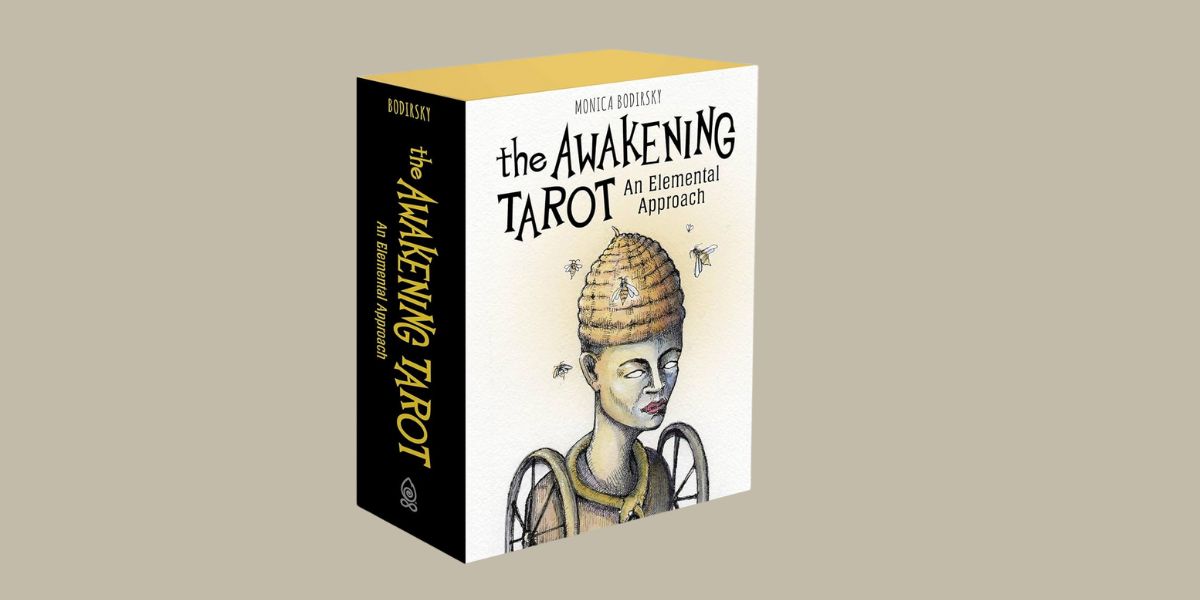
The Awakening Tarot: An Elemental Approach by Monica Bodirsky is truly a deck that you will learn so much from. I was very drawn to this deck, and I can see very much why this was: Boridsky uses her brilliantly unusual and stunning watercolor artwork that is reminiscent of the 70’s. With her knowledgeable guidance through Earth-based spirituality, she creates this powerful deck that will be your framework to build you up and help guide you on your spiritual awakening.

Boridsky created this deck out of love for her divination and witchy practices, as well as her own experiences with awakening as well as being inspired by C.J Jung’s idea of external dreaming and the internal process of awakening. She is also moved to share her experiences with awakening to help others expand and grow creatively as well as spiritually. This deck will teach you how to become awakened and empowered spiritually, and you will learn to expand your consciousness with groundbreaking lessons from each of the elemental guides: water, fire, air, earth, and spirit.

The deck is very nicely packaged. There is a larger box with artwork of the Balance card. You open the box to reveal your deck in its own little box with artwork of the Nine of Air card on it. 

The deck is truly perfect to help hone and understand the powers that you were given; through each card there is a lesson to be learned. The deck’s accompanying book will also guide you into “shadow work”, which is key to any spiritual awakening journey. Along with the shadow work, each card is shown on the page with both upright and reversed meanings as well as a mantra and a short message.

The guidebook is decently thick and has a lot of great information and insight. It is very easy to understand and it gives clarity and extraordinary insight. Like any normal Rider-Waite-Smith (RWS) tarot deck, the major and minor arcana are included. They have similar aspects to the RWS cards, but instead of the normal suits we’re familiar with, these are replaced with each suit’s respective elemental correspondence. For example, fire is wands, water is cups, earth is pentacles, and air is swords.

I do have to say for a fact this information tracks with what I know of the traditional card meanings. Plus, there is also a helpful guide at the beginning that tells you each correlating card, along with pictures for each card with a description accompanying the image.

Each element has its own section and it gives a lot of helpful information. It includes helpful keywords, manifestations, exercises, and healing rituals, reflection questions. Also, each section is color-coded, you can see it on the side of the book, this makes it super simple to find the card you’re looking for! 

The guidebook is also very beautifully written. It blew me away with how much information it provides. Compared to some of my other decks, this is the first deck I have come across with such a well-written guidebook.

The deck shuffles with great ease and the cards fit perfectly in your hands. The cards are nice and sturdy. To say the least, these cards have been crafted perfectly. Each card uniquely showcases each element in a humanoid manner combined with that element.

Four of Fire had to be my favorite card that I had pulled, it depicts a humanoid figure with a fiery-colored fox head with a human body holding a sparkler with fireworks in the background. This shows the connection between us and the elements in a completely different way. Every card has art that is as eye-catching as the next, you could just gaze upon it and get lost in its beauty and detail for a good while.

If you’re a novice to tarot and working with the RWS deck, this deck is perfect to work with. You will find the messages to be clear and easy to understand, I was able to tell instantly which card corresponds to the RWS deck without using the guide at the beginning of the book!

I’ve been using this deck for about two weeks now and I really felt an instant connection to it. I just went to pull a card for myself and this is what I got for the Visionary of Water upright, which is a court card that corresponds to the Knight of Cups in the RWS deck.

The advice given said that I have reached the highest peak of emotional growth despite feeling alone. I’m a part of a good community, my visions are appreciated, and right now is my moment to move above and beyond and share my visions with a larger audience. What stuck out the most was this part, explaining how I need to move on in my career to a more creatively challenging job. Boridsky writes: 

“To assist with the complexity of integrating self-development and divination, I have created this deck and guide as a method for us to transition from potentially feeling like passive observers in our lives to becoming active, awake, and empowered participants.“2

This card was insanely on par with what I’m doing currently as I write this review.

Overall, The Awakening Tarot is for those who seek a genuine connection with the elements and themselves. If you’re interested in working with a one-of-a-kind deck with an innovative take on the normal RWS deck then this deck will most definitely suit your fancy, as the artwork is so unique. This deck is a good elemental approach to a traditional tarot deck. It is easy to understand, and it’s a deck that you’ll appreciate with all of its creativity.