✨ A Gathering Place for Magical Readers and Writers ✨

Tag Archives: energy

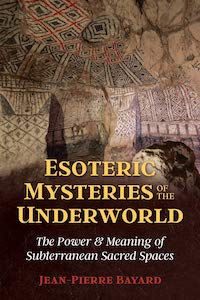
Esoteric Mysteries of the Underworld, by Jean-Pierre Bayard

Esoteric Mysteries of the Underworld: The Power & Meaning of Subterranean Spaces, by Jean-Pierre Bayard
Inner Traditions, 978-1644110621, 320 pages, 2020

One of the first things I noticed about Esoteric Mysteries of the Underworld: The Power & Meaning of Subterranean Spaces was how incredibly dense it is. This book is not a light read; it’s meant for those serious about exploring the hidden symbolism and meaning found in the deepest recesses of the Earth. Perfectly poised to craft such a tome, Jean-Pierre Bayard was a prolific esoteric scholar and authored more than 50 books on topics such as Rosicrucianism, secret societies, symbolism, and the spiritual aspect of Freemasonry. Bayard passed away in 2008 leaving behind a legacy of gorgeous writings that are multilayered and diverse in their objective to share his vast knowledge. This specific book explores the spiritual aspects of the underworld; with many ancient cultures sharing similar beliefs around the power of underground spaces and natural rock formations, Bayard weaves together the similarities in a way that breathes life into these places often thought devoid of life.

This book called to me instantly, as the myths of humans and demigods traversing through the underworld on their various journeys to find themselves is an appealing theme. Included with this thematic exploration of myth, symbology, deities, and beliefs is a guide to the spiritual energies that ebb and flow beneath our feet. Reading this book caused me to become more aware of my surroundings and to pay attention to subtle shifts in energies around me, as often they are telltale signs of things to happen. Not to say I accurately predicted lottery numbers; this was more of an awareness of present energies and their patterns. Birds suddenly flocking around me signaling an approaching predator (a cat), a squawking crow alerting me to a changing traffic light, and so on. Situations like this may seem mundane, as most of us have experienced some form of what I mentioned at some point, but when taken in a spiritual light as a form of an all-encompassing connection it becomes so much more.

The book is separated into two parts: “The Symbolism of the Underworld and the Cave” and “The Cavern.” Dealing with topics such as telluric currents, underground water, underground gems and so on, the book lays out very detailed explanations of each topic and why it’s relevant. The meaty stuff is where I turned to first: underground temples, initiatory passageways, underground labyrinths, and more. This is why you buy this book: these topics are so thoroughly explored you feel as thought you’ve just earned a degree. Bayard references his previous books as additional sources of information, not out of megalomania but because he really does know that much about these things. There is no bravado here, it’s all just information presented in a very high level manner that is a joy to read. An in-depth bibliography, endnotes presented by chapter, and two appendices (one listing definitions from the Mytho-Hermetic Dictionary and the other a two page piece on Hollow Earth Mysticism) are nice additions to the book. These provide great resources for those who may require further explanation. I love when writers include their notes on the resources they used and referred to in their work as quite often it leads to discovering more information and new writers. Everything is connected.

Perhaps my favorite section of the entire book is lucky chapter eight, “Descent Into Hell.” This chapter delves into the notion of hell. It does not focus on the Christian aspect of the region, but instead goes into vast details about the symmetry of the place as an idea — one that is described using similar vernacular across various cultures and time periods. I appreciated this shift away from the whole “lake of fire and eternal damnation” imagery immensely. Bayard explains his choice to explore other aspects of the realm by reminding the reader that this has already been explored in a previous book. Again, this does not come across as bragging, merely a statement that if one wishes to know more about that specific topic, there is another book by the same author that could give you what you are looking for.

What I also love about this book is how Bayard takes all of this information and somehow manages to not only make it interesting, but to also leave space for the reader to question. There is no feeling that the material presented is the final word on any of the subjects contained within: this is more of collection of writings on a variety of topics that all have an esoteric thread linking them to one another. Each section blends seamlessly into the next and there is enough information in each section that links to the next, something that I found kept me on track and engaged despite the vast amount of information being presented.

Bayard’s style of writing might be off putting to some who may be used to more humor in their reading material. He writes in a tone that imparts the information in a very straight forward way, almost like a lecture but with more depth. Personally, I found his voice to be very to the point and without any frills, something that is rare when dealing with esoteric topics. I will admit I haven’t delved too deeply into the topic of the underworld previously, as it seemed unavailable to me, and now after reading Bayard’s Esoteric Mysteries of the Underworld, I think I am ready to have another go at it.

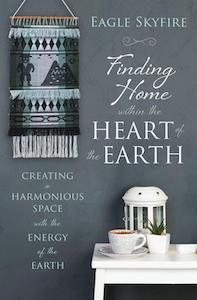
Finding Home within the Heart of the Earth, by Eagle Skyfire

Finding Home within the Heart of the Earth: Creating a Harmonious Space with the Energy of the Earth, by Eagle Skyfire
Llewellyn Publications, 0738760067, 231 pages, November 2020

Finding Home within the Heart of the Earth: Creating a Harmonious Space with the Energy of the Earth by Eagle Skyfire felt more to me words to be practiced rather than a book to be merely read. It provides guidance to creating a “harmonious space” in your place of dwelling or working that works in concert with the earth’s energy. A trained shaman, Skyfire is well-positioned to share with the reader what she’s learned from Native American teachers with whom she’s trained – with their permission.  

To begin, Skyfire introduces the reader to the “Heart of the Earth” method, a way of living in harmony with the earth. The purpose of the book is to be a “hands-on, step-by step guide in order to enhance harmony, wellness, and overall greater sense of well-being in many environments.”1 To be clear, it is not a Native American interpretation of the Chinese practice of feng shui. Heart of the Earth is a system that Eagle developed which is a “synthesis of Native American spiritual principles and shamanic practices, current resources, wisdom gained from experiences in the field, and intuitive gifts.”2

I remember when I took Home Economics in high school (is that even still a part of secondary curriculum?) and the teacher advised us to always read the recipe in full before starting to cook or bake. It was a way to make sure that you had the correct ingredients and cookware and that you followed the steps in order to have the recipe turn out correctly. Just like my Home Economic’s teacher, Skyfire rightly recommends reading the book in its entirety to familiarize one’s self with the concepts discussed, the methods described, and the explanations behind the principles before beginning to incorporate the principles to design or re-design one’s space.While it was a bit challenging to hold off diving into the exercises, I did follow the advice. 

The book is divided into two parts. Part One is an introduction of basic concepts of why we need to connect with nature, universal Native American spiritual principles, energetic principles, and being aware of the lay of the land including physical features, human-made features, and nonphysical features. 

In this section, Skyfire encourages the reader to remember that we are children of the earth mother, that we are affected by the cycles of the seasons, and that feeling the “current of sacred energy and the cycles of natural time”3 is empowering. I recommend taking one’s time in reading Part One as there is a lot to digest and familiarize one’s self with, especially if one is new to these concepts, such as the Good Red Road and the Seven Arrows, as I was. These concepts form the basis of actually creating one’s space that is the focus of Part Two. 

Especially meaningful to me in Part One was absorbing what Eagle wrote about understanding that there is an energetic landscape that surrounds us, which we inhabit. Attitude and core beliefs play roles in how we view ourselves and the world. Change is the only constant in our lives as is true with nature. It’s easy to notice the physical landscape that surrounds us, but idea of an energetic landscape that one could tap into… of course! Why hadn’t I ever made this connection of the existence of an energetic landscape? I was aware of the energy contained within a physical space like a home or office – but not to an energetic landscape per se. 

This section also contained exercises to facilitate connecting with one’s inner child, remembering what made us excited and lit us up! She writes that “in order to know what you want to create for your well-being, you must understand yourself better.”4 This was a fun exercise to do – but also very revealing as to how far I’ve strayed from what truly excites me, buried beneath reason and adult obligations. Another exercise asks the reader to reflect on what truly makes you happy, discerning whether this happiness comes from one’s heart or mind.  Also exercise shared in Part One I enjoyed is the Waterfall Meditation, which I found very relaxing, receiving sacred Power in my heart and returning it to the earth, much like the cycle of water

My favorite chapter in Part one was the Lay of the Land in which Skyfire write about natural elements such as bodies of water (above and below the ground), trees (my favorite) and wildlife, stones, and crystals, and the air. She opens our eyes to man-made surrounding that the effects they have, such as buildings, roads, power lines, parks, and graveyards. Nonphysical features include sacred ancestors of the land, nature spirits, and one’s own sacred ancestors. Part One increased my awareness of my surroundings, made me look deeper within, made me look higher up, and below the surface, made me listen, and see, and feel energy.

Part One concludes with a guide to looking at the indoor features where one lives or works – the layout of rooms, whether they are serving their purpose (for example, is the bedroom relaxing?), and whether they are clutter free. Taking stock of the spaces, actually taking a physical inventory of what the spaces hold, and then identifying if the space is serving one’s needs was a much-needed eye-opener.

Part Two covers the actual creation of one’s space based on the evaluations taken in Part One using the Heart of the Earth method. There is a lot of information covered such as “the qualities of each of the directions…and the function of each room in relation to the five elements.”5 Ultimately, one will “learn how to set the Heart of your place, which sets the energetic tone and maintains the health of your home or workplace.”6

Eagle asks the reader to understand how one’s core beliefs provide a “framework of energy that causes people and things to be attracted to you”7 and that understanding your core beliefs is necessary to designing your space. She encourages one to “work with your nature and not against it. You need to embrace yourself for who you are and from that choose what you need in order to thrive.”8

Part Two offers “the necessary information to see what you are working with in order to build your space in harmony with your own desires, as well as those of the land you are on.”9 To realize that we are not separate from our surroundings and that our needs or wants do not supersede that of the earth mother is vital. The steps outlined involve notetaking, use of a compass, and organization. As Eagle points out, some of the initial steps are “tedious” as one advances to the more enjoyable activities that incorporate creativity.

Topics covered include “gridding” one’s space, use of color and light, how to set the energy of a space, and decluttering. To be most effective, one should do all of the steps and exercises. And, if you are feeling overwhelmed or out of your element with the concepts, I recommend taking a pause. Give yourself time to digest what is being asked of you – and then carry on. I found the need to take breaks and re-group before proceeding with the next step. As Rome wasn’t built in. day, please don’t expect to be able to absorb and then accomplish everything that the book offers in one reading or in a finite amount of time. Give yourself latitude and you will make great strides. It’s been about a week of me actively shifting this energy, and I’m only getting started.

The Heart of the Earth method is truly an agent of change. I highly recommend Finding Home within the Heart of the Earth as a way to bring “abundance, peace, and contentment”10 to your spaces. It puts you in harmony with “nature and your Sacred Self.”11 It can sometimes be a heavy carry to understand and absorb the concepts and principles outlined. The self-centered exercises are beneficial and if one is truly honest with one’s self, they will put you on the path of creating beneficial spaces. The steps provided to work with one’s space that involve instruments such as a compass or grid might take time and dedication. But all in all, the Eagle’s Heart of the Earth method offers the reader a path to harmony, peace, and abundance.