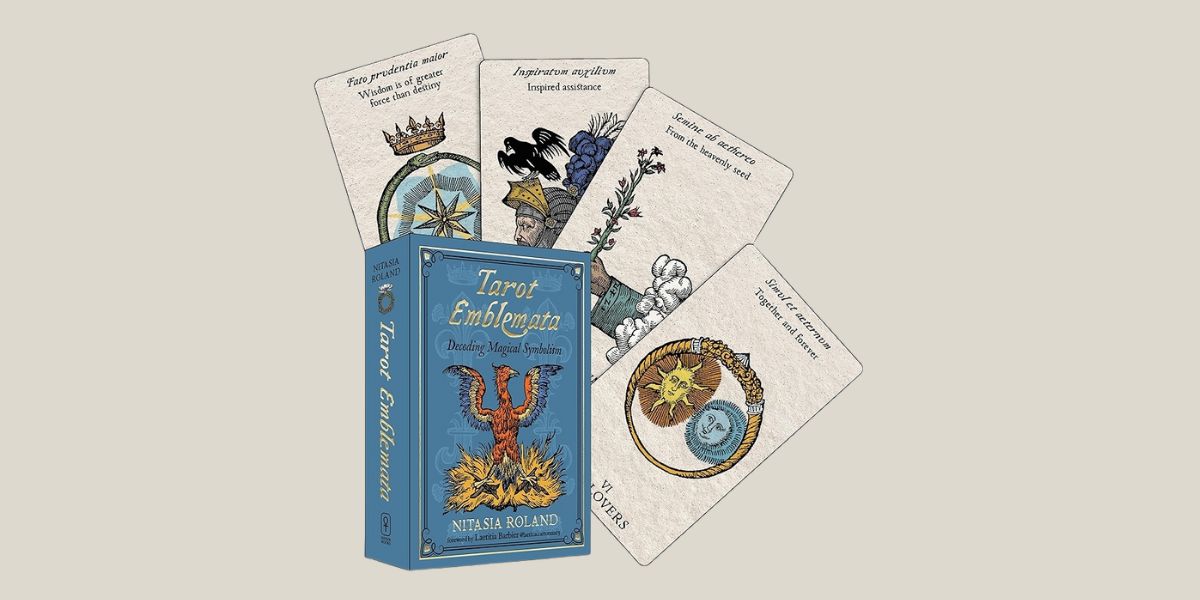
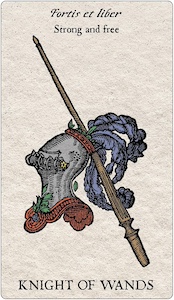
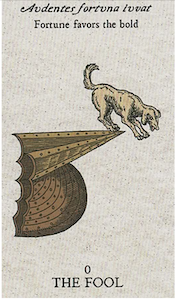
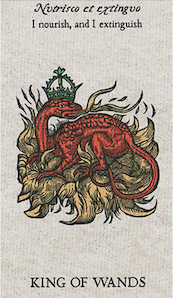
What if the tarot you hold in your hands was also a pathway to discovering Renaissance wisdom?Tarot Emblemata: Decoding Magical Symbolism beautifully bridges the culture of the Renaissance and modern tarot reading. Inspired by Claude Paradin’s emblem book, Devises Heroïques (originally published in 1551), Nitasia Roland revives the intricate art of symbolic storytelling that once conveyed moral, philosophical, and mystical truths through image and maxim.
Unfamiliar with emblems, I immediately went to Roland’s introduction in the guidebook to better understand the deck’s concept. I learned how during Renaissance emblems were visual metaphors designed to convey moral lessons, awaken contemplation and insight, and share didactic information. Roland explains how Renaissance emblems were illustrations “accompanied by mottos of text and verse that allegorically and symbolically express sentiments, concepts, societal concerns, and parables that were current in the social and cultural life of 16th- and 17th century continental and Baroque Europe.”1
In Tarot Emblemata, Roland repurposes Paradin’s emblems, which can be viewed here, to provide a fresh twist on the traditional tarot cards. This unique deck is comprised of 83 full-color cards: the traditional 78 cards of the Major and Minor Arcana along with five additional oracle cards. Weaving the emblems of Paradin (as well as a few by Bernard Salomon from an updated 1557 edition) and Latin mottos into the tarot’s archetypal structure, Roland has created a deck that illuminates the timeless insights of the Renaissance. This truly unique approach makes for some interesting reads!
The deck comes in a sturdy, hardcover box, giving it gravitas and weight. The tactile linen finish on the cards makes them very easy to handle (I much prefer this finish to a smooth varnish or glossy laminate!). And the gilded silver edges add a little burst of elegance.
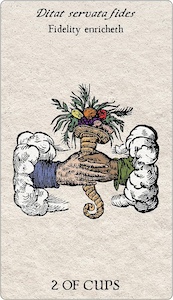
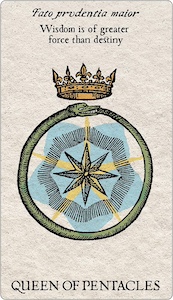
As for the design, Roland kept Paradin’s symbolic imagery and moral mottos, written in both Latin inscription and English, but brought them to life with color. At the bottom of each card is the name of the tarot card. The aesthetic is minimal yet steeped in mystique, the clean parchment background reminds me of illuminated manuscripts or alchemical engravings.
For those who are used to ornate or narrative tarot cards, this deck feels more refined, even cerebral. What’s interesting about the emblems is how the symbolic language they convey is universal enough to be widely accepted and spread yet personal enough to instill the meaningful message. The emblems give a new perspective on traditional tarot, compelling the reader to sit with the imagery and to ponder its message, despite the directness of the associated motto. In this way, readers can both get a straight-forward message that appeases the part of oneself that is searching for guidance as well as an esoteric illustration that ignites the subconscious.
Granted, those who heavily rely on context clues from more elaborately designed tarot decks might find the deck a bit harder to connect with, but for those already familiar with the general tarot card meanings, it’s fairly easy to see how the symbol aligns with the card. For me it is honestly refreshing to not be bogged down with elaborate illustration, allowing the interesting symbols to activate my psyche, prompting revelation. Roland writes:
“Drawing a card or interpreting a spread encourages personal transformation, allowing the reader to tap into the magical archetypes and the universal mysteries that Renaissance iconography and symbolism inspire, connecting you to the guidance of spirit via the wisdom of the seen and unseen worlds.”2
Accompanying the deck is the 192-page, full-color guidebook. It is about 5.5 by 7.5 inches big, about the size of a small book, and very easy to hold and read. There’s a foreword, introduction, messages for each card (including the five additional oracle cards) and spread suggestions.
What I absolutely love about the guidebook is how much detail Roland provides for each card. Written in 2nd person (you), Roland addresses the readers directly. While the cards themselves are very symbolic, the messages from Roland are filled with clarity and purpose, providing meaningful direction. Roland artfully translates the essence of the tarot card through the perspective of the Renaissance emblem and motto. She doesn’t skirt around the message, rather she hones in with skill and precision, delving right into the heart and soul of the card’s energy.
It’s quite evident the time and thought Roland put into matching each emblem with the corresponding tarot card archetype and then contemplating how to translate the card for readers in the guidebook. She hits the mark, having the traditional tarot meaning still present in each interpretation yet illuminating a novel perspective for readers to understand the tarot by filtering it through Paradin’s emblems and mottos.
For instance, The Hanged Man in this deck has the illustration of a rope hanging down from a cloud, piling on the ground, while another cloud has a hand holding a sword emerging from it about to slice the rope. The motto at the top reads, “I resolve all doubts by self-refelction”3. And the guidebook entry opens with this line:
“A severing blade and sword of divine wisdom and truth bring clarity after a time of being held up, where the clock seems to stop, and where inner reflection is the only choice to get you out of the snag you are in.”4
Ah, I just love how Roland conveys The Hanged Man without resorting to any of the trite and overused interpretations that can just make some guidebooks so boring. Dedicating two pages to each card, she provides a fantastic entryway into each card for readers, leaving them with plenty of information to further contemplate. Truly, I am deeply impressed by this guidebook and have really enjoyed reading Roland’s guidance for each card.
Plus, the additional five oracle cards are a real bonus. These cards – Ancestors, Libations, Sovereignty, Regeneration and Caduceus – give readings a real extra boost. The entry for these cards in the guidebook is a bit shorter, but it’s more than enough for readers to learn their meanings and skillfully weave these cards into their spreads. I get extra excited when I see one emerge in a reading!
Overall, Tarot Emblemata is a very interesting deck to work with. Roland offers a one of a kind approach to tarot that transports readers to the flourishing Renaissance. Somehow the deck is artfully able to be both universally enlightening and individually transformationing. For those looking for a creative re-envisioning of the tarot, especially if you enjoy ancient history, this deck is perfect for adding to your collection.
I’d recommend this deck to those who enjoy a dose of practical advice coupled with deeper spiritual insights. This is not simply a “deck for readings” but a tool for exploration, reflection, and developing one’s intuitive and symbolic literacy, priming the psyche with meaningful imagery to activate archetypes that continue to be relevant to spiritual growth and human development.
Alanna Kali is an astrologer, numerologist, and pioneer spirit that loves to explore life through the lens of depth psychology. She has a passion for studying the humanities and social trends. Her academic work is centered upon reuniting body, mind, and spirit through eco-psychology. She loves reading, spending time in nature, and travel.
Starlore Arcana: Constellations for Tarot, Astrology, and Cartomancy by Nitasia Roland is an intriguing and imaginative fusion of ancient wisdom and modern mysticism. In this deck, Roland seamlessly weaves together the celestial themes of constellations with the practices of tarot, astrology, and cartomancy, creating a rich tapestry that invites readers to explore the cosmos both within and beyond.
“We see something of our souls in the heavens, and the use of images helps us connect with those beings that are the stars.”5
The design of this 56-card deck is based on Astronomical Playing Cards created by John Lenthall and published in 1717. Roland digitally optimized Lenthall’s deck and then added four Knight cards she created, as the original deck had the traditional structure for playing cards (Jack, Queen, and King). Playing card suits are used instead of the traditional tarot suits with Wands as Clubs, Cups as Hearts, Swords as Spades, and Pentacles as Diamonds.
The symbol for the suit and card number is at the top of each card, though the full name of the card is also written at the bottom. The image of the constellation is the focal point for each card. Then the French name is written in a beautiful font, while the English translation is written in cursive below. Some cards feature more hand-written insight such as “rises not” or “sets not” to give further information about the constellation.
The deck is beautifully illustrated, with enchanting images that bring the constellations to life. These visuals not only enhance the reader’s experience but also serve as a valuable tool for meditative and intuitive work. I love the rich colors used for the cards, which are a perfect contrast to the bold black lines of the imagery. For someone who loves both astrology and tarot, seeing the constellations come to life in the depictions and then further be illuminated by the structure of the tarot is a real treat. There’s so many layers in each card, and this is also reflected in the detailed guidebook entries.
Roland’s translation of the vastness of the night sky into personal and relatable insights in the guidebook is impressive. In the introduction, Roland shares the numerology meanings for Ace-10, quick descriptions of the suits and court cards, and guidance on how to consecrate, charge, and store one’s deck. Then for each card, she has written about the location of the constellation in the sky/times of the year when it’s present, the mythology or history of the constellation (star lore), cartomancy meaning, tarot meaning, and divination. Some cards also have a zodiac section too, if they have astrological significance.
For each entry, the longest section by far is the divination, providing a ton of insight about the card’s message for you. One of the standout features of this deck is Roland’s thorough research and deep understanding of the symbolic connections between the stars and divinatory messages. Each constellation is packed with details that offer historical context, mythological background, and practical guidance. Even as a seasoned tarot reader and astrologer, I find myself gaining plenty of new insights from how Roland ties all the aspects of each card together.
Plus, the guidebook is nice and big, making it easy to hold in one’s hand and read like a book. For someone studying the constellations, simply pursuing the guidebook will yield tons of insight, especially from the Star Lore section of each entry. And for those more drawn to divination, there’s something about the tandem reading of the cartomancy, tarot, and mythological significance of the constellation that illuminates so much within a reading. Truly, this deck is one of a kind in this regard.
One of my favorite cards in this deck is Ace of Spades (Swords), featuring the constellation Draco. The imagery looks like a mix of a dragon and snake, and on the card it reads “sets not” as this constellation never dips below the horizon. The lore describes how it is of Phonecian origins and also a Chaldaen figure. To the Babalonians, this constellation represented Tiamat, “the dragon goddess of chaos”.6 There’s also a Greek myth included too.
Cartomancy meanings include “Clarity”efn_note]page 65[/efn_note] and “Intellectual prowess.”7 While some tarot meanings read “Cutting toxicity”efn_note]page 65[/efn_note] and “Breakthroughs”efn_note]page 65[/efn_note]. Roland writes as part of the divination:
“Balance street-smart cunning with levelheadedness and decisive action, know thyself, and declare your battle cry. It is time to claim the prize that your holy Daimon guards for you in the gard of your personal Eden, which is none other than the wondrous ability to understand the part you have to play in the grand scheme of life–a many-branched tree laden with meaningful synchronicities and deep gnosis that help cut through darkness, chaos, and clouds of ambiguity and welcome cathartic experiences to guide your personal mission along avenues of joy and prosperity.”efn_note]page 65[/efn_note]
How potent and poetic is that divination? And that’s only a part of what Roland has to say about Draco! This deck definitely isn’t just a lot of fluff; it’s packed with meaningful substance that takes readers deeper on their spiritual journey.
Overall, Starlore Arcana is a captivating and enlightening deck that offers a fresh perspective by blending cartomancy, tarot, astronomy, and mythology. Roland has created a valuable resource for anyone looking for thorough readings that have a multi-faceted approach to the divination. Roland provides a unique and inspiring way to connect with the cosmos; I’ve definitely been more inclined to go star-gazing when reading with this deck. Whether you are a seasoned practitioner or a curious newcomer, this deck is sure to spark your imagination and give you new insight to the interconnection of our night’s sky and the divinatory arts.
Alanna Kali is an astrologer, numerologist, and pioneer spirit that loves to explore life through the lens of depth psychology. She has a passion for studying the humanities and social trends. Her academic work is centered upon reuniting body, mind, and spirit through eco-psychology. She loves reading, spending time in nature, and travel.