The Sacred Biodiversity Oracle: A 36-Card Deck and Guidebook, by Angela Manno
Bear & Company, 159143503X, 160 pages, 36 cards, January 2026
Our planet is experiencing an unprecedented loss of biodiversity, with countless species disappearing at a rate that threatens the delicate balance of ecosystems worldwide. In The Sacred Biodiversity Oracle by Angela Manno, sacred art and contemplative practice converge to draw attention to the animals and habitats most at risk. Through reflection, education, and direct links to conservation efforts, this deck gently transforms awareness into meaningful action.
“The current biodiversity crisis is nothing less than a holocaust of Nature. According to the Center for Biological Diversity, more than 8,000 species are going extinct every year–that’s twenty-two species per day, about one species every hour–one thousand times the natural rate.”1
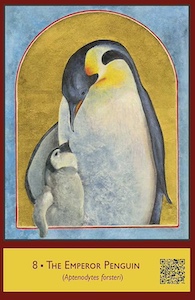
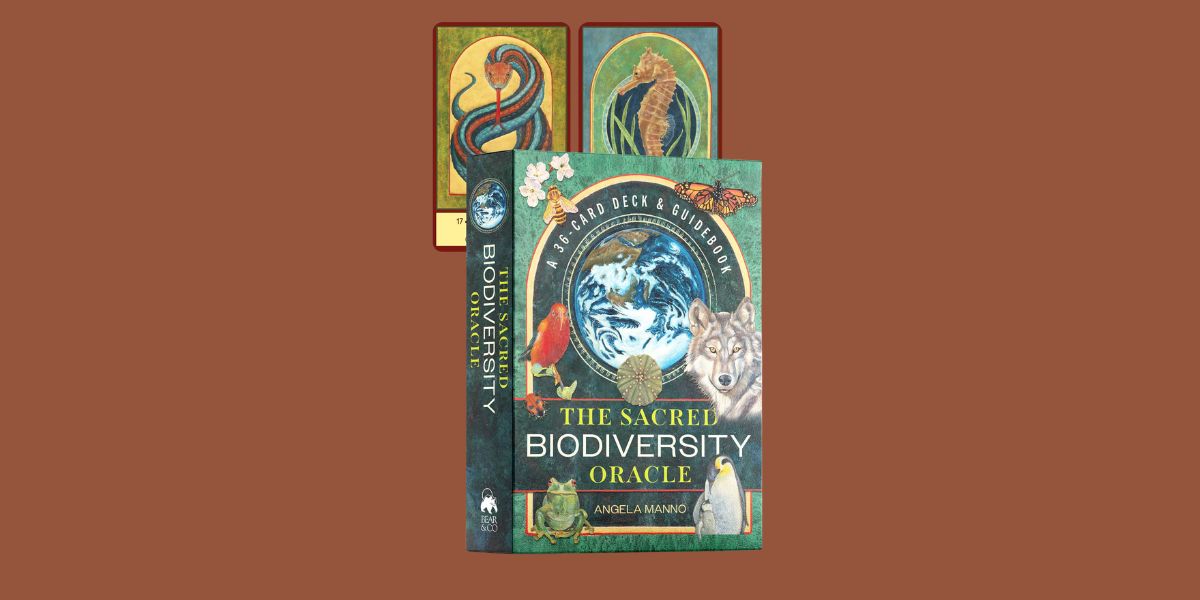
Manno’s artistic rendering of 36 full-color cards serve to honor threatened and endangered species with the aim of using her artwork to produce an emotional response that inspires readers to evaluate and hopefully transform their relationship to “the planet and all its life forms from one of exploitation to one of mutual enhancement and respectful coexistence.”2 The cards are huge ( 5.25 inches by 7.5 inches), which allows for them to be prominently displayed.
Within the guidebook, Manno details how she came to create this deck after studying the traditional Byzantine iconography style, in which divinity comes through contemplation of the image. She chose to use this style to frame each species in this deck as a sacred being worthy of reverence, not merely statistical information, in order to illuminate their value and special spirit. A key practice in this guidebook is visio divina (sacred seeing), which allows for the spiritual nature of reality to emerge from contemplation of the image. Manno writes:
“Anyone who fervently opens themselves up to the power of these images–both in Nature and in art–can rest in and be nourished by their wisdom and beauty.”3
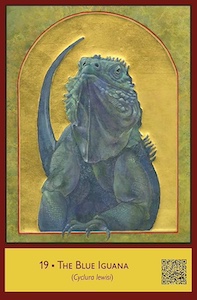
The artwork is gorgeous. Manno has painted each threatened or endangered species in a style inspired by sacred iconography, evoking reverence and stillness through tones are relatively simple yet illuminating. The clean backgrounds showcase the brilliant detailing of each species, clearly rendering and centering each one in a way that invites focus. Manno has given each species a quiet presence on the card that transforms them from overlooked or imperiled beings into holy ones worthy of contemplation, protection, and awe.
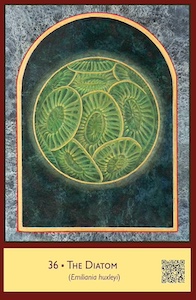
The exercises in the guidebook further assist readers with this process. For each card, Manno shares information about the species depicted (traits, habitat, role in the larger ecosystem, current plight), offers the opportunity to connect with the animal through visio divina, encourages stream of consciousness writing, and then shares a way for readers to take action on behalf of the species. There’s even a QR code in each entry, as well as on the card itself, in order to be immediately linked to a website of an organization working on conservation for the species.
The species are divided into six types: mammals, birds, fish, reptiles and amphibians, invertebrates, and plants. I appreciated how Manno spans the natural world when it comes to representing the threatened or endangered species. This highlights how each species, big and small, from the Gray Wolf to the Firefly, has a vital and important role to play within both the local and larger ecosystem.
As previously mentioned, there is no applicable spiritual guidance shared in the guidebook, which I think is important to note given the word “oracle” in the title. The Sacred Biodiversity Oracle is designed not for divination, but for contemplation, connection, and ecological awareness. The cards intend to foster insight, empathy, and ecological responsibility within the readers and are best used as a more educational and spiritual tool than predictive oracle. This made me reflect on how often we turn to other beings as spiritual allies, hoping their wisdom comes through to answer our questions in oracle decks, but it’s rare we are given the chance to assist them. This deck is unique in that regard, as the card pulls are not to provide insights related to your own personal journey, but rather an opportunity to use your agency to assist these species in need.
Almost all entries are exactly the same, with the main focus being performing the visio divina with the card and journaling to the question “Allow yourself to be enveloped by empathy for this living being. How does its plight impact your life?”4 Therefore, I think it’s important to brace yourself when working with this deck. It’s a delicate balance choosing to open to the animal’s sacred energy only to then be presented with wisdom that makes you feel a bit helpless. While the immediate vetted nonprofit groups accessible through the QR codes is very useful, it’s important to also take time to engage in self-care when doing this meaningful environmental work.
While many of us wish we could give limitlessly to help these species, there’s only so much time, energy, and financial resources we have available, making it a bit sad to think of all the animals that need assistance. This blue feeling for me only was amplified by the description of just how terribly the species are doing in the natural world. It was hard to cherish the beauty of the cards only to be hit with the stark reality of the situation, as described in the guidebook. Nevertheless, honoring these species and doing our part is the only way forward, even when the process brings up eco-grief.
I would most recommend this deck to those interested in a meditative or devotional practice, especially one focused on planetary healing and connection with nature. Individually, the cards are great for focusing on a species in need of care and attention, which one can then direct their healing and loving energies towards. Within a group, the cards are a wonderful focus for shared contemplation and discussion about threatened or endangered species and the key roles they play in ecology. There’s plenty of creative ways to work with the deck that certainly can inspire, raise awareness, and make a meaningful change on behalf of these species’ well-being.
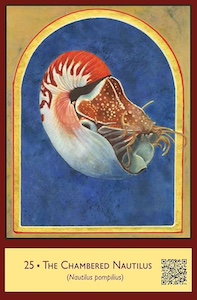
All in all, The Sacred Biodiversity Oracle is a thoughtful and contemplative deck that stands out for its ecological purpose and artistic depth. Manno’s background in icon painting infused with ecological philosophy gives the deck a ritualistic and reverent quality, making it more like a devotional tool than a standard oracle deck.
For those called to foster empathy for the natural world, this deck invites sacred contemplation and serves as a bridge between spiritual practice and environmental awareness. The deck beautifully emphasizes the interconnectedness between species and ecosystems, reminding us that no life exists in isolation. Through action-oriented reflection, including QR codes that connect directly to real-world conservation efforts, it transforms insight into tangible support for the planet.

Alanna Kali is an astrologer, numerologist, and pioneer spirit that loves to explore life through the lens of depth psychology. She has a passion for studying the humanities and social trends. Her academic work is centered upon reuniting body, mind, and spirit through eco-psychology. She loves reading, spending time in nature, and travel.