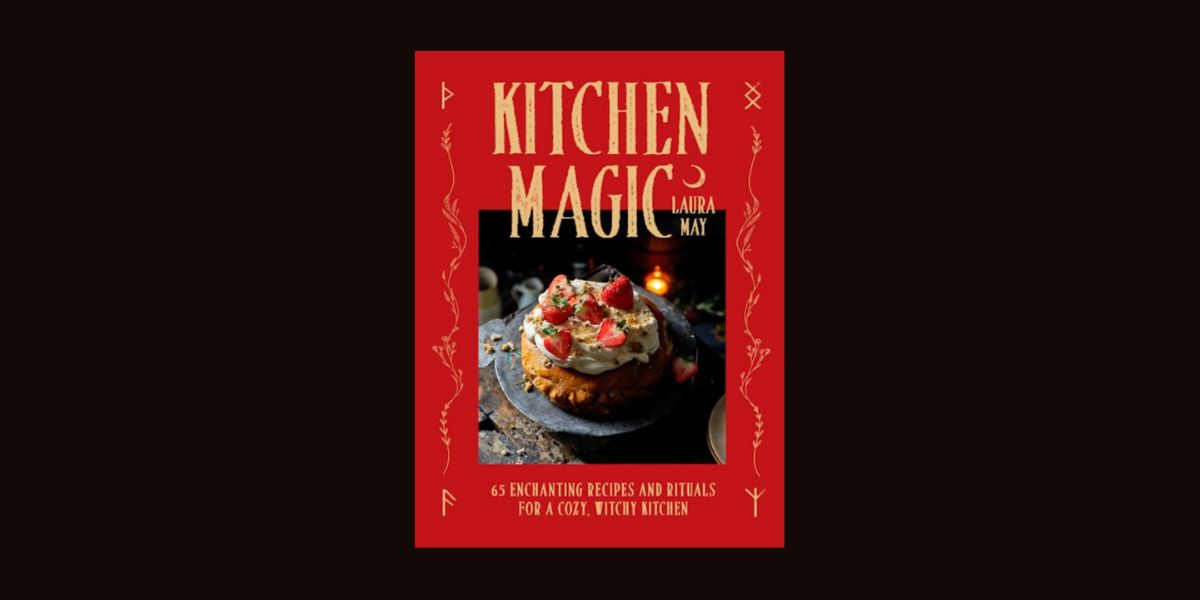
Ah, my kitchen witch heart is absolutely singing! Kitchen Magic: 65 Enchanting Recipes and Rituals for a Cozy, Witchy Kitchen by Laura May is such a wonderful addition to a cookbook library. Within these pages, May shows how each meal can become a spell, ritual, or act of sacred nourishment. Featuring delicious recipes and magical insights this is a wonderful cookbook for creating a warm, enchanted kitchen where food and magic come together.
As witches we love to share recipes, often including them in our grimoires, spellbooks, and even the community newsletter each month! But a hardcover cookbook filled with thematic pictures, culinary folklore, and delicious recipes takes on a life of its own. Flipping through the pages of Kitchen Magic, you can see the time devoted to infusing each page with reverence for the food we create, whether this be teaching readers about the magical correspondences of ingredients in the cupboard, blending herbs into a brew, or making pancakes for mindfulness.
May begins the cookbook by inviting readers into her world. In first-person style, she sets the stage of her daily life during the seasonal transition into autumn, living in a boat and baking her recipes in a stack stove, creating a cozy sense of intimacy as we glimpse her routine. We get to know May through her morning coffee ritual, spellwork, and tale of what drew her to the path of being a kitchen witch.
“The philosophy behind my recipes is to give you a sense of meaning and consideration to everyday cooking – even the smallest acts can impact the way we live and see the world. The rituals aid us in discovering what we really want out of life and align our daily consciousness in order to get it.”1
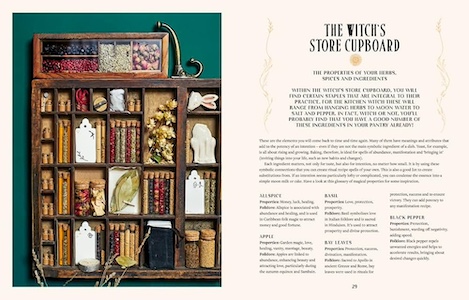
The introduction also covers topics like what it means to May to be a witch, symbols of the witch, core aspects of ritual (opening and closing a circle, moon phases, spoken word, sigils, etc.), foraging in nature, and a list of magical correspondence of the herbs and spices commonly used in kitchen witchery. Overall, this section is very grounding, preparing readers to move ahead and test out May’s recipes.
As for how the recipes are sectioned, May has divided the chapters into the following: “Folk Medicine”, “Botanical Bakes”, “Ceremonial Recipes”, “Menstrual Magic”, “Broomstick Brews”, and “Practical Magic”. There’s a good variety of recipes to make, ranging from coffee syrups and protection cake to pumpkin gnocchis and tahini blondies.
Each chapter is unique and May has made the content extremely engaging and interesting to read. In the chapter “Folk Medicine”, she gives a history of all the elixirs she shares. One that I found fascinating is Four Thieves Vinegar, “a tonic for protection”2, that is based on the legend of thieves “who used it to protect themselves against plague while they robbed the dead or dying” but was also “used as a disinfectant or immunity tonic.”3 May suggests readers now use it as a salad dressing, health tonic, or cleaning spray. I will definitely be making this one soon!
Then in “Botanical Bakes”, May “explores the folklore, histories, and personal stories” around seven of her favorite plants, focusing on the power and meaning of the ingredients specifically. “Menstraul Magic” teaches how to use food to nourish biological rhythms, where May offers insight into the four menstrual phases and a recipe to support each one.
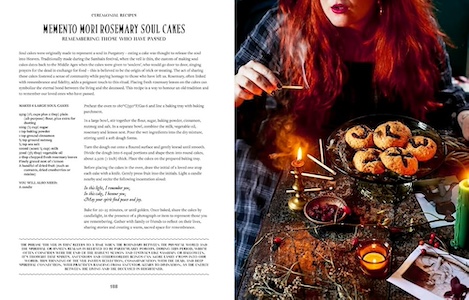
“Ceremonial Recipes” offers recipes for each turn in the Wheel of the Year, starting with Imbolc. She provides a bit of background about each sabbat and the recipes correspond to the magic best attuned to that season, such as Store Cupboard Soda Bread for spring cleansing during the equinox and Memento Mori Rosemary Soul Cakes for Samhain. Sometimes she includes rituals to do or words to say outloud, always explaining along the way the magical significance of the recipe as an introduction.
“Broomstick Brews” gets into the herbal liquid alchemy, which is something I am particularly excited to explore since I often forget this type of magic can be done in the kitchen, opting for cooking or baking instead. May teaches about witch bottles and how to carve your initials into fruit peels to bind the magic to you in her recipe for Witch Bottle Sweet Vermouth and offers a variety of coffee syrups to call in specific intentions for the day that can be amplified with candle magic too. She also offers variations of Moon Milk to manifest different goals ranging from attracting wealth to calming anxiety.
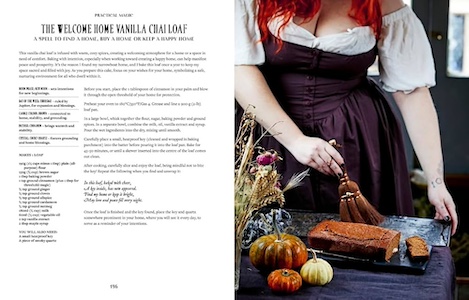
The final chapter, “Practical Magic”, is where the rituals get a bit more complex. May offers guidance on the moon phase, day of the week, candle color, incense, and crystal best suited for working the ritual. She shares incarnations and actions to do during the creation process, requiring a bit more of an energetic and time dedication in this magic making. All throughout, she offers tips and tidbits that add to one’s understanding of the spellwork.
Throughout the book, some of the recipes call for ingredients that I personally wouldn’t have on hand and would have to figure out how to acquire. For instance, Dandelion and Burdock Root Beer (I’ve never even heard of burdock yet I am learning so much from Kitchen Magic) calls for sarsaparilla root, burdock root, liquorice root, and dandelion root and petals, along with more common ingredients such as brown sugar, molasses, and cinnamon. This would definitely require a bit of planning to make, but I always feel like the hunt for the right ingredients in spellwork is part of the process.
While the recipes in Kitchen Magic do include quite a variety of ingredient, which at first makes the titles a bit intimidatingly fancy (Nettle Leaf Spanakopita Pie, Blueberry and Heartsease Cream Bread and Butter Pudding, Rose Hip Harissa Roasted Chickpeas), overall, a good portion of the recipes could easily be recreated by following May’s directions, whether you’re a novice or professional when it comes to the kitchen. As someone who thoroughly loves kitchen magic but is not a talented chef, May provides instructions that are detailed and simplified enough that even I’d have the confidence to follow along and see what I can create. Plus, venturing beyond my typical palette makes it feel even more ritualized and intentional for crafting these recipes.
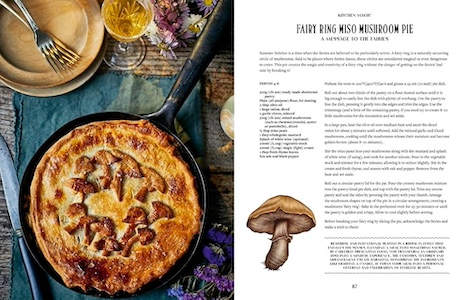
Beyond all the wonderful text, the photographs in the book are absolutely mouthwatering. Nearly every page has a decadent image of the finished culinary delight set against a dark background with beautifully set tables. Sometimes there’s candles to set mystical ambiance; other times it’s a snap shot of ingredients, utensils, and flowers. Occasionally, we see May in action stirring or adding final touches. The texture of the food and the beauty of the presentation is just incredible. I could flip through this book over and over again just for the visual feast it provides!
The book is brought to conclusion with parting words from May, a list of ingredient suppliers, further reading, and a handy index. I love her sentiment when she writes:
“Remember, magic is not something far away or difficult to grasp. It lives in the ordinary moments – in the quiet stirrings of a wooden spoon, the fragrant herbs you sprinkle on a dish, and the warmth of a home-cooked meal shared with loved ones. The magic is always there, waiting for you to notice, to invite it in, and to make it a part of your life.”4
Overall, Kitchen Magic is by far one of the most impressive magic cookbooks I’ve come across. The way May weaves together ritual, folklore, personal insights, and delicious culinary crafts makes it a must-have for those who love to infuse intentions into their food. More than just a recipe collection, this book celebrates the kitchen as a sacred space where nourishment, magic, and ritual seamlessly come together to create meaningful revelation and transformation.
Whether a reader seeks to gain a stronger relationship with spice and herbs or nurture themselves through the seasons, May offers edible ways to support one’s intentions. May has shared her recipes with readers to be an opportunity to manifest our desires, foster connection, and honor nature’s cycles. Her philosophy towards culinary witchcraft is a heartwarming reminder that every meal can be more than just food—it can be a spell, a celebration, and a devotional act of everyday magic.
Alanna Kali is an astrologer, numerologist, and pioneer spirit that loves to explore life through the lens of depth psychology. She has a passion for studying the humanities and social trends. Her academic work is centered upon reuniting body, mind, and spirit through eco-psychology. She loves reading, spending time in nature, and travel.
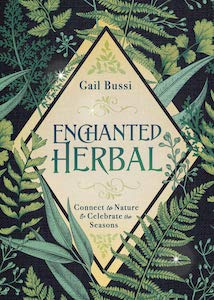
Living seasonally is a very important part of my spiritual practice. The best ways to connect with the seasons that I’ve learned over the years are practices that keep me grounded, such as cooking, journaling, and self-care. Though I’ve been living this lifestyle for quite some time, I have been delightfully surprised by all the inspiration offered by Gail Bussi in Enchanted Herbal: Connect to Nature & Celebrate the Seasons. This book is handy, practical, and filled with wisdom for all the seasons. Reading it just through Winter thus far, I’ve already felt a shift that deepened my mind-body-spirit connection to the season. I’ve also had lots of fun trying out new recipes and learning about seasonal herbs.
Immediately I resonated with Bussi’s words, “Each season brings its own gifts, lessons, opportunities, and sometimes challenges — but I believe nature also offers us the remedy for these challenges if we are open to connecting with her each and every day of the year.”3 By participating in the energy of the seasons, adjusting our routines accordingly, there is wisdom to be gained from the natural cycles of the Earth. Bussi’s writing nurtures the reader and enhances feelings of being calm and centered throughout the seasons. With this book in hand, I feel ready for all the shifts in nature through the year.
The book starts with Spring and moves along in seasonal order to end with Winter. Every season is divided into sections: Heart Notes, Create, Nurture, Grow, and Taste. The way this compendium of seasonal knowledge is organized makes it easy to find just what you’re looking for, whether it be general information about the time of the year, a scrumptious recipe, or an idea for a creative project. Enchanted Herbal has it all — simple practices to connect with the energy of the season, gardening tips, homemade body products, and a wide array of tasty delights.
What I like most about Enchanted Herbal is that it is a very hands-on book. Reading it makes one want to partake in the seasonal energy through the wide variety of projects, creative suggestions, and cooking ideas that Bussi offers. My initiative was ignited, but in the most soothing and centered way, as I am reading it during winter which is the “do nothing” season. The promptings to bake, cook, or partake in self-care felt very intuitive. I would feel called to try this recipe, or steep that tea, and the experience of reading through the book over the course of a few weeks yielded a Juniper Cleansing Mist, Eucalyptus and Jasmine Foot Soak, and dinner of Stir-Fry Brussel Sprouts with Bacon, Pecans, and Garlic (yum!).
Even though I only partook in Winter activities, I did read through the other seasons and got very excited for all the things I wanted to try out. My mouth was joyfully anticipating some of the recipes in the book, such as Chocolate Mint Pots, Fireside Mushroom Soup, Pumpkin Fritters with Sage, and Spicy Coconut Chicken. It’s worth noting that Bussi previously ran a catering company and has published a cookbook, so she truly knows her stuff when it comes to food! Furthermore, there are even recipes for enticing beverages – to name a few: Spring Morning Tea, Coconut Tumeric Latte, and Dandelion Wine.
Some other ideas inspired by Enchanted Herbal are planting an astrological garden, creating a nature mandala, and practicing the art of foraging. I’m very much looking forward to Spring now that I have this book to guide me into new ways to attune to nature and celebrate the season. I am already intending to create the Spring Morning Toner, which uses all the natural ingredients to refresh the skin, and Lemon Verbena Massage Oil that can be used for the skin or dropped into a bath. I’m pacing myself, but it’s tempting to not hold off on all the Summer recipes (Tri-Colore Tomato Salad!) and self-care DIY projects (Peaceful Nights Pillow Mist, After-Sun Soothing Tub) I’m eager to try out!
Bussi has filled each season with so many ways to engage with the herbs that the reader has room to pick and choose as they feel called, coming back over the course of a long while to perhaps finally try it all. This is definitely a book that you will reference back to many times through the year, as the recipes are worth repeating and the instructions for projects like creating essential oils, foot scrubs, and aloe vera gel will always come in handy. It is a wonderful book to begin your herbal journey of healing and self-nurturance.
All elements of my being felt supported when reading Enchanted Herbal, as it truly teaches how to tend to one’s self with love and care to become more aligned with the natural energy of the year. I highly recommend this book to anyone who enjoys cooking, DIY projects, or gardening that wants to further deepen their connection to the energy of the seasons. There’s magic in these everyday activities, and Bussi teaches the reader how to find joy throughout the year by living in harmony with the seasons.
Alanna Kali is an astrologer, numerologist, and pioneer spirit that loves to explore life through the lens of depth psychology. She has a passion for studying the humanities and social trends. Her academic work is centered upon reuniting body, mind, and spirit through eco-psychology. She loves reading, spending time in nature, and travel.