✨ A Gathering Place for Magical Readers and Writers ✨

Tag Archives: paranormal

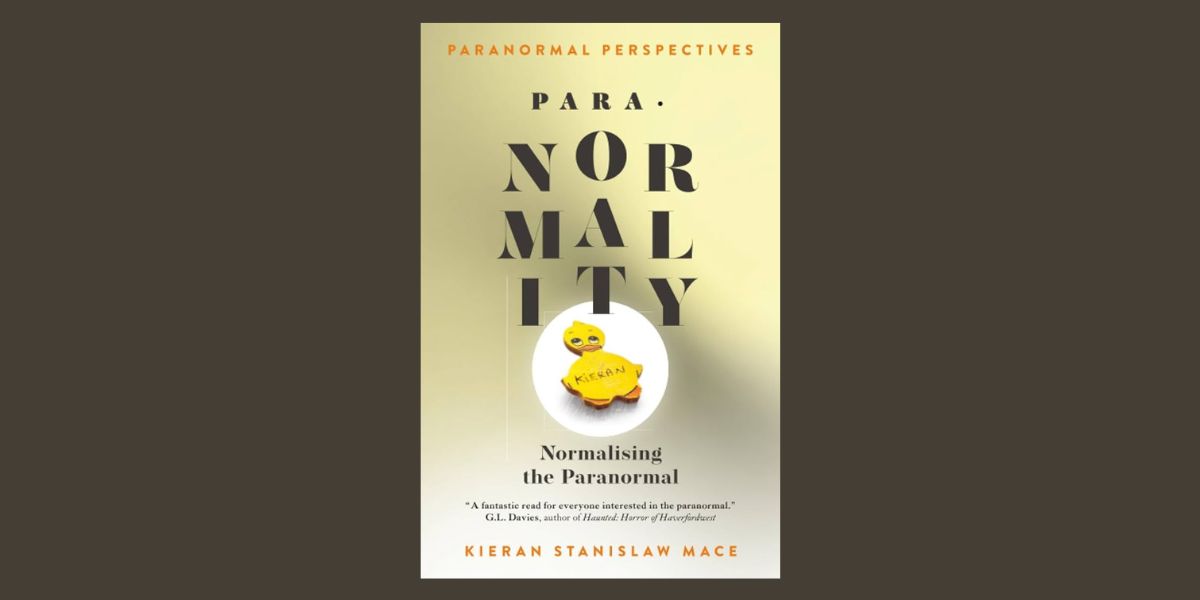
Paranormal Perspectives: PARA∙NORMALITY, by Kieran Stanislaw Mace

Paranormal Perspectives: PARA∙NORMALITY: Normalising the Paranormal, by Kieran Stanislaw Mace
6th Books, 1917704119, 128 pages, March 2026

It’s hard enough to figure out how to “live” accordingly to secure our basic human needs, but try throwing in paranormal encounters too that leave you questioning the nature of reality and just what the heck is going on! This is the predicament Kieran Stanislaw Mace shares Paranormal Perspectives: PARA∙NORMALITY: Normalising the Paranormal. Written with honesty and emotional sincerity, Mace shares his life journey and all paranormal moments that finally lead him to embrace the veiled reality existing concurrent to our own.

This book sits somewhere between a spiritual autobiography, paranormal testimony, and exploration of consciousness. Mace writes candidly about his life, not only the pivotable moments but the mundane day to day that blend together his on-going paranormal experiences with ordinary life, showing they are not two different paths, but a unified life journey. From his childhood trauma, including a near-death experience after a hit-and-run accident to the bullying, grief, and years of suppressing experiences that made him feel alienated, he brings forth a dialogue about the paranormal with this book.

Just how do you live with such extraordinary experiences happening when you are not sure how to define the events or who to turn to for advice? Unsurprisingly, you struggle quite a bit! And this is what makes this memoir quite captivating. This is NOT a book about a famed professional who “just knew” from the get-go how to converse with the entities on the other side of the veil; this is the story of a person thrown into the turbulent flow of life, a near-death-experience in childhood, earning an education, holding down a job to pay bills, finding love, having children, and still navigating the paranormal circumstances that have plagued him since childhood.

Despite Mace experiencing visions, synchronicities, hauntings, out-of-body experience, intuitive knowings, and encounters with spiritual entities, he had to fit into accepted reality. With this book, he works to break down the stigma of the paranormal and showcase how these experiences could truly happen to anyone, even an ordinary guy like himself. Mace doesn’t set out to prove anything, he just is sharing his own perspective and opening up a door for readers to reconsider the boundaries of reality.

Here’s an excerpt that I think characterizes Mace’s internal dialogue, intention for the book, and experience quite well:

“My observation supports the idea that negative energy affects the activity around us, just like during my grumpy teenage years, the sadness of losing my cat, or the anger of a miseducated manager. Maybe if I could switch my energies to emit positivity, perhaps that could affect the world in a different way. After all, every particle in the universe vibrates, bound by an energy that unifies to hold this universe in place. If we can change the frequency we emit, what happens? ‘Lie down, Kieran, you are not meant to question these things.’ That is what my programming said. When people begin to question the world that is laid out for them, they are often labelled as weird and people choose to move to sit at a different lunch table. Why is it so scary that people are forced to look down?”1

By presenting all his shortcomings and obstacles along the way, Mace’s intimate, earnest, emotional vulnerability becomes fodder for spiritual exploration of others. He is consistently reflective, offering possibilities rather than hard facts, inviting dialogue rather than argument. And for this, Mace brings to light an important aspect of paranormal experience: many people privately experience phenomena they fear discussing due to ridicule or social pressure. In having the courage to say, “I went through this”, “At times my mental health was not good.”, “I was lost and confused.”, others gain the ability to be more forthcoming about their own journey, a reminder that they are not alone.

Overall, for readers interested in psychic phenomena, hauntings, alter states, spiritual entities, and more, Paranormal Perspectives: PARA∙NORMALITY will be resonant. Mace’s memoir-driven spiritual writing and paranormal narratives rooted in personal transformation is an interesting read. Mace being so forthcoming about his experience makes for a great addition to the Paranormal Perspectives series to further provide food for thought to readers with an interest in this subject.

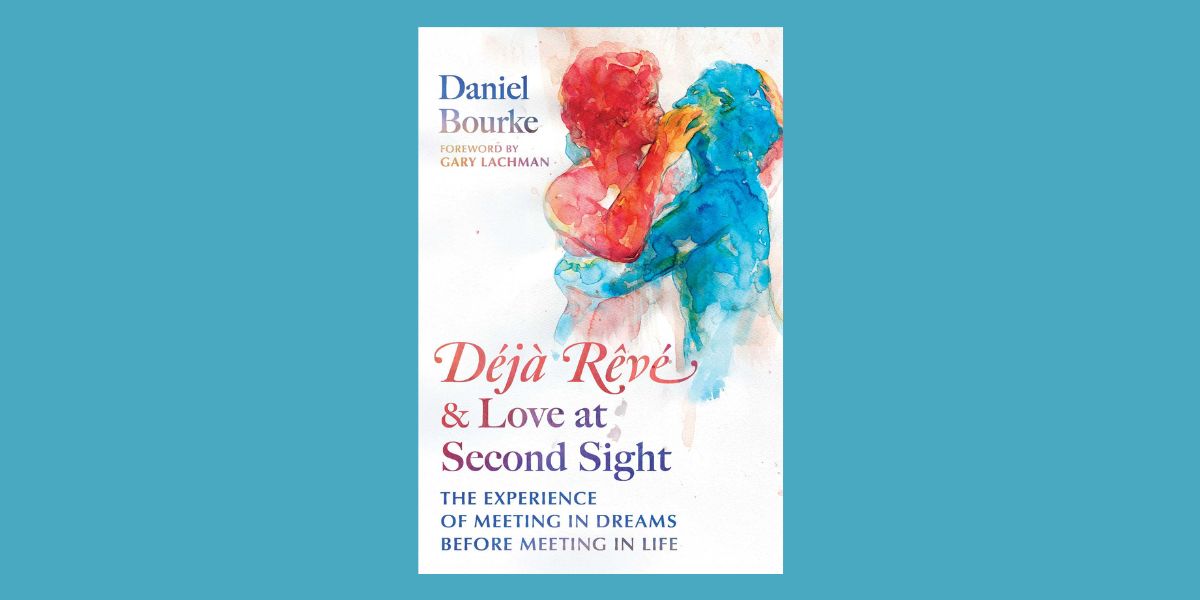
Déjà Rêvé and Love at Second Sight, by Daniel Bourke

Déjà Rêvé and Love at Second Sight: The Experience of Meeting in Dreams before Meeting in Life, by Daniel Bourke
Destiny Books, 979-8888502716, 320 pages, January 2026

For those who are dream lovers, Déjà Rêvé and Love at Second Sight by Daniel Bourke is a fascinating compendium of unique dream experiences. This book explores the phenomenon of déjà rêvé (“already dreamed”), the experience of encountering something in waking life that you feel you’ve specifically dreamed before, not just vaguely recognized. The vast amount of documentation surrounding this experience makes it a worthwhile topic of exploration, especially for those intrigued by the idea of precognition.

“Is it possible to dream or otherwise mysteriously envision a future spouse, acquaintance, helper, healer, or even a shaman or saint before meeting them in life? To literally see the face, hear the voice, or sense the presence of another whom you are yet to meet and are nevertheless destined to do so? If our only witnesses were the voluminous records of legend, lyric, and lore on all corners of the globe then answer would be a resounding yes.”2

Jam-packed with hundreds of instances of déjà rêvé, Bourke has organized the chapters of this book by general themes. One of the first types of déjà rêvé covered focuses on healers, saints, sufis, and sheiks. The general focus of these stories is when people had spiritually significant dreams and then soon met the person in the dreams for healing or spiritual growth. Another chapter focuses on how dream visions aid people in making real life decisions. For instance, according to The Schism in England, translated by Pedro Calderon de la Barca, Henry VIII had a dream of Anne Boleyn before he ever met her.

Speaking of fated romances, there’s plenty of stories of dreaming of lovers before meeting them in real life. One of my favorite stories was from the biography of a 107-year-old man from Arkansas who dreamed about heading to a terminal and seeing a beautiful woman standing there who said to him, “You come to carry me home, James? I’m your wife.”3 and then he met the same woman in real life at a New Year’s Eve party later on.

Other chapters do focus on folklore surrounding divination and magic in regard to this dream phenomena, as well as the religious impact déjà rêvé had on some people after their experience. Bourke shares tidbits such as how among the Ilocano (a Filipino ethnolinguistic group), “a man sleeps with a dipper of water near his bed in order to see the reflection of his future spouse, needing to wake at exactly twelve o’clock.”4

Then there’s also a story about a man whose youth pastor encouraged him to pray to God for the person he would marry in the future. He then received a vision of the cross pendant his future wife would be wearing. Lo and behold, he met her when he went to visit a new church and the secretary was wearing the pendant. Wouldn’t you know it, the cross pendant had been a gift from her grandmother, who had told her it had special meaning related to her future husband, who would be drawn to it. Now, it might be easy to brush off these tales as romantic, exaggerated love stories that signify a relationship has a divine blessing, but the sheer number of tales Bourke shares really does expand the reader’s perception of just how common déjà rêvé has been throughout time.

One of my favorite chapters in the book is “Picture Perfect”, which had a sections like “Media and Murder in Motion” and “Death, Ghosts, and Near Death”. Can’t help it—I love thrillers! But beyond the typical dreaming of a partner or spiritual aid, these stories had practical applications, such as solving a crime or reconnecting loved ones with someone who had departed.

What makes the book stand out is its scope: it gathers hundreds of accounts from folklore, historical texts, memoirs, and modern reports, aiming to create one of the first comprehensive collections of this phenomenon. While modern society might have an unhealthy dose of skepticism, many cultures historically have accepted dreams as predictive or spiritual messages. Bourke pulls from an unusually wide range of sources (saints, shamans, historical anecdotes, and contemporary experiences) showing that dream-foretelling appears across cultures and eras. This gives the book a mythic, almost archetypal feeling, as though you’re reading a global folklore archive rather than a single-author thesis.

This said, I found reading it to be overwhelming at times. It took me a few months to make my way though, and it was mostly because I kept getting mentally overloaded. While I was drawn to Déjà Rêvé and Love at Second Sight because I wanted to be immersed in the liminal space of dreams and discover something about their ethereal nature, the content is more along the lines of reporting on this dream experience rather than providing discussion on its significance or the meaning of reality understood through the exploration of this paranormal phenomena.

I would often get a bit of whiplash with how it jumped from one story to the next, quickly spanning time periods and cultures. There’s cohesion, but it’s definitely a book that keeps you in your mind, bombarded with recorded accounts rather than tapping into the spiritual dimension. I actually found this amusing, as dream books usually make me feel a bit spacey or ungrounded, while this one made it feel too stuck in reality with names, dates, and recorded experiences spanning centuries and the whole world.

Plus, the unfamiliarity with many of the cultures or historical time periods had me grappling just to wrap my head around the context of the story, ultimately preventing me from fully engaging with the content. I am all for cross-cultural examination, but one paragraph being about a Burmese writer in the early 1990s quickly followed by another featuring a tale of an Welsh American explorer in central Africa in the 1800s, which within the same paragraph talks about another American explorer living with the Ojibwa Indians of the Great Lakes between 1763 and 1764, you can see how my head could get spinning pretty quickly. Like where am I located in time and space?! I guess in some ways, I did get that untethered dream experience, but not how I was hoping!

Overall, for readers interested in dreamwork, synchronicity, psychic or intuitive phenomena, this comprehensive text will feel quite validating, highlighting just how common this phenomena of déjà rêvé is worldwide. I would definitely recommend Déjà Rêvé and Love at Second Sight for those who enjoy gathering stories, as Bourke collects and presents rather than rigorously interrogates. The documentation of the mystical experience of already dreamed gives backing to further discussion about the nature of reality, purpose of dreams, and the way people are connected. This book is a great launching pad for further study of a very intriguing topic!

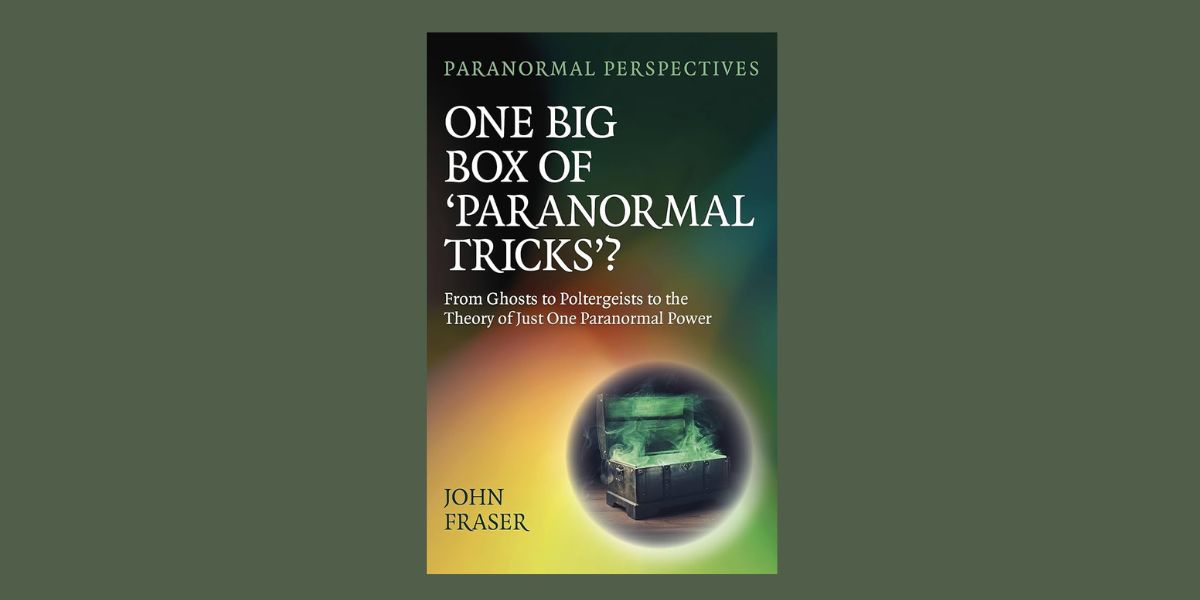
Paranormal Perspectives: One Big Box of ‘Paranormal Tricks’?, by John Fraser

Paranormal Perspectives: One Big Box of ‘Paranormal Tricks’?: From Ghosts to Poltergeists to the Theory of Just One Paranormal Power, by John Fraser
6th Books, 180341524X, 152 pages, November 2024

Paranormal Perspectives: One Big Box of ‘Paranormal Tricks’? by John Fraser offers a fascinating exploration into the enigmatic world of the supernatural. Fraser, a seasoned investigator and author in the field of paranormal phenomena, presents a compelling narrative that both challenges and intrigues readers.

The book begins with Fraser’s own journey into the paranormal realm, covering his adolescence inquiries after watching a show on ghosts to his questioning, yet formative years at university. He discusses one of his first investigations cover at Sandwood Cottage, which is cover more fully covered in his book Ghost Hunting: A Survivor’s Guide (2010). This was an interesting section to read because it made me reflect on my own childhood, teen years, and 20s to think about the events that called me to paranormal questioning. Reading Fraser’s experience is like talking with a friend, reminiscing on the awakenings that comes with budding curiosity and exploration.

Next, Fraser moves onto sharing the prominent influences on his quest to explore the supernatural. From his professor Richard Swinburne, who introduced him to Kuhn and inspired him to “discard a model of science as one that searches for absolute truth”5, to Nicolae Paduraru who created the Transylvanian Society of Dracula and provided tours for guests, the cast of characters that have been impact in Fraser’s life have fascinating personal and professional backgrounds. Since I’m in a big believer that we’re shaped by the people in our lives, I enjoyed reading about those who have influenced Fraser’s views and experiences.

The rest of the book series of specific lines of questionings and case studies, each meticulously detailed and analyzed. Fraser’s approach is both scientific and philosophical, providing readers with a balanced perspective that respects both skepticism and belief. His ability to weave personal anecdotes with historical context adds depth to the narrative, making it accessible and engaging for both seasoned paranormal enthusiasts and newcomers alike. The stories are all engaging, as Fraser talks candidly about his thought process during his own investigations, as well as his perspective on other’s paranormal work.

Here’s a sample of some very fascinating questions that Fraser explores:

Can the same paranormal power be expressed in different ways?

What makes ghost hunting a science if the haunted locations are often myths or folklore?

Can we haunt ourselves?

Is science too invested intellectually to consider its not seeing the whole picture?

What activates one’s paranormal powers?

Are UFOs considered paranormal?

Fraser encourages readers to question and scrutinize each phenomenon, fostering a sense of inquiry rather than blind acceptance. Above all, he encourages critical thinking in regard to paranormal phenomena, focusing on topics that really get the gears turning in one’s mind. His writing style is clear and articulate, making complex concepts easy to understand without oversimplifying them, opening doorways for readers of all supernatural-belief backgrounds to come together to ponder these overarching questions.

Overall, Paranormal Perspectives: One Big Box of ‘Paranormal Tricks’? is a thought-provoking read that invites readers to explore the mysteries of the unknown with an open mind. Whether you’re a skeptic, a believer, or somewhere in between, Fraser’s work will undoubtedly leave you pondering the nature of reality and the possibilities that lie beyond our current understanding.