✨ A Gathering Place for Magical Readers and Writers ✨

Tag Archives: astrology

Soul Journey through the Tarot, by John Sandbach

Soul Journey through the Tarot: Key to a Complete Spiritual Practice, by John Sandbach
Destiny Books, 1644117096, 384 pages, November 2023

I’ve been studying tarot for almost 27 years, but these magical cards contain so much wisdom that there is always something new to learn, and I often feel like I’ve barely scratched the surface. Most tarot books on the market tend to be geared towards beginners, rehashing the same sets of keywords and interpretations, so I get excited when I find a text that delves deeper into the esoteric teachings of the cards.

In Soul Journey through the Tarot: Key to a Complete Spiritual Practice, author John Sandbach shares his own unique magical system, co-created with his spirit guides and inspired by over 50 years of studying tarot. Sandbach first channeled these oracles in 1976, and wrote this updated edition with the intention that it will be used as “a tool for vibrational healing.”1

He has named the Major Arcana cards depicted in this book the Azoth Deck, and the illustrations were created by South Korean artist Daehee Son.

“Azoth,” Sandbach says, “refers to the spirit and energy of the planet Mercury, who in Egypt was the god Thoth, who was the inventor of the alphabet—the tarot being an alphabet of spiritual forces.”2

Sandbach has changed some of the traditional names of the Major Arcana. For example, as a departure from the final reckoning of Christianity, Sandbach calls the Judgment card “The Awakening,” a title that he feels more accurately captures the core meaning of Arcanum XX. The Devil, Arcanum XV, has been renamed “The Musician,” to avoid the negative connotations of the original title and shift the focus of the card to the inner harmony or discord of the seeker.

The book’s cover claims that this text integrates “numerology, astrology, Kabbalah, and the contemplative life.”3 I wanted to read this book to get a better grasp of the Kabbalistic Tree of Life and Hebrew letters in relation to tarot, as well as deepen my understanding of the astrological tarot correspondences. However, I was surprised to find that many of Sandbach’s astrological and elemental associations are completely different from the Golden Dawn attributions I currently use, which I learned from The Complete Golden Dawn System of Magic (1984) by Israel Regardie (1907-1985).

Sandbach associates The High Priestess, titled “The Guardian of the Gate (Veiled Isis)”, with Virgo instead of the Moon; The Hermit, titled “The Seeker (The Sage)”, with Aquarius instead of Virgo; The Star, “The Light”, with Gemini instead of Aquarius; and so on.4 The Suit of Coins is assigned the element of Air instead of Earth, and Swords are Earth instead of Air.5 Even though most of these associations don’t resonate with me, I decided to keep an open mind and shift my perspective to include them, at least for the duration of time it took me to read this book.

Sandbach justifies the association of Coins with Air by explaining that exchanging currency for goods is an abstract concept created by the mind, and “the air element resonates with concepts and systems formed through the mental activity of humans.”6 Swords, on the other hand, are practical instruments made of metal, which penetrate the density of matter. These elemental associations have Vedic origins, and relate to the Hindu tattwa system. He borrowed his elemental and astrological associations from The Sacred Tarot by astrologer and occultist C.C. Zain (1882-1951), a work that was a major influence on his approach to tarot.7 Sandbach acknowledges that these are less popular tarot associations, and advises the reader to use whatever correspondences make the most sense to them, because all systems are valid.

“Ultimately,” he says, “we must realize that the four physical elements are not four distinctly different things, but the same thing in different states.”8

This is an excellent point, and it made me more receptive to his alternative elemental associations. 

While I had a hard time connecting with many of these correspondences, the Virgo association with The High Priestess, titled “The Guardian of the Gate (Veiled Isis)” was compelling to me, particularly in how it influenced Sandbach’s interpretation of the card. Virgo rules the digestive system, and the message of the High Priestess is to “be watchful of what you ‘eat,’ whether it be food, thoughts, emotions, concepts, or vibrations.”9 I personally associate The High Priestess with Persephone, whose fast was broken by pomegranate seeds while she was in the Underworld, so the digestion message really spoke to me. The Moon, which is usually the planetary association for this card, is considered to be the ruler of Virgo in esoteric astrology, and knowing this reinforces the validity of Virgo as an alternative astrological association for the High Priestess.

The most unique tarot associations Sandbach gives are spirit names in the intergalactic Language of Space. “This universal constructed language, known as aUI,” Sandbach says, “was originally received from extraterrestrial beings by psychologist and linguist Dr. John Weilgart (1913-1981) in the early 1950s.”10 aUI (pronounced “ah-OO-ee”) is a sound-based language, and the aliens who transmitted it to Dr. Weilgart told him that it had been spoken by Adam and Eve in the Garden of Eden.11

Sandbach gives a spirit name in aUI for each major arcana card and supplies the correct pronunciations for the reader. For example, the spirit name for the High Priestess (Veiled Isis) is ytlUkU (pronounced “yit-LOO-koo”).12 Sandbach says these spirit names were channeled by him and belong to entities associated with the cards.

“The letters of aUI and their sounds can be used for contemplation and to make up your own magical words,” Sandbach says.13

What a fascinating concept! Even if a reader doesn’t agree with Sandbach’s tarot associations, the chapter on the Language of Space is intriguing.

I draw a daily tarot card for myself almost every morning, and I decided to apply Sandbach’s interpretations while reading his book. One of the cards I drew was Strength from The Bones Arcana.

Sandbach calls Strength “Arcanum XI: The Maiden (The Enchantress)” and associates her with the planet Neptune. I love the title “The Enchantress,” which brings to mind the Greek witch goddess Circe, daughter of the sun god Helios, who was accompanied by lions in the Odyssey and transformed Odysseus’s crew into pigs. I tend to prefer numbering this card 8 instead of 11 because I associate it with Leo, and the eighth month of August. Sandbach’s Neptune association aligns with the belief of some modern astrologers that Neptune is exalted in Leo.

Sandbach says of “The Enchantress” that “she has gained ascendancy over one of nature’s most powerful creatures, and she has accomplished this through the actualization of her psychic power, as well as through her love.”14 Sandbach’s description of Strength as “the arcanum of psychic power,”15 reminded me again of Witch Queen Circe. In the Odyssey, she was a loner who lived on the uncharted island of Aeaea. She was a master of illusion magic, involving shapeshifting and crafting potions, and she revealed the bestial natures of those who invaded her privacy by transforming them into animals.

All of these skills have a very Neptunian quality to them. Neptune is the hypnotic and bewitching planet of dreams, fantasies, glamor, illusions, mysticism, and drugs (or potions, in Circe’s case). Circe was the daughter of the sun god Helios, and Sandbach says the Sun is the root ruler of this card, while Neptune is the “therapeutic agent.”16 After exploring the Circe connection I made to the Strength card, I appreciate Sandbach’s Neptune association much more. 

Sandbach’s system is a radical departure from what most tarot students are probably familiar with, and this reminds me of the differences between tropical (Western) astrology and sidereal (Vedic) astrology. Western astrology is more popular, but both systems are equally valid. Tarot readers influenced by occultist C.C. Zain will likely resonate with Sandbach’s system, while those who have memorized the Golden Dawn’s tarot associations may find these correspondences a bit more difficult to integrate.

Sandbach claims that the system he uses, which is modeled after Zain’s work, “is a therapeutic or healing system,” while the more common associations, which he says are based on the Kabbalistic text titled the Sepher Yetzirah (the “Book of Formation,” or  the “Book of Creation”), encompass “the root, or actual system.”17 Approaching his associations as a complementary healing system may help readers blend Sandbach’s method with the one they currently use.

Initially I was resistant to the teachings in this book because I was hoping to expand my understanding of the Golden Dawn associations, not learn a completely new system. However, being receptive to correspondences I didn’t agree with and exploring them with open-minded curiosity helped me glean new insights about the cards. I think any experienced tarot reader will benefit from questioning and reevaluating the associations they have memorized by being open to alternative ones or intuitively assigning their own. After all, when used as a tool for spiritual growth, tarot expands consciousness and opens our minds to new possibilities, so the archetypal images have infinite layers of interpretation. In this light, Soul Journey through the Tarot can help seasoned readers rediscover tarot and tap into new ways of relating to the cards.

Healing Pluto Problems, by Donna Cunningham

Healing Pluto Problems: An Astrological Guide (Weiser Classics Series), by Donna Cunningham
Weiser Books, 1578638151, 256 pages, December 2023

Ever since Pluto was first discovered in 1930, our perception of this celestial body has been growing and evolving. While Pluto was initially recognized as the ninth planet in our solar system, it was demoted to dwarf planet in 2006, and a lot of people who grew up knowing Pluto as a planet are still bitter about this demotion (myself included!). Despite astronomers minimizing its significance, modern astrologers acknowledge the Underworld power of Pluto by assigning it as the modern ruler of Scorpio and the Eighth House.

Native Scorpio Suns pride themselves on being Plutonians, and they can be quite possessive of that identity (all Scorpios believe they were born under the best sign in the zodiac!), but they don’t own Pluto. Everyone has Pluto somewhere in their natal chart, and significant Pluto transits can have profound and lasting effects on our lives.

In Healing Pluto Problems: An Astrological Guide, astrologer Donna Cunningham (1942-2017) explores the immense impact Pluto has on the soul’s evolution. Originally published in 1986, this Weiser Classics edition includes a foreword written by astrologer Lisa Stardust. This book has been on my wish list for a while now, and I was thrilled to have the opportunity to review it.

Cunningham defines a Pluto person as anyone who has Scorpio placements in their natal chart or a prominent Pluto connected to their Sun, Moon, Ascendant, or Midheaven.18 According to her definition, I’m a Plutonian, despite my Gemini Rising and Gemini stellium (Sun, Moon, and Venus in Gemini), because my natal Mars and Saturn are cozied up together in my Scorpio Sixth House. I was very close to having Pluto in Scorpio as well, but right before I was born, Pluto backpedaled into Libra due to retrograde motion, so I’m a member of the Pluto in Libra generation.

In Healing Pluto Problems, Cunningham addresses a wide range of taboo emotions and traumatic experiences Plutonians may experience with compassion and sensitivity, such as grief, resentment, alcoholism, domestic violence, incest, abuse, and suicidal thoughts. She gives guidance on how Plutonians can process the intense and complex emotions that arise from their life challenges, and she also coaches professional astrologers on how to counsel the Plutonian people who confide in them.

“One reason Plutonians keep their secrets is that so often the people they go to for help wind up making them feel worse—more ashamed, more angry, and more betrayed,”19 Cunningham says.

Being forced to keep their taboo emotions secret in order to avoid negative reactions from others often makes Plutonians feel isolated and alone, as if they are “from another planet.”20 I’ve observed this as spiritual bypassing in religious and New Age communities, in which people are often shamed for feeling angry or resentful about past victimization, and chastised for not being more forgiving of their abusers. Talking about Plutonian emotions can be a healthy way to release the pressure of them, but it can be difficult to find safe spaces with trustworthy people to confide in. For example, Plutonians who have suicidal thoughts must keep quiet about them when talking to a therapist, even if they have no intention of acting upon them, because that therapist may perceive the Plutonian as a danger to themselves and feel legally obligated to have them committed, which would be a traumatizing experience that would compound those negative feelings with more layers of shame and betrayal. 

However, Cunningham points out that there are potential benefits to Plutonian solitude. “Isolation may be a condition which some require in order to develop their abilities to the fullest or to achieve an agreed-upon life purpose,” Cunningham says. “It may be necessary to focus on some singular activity, rather than being immersed in the daily needs of family or other relationships.”21 Isolation can also be therapeutic, especially when one is processing grief or trauma.

“When we do not give ourselves time to regenerate and to process new stages of life,” Cunningham says, “resentment and grief can build up to toxic levels.”22 

Plutonian transits can generate healing crises, during which the Pluto problems seem to intensify, as if resisting one’s efforts to heal them. Repressed emotions are at the core of all Pluto issues, and they will flare up, demanding recognition. “The feelings don’t get worse,” Cunningham says, “you are just more aware of them and of the thought patterns behind them. Heightened awareness is part of the process.”23 The cathartic release of repressed emotions is like an acne breakout after a skin treatment. It seems like things are getting worse because all the dirt and grime that was clogging the pores is coming to the surface, but it’s all a necessary part of the purging and cleansing process. 

Cunningham offers healing methods to assist the process, such as affirmations, chants, flower essences, chakra cleansing visualizations, and color therapy. In the section on healing with color, I was fascinated to learn that purple, my favorite color, assists in “releasing and processing old resentments,”24 and that purple’s popularity increased when Pluto entered Scorpio. For almost a decade, I have preferred purple sheets on my bed, so perhaps my gravitation towards this color has been an unconscious impulse to help myself heal with the higher vibrational energies of purple while I sleep.

Cunningham supplies sample charts of a few famous Plutonians, including Amelia Earhart, Marie Curie, and Sigmund Freud. Building upon her examples, I thought I would explore the chart of a prominent celebrity whose Plutonian struggles have attracted a lot of media attention. I read pop star Britney Spears’s memoir The Woman in Me (2023) alongside Healing Pluto Problems, which is quite fitting because Britney has Pluto Rising in Libra [natal chart], and her life struggles illustrate the unfair power dynamics that tend to manifest in the relationships of the Pluto in Libra generation.

Many of Cunningham’s insights about Plutonians apply to Britney. According to Cunningham, Plutonians tend to be the children of alcoholics, and, as a child, Britney was afraid of her alcoholic father, who would go on benders and disappear for days, which she said “was a kindness” because she “preferred it when he wasn’t there.”25 She also reveals in her memoir that her mother started giving her alcohol when she was in eighth grade. “By thirteen,” she says, “I was drinking with my mom and smoking with my friends.”26

As Britney rose to stardom, her Pluto Rising gave her a sexual magnetism that was perceived as threatening by the media, and she was criticized for being a corrupting influence on youth because of the way she dressed. During interviews, she was subjected to a lot of uncomfortable and inappropriate questions about her body and sex life, and she was shamed for her sexuality throughout her career. “I was a teenage girl from the South,” Britney writes in her memoir. “I signed my name with a heart. I liked looking cute. Why did everyone treat me, even when I was a teenager, like I was dangerous?”27

In her memoir, Britney describes herself as empathic and felt that she was absorbing all the negativity that was being projected onto her. She even believed her misfortune was due to bad karma catching up with her. It’s heartbreaking to read, in her own words, how this vivacious, free-spirited, and talented young woman was eviscerated by the media and financially exploited by her own family. After reading Britney’s memoir, I suspect it was ancestral trauma seeking expression and healing through her, not “bad karma” she had personally accrued (this is exactly why I have taken the word karma out of my spiritual vocabulary; it can guilt trip people into taking blame for things beyond their control!) 

“Tragedy runs in my family,” Britney says. “My middle name comes from my father’s mother, Emma Jean Spears, who went by Jean.”28 Britney was the spitting image of her paternal grandmother Jean, who took her own life in 1966, at the age of 31. Jean had lost a baby eight years prior, and shot herself over her infant son’s grave. Jean had also been abused by her husband June, Britney’s grandfather, and he had kept her institutionalized in an asylum where she was given lithium.

The parallels between Britney’s life and Jean’s are chilling. During Britney’s divorce from Keven Federline, the father of her children, she had a very public mental breakdown because she was grieving the loss of her two little boys since Kevin had full custody and would not allow her to see them. The breakdown landed her in a conservatorship, in which all her assets and every aspect of her life was placed under the control of the alcoholic father she had feared so much as a child. During Britney’s abusive conservatorship, her father, who apparently had learned from his own father to send defiant women to asylums, also had Britney institutionalized and put on lithium like her grandmother, in a disturbing reenactment of the Spears family’s intergenerational trauma. 

Pluto is a generational planet, and, after reading these two books together, I believe that the placement of Pluto reveals the intergenerational trauma that one is destined to transform into personal power. In other words, Pluto is your inheritance of unprocessed ancestral trauma. I feel like the Pluto in Libra generation in particular has quite a burden to bear because they are the intergenerational mediators, and the Libran desire to restore harmony may cause them to take on more than their fair share.

As a member of the Pluto in Libra generation, I sympathized with Britney’s relationship struggles and court battles because I also went through a nasty divorce around the same time she did. I’ve noticed that my own relationship issues are also rooted in ancestral trauma. I can only imagine how traumatic it was for her to go through all of that publically, especially compounded with the endless harassment by paparazzi. 

As a Libra Rising, Britney’s chart ruler is Venus, and her natal Venus at 25° Capricorn forms an exact square with her natal Pluto at 25° Libra. This emphasizes that her way of relating to people (Venus) needs to be transformed (Pluto) in this lifetime. Britney Jean’s Pluto is in the first house, and, by bearing her ancestor’s name, the trauma associated with her grandmother Jean’s memory expressed itself through Britney’s public persona. It’s also noteworthy that Britney’s Pluto is conjunct Saturn, the planet of incarceration, and she was locked under the conservatorship for almost the entire duration of Pluto’s transit of Capricorn (ruled by Saturn). Pluto entered Capricorn in 2008, the same year Britney’s conservatorship began. The conservatorship was terminated on November 12th, 2021, when Pluto was at 24° Capricorn, forming an almost exact square to her natal Pluto at 25° Libra.

In Healing Pluto Problems, Cunningham says that the square between Pluto and natal Pluto “is a major chance to heal your Pluto problems” and presents opportunities for “confronting and breaking down barriers.”29 Transiting Pluto squaring Britney’s natal Pluto liberated her from a thirteen year abusive conservatorship, so if anyone who is reading this is afraid of their own Pluto square Pluto transit (which is one of the so-called midlife crisis transits), this is proof positive that it can emancipate you from long-standing Plutonian difficulties. I’m experiencing mine right now and I find this to be quite comforting.

Healing Pluto Problems is an excellent resource that has given me a lot of insight into understanding Pluto’s power in a natal chart, and any student or practitioner of astrology should have it in their library. The therapeutic advice Cunningham provides also helps Plutonians work on reclaiming their personal power through self-healing. This work is indeed a classic, and as Pluto transitions into the sign of Aquarius, the guidance Cunningham gives is just as relevant now as it was when it was first published in 1986.

Oracle of the Universe, by Stacey Demarco

Oracle of the Universe: Divine Guidance From the Cosmos, by Stacey Demarco, illustrated by Kinga Britschgi
Rockpool Publishing, 9781922785015, 112 pages, 44 cards, 2023

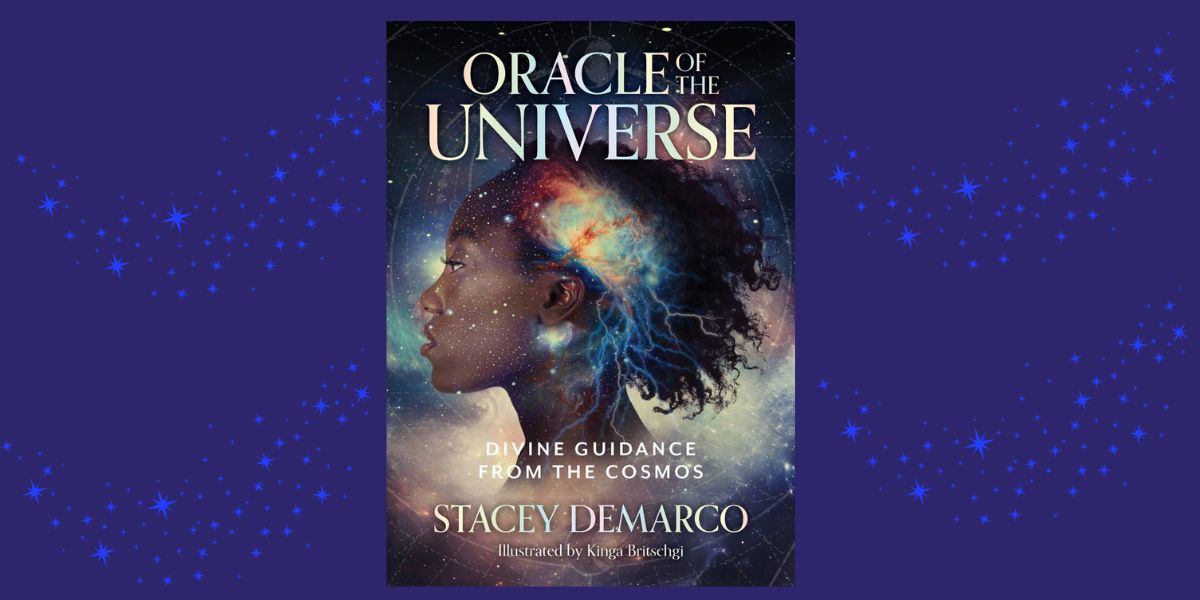
The shining box for the Oracle of the Universe: Divine Guidance From the Cosmos really attracts your attention with the background of the night sky, a woman’s profile, and an electrical storm in multiple colors in place of the woman’s brain. By adding an overlay of even more stars, Stacey Demarco and Kinga Britschgi immediately let you know that a journey through the cosmos is about to begin!

Did you know that we have eighty-eight areas of the night sky? Demarco shares this:

“Constellations are named areas of the celestial sphere that are used to divide the night sky into specific regions for easy reference and we now officially have 88.”30

Stacey Demarco is an author, pagan practitioner and modern witch, whose passion is to “make practical magic accessible to everyone and to reconnect people with the power of nature.”31 Demarco has created nine oracle decks, one tarot deck, a lunar calendar and numerous best-selling books. She is a popular teacher and speaker in her native Australia and around the world. 

As an award-winning artist and digital creator, Kinga Britschgi has a degree in fine art and a master’s degree in bilingual education. After working as a teacher, Britschgi transitioned to the digital world, where she has been creating art for more than twenty years. Originally from Hungary, she now lives in the US with her husband and son. 

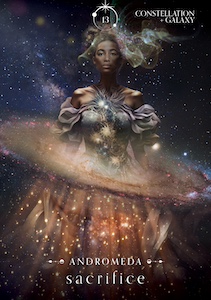
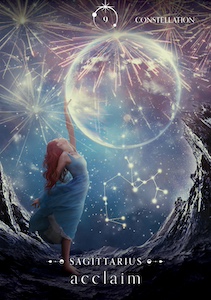
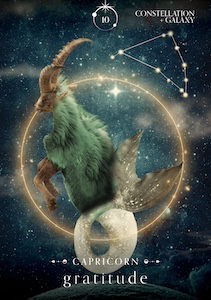
The collaboration for this deck of oracle cards is truly amazing! From the compelling cover art to the rich jewel-tone colors of the cards, I was mesmerized by the deep night sky combinations. Britschgi adds symbols, animals, people, nature, elements, and mythical creatures in a rich collage with stars, stars and more stars. Each card contains a number and a title that helps you identify it as either Constellation, Nebula, or Bright Star. Then, the creators add the name, a common name (if there is one), and a key word or theme. 

For example, for the card Sirius, it is identified as a “Bright Star,” tagged “Sirius”, modified as “Dog Star” as its more common name, and further marked with “Consistency” as its keyword. This method of identification is very helpful as you navigate the extensive guidebook. The Table of Contents is also broken into the three sections mentioned and each card is listed in number order. In addition to the name of the constellation, nebula, or bright star, they also include the key word in the table of contents.

The Constellations section is the largest grouping and includes the twelve zodiac star formations, as well as many others, such as Andromeda, Centaurus, and Cassiopea. In all, the creators include thirty-two Constellations, eight Nebula and four Bright Stars.

The guidebook is quite extensive and includes an introduction, a section on how to best use the forty-four cards, and several pages on spreads for this deck. Demarco also features a simple ritual for dedicating your deck and a few words on combining this deck with other decks. For each card, the creators feature a small, four-color photo of the card, key word, guidance summary, affirmation and information on the myth or history and IAU official astronomy tag for sky viewing. 

I took the cards on a test flight and utilized a spread called “The Stellar Read.”32 For this spread, I was to pull out the four Bright Star cards and set those aside. Next, I shuffled the rest of the deck and chose three cards. Then, I shuffled the four Bright Star cards and chose one. Here is a recap of the cards I drew and description of the spread placements:

  1. Represents the blind spot or hidden issue:  #7 Libra – Balance
  2. Represents the path of most empowerment: #35 Butterfly – Change
  3. Represents the truth of the matter: #3 Gemini – Rescue
  4. Bright Star Card: Represents the immediate action to take: #43 Vega – Dynamism

My question regarded how to get moving on a large project I was working on, where I felt stalled or sidetracked. From the four cards, I came to realize that I needed more balance, rather than an “all or nothing” work pace. I also was challenged to look at my schedule and see where changes could be made to better accommodate work in the mornings, when I am at my best.

I also got a message about waiting to respond to requests for guidance and help, rather than jumping in and “rescuing” people.  Finally, the Bright Star card spoke to the importance of setting goals, doing the work, and then resting when tired. This is a great reminder!

Next, I pulled cards for friends, both online and in my Friday “Coffee & Cards” group.  For one friend, I pulled the Crux, or Southern Cross, card.  She called to thank me and related that the message of carefully communicating to avoid sending mixed messages was right on track for her. The card featured two aboriginal men and she related that she has always been drawn to the indigenous people of Australia. 

Another friend asked: “What do I need to know as I head into the holiday season?” Her card was #26 Cygnus which talked of compassion. She was guided to show compassion for others and for herself.  I think I saw tears in her eyes when she read this passage from the guidebook:

“Get your self-compassion on and forgive yourself. It’s easy to show compassion to those you know, but a greater compassion is to show it in action to those you don’t. Give someone the benefit of the doubt. Show up.”33

One of my Facebook friends received #28 Draco, which featured a dragon and the theme of “guardianship.”  She wrote to share: “This message really speaks to me today.  I need to remember good boundaries, especially as we enter the holiday season.  Thank you!”

These cards are dynamic, beautiful, and so very healing.  The rich artwork and gilt-edge finish may draw you in, but the guidance is deep and resonates on many levels. I really like the layers of the information in the guidebook. A person can simply select a card and use the keyword as a theme for their day.  Or they can go to the guidebook and read the guidance summary.  If someone has more time and wants to learn about the myth or history of the nighttime star or nebula, the information on each one is extensive. Finally, if a person wants to find the star or nebula in the sky, the information to do so is provided.  

I appreciate the structured layout of the guidebook and the easy navigation. Demarco has created signposts to make retrieving the guidance, the myth, and the sky placement easy and effortless. Oracle of the Universe would be great for a novice oracle card reader, as well as the more experienced diviner.  Also, if someone is interested in stars and nebulas, this would be a great gift! I can see myself adding this deck to client readings for a final bit of guidance.  I also look forward to using this deck for my own daily card reading.

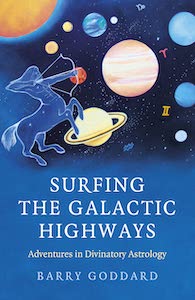
Surfing the Galactic Highways, by Barry Goddard

Surfing the Galactic Highways: Adventures in Divinatory Astrology, by Barry Goddard
Moon Books, 978-1803410104, 216 pages, January 2023

“This book is aimed at anyone who has a little bit of knowledge of astrology upwards. Astrology is one of those subjects that enters your bones, and if it is there, then it is there, however much or however little you know. It is a primordial connection to the sky that many of us feel.”1

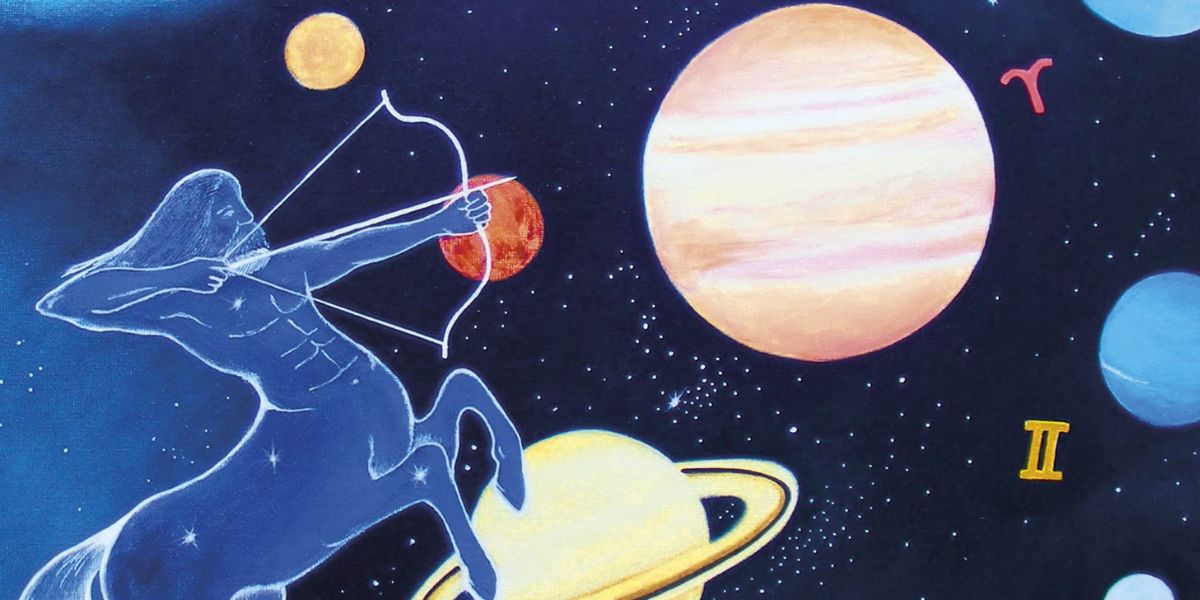
The quote above succinctly expresses the intention of Surfing the Galactic Highways: Adventures in Divinatory Astrology by Barry Goddard. The twenty-one (21) chapters cover an expansive and fresh perspective that differs from the usual books on astrology and often a more mechanical approach that forms a less intuitive structure for the reader. The visual appeal draws the reader in simply in the cover art work and the colors used and imagery, which exude a playful approach. It is reminiscent of the required dioramas that we crafted as children in elementary school. 

Lest, this playful first encounter set the tone for frivolity in the content, there is an abundance of practical and very relatable information within the pages of this title. To that point, “Chapter 1: The Power of Astrology” begins with the First Vaccination Chart reflecting the date when Margaret Keenan (UK), received the first dose of the COVID vaccine on December 8th, 2020. Using this as a starting point for the innate power of astrology as a predictive tool grounded in the present celestial events, Goddard creates the fertile space of return to inclusion of a sentient and accessible Universe as a tool of free will and intention…. 

“Astrology enchants the universe in an age when that enchantment has been replaced by the notion of a dead universe, that the universe is just a thing and we are just one more thing in it. We are the first people in history to entirely forget our roots in spirit, in the sense that consciousness is fundamental.”2

As you move through the chapters of this book, there is a sense of being part of an adventure in exploration of the astrological basics versus the academia of the subject matter. “Chapter 2: Keeping it Simple” exemplifies this approach beautifully. Goddard provides the reader and novice with just enough astrological information to make sense of the deeper explorations of the components of astrological practice. 

“I like to keep astrology simple, because it is then easier to remain close to the symbolism. When you are close to the symbolism, when you feel it strongly, it can speak through you. Anyone can learn the set of meanings of the planets and signs and put them together to read a chart. A computer can do that. But that is not astrology, because it is not the gods speaking through you, but the intellect, which needs to be the servant, not the master.”34

This simple approach is sampled in the reading of Barack Obama’s chart – only containing the Sun, Moon and Rising signs. The lesson here is one of using the highlights (Sun, Moon, and Rising) information as the starting points for analysis of an individual chart. The reader is reminded of the deep, albeit for many unconscious, knowing we have of the two largest celestial bodies of reference we have access to directly: the Sun and the Moon. This concept follows the idea of connection and symbolism and allows those very common things to speak through the astrological reading by way of what is already established as a connection to the reader’s ideology of what the Sun and Moon mean to them beyond astrological purposes. 

Goddard provides all of the usual information sought after by those looking to astrology with specific intentions. “Prediction, Political Astrology and Bad Astrology” (Chapter 3), “Relationships” (Chapter 4), “Astrology, Divination and Science” (Chapter 10) and “The Elemental Balance” (Chapter 11) are just a few of the highlights that would satisfy the more traditional approach.  But, the more interesting perspectives can be found in chapters such as these: “Trusting in Death” (Chapter 8), “Tweaking Our Creation Mythologies” (Chapter 12), “The Geography of the Underworld” (Chapter 21) and others that pique the reader’s curiosity about entwining astrological concepts into more expansive areas of consideration. 

Throughout Surfing the Galactic Highways, the underpinnings of a scientific approach to astrology are woven with the mythos of sign and planet and the symbolism becomes one infused with reality and intuitive creativity. Each chapter is primed with visual examples of charts that have been simplified in how much is contained within, allowing the reader to properly digest the concepts presented and create new pathways of understanding that can at a later date be expanded upon. 

Would I Recommend?

In Surfing the Galactic Highways, Goddard has successfully taken some very dry and often challenging principles of astrology and crafted them in such a way that makes them relatable to everyone at all layers of knowledge base. Goddard’s writing style is one that elicits an ease of reading that is similar to that of sitting and discussing a complicated subject with a patient and enthusiastic friend whose only goal is one of wanting to share their passion for that topic. All in all, this book is an excellent resource for those who wish to explore the many uses of astrological application and enjoy the journey of new awakenings. 

About the Author: Barry Goddard

In his twenties and thirties, Goddard was engaged in Buddhist practice, but for the last 25 years the main currents have been astrology and shamanism. He regularly writes blogs and Facebook posts about both shamanism and astrology, to which he brings a fresh and sometimes controversial perspective.

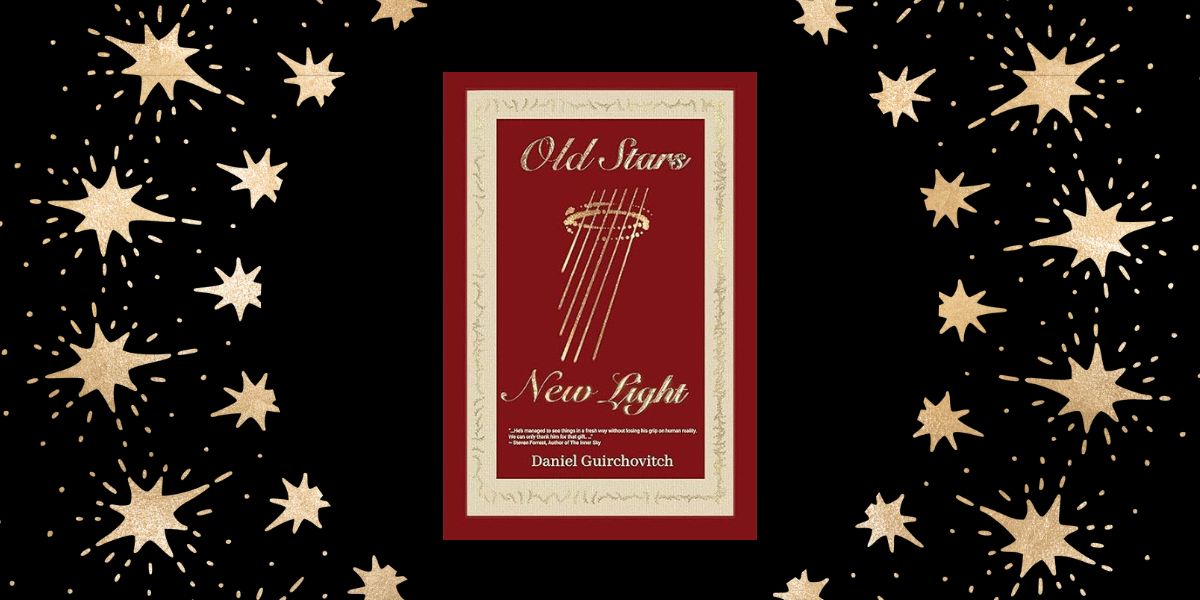
Old Stars, New Light by Daniel Guirchovitch

Old Stars, New Light: Astrology, Tarot and Runes, by Daniel Guirchovitch
Daniel Guirchovitch, 979-8987826300, 597 pages, April 2023

As someone who has studied astrology and tarot for over a decade, it can become quite boring reading the same reiterated information over and over again. While these descriptions of the characteristics of Sun in Capricorn or the Lovers card can provide insight at times, more often than not, it feels like there’s a general script being stuck to, ensuring the card is conveyed in the “correct” way. As a natural rebel and information seeker, I yearn for a fresh perspective on the esoteric arts. Old Stars, New Light: Astrology, Tarot, and Runes by Daniel Guirchovitch provides just that, and reading it over the past months has revived my passion and curiosity for the celestial insight and divine knowledge accessible when we extend our perception and invite in wisdom from beyond.

This book is unique in the span of time it took to collect the material and the methodology of how the information was obtained. For over 26 years Guirchovitch spoke with Elias, energy personality essence channeled by Mary Ennis, about topics related to astrology, tarot, and runes. Elias is fascinating, and I recommend learning more about him and Mary’s process of exchanging energy with him before reading the book by looking at the website www.eliasweb.org. There’s plenty of interesting transcripts and audio records you can read dating back to 1995. I really appreciate how the website is so well organized, making it easy for viewers to see the topic of each session.

Guirchovitch describes:

“The book reflects my journey to become a professional reader, which included a spectrum of challenges ranging from self-doubt, to re-examining the fundamentals, to learning to synthesize multiple factors and to flow with the interpretations.”35

The content reads as a dialogue between Guirchovitch, who goes by his first name Dan in the book, and Elias in a style of Socratic questioning, the thoughtful dialogue between the two exposing new truths and unraveling frames of mind to see beyond limited perception. As a reader, I gained just as much from Guirchovitch sharing his viewpoint and the questions he asks as I did from Elias’s thought-provoking answers.

Sometimes the dialogue is short and sweet, just a few sentences back and forth. Other times Dan shares an elaborate idea or perception with Elias and Elias shares his response, which ranges from a one-word agreement to a paragraph-long explanation.

Here’s a little sample from the section from Chapter 32, focusing on rune casting and other applications:

“Dan: So the divination aspect of the Runes, as in describing and helping to fine-tune situations, helping people to find the most beneficial alternatives.

Elias: Yes. Yes. Giving information, in a manner of speaking. They can be used for scrying. They also, because there is that element of magic, they can be used to be collectively expressing a type of intuition. Which, if you are defining intuition correctly, intuition is that communication that answers questions. Even if you don’t know you are asking a question, your intuition is answering your questions that you might be leaning into subjectively, or that you might be expressing an energy that is moving in a certain direction.

Now this is NOT precognitive or expressing predictions. But you can engage in a particular direction, and although you don’t necessarily see some aspects of that direction that involves the future that you are already engaging, and you may not see that objectively, but that doesn’t mean that you aren’t already engaged [in] doing it. And your intuition can actually express that. Therefore, that may also be some of the questions that intuition is answering at times.

In this relation to Runes, they can be used in a very similar capacity except in relation to the collective energy – not simply individual – therefore expanded.”36

While one could certainly read this book cover to cover, it’s also very helpful to use the table of contents and find exactly what you’re seeking to learn more about. The book is chronologically organized into 39 chapters, starting with transcriptions from November 2013 and ending in November 2021. In the table of contents, underneath the chapter number and date, the topic(s) of the discussion is listed. For instance, Chapter 9 May 30, 2016 covers “Aries, Taurus, Scorpio, Capricorn, and Cancer.”37, while Chapter 29 January 20th 2020 covers “The Temperance Card.”38

Whether you’re into astrology, tarot, or runes, I have no doubt the content of these dialogues will leave you inspired, contemplative, and with a fresh perspective on things. So far for me the most revelatory passages were in Chapter 19 May 16, 2019 covering Leo and Aquarius. My ascendent is in Leo and descent in Aquarius, along with my Sun, North Node, and Mercury also there too. I’m still processing and journaling about all the insights from Guirchovitch and Elias about the relationship between these two signs!

What has stood out the most is Elias describing Aquarius by stating, “.. they are not as concerned with outward expressions, therefore they aren’t as concerned with whether everything is flowing, but rather whether they are flowing.”39 This passage was notable to to me because I feel like I rarely want to impede the flow of others by expressing myself, and I also deeply believe that everyone just lives in their own flow that things work out best. In reflection, my flow is definitely what shapes the landscape of my life and relationships – and I get very annoyed when external forces impede this inner flow!

Not only does this book provide information for self-reflection, it also is an opportunity to get a glimpse into the art of chart reading. Guirchovitch speaks with Elias about different aspects and planet placements, seeking guidance into their meaning. For those who read charts, this content is worth reading as it showcases the process “seeing” an astrological chart and slowly revealing the intricacies of the person through careful rumination on their chart.

For those who are students at heart, willing to see things in a new way, Old Star, New Light will open doorways for you to better understand astrology, tarot, and runes. This is a book one can come back to time and time again for a deeper understanding of their mysteries. Guirchovitch is generous in sharing his insights from Elias with a greater audience, choosing to gift the answers he’s received to readers rather than keep it all to himself. I think this would be a wonderful resource for a group to study together, as the material lends itself to discussion quite readily. But even read solo, these conversations are a starting point into our own dialogues about these topics, which are essential when contemplating and enacting our practice of these sacred arts. Be prepared for the “aha” moments that spring up as you read!

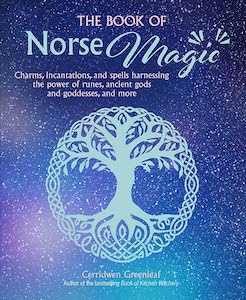
The Book of Norse Magic, by Cerridwen Greenleaf

The Book of Norse Magic: Charms, Incantations and Spells Harnessing the Power of Runes, Ancient Gods and Goddesses, and More, by Cerridwen Greenleaf
CICO Books, 1800651244, 144 pages, September 2022

I’ve always been drawn to runes, believing they are one of the most accurate divination methods, but my lack of knowledge of Norse magic has always made me a bit hesitant to explore this curiosity. While I know the well-known gods and goddesses – Loki, Odin, Freya – I had never taken a deep dive into Norse mythology or background that would give me a foundation for expanding my practice of rune reading.

But when I first picked up The Book of Norse Magic: Charms, Incantations and Spells Harnessing the Power of Runes, Ancient Gods and Goddesses, and More by Cerridwen Greenleaf, I felt my trepidation and anxiety about learning more about Norse mythology, magic, and beliefs melting away, replaced by an excitement that I might have finally found my in to explore Norse magic. Greenleaf has distilled the essentials to open a door for beginners to gain insight into how one can use Norse practice in their own magickal practice.

Divided into six chapters, this book covers different aspects of Norse magic: runes and divination, goddesses and gods, folklore of the forest, crystals and healing, essenes and incenses, and norse astrology. All throughout, there are beautiful graphics and color pages that make the information pop out to the reader. Whether one is looking for a quick spell or hoping to initiate a deep personal transformation, this book provides all that is needed.

I was pleasantly surprised by how much information Greenleaf provided about runes. From helping the reader pick the runes that are right for them (there are different sets spanning from the 2nd to 19th century!) to create a runic blessing bowl and altar, Greenleaf covers all the steps to get started doing readers. In addition to sharing the rune meanings, she also offers different methods of casting the runes, so the reader can discover their own divination style. There’s even information about how to create one’s own rune set! And my favorite part of this section was suggestions for how to use runes magically in one’s daily life through spellwork, candle magic, and creating charms.

The section on Norse legends covered the main gods and goddesses, as well as other spirits, such as Puddlefoot, a nature spirit, fairies, meremaidens, and Nidhogg, the dragon of envy. There’s also rituals for calling down the gods and goddesses, quelling restless spirits, and conjuring spirit guides. While these all are more in-depth magic practices, Greenleaf also includes more light-hearted sections, such as a table to create your own mythical name using dice. Mine turned out to be Queen Amethyst the Enchantress of the Night. Lol!

The section “Folklore Forest” felt really grounding, as it opened with a ritual for earthing, or connecting with Mother Earth. Greenleaf teaches the magical properties of various trees and how to use tree essences and herbal oils. There’s also bath potions (my favorite!), spellwork for prosperity, and guidance on how to create a wand from a tree branch.

Next Greenleaf’s focus switches to crystals, teaching the readers about the legends and magical properties of different crystals and gems. She includes spells for invoking Thor’s thunder and grounding with earth and water. Briefly tapping into lithomancy, Greenleaf shows how crystals can be used for divination and shares the meaning of different crystals. There’s also tons of rituals for a variety of things, including creating healthy habits, boosting your enthusiasm, relaxation, and inspiring creativity.

The following section, “Transformative Essence and Incense” was my favorite because of the recipes and “cozy witch” hygge vibe! Greenleaf writes, “I have incorporated everything I have learned from the wise women in my family and the greater community to which I I belong into my mindfulness regarding home and the creation of sacred space.”1 There’s brewing spells for magical potpourri and teas, DIY self-care blends, and aromatherapy guidance. All of which inspires me to bring a bit of enchantment to my home!

 The final section details how the “Germanic and Nordic pagans of old saw the year as only two seasons-winter and summer”40. Greenleaf includes rituals for Yule (start of winter) and Litha (start of summer), along with information on the nordic lunar system, astrological seasons, energy of the days of week.

I cherish authors who take their expertise, which this absolutely is for Cerridwen Greenleaf who is a scholar and dedicated teacher, to open new pathways for those eager to learn. It could appear this book is only skimming the surface or that the book has a Wiccan spin to it, but I’ve found that by making my way through The Book of Norse Magic and taking the time to do the exercise, spellwork, and recipes, there is potency in the content. I highly recommend it for those looking for a beautiful book to expand their magical cultural knowledge.

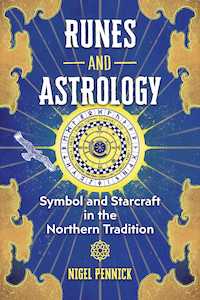
Runes and Astrology, by Nigel Pennick

Runes and Astrology: Symbol and Starcraft in the Northern Tradition, by Nigel Pennick
Destiny Books, 978-1644116005, 223 pages, June 2023

I’m just going to say it: Runes and Astrology: Symbol and Starcraft in the Northern Tradition by Nigel Pennick is an absolute must have if there is even an inkling of curiosity about Northern Tradition runes and their kin. This book is an absolute treasure trove of insight, magic, and tradition and is worth every single penny. If a previous edition sits on your shelf, move it over and put this one beside it.

Nigel Pennick is an authority on ancient belief systems, traditions, runes, and geomancy and has traveled and lectured extensively in Europe and the United States. He is the founder of the Institute of Geomantic Research and the author and illustrator of more than 60 books, including Elemental Magic, Magic in the Landscape, and The Ancestral Power of Amulets, Talismans, and Amulets. His level of insight into this tradition is unparalleled, and that insight resonates throughout this latest book.

One thing I love about a good book is the introduction and the appendices. Runes and Astrology does not disappoint on either front. The introduction is well layered with history and practical application is evenly distributed throughout. I love it when authors set out their intentions for the rest of the book within the context of the introduction and that’s precisely what Pennick has done. Glorious.

The Table of Contents is neatly set out and covers the topics one would assume to find. There’s a chapter on basics which is extremely well written and very informative. Titled “The Basic Concepts”, this first chapter is anything but. Honestly, you could read this one chapter and you’d know more about runes and their history and use than most people. Starting with linking runes with the idea that everything exists simultaneously with everything else, Pennick states clearly that “nothing in existence exists separately – everything that is present in the universe is continuous with its surroundings and is the product of its own historical circumstances.”1

Pennick continues:

“Wherever we choose to look, there is nothing that exists now, or that has existed in the past, that is not the result of a multiplicity of events and processes, traceable back ultimately to the formation of the world eons agon. Because of this, it is only by studying history in the widest sense that we can begin to get some insights into the true meaning of anything.”2

By tracing the lineage of the runes and the system they are part of, Pennick explores the concept of using history as a way to understand how things became what they are currently. It’s a brilliant method of writing and gives rise to a whole new way of thinking about runes and their place within a divination system. Personally, I enjoy learning about the history of things, whether they are divination systems, magical paths, or ingredients. For me, knowing how we came to use such things is as useful as knowing how to apply them practically in today’s world.

There’s an excellent chapter about runes and their meanings, but for me the chapter to really get into is the chapter titled “The Runes, the Planets, and Their Cycles.” Connecting the runes to various planets in the context of their deeper meanings is fascinating. Pennick takes time to clearly explain the links made between the runes and the various planets and satellites generally accepted as rulers of both hours and days of the current way of timekeeping.

Pennick’s style of writing is both informative and descriptive and lends itself well to the topics covered in this book. I found it both a delight to read because of the easy style of writing and also very interesting as there is so much information present in each chapter.

Do yourself a favor and pick Runes and Astrology up. Even if you only have a passing interest in astrology or runes, this book contains so much information through both the individual chapters and the appendices that follow, you will be glad you have it on your shelf as a reference.

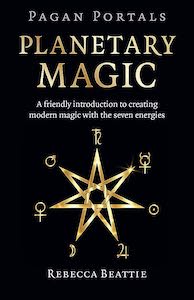
Pagan Portals – Planetary Magic, by Rebecca Beattie

Pagan Portals – Planetary Magic: A Friendly Introduction to Creating Modern Magic with the Seven Energies, by Rebecca Beattie
Moon Books,1803411767, 152 pages, August 2023

What if you weren’t at the mercy of the planets, but rather could learn to work with their energies in order to create magic? Pagan Portals – Planetary Magic: A Friendly Introduction to Creating Modern Magic with the Seven Energies by Rebecca Beattie is a guide to connecting with the Seven Planetary Powers to enhance your spellwork. Within this book is all you need to learn about each planetary energy and different methods to invoke their powers.

Since Beattie’s focus is on the Pre-modern Universe, this book focuses on the Sun, Moon, Mercury, Venus, Mars, Jupiter, and Saturn (sorry Uranus, Neptune, and Pluto!). She draws upon traditional grimoires of this time, such as Cornelius Agrippa’s Three Books of Occult Philosophy, and takes readers back in time through history to understand how these planetary energies were observed by cultures of the past. The illustrations in the book “are taken from pre-modern woodcuts from either the grimoire tradition, or medieval tomes on the nature of the universe,”41 which is great for those interested in occult history.

Before delving into the energies, in addition to the history of grimoires and planetary magic, Beattie covers topics such as twenty-first century magic (the conscious/unconscious mind), the Kabbalah, planetary kameas (magic squares) and sigils, working with herbs, tarot correspondences, planetary days and hours (magical timing), and Orphic Hymns. She also acknowledges how source texts are often contradictory, noting in this book she primarily focuses on Agrippa’s work. For those who read additional sources from this time, Beattie recommends keeping a notebook to keep track of differences in order to make up one’s own mind.

The chapters for each planet pretty much follow the same format. They begin with an Orphic Hymn followed by an introduction to the planetary energy by Beattie. She explains how working with the planetary energy can be helpful and then provides the kamea, sigil, Agrippa’s suffumigation, incense recipe, sigil, seal, examples of deities with this energy, tarot correspondences, and then practical magic section. The practical magic section varies depending upon the planetary energy, but various examples include oil recipes, bath salt recipe, tea recipes, herbal sachet recipes, and candle magic recipes, along with planet-specific spells.

And I just love how well organized it all this whole book is for reference! I admittedly own a copy of Agrippa’s Three Books of Occult Philosophy, but the books are hefty and quite long; they are not something I could easily carry around for reference. In comparison, Pagan Portals – Planetary Magic is short, sweet, and densely packed with all you’d need for planetary magic spellwork. This is a book that I could keep in my backpack or near my altar for reference.

Plus, Beattie makes it so easy to figure out which planet to work with by including a long list of intentions, alphabetically ordered, with the corresponding planet. From abundance to worry, the A-Z list of intentions also includes breaking contracts, dreams, fertility, mental power, peace, sea-faring protection, preventing theft, and so much more!

I recently started a new fitness plan, so I decided to bolster my motivation with some spellwork. Using the list of intention, I found “Athetlics – endurance”42 and saw it was ruled by the SUN. This is something I wouldn’t have guessed, since I figured Mars would be the planetary energy for all things athletic. I decided to draw the seal of the Sun and tape it on my water bottle. And then I also followed Beattie’s directions for making a solar candle for health, which was anointed with the solar oil for success recipe Beattie also provided.

In addition to the practicality of the book having so much information in one place, my other favorite thing about this book is the inclusion of deities beyond the Roman pantheon the planets are named from. Beattie writes:

“It’s the quality of the planetary energy that is important, not the name, and while the deities they were named for might be ascribed masculine or feminine genders, the planetary energies aren’t gendered in this book as I don’t consider them to be gendered.”43

I appreciated this non-binary approach to the planetary energies. And furthermore, I also highly enjoyed how for each planetary energy Beattie included alternative deities to work beyond the traditional Roman one. For instance, other Saturnian deities included Osiris, Hel, Persephone, and Binah. Beattie shares a bit about the deity, how they reflect the plantery energy, and sometimes even specific ways to work with them (i.e. offerings the deity likes).

Overall, Pagan Portals – Planetary Magic: A Friendly Introduction to Creating Modern Magic with the Seven Energies has been a delightful read for me. Beattie is a wonderful guide for those who want to learn how to include planetary magic in their practice. Her ability to concisely present a vast, ancient magical system without skimping in detail is truly so valuable for readers. I appreciate the work she has done so that we all can have a handy guide for planetary magic. It’s a book that I am certainly going to keep handy for reference. Whenever I want to carve a planetary sigil, it’ll be quick to find it in this book. Or when I want to create incense or an oil, all the information I need is right here.

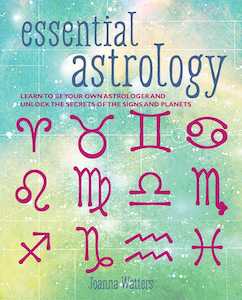
Essential Astrology, by Joanna Watters

Essential Astrology: Learn to be your own astrologer and unlock the secrets of the signs and planets, by Joanna Watters
CICO Books, 9781800652354, 160 pages, July 2023

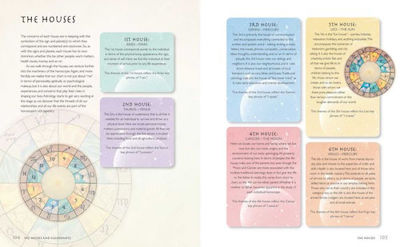
In Essential Astrology, Joanna Watters presents the basics of reading your own natal chart in a very clear and step-by-step manner.  With numerous graphics and examples of famous people, she illustrates the meanings behind the luminaries (Sun and Moon) and the planets in various signs.  She also shares a brief look into the twelve houses of the zodiac, as well as aspects, elements, and modes of the signs.

Her subtitle says it all: “Learn to be your own astrologer and unlock the secrets of the signs and the planets”.42

Watters has been an astrologer for over 30 years, doing readings, teaching, and writing her astrology blog. She has lived in Greece, in the village of Nidri on the Ionian island of Lefkada since 1995. She is the author of three other books on astrology and tarot.

As a student of astrology for the past four years, I was interested in investigating Watters’ methods of chart reading for myself. I particularly enjoyed how she explained what the chart really is:

“At an objective and mathematical level, the horoscope is generated from specific data and is firmly rooted in time and space, but at a subjective and symbolic level, the horoscope holds destiny’s DNA that awaits to be unraveled and decoded…. In other words, the craft of horoscopy shows us how to marry astrological symbolism with the uniqueness of an individual’s life story. Horoscopy therefore is not clairvoyance. But it is magic.”43

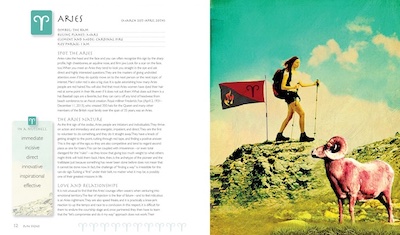
Watters begins her explanation of the luminaries and planets with a complete discussion of the sun and includes information for each of the twelve zodiac signs. I appreciated her prefacing this discussion with a note about the dangers of over-simplifying the qualities of the signs or presenting this descriptive information as written in stone.  She adds:

“We all know earth-sign individuals who do not know one end of a screwdriver from another or fire-sign people who are not risk takers.”44

I found the description of my Sagittarius sun to be on point, including my love of personal freedom and a note on the dangers of marrying too early! (Been there, done that!) She also includes a list of what she calls “Textbook Sagittarians”, which included comedian Billy Connolly, Bette Midler, and Mark Twain. Watters includes examples of famous people for each sun sign

Watters goes on to describe the elements and modes of the signs, including characteristics and two unique graphics that show how fire, earth, air and water line up on the zodiac wheel. Next, she describes the modes of cardinal, fixed, and mutable in a similar fashion, with a beautiful graphic, as well. 

Her “In a Nutshell” recap in this section ties it all together and shares each sign with its own mode and element, as well as whether masculine or feminine. I’ve already made a note of that graphic to use later.

Next, Watters dives into the personal planets and reminds the reader:

“The following cameos of the planets through the 12 signs are offered as “takes,” that is, illustrations as opposed to absolute givens, snapshots of symbolism as seen through my own client work or in the lives of prominent people.”45

She begins the discussion with the moon and includes a recap on what the moon represents before listing the qualities of each zodiac sign. She ends each section with three words or phrases to encapsulate the moon in that sign.  

I found her description for my Capricorn moon to be accurate and also provided some insight into my childhood:

“More typically, there is nearly always some early situation, which, in some way, forced them to grow up too quickly. As a result of such upbringings, this moon often signals a truncated childhood.”46

Watters includes these references to childhood in many of her descriptions and I can’t wait to investigate more of the charts of my family members through the lens of her wisdom and experience.

I was particularly interested in reviewing Watters’ information on my Venus in Scorpio. In many natal chart readings I have had and in plethora of the books I have studied, the Venus in Scorpio type is described as a cold and calculating yet passionate person. Watters goes much deeper: “Venus in Scorpio’s feminine sign is intense and deeply emotional… These Venus people do not wear their hearts on their sleeves, to put it mildly.”47 In my years of study, I’ve never seen such an accurate portrayal of my Venus in Scorpio!  Thanks, Joanna Watters! 

Due to the complete and easy-to-read style, as well as the stunning graphics, Watters’ book is valuable for both the beginner and intermediate astrology student.  I found quite a lot of new information in the book, as well as a more helpful compilation of astrological information than I have seen previously.

Many books seem to make you “work” to learn the data, while Watters takes you by the hand, leads you through the Zodiac wheel, and prepares you to read your own chart.  I felt supported and informed, rather than someone talking in esoteric language. She also sprinkles beautiful graphics for the planets and signs to keep your interest and brighten the pages. 

One idea that Watters shares is that of creating your own natal chart by hand.  She explains that by using pencil and paper to create your own chart with a blank zodiac wheel, the information will really come alive for you.  I can’t wait to find a blank wheel online and do this! 

Watters includes a simple table of contents, an extensive index, and a bibliography.  She even includes the website from which she drew the celebrity natal chart information. The book is very well organized overall and is easy to navigate and return to for additional information.

The index is particularly important.  I looked up “stellium” and found a great reference, although I had totally missed it when I reviewed that page initially. The index also gives multiple references for each zodiac sign in different sections of the book.  This will be very helpful to me as I prepare readings for clients and friends.

Whether you are new to astrology or have basic knowledge and want to learn more, allow Essential Astrology to take you on a magical learning adventure.

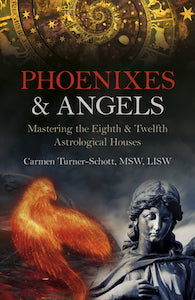
Phoenixes & Angels, by Carmen Turner-Schott

Phoenixes & Angels: Mastering the Eighth & Twelfth Astrological Houses, by Carmen Turner-Schott, LISW, MSW
O-books, 1803410809, 290 pages, July 2023

Whether one is interested in astrology for mystical or mundane purposes, it’s hard to deny there’s something about the eighth and twelfth houses that stirs up the soul. These aren’t areas in our charts we can tread lightly. We’re either being plummeted into depths or transcended beyond the ordinary, and this can leave one feeling a bit traumatized or confused at times. In Phoenixes & Angels: Mastering the Eighth & Twelfth Astrological Houses, Carmen Turner-Schott draws upon her own experience of working in these special realms to teach readers how to navigate the waters for themselves.

Turner-Schott has been studying astrology for over 30 years with a specific research interest in the eighth and twelfth house. She holds a Master of Social Work degree and is both a licensed independent and clinical social worker. She courageously holds space for those dealing with the energies of these houses in her daily life through astrological consultations of clients worldwide and her work with victims of trauma. Turner-Schott is quite the writer too, and she has previously published nine books, including A Practical Look at the Planets through the Houses, Astrology From a Christian Perspective, Moon Signs, Houses & Healing, and Sun, Houses & Healing.

While she’s also written books focusing on the eighth and twelfth house individually (The Mysteries of the Eighth Astrological House and The Mysteries of the Twelfth Astrological House), Phoenixes & Angels is a combination of research and information on the two houses. Turner-Schott’s wrote this book specifically for “eighth and twelfth house people”43, which she describes as those with planets in those houses or “someone who has an abundance of Scorpio and Pisces energy.”44 The information is also useful for those with a prominent Pluto or Neptune placement in their chart.

Eighth house people have been termed Phoenixes by Turner-Schott because of how they are continually transformed and reborn throughout their life. With each rebirth, they grow stronger and more resilient, though this is not without hardship and difficulties along the way. In “Part One: Mastering the Eighth House”, Turner-Schott delves into the key aspects characteristic of Phoenixes, such as their strength, power, childhood secrets, and need for privacy and intimacy, as well as naturally being drawn to the taboo realms of death and sexuality.

“Eighth house people are meant to rise like a Phoenix out of the ashes. They must let the past die to release past hurts and trauma. They are meant to let go, destined to become beacons of hope for those who are hopeless. . . . Born with extreme empathy for those who suffer, they know what it feels like.”48

Along the way, Turner-Schott offers guidance for eighth house people as they learn how to forgive and let go, deal with the unseen world through spiritual gifts and psychic senses, battle with tough emotions like depression and rage, and perform self-care as they heal and deal with trauma that arises.

“Part Two: Mastering the Twelfth House” focuses on those Turner-Schott calls Angels. The twelfth house has to do with a belief in a higher power and making sacrifices to bring in healing energy. She describes how Angels are called to walk a spiritual path in life, alleviating the pain and suffering through their innate compassion and kindness. 

“Angels who fell to earth to support and uplift the lives of others, they are destined to come out of the mist and be seen. Walking in two worlds, with one foot in the spiritual and the other in reality helps them to find peace.”49

Topics covered by Turner-Schott include 12th house Angel’s need for isolation and solitude, imaginative gifts and mystical inclinations, propensity for secrets and illusions, connection to foreign countries and large animals, behind the scenes work, karmic issues to work out with their fathers and mothers, romanticism and loneliness, connection to cosmic consciousness, and influence of their dreams.

At the end of both parts, ​​Turner-Schott also provides information about what each planet in the eighth/twelfth house means natally and when transiting the house. And then there are quotes of insight and wisdom provided by Phoenixes and Angels themselves. Gleaning advice directly from those with these placements really integrated all that Turner-Schott had written in this section and creates a sense of connection, reminding readers they are not alone in their eighth house struggles, strengths, and lessons.

All in all, Phoenixes & Angels is a really interesting take on the eighth and twelfth house. Turner-Schott’s combination of personal experience, insights, and feelings, along with her examples and testimonials of clients from direct research, deepens readers’ understanding of these spiritually transformational houses. This book is a wonderful resource for those with eighth or twelfth house energies in their chart looking to find out more, whether one is new to astrology or has been studying for some time, to gain guidance in their unique challenges and abilities and grow in self-awareness.