✨ A Gathering Place for Magical Readers and Writers ✨

Tag Archives: deck review

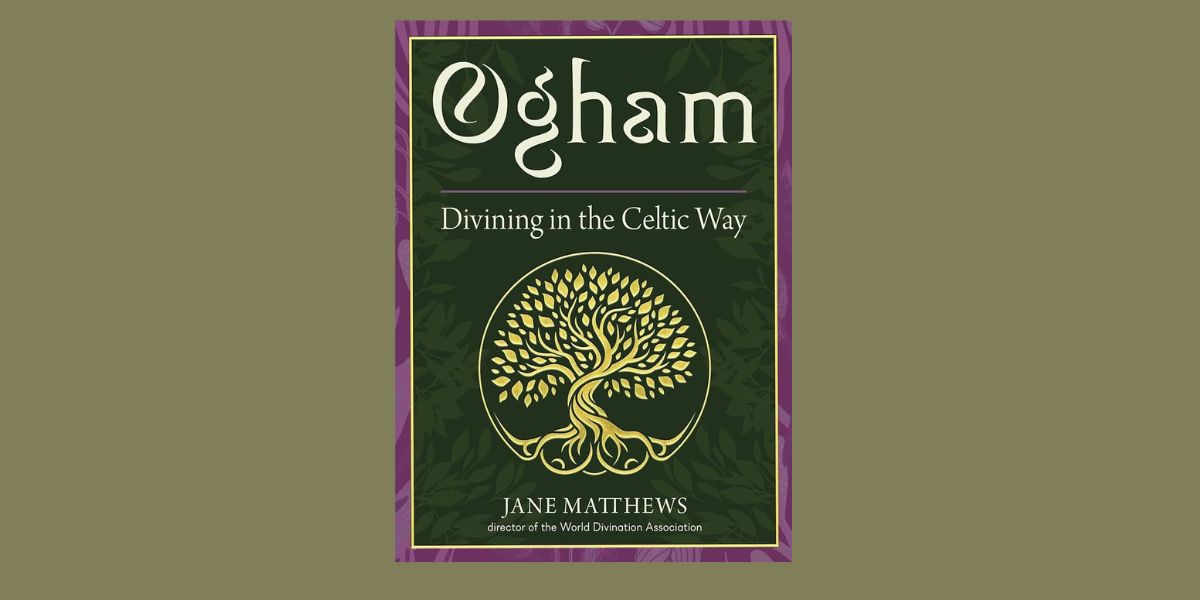
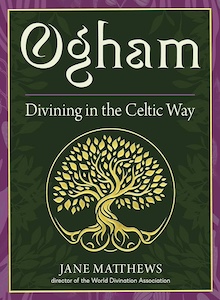
Ogham, by Jane Matthews

Ogham: Divining in the Celtic Way, by Jane Matthews
Weiser Books, 1578638909, 192 pages, 25 cards, March 2026

Ogham: Divining in the Celtic Way by Jane Matthews is a beautiful way to connect with powerful Celtic knowledge. Based on the earliest Irish written script, Ogham is rooted in the Celtic belief system. While most associate Ogham with corresponding trees–Matthews notes these correspondences were added later for Druids and Bards to remember the meanings of each letter–there’s plenty of wisdom within the letters themselves. She writes of the Ogham:

“The meanings all bring a duality with them. There is light and dark in each, and this makes them truly unique in how they present themselves.”1

This 25-card oracle deck is divided into four “families” called aicme, which are similar to the Futharks in the runes system for reference. Within each aicme is five fedha, or characters of the Ogham alphabet. At the start of each section, Matthews describes what each aicme deals with, illuminating the overall theme of the fedha in that section. The other five cards in the deck are the forfeda, which are the “additional letters”2.
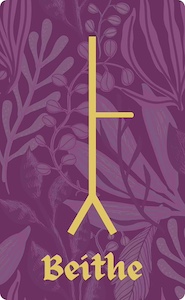
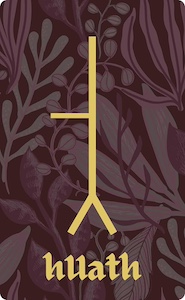
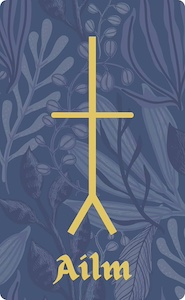
Each one is color-coded, so once a reader is familiar with the deck, they will be quickly able to discern which aicme the card is from. The fedha cards are dark blue, violet, indigo, and dark, while the forfeda cards are a contrasting bright white. All the cards have the same layered botanical pattern in the background, making the focus the golden Ogham glyph in the center and name at the bottom of the card.

Aside from the shift in color and Ogham glyph, there’s not much variation in the visuals of the cards, giving a clean and simple aesthetic. It’s a restrained design overall, but it works well for a system like Ogham where the power of the symbol is meant to stand on its own. It makes me imagine how these symbols would have appeared carved into wood or stone.

There are no corresponding numbers, so when first working with the deck, readers will most likely have to reference the table of contents in the guidebook to find the page of entry.

As for the guidebook entries, for each fedha card listed is the associated tree, keyword, letter, stroke bearing, and pronunciation. Matthews then gives insight about the Ogham’s particular message, providing further specific information within the context of a relationship, work, and health. I really enjoy all of Matthew’s insights, particularly into health, an area of life that I had never considered to engage with the Ogham’s energy. All of the advice she provides is very grounded, acknowledging the energies in play with clarity and directness.
What surprised me the most was how the messages did not at all focus on the aspects of the trees associated with each Ogham. I actually really enjoyed this because all I’ve read about Ogham previously is specifically focused on the spiritual properties of the corresponding tree, rather than the symbols themselves. Getting to know the symbols on their own has been quite illuminating, particularly Matthew’s insight into the brush strokes that highlight the pathways to the Underworld, World, and Otherworld.

“When you’re looking at the fews in this way, it is easy to see how all paths come through our world, and that means that we have the answers to all that has been and all that will be–it is all at our fingertips, in this world for us to seek and understand. This world is a portal to all worlds and all the information that all worlds possess.”3

I also really enjoyed learning about the forfedha, which Matthews describes as “important on an esoteric point as they provide cosmological and directional signs.”4 They provide a map of the cosmos that can be then arranged as a casting mat or placement holder for reading with the deck. Matthews shares quite a bit about working with the forfedha, including using them in spreads (What Am I Spread, Spiral Spread, The Four Directions, and Celtic Cross) and in casting one’s own Ogham set.
Additional sections in the guidebook focus on using Ogham for magical purposes and a meditative framework for understanding Ogham, which provides a journey through The Underworld, This World, and The Otherworld. I definitely would recommend doing these meditations before working with the deck, as it really helps to center oneself within the belief system from which the Ogham emerged.

My only gripe with this deck is the guidebook is very tiny and hard to hold open and read. I kept trying to reference the spreads, but the book would close and then I’d have to flip it open again and try to keep the pages open. And whenever I use some force to do this, the binding then gets a bit messed up, creating a gap in those pages.

Overall though, Matthews has provided a wonderful resource for those who are seeking to connect with the Ogham, especially in a way that goes beyond the nature-based perspective that all too often focuses exclusively on the tree associations. The content in the guidebook offers both spiritual reflection and practical direction, providing a great balance for wisdom seekers. And, quite notably, the additional information about the forfedha is a real bonus for deepening one’s work with the Ogham.

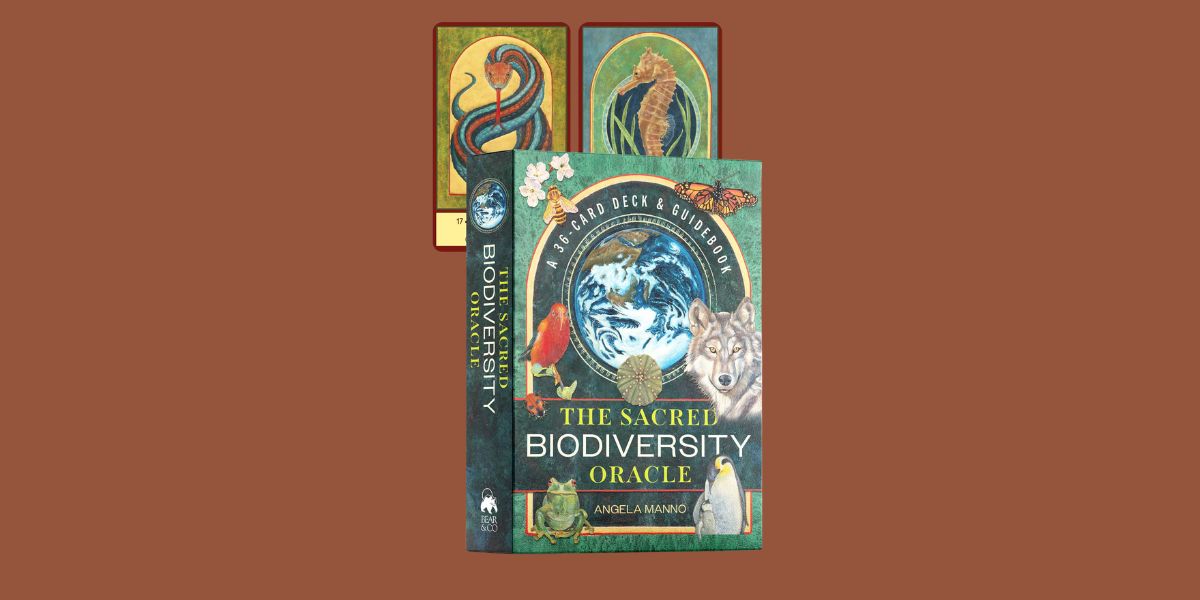
The Sacred Biodiversity Oracle, by Angela Manno

The Sacred Biodiversity Oracle: A 36-Card Deck and Guidebook, by Angela Manno
Bear & Company, 159143503X, 160 pages, 36 cards, January 2026

Our planet is experiencing an unprecedented loss of biodiversity, with countless species disappearing at a rate that threatens the delicate balance of ecosystems worldwide. In The Sacred Biodiversity Oracle by Angela Manno, sacred art and contemplative practice converge to draw attention to the animals and habitats most at risk. Through reflection, education, and direct links to conservation efforts, this deck gently transforms awareness into meaningful action.

“The current biodiversity crisis is nothing less than a holocaust of Nature. According to the Center for Biological Diversity, more than 8,000 species are going extinct every year–that’s twenty-two species per day, about one species every hour–one thousand times the natural rate.”4

Manno’s artistic rendering of 36 full-color cards serve to honor threatened and endangered species with the aim of using her artwork to produce an emotional response that inspires readers to evaluate and hopefully transform their relationship to “the planet and all its life forms from one of exploitation to one of mutual enhancement and respectful coexistence.”5 The cards are huge ( 5.25 inches by 7.5 inches),  which allows for them to be prominently displayed.

Within the guidebook, Manno details how she came to create this deck after studying the traditional Byzantine iconography style, in which divinity comes through contemplation of the image. She chose to use this style to frame each species in this deck as a sacred being worthy of reverence, not merely statistical information, in order to illuminate their value and special spirit. A key practice in this guidebook is visio divina (sacred seeing), which allows for the spiritual nature of reality to emerge from contemplation of the image. Manno writes:

“Anyone who fervently opens themselves up to the power of these images–both in Nature and in art–can rest in and be nourished by their wisdom and beauty.”6

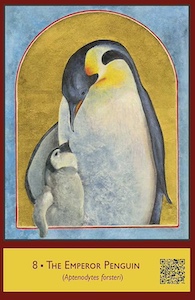
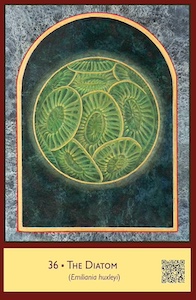
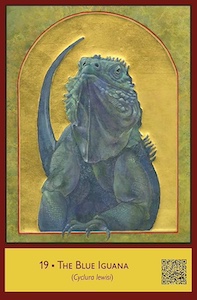
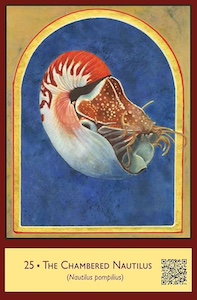
The artwork is gorgeous. Manno has painted each threatened or endangered species in a style inspired by sacred iconography, evoking reverence and stillness through tones are relatively simple yet illuminating. The clean backgrounds showcase the brilliant detailing of each species, clearly rendering and centering each one in a way that invites focus. Manno has given each species a quiet presence on the card that transforms them from overlooked or imperiled beings into holy ones worthy of contemplation, protection, and awe.

The exercises in the guidebook further assist readers with this process. For each card, Manno shares information about the species depicted (traits, habitat, role in the larger ecosystem, current plight), offers the opportunity to connect with the animal through visio divina, encourages stream of consciousness writing, and then shares a way for readers to take action on behalf of the species. There’s even a QR code in each entry, as well as on the card itself, in order to be immediately linked to a website of an organization working on conservation for the species.

The species are divided into six types: mammals, birds, fish, reptiles and amphibians, invertebrates, and plants. I appreciated how Manno spans the natural world when it comes to representing the threatened or endangered species. This highlights how each species, big and small, from the Gray Wolf to the Firefly, has a vital and important role to play within both the local and larger ecosystem.

As previously mentioned, there is no applicable spiritual guidance shared in the guidebook, which I think is important to note given the word “oracle” in the title. The Sacred Biodiversity Oracle is designed not for divination, but for contemplation, connection, and ecological awareness. The cards intend to foster insight, empathy, and ecological responsibility within the readers and are best used as a more educational and spiritual tool than predictive oracle. This made me reflect on how often we turn to other beings as spiritual allies, hoping their wisdom comes through to answer our questions in oracle decks, but it’s rare we are given the chance to assist them. This deck is unique in that regard, as the card pulls are not to provide insights related to your own personal journey, but rather an opportunity to use your agency to assist these species in need.

Almost all entries are exactly the same, with the main focus being performing the visio divina with the card and journaling to the question “Allow yourself to be enveloped by empathy for this living being. How does its plight impact your life?”7 Therefore, I think it’s important to brace yourself when working with this deck. It’s a delicate balance choosing to open to the animal’s sacred energy only to then be presented with wisdom that makes you feel a bit helpless. While the immediate vetted nonprofit groups accessible through the QR codes is very useful, it’s important to also take time to engage in self-care when doing this meaningful environmental work.

While many of us wish we could give limitlessly to help these species, there’s only so much time, energy, and financial resources we have available, making it a bit sad to think of all the animals that need assistance. This blue feeling for me only was amplified by the description of just how terribly the species are doing in the natural world. It was hard to cherish the beauty of the cards only to be hit with the stark reality of the situation, as described in the guidebook. Nevertheless, honoring these species and doing our part is the only way forward, even when the process brings up eco-grief.

I would most recommend this deck to those interested in a meditative or devotional practice, especially one focused on planetary healing and connection with nature. Individually, the cards are great for focusing on a species in need of care and attention, which one can then direct their healing and loving energies towards. Within a group, the cards are a wonderful focus for shared contemplation and discussion about threatened or endangered species and the key roles they play in ecology. There’s plenty of creative ways to work with the deck that certainly can inspire, raise awareness, and make a meaningful change on behalf of these species’ well-being.

All in all, The Sacred Biodiversity Oracle is a thoughtful and contemplative deck that stands out for its ecological purpose and artistic depth. Manno’s background in icon painting infused with ecological philosophy gives the deck a ritualistic and reverent quality, making it more like a devotional tool than a standard oracle deck.

For those called to foster empathy for the natural world, this deck invites sacred contemplation and serves as a bridge between spiritual practice and environmental awareness. The deck beautifully emphasizes the interconnectedness between species and ecosystems, reminding us that no life exists in isolation. Through action-oriented reflection, including QR codes that connect directly to real-world conservation efforts, it transforms insight into tangible support for the planet.

Couture Tarot, by Megan Skinner

Couture Tarot, by Megan Skinner
REDFeather, 0764369857, 192 pages, 78 cards, October 2025

In Couture Tarot by Megan Skinner, high-fashion collage art stands in for the traditional deck imagery, bringing a fresh, stylish vibe to the timeless wisdom of tarot. Fashion and tarot are both mirrors in many ways. Tarot reflects the psyche; fashion reflects identity, desire, rebellion, belonging. Neither tells you who you are, rather they show you possibilities. They invite projection, interpretation, and play with visual symbolism that cues our unconscious in certain ways, making them a potent tool for revelation.

Within this deck, Skinner has reimagined the classic 78-card tarot through the lens of couture fashion and collage art. Each card draws from meticulously cut and arranged images sourced from iconic fashion magazines like Vogue, Harper’s Bazaar, and Elle, giving the deck a look that’s at once glamorous, contemporary, and delightfully eclectic. The visual experience feels like stepping into a runway show that is unique, lush, and deeply expressive of archetypal themes in a modern visual language.

The first thing I appreciated about this deck was the very sturdy box it comes in. The box lid opens from the front, held closed by a magnet, making for easy access. The cards and guidebook are neatly secured and there’s a brown ribbon to diligently pull the cards out. The interior of the box’s lid has a quote from Yves Saint Laurent that perfectly captures the energy of the deck.

As for the cards themselves, they’re quite eclectic. I definitely think readers who are used to the traditional Rider-Waite-Smith (RWS) imagery will be in for a shock because there’s little resemblance whatsoever. There’s not even an image for the different suits depicted in the cards. Rather, for each one, there’s a brilliant collage bursting with energy and the name at the bottom. Skinner explains this in the guidebook, writing, “Yet, each image carries the essence of the suit and card through color and a visual story.”8

The collage art turns a tarot deck into a living conversation between symbols. By layering images, it breaks the expectation that meaning should be neat or singular. Instead, insight arrives the way intuition does: sideways, through association, memory, and mood. Additionally, the collage element holds tension. These juxtapositions mirror the way tarot itself works, holding contradiction and multiplicity. The cards feel less like illustrations of fixed meanings and more like portals, asking the reader to participate in interpretation rather than consume it.

There’s A LOT of room for subjective interpretation. For those familiar with the traditional tarot meanings, this deck becomes a fun way to engage with the archetypal energies in a new way, letting your eyes roam over the busy card imagery to see what your intuition picks out and relates to your understanding of the card.

However, for those new to tarot or not entirely familiar with each card’s essence, you might struggle a bit if you are someone who likes to use the card’s imagery as a visual prompt to cue the oracle’s message. Though, if you’re willing to go off script and let the cards lead, not worrying about “getting it right” in the by-the-book sense, there’s lots of exploration that can be done with this deck.

I think working with this deck is an exercise in intuition over instruction. You can teach someone how to piece together an outfit, but it takes a certain something to make it fashionable. This deck calls forth that certain something within that makes for an insightful tarot reading too that goes beyond just relying on the rote meanings.

A tarot card doesn’t mean the same thing in every reading, just as a garment doesn’t mean the same thing on every body or in every context. Meaning emerges through feeling, timing, and relationship. You sense when a look is right, the same way you sense when a card is speaking clearly. This is the ever-changing beauty of Couture Tarot.

This said, Skinner provides illuminating guidance in the accompanying book, which is nearly 200 pages long, so fear not if you are someone who enjoys looking up the meanings. This deck is still very approachable and engaging in this sense too. For each card, Skinner shares keywords, the planetary rule, and an explanation of her artistic choice. For instance, she writes of the Ten of Wands:

“Yet, the Ten of Wands indicates that you are carrying the past forward, feeling like you need to keep working toward some outlived goal. In a word: Baggage! Hence the designer suitcase stacked upon each other.”9

Skinner’s insights into her interpretation of each card goes a long way in anchoring the traditional meanings of the tarot. She visually describes the intention of many of the symbols, taking some of the guesswork out for those who, like me, enjoy knowing what I’m looking at. In this way, the deck skillfully balances symbolism with artistic innovation. Readers have the ability to intuitively engage with the imagery that resonates with their own psyche–the heart and soul of good artwork–while also having a solid foundation of general understanding of the artist’s intention.

Personally, I would use this deck when I want some creative energy in my life. Beyond doing oracle readings, I think this deck has a certain zest for awakening the inner genius. Working with it gets me out of my head and submerged in the feelings that arrive when I’m fully present, open, and gently alive. It’s the same transformative experience I have walking through an art museum, allowing the beautiful imagery to overwhelm my senses.

The collage art restores mystery to the tarot. As someone who gets quite bored seeing the same archetypal images repeated, this deck is a breath of fresh air. I love how little pieces of various fashion publications come together to create something entirely new. The format of discerningly collecting these little bits of visual imagery and then piercing them together reminds me that there’s always the ability to see things from a different perspective, shifting around the arrangement until the alignment feels right, which is the essence of getting a meaningful tarot reading.

Overall, Couture Tarot is a stylish, thoughtful tarot deck that is perfect for those who enjoy bold, lively imagery in their readings, especially if you appreciate fashion and aesthetic symbolism as tools for inner exploration. It’s a tool for reconnecting with creativity too. Whether used for daily draws, deep spreads, or contemplative journaling, it offers a rich, modern bridge between tarot tradition and creative expression.

The Ukrainian Tarot, by Tania Andrushko

The Ukrainian Tarot: Flower of the Magic Fern, by Tania Andrushko
REDFeather, 0764370170, 192 pages, 78 cards, September 2025

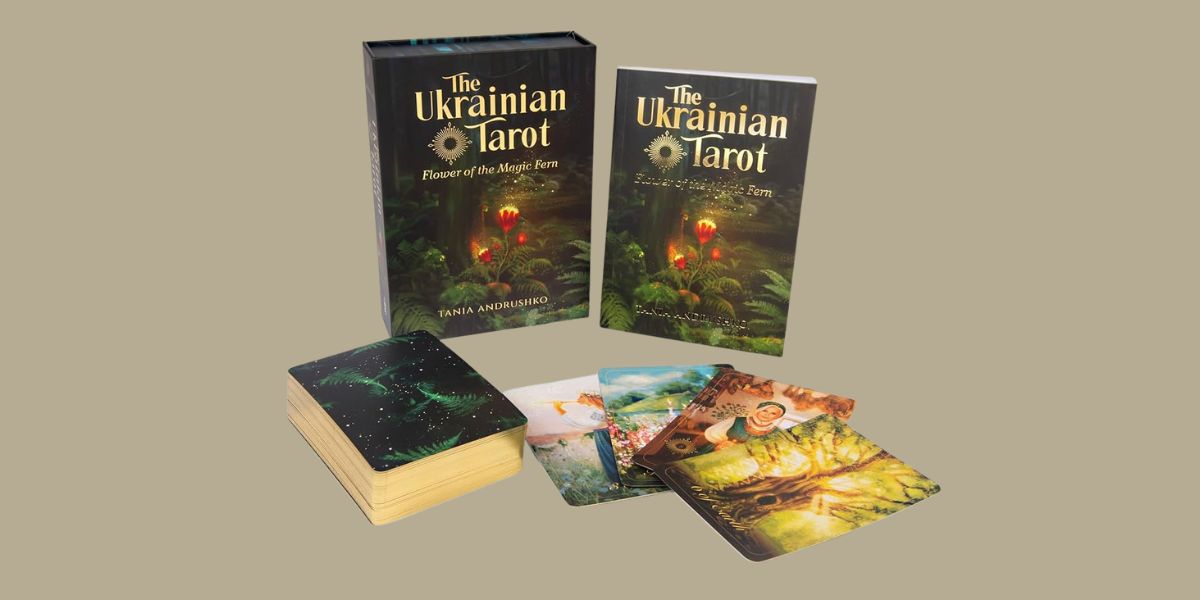
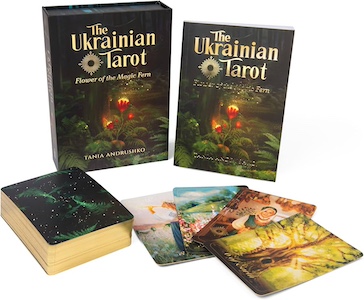
The Ukrainian Tarot: Flower of the Magic Fern by Tania Andrushko is a 78-card tarot deck and companion guidebook rooted in Ukrainian legend, myth, and cultural heritage. Created with the intention of inspiring peace and love for humanity, Andrusko has imbued this deck with the soul of Ukraine. The title highlights the Magic Fern is a metaphor for illumination emerging from darkness, a theme which is carried through the imagery and wisdom of the deck.

“This magical flower is said to bloom only once a year, on the shortest night of the year, bringing good fortune to whoever finds it. As the legend goes, this flower can be found only in the darkest of forests in Ukraine, and only if your heart and intentions are pure.”10

This deck follows the traditional tarot structure (22 Major Arcana and 56 Minor Arcana) but its imagery, themes, and storytelling are firmly grounded in Ukrainian culture, history, folk lore, ritual, mythological figures, and symbolic motifs. At the beginning of the guidebook, Andrushko shares her story about what inspired her to create this deck. While it is specifically focused on Ukraine, her intention is expansive: helping others remember who they are and the valuable role they have in the wider collective.

Andrushko then introduces readers to Svarog’s Circle, a circular calendar based on Slavic mythology. With solstices and equinoxes marking key points in the year, this cosmological system is much like the Wheel of the Year in modern Pagan traditions, yet it has a deeply rooted mythology and history that is incorporated into the deck. Andrushko explains how she has reflected the directions of Svarog’s Circle within the traditional elemental suits and provides a table of the themes for each numbered or Court Card in the Minor Arcana. There’s also guidance on how to do readings and three spread options shown.

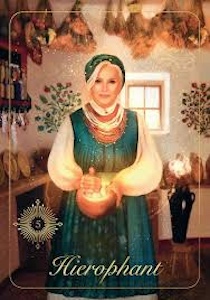
After reading the introduction information in the guidebook, I felt I had an overall sense of the deck’s structure and energy, so I was ready to dive into doing a reading! I decided to keep my first one simple and do a one-card pull in regard to the energy I should focus on for the day: Hierophant. While the traditional version of this card features The Pope or a High Priest, Andrushko’s version is a homely crone, a Ukrainian healer. Instantly, I felt a deep connection to the woman on the card; her magically infused cottage in the background of the card feels warm and inviting, while her eyes shine with acceptance and wisdom. The guidebook reads:

“The Hierophant is one who reveals the sacred mysteries. She is a healer and a shaman. Drawing from the ancient skills of her ancestors, she can come to know the past, present, and future. She can interpret dreams about life and death, warn against evil people, and ward off misfortune. These are powerful women who know God’s will and know how to speak in God’s way.”11

First of all, I just LOVE how Andrushko hasn’t followed the typical script when it comes to portraying the tarot cards. Second, I appreciate how she blends in Ukraine culture to the tarot archetype while still making the overall message applicable to all readers.

It’s interesting how Andrushko doesn’t stick to the traditional cards, changing cards to better showcase the wonder and beauty of Ukraine. For instance, Wheel of Fortune is Fortune’s Wheel, The Devil becomes a Witch, and Judgement is Call. The traditional meanings of the cards take on a new dimension with Andrushko providing an infusion of spiritual and cultural insights from Ukrainian values too. It’s always refreshing to work with the tarot from a new perspective!

For each guidebook entry, there’s an image of the card, key words for the feeling of the card, a question to ask yourself, an action to take, and the essence of the card. At the bottom, there’s even a space for notes! How cool is that? You can write in this guidebook! Plus, it’s nice and big (5.63 x 7.63 inches), so there’s plenty of space for your own thoughts.

While Hierophant happened to be more spiritual, there are a variety of aspects of Ukrainian culture that come through in the guidebook descriptions. For instance, King of Fire tells the story of Ivan Mazepa, a hetman whose passion for science, art, and education lead to many cultural initiatives. There’s also insight on sacred embroidered clothes for 2 of Air, decorative Easter eggs (Pysanka) for 9 of Water, and the significance of horses in Ukrainian folklore for 8 of Fire. From textiles to holy days, the deck shares the full spectrum of what makes Ukraine special.

As for the artwork, there’s a peaceful and tranquil quality to the essence of this deck. There’s no specific symbol that represents the suits, rather each card has its own image. The effect of this is that readings become visual stories, allowing the readers to absorb the imagery, let it flow through them, and then see how all the artwork comes together to provide meaningful insight.

Furthermore, instead of drawing from the familiar tarot archetypes, the imagery reimagines the cards through the lenses of Ukrainian mythology, cosmology, customs, history, and more. Many of the cards do have people on them, whether this be a deity or symbolic figure, as well as featuring animals or trees, or simply items important to the culture. This image makes readings feel like a journey deeper into the heart of Ukraine’s spirituality rather than abstract divination.

Admittedly, I decided to work with The Ukranian Tarot purely out of curiosity. I have no Ukrainian ancestral connections, nor do I know anyone from this region. Nevertheless, this deck has immersed me in the tapestry of the rich soul of Ukraine, teaching me all about the cosmology, history, folklore, and more. I find the readings from this deck to be very illuminating; there’s a combination of spiritual protection as well as practical realism that comes through. It’s very interesting to get tidbits of cultural knowledge alongside a divinatory reading.

Andrushko has created something truly incredible. Whether you have Ukrainian heritage that you wish to strengthen through working with this deck, or you’re simply culturally curious, this deck has a lot to offer. The reframing of the traditional tarot energies make for powerful readings, as well as spiritually infused energy of Christianity, Svarog’s Circle, and Slavic deities. I recommend it for those looking to expand their tarot readings, bringing in new spiritual insights for guidance, reflection, and growth.

Lieselle’s Eternal Tarot, by Lieselle Elliot and Sean Frosali

Lieselle’s’ Eternal Tarot: Trust Your Voice and Then Learn to Trust the Journey, by Lieselle Elliot and Sean Frosali
REDFeather, 076436975X, 224 pages, 78 cards, September 2025

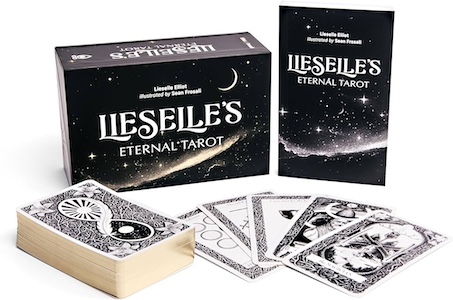
With countless tarot decks now in circulation, each offering new themes, artwork, and layers of symbolism, it can be easy to forget the quiet power of returning to the basics. There is something enduring about a deck that honors tarot’s foundational structure, where meanings are clear, imagery is intentional, and the essence of each card is distilled rather than overcomplicated. In this simplicity, readings often become sharper and more resonant, allowing intuition to speak without distraction. Lieselle’s Eternal Tarot: Trust Your Voice and Then Learn to Trust the Journey is just this type of deck, reminding readers that when the core of tarot is respected, its wisdom remains timeless and deeply effective.

Created by Lieselle Elliot, a tarot reader with over 20 years of experience reading for clients, this deck taps into the heart of tarot’s eternal nature. Likewise, Sean Frosali’s illustrations capture the essence of each card’s rich symbolism and history. Together, their intention for this classic deck is “empowering you and nurturing your intuitive abilities.”12

The first thing I enjoyed about this deck is the hardy box with a lid that gently folds back to reveal the cards inside. This is one of the best exterior deck designs I’ve ever seen. The cards are slim but sturdy, making it easy to shuffle. And the gilded edges certainly add a nice touch to the overall aesthetic.

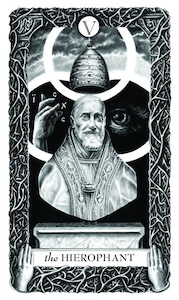
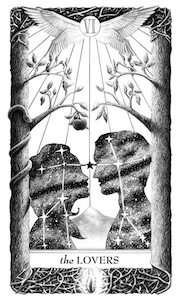
The inspiration from the traditional Rider-Waite-Smith (RWS) deck in the Major Arcana is present, but each card is definitely imbued with the creators’ unique perspective on the cards. For instance, The Fool features a faceless jack-in-the-box floating in water, featuring a leashed dog and flowers as the design of the box. Above the sun illuminates the scene. Meanwhile, The Star shows a woman looking down into her cupped hands, which are submerged in water and holding a star. Above her seven other stars shine and there’s a vessel on each side at the top. With the imagery alone, readers familiar with the RWS would definitely be able to figure out the card. Though, each card is also labeled at the bottom and numbered at the time.

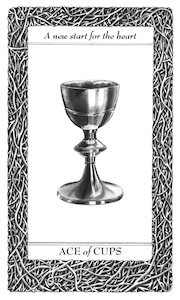
The Minor Arcana is designed in Pips style, only showing the suit symbols and no scenic artwork, with the name of the card at the bottom. To some degree, this design means the reader must know the interpretations of each card when doing a reading or be prepared to look it up in the guidebook, as there are no visual clues. However, there is a mantra at the top of each Minor Arcana card that does give some insight into the overall meaning of the card.

Reading in a Pip-style system definitely requires a different kind of engagement with the cards, and I appreciated the opportunity to try it out since it’s not my usual deck style. Without visual narratives to guide interpretation, I noticed I had to rely more on number, suit, elemental energy, and inner knowing to shape the message.

This absence of imagery strips the reading down to its basics, asking the reader to meet the cards halfway and participate actively in meaning-making rather than passively receiving it. While this approach can feel challenging at first, in the end, I felt it resulted in clearer, more precise readings, as the symbolism is distilled to its core and my own inner voice becomes an essential part of the divinatory process.

And this said, the guidebook is also a wonderful reference. It begins with a message from the creators, a brief history of tarot, and overview of numerology, sharing the numerology meaning and tarot application for numbers 1-14. There’s also a few pages on the elements of the four suits, covering the associated qualities and symbolism in tarot for each one. Initially, I was surprised there was no guidance about spreads, but later on I did find a few suggested ones at the very end of the guidebook. So take note, if you’re someone who likes to use the spread suggested by the author, that it’s in the back.

The guidebook information differs for the Major and Minor Arcana. For the Major Arcana, Elliot provides information on the card’s imagery, noting the key symbolism, and then shares the card’s meaning with a list of interpretations for its significance. There’s also an overview at the end as well as a reversed meaning provided. For the Minor Arcana, there’s the same style of providing the meaning with a list of interpretations, the numerological significance, and the overall meaning for both upright and reversed.

I really like how the guidebook is styled for the most part.  Elliot makes use of bold text to emphasize key interpretations and then further explains them. All of the explanations are pretty by-the-book common interpretations, but it’s formatted in a way that makes it easy to absorb the meaning of the card. It’s for this reason, I think the guidebook is PERFECT for tarot beginners. It lays out the message of each card with precision, making the esoteric very accessible.

The only downside of the guidebook’s format is each card entry begins on the page right where the other one left off. This makes it a bit tricky to look up the card as you kind of need to flip through to see where it’s at. I definitely prefer when an entry for a card begins on a new page, so this took some getting used to when reading.

Overall, Lieselle’s Eternal Tarot is a powerful tool for connecting with the foundations of tarot. The charcoal imagery lays the symbolism bare, allowing one’s attention to focus on the essentials. There’s no extra fluff in both the artistry and the guidebook definitions, making this a wonderful resource for those who are seeking sleek and refined readings.

I recommend working with this deck when seeking clarity. Just like the King of Swords, this deck “signifies authority, intellectual power, and the ability to lead with truth and integrity.”13 Those who enjoy the traditional RWS but are looking for a modern twist will most appreciate this deck.

Road Show Wisdom, by Dreamopedia

Road Show Wisdom Oracle Deck, by Dreamopedia
Sacred Scribe Publishing, 979-8990956049, 180 pages, 41 cards, October 2025

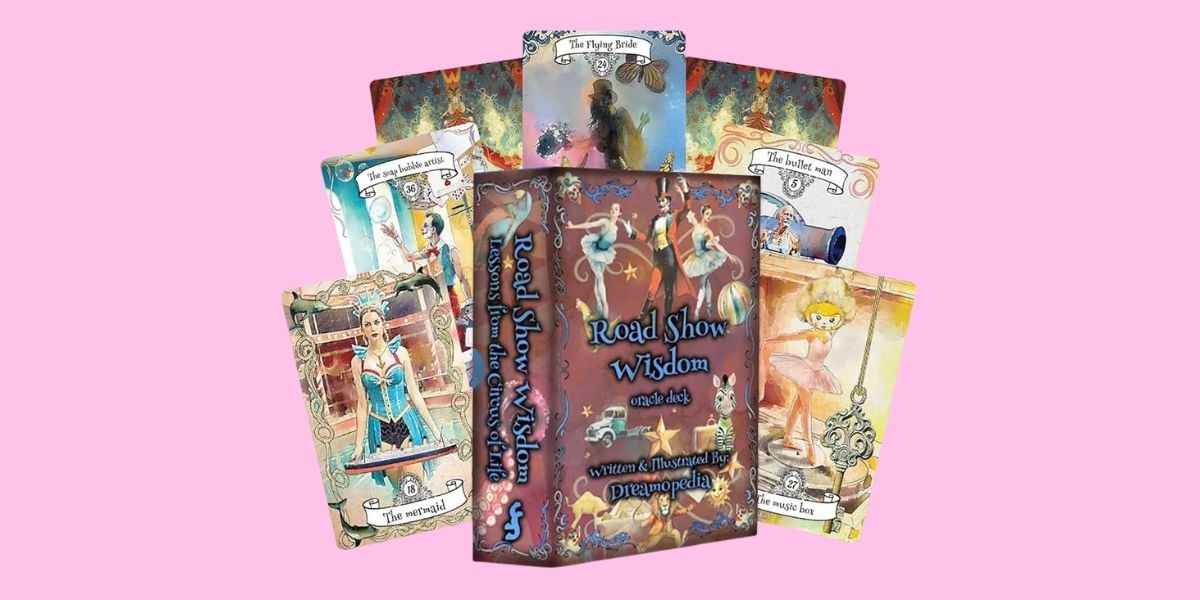
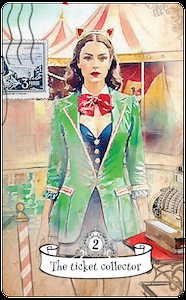
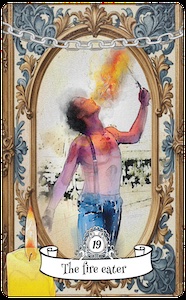
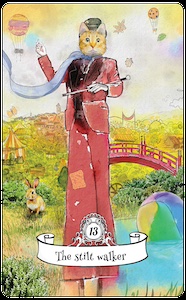
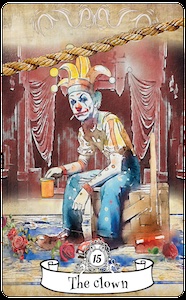
Road Show Wisdom Oracle Deck by Dreamopedia is truly beautiful inside and out. These oracle cards were definitely built to entertain. This deck includes forty-one cards, all with beautiful watercolor portraits. Cards such as The Silt Walker, The Ticket Collector, The Fire Eater, The Magic Lantern, and many more bring to life the vivacious nature of a circus, providing a unique oracle energy.

I love the theme of this deck: old circus/roadshow aesthetics. This is all thanks to the book The Night Circus by Erin Morgenstern. (If you know what I’m talking about, excellent taste in books. If you don’t, I HIGHLY recommend this book. It was one of my favorite reads when I was in middle school, and I still love the book to this very day.)

These cards are so detailed and lovely. The box is small but the details inside are stunning, revealing a carnival scene once you take all the cards out of the box. The lid has a spider-like looking clown juggling; this artwork is of the card called Juggler.

This deck is full of life and whimsy, which I absolutely love. The cards are large but they shuffled with great ease. At first, they felt awkward in my hands, but I got used to the feel of them after a few uses. The illustrations are colorful and extremely detailed. I’m a sucker for a deck with lovely artwork, as I’m an artist myself. Each card was a new treasure for me to discover.

The guidebook it comes with was also awesome and very detailed. I loved the fancy font that was used. Each card has a story behind it with words written so wonderfully that it was easy to picture what was being read in my mind. Dreamopedia is not only a great artist but has a great knack for writing as well. The content is easy to read and it really fits the whole vibe of the deck itself.

At the beginning of the guidebook, Dreamopedia explains how the cards are divided into eight stages and explains how this “reflects different facets of personal development, encompassing observation, planning, growth, and reflection.”14 It is then explained how this structure provides additional guidance in regard to the progression of sequence, more generalized theme, guidance about where you’re at within the journey, and a creative metaphor for exploration.

For each card, there’s a rhyming poem, a bit of circus history that gives context to the card, and the card explanation. What’s unique about the explanation is that Dreamopedia uses numbered lists, so there’s more than one meaning, providing a multi-faceted insight to the question at hand, though they all blend together within the common theme. There’s also an invitation at the end of the entry, detailing what the presence of the card signifies and the opportunity available as a result.

I spent over three weeks with this deck and I’ve really fallen in love with it. This deck has brought a lot of excitement into my life with all of its charm and whimsy. My first reading with it I pulled out The Mermaid. The mermaid on the card is beautiful. The message of just simply following curiosity really did reveal things that were hidden beneath the surface. Curiosity killed me just a bit. Without going into detail with my personal experience, oh boy this card really was an eye opener, in the most over the top manner.

The three words that best describe the deck’s attitude: mysterious, moving, and free. I have to say out of all the decks I’ve reviewed, Road Show Wisdom Oracle Deck really got me. The first week I used this deck it wasn’t my typical lighting fast connection. This one had a bite to it. The more I used it and attuned with it, it became more friendly.

My second card I pulled was The Hot Air Balloon. This card stuck out to me because I have a huge fascination with hot air balloons, but the message hit me deeply. The need to release but also balance and control. I pulled this card at a significant time because I cut ties with my toxic mother. It was hard but I know this will be the best for me in the end. One of the card explanations reads:

“To rise, the balloon must shed weight. This suggests letting go of attractions or limitations to reach goals.”15

Overall, I really enjoyed bonding with Road Show Wisdom Oracle Deck, and I can’t wait to see how it helps me in the future. Dreamopedia has really brought to life the energy of the circus, bringing creativity and inspiration to divination.I recommend it for those who are looking for a bit of novelty and fun in their oracle readings. 

The Runes and Roots Oracle, by Nicolette Miele and Adrienne Rozzi

The Runes and Roots Oracle, by Nicolette Miele  and Adrienne Rozzi
Destiny Books, 979-8888502471, 144 pages, 36 cards, November 2025

Runes and plant magic speak the same old language of the earth: one carved into symbols, the other rooted in leaf and stem. Both arise from close listening to cycles, seasons, and the subtle ways meaning reveals itself through form and growth. Beyond simply a divination tool, The Runes and Roots Oracle by Nicolette Miele  and Adrienne Rozzi is an invitation to delve deeper in this ever-flowing realm. Rooted in Norse mythology, witchcraft, and plant wisdom, this oracle deck asks the reader to step into a mythic–imaginal world where symbols are alive, the land speaks, and knowledge is earned through relationship rather than immediacy.

At its core, the deck’s purpose is clear: to reunite runic magic with the living intelligence of the natural world. Each rune is paired with a specific plant ally, emphasizing particular energetic, psychological, or spiritual dimensions of the symbol. These pairings are not merely illustrative but deeply intertwined.

Horny Goat Weed, for example, accentuates the erotic and creative fire of Kenaz, foregrounding the rune’s generative, catalytic force; meanwhile, Lavender is paired with Wunjo, which together “gently remind us that within each of us, there is a sanctuary where we can always find solace, peace, and the magick of simply being.”16 In this way, the deck operates as a fusion of esoteric knowledge and embodied, earth-centered wisdom.

Roots in Feminine Power and Norse Cosmology

A strong current of feminine spirituality runs throughout the deck. The creators draw deeply from the mythic presence of the Norns, the weavers of fate, and from Mother Nature herself as an animating intelligence. Rather than offering a detached system of meanings, The Runes and Roots Oracle asks the user to engage with the spiritual and cultural background of Norse cosmology, combined with western esotericism and plant magick, as a living worldview.

This mythic engagement is reinforced through the spreads provided in the guidebook. Larger layouts such as the nine-card Yggdrasil spread or Loki’s Unveiling the Shadow four-card spread encourages deep psychological and spiritual inquiry, while even simpler three-card spreads (past, present, future) are framed through the lens of the Norns and the unfolding of Wyrd. The result is a deck that consistently gestures beyond fortune-telling toward participation in a living mythos.

There are 24 cards that feature the traditional Elder Futhark as well as an additional 12 Bind Rune Aett, which are created by combining two or more runes together. The intricacy of the plant correspondences with runes make for very layered, thoughtful card meanings.

The Booklet as Initiatory Text

The accompanying booklet reinforces this initiatory tone. Rather than functioning as a purely reference-based manual, it is structured as a frame narrative: the reader encounters Yggdrasil, engraved with runes, and meets the Norns themselves. This narrative device subtly shifts the reader from consumer to seeker.

The booklet includes a unique ritual for cleansing and binding the deck to the user, underscoring the idea that this oracle is meant to be informed by one’s relationship with the deck. Notably, the rune and plant entries are not numerically ordered, requiring frequent consultation of the index. While this may be mildly inconvenient for beginners, it also feels intentional—less a flaw than a design choice that favors intuition and familiarity over efficiency, particularly for those already conversant with the runes.

Later sections of the booklet, especially those dealing with bind runes and ritual work, further emphasize that this is not a deck designed for instant clarity. It is something “found,” like a relic pulled from a crone’s library, that must be studied, lived with, and slowly understood.

Card Imagery: Ancient Pages, Living Symbols

Visually, the cards resemble pages torn from an ancient spell book: parchment, papyrus, and aged engravings layered with symbols. Each card features a combination of imagery surrounding the central rune and its plant ally. There is a palpable nostalgia here, reminiscent of 16th-century pen-and-ink manuscripts, which harmonizes beautifully with the booklet’s suggestion that this deck originates from a witch’s cottage hidden deep in the woods.

User Experience and Learning Curve

My immediate impression of the deck was one of admiration, especially for the thoughtful integration of plant wisdom into the runic system. The imagery is vivid and layered, inviting contemplation rather than quick interpretation. That said, the cards themselves contain few descriptive keywords. Unless one is already familiar with rune meanings and/or herbal correspondences, readings often require repeated reference to the guidebook.

This becomes particularly noticeable in larger spreads, such as the nine-card Yggdrasil or the twelve-card Web of Wyrd, where grasping the gestalt of the reading can be challenging without significant prior familiarity. With time and repeated use, however, the deck clearly becomes more intuitive, suggesting that this slow unfolding is part of the designers’ intention.

In this sense, The Runes and Roots Oracle does not present itself as a tool made for the user so much as a tool the user must grow into. Its wisdom is not delivered; it is cultivated. In a similar spirit of cultivation, the plant wisdom of the deck may be taken as purely symbolic or ritualistic. However, the oracle also invites the user to put the deck’s plant lore into actual practice–though first advising the user to approach herbalism with due care and caution.

Final Thoughts

The Runes and Roots Oracle is a richly textured, deeply intentional deck that rewards patience, study, and mythic imagination. By uniting runic magic, plant allies, and feminine cosmology within a narrative framework, Miele and Rozzi have created something that feels less like a product and more like an inheritance, an artifact from a living tradition.

This deck will likely resonate most strongly with practitioners of witchcraft, those already familiar with the runes, those with an interest in plant correspondences, and readers drawn to slow, initiatory forms of divination. For such seekers, The Runes and Roots Oracle offers not just answers, but a relationship with symbols, with nature, and with the whispering roots of fate itself.

Seeds of Light Oracle Deck, by Danielle Venables and Stephanie Wicker-Campbell

Seeds of Light Oracle Deck, by Danielle Venables with artwork by Stephanie Wicker-Campbell
Muse Oracle Press, 9780645885095, 140 pages, 48 cards, November 2025

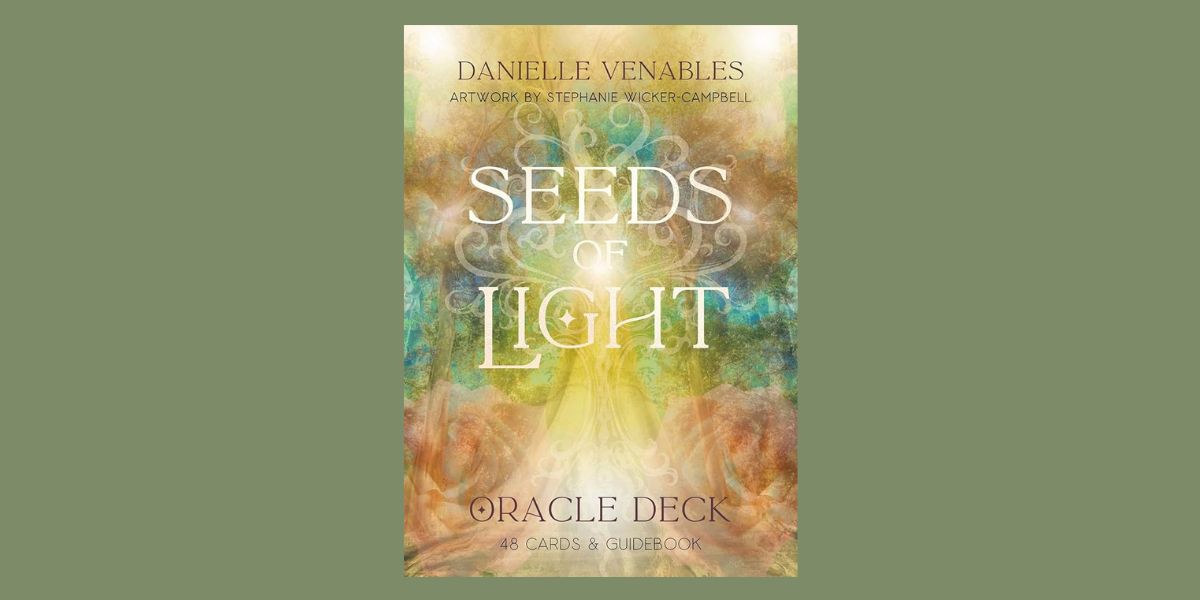
Seeds of Light Oracle Deck by Danielle Venables with artwork by Stephanie Wicker-Campbell is a colorful deck that invites users to connect with their intuition and cultivate personal growth through its evocative imagery and thoughtful guidance.

Danielle Venables is an author, mentor, akashic guide, and mother. As a spiritual midwife, Venables’ work focuses on soul purpose, holistic success, conscious leadership, and motherhood initiations. She has guided hundreds of women on their journey of empowerment since the birth of her daughter in 2019. She feels that this personal event ignited her own spiritual awakening. With this deck, she wants to “plant seeds of light.”17 You can learn more about her on her website.

“It is her goal, and soul mission, to plant seeds of light across the planet and activate the remembering of the divine light within every soul here at this time and to ultimately see the very fabric of society shift into more peace and harmony.”18

Stephanie Wicker-Campbell is a gifted illustrator and artist who combines artwork in a way that is simply out of this world. She has illustrated numerous oracle decks, journals, and book covers in rich hues and beautiful renderings. Here are some of her other publications reviewed previously.

What interested me about this deck was the name and the idea that we are all planting and harvesting “seeds of light.” As a lightworker in a modern world, I can use this special oracle for tapping into divine wisdom, and so can you!

To test the deck, I took it to my Friday Coffee & Cards group and my friends loved it!  Here is a short recap of a few of the cards drawn by the ladies in the group and their response to the guidance:

TB had a question about a relationship.
She drew the card Let Go. She smiled when she read “Trust that what’s meant to stay in your life will stay, without you trying to control and hold it together.”19

KS wanted to know how to best support her daughter, who is struggling.
This is her card: Sovereignty. The guidance included a note to be mindful of being overly generous or overextending yourself. She knew exactly what that meant and thanked me (and Venables) for the guidance.

LK asked a question about a financial matter.
Her card was Integrity. She was really challenged by the questions posed in the guidebook and the admonition to “consider whether your actions align with your values and vision.”20

The guidebook is carefully structured to make finding the guidance for each card easy, as Venables lists each card in alphabetical order in the Table of Contents.  For each card, she features a full-color photo of the card, lists the name of the card, a few key words, and then guidance.

She wraps up the written wisdom with what she calls “Integration” and lists two or three questions for more insight. I really love these questions, as it takes the guidance to a more personal level. You can journal your answers to the questions or just ponder the ideas presented.

Venables includes several spreads as well as a section on how to work with the cards. She covers the basics of setting the scene, shuffling, and allowing the cards to speak to you. Venables also presents the concept of reversed cards, how to read them, and gives several examples of interpretations of reversed cards.

In the back of the guidebook, she includes a short appendix, which lists the types of senses or “clairs” that everyone uses to tap into spiritual wisdom. This is one of the best descriptions of this topic that I have seen. 

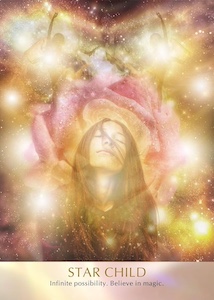
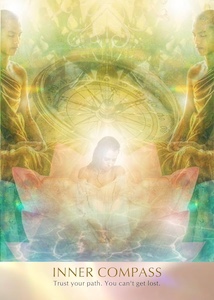
One of the most striking features of the Seeds of Light Oracle Deck is its vibrant, uplifting artwork. Wicker-Campbell masterfully blends gentle pastels and radiant colors to convey a sense of hope, healing, and possibility on each card. The illustrations are modern yet timeless, with symbolic elements that encourage contemplation and connection. The back of the cards features a decorated frame that feels like a portal to higher guidance. One can use this image for meditation or gazing for more wisdom.

The card stock is of high quality with a smooth, matte finish, making shuffling easy and enjoyable. The deck is packaged in a two-part box that is both sturdy and beautifully designed, reflecting the care and intention behind this divination tool. The inside of the deck box reads:

“When you move in unwavering devotion to the desires of your heart, you can move mountains with faith alone.”21

Overall, Seeds of Light Oracle Deck is a heartfelt, radiant companion for anyone seeking guidance, inspiration, or a deeper connection with their own inner wisdom. Its combination of beautiful artistry and thoughtful messaging makes it a valuable addition to any spiritual toolkit.

Venables’ words are positive, encouraging, and compassionate.  Yet, the questions she poses invite introspection and accountability. Whether used for a daily card draw, in-depth spreads, or creative journaling, this deck truly plants seeds of light for personal and spiritual growth.

I plan to keep this deck on hand for my own daily card adventures and utilize it to close out client readings. The thoughtful questions Venables poses will be a great addition to my readings and discussions with clients and friends.

Memento Mori, by Red Wheel/Weiser

Memento Mori: 36 Cards to Embrace Life, by Red Wheel/Weiser
Red Wheel, 1590035860, 36 cards, October 2025 

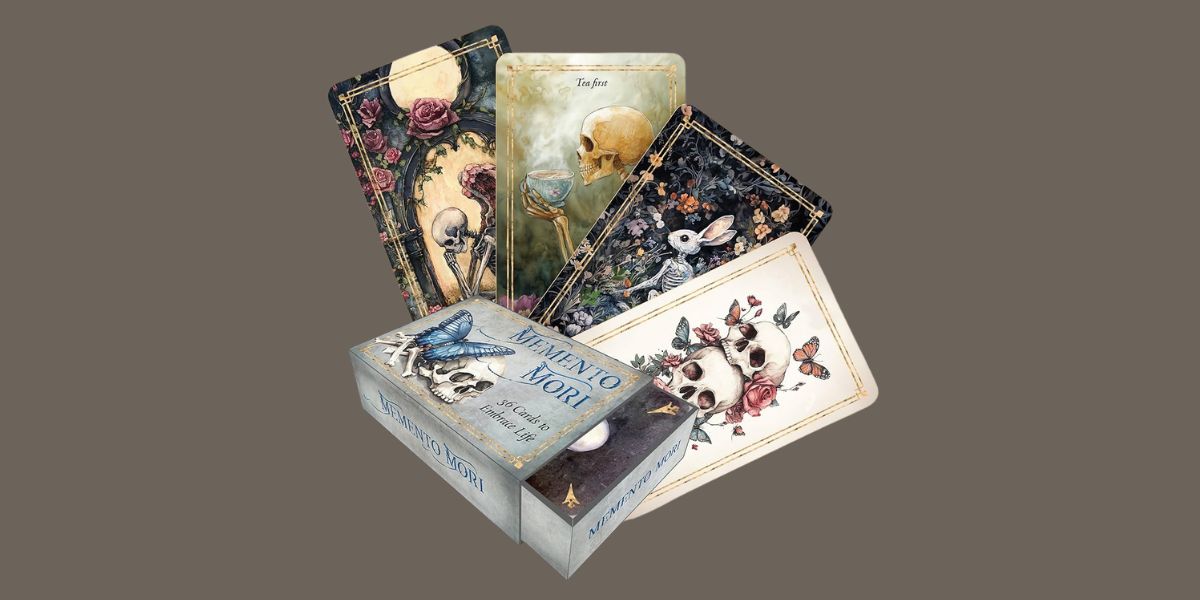
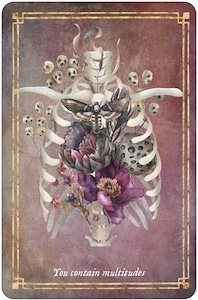
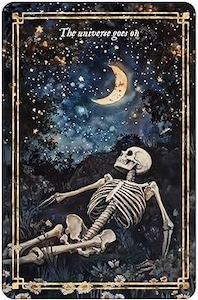
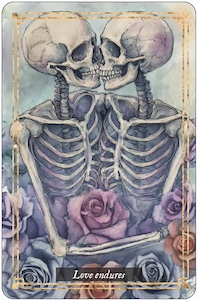
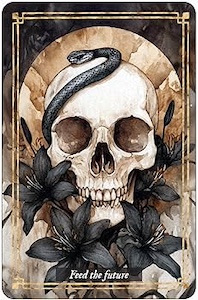
Memento Mori: 36 Cards to Embrace Life is far more than a simple oracle deck; it is a  contemplative, visually arresting meditation on the universal human experience. Rooted in  the ancient maxim Memento Mori, Memento Vivare— “remember that you will die, do not  forget to live”—this deck offers a uniquely balanced fusion of mortality and vitality.  This 36-cards set invites readers to reflect on the  fragility, beauty, and sacred ordinariness of life through art that is both haunting and deeply life-affirming. 

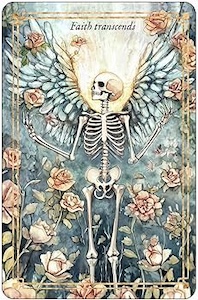
The first thing that struck me about this deck was its powerful intentionality. Each card  depicts a skeleton—no identities, no hierarchies, no distinctions. Whether a gardener, a  healer, a wanderer, or a childlike rabbit figure, every being is rendered with the same bones beneath the surface. This symbolic leveling highlights the truth at the heart of memento mori: regardless of where we come from or where we believe we are going, we walk the  same path from dust to dust, from life to death. Rather than approaching this with heaviness, the deck uses that equality as a basis for solidarity, compassion, and the celebration of the present moment. 

The artwork is one of the deck’s greatest strengths. Against a cool, subdued gray  background, evocative of ash, stone, and impermanence, vibrant  florals, botanical elements, and richly hued natural motifs are used to create striking visual contrast. The result is a language of opposites brought into harmony: the starkness of bone beside the lushness of life, the quiet of the grave beside the riotous bloom of flowers. Each  card feels like a small fine-point sketch brought to life, full of delicate linework and a painterly use of color that softens the subject matter while also imbuing it with unexpected  warmth. 

The simplicity of the messages is another defining feature. Phrases such as “Hold Space”, “Be the Light”, and “Your Path Is Open” guide the reader toward grounded, practical wisdom.  More than offering predictive statements or metaphysical abstractions, the deck focuses on actionable invitations to presence, kindness, connection, and courage. In a world oversaturated with noise, these short declarations feel like distilled clarity, acting as gentle reminders to inhabit the only time we truly have in the present moment.

The companion text on the introductory card expands on this philosophy beautifully. It  acknowledges death not as something to fear but as something to understand, presenting death as a teacher that encourages us to savor our days more deeply, to notice our habits and attachments,  and to remember that each moment holds the potential to shape the legacy we leave  behind. By embracing the transient nature of our existence, we are invited to live with  greater intention, to love more freely, and to let go of what is unnecessary.

Structurally, the deck is remarkably user-friendly. Its 36-card format feels intentional and  uncluttered, giving each image the space to speak for itself. The cardstock and printing quality, demonstrated in the richly detailed fronts and the elegant skull motif on the card backs, reflect a high level of craftsmanship. The minimalism of the guide materials also supports the deck’s overall theme of nothing extraneous, only what is essential. 

One of the most compelling aspects of Memento Mori is how it frames mortality not as an  imposed limitation but as an invitation. The presence of skeletal figures reminds us that beneath our stories and differences, we are united in our origin and our eventual return to  the earth. Yet the abundance of flowers, animal life, and symbolic objects illustrates that  within that shared trajectory, there is infinite complexity, possibility, and meaning. This interplay makes the deck both meditative and inspiring—a rare duality in oracle systems.

From a practical standpoint, the deck is wonderfully versatile. It works beautifully as a  daily draw, offering a reflective touchstone for mornings or evenings. It can also support  journaling practices, shadow work, grief processing, meditation prompts, or simply  moments of grounding during stressful days. Because the messages are concise, the  cards can be integrated easily into readings with Tarot or Lenormand, adding emotional or  philosophical depth without overwhelming the spread.

Ultimately, Memento Mori: 36 Cards to Embrace Life is a deck that succeeds in delivering  exactly what it promises. It reminds us of our mortality without morbidity, guides us toward  joy without triviality. It reveals the inherent beauty of being human, not in spite of our impermanence, but because of it. For anyone seeking a tool that blends introspection, artistry, and soulful presence, this deck is a powerful companion. 

For me, working with this deck was a quiet yet profound experience. Its imagery  encouraged a sense of reverence for the everyday—an awareness that even the smallest  details of life, from a wilted flower to a fleeting moment of gratitude, carry meaning. It deepened my appreciation for the present and reinforced the truth that to remember we will die is, paradoxically, to remember to live fully. 

I highly recommend this deck to spiritual practitioners, introspective readers, artists, grief  workers, and anyone who is navigating the delicate balance between honoring the past and embracing the future. It is a beautiful tool for grounding, reflection, and reconnecting with  the essence of what it means to be alive.

The Mythical Creatures Tarot, by Jayne Wallace

The Mythical Creatures Tarot, by Jayne Wallace
CICO Books, 176 pages, 78 cards, October 2025

Throughout history, mythical creatures have served as reflections of humanity’s hidden emotions, instincts, and mysteries. From dragons breathing the fires of transformation to mermaids singing of love’s depths, these beings live in the realm between imagination and truth animated by the unseen forces that shape our lives. In tarot, they become messengers from the mythic realms, guiding readers toward greater self-awareness and spiritual insight.

The Mythical Creatures Tarot by Jayne Wallace invites readers to step into this enchanted landscape, where every card holds the spirit of a legendary mythic being, pairing their ancient wisdom with the guidance of tarot. This approach adds a deeper layer of meaning to the tarot cards, reminding readers that myth and magic are always alive in our everyday experiences and that these sacred guardians are here for counsel. Serving as a bridge between reader and these magical creatures, this deck is a reminder that myth and intuition often go hand in hand.

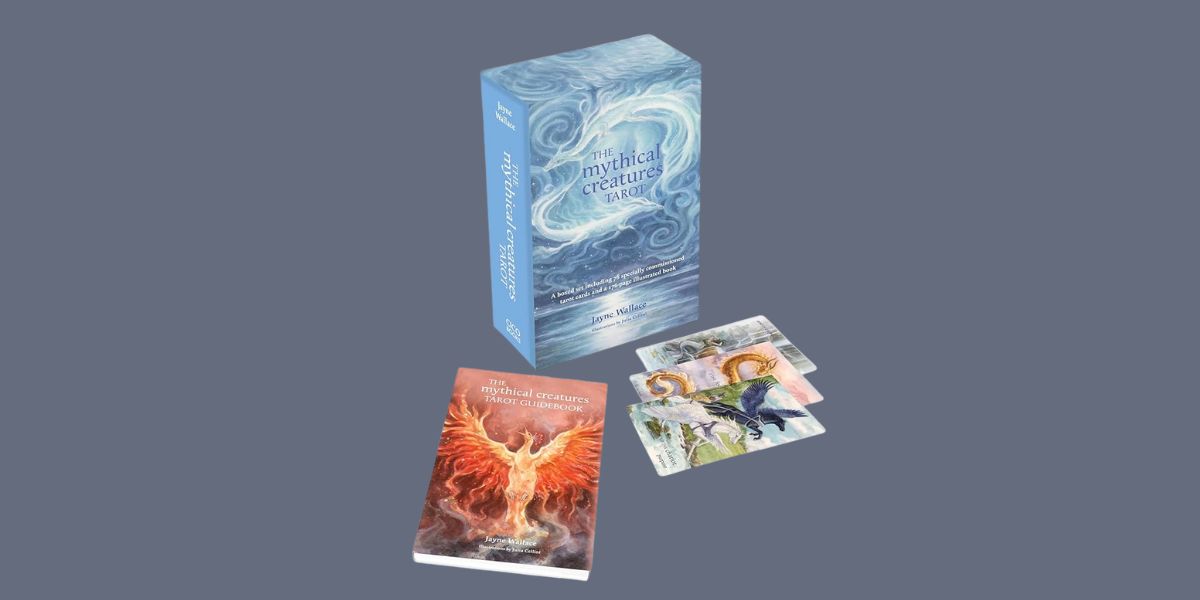
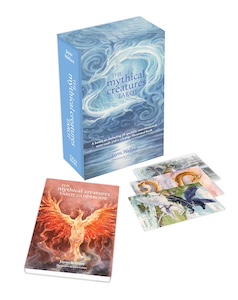
There’s a special feeling when opening a new tarot deck and the packaging and presentation of The Mythical Creatures Tarot add to the tactile and collectible appeal. This deck is housed in a sturdy keepsake box illustrated with a luminous full moon circled by two air dragons hovering above a serene body of water. Opening this box reveals a large, full-color, hardback illustrated guidebook. And underneath this is the deck itself in yet another hardbound case, safely housing the mystery and magic of this deck, with a beautiful blue ribbon to assist with pulling it out. There’s also a blue ribbon within this case holding the deck to once again aid in collecting the cards easily into one’s hands.
The matte cards are nice and large. They’re bigger than your average card deck, yet still a good size to hold in one’s hands. My first impression was how smooth the cards were; there was no friction when shuffling and none of the cards stuck together. The cards have nice weight to them too, adding a palpable pleasure to the physicality of working with this deck.

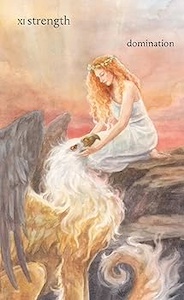
The artwork on the cards is soft, dreamlike, and filled with gentle movement, creating a sense of stepping into a living scene. Each card is rendered in delicate watercolor tones that blend earthiness with ethereal light, giving the deck a serene yet mystical tone. The imagery feels both ancient and timeless with the mythical beings depicted with grace and reverence, harmonizing with natural landscapes of misty woods, glowing skies, and flowing waters. There’s a gentle blur to the artwork too that allows for the mind to release its grip, opening up to the blending of the fantastic and familiar for new insights when gazing at the cards.

Most imagery on the cards align with the traditional Rider-Waite-Smith (RWS) illustrations, giving experienced readers a familiar foundation for their readings. Yet it is not to the point where it is a mirror of the RWS deck; there’s plenty of creative interpretation in the depiction of the legendary beings and nature-filled landscapes. Wallace includes the card name and one keyword on the card for readers to be able to quickly discern the card, yet there’s still plenty of visual space for the eyes to wander and contemplate the messages coming through visually. The symbolism of the chimeric creatures opens up a whole new array of interpretations in a reading, providing a fresh perspective on the traditional card meanings by infusing them with mythic insights. 

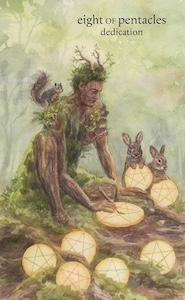
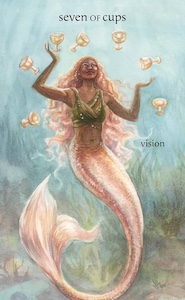
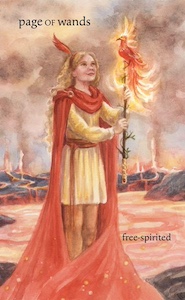
As for reading the cards, the Major Arcana is a mix of different mythological beings, including Griffin, Kraken, Pegasus, Centaur, and more. The Minor Arcana suits follow elemental creature associations:

• Swords/Air → Dragons 
• Cups/Water → Merfolk 
• Wands/Fire → Phoenixes 
• Pentacles/Earth → Dryads

For those who are new to mythological beings, Wallace has included a list in the guidebook providing a short description of each one. She also includes guidance on reading the cards in this deck and ideas for spreads to use.

For each card entry in the guidebook, Wallace has shared the name and main keyword at the top, followed by a few more key words, description of the scene the card depicts, card meaning, mythical message, and an affirmation. She writes with a tender tone, offering heartfelt wisdom. The card meanings are distilled from her tarot expertise spanning decades, while the mythical messages perfectly translate the traditional tarot meaning into a greater archetypal message that resonates on a soul level.

I particularly love how the guidebook is a well-bound hardback that’s extremely easy to hold in one’s hands with a ribbon to mark the current page. As someone who enjoys journaling, this makes it very easy to refer to the guidebook while I’m recording my thoughts because it’s  easy to flip from one page to the next. Plus, the full-scale, colored image right next to the card’s message is perfect for contemplation.

So far, I have really enjoyed this deck because the elemental symbolism of the Minor Arcana makes me feel intuitively connected to the natural rhythms of the world around me. I love working with elemental beings (especially merfolk!), and I feel this deck really serves as a bridge, connecting readers to this realm. While there’s decks devoted solely to many of these creatures, such as dragons and phoenixes, it’s nice to have them all come together in unity within this deck.

There’s something about stepping away from the humanness within the RWS deck or other traditional tarot cards that prompts revelation. The archetypal energies of the tarot are given a new avenue of expression, and Wallace has done a magnificent job translating the grandiose essence of these mythical creatures into applicable and meaningful guidance. It’s easy and very human to get caught up in the fear of the unknown, turning to the tarot for answers about what lies ahead or the best course of action. But the mythical creatures of this deck remind us of our inner strength, imaginative freedom, and flowing connection to the special energies these legendary beings share with us.

Overall, The Mythical Creatures Tarot is a beautiful and powerful addition to the tarot world. It’s ideal for readers who are drawn to mythology, folklore, and imaginative reimaginings of the cards that stretch beyond traditional interpretations. Those who appreciate a touch of fantasy in their readings will find the vibrant depictions of legendary beings both enchanting and immersive, especially if they enjoy working with elemental forces or mythic symbolism. Readers of all levels will find Wallace’s interpretations accessible, inspiring, and heartfelt, guiding them toward deeper understanding and self-discovery through the wisdom of these extraordinary creatures. It’s definitely a deck that I will be turning to again and again!