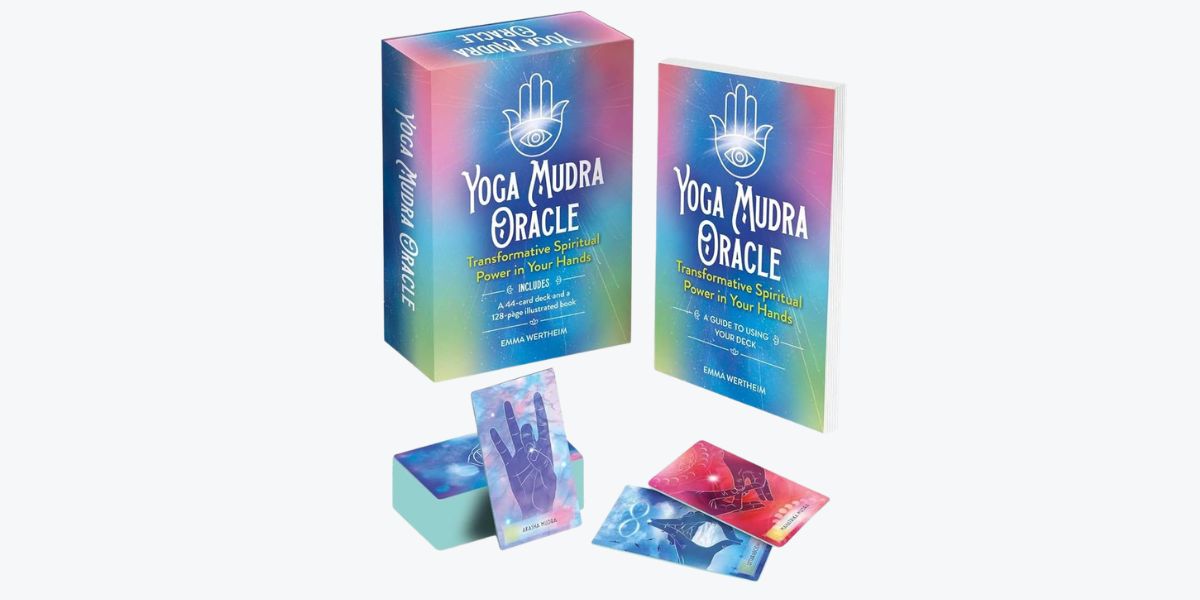
Yoga Mudra Oracle, by Emma Wertheim with illustrations by Stephen Denham Sirius, 1398849863, 128 pages, 44 cards, March 2026
I am a huge proponent of connecting to the body’s wisdom, specifically through touch and movement. This concept is even what I wrote my master’s degree thesis on: the importance of including a kinesthetic approach to education. Yoga has been a steady practice for me to connect with my inner wisdom, but I don’t always have time to do a full series of poses. As soon as I saw the brightly colored Yoga Mudra Oracle by Emma Werthheim with illustrations by Stephen Denham, I was instantly intrigued! What insights might this deck reveal and could I embody it through my body?
The answer is yes, and it has beautiful messages too! This is a hands-on deck, quite literally offering mudra poses as well as meaningful guidance. This deck contains 44 mudra cards and a 128-page guidebook designed to bring ancient yogic hand gestures into contemporary spiritual practice.
While most oracle decks work through symbolism, intuition, and reflection, Yoga Mudra Oracle adds a physical component too with each card and invites readers to form a specific mudra with your hands while contemplating its message. Instead of simply receiving guidance, you’re asked to participate in it through gesture, breath, and awareness, deepening divination through embodiment. Needless to say, I’m obsessed!
For those new to mudras, Wertheim describes them as this:
“Yoga mudras are simple, sacred postures from an ancient yogic tradition. They permit you to redirect, shape and “seal” the flow of pranic energy within the body, which can unite us with cosmic intelligence and help manifest change on a physical and soul level.”1
An example of working with a mudra is at end of a yoga session when you put your hands together to “seal” the practice. I love the idea of intentionally encapsulating the energy within ourselves, creating a connection between mind, body, and spirit.
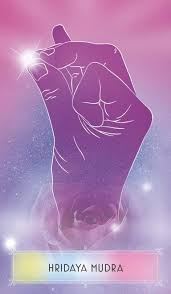
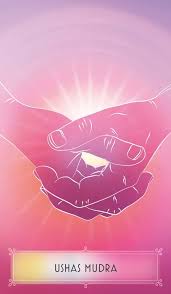
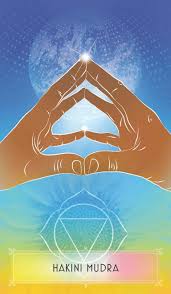
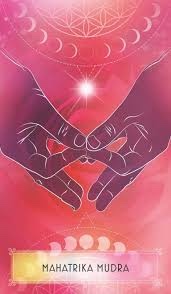
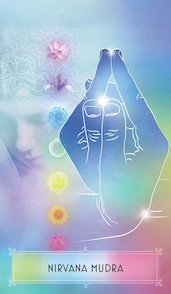
The artwork in this deck blends hand imagery, bright color fields, spiritual symbolism, and luminous energy depictions. The pair of hands on the cards are outlined in white, making it easy for the reader to copy the same pose. The aesthetic has a feeling of serenity, spaciousness, and energetic alignment. There’s a feeling of “containment” in each mudra, perfectly holding the energy of each gesture in a balanced way that brings the sensation inward for the reader to experience.
In addition to the mudras, there’s often a symbol that adds further intuitive resonance for the reader to gaze at while working with the card. I feel like this deck is perfect for both meditation as well as creating an altar space. It’s as though the dynamic energy of the mudra on each card gently radiates outward, infusing the reader with its energy through visual contemplation. The deck is also easy to hold in one’s palm and shuffles quite easily. I very much enjoy simply holding the deck and feeling its spiritual energy.
Rather than be numbered, at the bottom there is the name of the mudra. It’s up to the reader to find the entry in the guidebook for further oracle insight, but the entries are listed alphabetically, so it’s pretty easy to navigate. There’s also an index at the back if you don’t want to flip through and prefer finding an exact page number. While most of the mudras in the deck are traditional yoga ones, there are a few non-traditional ones that Wertheim intuited; she notes which ones these are so readers are aware when working with the deck.
The guidebook begins with an introduction by Wertheim, where she talks about her interest in mudras and the study she’s put into working with them. She then provides a very interesting introduction to mudras, explaining the vitality of the hands and ancients of this practice. I was fascinated to realize how “Similar to foot reflexology, all areas of the hands are thought to connect to corresponding organs, glands, nerves, and meridians throughout the body.”2. She presents mudras as an accessible way to work with energy, which is perfect for those of us who don’t always have the time for a longer practice.
Wertheim lays a great foundation for beginners in the guidebook too. She explains how to prepare your hands for mudra, how long to hold them, and what to do if one doesn’t resonate or your hand can’t hold the shape. She covers chakras. And there’s even guidance on preparing to work with the deck (cleansing, how to consult the deck, and layout options). All throughout, Wertheim’s tone is gentle and encouraging. While she’s clearly sharing her passion with readers, she also encourages everyone to do what works best for them, pausing to stop and enjoy the experience. I appreciate her dedication to making this deck useable for all, as well as her heartfelt consideration for readers’ experience.
As for the entries in the guidebook, they’re beautifully crafted. The title is in big letters and there’s an image of the card. Beneath is a subtitle, further explaining the card and keywords or symbolisms. It is here that Wetheim notes if the mudra has been intuited too. The opposite page explains the mudra—what it calls you to do or invites into your energy field. There’s also directions for how to do the mudra, which is helpful for people like me who like specific instructions. Finally, Werthiem includes an affirmation. Occasionally, there’s also a quote that reflects the energy of the mudra.
The first card I pulled when working with this deck was Naga Mudra, subtitled Goddess Rising. Instantly, I felt the activation just looking at the card. I had just come from meeting with a long-time spiritual mentor for the first time in person. I had connected with a great group of people and was really feeling my divine feminine leadership; I was still tingling from the experience. Aptly, this card immediately brought awareness to this fire burning within, noting “The energy is rising through your chakras now”.3 Wertheim further writes:
“The symbols used in this card—such as Naga (the snake goddess—represent wisdom, fertility, and creative force. The ancient Egyptians ankh symbol is known as “the key of life”. Fire represnts the pure fire of insight and the awakening of potent energy within you.”4
Not only did it feel aligned to draw this card, but it was so amazing to have the mudra to ground the energy. Holding the mudra channeled this energy throughout my body, infusing my spirit with it and embedding it in my physical form. Instantly, I was hooked on the power of mudras!
While all can enjoy the experience of connecting with their embodied wisdom through mudras, I highly recommend this deck to those who enjoy meditation, yoga, energy practices, or are seeking a unique oracle deck. This deck is a great one for attuning to the energy of the present moment, and I’ve enjoyed pulling a card before creating a ritual space to set the tone and find center. Pulling a card, holding the corresponding mudra, and sitting with the guidance for several minutes turns a reading into a contemplative practice.
Overall, Yoga Mudra Oracle does a wonderful job combining sacred mudra practice, oracle wisdom, and uplifting artwork to create a thoughtful spiritual tool that feels both modern and rooted in ancient traditions at the same time. The alignment that comes from working with the mudras is sensational. And Werthheim’s inspired wisdom is perfect for a gentle reading, one that encourages you to slow down and enter a contemplative state. This deck isn’t so much for knowing what’s to come but rather honoring what is appearing in the moment. The physical component with the energetic resonance makes for an impactful reading!
Alanna Kali is an astrologer, numerologist, and pioneer spirit that loves to explore life through the lens of depth psychology. She has a passion for studying the humanities and social trends. Her academic work is centered upon reuniting body, mind, and spirit through eco-psychology. She loves reading, spending time in nature, and travel.
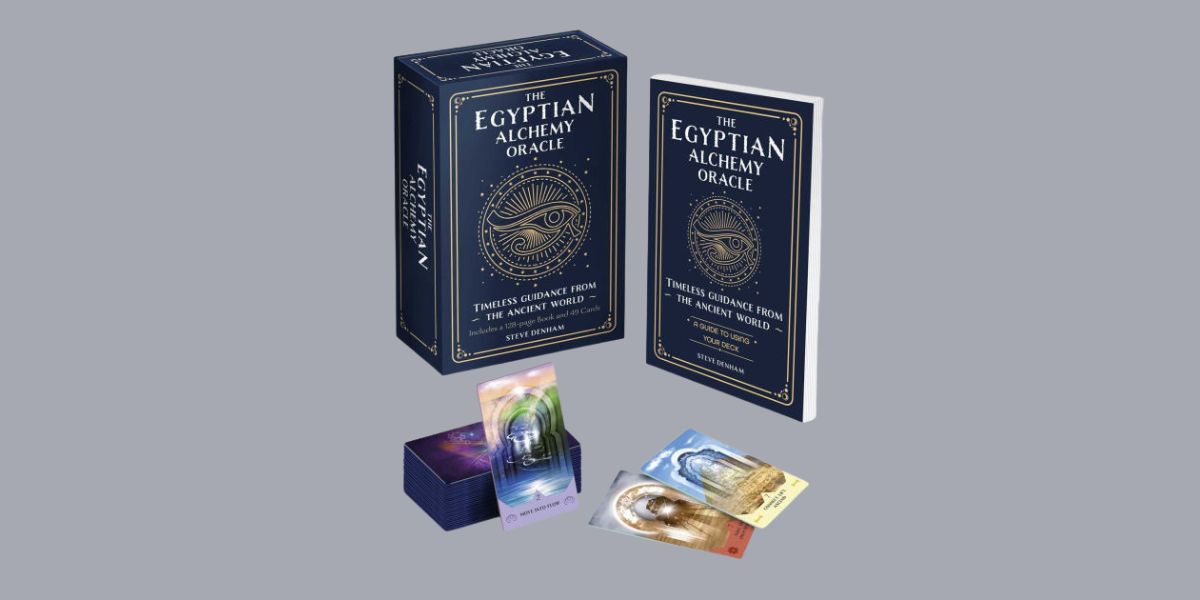
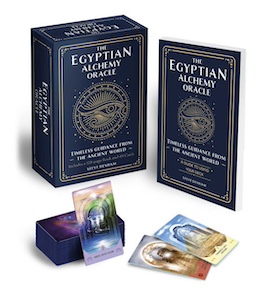
My favorite books and decks are ones where you can tell the author had a spiritual calling to put forth that work. From the moment I opened The Egyptian Alchemy Oracle, I knew this was going to be one of those special decks. This 49-card oracle deck by Steve Denham opens a pathway of wisdom or inner awakening and spiritual refinement based on the 7 Hermetic principles detailed in The Kybalion, a text written by the “Three Initiates” in 1908. Denham writes:
“Sifting through this manifesto, which harks back to the esoteric knowledge of ancient Egypt and purports to articulate the energetic laws that govern the universe, nature and human existence, I realized I had become privy to something quite extraordinary.”4
While The Kybalion was written in the 20th century, in the introduction, Denham explains how this Hermetic alchemy was popular during the Hellenistic era (323-331 BCE) during which Hermes Trismegistus contributed much to occult wisdom. Inspired by this Hermetic philosophy, Denham added his own creative touch, developing 7 intuitive messages for each of the 7 principles as well as meaningful artwork, to create this deck.
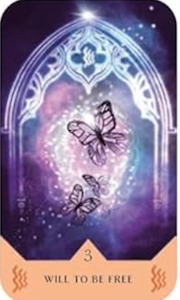
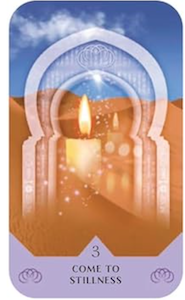
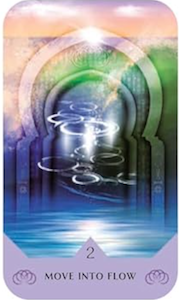
Visually, each card is laced with meaning. The artwork blends mystical compositions–images of the earth and space that highlight the limitlessness and expansiveness of universal mystery–with digitally layered sacred imagery. There is a symbolic arched gateway featured on every card, serving as a portal to the realms beyond. Denham explains, “the archways are like ‘keyholes’ or ‘doorways’ through which hidden worlds and dimensions become accessible.”5
The name and number of the card is detailed at the bottom. Each principle has its own symbol and color too, allowing readers to distinguish the card type quite easily when working with the deck. Even the back of the card has significance, which Denham describes as a “Master Key”6 symbolized by the crossed keys of Hermetic alchemy.
While the cards themselves are tantalizing and engaging, it was really the guidebook that illuminated the full spectrum of use for this deck. In addition to the details already shared, Denham also teaches readers how to use the deck, likening it to a magic carpet ride through dimensions. He shares spreads and guidance for interpretation as well. My favorite part of Denham’s reading approach is inviting the reader to bring in love to engage with the principles, infusing the deck with this potent energy to be the “eighth” key.
The rest of the guidebook is sorted by principle. At the start of each one, Denham shares an overview of it and how it comes through in The Egyptian Alchemy Oracle. Just like the deck itself, all the pages of each principle are color-coded, making it easy to flip through and find the card message you’re seeking. The entries all feature an image of the card, a description of the card, a one-sentence directive, and questions to reflect upon.
The messages are definitely metaphysical. This is a deck to contemplate a meaningful philosophy and see how the principles can inform your current situation. Compared to other oracle decks, this one invites more cerebral engagement, though gazing at the cards can also lead to a symbolic awakening too.
I think readers who are dedicated to working with this system long-term would reap the most benefit, as it feels like an initiatory deck to me. Yes, there’s an intuitive aspect to working with the cards where you can do a daily draw, but the deck also operates as a unified symbolic worldview to explore over a period of time. There’s many facets and dimensions to it that could honestly take years to explore, particularly if you want to go deep into the alchemical symbolism.
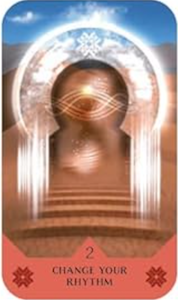
As for me, I apparently am doing some intense energy work relating to the fifth principle: Rhythm. Every single card I have pulled (and I’ve done at least 6 one-card draws) have been Rhythm ones! Specifically, I’ve pulled the card “Change Your Rhythm” multiple times.
This card relates specifically to the “connection between being and breathing”7. I find this really interesting as, embarrassed as I am to admit, I’ve developed a bit of a nervous tick recently from being so stressed. The only way I’ve found to be more conscious of it and ease it away is through pausing to breathe, which I never would have thought to do if I wasn’t pulling this card over and over. For this card, Denham writes:
“To expand what you are seeing and feeling – stop, come to stillness, change your rhythm.”8
The question posed for this card relates to habitual behavior and negative thinking too, further revealing that I need to focus on my breathing to overcome the perpetual loop in my mind, causing me enough distress to have an unconscious tick now, which is popping my jaw by the way! Attuning to the principle Rhythm is a great reminder to let things flow. I can release control, be present, and shift the way I move through my life.
I am looking forward to eventually exploring the other principles more deeply, but for now, I am trusting that working with this one specifically and intentionally will have the most meaningful impact.
Overall, The Egyptian Alchemy Oracle opens new doorways for readers to explore metaphysical realms and discover a map for transformation rooted in a seasoned spiritual framework. Those who are interested in Hermetic philosophy, particularly The Kybalion, benefit from the integrative ways Denham has provided fine-tuned interpretations of the principles to carry messages through this deck that can be practically applied to one’s life. Working with this deck has grounded the symbolism and esoteric wisdom in a new way for me, making it much more engaging and able to be contemplated and connected with.
While the traditional oracle reader can certainly glean meaningful insight from this deck, I recommend it more for those seeking a more structured system to immerse themselves in. The combination of alchemy, symbolic initiation, and contemplative depth overlaps naturally with the kind of integrative spiritual work those who are interested in metaphysical discourse and soulful transformation will gravitate towards. Those who are philosophers at heart will enjoy Denham’s insightful presentation of the 7 Hermetic principles and appreciate the initiatory nature of this deck.
Alanna Kali is an astrologer, numerologist, and pioneer spirit that loves to explore life through the lens of depth psychology. She has a passion for studying the humanities and social trends. Her academic work is centered upon reuniting body, mind, and spirit through eco-psychology. She loves reading, spending time in nature, and travel.