✨ A Gathering Place for Magical Readers and Writers ✨

Tag Archives: crossed crow books

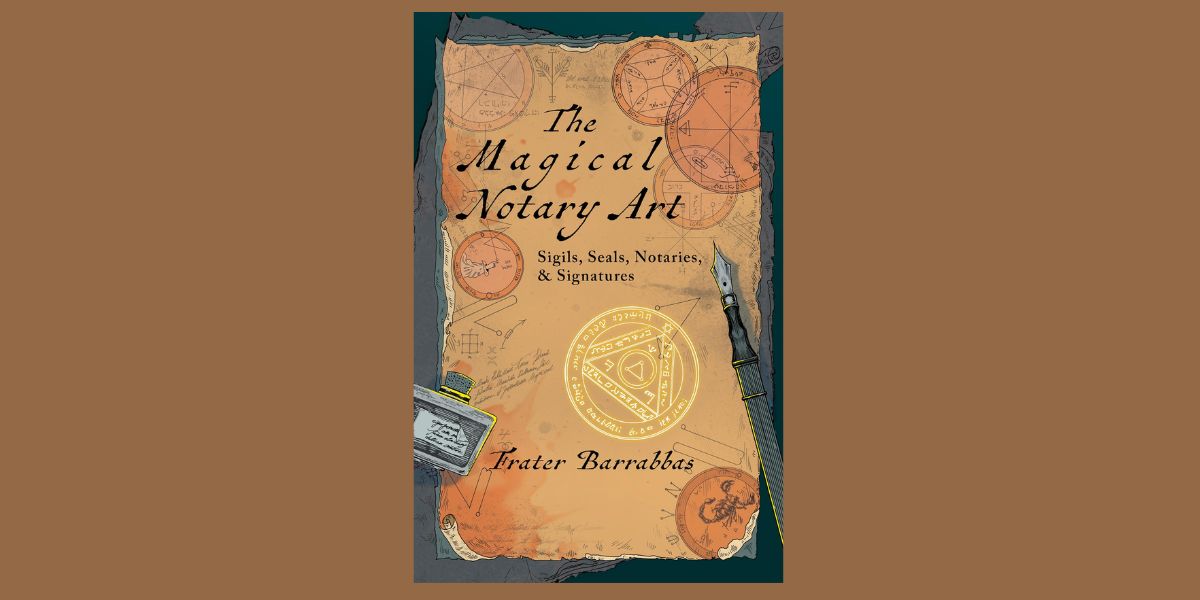
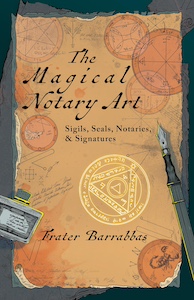
The Magical Notary Art, by Frater Barrabbas

The Magical Notary Art: Sigils, Seals, Notaries, & Signatures, by Frater Barrabbas
Crossed Crow Books, 1959883968, 170 pages, May 2025

Frater Barrabbas’s The Magical Notary Art is a detailed compendium for those interested in mastering the skill of transforming the written word, sigils, and symbols into vessels of power. Notably not a book for beginners, Barrabbas’s teachings are a mixture of scholarly background information and practical guidance for those interested in adding this skillset to their magical practice. Detailing different techniques and methodologies, Frater Barrabbas has created a multi-faceted resource that provides practitioners with a strong foundation to further their craft of notary arts.

“The notary art is a method of writing or producing an occult language that has meaning and significance within the spirit world, and therefore has a certain power and mystery in the mundane world.”1

Before delving into art of notary, Frater Barrabbas provides a solid introduction about what notary art is and how it works, including an overview of information model theory. (Side note: For those interested in learning more about the linguistics of magic, I encourage reading The Languages of Magic by Toby Chappell, which I read just a few weeks ago and made me feel more prepared for the content of this book.)

“Part 1: Sigils, Seals, and Signatures for Spirits” focuses on applying these notary arts to empower one’s rites with the invocation and evocation of spirits. The methods covered by Frater Barrabbas are magic squares, which he notes is one of the oldest methodologies to create sigils and seals, planetary kameas, alphabet wheels (Hebrew, Greek, and Latin), and angelic and demonic seals. There’s also a chapter on how to create magical signatures by condensing letters that includes a fascinating section on how tarot can be used to define the qualities of a spirit.

Frater Barrabbas teaches how if one wants to work with a spirit, especially one with minimal lore, the magical practitioner can do a general reading about their spiritual nature by noting the major arcana tarot cards that correspond with the letters in their name and doing a reading in order to prepare for conjuring. To be honest, I didn’t try it out with any spirits yet, but I did it for my name, along with some family members’ names to practice, and it was quite illuminating!

Through the chapters, Frater Barrabbas includes tables, drawings, and step-by-step instructions detailing exactly what to do for each of these methodologies. I appreciate how he openly shares which techniques he personally uses in his practice compared to those which he doesn’t utilize but is still sharing the how-to for others.

For instance, though he shares how to use magical squares to draw sigils, he also writes “Many spirits do not fit into these nice and neat categories, and some of them cannot be adequately represented by Hebrew spelling since they have Greek or Latin origin.”2 I enjoyed the balance of Frater Barrabbas’s teaching how to perform the methodology while also openly acknowledging the limitations; it gives a lot of room for the practitioner to make their own decisions and find what works for them.

“Part 2: Alphabet of Aspirations: Sigils, Words, and Phrases of Power” focuses on notary arts “derived from phrases that describe desires, aspirations, and magical objectives.”3 In this section, Frater Barrabbas shares the work of Austin Osman Spare (specifically his alphabet of desire), pictograms, and creating chants and mantras based on graphic sigils. This section gives readers free-range in crafting notary art that aligns with their personal intentions, offering plenty of creative freedom within these structured techniques.

My favorite part of this section is Frater Barrabbas’s discussion of Art Notoria: the Notary Art of Solomon the King from the late medieval period. The magical notae showcase “great symbolic figures and geometric shapes where these prayers and words of power and evocation were integrated into designs”4. Frater Barrabbas testifies the magical potency of working the nota and teaches how modern practitioners can include them in their workings now.

“Part 3: Rites of Sigil, Seal, Note, and Signature Consecration” and “Part 4: Magical Uses of Sigils, Seals, Notae, and Signatures” delve into the two ways the notary arts become activated and empowered: consecration and rites. These are how the magical link is established, determining whether the work is successful or not. In the introduction, Frater Barrabbas explains:

“It doesn’t matter if the main magical working is employing the spirit model, energy model, or the psychological model: building and deploying the magical link between subject and object through the domain of Spirit is integral to all forms of successful magic.”5

These sections are where Frater Barrabbas teaches just how to do this to ensure one’s notary art has the oomph and connection needed to serve its function. Methods covered include the use of sacraments, which themselves need to be consecrated and charged, mediation, and chanting. Also covered in these sections are creating sacred space and discussions of different forms of magical operations (energy, spirit, and psychological/temporal) so that readers can select the model approbate for their working. Within the spirit model is a great conjuring rite for those who are interested in performing this as part of their notary art.

Towards the end of the book, Frater Barrabbas covers the many ways a practitioner can incorporate the notary arts into their rites: imprinting and directing raised energy fields, symbolic naming for invoked or evoked spirits, building a temporal link and directing talismans, deity placeholders and naming animated statues and pictures, and working with consecrated sigils and notae. For each section, plenty of detail is provided, including tips from Frater Barrabbas and resources for further study, if the practitioner wants more information.

Frater Barrabbas writes with clarity and authority, ensuring his research and expertise comes across in a balanced manner. His tone is rather serious, giving a weighted testament to the content of the book. However, his earnestness lets readers know he understands the process of gaining experience and growing as a magical practitioner, leaving room within the text for readers to find their own way too.

Overall, The Magical Notary Art is perfect for practitioners seeking to become both scribe and sorcerer. To practice this craft is to engage with magic in a form that is both deeply structured and beautifully fluid, where every flourish of your pen becomes a spell and every seal a sacred binding. Frater Barrabbas’s coverage of this magical art is comprehensive, providing many directions one can take in their practice. For those feeling the call to study the notary arts, this book is a great foundation from which to take your craft to the next level. Your ink is your wand, and this book is sure to unlock new levels of mastery.

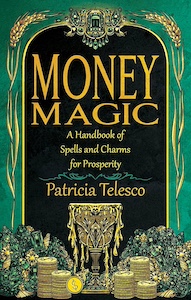
Money Magic, by Patricia Telesco

Money Magic: A Handbook of Spells and Charms for Prosperity, by Patricia Telesco
Crossed Crow Books, 196453710X, 189 pages, April 2025

Money — one of the most sought out manifestations in spellwork! Who doesn’t want a bit of extra coin to take a vacation, buy a new car, or sign up for a course that’s been calling? Money Magic: A Handbook of Spells and Charms for Prosperity by Patricia Telesco teaches readers how to bring about financial enhancement through a variety of magical methods. Filled with time-honored practices and Telesco’s magical insights, this book offers  inspiration and novel methods to increase one’s prosperity and abundance.

“I think a lot of people today feel overwhelmed with financial burdens. Having walked a mile in those shoes, and knowing what a difficult road it can be, inspired the material you’ll discover here. My hope is to give everyone reading this a clever, insightful, and practical magical blueprint for changing meager patterns in your life to those that reflect plenty, no matter how you wish to apply that energy.”6

Telesco, a seasoned author in the field of magical and spiritual literature, offers readers a comprehensive guide to attracting wealth that is very grounded and doesn’t eschew the hard work required to build and maintain one’s resources. Often referring to idioms and maxims, she encourages readers to do what’s necessary on a practical level, boosting it with magical intentions, rather than solely rely on one’s magical workings alone. I loved how she weaves together humor with a realistic approach to money magic, getting the reader in the right frame of mind to preserve, tend to their financial matters with care, and take personal responsibility for their money situation.

While Telesco doesn’t offer a get-rich-quick solution, she does provide TONS of guidance on magical methods one can draw upon to boost their financial flow. The book is organized into several chapters, each focusing on different aspects of money magic. The book includes hundreds of spells, chants, rituals, and more aimed at enhancing prosperity. These range from simple charms to more elaborate rituals, suitable for practitioners of all levels. Even more, she also includes folklore, superstitions, and customs from cultures both ancient and modern to provide a wide range of ideas and different perspectives for readers.

Telesco begins the book with lists of folklore, superstitions, signs, and omens related to money from around the world. Presented in lists, this section is easy to read and quite engaging, as there’s a lot of little tidbits of useful information. Next, she moves onto creating beverages and food for abundance, presenting recipes like “Prosperity Punch” and “Quick Cash Cabbage”. She offers tips for enhancing the recipe and making modifications to fine-tune your results.

Chapter three turns to aromatics, as Telesco notes “the nose knows”7 More than simply good-smelling oils, Telesco presents a variety of ways one can use scent to boost their magic. She lists prosperity aromatics, along with offering recipes for air sprays, bath salts, candles, creams, incense, and more. My favorite was her suggestion to create finger bowls, or small bowls fill with herbal water for cleansing. I had never heard of these before! Furthermore, Telesco shares ideas for potpourri, powders, and culinary infused aromatics, such as herbal butter, seasoned salts, and infused sugars.

The following chapter is all focused on spellwork. Telesco provides her general “rules” for spellwork, encouraging readers to disregard what doesn’t feel right for them and do what does instead, though I found her insights very helpful. She discusses how she doesn’t do magic if she’s too personally invested and only uses magical energy if it’s something she truly can’t do on her own. Great tips! And within this chapter are so many spells, ranging from “Eggshell spell” to “Money in the Moon”. Most of these are all the quick spells one can do with just a few items and a chant.

The longer rituals are shared in “Chapter Six: Rich Ritual”. Telesco provides background context for performing rituals, such as the components of a ritual and process, including invoking the elements and calling to spirit. She then provides pre-written rituals that can easily be adapted for a new job/raise/promotion, financial dream prophecy, stretching one’s resources, getting cash quickly, and banishing poverty and bringing in luck.

There’s also a chapter on talismans, where Telesco covers “portable magic”8–charms, amulets, talismans, and fetishes–and teaches readers the basics of crafting their own. She offers symbols one can carve into or draw on, charms from different places (bee, pumpkin seeds, coral) one can carry with them, crystals to keep on one’s person, and other materially tangible ways to boost one’s luck in financial matters.

The final chapter delves into astrology and feng shui. Telesco offers general astrological insight for Western astrology sun and moon signs as well as the Chinese astrology animal zodiac. She also covers the basics of feng shui, teaching readers about the significant regions, colors, and elements involved. Astrology and feng shui are clearly very in-depth fields in their own right, so what Telesco shares is only a brief introduction, but it’s enough to get the reader curious about learning more!

Telesco includes two appendices at the end. The first is a list of “suitable offerings, libations, incense, and spell and ritual components for money magic”9 and the second is a list of prosperity gods and goddesses. Both are very interesting reads!

What’s really lovely about this book is how it engages so many magical methods. For those more inclined to working with herbs or hands-on crafts, there’s plenty of options. Likewise, the kitchen witch will have a ball reading through all the magically-infused food options. Those who enjoy spellwork or astrology also have their pick of magical methods to boost their finances. From crystals and gems to sigils and chants, all kinds of magical workings are contained within this book! There’s so much to explore!!

So far, I’ve had two major money successes using tips from this book. First, I negotiated a 33% higher rate for an independent contractor job I’m starting in July. Then the next dayI was selected to do a focus group I had applied for that pays $150 for just an hour and a half of my time! These little boosts of cash made me quite happy and made me feel confident my money magic is working!!

Overall, Money Magic is a easy-to-read, well-structured, and insightful guide for anyone interested in utilizing magic to boost their financial well-being. Telesco’s practical advice coupled with decades of wisdom makes this book a valuable addition to the library of both novice and seasoned practitioners. Whether you are looking to enhance your financial situation or simply curious about money magic, you’re sure to find quite a few new tricks to add to your toolbelt.

As mentioned, I’ve already seen two major results from working with the book for just one week! I am excited to keep experimenting with the ideas shared in this book; it’s a relief to know I have a resource to go to for this specific type of magic. I love Telesco’s mix of correspondence lists, so one can craft their own magical recipes, spells, charms, etc., and step-by-step workings that provide full details about what to do, how to do it, and when the best time is for it. There’s so much room for creativity and personalization within Telesco’s guidance, which I think is the true key to successful magic!

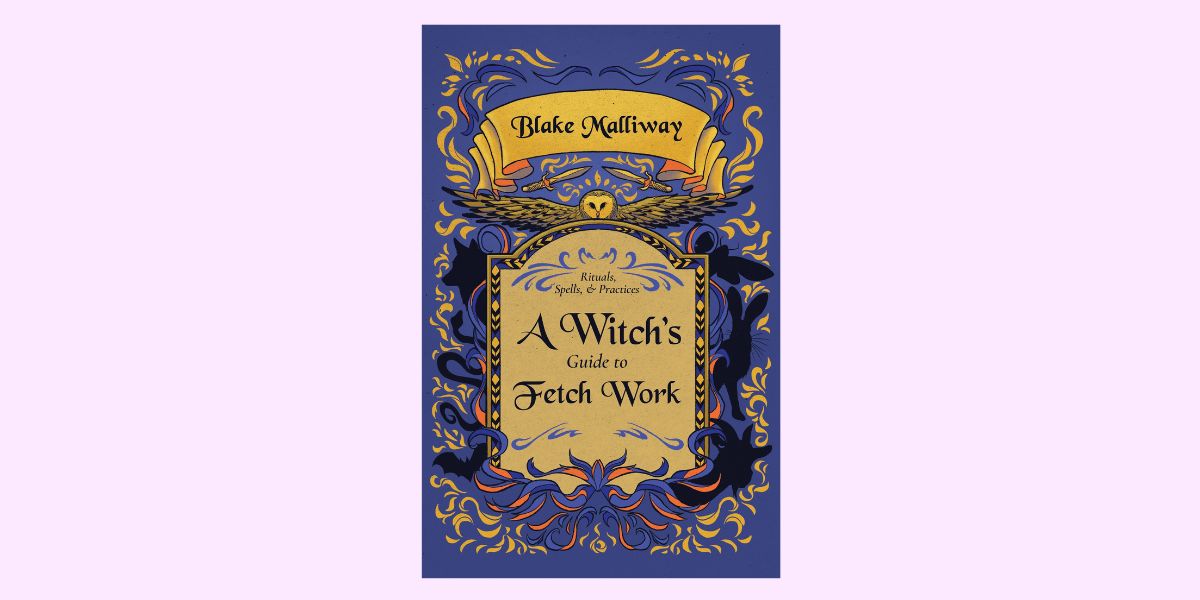
A Witch’s Guide to Fetch Work, by Blake Malliway

A Witch’s Guide to Fetch Work: Rituals, Spells & Practices, by Blake Malliway
Crossed Crow Books,  1964537029, 200 pages, February 2025

A Witch’s Guide to Fetch Work: Rituals, Spells & Practices by Blake Malliway explores a lesser known aspect of witchcraft. Although historically creating and working with a fetch was common practice, there has been little written on both the methods of creation and the practical uses of a fetch. Malliway offers this most useful tool as one that can enhance the magical workings of those who commit to the study of this form of creation.

This book is organized into three parts: “Part I: Folklore & Theory”, “Part II: Beginning Magical Operations”, and “Part III: A Grimoire”. Additionally, there are twenty-five magical workings that address the needs for creating a fetch and how and what can be accomplished in its use. A robust bibliography and ever useful index round out the offerings of this title. 

“Chapter Two: Daimons, Fetches, Souls & Selves” clarifies for the reader the distinction between the semantics of these terms and the distinction between an actual fetch and daimon and the more complex nature of the Soul and division of self. Malliway has taken a very complex set of topics and dissected each in a fashion that is both logical and informative. 

“Chapter Three: The Fetch in Folklore” focuses on the Witch Folklore that has helped to form the foundations of how we practice the Craft today. These stories provided are those that hold the witch’s fetch, and its workings as an omen of death, a common theme of the past. Additionally, the frequency that the non-magical perceived a fetch as a corpse or other etheric spirit is a point of note in the writings Malliway shares of encounters that one would only associate with the skills of the witch

“Part II: Beginning Magical Operations” provides the reader with a ritual of calling and meeting your fetch and  exercises of engaging and tasking your fetch. “Chapter Four: First Steps in Fetch Work” sets the tone for a switch from the lore and academia of the fetch and hands on experience and workings. At the onset, Malliway pares down to three classifications of use for a fetch and their presentation:

“Fetch Beast: As a beast , the fetch serves as a mode of transportation, leading the Witch through the otherworldly landscape. Fetch Guide: As a guide , the fetch imparts unto the Witch certain knowledge and wisdom. . .Fetch Mate: As a mate, the fetch represents the complete coming together of two essences.”10

More detailed information is given for each in preparing the reader for the form that the fetch may take as it presents in the next steps of preparation. A ritual of calling ensures and is complete and easily used employing staples of magical exercise such as visualization, intent and quieting the mind’s chatter, creating the magical space of working and the actual calling and meeting of your fetch.

And, in the fashion of all successful magical working, “Chapter Five: Everyday Fetch Work” continues the work of ritual meeting and the reminder that sustaining what has been created is as important as the work of creation itself.   Malliway provides the reader with seven very sound exercises that build upon one another in exploring the many ways the fetch may be used, both priming the witch and the fetch for the necessary patterns of working. I especially enjoyed “Exercise Seven: Give Your Fetch A Break”:

“I know it’s exciting to see and experience the incredible works of magic you can create with your fetch, but don’t forget to give it-and consequently, yourself-a well-deserved break every now and then. Use this pause to reconnect with yourself.”11

This is a particularly useful reminder for any magical work, as burnout is real and sustaining a highly energetic level of practice such as this, requires recharging mundanely and magically. 

“Part III: A Grimoire” provides the reader with ample points of information and inspiration.

“Much of the work we’ve done up to this point has been focused on helping you learn some of the foundational techniques that will play into the more advanced methods of making magic. . .Now, as we move forward, we will shift from the exploratory phase into a more structured approach, where your foundational skills will be put to use in advanced and purposeful ways.”12

The chapters of this section cover topics such as divination, shapeshifting, spells, and rituals. “Chapter Eight: Fetch Spells and Rituals” returns to the three types of fetch introduced earlier (The Fetch-Beast, The Fetch Guide, and The Fetch Mate) and provides workings that are specific to each and their predispositions, as well as recommendations around making the best use of each. 

“The Conclusion: Go Boldly!” of this title and section offers the encouragement and wish that the work accomplished in creating your fetch will have only been a momentary project tied to the length of guidance contained in the reading of the entirety of the book. And, other important needs for successful magical work, inclusive of and beyond that of the fetch are highlighted as final reminders:

“The saying “practice makes perfect” is often tossed out as advice to those struggling with their efforts in both magical and mundane lives. While practice is certainly a  gateway to improvement, I believe there are other essential virtues that must be cultivated, especially in your work with your fetch-or any aspect of your Craft. These virtues are vulnerability, patience and perseverance.”13

Each of these “virtues” are discussed and given the attention required to apply to all of a magical practice. They are, in general, also excellent ways to proceed with the task of living as a powerful human being within the mundane experience. Malliway leaves the reader with one final exercise, “Remembering the Wins”, which says it all about staying mindful of your growth, offering gratitude for your progress, and using these traits to move you on towards greater goals.

Would I Recommend?

A Witch’s Guide to Fetch Work is an invaluable tool of resource and practice. It will deepen the understanding of the mechanisms of creation as well as broaden the perspective and enhance the workings of the modern witch. This is a smaller book in page count, but to fully understand the deeper nature of fetch work, it is dense with useful practice and information.

The index following the table of contents provides a quick reference point to return to the specific exercises you wish after having completed the title and then continuing to refine your practice. The bibliography provides ample material for the reader to explore, dissect, and come to their own conclusions about what the fetch is and how it may be used beyond the scope of this title. 

All in all, Malliway has crafted a title that opens the magical practitioner to the possibilities and potential of engaging ALL of yourself in workings. His writer’s voice creates a gentle tone of guidance and one could easily imagine the content as part of a treasured conversation of training.

About the Author: Blake Malliway 

“Blake Malliway, a Michigan native, has been a practicing witch since childhood. As a self-proclaimed oddball, Blake has always had an affinity for the other world and tends to incorporate his spirit allies into his practice whenever he can. When he’s not working magic, he can generally be found spending time at Malliway Bros., his Chicago-based witchcraft shop that he co-owns with his brother, Wycke. Blake lives in Highland Park, Illinois, with his spoiled black cat Feens.”14

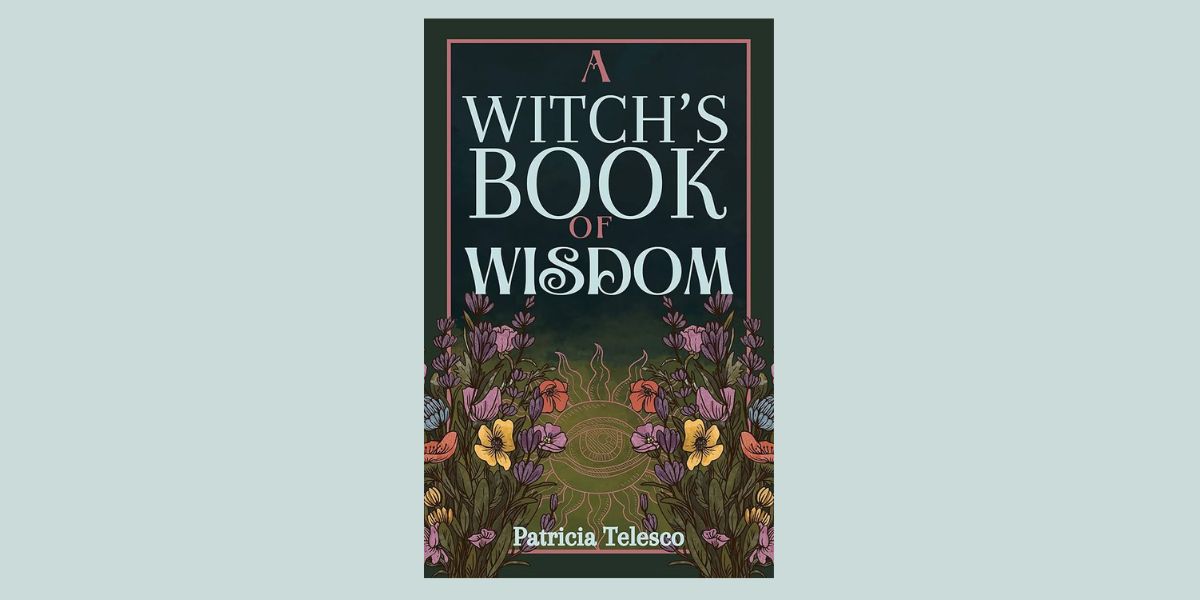
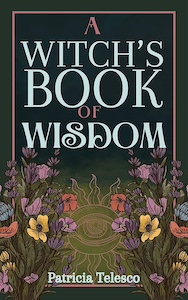
A Witch’s Book of Wisdom, by Patricia Telesco

A Witch’s Book of Wisdom, by Patricia Telesco
Crossed Crow Books, 1959883542, 224 pages, November 2024

Looking for a charm guide to magic? A Witch’s Book of Wisdom by Patricia Tesleco is just for you! Telesco is a prolific author, whose other works include Mastering Candle Magic, A Floral Grimoire, and A Kitchen Witch’s Cookbook. In this book, she adapts the persona of “Granny Good Witch”, an archetypal Cunning Folk, who is happy to share their honest thoughts and practical knowledge based on decades of experience to those seeking guidance on magical topics.

“The entire purpose of this book is to provide a nurturing, sound, practical, and fun-loving outlook on magic and spirituality as they intertwine with your everyday life.”15

The book is organized alphabetically by topic. From A to Z, readers can browse the magical advice Granny Good Witch has to offer on all sorts of aspects of the Craft. From etiquette to gardening to beauty, Granny Good Witch has something to say. While a spell or incantation might be offered here and there, this book is definitely more focused on imparting general knowledge than offering “how to” advice. For those looking for specific spells with directions to follow, I’d recommend Telesco’s  Spinning Spells, Weaving Wonders.

Much of this book is sharing principles, lessons, helpful hints, and methods one can use to fulfill their intention. It reads like a magical compendium. For each topic, there’s a quote and Granny’s general take on the topic. Bullet-point lists are often included too, making the material easy to absorb and remember.

Telesco notes, “The processes provided are neither over time-consuming nor do they smack of Hollywood hocus-pocus.”16 I concur that all the advice was easy to implement! The whole book is very down to earth, acknowledging the reality that many magical practitioners don’t always have the time for complex workings. All this wisdom goes to show that our practice is meant to be lived and there’s many ways to incorporate magic into one’s day.

There’s quite a few tidbits of guidance from Granny that I picked up so far, yet three things have stood out the most. The first is to draw in luck by changing one’s routine around a bit. The second is a recipe for baking bread for kindness. And the third was a list of things fire magic can be used for.

Some of my favorite advice from Granny came from the “Manifestation” section:

“The question is, how do we go about encouraging manifestation? To answer this question, Granny looks at the ancients, who often used ritualistic dance to nudge the process along. Ritual dancing consummates the connection between the spiritual and temporal. It provides an energy-generating medium, and it then offers a way for the practitioner to express magical fulfillment as realized (in symbolic form).”17

Another aspect I like of Granny’s wisdom is the balance between encouragement and a healthy caution. This isn’t a fast-track to magic, and often, the advice is to keep on trying different things, such as working alone vs. in a group, until you find what works best for you. There’s absolutely not a “one-size fits all” mentality in these pages. Rather, the advice feels like it has your best interest at heart, as the message is tread of advice often circles back to discovering what’s best for your path, taking it slow in your exploration, and then keeping an open mind for the sake of flexibility; adaptation is definitely one of the Cunning Folk’s best attributes!

Overall, I recommend A Witch’s Book of Wisdom for those who are in need of someone (yes, even if it’s a book, Granny’s advice feels very comforting!) to turn to for magical advice. While some witches are blessed with a fulfilling community, others are left to seek out other like-minds in new groups or online forums, gathering the advice they can get from books and other resources. It’s very nice to have Granny in your corner; this is absolutely a book that is worth adding to your collection to turn to for inspiration when seeking guidance on a myriad of topics.

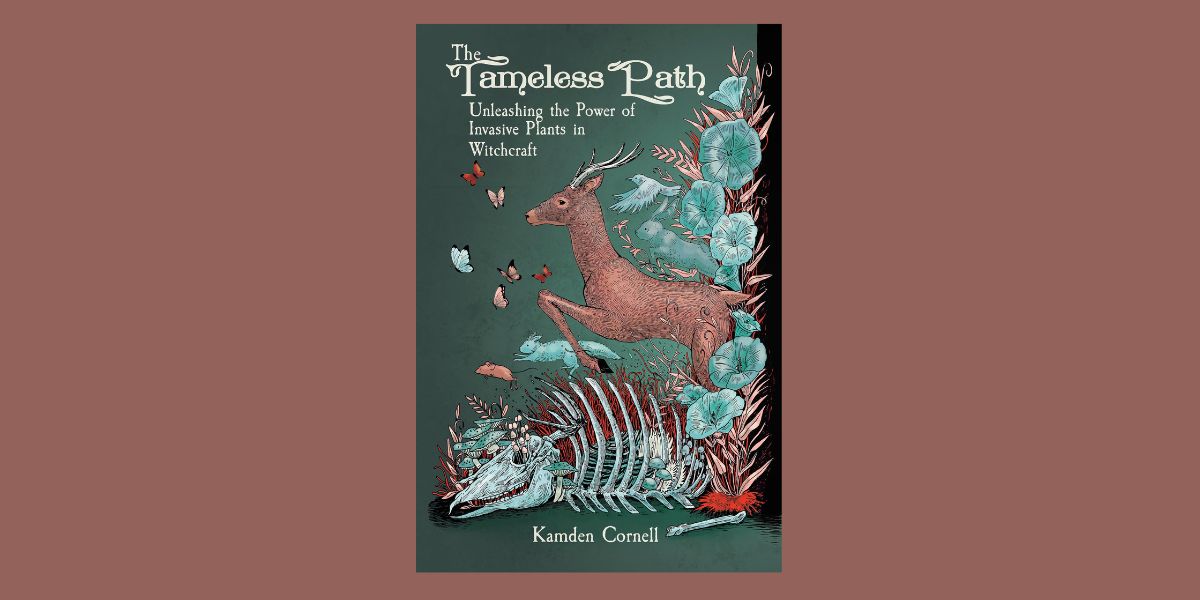
The Tameless Path, by Kamden Cornell

The Tameless Path: Unleashing the Power of Invasive Plants in Witchcraft, by Kamden Cornell
Crossed Crow Books, 1959883631, 306 pages, August 2024

In recent years, there’s been a shift in how plants are used in magical practices. There have always been ways to obtain ingredients for spells or other workings, but the events during the last few years have seen many people foraging for their own elements. Without overly generalizing, it seems as though anyone with access to an outdoor space has taken advantage of that and started to grow their own herbs and such. But how many people actually forage, as in go into the woods and search endlessly for plants that grow wild only in certain spots? And how do you make sure that what you are gathering is safe and not harmful to children or pets?

Enter The Tameless Path: Unleashing the Power of Invasive Plants in Witchcraft, by Kamden Cornell. If Rachel Pollacks’ 78 Degrees of Wisdom is looked upon as the definitive book on tarot, then Cornell’s book will certainly be a top contender with respect to plants. Cornell is no stranger to plants: they currently teach classes on witchcraft, occultism, herbalism, wortcunning, foraging, and invasive species wildcrafting in their region. They also work as an apothecarist and own a small, witchcraft-oriented business that focuses on herbal remedies, ritual goods, and education. To say they are qualified is an understatement.

“What we call “weeds” have been used as remedies and food for thousands of years in the regions they were native to before being transplanted to our own soils.”18

One of the first things I questioned when I picked up this book was relevance to me personally; after all, I don’t live anywhere near the author. Looking at the table of contents quickly relieved me of that fear as I saw many familiar plants that grow in my area listed. The chapters on alchemy, planetary magic, and various methods of plant preparation are well written and provide information that will lead the reader to a deeper understanding of the connection between plants and the universe.

There are two table of contents pages: one showcases chapters divided thoughtfully into a pattern that makes sense in terms of content, and the other is a full listing of spells and recipes by weed. Both are comprehensive and well laid out, but it’s the spells and recipes that drew me in. While some of the spells seem whimsical in terms of their ingredients, knowing what can be substituted for the more arcane and less available tasks is vital. Knowing a bit of herbology and spellcraft would be useful here but isn’t necessary as long as the internet exists!

Chapter 4 is my favorite as it deals specifically with choosing the method of preparation and provides clear instruction on how to do so. The preamble for the directions is very informative and provides a ton of guidance around the processes. There is also a disclaimer regarding using words such as medicine or medicinal, as Cornell is very clear to reiterate that “nothing in this book is intended to be a substitute for medical treatment.”19 The author is very clear about personal safety and recommends being in the care of an allopathic physician should one choose to utilize herbal protocols in any way. 

Cornell goes into great detail in each section of this chapter, explaining common terms that relate to each section such as tisane and strewing blends. Most people who pick up this book will probably have some knowledge around these terms, yet Cornell goes deep into each area and ensures there are no stones left unturned. I appreciate that immensely as there is no need for cross referencing: everything you need to know is contained in one book. How convenient!

Perhaps the most interesting part of the section is the alchemical one. Not being familiar with this specific method myself, I devoured the section and made notes. I was under the impression that processes like distillation were complicated and involved so many containers and apparatus, and I was right. Probably not something I could do in my tiny apartment, but a girl can dream. I love the idea of distilling my own supplies, but the reality is I cannot. Not the first time I’ve been disappointed but at least it’s not with the book.

The Tameless Path is perfect for those who are interested in the path of herbology and want to deepen the practice. Chock full of information that isn’t readily available elsewhere unless you dig deep, this book provides clear and concise information as well as a variety of accompanying methods and recipes for a well-rounded literary journey through the land of herbology. Practical and magical, I will be gifting copies of this book to a few of my green-thumbed friends, who might be persuaded to share the fruits of their labour with me.

Elemental Spirits, by Jaq D. Hawkins

Elemental Spirits: Building a Magical Practice in an Animistic World, by Jaq D. Hawkins
Crossed Crow Books, 1959883569, 294 pages, August 2024

Elemental Spirits: Building a Magical Practice in an Animistic World by Jaq D. Hawkins is a fascinating journey into the world of animism and elemental magic. Drawing on decades of experience, Hawkins presents readers with a comprehensive guide on connecting to the elements to develop a spiritual practice grounded in the natural world. She emphasizes the importance of forming a personal connection with nature, encouraging readers to view the world as filled with energy we can learn to draw upon and work in harmony with.

“When I speak of elemental spirits, the reference may refer to a wider spectrum of spiritual essences as well as more individualised spirits of different kinds. I’m basically an Alchemist and an Animist. I believe that everything that exists has a spiritual nature, including things that are manufactured. Everything is made from basic elements that begin in nature, after all.”20

In this book, Hawkins provides a detailed exploration of the elements—earth, air, fire, water, and aether—through a variety of perspectives. Most of the chapters focus on an overarching topic that delves into the perspective of each individual element. These topics include the animistic view (the nature of the element), folklore of the elemental spirits, locations to find the elemental spirits, how to perceive the spirits (actually see them), folk magic to work with the elements, formal elemental rituals (both outdoors and for specific tasks), creating elemental thought-form servitors, divining with the elemental spirits, and elemental spellwork.

One chapter that deviates from the general format delves into correspondences (astrological, alchemical, and incense), along with the numerology, including magic squares, and associations between “creatures, plants, and colours.”21 The other one covers tree lore, bird lore, holy wells, and dance.

With so many approaches to each element, readers really get to know the characteristics and energies of them. The book is enriched with practical exercises designed to help readers develop their skills, including meditation techniques, visualization exercises, and rituals that facilitate a deeper understanding of elemental spirits. Hawkins’ instructions are clear and concise, making them easy to follow for anyone looking to incorporate these practices into their daily lives.

This is a book readers will absolutely come back to over and over again because there’s SO much information! At first, I tried reading it all the way through, but it started to feel overwhelming to absorb so much at once. Instead, I decided to pick the element I wanted to focus on (air) and read the chapters on air that called to me. Hawkins writes of air:

“As an element, Air rules intellect, thought, the first steps towards creation, movement, pure visualisation, spells involving travel, instruction, freedom, obtaining knowledge, discovering lost items, and uncovering lies. It is the element of dreams and plans, goals, and inventions.”22

I learned so much from Hawkins about air!!! First, I discovered that banshees and night-elves are forms an air spirit might take. My perception of air was then expanded by Hawkin’s assertion that “it is the Air spirits who we are most likely to respond most strongly to on the subconscious level.”23 As someone with an air Mercury that squares Pluto, this makes a lot of sense about why depth psychology was my field of study. 

I also realized that I work with air much more naturally than I thought I did, as Hawkin’s descriptions of folk magic with Air elementals were pretty much already how I do much of my own practice! I enjoy inventing spells on the spot through using my intuition, and oftentimes, these spells involve singing silly chants that I make up and repeat over and over again. I also regularly write out what I want and charge it.

Some ideas I received from Hawkins about other things I can do are burn a sigil and then blow away the ashes to rid myself of things and hone my visualizing skills. My next steps with air? This weekend I plan to use Hawkin’s “Spell for Inviting Air Spirits Into the Temple or Home”24 to invite Air into my office space for inspiration.

I am really looking forward to taking my time and working with another element soon—which one is yet to be determined! To be honest, I am in no rush to “finish” this book, as it’s a field guide to working with the elements that I want to truly explore and delve into over time. By far, Elemental Spirits is the most comprehensive book on the subject that I’ve yet to find. Hawkins has written a treasure trove of information!

Overall, Elemental Spirits is a valuable resource for anyone interested in exploring the intersection of nature and spirituality through the elements. Hawkins provides readers with the tools to build a meaningful and personalized magical practice rooted in the natural world. Whether you’re a beginner or an experienced practitioner, this book offers insights and inspiration to deepen your connection with air, earth, water, fire, and aether.

Invisible Fire, by Nicholaj de Mattos Frisvold

Invisible Fire: Traditional Themes in Western Mysticism and Sethian Gnosticism, by Nicholaj de Mattos Frisvold
Crossed Crow Books, 220 pages, 1959883607, August 2024

Nicholaj de Mattos Frisvold’s Invisible Fire: Traditional Themes in Western Mysticism and Sethian Gnosticism offers a profound exploration of the starlit river of ancient wisdom that connects the diverse tributaries of Western spirituality. Drawing from a wellspring of Gnostic and Apocryphal texts, Frisvold illuminates the Primordial Tradition, turning our gaze to the heavenly realms of pure Platonic ideas where all mystical paths converge into a slipstream of cosmic consciousness.

Frisvold, a behavioral psychologist, anthropologist, and consecrated Bishop of Gnostic, Catholic, and Orthodox lineages, has spent decades studying a wide range of spiritual practices, from African-based traditions to European witchcraft. His scholarly analysis of ancient texts, combined with his poetic prose and engaging writing style, make these complex concepts more accessible to readers. Frisvold’s meticulous citations also provide a valuable resource for those seeking to dive deeper into the obscure texts discussed, providing a springboard for further exploration and independent research.

Divided into two parts, titled “Gnosis” and “Praxis,” this book offers both theoretical insights and practical guidance. The first section consists of essays on the Primordial Tradition, while the second provides a collection of rituals for personal spiritual growth. At the heart of Invisible Fire lies the Biblical figure of Seth, the third son of Adam and Eve, who replaced the slain Abel. From the Gnostic perspective, he is the embodiment of the Primordial Tradition and takes on a Christ-like role. “Due to his perfected state, Seth enters the world as a perfected one, the upright one, and, as such, becomes the symbol of redemption, prophecy, and tradition,”25 Frisvold says.

“Invisible Fire is about this legacy left by Seth and is explored through examining the Primordial Tradition and the Sethian themes found in Western Mysticism.”26 

Frisvold introduces the core principle of the Primordial Tradition as a non-dual cosmology centered on the interconnectedness of all things and the divine. This perspective rejects the dualistic worldview that separates the spiritual from the material, emphasizing the underlying unity of existence. In addition to this non-dual cosmology, the Primordial Tradition places great importance on divine revelation, the direct experience or understanding of spiritual truths. According to Frisvold, “these are paths of prophetic activity that focus on how we can connect to the Empyrean realm in such a way that we become subject to this revelatory fire that gives luminescence to stars and angels.”27

In the Primordial Tradition, God is considered the incandescent source and center of everything, both seen and unseen. Therefore, in our fallen, imperfect state, everything we experience is fragmented like a shattered mirror, the scattered shards reflecting distortions of the Divine Light. To truly understand the divine, we must transcend our material limitations and recognize that the physical world is a reflection of a higher, perfect order. This higher order can be understood through the stars, which represent a tangible manifestation of the divine.

Frisvold’s analysis of the Cain and Abel narrative offers a compelling interpretation that transcends dualistic notions of good and evil. Departing from the canonical portrayal of Cain as a villainous murderer driven by envy and wrath, the Primordial Tradition offers a more nuanced perspective, presenting him and his brother Abel as archetypal figures representing opposing forces within the human soul.

The story of Cain and Abel is not merely a tale of fratricide but a profound allegory of the dual nature of humanity, the clash of the divine and the profane. Cain, the hylic man, embodies the material and sensual aspects of existence, while Abel, the psychic man, represents the spiritual and intuitive nature. Their sibling rivalry represents the internal battle between the material and spiritual, waged within the heart of every human being.

Cain’s murder of Abel is not merely a senseless crime of passion but a symbolic sacrifice, a dark ritual that unwittingly sets the stage for a greater redemption. It is a catalyst for the emergence of Seth, the divine mediator, who bridges the chasm between the earthly and the celestial.

“When Cain murdered Abel, he sacrificed the flesh and released the spirit,” Frisvold says. “He did what needed to be done in order to become perfected.”28

Seth, the pneumatic man, embodies the divine spark that unites the material and spiritual realms. Through this act, Cain inadvertently paved the way for Seth’s revelation, demonstrating that even the darkest aspects of human nature can serve a higher purpose.

Frisvold explains that Cain’s murder of Abel was redemptive, much in the same way that Judas’s betrayal of Jesus paved the way for salvation. “It is the redemption of the soul from its material state that is enabled through the betrayer and the betrayed, the murderer and the murdered, dissolving the dyadic illusion and becoming one,”29 he says.

According to Frisvold, the white and black pillars standing sentinel at the entrance to the Temple of Solomon, Jachin and Boaz, symbolize the dual nature of humanity, manifested in the right and left-hand paths of Seth and Cain. Jachin, the pillar of understanding, reveals the mystery of Seth and the divine spark within us. Boaz, the pillar of confusion, represents the material world and the illusions that obscure our spiritual vision.

As Frisvold explains, “Ultimately, the pillar of confusion carries the secrets of Cain’s legacy as the pillar of Jachin reveals the mystery of Seth, which Cain made possible.”30 As the pillars of Jachin and Boaz stand before the Temple of Solomon, so too do Cain and Seth represent the twin forces of darkness and light. The profane and the sacred, the abyss and the empyrean, are not opposites but complementary aspects of the Great Work.

Frisvold’s insightful interpretation of the pillars aligns with the following passage from the Gnostic Gospel of Phillip: “Light and Darkness, life and death, right and left, are brothers of one another. They are inseparable. Because of this neither are the good good, nor evil evil, nor is life life, nor death death. For this reason each one will dissolve into its original nature. But those who are exalted above the world are indissoluble, eternal.”31

Frisvold’s analysis of the Cain and Abel narrative exemplifies the non-dualistic cosmology central to the Primordial Tradition, illuminating the interconnectedness of all things, even the seemingly contradictory forces within the human psyche. Cain is not merely a villain but a necessary catalyst for spiritual evolution. His actions, though seemingly dark and destructive, ultimately serve to illuminate the path to divine consciousness.

Seth, the third brother, emerges as a symbol of hope and renewal. He embodies the divine spark within humanity, the potential for spiritual enlightenment. Seth’s legacy is a testament to the enduring power of the human spirit, capable of overcoming even the darkest of sins. Thus, the tale of Cain and Abel is a timeless parable that teaches us the importance of balancing the material and spiritual aspects of our nature. By recognizing the divine spark within us and striving to overcome the limitations of our material existence, we can achieve spiritual enlightenment and liberation.

Frisvold also presents a non-dualistic perspective on the fraternal rivalry between Archangel Michael and Satan. “Bogomil doctrine teaches that Satanael, Michael’s brother, was forgiven for his mistake, and, as such, redemption already happened by the intervention of God, which made it unnecessary for Jesus Christ to die for a sin already forgiven,” Frisvold says. “Rather, Jesus came as an example and to light the fire of gnosis and wisdom. Saint Michael took care of the spiritual domain as the ‘Golden Tzar,’ and Satanael was given the material realm and to rule over as its ‘Silver Tzar,’ clearly referencing the two main luminaries of the heavens.”32

One of the most intriguing aspects of Invisible Fire is its emphasis on astral magic, the celestial wisdom Adam received from the angel Raziel and passed down to Seth.

“One who knows their star will know themselves, and from this, an ability of discernment that recognises the divine mirror upon the Earth will be born,”33 Frisvold says.

This passage really jumped out at me, because, a few years ago, one of my spirit guides told me in my sleep that my star is Aldebaran. The next day, I plugged fixed stars into my natal chart and was startled to discover that Aldebaran is exactly conjunct with my Sun at 9 degrees Gemini. I’ve been hooked on studying fixed stars in astrology ever since. 

In an essay titled “The Regent of the Milky Way,” Frisvold paints a vivid picture of the Milky Way as a celestial river of liquid silver flowing through the heavens. This astral stream of immortalizing milk is the Pleroma, a transcendent realm beyond the traditional seven planets, ruled by Seth. This evocative imagery reminded me of an enigmatic message on one of the Orphic gold tablets: “A god you have become from a man. A kid you fell into milk.”34 Perhaps the Milky Way represented the transformative journey from human to divine for Orphic mystics as well.

As a Gemini, I was especially intrigued by Frisvold’s association of the Milky Way with my zodiac sign. He explains that the celestial river leads to Gemini, the sign of duality, which nourishes the twins Castor and Pollux, and “challenges our choices by strength and mercy.”35 This house of Mercury holds the caduceus, the symbol of balance and healing, where the snakes of Mercury and Sulphur coexist in perfect harmony, supporting the sacred path. 

One of my favorite essays is titled “Raziel’s Secret.” In this magical work, the Tzohar is described as a literal jewel, a sapphire forged in primordial light. Revealed by the angel Raziel, this sapphire enabled Adam to read the Book of Raziel by holding it to his eye. I was delighted by this enchanting touch of Jewish fairy tale mysticism. 

Raziel, a being of extraordinary power, is both a Seraphim and an Ophanim, and as such, “belongs to the potencies of divine fire guarding and watching the divine throne itself.”36 Frisvold explains that Seraphim are the guardians of “the primordial fire of transcendence, the glowing coals of perfect fire flowing forth in the rivers of wisdom from the divine throne.”37 Being a Seraphim “means that Raziel is not only an angel formed in the likeness of the mystery itself; Raziel is the voice of the Tzohar.”38

The Praxis section of Invisible Fire includes several rituals that utilize the power of the fixed stars, and have that old school feel of the Greek Magical Papyri. One such ritual involves creating a protective talisman using a scorpion. The practitioner is instructed to feed the scorpion wine and herbs while reciting a hymn to Antares, the Royal Star and heart of the Scorpio constellation. While acquiring a scorpion, dead or alive (the ritual doesn’t specify which), might be challenging, I personally own a taxidermy scorpion necklace that I wear to honor my natal Mars and Saturn in Scorpio, which I’m considering incorporating into a modified version of this ritual to imbue it with protective energy.

While the grand scope of this luminous work may be a bit overwhelming for the casual reader, Invisible Fire will serve as a valuable resource for those seeking a deeper understanding of the mysteries of the universe and the human soul. Its esoteric insights, like the stars themselves, illuminate the ancient traceless paths of Gnosis, awakening the divine spark, the invisible fire that flickers within us all.

High Magic in the Age of Steam, by Jeffrey S. Kupperman

High Magic in the Age of Steam: A Steampunk’s Introduction to Victorian Esotericism, by  Jeffrey S. Kupperman
Crossed Crow Books, 1959883623, 200 pages, August 2024

High Magic in the Age of Steam: A Steampunk’s Introduction to Victorian Esotericism by Jeffrey S. Kupperman is a fascinating exploration of the intersection between the steampunk aesthetic and the rich tapestry of Victorian esoteric practices. Filled with interesting historical overviews of the occult movements emerging during the Victorian era, along with character sketches one might use to model their steampunk persona, this book links the past, present, and future (or in regard to steampunk, retrofurturism). In a time when technological advancements were rapidly reshaping the world, High Magic in the Age of Steam delves into the intersection of the occult movements flourishing alongside, offering a wider-range of technofantasy elements one can draw upon for steampunk inspiration.

“The occult has always been part of steampunk, either artificially partitioned as Gaslamp, or just generally ignored by steampunks outside the various occult communities. The point of this book is not to redefine steampunk but to expand it to be more inclusive.”30

Kupperman begins High Magic in the Age of Steam by sharing the history of steampunk, from its origins to the nuance about the definition of the genre. There’s many dimensions to steampunk, and for those on the outside looking in, it can feel like a whole new world to understand. It’s clear Kupperman has done a lot of reflection on steampunk and come to see areas where it can expand to be more accessible to a wider audience. This book aims to integrate occultism with the science of the time with Kupperman noting: 

“Victorians also had a deep interest in the occult and occultist—any number of whom were also scientists—and often considered various occult practices as kinds of science.”31

Following the foundation he’s laid about steampunk and magic, Kupperman moves into detailed examination of the various forms of occultism that flourished during the Victorian era, including Theosophy, Masonry, Druidry, Spiritualism, and more. For each one, he provides thorough explorations of traditions and stories of the prominent individuals within the movement. He really delves into the belief systems of the movements, how they impacted and were impacted by zeitgeist of the era, and the characteristics one might draw upon to distinguish their steampunk persona. At the end of most sections, there’s a full character sketch, which highlights their occult background and describes the attire one can use to convey this persona.

While reading this book, I was continually impressed at the way Kupperman teaches and explains each esoteric practice, providing enough information to get a full overview with an intuitive knack of capturing the essence of each. His style of writing is straight-forward and engaging, ensuring that complex concepts are broken down into digestible parts while also honoring the nuances of the topic being explained. Through his story-telling, these movements come to life, and the reader feels themselves placed within the period Kupperman is writing about. This transportive aspect makes this book a real journey through time, which I feel is immeasurably helpful for getting in character.

Kupperman does a great job of skillfully situating occultism within the broader context of Victorian society, exploring how technological advancements and societal changes influenced the spiritual landscape and vice versa. One instant of this is how he presents the impact Spiritualism had on the social movements of abolition and women’s rights. This historical grounding adds depth to the book, allowing readers to appreciate the unique blend of science and mysticism that characterized the era in order to connect with their steampunk persona in a deeper way.

Another aspect of the book I enjoyed is Kupperman’s insightful commentary on the cultural and social implications of occult practices during the Victorian era. In the beginning of the book, he delves into the sticky subject of cultural appropriation vs. appreciation, which was rampant during the imperialism of this age. He never shies away from acknowledging the social inequalities of the time nor the racism that cropped up in certain occult communities, such as Theosophy’s idea of “root races”32. There are even times Kupperman refrains from presenting a character sketch, such as for Vodou, which I really respect.

The Appendices and additional chapters at the end of the book also contain a wealth of information too. “Appendix A: Persona Building” and “Appendix B: Expanded Steampunk Personae” assists readers with getting started in steampunk. Whether one wants a more DIY approach or prefers to use prefabricated character sketches, Kupperman provides useful guidance about how to create one’s own steamsona. I particularly like how he encourages readers to create their own history in “Appendix C: Building a Better Order” that moves away from the racism or infamy some of the real esoteric organizations come along with. In regard to creating one’s own order, he writes:

“You can do whatever you’d like it with and there really is no one to challenge you on its historical accuracy outside of blatant anachronism. Even that can be easily written off as something that exists at that time in the steampunk world you inhabit, even If it didn’t exist in ours.37

I was drawn to High Magic in the Age of Steam for two reasons. The first is that I love reading occult history and the Victorian era is one of my favorite periods. The second is that I was going through a bit of a professional identity breakdown; it felt like how I was presenting myself was no longer resonating with recent change and growth I’ve experienced. I’d never thought about crafting a “persona” before, whether for roleplaying or in my professional offerings (I guess in this regard it’s considered “branding”), so I was looking for insight into how one goes about doing so.

In both regards, all my expectations were exceeded by Kupperman. The historical writing was fascinating, containing a lot of details that often are overlooked in a quick summary of the occult movement. It’s extremely evident he took so much care in portraying the Victorian occult as accurately as possible. Then Kupperman’s descriptions about incorporating each occult practice into a steampunk persona gave me so much insight into how I could play with my own professional identity, highlighting certain aspects of myself and what I offer to others, to feel more aligned with how I present myself. I feel a lot more free to play around with how I show up to others now.

Overall, High Magic in the Age of Steam is a well-researched work that successfully bridges the gap between historical study and creative exploration. Kupperman has crafted a compelling guide that will delight both steampunk aficionados and those curious about the mystical side of Victorian history. This book is a must-read for those interested in Victorian or modern occultism (so much of today’s occultism is influenced by this time period!). It’s honestly been my favorite occult book that I’ve read in a while.

For fans of steampunk, especially those looking to incorporate an esoteric element to their persona, Kupperman offers a treasure trove of inspiration. He draws connections between the aesthetics of steampunk and the symbols and rituals of Victorian occultism, providing a rich source of material for writers, artists, and enthusiasts looking to deepen their understanding of the genre. The book’s imaginative approach encourages readers to see the Victorian era not just as a backdrop for steampunk adventures, but as a vibrant, mystical world in its own right that saw the creation of esoteric movements that continue to be practiced today.

The Eye of Odin, by Per Henrik Gullfoss

The Eye of Odin: Nordic Mythology and the Wisdom of the Vikings, by Per Henrik Gullfoss
Crossed Crow Books, 1959883259, 140 pages, May 2024

Mythology is often viewed as whimsical in the way the stories that are told reduce deities’ power to superstition. This book pulls back the veil of that notion of superstition to disclose ideas that mythology is directly related to many other facets of magic and not all amusing stories and fairy tales. In fact, if you are a practitioner of any kind there is a good chance that most of the ideas presented here will resonate deeply. 

Per Henrik Gullfoss’ book, The Eye of Odin: Nordic Mythology and the Wisdom of the Vikings, takes the reader on a journey and sets up the idea that Norse mythology is not as primitive as Christianity has portrayed. Christianity is a much younger religion by comparison, and delving into the root of the Norse beliefs reveals a startling amount of thought and competency that many cultures have been told didn’t exist within the barbarian tribes of old. By combining classic astrology with Norse mythology to get a deeper understanding of human consciousness itself, Gullfoss has crafted a remarkable book that appeals to a wide range of practitioners.

As one of the leading experts in the field of Norse myth and astrology in Norway, Gullfoss brings together both of these topics to show how these old stories led to the development of human consciousness and mystical thought. It’s a fascinating look at how the two are connected, and Gullfoss’ writing certainly illustrates in detail how similar the two concepts actually are.

Gullfoss writes, “… I have used astrology as a map that one can utilize to learn about and understand Norse myths.”1 He continues, “In the following chapters, I will show how Norse mythology can give a coherent and logical view of the world, which is just as marked by common sense and insight about cosmic laws as other belief systems.”2

This book is glorious and marvelous in the way that it seamlessly moves through what appears to be difficult concepts of creation, consciousness, awareness and ties these concepts together using Norse mythology. His language is that of a practiced storyteller, weaving together the stories of the old gods and marrying them with modern astrology. One of my favorite parts of this book, and examples of this are peppered throughout which is joyous for me, is the direct way he connects specific planets and other deities with Norse gods.  He says:

“Odin is the highest god of the heavens in Norse mythology, filling the same space as Uranus in Greek mythology. Consciousness and the element of Air are both the hallmarks of Uranus and Odin… Odin (Uranus) thus becomes the one who mediates the cosmic laws of creation and the universe to humans.”38

There is no question that Norse mythology is dominated by the values of men and relates to a warrior set that is almost exclusively male. Gullfoss deftly inserts the feminine aspect, stating that the power of femininity consists of an enormous force that is equal to the male counterpart. His writing is not dismissive of female power; rather, he uses feminine examples to show balance. One part focuses on the Norns, three mighty maidens not unlike the three sisters of fate in other stories, with this archetype continually referenced, along with others, throughout the book. It’s moments like these where the reader begins to realize just how interconnected these stories really are. It matters not what time period or culture, there is a resonance of similarity between them that can’t be dismissed.

There is so much in this book, it’s difficult to pull out specific parts to showcase. The mention of Tyr, a mighty warrior god representing a pure form of Mars, is a god that is barely talked about. I personally didn’t know he was a god, I thought Tyr was a rune and didn’t realize there was a whole backstory. Such realizations like this happened quite frequently as I read through this book, and I am so glad I took the time to digest the work. 

The Eye of Odin is a great book for anyone who loves astrology and Norse mythology and is interested in seeing how deep the connection is between the two. It presents some concepts that might feel a bit radical or out of place in today’s society; understand that this is not a rewrite of history but a comparison. While I personally did not find anything that particularly caused my hackles to rise, I can see how the overlay of masculinity could be seen as disregarding the feminine. My hope is that as the reader delves more deeply into the book and the subject as a whole, they come to the same realization as I did: no matter what, there is no male without female, especially in the world of mythology.

Witchcraft, by Raven Grimassi

Witchcraft: A Mystery Tradition, by Raven Grimassi
Crossed Crow Books, 978-1-959883-59-3, 270 pages, July 2024

Neo-Pagan scholar and witch Raven Grimassi (1951-2019) was the prolific author of several books on the Old Religion. Initiated into Wicca in 1970, he founded the Aridian tradition a decade later, which blended Wicca and Italian witchcraft. In 2006, he established the Ash, Birch and Willow tradition with his wife Stephanie, which emphasizes the primal roots of European witchcraft. 

Crossed Crow Books, dedicated to preserving Grimassi’s legacy by republishing his out-of-print works, has rereleased Witchcraft: A Mystery Tradition. In this comprehensive work, Grimassi explores the myths and universal deity archetypes at the core of the Mysteries, which he says are “applicable to any system or tradition of Witchcraft.”39. This book was inspired by the Goddess of the Mysteries, Ceres, who Grimassi honored as his patroness because he was born on her festival day, April 12th. Before writing each chapter, Grimassi asked Ceres for her guidance.

For me, witchcraft is an ecstatic religious experience rooted in ancient practices, and Grimassi’s writings support that school of thought with meticulous research.

“It is my personal belief and experience that Witchcraft is a religion that has evolved over countless centuries (as opposed to a modern construction),”40 Grimassi says. “Historians and archaeologists spend a great deal of time and energy trying to separate magick and sorcery from Witchcraft as well as other things that the Witch as a practitioner knows to be inseparable.”41

Grimassi’s traditional perspective is so validating and refreshing to read, and I wholeheartedly agree with him. It’s become trendy for witches on social media to deny that witchcraft is a religion, and I can’t help but feel that they are serving their egos instead of the Goddess and the God.

Grimassi provides supporting historical evidence of Wiccan concepts and practices that have supposedly been debunked by historians like Ronald Hutton as modern inventions. He traces the ancient origins of ritual nudity, also known as being “skyclad,”42 citing seventeenth-century woodcuts and classical works, such as Ovid’s Fasti, as proof. He also validates the threefold nature of the goddess of witches, who is mentioned in classical sources like Lucan’s Pharsalia and Ovid’s Metamorphoses, as well as in “the ancient concept of the Three Fates,” in which “we see the classic Maiden, Mother, and Crone vision.”43 

One of the greatest strengths of this book is that Grimassi helps readers see the Mystery Tradition from the perspective of our prehistoric ancestors. For example, he suggests that the ancient belief in an afterlife may have stemmed from the observation that sleeping people resemble the dead and visit the spirit realm in dreams. He also notes that “the Sun and Moon appeared to arise from beneath the ground and return each day or night,”44 suggesting the presence of an Underworld beneath the earth.

“It is the work of a Witch, as a practitioner of Earth Religion, to be a steward of nature,”45 Grimassi says.

Witches align with nature through the seasonal rites of the Sabbats, which Grimassi explores in detail. He explains how the waxing and waning halves of the years are personified by the Holly King and Oak King, whose animal forms are the stag and the wolf, and he analyzes the symbolism associated with the myths and legends of each Sabbat. 

“The Mystery Teachings are designed to bring humankind back to its original relationship with nature,”46 Grimassi says. By studying these teachings, he believes we can reactivate dormant ancestral knowledge, which he refers to as “memory-chain associations.”47 Memory-chain associations are energetic currents that Grimassi likens to quantum threads in a spider’s web of non-linear time, weaving together the simultaneously existing past, present, and future.

By aligning with a “core concept” that is received upon initiation into the Mysteries, “one can interface with the memory-chain associations.”48 Once the memory-chain has been activated, the initiate can draw from the Underworld cauldron of ancestral memory hidden within the labyrinthine tangle of roots beneath the Tree of Knowledge. The wisdom that lies therein is meant to be shared, for the enlightenment of humanity, and “the cauldron will not offer its essence to those who serve only themselves.”49

I believe Grimassi wrote this book in such a way that it activates those memory chains in the reader, stimulating initiatory insights, and this book is such a wellspring of information that it would take multiple readings to fully integrate what it has to offer. By shifting my mindset to the primal perspective of this work, I had a profound epiphany that deepened my understanding of the Horned God and my personal relationship with him. 

I took the holy sacrament of psilocybin cubensis for the first time while reading Chapter Three, “The God of the Witches,” and it was a truly initiatory experience. Although Grimassi does not mention the use of psychedelic sacraments in this book, I felt guided to do so by my guardian spirits because the mushroom, with its phallic shape and ecstatic properties, is a sacred plant medicine of the Horned God. It was a fortuitous synchronicity that I received the sacrament from a church the day after I started reading this book. I was also given signs to take it by the presence of two large mushroom fairy rings at the local park.

After waiting several hours for something to happen, I was disappointed because I thought the sacrament wasn’t working. I gave up and watched an episode of the X-Files, in which Agent Scully was kidnapped and almost lobotomized by a serial killer who wanted to trepan out her demons. Before Mulder rescued her, I had an intense craving for Doritos. That’s when the magic mushrooms finally started to kick in.

I heard a spirit voice tell me that I was protected and it was safe for me to let my guard down and surrender to the experience. She told me I have a very strong mind, like barbed wire, and it took a long time for me to feel the effects of the sacrament because of my psychic barriers. I realized she was right. I was curious to see what would happen, but I was also afraid of being mind-raped by the mushroom, so I had a lot of subconscious resistance. Up until that point, I had been worried that I wasn’t feeling anything because I didn’t take enough, but she told me that the Universe had provided me with the exact dosage that was right for me to consume at that time. Left to my own devices, I could easily have overdosed and become Madame Psychosis. My guardian spirits know me all too well.

At the peak of my trip, Dionysos appeared to me in the form of a serpent crawling along the tiles of my floor. The serpent told me he knows me better than I know myself, and gave me a lot of insight into my own behavior. He revealed to me that he is like a chameleon, and if I try too hard to see him, I won’t find him at all. “Surprise!” he said. I am the Mushroom King. He was very playful and teased me for overlooking him when he’s all around me, giving me obvious signs of his presence.

On the eve of Lughnassadh, a few days prior to me consuming the sacrament, a catalpa tree fell in the backyard during a thunderstorm. Thankfully, no one was injured and there was minimal damage, but it was a really startling encroachment of nature. A forked stang was gifted to me from that fallen tree, and I learned from an internet search that catalpa wood encourages creative self-expression, embracing one’s uniqueness, and facilitates communication with spirits, including angels, fairies, and ancestors.

The garden has also been strangely wild and overgrown with monstrous weeds this summer, despite all my diligent efforts to tame them. The corn was mysteriously knocked over by some unseen force, which was a frustrating disappointment, but the berry bushes have been thriving. All of this excessive weedy vegetation has been the Horned God’s way of trying to get my attention. He confirmed that I am a maenad by giving me a vision of myself with green skin and wearing a flower crown, which aligned with me being born in May and the emerald being my birthstone. I reveled in this Dionysian ecstasy without worrying about whether or not these insights were real or a form of spiritual psychosis, and once it was over, I felt heightened creativity and wrote down everything I could remember and transformed my experience into a poem.

Dionysos taking the form of a serpent in my vision was significant because Grimassi writes that, according to Plutarch, during the waning half of the year, “Dionysos is lord of Delphi,”50 while Apollo reigns during the waxing year. He likens Apollo and Dionysos to the Oak and Holly Kings of the waxing and waning and waning year who annually battle for regency. After re-reading this passage, I realized I had seen Dionysos in the form of the sacred python of the Delphic Oracle. This information was important for me to integrate because I’ve been wanting to incorporate Apollo into my practice as a complement to Dionysos, and seeing him as the king of the waxing year adds more depth to how I perceive his relationship with the Dionysian shadow.

I now see Apollo as the rational conscious mind, the Luciferian prince of dawn who wakes us in the morning and helps us remember and interpret the dreams and visions gifted to us in the Dionysian underworld of the subconscious mind. Light-bringing Apollo helps us make sense of it all and gives our visions deeper meaning by translating them into poetry, music, and other art forms. Apollo, the embodiment of reason, bestows the gift of discernment, enabling the mind to parse out delusions and fantasies from genuine prophecies and mystical experiences.

According to Grimassi, when the conscious mind attempts to digest illogical dream symbolism, “it discards what cannot be understood and retains what can be deciphered through logic and rational reasoning.”51 “The discarded information falls back into the subconscious mind where it later reappears in another dream state,”52 Grimassi says. This subconscious stew of dreams is symbolized in mythology as a magical cauldron, and as I read Grimassi’s words, I had a sudden epiphany that these dream fragments are reflected in the myth of the dismemberment of Dionysos, who was cooked in a cauldron and eaten by the Titans.

“The mystical theme of consuming is at the core of the Mystery Teaching associated with the Sacred King or Slain God,” Grimassi says. “The seed must go into the earth and the God must go into the soul. In essence, burial takes place in the soil and the stomach.”53 Grimassi also points out that the hearth was seen “as an entrance to the Underworld.”54 “The cauldron,” he says, “is not only a cooking pot but also a womb symbol from which metaphorical children are born.”55 

Taking the sacrament while reading this chapter gave me a whole new perspective of the Horned God’s manifestation as the sacred serpent. The correlation between the Horned God and digestion got me thinking about how the human digestive tract is just one long snake.

“The serpent is a very old symbol of the forces of the Underworld and of transformation itself,”56 Grimassi says.

Part of the Biblical serpent’s wisdom must have been instinctual discernment of what is safe and not safe to eat. Practicing Grimassi’s prehistoric way of thinking, I imagined the process of trial and error for hunters and gatherers learning which plants were safe for consumption and which ones were poisonous. To consume the sacrament is to metabolize plant wisdom. Perhaps being cursed to crawl on one’s belly metaphorically means that the will to survive is driven by the pangs of hunger. In order to stay alive, we are slaves to the dietary needs of our bodies.

Perhaps this is why so many Christian ascetics used fasting as a method of resisting the Devil. I have come to the conclusion that the Tree of Knowledge is the human body, and the serpent is the digestive system. The serpent rules the literal bowels of the Underworld, the digestive system that alchemizes food into energy. By honoring the wisdom of the serpent, we treat all food as sacred and become more mindful of what we consume.

Witchcraft: A Mystery Tradition has blessed me with initiatory revelations and I can’t praise this book enough. I came to this work seeking to know the God of Witches better, but of course, Grimassi devotes the same amount of attention to the Triple Goddess. In the past, my practice has been primarily goddess-centric, so this book initiated me into an aspect of the Horned God’s mysteries because that’s what I needed most for my personal spiritual journey. I have no doubt that multiple readings will take me in new directions, and every reader’s initiatory experience will be different, depending on where they are on their spiritual path.