✨ A Gathering Place for Magical Readers and Writers ✨

Tag Archives: 6th books

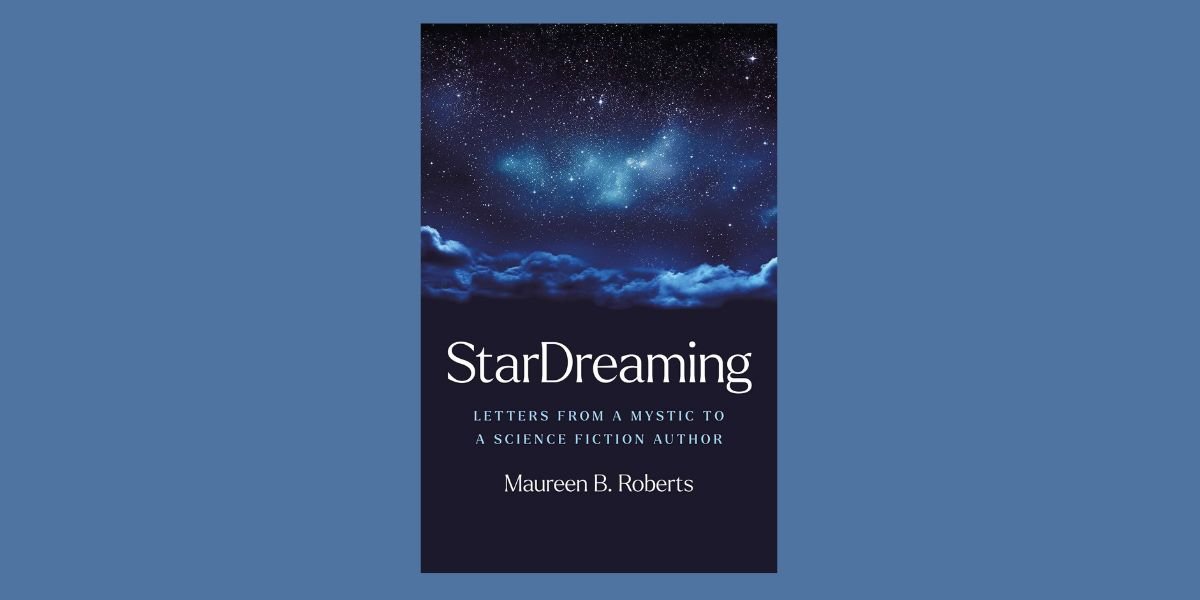
StarDreaming, by Maureen B. Roberts

StarDreaming: Letters From a Mystic to a Science Fiction Author, by Maureen B. Roberts
6th Books, 1917704623, 200 pages, August 2026

What happens when two people meet at the intersection of intellect and intuition, skepticism and mysticism, outer space and inner worlds? In StarDreaming: Letters from a Mystic to a Science Fiction Author, Maureen B. Roberts offers an intimate record of a relationship that seems to exist within all of these tensions at once.

StarDreaming centers on Roberts’s correspondence with Australian science fiction author Damien Broderick during the mid-1990s. Roberts, whose background encompasses depth psychology, Jungian thought, shamanic psychotherapy, mythology, and spirituality, approached their connection through an intensely symbolic lens. Though we don’t read Broderick’s side of the correspondence, these letters become the story of two people attempting to understand one another, meeting between two different ways of interpreting reality.

Between 1994 to 1997, Roberts experienced a series of powerful dreams, including one with Broderick himself that piqued her interest in him; she came to understand the dream as foreshadowing the emotional pattern and eventual trajectory of their relationship. Even knowing things probably wouldn’t end great, Roberts dove into the relationship with an open mind and open heart.

What followed was years of thoughtful correspondences that range from day to day things going on in Roberts’ life at the time to metaphysical discussions to romantic conversation. Here’s an example of the range:

“At the heart of myth is the archetypal essence of human nature, the transcendental centre and circumferential whole of the Jungian “self”, which is coextensive with the cosmic and experientially indistinguishable from God. If myth is inclusive by virtue of its holism, so then is its unifying core self, which transcends the polarities of matter and psyche, inner and outer, Nature and technology.”1

To vulnerable confessions like this:

“All the men I was involved with before you were conventionally good-looking as well, personality-wise, idealised versions of my idolised father, and as I’ve mentioned before, part of my breaking free from this complex has come through finally learning to love aman who’s not in the least like my dad, so perhaps I’ve made some progress.”2

It’s so fascinating to see things from Roberts’ perspective, navigating her inner world during the evolution of her relationship with Broderick.

Readers familiar with Jung will recognize many of the ideas woven throughout the letters: projection, archetypes, synchronicity, individuation, the unconscious, and the meaningful symbolic life. Yet the book moves beyond Jungian psychology into questions of precognition, spirituality, reincarnation, shamanism, paranormal experience, literature, and philosophy.

Science fiction becomes another realm where these mysteries are explored, as Broderick was a science fiction writer, while Roberts was an enthusiastic reader. Robert introduces readers to the idea that rather than being completely separate from mystical experience, speculative fiction becomes a place where humanity has long experimented with ideas about consciousness, identity, alternate realities, transcendence, and the unknown. While I rarely knew the science fiction book she was discussing, I loved how she interwove themes, for instance:

“All of this is of course the essence of synchronistic phenomena as eruptions of archetypes into the phenomenal realm. Predictably, then, Strieber’s aliens reflect the evolution of consciousness, that is, Jung’s proposal that ruling dominant age, thereby bringing about what he called a ‘metamorphosis of the gods’, such that (in Strieber’s words) ‘we know that their appearance depends more on the understanding of reality through which a given culture perceives them than on any objective insight into their true nature.”3

I mean, we got aliens, consciousness, and Jungian psychology. How cool, right?!

It’s fascinating to read her letters because Roberts can move from intellectual discussion into emotional vulnerability, from literary analysis to spiritual speculation, from psychological interpretation to the complicated realities of loving another person. She has a wide range of interests but her thoughts are absolutely fascinating.

The book’s range is broad, occasionally moving quickly between personal experience, psychology, philosophy, literature, science fiction, and mystical speculation. Those comfortable following connections between seemingly different territories are likely to find this quality part of its charm in reading Roberts’ letters.

I really enjoy epistolary structure of the book, which makes the experience of reading it particularly intimate. Since these were Robert’s personal letters during the time, decades later they still retain something of that immediacy that comes from passion–the amorous and vexing feelings all in one shimmering within the subtext. You get this glimpse into Roberts’ heart and soul, which feels a bit voyeuristic at times but completely enthralling.

And while readers never get to read Broderick’s responses, I do not feel this diminishes the book in the slightest. Ultimately, the style reinforces what StarDreaming truly is: one person’s attempt to understand what that relationship awakened within her. As someone who has long kept diaries of lovers and saved especially meaningful conversations, I just think there’s such beauty in this publication. The thought that a meaningful catalyzing relationship could yield such insight is inspiring, and it’s very entertaining to witness this small glimpse into a formative time in Roberts’ life.

While most readers will never experience Roberts’s precise circumstances, many will recognize the experience of meeting someone whose presence rearranges the internal landscape. Some relationships arrive not because they are destined to remain forever, but because they expose something previously hidden. They reveal projections. They activate wounds. They challenge assumptions. They introduce new ideas. They force an encounter with parts of the psyche that might otherwise remain comfortably unconscious. Within these letters, we see how Roberts moved through these activations, finding meaning in the process.

Love, in StarDreaming, does not guarantee compatibility. Spiritual significance does not guarantee permanence. A relationship can matter profoundly and still become conflicted. Meaning does not necessarily require a conventional happy ending. I think this is a beautiful lesson that is imparted, amid the many intellectual, emotional, and spiritual conversations taking place.

Those who are interested in exploring the idea of destiny, soul connections, synchronicity, and signs will enjoy reflecting on what might have brought Broderick and Roberts together, as StarDreaming presents a romance that is psychologically complex. This is a meaningful example of how connection may feel fated while still demanding discernment and how a dream may reveal significance without providing simple instructions. Sometimes, the goal is not a unified relationship; transformation itself may be the purpose.

Ultimately, Roberts invites us into the liminal territory where dreams intersect with waking life, intellectual understanding meets intuitive knowing, and another person can become both companion and catalyst. Some relationships change the course of our lives because they last. Others change us because they awaken something. StarDreaming is an exploration of the latter and of the mysterious inner universe that opens when we are willing to take our dreams seriously.

I highly recommend this book for those interested in Jungian psychology, dreamwork, synchronicity, paranormal experience, science fiction, shamanic perspectives, and spiritually transformative relationships. Roberts has given those with mystical inclinations a real gift by sharing her letters. There are so many avenues one can explore within the content–discovering new sci-fi books, understanding Jung better, contemplating the role of dreams in our lives–that I am sure each reader will take away something special from this book.

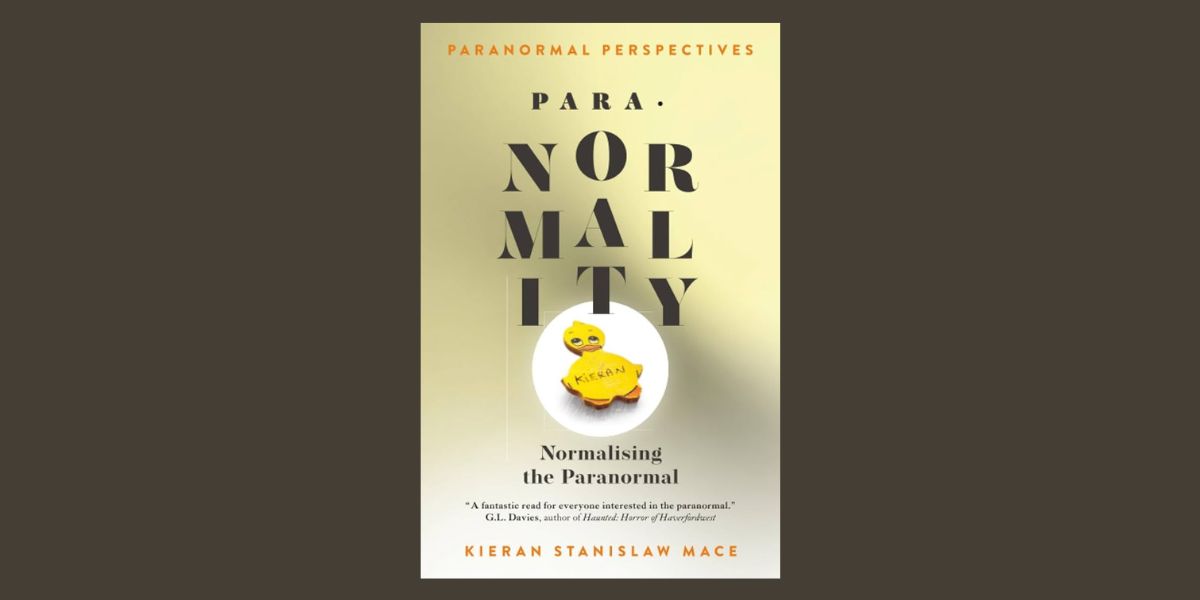
Paranormal Perspectives: PARA∙NORMALITY, by Kieran Stanislaw Mace

Paranormal Perspectives: PARA∙NORMALITY: Normalising the Paranormal, by Kieran Stanislaw Mace
6th Books, 1917704119, 128 pages, March 2026

It’s hard enough to figure out how to “live” accordingly to secure our basic human needs, but try throwing in paranormal encounters too that leave you questioning the nature of reality and just what the heck is going on! This is the predicament Kieran Stanislaw Mace shares Paranormal Perspectives: PARA∙NORMALITY: Normalising the Paranormal. Written with honesty and emotional sincerity, Mace shares his life journey and all paranormal moments that finally lead him to embrace the veiled reality existing concurrent to our own.

This book sits somewhere between a spiritual autobiography, paranormal testimony, and exploration of consciousness. Mace writes candidly about his life, not only the pivotable moments but the mundane day to day that blend together his on-going paranormal experiences with ordinary life, showing they are not two different paths, but a unified life journey. From his childhood trauma, including a near-death experience after a hit-and-run accident to the bullying, grief, and years of suppressing experiences that made him feel alienated, he brings forth a dialogue about the paranormal with this book.

Just how do you live with such extraordinary experiences happening when you are not sure how to define the events or who to turn to for advice? Unsurprisingly, you struggle quite a bit! And this is what makes this memoir quite captivating. This is NOT a book about a famed professional who “just knew” from the get-go how to converse with the entities on the other side of the veil; this is the story of a person thrown into the turbulent flow of life, a near-death-experience in childhood, earning an education, holding down a job to pay bills, finding love, having children, and still navigating the paranormal circumstances that have plagued him since childhood.

Despite Mace experiencing visions, synchronicities, hauntings, out-of-body experience, intuitive knowings, and encounters with spiritual entities, he had to fit into accepted reality. With this book, he works to break down the stigma of the paranormal and showcase how these experiences could truly happen to anyone, even an ordinary guy like himself. Mace doesn’t set out to prove anything, he just is sharing his own perspective and opening up a door for readers to reconsider the boundaries of reality.

Here’s an excerpt that I think characterizes Mace’s internal dialogue, intention for the book, and experience quite well:

“My observation supports the idea that negative energy affects the activity around us, just like during my grumpy teenage years, the sadness of losing my cat, or the anger of a miseducated manager. Maybe if I could switch my energies to emit positivity, perhaps that could affect the world in a different way. After all, every particle in the universe vibrates, bound by an energy that unifies to hold this universe in place. If we can change the frequency we emit, what happens? ‘Lie down, Kieran, you are not meant to question these things.’ That is what my programming said. When people begin to question the world that is laid out for them, they are often labelled as weird and people choose to move to sit at a different lunch table. Why is it so scary that people are forced to look down?”4

By presenting all his shortcomings and obstacles along the way, Mace’s intimate, earnest, emotional vulnerability becomes fodder for spiritual exploration of others. He is consistently reflective, offering possibilities rather than hard facts, inviting dialogue rather than argument. And for this, Mace brings to light an important aspect of paranormal experience: many people privately experience phenomena they fear discussing due to ridicule or social pressure. In having the courage to say, “I went through this”, “At times my mental health was not good.”, “I was lost and confused.”, others gain the ability to be more forthcoming about their own journey, a reminder that they are not alone.

Overall, for readers interested in psychic phenomena, hauntings, alter states, spiritual entities, and more, Paranormal Perspectives: PARA∙NORMALITY will be resonant. Mace’s memoir-driven spiritual writing and paranormal narratives rooted in personal transformation is an interesting read. Mace being so forthcoming about his experience makes for a great addition to the Paranormal Perspectives series to further provide food for thought to readers with an interest in this subject.

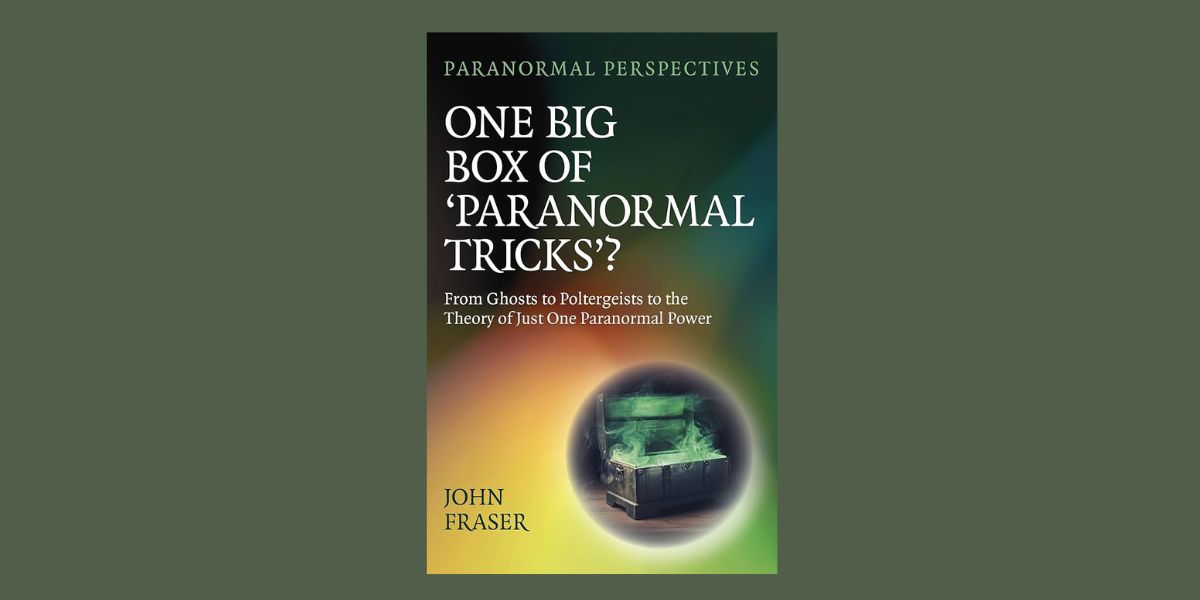
Paranormal Perspectives: One Big Box of ‘Paranormal Tricks’?, by John Fraser

Paranormal Perspectives: One Big Box of ‘Paranormal Tricks’?: From Ghosts to Poltergeists to the Theory of Just One Paranormal Power, by John Fraser
6th Books, 180341524X, 152 pages, November 2024

Paranormal Perspectives: One Big Box of ‘Paranormal Tricks’? by John Fraser offers a fascinating exploration into the enigmatic world of the supernatural. Fraser, a seasoned investigator and author in the field of paranormal phenomena, presents a compelling narrative that both challenges and intrigues readers.

The book begins with Fraser’s own journey into the paranormal realm, covering his adolescence inquiries after watching a show on ghosts to his questioning, yet formative years at university. He discusses one of his first investigations cover at Sandwood Cottage, which is cover more fully covered in his book Ghost Hunting: A Survivor’s Guide (2010). This was an interesting section to read because it made me reflect on my own childhood, teen years, and 20s to think about the events that called me to paranormal questioning. Reading Fraser’s experience is like talking with a friend, reminiscing on the awakenings that comes with budding curiosity and exploration.

Next, Fraser moves onto sharing the prominent influences on his quest to explore the supernatural. From his professor Richard Swinburne, who introduced him to Kuhn and inspired him to “discard a model of science as one that searches for absolute truth”5, to Nicolae Paduraru who created the Transylvanian Society of Dracula and provided tours for guests, the cast of characters that have been impact in Fraser’s life have fascinating personal and professional backgrounds. Since I’m in a big believer that we’re shaped by the people in our lives, I enjoyed reading about those who have influenced Fraser’s views and experiences.

The rest of the book series of specific lines of questionings and case studies, each meticulously detailed and analyzed. Fraser’s approach is both scientific and philosophical, providing readers with a balanced perspective that respects both skepticism and belief. His ability to weave personal anecdotes with historical context adds depth to the narrative, making it accessible and engaging for both seasoned paranormal enthusiasts and newcomers alike. The stories are all engaging, as Fraser talks candidly about his thought process during his own investigations, as well as his perspective on other’s paranormal work.

Here’s a sample of some very fascinating questions that Fraser explores:

Can the same paranormal power be expressed in different ways?

What makes ghost hunting a science if the haunted locations are often myths or folklore?

Can we haunt ourselves?

Is science too invested intellectually to consider its not seeing the whole picture?

What activates one’s paranormal powers?

Are UFOs considered paranormal?

Fraser encourages readers to question and scrutinize each phenomenon, fostering a sense of inquiry rather than blind acceptance. Above all, he encourages critical thinking in regard to paranormal phenomena, focusing on topics that really get the gears turning in one’s mind. His writing style is clear and articulate, making complex concepts easy to understand without oversimplifying them, opening doorways for readers of all supernatural-belief backgrounds to come together to ponder these overarching questions.

Overall, Paranormal Perspectives: One Big Box of ‘Paranormal Tricks’? is a thought-provoking read that invites readers to explore the mysteries of the unknown with an open mind. Whether you’re a skeptic, a believer, or somewhere in between, Fraser’s work will undoubtedly leave you pondering the nature of reality and the possibilities that lie beyond our current understanding.

The Mindful Medium, by Alison Grey

The Mindful Medium: A Practical Guide to Spirituality, by Alison Grey
6th Books, 9781803412658, 248 pages, March 2024

In her book The Mindful Medium, author Alison Grey shares “an inspiring, practical guide for awakening”6 as she relays her journey to becoming a psychic medium, spiritual teacher, and healer.

Grey has been a professional reader for over 14 years and also hosts a weekly spiritual development circle in her area and online. As part of her spiritual training, she has studied reiki, meditation, mental health awareness, crystal healing, Moonology and past life regression, as well as mediumship with several mentors. 

As a twenty-year experienced teacher in primary school and children with special needs, She has also created Calmer-Kids, which is a program for children with emotional and behavioral difficulties. Grey lives in Cotswolds, UK with her husband and four sons.  You can learn more about Alison, her background and the services she offers on her website.

I was interested in this book because Alison’s journey and training are similar to my own. I was excited to learn more about her and the helpful tips she has to share for living life as a spiritual being.

The book is divided into three parts and thirty-two, easy-to-read chapters: “Part 1: Welcome” (where Grey shares her story), “Part 2: Understanding Spirituality” (where she provides tips, tools and practices), and “Part 3: Mindfulness Approach” (where you learn about her Calmer-Kids Program and how to use mindfulness to navigate your life).

Grey begins the book by sharing the story of her awakening, including some experiences she had as a young girl and well as this passage:

“Being pregnant stirred up my sensitive side, my senses became extra heightened, and I started to get my ‘funny feelings’ of floating again. . .  After my second son was born, images repetitively flashed into my mind. I could see flashes of people I knew were in the spirit world and images of things connected to them.”7

Although she went to see a medium who confirmed that Grey had her own spiritual gifts, she didn’t begin her spiritual training at that time. Later, she began to attend a healing circle with her aunt and learn how to channel healing for other people. After becoming a reiki master, Rahanni teacher, and reiki drum practitioner, Grey began to study crystals.  Lastly, she found a mediumship circle and she and her aunt attended it weekly to develop their psychic skills. 

In “Part 2”, Grey shares many of the tools, practices and resources a person needs to live as a spiritual being.  She covers guides, tarot, healing modalities, numerology, angel numbers, the moon, and past lives, among other topics. I particularly enjoyed the two chapters “Understanding Crystals” and “What Are the Chakras?”. Her explanation of how crystals work is one of the most clear and succinct I’ve ever read:

“This is because crystals have a physical, balancing effect as they realign atoms in our body. The energy our Earth puts into the creation of crystals transforms into power for healing properties. Holding one of these gifts of nature, allowing it to resonate with our own energies, allows it to assist us in our healing.”8

The chapter on chakras is the longest chapter in the book because Grey goes into such great detail. She talks about each of the seven chakras, crystals for each, crystal grids for healing and how to use a pendulum for checking and balancing the body’s energy system. Grey also discussed how to treat the chakras for animals and use crystals to heal plants! 

In the chapter called “The Afterlife,” Grey shares what she has been shown about life after death and includes a very personal story about the loss of her unborn child.  She also touches on suicide and those who die relatively early in life, including two personal accounts. Here’s what she shares about suicide:

“I also believe that there is much learning for the families who are left behind and not only emotionally, but I’ve also heard amazing stories of charities which are formed to raise awareness of people with mental health issues, and this is a good thing which grows from tragedy. There is a higher purpose and the beautiful soul agreed to be that soul who leaves Earth too soon.”9

In “Part 3”, Grey presents the idea of The Mindfulness Approach and talks extensively about meditation, affirmations, prayer and her program Calmer-Kids. This process for teaching children mindfulness techniques came out of her work as a teacher for young children:

“With my carefully designed programme, it offered children the chance to breathe, take time out and build a relationship with themselves, bringing back self-choice and ultimately begin to understand themselves better. . . The goal is for children to be able to apply learnt strategies for coping with stressful situations, to learn about themselves, begin to live their life and become confident.10

In this part of the book, she also goes into much more detail on meditation.  She has included several guided meditations within her book and my favorite one is called “Breathing Technique,” which is found on page 190-191. This meditation helps the reader to be present and connect fully with their body.

Next, Grey presents a chapter called “Putting it All Together-The Mindful Medium” where she discusses life, life’s challenges, and provides a simple grounding exercise.  She adds a few pages of FAQs, where she covers topics that were not discussed earlier in the book.  Lastly, she adds her “Final Thoughts,” including a beautiful poem about time and freedom.

My favorite chapter in the book was Chapter 26 called “Colour Therapy.” She presents nine colors and the energy or qualities of each color. Her meditation called “The Healing Ocean” is another favorite of mine. This guided meditation brings in all the colors of the rainbow, as you use the imagery of the ocean to cleanse your energy.

I really enjoyed The Mindful Medium. It is beautifully written and is a great resource for spiritual teachers and students alike. Someone who is new to studying spirituality, mediumship, or meditation will especially benefit from the wealth of knowledge that Grey shares. I plan to recommend it to clients for whom I do readings and those who come to me to develop their spiritual gifts. I will also pass it on to my husband, who is a psychic medium. He loves to read about other professionals and learn about their journeys. 

Grey ends the book with a beautiful poem, and I’ll share the part which really resonates with me:

“We are one,
From source. 

Feel our hearts beat simultaneously,
Sense our rhythm,
The flow of life. 

Allow our voice to speak
Express how we feel
Never doubt the reason. 

Be free.
Be determined.
Be love.”
11