✨ A Gathering Place for Magical Readers and Writers ✨

Tag Archives: Destiny books

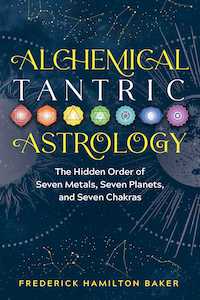
Alchemical Tantric Astrology, by Fredrick Hamilton Baker

Alchemical Tantric Astrology: The Hidden Order of Seven Metals, Seven Planets, and Seven Chakras, by Frederick Hamilton Baker
Destiny Books, 1644112809, 242 pages, June 2021

Recently, my husband completed the course Spiritualized with astrologer Aeolian Heart, and it really ignited a lot of spiritual growth for him. The premise of the course was to energetically move through the alchemy of astrology to facilitate healing through the gateways of the chakras.

Curious to learn more about this, I was delighted to discover Frederick Hamilton Baker recently published Alchemical Tantric Astrology: The Hidden Order of Seven Metals, Seven Planets, and Seven Chakras, which seemed to essentially be drawing from the same alchemical/astrological associations as Aeolian Heart did in my husband’s course. Now it was my turn to take a deep dive into the material, and I’ve been delighted with the quality of Baker’s dedication to this subject.

Baker begins by sharing how he came to develop the Alchemical Tantric Arrangement (ATA), his own astrological system, through his time studying in California, serving in the U.S. Navy, and visiting sacred sites around the world. Blending his study of astrology, alchemy, and the chakra system of tantric yoga, Baker has concluded Capricorn to be the final sign of the zodiac and Aquarius as the first.

I really resonated with this conclusion, particularly after watching the events unfold during major alignment of planets in Capricorn in 2020 and getting to know my own Capricorn stellium in my chart. It simply makes sense, given the many “new beginning” holidays in Aquarius (Candlemas, Chinese New Year, Imbolc), and I personally have always waited until February to set my new year intentions.

Diving right into associations between chakras, astrology, and alchemical metals, Baker clearly lays out the correspondences that are the foundation of ATA. From there, he delves into the mythology of every zodiac sign, which was very beneficial as an astrologer to read. While I am familiar with most of the mythology, the way Baker illuminates all the archetypal energy within each zodiac sign through his interpretations was extremely insight.

By offering a cross-culture description of archetypal energies (gods and goddess) from different pantheons, my understanding of the energies of each zodiac sign expanded. For instance, I previously did not know that Hecate and Vishnu are both associated with Pisces. I also really liked his thorough descriptions of Mercury/Hermes roles, including some such as secret keeper, midwife, and seducer, which I hadn’t previously realized.

Next, Baker gives an overview of kundalini energy and the tantric aspect of transforming consciousness with astrological energy. He notes this process can also be referred to as Hermetic astrology, where the alternating feminine and masculine energies of the signs move up and down the chakras to facilitate shifts in conscious awareness. Therefore, Baker concludes, “Knowing the signs and their associations with the two directions of the chakras, those who are acquainted with transits can now use astrology to tune into the most appropriate time for their meditation and actions.”1

Baker teaches the reader how to sense astrological energy as having an upward motion (Aquarius to Leo) and downward motion (Virgo to Capricorn), moving the energy in a cyclical way, just like the continual inhale and exhale of our breathing. Through his very illuminating descriptions of the relationships between each zodiac sign and the corresponding chakra, I gained a deeper understanding of this upward and downward energetic motion he describes.

For instance, Pisces and Sagittarius are both associated with the second chakra, however Pisces is the upward energy of the second chakra, while Sagittarius is the downward energy of the second chakra. Additionally, he provides the Hermetic phrase for each zodiac sign, giving further explanation of how the astrological energies are expressed through the chakras. One example is “The key word of Hermetic Scorpio is transformation.”2

My Aquarius Sun and Mercury found the most interesting section to be when Baker moved beyond the Saturian planets, which have a long alchemical history, to explore the trans-Saturian planets (Uranus, Neptune, Pluto, and Eris) with Chiron as a gateway. He relates Uranus, Neptune, and Pluto to the radioactive elements uranium, neptunium, plutonium, and americium (respectively), which completely blew my mind and is a connection I would have never made on my own, but fascinated me in terms of alchemy and the future.

Since Chiron is still rather new to astrology, discovered in only 1977, many astrologers are still working to figure out the energy of the asteroid. In his philosophy of ATA, Baker asserts “Chiron is the key to unlocking the central nadi in the chakra system and a bridge between the downward and upward paths of the zodiac signs.”3

He goes on to explain, Chiron serves as a guardian of the threshold between the traditional alchemical metals and planets and the radioactive metals and planets. His insight on Chiron is worth reading for those interested in astrology, for it presents an archetypal explanation of the role this energy may hold in how the future unfolds.

This section concludes with information on the numerology of the astrological houses, the connection between DNA and the chakra energy, and how astroyoga can open multidimensional portals through meditation. Baker offers written-out guided visualization processes for the reader to tap into this potent energy.

I also really enjoyed the final part of the book, which focuses on interpreting events through the lens of ATA, and is the practical application of this complex system. Baker teaches the reader how to understand this Hermetic Chart compared to a traditional Western astrological chart. They look quite different, and I had to hand sketch how my Hermetic chart would look because there’s no program to produce this. I’m still not sure exactly how to interpret the placements (yet), but it helped to understand the alchemy of my personal chart better.

I particularly enjoyed Baker’s focus on the alignments happening in 2020, which I had been waiting years to see how they would unfold, knowing major change is in store for everyone on both a personal and collective level. HIs interpretation of events, both past and future, did not disappoint. I find his evolutionary approach to astrology to be very aligned with my own conclusions, particularly his thoughts on the upcoming transit of Pluto through Aquarius, as it wraps up a transit through Capricorn. He certainly knows his stuff and has given immense thought to the impact of the transiting planetary energy currently shaping events.

The one thing I do have to say about the ATA, as forward-thinking and integrative as it is, I would assert these ideas are not new and others have drawn similar conclusions as well. While this lends credence to the ATA system, I also think it’s valuable to acknowledge a lot of this system is rooted in alchemy, astrology, and yoga practices that have existed for centuries.

Nevertheless, Baker’s perspective, stemming from years as a researcher and practitioner of these arts, certainly bolsters the knowledge on these subjects and integrate them in a way that can be practically applied in one’s life for energetic attunement with the zodiacal energy. He has a way of sharing his wisdom that makes it easily accessible to readers, both logically and intuitively. There is plenty of information for readers to gain from Alchemical Tantric Astrology, and it is a wonderful book for readers to become acquainted with Hermetic Astrology.

I have been truly delighted to discover similarities in my own astrology practice with Baker’s practice. Currently, I am looking forward to seeing if I notice the downward energy shift as the Sun moves into Virgo next week. I feel like this integration of the tantric energy into my nature-based spirituality and astrology practice will be bolstering my awareness.

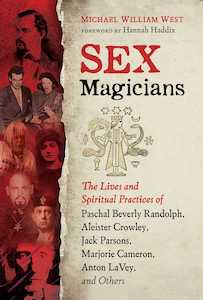
Sex Magicians, by Michael William West

Sex Magicians: The Lives and Spiritual Practices of Paschal Beverly Randolph, Aleister Crowley, Jack Parsons, Marjorie Cameron, Anton LaVey, and Others, by Michael William West
Destiny Books, 1644111632,  256 pages, March 2021

Riveting and yet delightfully easy to devour, Michael William West’s book Sex Magicians: The Lives and Spiritual Practices of Paschal Beverly Randolph, Aleister Crowley, Jack Parsons, Marjorie Cameron, Anton LaVey, and Others is a spirited collection of biographies of history’s most renowned sex magicians. Vice, voice, and breakthrough come together for the quite young yet practice of sex magic in the West, with the usual suspects of Aleister Crowley and Marjorie Cameron dancing side by side with the lesser known names such as the tragic leviathan Ida Craddock. West captures the personality and quirks of each magician with a finesse and sense of fun that perhaps only a fellow practicing sex magician could bring to the table. 

West drops us squarely into the lives of renowned practitioners with such a unique immediacy—it’s a joy to gallop along with him as he recounts the meandering and often mad loves and appetites of the spirited way showers and metaphysicians of the Western tradition. 

As a female-identifying practitioner, I’m fascinated by female identity and sex magic / eros in relationship to magic and gender, specifically female eroticism and occultism. I’m a student of my body in this way. Ecstatic personal rites and experiences are fascinating to me, as is the sovereign tantric path of sexual tantra and sacred sexuality. What struck me most in reading this book was the singular path each magician discovered, having developed their own lexicon, practice, and walked their own oft misunderstood path to illumination. Sex magic is a living tradition, as is magic, one that requires a certain diablesse and courage. 

I loved Sex Magicians for it’s deep and windy dives into the lives of actual practitioners, and there’s something beautiful about a book that’s about sacred sexuality and not interested in virtue signaling or defining the ‘sacred’, but rather moving in the realms of exploration of the profane. It was a refreshing lens, a colorful one that adds dimension to the conversation on sacred sexuality. I have a soft spot in my heart for the colorful characters whose faustian will is so consuming that they use everything they can (sex included) to illuminate, inspire, and instigate their own awakenings, trials, tribulations, tragedy and all.

West’s obvious enjoyment of the topic shines through in his recounting. Beyond the sensationalism, sex magic’s major gift to us (or as West calls it, “The Open Path,”) in the here-present is a different way to the rancid landscape and psychic poverty inherent in modernity’s modus operandi of hook up culture. As West shares in the introduction, “Utilizing (sex) magic to know thyself and change your reality is a personal journey that requires imagination, creativity, and doing things your own way.”4

Anyone who is interested in — or practicing — at any level— will enjoy this benchmark book. West gives context, but the text also instigates in its own way an inner journey for the reader to contemplate what to take from the past, what to leave behind, and perhaps where their own sovereign journey will bring them.

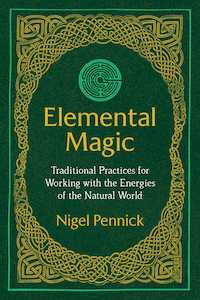
Elemental Magic, by Nigel Pennick

Elemental Magic: Traditional Practices for Working with the Energies of the Natural World, by Nigel Pennick
Destiny Books; 3rd Edition, 1620557587, 144 pages, October 2020

Nigel Pennick’s Elemental Magic: Traditional Practices for Working with the Energies of the Natural World contains multitudes. There is so much depth and wisdom here for you to explore, experiment, and deepen your magic. I am truly blown away by Pennick’s ability to offer eloquent and clear breadth and depth within this slender forest-green handbook. I feel as if I have happened upon an essential tome for my magical practice as a person living through environmental crises. 

The time for this book is right now. Pennick is grounded, both in terms of his clear writing style and in his offering of foundational practices that will benefit both the burgeoning witch and the established practitioner. On the back cover, Pennick is named an authority on ancient belief systems, traditions, runes and geomancy. This book is an impeccable example of that authority. 

Pennick touches on the essential elements of the practicing magical person, and he is able to do so with clarity and brevity. What I loved about this book is that Pennick has taken the esoterica out of the transmission. He communicates accessibly so that we can enter into these practices and rituals. His clarity allows our intimacy with the earth and natural magic to foster the mystical and the ineffable.

This text is truly a practical reference for so many aspects of natural magic. Pennick touches deftly on the fundamentals: “Saturday is dedicated to the Roman god of aging and time, Saturn.”5 and “Fire symbolizes the lightest things of existence, the energy and spirit.”6 If you are a beginner, trust that this handbook is an instructive initiation.  

My favorite chapter, “The Magic of the Land,” surfaces the ensouled landscape. It talks about how “there are certain places in the natural landscape, whose spirit is more likely to be noted by human… they are all holy grounds, at which something intangible but nevertheless, real is present.”7 Reading this book reminded me how deeply woven I am into the fabric of the land, and that my intimacy with the natural world is a place where magic springs.

Elemental Magic can absolutely be read from start to finish. It also invites you to sit down, open to an unexpected page, and discover what awaits you. At one such moment with this book, I found myself reading about the crossroads and the labyrinth. Pennick says “Crossroads are good places to make magical ceremony.”8 He offers that labyrinths “create an anchor energy, their spirit is energized by human activity.”9

This is a book of a multitude of beginnings. Pennick gives you just enough information to pull you in, to spark your curiosity, to get you started in your communion and magick-making. And you get to find out for yourself what the tree, or the stone, or the labyrinth has to offer. It is beautifully constructed for a beginner who craves a broad overview. This book stands as an excellent resource and reference for the more established magical practitioner because it is organized so succinctly. It is organized in chapters that explore the plants, minerals, animals, the land itself.

One of my favorite practices offered was part of the “Magic and Action” chapter on making and charging a magical talisman. I invited a friend into this practice. First, we each created the talisman. We then followed Pennick’s protocol, including working with the astrology of the moment and lunar cycle. Both of us felt not only the pleasure of crafting our own magical tools but also the potency of the spell work.

One of my favorite things about this book is how much it is just a welcome beginning to having your own unique experience. Pennick is impeccable at walking that line between offering you his approach and perspective, promising you the richness of what is to come in your own intimacy with these practices, and truly leaving the space for you to discover the magic for yourself. 

Orienting towards nature is a vibrant and necessary practice so deeply needed in our lives, so often mediated through technology. Elemental Magic allows you to truly see and understand yourself as a part of the more-than-human world. It is an honor to have such easy access to these profound and fundamental principles. This book is light enough to keep with you wherever you go and helpful enough to make the carrying of it worth it. 

In particular, if you are a person of European descent who is seeking ways to reconnect with your lineage, use this book. For me, this book has been a continual reminder to go outside, to enjoy the song of the wind, to make magic exactly where I am, the sun on my skin, rooted in the dirt. 

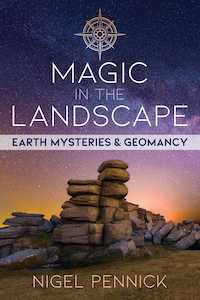
Magic in the Landscape, by Nigel Pennick

Magic in the Landscape: Earth Mysteries & Geomancy, by Nigel Pennick
Destiny Books, 1620558799, 176 pages, May 2020

Magic in the Landscape: Earth Mysteries & Geomancy by Nigel Pennick is a history book about how magical practices and the routines of indigenous people are recorded in the present-day landscape – in this case, the landscape of Great Britain.  And though this is a book about looking to the past, with an introduction titled, “A Vanishing World in Need of Rescue,” Pennick makes it clear that his book is NOT an “attempt to reconstruct the past by creating a depiction of an ideal time when the writer perceives that the system under study was perfect or intake.” 9  Instead this book explores fragments of history where magic was present.

My favorite chapter came early on, Chapter two, “The Ensouled World,” where he talks about Land Wights, celebrated and offered autonomy in Iceland,10 and a haunting story about the DeLorean Factory (that classic sports car used as the time machine in the movie Back to the Future).  DeLorean’s are classic collectable cars because despite its slick appearance, the company was only around for three years before declaring bankruptcy.  According to Pennick, the DeLorean factory was constructed outside of Belfast in a field that was home to an enormous and aged hawthorn bush. The locals had long believed that bush had a soul of its own, yet it was cut down and dug up in order to build the DeLorean Factory.  Soooo why the did factory close after just three years?  Just a coincidence?  Pennick purports not.  About the subsequently abandoned factory, he says, “Blighted and derelict places where such establishments once existed are instances of the desacralized cosmos.”11

The violation of traditionally sacred spaces is a theme Pennick references frequently, whether it is highways being paved over an ensouled landscape or archeologists digging up sacred sites in the name of their research. Pennick makes a point that we may be unknowingly erasing a piece of not only cultural history, but of genuine magical presence. “If the sacred is not just a human construct, as some argue, but actually emanates from the power within the earth at particular places, then to dig there without traditional geomantic precautions runs the risk of destroying that power.”12

One part of this book which was unexpected, was Pennick’s thorough research on exorcisms and hauntings.  In the chapter simply titled “Boundaries” in the section titled Magic Circles and Conjuring Parsons, Pennick offers us many recorded examples of church ministers in small towns across England using magic to banish ghosts who were either haunting a site or haunting an individual parishioner.

“On January 9, [1965] [the Rev. William] Rudall made a secret journey to Exeter to visit the bishop…and having convinced him, was given official permission to ‘lay the ghost’.  When Rudell got back home, he worked out the astrological chart for the next morning and prepared his magical paraphernalia.” 13

The details Pennick has about these instances of “ghost-hunting’ in small-town English parishes are remarkable! Yet for me felt a little like a departure from the main trajectory of this book.  And that might be the thing: the main trajectory of this book might not have been what I was hoping for when I ordered it, not what I was hoping for when I picked it up, and not what I was hoping for as I devoured the first few chapters.

I absolutely love that Pennick is calling attention to the awareness of sacredness in the landscape – sacredness than might be inherent, such as an ancient tree or rock or even a scenic vista, or the sacredness of a Feng Shui inspired English garden planted in the late 1700’s — 200 years before Feng Shui was trending in the New Age community.14 I think it is also priceless to call attention to the ways in which modern development is literally plowing over ensouled landscapes, and in which common human secularized ignorance erases the filaments of magic offered to us by something vaster.  It is also priceless to consider that parish ministers practiced astrology, that Feng Shui’s influence over the West started much longer ago than most people think, and that forest spirits truly exist.

I guess my one disappointment though was that I wanted a little more of a “how-to” book.  I wanted to learn how to do something related to all the fascinating topics in this book.  This is not a criticism, but a praise in disguise.  For this book ignites the imagination and enchants the spirit in unexpected ways.

As someone who practices permaculture design – a spiritual philosophy of sustainable landscaping- it is inspiring to learn about how magical places and spaces have been understood in the past and in other cultures.  So now I might use those intentions, as well as sacred geometry and planet synergy in landscapes I’m working on, in hopes of infusing something sacred and enduring.  In the United States we don’t have the same history as Britain, yet the Native American people had profound magical sensibilities in their culture, so I can pay more careful attention as I stroll my neighborhood, knowing the land I live on once belonged to them.

Overall, Magic in the Landscape is a historical overview of different topics relating to the spiritual elevation of a place.  These topics span from the uplifting effects of scenic vista, beliefs that certain landscapes are home to magical beings, curiosity about spirits inherent in rocks, trees, fields and forests, awareness that the architecture of certain buildings contain magical intentions, the power of memorials and town commons to shape cultural narrative, and the craft of creating sacred space for safely interacting with the spirit world.

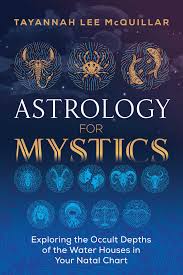
Astrology for Mystics, by Tayannah Lee McQuillar

Astrology for Mystics: Exploring the Occult Depths of the Water Houses in Your Natal Chart, by Tayannah Lee McQuillar
Destiny Books, 1644110515, 176 pages, March 2021

There’s so many lenses through which one can embrace astrology, but my personal favorite has always been a spiritual perspective. Astrology for Mystics: Exploring the Occult Depths of the Water Houses in Your Natal Chart by Tayannah Lee McQuillar is a soulful dive into the element of water in one’s natal chart. By tapping into the healing, mysterious currents of the 4th, 8th, and 12th house, McQuillar takes us on a journey to discover and illuminate the depths of our astrology chart as shown by the sign and planet placements.

I think my favorite part of the entire book was the Introduction, “What is a Mystic?”, most likely because I’ve been pondering this question myself recently. McQuillar’s writing demonstrates such wisdom and insight that it makes it clear her spirituality has emerged through authenticity, originality, and genuineness. I immediately felt both trust and respect for her, which made me feel safely held as I proceeded onward.

“Mystics are the foundation of all religious and spiritual systems in the world. Someone, somewhere, at some time had to be the first to wonder if what she was being told about the divine was true and to seek a direct mystical experience in order to confirm or deny it for herself. Then, from that experience, that person formed ideas regarding the truth or nature of existence.”15

Her assurance that this book is meant to assist one in creating their own “individualized occult philosophy and spiritual regimen, one that doesn’t require you to believe anyone else, follow everyone else, or become someone else”16 greatly put this Aquarian at ease as I dove into the water in my chart.

Honestly, water has always been the element I connected with least, so I was looking forward to hopefully taking my time reading to figure out why and how I could better establish a connection to the energy of these houses in my chart. McQuillar lays a wonderful foundation by sharing a bit about what sets water apart from the elements. From how we can consume it and feel its nourishing effects, to the wide spread healing properties, her writing made me take a moment of pause in gratitude for all the water in the world.

By looking to the role of water in mythology, and sharing with the reader different spirits, gods, goddesses that are related to the water, McQuillar highlights water as the foundation of creation. The origin story of many cultures through time have evolved from a watery abyss, likewise the destruction of civilizations occurs through water when people have forgotten the importance of living in alignment. On that note, I appreciated McQuillar’s words on how our current society is allowing for the sacred waterways to become polluted. She puts forth an impactful call to stop these harmful practices and cherish the water supply here on earth.

For those who may be new to this level of astrological exploration, McQuillar teaches the reader how to look up their own chart and see the houses within it to discover the zodiac sign the house is located within and any planets there. She discusses the glyphs to help the reader know what to look for in their chart, and also gives a little overview of each sign with keywords to get a feel for them.

After this introduction into glyphs and astrological energy, McQuillar goes through the 4th, 8th, and 12th house respectively to give a bit of information about the zodiac sign and planet. First is an introduction to these houses, followed by each zodiac sign in those houses.

For every house, McQuillar focuses on the main themes of that house and explains how the energy in the chart of each sign would come through. For example, the 8th house sections are Sexual Intimacy, Your Elevated Self-Image, Your Secret Power, and Transformation and Endings. Based on which sign their 8th house is located within, the reader can learn more about the specifics of their chart.

Next, McQuillar discusses the specific meaning of each planet, providing information about their zodiac sign ruler and co-ruler as well. She then goes through the 4th, 8th, and 12th house and gives a description of each of the seven planets (thankfully, she included transpersonal planets!) in each one. I found her descriptions to be very illuminating, and reading this book came at a particularly apt time for me personally.

While doing a zodiac meditation earlier this week, I realized that I had immense trouble connecting with my Jupiter in Cancer in the 12th house; I simply could not sense the energy, nor get an intuitive grasp on this area of my chart. Reading the description of Cancer on the 12th house brought to my attention some traits that I didn’t immediately recognize within myself, but in reflection saw how they were in play in my life.

I think with the 12th house especially it’s beneficial to have an “outside” perspective because this can often be one of the tougher spots to see about oneself, as it’s related to our hidden, unconscious self. McQuillar calls this the house of “Unspoken Expectations, Confinement, Karma, Loss, and Self-Sabotage,”17 which can make it a bit difficult to delve into these placements lightly.

Luckily, I felt a bit of an optimistic boost from reading about Jupiter in the 12th house. It reaffirmed the initial connection to my spirituality that I usually always feel, and it also reminded me of the feelings of good will I get from being active in communities where I get to share my spiritual gifts.

This all being said, there were a few descriptions that I didn’t resonate with immediately, such as my Pluto in the 4th house, which implied a violence or abuse in my upbringing. However, I don’t think it diminishes the quality of information being shared, even if it felt like a more textbook description for me. I took McQuillar’s mystic approach of embracing what resonated with me and releasing what did not stick.

Plus, I am aware enough to know that sometimes energy and the meaning of the planets and signs can take time to sink in. Since this book is centered on the water houses specifically, it may take a bit more time to dive into these depths, swim within them, and emerge with a fresh breath of clarity. I would advise readers to have patience in moving through this book and taking the time to really explore their chart house by house using all the wisdom McQuillar has graciously offered.

I highly recommend Astrology for Mystics for those who want a guide for navigating the watery realms of their chart. For astrological novice, this can be a wonderful book to tap into the uncharted energy of the 4th, 8th, and 12th house in their chart. Those with advanced knowledge in astrology are sure to discover something new as well since McQuillar offers her own insight, which is soulful and poignant. It can be so very nice to have a “hand to hold” or a book to anchor us as we take the plunge into the occult depths of our natal charts, and McQuillar perfectly holds that space for us.