✨ A Gathering Place for Magical Readers and Writers ✨

Tag Archives: divination

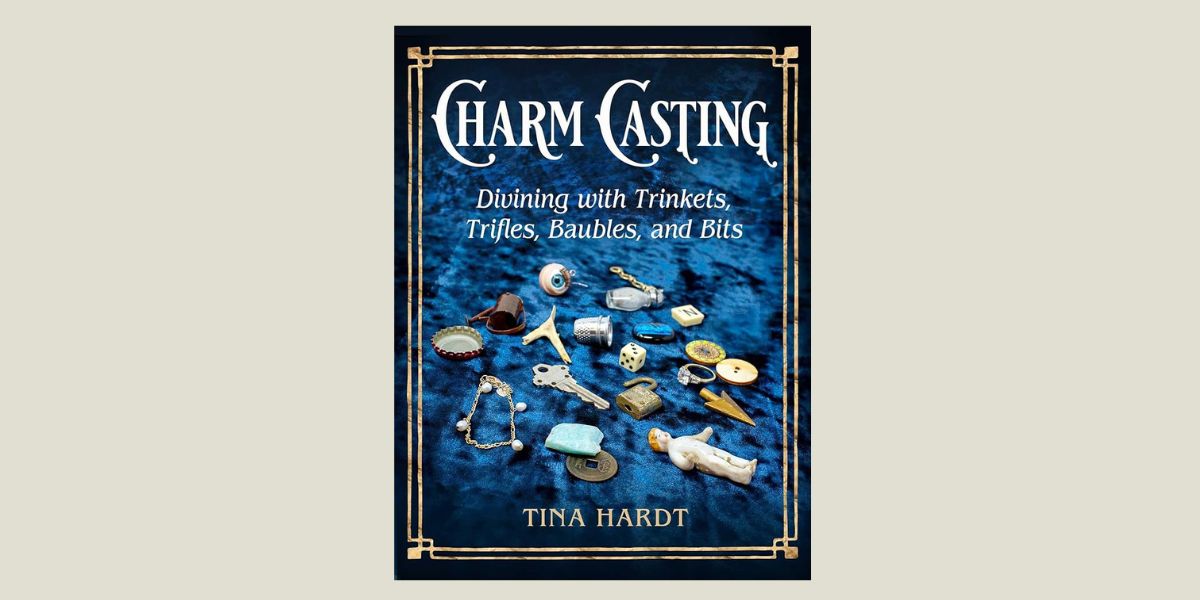
Charm Casting, by Tina Hardt

Charm Casting: Divining with Trinkets, Trifles, Baubles, and Bits, by Tina Hardt
Weiser Books, 1578638720, 208 pages, November 2025

Charm Casting: Divining with Trinkets, Trifles, Baubles, and Bits by Tina Hardt is a great start to anyone’s charm casting journey. This form of divination is so much fun and it brings a lot of whimsy to your craft! If this sounds up your alley then this is the book for you, my dear friend!

This book was a very fun read. Hardt encourages developing your intuition through play, encouraging creative spiritual exploration. She teaches not only how to build your charm kit but also how to apply the wisdom of the reading to different areas of life. All throughout, I enjoyed the prompts, charts, and checklists. (I always love books that allow you to write in.)

Hardt really opened my eyes to the possibilities of what else I could be adding into my charm casting bag. She encourages readers to personalize their charm set by selecting objects that resonate uniquely with you She also gives very thoughtful tips, such as not adding glass items to your charm casting kit. I made this mistake with a small glass cat charm I had, and it ended up getting chipped in the process of my readings. We live and learn! But having Hardt’s warning prior would have been beneficial.

This said, the information covered will come in handy for beginners and for those who are way past the beginner stage of charm casting. You may find yourself reading and going “Why didn’t I think of that?!” because I sure was! This book is a very quick read too. It dives right in with all of the useful information you need to build up and read your kit, coming up with meanings, what charms you should add, how to store them, where to find these charms, how to read them and so on. I was very impressed with the knowledge Hardt has packed into this book.

I also found myself learning about other items that can be used for charm casting, such as Go stones. I wasn’t familiar with what those were until I read this book. But apparently the black and white pieces that make excellent yes and no charms! Hardt gives many great ideas for themed kits too, ranging from people, to themes (ex. love), and to even sports. All of the ideas for different themed kits really got my creative juices flowing on creating some different sets for myself. Currently, I only have two basic sets I use but the ideas given to me opened up a world of possibilities.

Another interesting concept presented by Hardt is to let the pieces you’re bonding with to “perform” for you. I have struggled to connect with some of my charms, but hard reminds readers, “You’re the director.”1 This helped me get clarity on some of my more elusive charms that I’ve been trying to understand their meaning for sometime. Letting them perform really helped me understand them more.

Overall, Charm Casting is a fun and engaging read. It helped me understand a lot more about charm casting, with Hardt going in depth and providing a lot of helpful advice and information. She has done a great job encouraging readers to trust their intuition and build their own personal relationship with their charms. Beginner or not, if you’re a charm caster you’ll appreciate Charm Casting, especially if you’re ready to jump in and practice right away as a hands-on approach is best suited for this book.

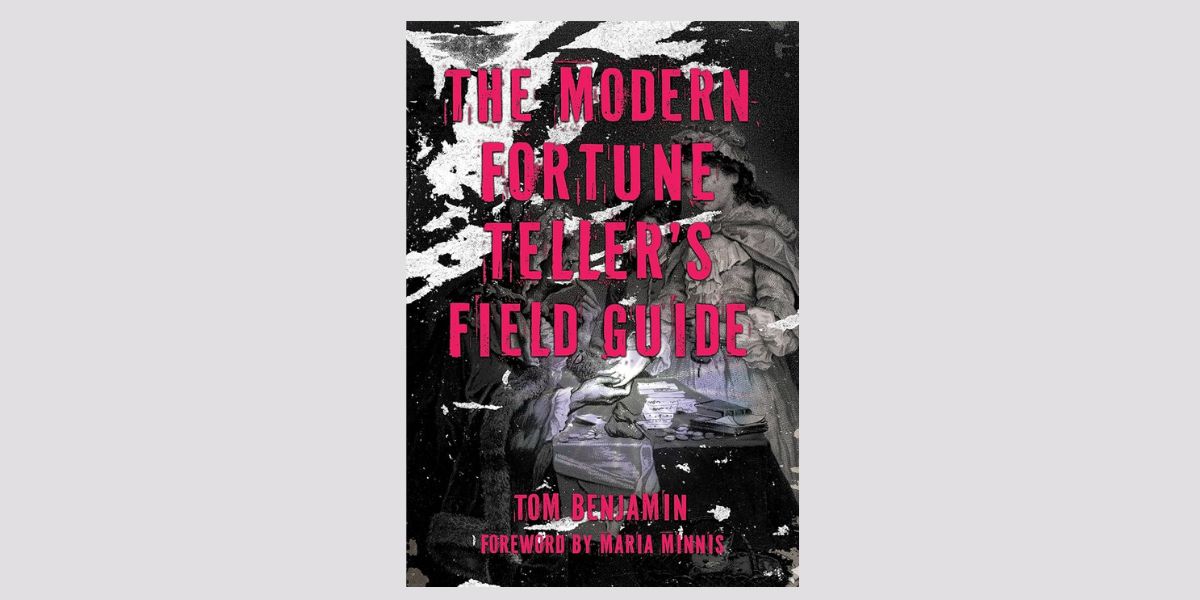
The Modern Fortune-Teller’s Field Guide, by Tom Benjamin

The Modern Fortune-Teller’s Field Guide, by Tom Benjamin
Crossed Crow Books, 9781964537450, 306 pages, October 2025

The Modern Fortune-Teller’s Field Guide by Tom Benjamin is a comprehensive manual designed for both aspiring and seasoned fortune tellers. Blending traditional wisdom with contemporary practices, the book aims to equip readers with the tools, techniques, and ethical considerations necessary for navigating the world of divination today.

Tom Benjamin has more than twenty years of experience as a tarot reader and teacher. From his popular YouTube channel (TheFoolsJournal) to his online workshops, Benjamin loves to share his tarot knowledge. He has written two workbooks for tarot students: Tarot on Earth and Your Tarot Toolkit. Learn more about Benjamin on his website.

The guide is thoughtfully organized, beginning with a brief history of fortune telling and its cultural significance. Benjamin then discusses fortune telling today and how it has changed over time. Step-by-step instructions, sample readings, and troubleshooting guidance make the book accessible to novices, while deeper insights and advanced techniques will appeal to experienced practitioners.

Benjamin explains that this is not a “how to book”, but rather a book about himself as a fortune teller or tarot reader. He shares his own experiences and teaches us about reading tarot along the way. His classes are based on this same type of strategy. He says that there are lots of basic tarot classes online and he doesn’t want to compete with those. 

The book is set up as a field guide and even looks like an old tome that has been weathered and used over time. The font he uses for headlines is like an old newspaper linotype and each chapter starts with a page printed in white type on black. I enjoy these black pages for each chapter, because it makes it easy to find chapters!  However, the white type is set in a serif typeface that is a little light and hard to read on the black background.

I was drawn to this book because of the reference to fortune telling and I decided to jump right in. The chapter called “Kill Your Darlings” really captured my interest.  In this section, Benjamin discusses ideas and beliefs you may hold dear about reading cards.  He dissects them and invites the reader to ponder these questions:

“What are things you fundamentally hold to be true about divination? What would happen if you change them — even just for an experiment. You might find it alarming, but you also might find it freeing…. What things do you have to have for your readings to be successful? A certain crystal? A particular cloth or incense blend? What would happen if you changed it up or tried not using your usual thing at all?”2

In the chapter “Seeing like a Fortune Teller”, Benjamin talks about how he “started his YouTube channel by doing readings for fictional and historical figures.”3 What a great and novel approach! He then invites the reader to grab a tarot deck and play solitaire with the deck for 5 minutes. Then read the cards in front of you when the timer goes off.  Again, what a wonderful exercise!

The chapter entitled “Learn Me Something” is a great treatise on learning in general and how we can all be more like little kids by being totally open to new information and new tools and techniques. To demonstrate, he takes a deck of playing cards, makes up an entirely new spread and shares his take on numbers and suits. At the end of the chapter, he has the audacity to say that “you are capable of doing the same thing!”4

Benjamin also includes a chapter on putting your own thoughts together for workshops, including how to create it, how to share your own wisdom, and how to use visual aids. He shares a basic outline for a four-part class that is structurally sound and looks interesting.

The chapter on advice is priceless. He talks about taking on the problems of the people for whom we read and offering “advice,” even when most people aren’t going to listen or act on it.  As Benjamin says: 

“A lot of times, people just want to vent. They don’t need a list of instructions; They want to be heard. Giving unwanted advice is a sure way to cause moderate to severe rage among our friends. Again, I know because I’ve done it. A lot.”5

He ends the book with his chapter “How I Read”, and he saved the best for last! Rather than giving keywords and brief card descriptions, he provides lots of information about the history of each Major Arcana card, some myths about the card and its symbolism, and his own interpretations or feelings about each card. Benjamin then discusses the Minor Arcana suits and the meanings for numbers. He sums up how he works with the Minor Arcana:

“It’s worth knowing the primary tool I work with is its element and number. Everything else (artwork, keywords, impulse) comes after I consider the element and the number. This isn’t right or wrong, good or bad; It’s just how I do it.”6

The writing style is engaging and easy to follow, making complex concepts approachable for beginners. The book emphasizes the importance of ethical practice, personal boundaries, and adapting ancient arts for contemporary audiences. I love the sample spreads and footnotes he adds to some chapters. This guide acknowledges diverse cultural traditions and encourages respect for different backgrounds and belief systems. Benjamin adds a section for further reading and reference at the back of the book, as well. 

Overall, The Modern Fortune Teller’s Field Guide is an excellent resource for anyone interested in the art of divination with tarot cards. Its blend of historical context, practical guidance, and modern sensibilities makes it a valuable addition to any reader’s library. Whether you’re just starting out or seeking to refine your craft, this book offers thoughtful instruction and inspiration for your journey.

I plan to keep this book on hand for classes I teach as well as recommending it to new students for their own personal library. The information Benjamin shares is like the culmination of an afternoon spent at a coffee shop, going over his life story, getting a reading and making a new friend.

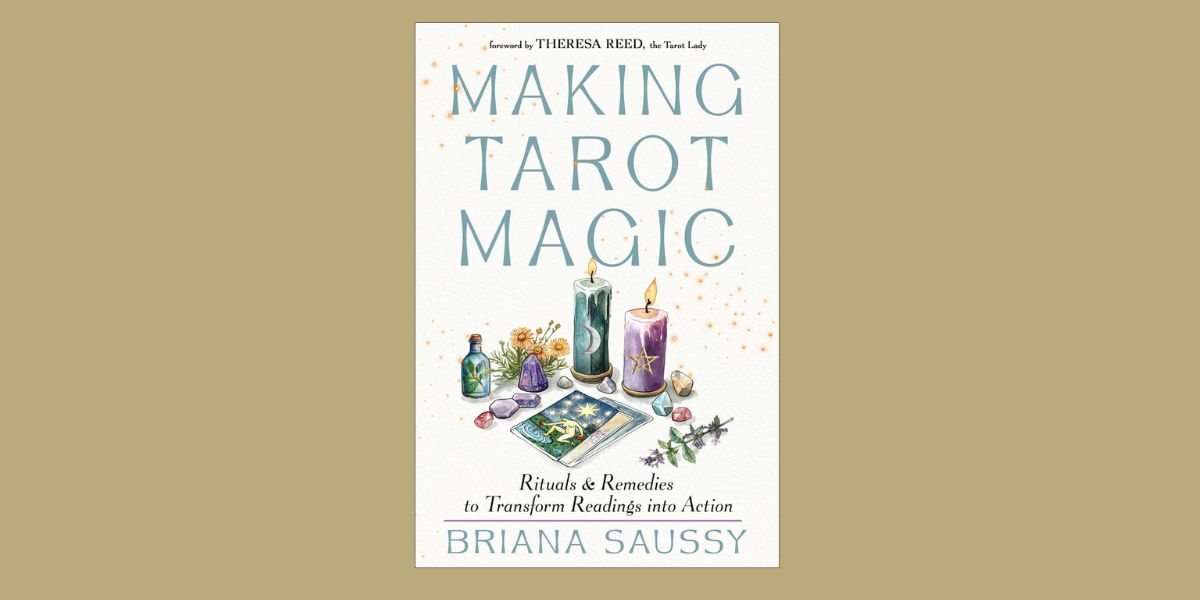
Making Tarot Magic, by Briana Saussy

Making Tarot Magic: Rituals and Remedies to Transform Readings into Action, by Briana Saussy
Weiser Books, 1578638763, 248 pages, December 2025

Have you ever done a tarot reading and found yourself wondering how to actually act on the messages the cards revealed? Maybe you journal or meditate afterward, yet the practical steps still seem to allude you. Perhaps your readings have begun to feel a bit passive, keeping you circling in the “what ifs” or lost in contemplation. Enter Making Tarot Magic by Briana Saussy, a guide that reminds us tarot isn’t just a tool for insight, but a catalyst for real transformation.

Where before there was only fate, after a good reading there should be freedom.”7

Weaving together the arts of divination and magic, Saussy reframes tarot reading as an opportunity for ritual and intention work. Readers learn how to use each tarot cards’ energy for real life healing, love, protection, abundance, and more. While many tarot books teach how to read the cards, Saussy’s focuses on what readers can do with that information to practically apply it in the world, reminding readers they can make moves to either lean into or shift the story of the cards, and use magic to do it.

“A tarot reading told you a story…and told you what you needed to do to change the story, to give it a better ending, to create more spice, adventure, and depth.”8

As an experienced diviner, Saussy has organized the book into chapters based on top topics people most seek advice about: love (marriage, romance), prosperity and abundance (personal wealth), career and business success, healing, court cases and legal issues, fertility/pregnancy and manifestation, baneful work, and protection and divine blessings.

For each intention, she provides an introductory overview, special considerations to note in regard to the Major Arcana and suits, descriptive meaning for all Major Arcana and Court Cards plus corresponding magical techniques and intentions, short meaning of the Pip cards (Ace-Ten), and then tasks for further development and relevant spells.

I absolutely LOVE how Saussy goes through each chapter and provides a different interpretation of the cards based on the specific intention of the chapter. Too many tarot books give only one general interpretation for each card, leaving it up to readers to apply the energy of the card to the specific focus of either the reading in general or the card’s placement in a spread. The way Saussy goes above and beyond interpreting each card through a different lens is both an enlightening way for readers to see the mutli-faceted nature of the cards as well as a quicker way to find a more specific answer to your question by focusing specifically on the relevant interpretation.

And on top of this there’s a magical component too, of course, which opens a whole other doorway to interacting with one’s reading too. For those new to either tarot or magic, Saussy provides a great foundation in “Chapter One: Tarot and Magic Basics”. Topics covered in this chapter include how to work with tarot cards, specifically focusing in on how they relate to magic, reviewing magical intentions, exploring different magical techniques (candles, incense, spirit work, lodestones), magical timing, color magic, how to deploy and dispose of magic, and personal concerns (things that carry the DNA of a person).

One thing I will note though is that Saussy doesn’t go too much into how to do all the different magical techniques. While she lists them in chapter one, there’s not much guidance on how to actually do textile magic; the information given more describes how it involves working with knots or fabric. For those who have no idea how to work that type of magic, me for instance in regard to textile magic and sacred vessels (witch bottles, mojo bags), I would need more specific spells with exact ingredients and instructions. So while Saussy can point readers in the right magical direction, there’s definitely going to be a bit more work to do for follow up.

This might just be because I read the books back to back, but I think Tarot Spreads by Meg Jones Wall would be a great compliment to Making Tarot Magic because it teaches readers how to intentionally structure their readings to get to the heart of their question. While I absolutely love all the different interpretations of the tarot based on the overall topic that Saussy provides, I initially felt like I could only one-card pulls that corresponded with my intention to then draw on the magical insight Saussy provides for the card in the relevant chapter.

It wasn’t until I thought to put to use what I’d learned in Tarot Spreads about creating spreads that I started to see how I could layer different topics from Making Tarot Magic (ex. Healing, romance, and divine messages) into one reading. And once I started doing this, I became enthralled with mixing together the different messages from Saussy’s perspective in this book.

Here’s an example of one of my readings I did to find a way to feel unstuck. I had been creatively blocked and worrying about money. I wasn’t in a state of flow. I crafted my own spread with the intention of reading each card from the corresponding chapter in Making Tarot Magic:

Card 1 – How am I holding back my own abundance?
Four of Coins from “Chapter Three: Money, Honey! Part One: Personal Prosperity, Wealth, and Abundance”.

“The querent refuses to give up the best part of themselves and so does not have as much security or abundance as they otherwise might.”9

Card 2 – What messages are there from the divine that can help me overcome this?
King of Pentacles from “Chapter Nine: Full of Ourselves: Safeguarding Vital Energy and Opening to Divine Empowerment and Blessings”.

“There is a need to connect to family members, ancestors, and history. Personal history, world history, history of place–any or all of these are relevant now.”10

Card 3 – How can I apply my creativity to create a new path?
Three of Cups from “What Are You Expecting? Fertility, Pregnancy, and the Work of Manifesting”.

“Female friends will come around to support and bless someone so that they may go forth and be fertile.”11

Overall interpretation: I’ve been spending too much time on my own, in my head, declining social invitations, and being a bit of a grump, which is to say I haven’t been sharing myself with others much. This reading reminded me that I light up when I am around people I love, especially my good friends who have been there through thick and thin throughout the years.

Wouldn’t you know the next day one of my good friends invited me over and I gave into a day of pure relaxation. I didn’t think about work, food prepping, or the upcoming holidays. We watched Wicked, sang and danced to Taylor Swift’s new album, and got caught up on life with each other. And I was absolutely rejuvenated! It felt like a clean slate. My reading ended up being spot-on in what I needed, and I’m glad it gave me the awareness I needed to accept my friend’s invitation instead of pushing it off for the sake of productivity.

Overall, I’ve very much enjoyed Making Tarot Magic for the variety of card interpretations. For those with a magical background, there’s a lot of room to apply your craft in regard to tarot readings. Saussy provides not just tarot insights, but a magical roadmap for creating meaningful change, gifting readings the opportunity to transform their reading into practical real-life action.

Whether readers are seeking to work magic related to their relationships, healing, manifestation, money, career, legal matters, or protection,this book gives you the tools to discern the messages of your readings more clearly and then utilize magic to pave the way forward. Saussy’s guidance helps readers move from “what the cards say” to “how I can act with the cards’ energy?”. This is truly a gift of freedom, as readers ultimately hold the cards and have the ability to do what they will with the information presented. Saussy’s lists of magical ways to work with each cards’ energy is a truly a useful addition to any magician’s book collection.

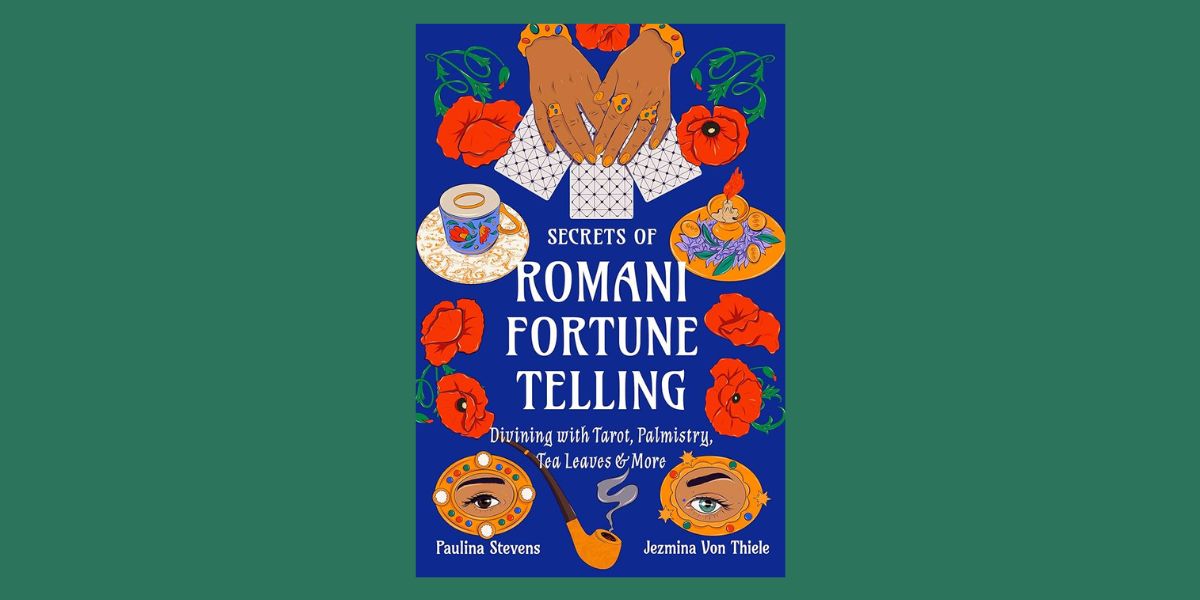
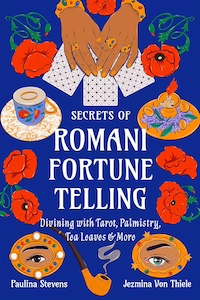
Secrets of Romani Fortune-Telling, by Jezmina Von Thiele and Paulina Stevens

Secrets of Romani Fortune-Telling: Divining with Tarot, Palmistry, Tea Leaves, and More, by Jezmina Von Thiele and Paulina Stevens
Weiser Books, 1578638585, 224 pages, October 2024

Secrets of Romani Fortune-Telling: Divining with Tarot, Palmistry, Tea Leaves, and More by Jezmina Von Thiele and Paulina Stevens is a compelling exploration into the rich and often secret world of Romani divination practices. The book serves as both an educational resource and a captivating narrative, shedding light on the traditions and cultural significance of fortune-telling within the Romani community. While not all secrets can be revealed, the authors open the world of Romani divination to us gadje (non-Romanian folks) to facilitate more cultural appreciation and less cultural appropriation.

“To understand the true art of Romani fortune-telling, and the secrets of intuition, we will share some spiritual techniques and business acumen, but more than that, we will share our beliefs, culture, history, trauma, resilience, and our stories. All of these make up the much misunderstood, maligned, and misrepresented practice of Romani divination.”1

Both Von Thiele and Stevens are of Romani descent. Von Thiele is a creative spark, working as a fortune teller, writer, editor, teacher, and performer in New Hampshire. While Stevens lives in California running her business Romani Holistic Healing where she offers clients fortune-telling, meditation, herbal health remedies, and life coaching. The authors combine their expertise in their joint podcast Romanistan, which inspired and led to Secrets of Romani Fortune-Telling.

What I love about the authors is how in both their podcast and this book they challenge aspects of their culture that need to evolve. They consider themselves intersectional feminists, gender librators, and anti-colonist, choosing to walk their own path, support LGBTQIA+ communities, and speak out against cultural issues such as domestic violence and arranged teen marriage. Their collaboration ensures that the book is not only informative but also sensitive to the cultural intricacies and historical context of Romani fortune-telling; it does not sugarcoating what needs to be addressed while simultaneously promoting a more inclusive future.

The book is structured to guide readers through various aspects of Romani divination. It covers a range of techniques, from palmistry and tarot reading to more obscure methods like coffee grounds and crystal gazing. Each chapter delves into the history, symbolism, and practical application of these techniques, making the book suitable for both beginners and those with a more advanced interest in the subject.

A real highlight are the  personal stories Von Thiele and Stevens share from firsthand experience. The authors share anecdotes and insights from their own lives, providing a personal touch that makes the material more relatable and engaging. This narrative approach helps demystify the practice of fortune-telling and highlights its significance as a living tradition within Romani culture.

It’s also interesting to compare and contrast the experiences of Von Thiele and Stevens as their stories are often side-by-side, offering a multi-faceted perspective. I particularly enjoyed the information shared in the chapter “Dream Divination”. Each author shares their family’s approach to dreams, as well as prophetic dreams they’ve had, bedtime tea recipes, and dreams for interpretation. It feels like you are getting a two-for-one bonus with the dual insights shared by the authors.

I found it interesting to read about all the energy clearing and protective measures within Romani culture. Similar to my Italian heritage, the Romani culture veers towards superstitions and proactively acts to counter bad energy. There’s a whole section on the evil eye and what measures one can take to avoid it or remove it. The authors explain how within is an emphasis on cleansing and protecting your space and yourself, offering ways one can do this to maintain good energy.

“Fortune-telling deals with people’s lives, secrets, hopes, dreams, beliefs, loves, mistakes, struggles, and ambitions. The potential for messiness is great if you don’t have a solid moral compass yourself.”8

Another aspect of the book I really enjoyed is the guidance for working with clients and running one’s own fortune-telling business. The authors are seasoned professionals, trained from childhood to be fortune tellers, and after decades of this work, it’s clear they know what they’re doing. Entire chapters are dedicated to fortune-telling ethics, how to be convincing as a reader, ways to deal with skeptics, and how to be a professional fortune-teller. For those interested in running any client based business where they’re offering readings, these chapters are very helpful.

Overall, Secrets of Romani Fortune-Telling is a valuable addition to the literature on divination and Romani culture. It offers readers a unique perspective, combining historical context, practical guidance, and personal narrative. Whether you are interested in learning about fortune-telling techniques or gaining a deeper understanding of Romani traditions, this book is a worthwhile read.

Throwing Bones, Crystals, Stones, and Curios, by Mystic Dylan

Throwing Bones, Crystals, Stones, and Curios: Includes 20 Unique Casting Boards for Divination and Insight, by Mystic Dylan
Weiser Books, 1578638364, 128 pages, April 2024

The art of casting lots, also known as cleromancy, is an ancient practice that involves interpreting patterns formed by throwing bones, stones, and other trinkets. This method of divination has been used by many cultures throughout history as a means of seeking guidance, insight, and answers to important questions. Different types of bones, dice, shells, crystals, or other significant small objects (curios), are used in this practice, each carrying its own symbolic meaning. In Throwing Bones, Crystals, Stones, and Curios, Mystic Dylan provides readers with all they need to know to begin their own cleromancy practice.

Mystic Dylan is a seasoned occultist, skilled in palmistry, tarot, and other mystic arts. He is a professional witch who utilizes his gifts to help others in their personal lives. He currently teaches classes, runs a coven, co-hosts Life’s a Witch podcast, and co-owns III Crows Crossroads online store.12 He also is the co-founder of The Olde World Emporium in Santa Clarita, California. In this book, he draws upon his research and experience to teach readers about different forms of divination, in particular cleromancy.

“Most divination techniques require the reader to interpret different patterns, or to pay attention to the system and base the answers on what it is the reader seeks and feels.”13

Right off the bat, this book caught my eye with the many full-page, color photos. This isn’t a long, text-filled read. All the guidance is direct and to the point, often written out step by step with information shared in bullet points, tables, and lists. The style makes it very easy to absorb Mystic Dylan’s wisdom, while also having an aesthetically pleasing read. The book is nice enough to keep on a coffee table to spark conversation or magical moments when company comes over, though there’s a good chance you’ll also want it nearby your altar once you begin to practice your own hand at casting lots.

The book begins with an overview of divination, including how it even appears in the Bible, but with time was banned and became associated with witchcraft and magic. Mystic Dylan is very encouraging about it being a personal process of finding what works best for one’s own intuitive gifts, noting that not all forms of divination will appeal to each reader. Fortunately, the list provided is broad enough, encompassing divination forms alphabetically ranging from abacomancy (“to read the patterns of dust, dirt, sand, or the ashes of the dead”14) to tasseography (“reading with tea leaves and interpreting their patterns”15). He also offers insight into the types of psychic senses, or the avene which one’s psychic gifts may appear, such as through hearing (clairaudience) or empathy and emotion (clairempathy).

From here, the focus shifts to the specifics of throwing bones and building one’s cleromancy set. Mystic Dylan covers where to store your casting kit, giving the items meaning, noticing position and direction, and many other how-tos to feel confident getting started. While it’s important for the practitioner to build their own meaning, there are lists of commonly associated meanings for certain items, such as ribs being related to protection/withholding, coins being related to money, and seashells being related to feminine energy, emotions, and fertility. This guidance helps readers to be aware of the energies they want to bring into their casting set as they begin to put it together. There’s even a list of types of animal and the associations with their bones. Alligator bones are associated with “strength, determination, protection, and stubbornness”16, while fox bones are associated with “cunning intelligence and diplomacy”17.

Necromancy and scrying are also covered, but in much less detail. There are rituals for protection, connecting with one’s bones through necromancy, and cup reading, along with instructions to make a Venus glass for scrying and doing oil and water scrying. For those who are new to scrying, there’s also a very long list of potential things one might see and the meaning.

There’s also guidance on divination with pendulums, dice, eggs, astrology, runes, and playing cards. For those unfamiliar with astrology, there’s really helpful tables for the planets, houses, and zodiac signs. Only a page or two is offered for each type of divination, but there’s enough information to get started and see if the method suits you. If you are feeling connected to the method, you can always follow up with other sources to learn more.

For me, the best part of the book was the second half which features twenty boards that can be used with your casting set or pendulum for more insight.

“The main purpose of a board during a cleromancy or pendulum reading is to have a reference of possible images, letters, numbers, and symbols that might come up when those specific elements on the board are touched. This adds more detail to a reading and helps us connect with our intuition in a deep way.”18

There’s all types of boards! Some of my favorites are the Druid Circle, Wheel of Fortune, Wishing Star, Venus Vibes, and The Sybil’s Circle. The boards take up a full page, and the book bends enough to fold them down flat and cast right on the book. The key thing is noting which bone, stone, crystal, or curio falls where to blend the meaning of the trinket with the placement on the board. So far, each cast I’ve done has been very insightful. Mystic Dylan notes how it’s important to also notice if a trinket goes off the board, as well as the patterns the cast lands in.

While the first half of the book was quite informative, getting to know the boards requires actually practicing cleromany. It definitely takes a little time to gather the materials, especially if you’re trying to put together a very specific casting set with certain types of bones, stones, crystals, or trinkets. But I suggest starting simply to get a feel for casting lots. Most people have crystals and trinkets laying around, perhaps even shells and stones from time spent in nature. Do your best to not overthink it, and have the courage to work with the boards sooner rather than later. They’re a great tool for beginners getting used to divining the lots cast. And remember you can always begin with a pendulum on the boards first too.

Overall, Throwing Bones, Crystals, Stones, and Curios guides readers on a journey through the mystical art of casting and interpreting symbols to uncover hidden truths and receive guidance from the universe. Whether you are a seasoned practitioner or a curious novice, this book offers a wealth of knowledge and inspiration to enhance your divination practice and connect with the spiritual realm in a meaningful way. Get ready to explore the mysteries of the unseen world and unlock the secrets that lie within the patterns of bones, crystals, stones, and curios as you embark on a transformative journey of self-discovery and enlightenment. You’ll find a diverse range of techniques to tap into your intuition and gain deeper insights about what the future holds.

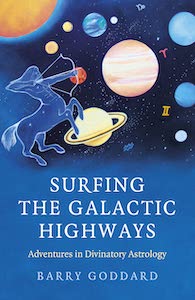
Surfing the Galactic Highways, by Barry Goddard

Surfing the Galactic Highways: Adventures in Divinatory Astrology, by Barry Goddard
Moon Books, 978-1803410104, 216 pages, January 2023

“This book is aimed at anyone who has a little bit of knowledge of astrology upwards. Astrology is one of those subjects that enters your bones, and if it is there, then it is there, however much or however little you know. It is a primordial connection to the sky that many of us feel.”15

The quote above succinctly expresses the intention of Surfing the Galactic Highways: Adventures in Divinatory Astrology by Barry Goddard. The twenty-one (21) chapters cover an expansive and fresh perspective that differs from the usual books on astrology and often a more mechanical approach that forms a less intuitive structure for the reader. The visual appeal draws the reader in simply in the cover art work and the colors used and imagery, which exude a playful approach. It is reminiscent of the required dioramas that we crafted as children in elementary school. 

Lest, this playful first encounter set the tone for frivolity in the content, there is an abundance of practical and very relatable information within the pages of this title. To that point, “Chapter 1: The Power of Astrology” begins with the First Vaccination Chart reflecting the date when Margaret Keenan (UK), received the first dose of the COVID vaccine on December 8th, 2020. Using this as a starting point for the innate power of astrology as a predictive tool grounded in the present celestial events, Goddard creates the fertile space of return to inclusion of a sentient and accessible Universe as a tool of free will and intention…. 

“Astrology enchants the universe in an age when that enchantment has been replaced by the notion of a dead universe, that the universe is just a thing and we are just one more thing in it. We are the first people in history to entirely forget our roots in spirit, in the sense that consciousness is fundamental.”17

As you move through the chapters of this book, there is a sense of being part of an adventure in exploration of the astrological basics versus the academia of the subject matter. “Chapter 2: Keeping it Simple” exemplifies this approach beautifully. Goddard provides the reader and novice with just enough astrological information to make sense of the deeper explorations of the components of astrological practice. 

“I like to keep astrology simple, because it is then easier to remain close to the symbolism. When you are close to the symbolism, when you feel it strongly, it can speak through you. Anyone can learn the set of meanings of the planets and signs and put them together to read a chart. A computer can do that. But that is not astrology, because it is not the gods speaking through you, but the intellect, which needs to be the servant, not the master.”19

This simple approach is sampled in the reading of Barack Obama’s chart – only containing the Sun, Moon and Rising signs. The lesson here is one of using the highlights (Sun, Moon, and Rising) information as the starting points for analysis of an individual chart. The reader is reminded of the deep, albeit for many unconscious, knowing we have of the two largest celestial bodies of reference we have access to directly: the Sun and the Moon. This concept follows the idea of connection and symbolism and allows those very common things to speak through the astrological reading by way of what is already established as a connection to the reader’s ideology of what the Sun and Moon mean to them beyond astrological purposes. 

Goddard provides all of the usual information sought after by those looking to astrology with specific intentions. “Prediction, Political Astrology and Bad Astrology” (Chapter 3), “Relationships” (Chapter 4), “Astrology, Divination and Science” (Chapter 10) and “The Elemental Balance” (Chapter 11) are just a few of the highlights that would satisfy the more traditional approach.  But, the more interesting perspectives can be found in chapters such as these: “Trusting in Death” (Chapter 8), “Tweaking Our Creation Mythologies” (Chapter 12), “The Geography of the Underworld” (Chapter 21) and others that pique the reader’s curiosity about entwining astrological concepts into more expansive areas of consideration. 

Throughout Surfing the Galactic Highways, the underpinnings of a scientific approach to astrology are woven with the mythos of sign and planet and the symbolism becomes one infused with reality and intuitive creativity. Each chapter is primed with visual examples of charts that have been simplified in how much is contained within, allowing the reader to properly digest the concepts presented and create new pathways of understanding that can at a later date be expanded upon. 

Would I Recommend?

In Surfing the Galactic Highways, Goddard has successfully taken some very dry and often challenging principles of astrology and crafted them in such a way that makes them relatable to everyone at all layers of knowledge base. Goddard’s writing style is one that elicits an ease of reading that is similar to that of sitting and discussing a complicated subject with a patient and enthusiastic friend whose only goal is one of wanting to share their passion for that topic. All in all, this book is an excellent resource for those who wish to explore the many uses of astrological application and enjoy the journey of new awakenings. 

About the Author: Barry Goddard

In his twenties and thirties, Goddard was engaged in Buddhist practice, but for the last 25 years the main currents have been astrology and shamanism. He regularly writes blogs and Facebook posts about both shamanism and astrology, to which he brings a fresh and sometimes controversial perspective.

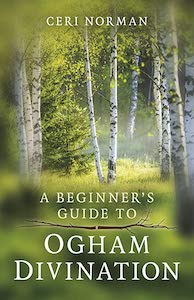
A Beginner’s Guide to Ogham Divination, by Ceri Norman

A Beginner’s Guide to Ogham Divination, by Ceri Norman
Moon Books, 1803410922, 240 pages, December 2022

A Beginner’s Guide to Ogham Divination by Ceri Norman is an excellent resource for anyone interested in exploring the fascinating world of Celtic divination and provides a comprehensive introduction to the ancient Celtic divination system known as Ogham. Norman gives readers a thorough introduction to the ancient Ogham system, touching upon the history of the communication system, and offering practical advice and insights for beginners. Throughout this book, Norman provides readers with a step-by-step approach to understanding and utilizing Ogham for their own divinatory purposes. 

The book begins by explaining the origins of Ogham, tracing its roots back to the early Celtic Druids. It delves into the symbolism and significance of each Ogham symbol, known as a “feda,” which represents a letter of the ancient Celtic alphabet. The author explores the mystical qualities and associations of each feda, allowing readers to develop a deeper understanding of their divinatory meanings. Norman is careful to keep her readers mindful and respectful of the tradition and ancestries associated with Ogham while also allowing space for personal exploration and expression. Ogham has meaning but Ogham is also meant to create meaning for each person.

Norman does a fantastic job of explaining the historical significance of Ogham, making it easy for beginners to grasp the basics while still being thorough and complete in her explanations. This well-structured book starts with the fundamentals and gradually delves deeper into the meanings of each Ogham symbol. The author’s writing style is clear, engaging and makes complex concepts manageable. Though this is truly structured as a book for beginners, I did not find myself bored or irritated by the simplicity, despite not being a true beginner with Ogham. Norman is one of those authors who knows what she knows and also knows how to present her knowledge in an engaging way for a variety of readers.

What really sets this guide apart is its emphasis on practical application. Norman provides step-by-step instructions on various divinatory techniques, such as casting Ogham staves and using Ogham cards. Because of this, readers are encouraged and able to actively engage with the divination process. Throughout the guide, these practical techniques and exercises are presented to help readers connect with the energy of the Ogham symbols and develop their own intuitive abilities. The inclusion of exercises and meditations enhances the learning experience, helping readers develop their intuitive abilities and connect with the ancient Celtic wisdom.

In particular, in Chapter 5 “Divining with the Ogham”, Norman presents twelve different spreads or methods for divination. Most books provide 3-5 of the most well-known or popular. Because of her commitment to authenticity and honor, Norman went far beyond what’s typical for beginner’s guides. She also gives readers Diety correspondences both old and new, letting readers know that “a few are older and come from older mythology such as Bran’s link to the Alder Tree, others are newer and come from more recent folklore, Wicca, the Druid revival, and the like.”20

In fact, Norman is so careful to present all of her information with honesty that she tells readers that some of the information she included about crystals, planets, elementals, and animal correspondences “are all modern modern” and that she feels it is “important for [her] to be honest about that with you.”21

In addition to the divinatory aspects, the guide also explores the spiritual and ancestral aspects of Ogham, emphasizing the importance of connecting with nature, ancestry, and the Celtic traditions. Norman emphasizes the spiritual and ancestral aspects, encouraging readers to cultivate a deep reverence for nature and their Celtic heritage – or, the elements and gifts of the Celts that can be seen across many ancestral heritages. This holistic approach adds depth and meaning to the divination practice, creating and holding space for personal growth and self-reflection at each individual reader’s pace and place along their journey.

Overall, A Beginner’s Guide to Ogham Divination provides a comprehensive, invaluable resource for those intrigued by Celtic divination and seeking to explore the wisdom of the Ogham system. Ceri Norman’s expertise and passion shine through in this well-crafted guide, making it a must-read for anyone interested in delving into the ancient art of Ogham divination, exploring the ancient Celtic wisdom, and utilizing Ogham as a tool for personal insight, guidance, and connection with the spiritual realm. From brand new beginners to those of us who want to reconnect with what we’ve learned and experience it anew, this book is a welcome companion, and a smart traveling partner along the divination journey.

Pagan Portals – The Art of Lithomacy, by Jessica Howard

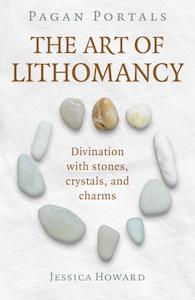
Pagan Portals – The Art of Lithomancy: Divination with Stones, Crystals, and Charms, by Jessica Howard
Moon Books, 9781789049145, 104 pages, May 2022

A few years back, I had my first lithomancy reading without even realizing it. I sat down with a  woman at a psychic fair reading small pebbles and stones, who then accurately shared insights about my past, present, and future. Even since then I’ve wanted to learn more about this art form, but there was scarce information I could find about it. Therefore, I was absolutely thrilled to discover Pagan Portals – The Art of Lithomancy: Divination with Stones, Crystals, and Charms by Jessica Howard, which has completely sparked my interest in developing my own lithomancy practice.

Howard is an eclectic witch, blending Water, Kitchen, Celtic, and Green Witchcraft into her practice, adding to the well-rounded approach to this topic. She explains to readers how lithomancy is the art of divination done by reading stones, crystals, charms, or even seashells. A caster, who is doing the divination, tosses the stones and then interprets the reading based on where everything falls, noticing patterns, geometric designs, and even the texture of the stones.

“So, what exactly can lithomancy tell us? Like many forms of divination, lithomancy can help us understand our past and our present. It can help us divine the future, uncover ancient knowledge and wisdom, connect with our higher selves, and unlock the secrets of our subconscious.”21

Step-by-step Howard lays out all the reader needs to know to begin their practice, prepare for a reading, and then perform the reading. There are so many little details she covers, such as how to choose your stones, followed by how to cleanse them and later ascribe meaning to each stone. I learned all about how the casting can be done with either a personal stone, imbued with your own energy, or simply by observing the stones that fall closest to the querent.

What I like about Howard’s approach is that she provides the foundation to begin a practice but emphasizes how individualized one’s lithomancy practice will be. She leaves a lot of room for the budding lithomancer to develop their own style, interpretations, and intuitive guidance along the way with just the right amount of support to make one feel confident this is a divination style they can learn to use successfully.

For instance, one of the lithomacy sets described is an “Astrological Correspondence Set” based on the planets. Howard goes through all the planets and provides readers with their keywords and meaning to help discern which stone might be best to use to represent them in a set. She also covers the additional stones included in this set, which are stones for place, love, luck, magic, life, and commitment. As an astrologer, I was fascinated by this set and felt it was one that could bridge my knowledge of astrology with lithomancy. Howard even describes how the diviner could divide the casting circle into houses for further insight – pure genius!

Another section that I found very insightful was the chapter about performing a reading. Howard covers how to cast the stones, the use of casting boundaries (or not, depending on the reading style), and reading with segments, where you divide your casting space into defined areas, such as months, seasons, or past-present-future for more insight. I loved being invited to think about all these little nuances and have options to explore as I develop my practice.

Most helpful to me as a beginner was all the information about interpreting one’s reading. Howard shares a bunch of things to take note of when determining the reading’s message, such as the distance between stones, where they fall in relation to the reader/personal stone, the meaning of various patterns and shapes (ie. square vs. circle vs. straight line), and the stone’s physical characteristics (if a jagged or smooth part of the stone is facing upward, if a pointy edge of the stone is facing a certain direction, etc). Her thoughtful details make the reader feel a lithomancy practice is quite accessible, and this section serves as a great reference when casting one’s stones for the first time.

One of the final chapters, which Howard claims she just had to include due to the good results she’s had with this type of reading, is called “The Chakra Stone Set for Healing”. Just how Howard greatly expanded my perception of what was possible with lithomacy in regard to astrology, she did once more in this section where she teaches how lithomacy can be used in combination with energy work as well. This stone set is really unique in that it has one stone for each chakra, plus one for each element, and a personal stone. She teaches how to read the stones to determine where one should direct their energy or where there is an energy blockage. The mixture of the chakras with the elements yields really interesting insights about how to realign or direct one’s energy, making this a reading that can be done daily for energy attunement.

Overall, Pagan Portals – The Art of Lithomancy is the perfect start to developing one’s own practice. Howard provides the foundation needed to get started while also empowering the reader to trust their intuition to discover for themselves the stone’s messages. After reading this book, I am feeling very inspired and eager to begin creating my own stone sets. There are so many neat directions this form of divination can take that regardless of your magical style you’re bound to find a way that lithomancy can be used to enhance your current practice.

The Creative Pendulum, by Joan Rose Staffen

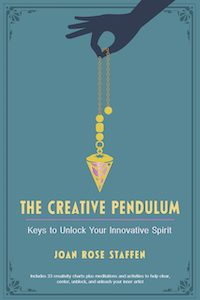
The Creative Pendulum: Keys to Unlock Your Innovative Spirit, by Joan Rose Staffen
Red Wheel Weiser, 9781578637515, 288 pages, June 2022

The Creative Pendulum: Keys to Unlock Your Innovative Spirit by Joan Rose Staffen got me out of a creative rut in the most fun way. It had been a while since I’d used my pendulum, but after a quick dust-off, I remembered how much insight I used to get from this method of divination. It seems I had forgotten the myriad of possibilities that came from tuning into my higher consciousness in order to figure out what was needed in my life.

Until reading this book though, I had never thought to practically weave together my creativity and work life by dowsing with my pendulum. But Staffen provided me with a marvelous gift of ingenuity in this book that inspired a renewed interest in the pendulum as a divination tool while also relighting my spiritual spark.

I will say right off the bat what I liked most about this book is Staffen’s openness, humor, and willingness to think outside the box that pours through every page. This pendulum technique is so unique and quickly ignites new insights. And I feel this technique works because Staffen has pulled from her life experience to create a method that is practical, creative, and spiritual all in one.

Anecdote after anecdote showcases how Staffen deepned her creative practice and expanded her wisdom through trusting the process. For instance, how she once “spent a year asking God/Goddess for my right, perfect place, opportunity, and company”22 before launching her business venture. Reading her stories is not only amusing, but also reaffirms that we always have the opportunity to try new things, learn, and grow; this has helped her navigate through plenty of career changes and shifts in life circumstances. Through the ups and downs in life, Staffen reminds us that the Muse is always present – all we need to do is tune into the energy at hand.

But even though this book is wonderfully infused with Staffen’s spirit, the focus remains centered on readers expanding their life, overcoming roadblocks, and connecting with their own creativity. Staffen has created Intuitive Creativity Charts that the reader can use their pendulum to gain a deeper understanding of what is being called for in their life right now. The technique she teaches in this book involves dowsing with the pendulum over the Intuitive Creativity Charts for guidance that goes beyond simply “yes/no” answers, the more simple and commonly used method of working with a pendulum.

For those of you who might not know how pendulums work through the process of dowsing, Staffen provides a great description:

“Dowsing has both scientific and mystical elements that help us tap into both our subconscious and super-conscious minds. Using the pendulum can help us to center emotionally and spiritually, and we can more easily open to a meditative state, where we become calm, relaxed, and receptive to the suggestions presented by the pendulum and charts.”23

Chapter two, “Learn to Dowse with the Pendulum,” provides all the information needed to get started, even if you’re completely new to this method of divination. Staffen provides details such as where and when to use one’s pendulum, how to center yourself for accurate results, and what to do if your dowsing isn’t working. She also shares with readers step-by-step instructions for how to dowse, which is very easy to follow along with. As with anything, practice is important, so even if at first you’re a bit skeptical or unsure, I recommend keep going!

Now, while the main premise of the book is teaching readers how to use the Intuitive Creativity Charts, it includes a heap of creative life-coaching. Staffen goes chapter by chapter explaining the significance of each chart, illuminating how it can be used for insight, as well as explaining all of the potential chart pendulum answers to clarify the messages that might come through. But these aren’t static explanations, such as “If your pendulum lands on this then it means xyz..” Rather, it’s almost like Staffen is coaching you through understanding the answers revealed. 

Oftentimes there are exercises to do, like meditations and journal prompts, to ground the insight and find out what it means for you personally. And it’s this delivery from Staffen, focused on process more than result, that makes the book so creatively stimulating. Dowsing with the Intuitive Creative Charts is not meant to be a one-size fits all approach! And I was amazed at all the guidance available using the charts. Staffen has done a great job of charting questions you might not even have ever thought to ask.

There’s a chart for answering questions about one’s creative process (“What literary/performing/visual art should I pursue?” and “What artistic needs do I have?”), timing (“When’s the best time to take action?”), energy work (“How can I clear my chakras?” and “How can I overcome negative beliefs?”), business strategy (“How can I market my art?” and “What is the best income stream for me?”), plus so much more! I honestly have spent hours trying out different charts and am always so surprised by the accuracy of the pendulum responses.

And this guidance is tailored to recognize a multitude of paths, rather than a prescriptive “it has to be this way to work” model, that opens new doorways, especially when one starts to layer and sift through all the insight they’re getting from the perspective of each chart.

Once you’re comfortable with the technique, I’ve found it’s useful to use charts in combination. For instance, I use my pendulum to dowse for questions related to my creative identity and how to improve my income stream. (I try not to ask too many questions at once, even though I want to!) Quickly, I saw how the answers were interrelated and urging me in a new direction.

One really neat thing about The Creative Pendulum is how Staffen shared two chapters on using the pendulum and Intuitive Creativity Charts to coach yourself and others. She offers tips for coaching oneself with a reading and includes two personal assessments worksheets that help you to clarify the issue you’re working on and hone in solutions.

Then there’s also an entire chapter on coaching others by discovering their talents and motivating them to take action. Staffen offers guidance about preparing for a session with clients, along with client assessment forms that can be used when working with them. I so deeply respect Staffen’s choice to so transparently share her Intuitive Creativity Charts method with others and teach them how they can use it to coach others. 

And it gets better – Staffen saved some of the best material for last, such as the chapter “Paint on Your Hands: Art Prompts” that are “fun exercises…to help beginners spark their own brave, intuitive creative within.”24 As a creative at heart that often needs a nudge to indulge, I loved the prompts to draw, create collages, play with finger paints, and more! It got me motivated to actually take out my art supplies and enjoy/explore myself.

In the final chapter, Staffen suggests starting a “creativity cluster” of “like-minded people who want to learn to dowse, journal, and play together!”25 Now I’m certainly wanting to do this, and I’m thinking about starting a Meet-Up group once I relocate next month. 

Overall, The Creative Pendulum has been such a breath of fresh air! I highly recommend this book for those seeking to expand their horizons. When read with curiosity and an open-mind, the possibilities of what you might discover about yourself through the process of dowsing with Staffen’s Intuitive Creativity Charts are endless.

From discovering your creative identity to figuring out what business steps you should take next, this book is useful on so many levels, which opens doors for readers to make their dreams a reality through the aid of their pendulum. It’s certainly a book one can come back to time and time again, whenever you are feeling called to use the guidance of the charts for both yourself and teaching others.

The Wanderer’s Tarot, by Casy Zabala

The Wanderer’s Tarot, by Casey Zabala
Weiser Books, 1578637597, November 2021

There is room for everyone to improve in life, but sometimes we don’t know where to start. The Wanderer’s Tarot by Casey Zabala appears to be an amazing jumping-off point for this particular activity; only time will tell, and I doubt time will prove this observation wrong. Casey Zabala is a creator after my own heart, believing in divination as a means of healing self-discovery and personal empowerment. Her deck, The Wanderer’s Tarot, is a tool I will be keeping in rotation for a long time.

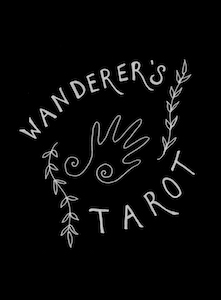
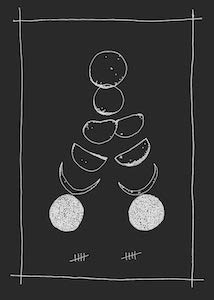
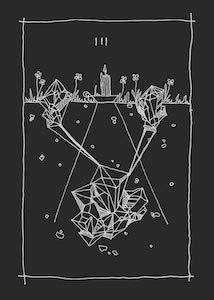
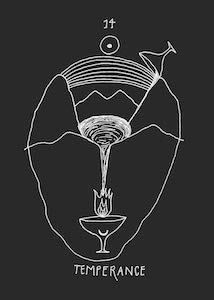
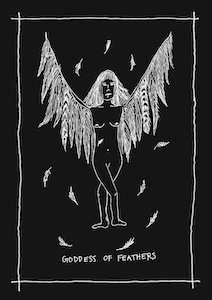
This box is just superb! The design is simple, but the sleek all black design with white text is inviting. The artwork present is barebones, but alluring. The picture on the back made me immediately paw through the cards to see which card art inspired it (it’s the Wanderer of Stones).

The spine is completely blank: there’s no name, no doodles, just black inky nothingness, which I only see as an issue if you display your decks on a shelf of any kind with spines facing out. But then again, you could resolve this issue with a sticky tab or, dare I say, writing on the box yourself! The opening mechanism is a hinge style clam-like lid. Now, I wouldn’t go shaking it about, but it stays quite secure. I would trust this box to protect the cards on the go if you take a deck with you.

Now onto the cards themselves. The card stock is great. They have a good amount of give without feeling thin and aren’t obnoxiously thick, I have small hands so card sizing is very important to me in a deck. If I can’t shuffle the deck, I’m less likely to use it and will then feel bad about neglecting it.

The cards were thankfully held together not by plastic but rather by a simple black paper band that I was able to slide back on after removing if I was careful… up until the point where I stepped on the band like a goofus. Off topic, so let’s get back on track with the edges of these bad boys. They are so shiny! I have in the past gone out of my way to color the edges of some of my other decks, but these cards came pre-treated with a shiny silver, and I am in love to a degree.

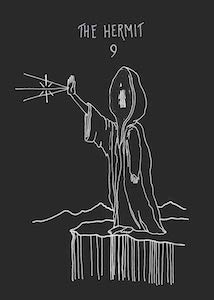
On flip through, the cards stuck together much more than usual, and my hands came away with a faint dusting of silver the first few times of handling. This silver is a gorgeous contrast to the solid black background of these cards. The backs lend themselves well to reading reversals. The circle in the middle with lines radiating off of it gives me “light at the end of the tunnel” vibes, and I like that a lot. These cards are a bit wider than your standard deck but it is still very shuffle-able.

Reading with these cards is a bit tricky though. The numbering for both the majors and the minors are not consistently placed, so I find myself looking for the numbers or names on some cards. I do, however, appreciate that the majors don’t use the traditional roman numerals and the minors are denoted by tally marks only.

It makes you think a little when doing a reading, and that’s kind of the whole point of the deck: diving deeper into the mind and self to better your existence. The minor arcana is drawn in a very pip like style which, in my mind, would prove a bit hard for a new reader to understand as there isn’t any of the traditional RWS context images to help them out.

We’re gonna talk about that smell now. This is my biggest problem with this deck. Trying to riffle shuffle them the first time made it more obvious than when just holding it. If smells trigger any issues of yours, let these cards air out. Set them on a window sill or a table spread out for a few days, otherwise you will not have a fun time. Do the same with the box, leave it open before storing them.

Enough tough talk, let’s look at the guidebook. The book isn’t so much a book as it is a pamphlet with quick info on the cards. Zabala makes it pretty clear that we’re supposed to sit with these cards and come up with our own personal meanings and really suss out how these cards make us feel when they come up, rather than treat the guide like it’s some kind of god.

Our major arcana cards get a few keywords apiece, which is pretty standard fare. The minor arcana got an interesting treatment though. The only bits that get any kind of in-depth meaning is the suits and court cards, as they were changed for this deck. Pentacles are now Stones, Swords are Knives, Wands to Feathers, and Cups to Moons. There is a short explanation of each of the suits on their own panel.

But the truly interesting part is how the numbered minor arcana are treated. We get a numerology cheat sheet of sorts that we have to pair with the traits of the suits to get our meaning. The courts are a bit tricky; they feel like their own entity completely divorced from the RWS courts. I couldn’t figure out a one-to-one correspondence, so here they are for you to decide: Philosopher, Goddess, Prophet, and Wanderer. I won’t say anymore on them as I feel you should pick up this deck to sate that curiosity and support the creator yourself.

There is an option to purchase a more in-depth book from their shop for $20 USD. I would suggest picking up the book with this deck, even though I haven’t had a chance to read it yet. In the description of the item it says there are spreads, in-depth meanings plus reversals, and a brief history of the tarot in the big book. As of writing this, the full guidebook is out of stock on Zabala’s shop, but here’s a link to the book itself anyway for your viewing pleasure.

The sheer amount of self-reflection I’ve been forced to do with this deck is unreal. From the moment I pulled my first card, it was already reading me to filth. There is a brutal honesty in these cards that most of my other decks also have with me, so I guess that’s just how I get messages best. Tell me straight up — no sugar coating, hit meh!

While I don’t feel any more connected to the wider world around me through the work I’ve done with these cards, I feel more grounded in myself. I’m setting down roots that I need to start reaching for the cosmic truths this deck wants to throw at me. So, if you pick this one up, get ready for a journey cause you’ll be going on one whether you think you want to or not.

The Wanderer’s Tarot holds lessons that I think everyone should hear regardless of how you identify, and I would love to say everyone should pick up a copy, but I can’t. Are you open to looking into yourself? Can you admit to yourself that things need to change and are you capable of enacting those changes? If the answer to any of those questions is “no”, then this is not for you at this time. This change is what the deck wants for me and what it will want for you. It will make you think, it will tell you the same thing as many times as it takes to get you to do something about it. It will fight you FOR you to ensure growth is happening.