✨ A Gathering Place for Magical Readers and Writers ✨

Tag Archives: pagan portals

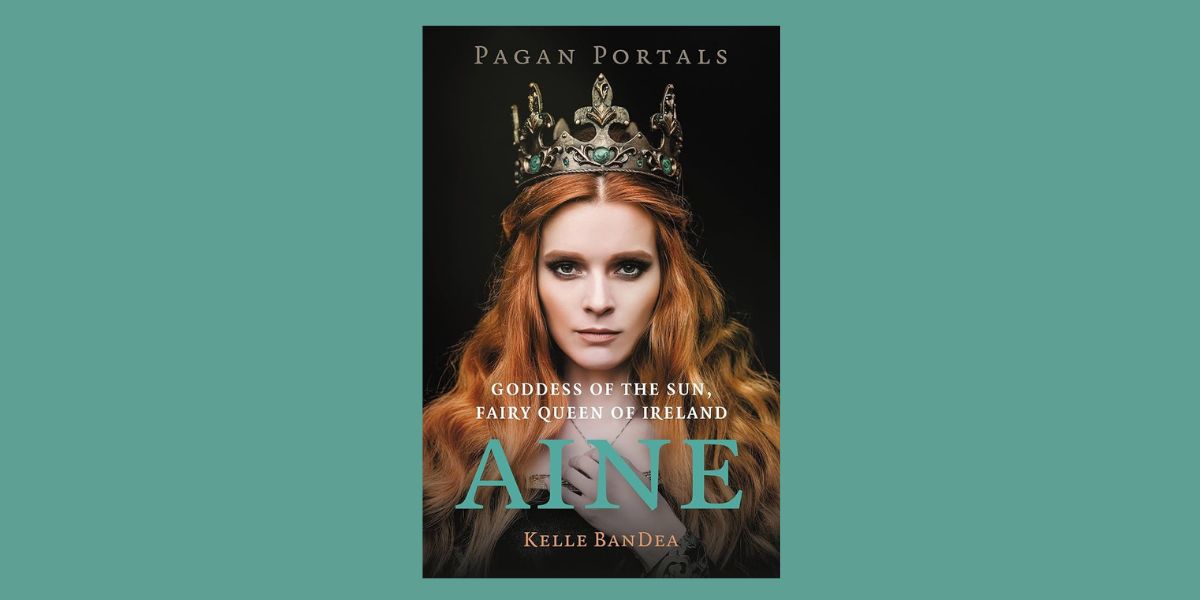
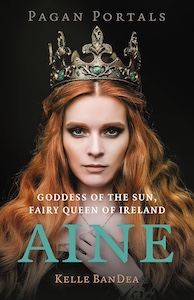
Pagan Portals – Áine, by Kelle BanDea

Pagan Portals – Áine: Goddess of the Sun, Fairy Queen of Ireland, by Kelle BanDea
Moon Books, 1803419423, 104 pages, December 2025

A while back, I was at a hostel in Kalispell, Montana when another traveller offered to give me a psychic reading in exchange for reading her tarot cards. Out of all the things she told me, what stuck with me the most was how one day I would go to Ireland and deeply connect with a powerful red-haired goddess, changing my life forever. Well, I’ve yet to get myself to Ireland, nor have I pursued getting to know any Irish goddesses.

But when I first saw the cover for Pagan Portals – Áine: Goddess of the Sun, Fairy Queen of Ireland by Kelle BanDea, I was immediately drawn to the cover’s image. Who was this goddess with the flaming hair? Certainly one I’ve never heard of before! I’m so glad I followed my curiosity to read this book, as BanDea has done a wonderful job depicting Áine through stories and offering readers a multitude of ways to get to know her.

BanDea begins this book with an insightful introduction about Irish deities and fairies. Topics covered include the Tuatha Dé Danann, Fairy Faith, Irish Fire Festivals, the Celtic Revival, and Irish Travellers. This introduction is vital for someone new to Irish history, mythology, and folklore, as it situates what BanDea shares about Áine in the wider context. From cultural feelings towards fairies to understanding the Sidhe, this section attunes readers to the collective wisdom of Irish culture those on the outside might not otherwise be aware of.

“Part I – Áine in Myth and Folklore” is divided into two chapters. The first chapter, “Sun Goddess of the Tuatha de Danann”, focuses on Áine’s popular depiction as a love goddess associated with the sun. BanDea explores references to Áine in the Book of Invasions as well as mythology within Tuatha Dé Danann. What I found interesting was BanDea explaining how Áine’s name and the rituals associated with her, particularly at her hill in KnockÁiney, Ireland, highlight her association to Midsummer and land fertility.

Within this chapter BanDea also explores the associations of Áine as a Mother Goddess, Fertility Goddess, and Land Goddess. All of the information BanDea shares is well researched and provides a multifaceted approach to Áine, taking into consideration both the folklore as well as scholarly sources. She even covers her darker attributes, which potentially link her to the Morrigan and god Crom Cruach.

The second chapter, “Fairy Queen of Munster”, delves more specifically into the Áine’s folklore of being raped and then taking revenge through either murder or cutting off the man’s ear thus making him maimed and unable to be king, depending on the version. BanDea does a great job explaining how these stories of Áine, as well as countless other goddesses, were changed based on who is telling them, writing:

“Feminist theologians, noting this phenomenon of reducing goddesses to sinister spirits in many cultures, often frame this is a mythological parallel to how women’s ability to hold power in general was degraded over time, and how, under the Christian world in particular, women came to be seen as dangerously seductive; a natural temptation.”1

Therefore, she takes a measured approach in exploring Áine as a banshee and mermaid. I found these topics fascinating, especially BanDea’s exploration of the “magic wife” motif.

“Part II: Áine in Neopagan Practice” is where BanDea shifts towards offering ideas for working with Áine. First, she includes a guided journey to establish a connection. From here, BanDea shares Áine’s correspondences and folklore tips, reminding readers to use proper caution as she is a fairy. BanDea also offers insight on how Áine can support ancestral work, including a ritual to ask for her blessing on ancestral endeavours.

The next chapter focuses on Áine and seasonal workings, which is very fitting given her association with natural cycles, fertility, and abundance. BanDea shares magical workings that can be done at Midsummer, Lughnasadh, and Samhain. These range from a protection ritual to an abundance spell jar. I particularly appreciated the eco-spirituality consideration given in BanDea’s suggestion to adapt Áine’s rites “to bless the land with her protection, while making a commitment to do what you can to help both the Earth and those who will be most affected by man-made climate change.”2

Yet the chapter that stood out the most to me was “Áine in Ritual, Archetype, and Story”. As someone who has studied depth psychology for nearly a decade, it was a thrill to see BanDea include a whole chapter dedicated to working with the archetype of Áine. While I believe it’s important to not reduce deities to archetypes, this has always been how I personally connect the most with the stories and energies they hold. BanDea offers a guided journey to meet Áine as the Dark Maiden as well as meaningful questions that one might ponder or journal after working with one of Áine’s stories that resonates with them. In this context, Áine becomes a potent goddess those working through trauma can call on during their healing process.

My favorite thing overall about this book was BanDea’s perspective. She’s a feminist theologian and this shows in how she depicts Áine and offers insight into establishing a relationship with her. The mixture of healthy skepticism and honesty about the supernatural and spellwork make her a grounded voice for the subjects of such a mysterious goddess. While the content is rooted in primary sources and Irish culture, BanDea’s personal anecdotes and experience give shape to the text to make for an engaging read.

I also appreciated how BanDea acknowledges the different Neopagan approaches to working with deities. She has an appreciation for the wide variety of spiritual paths, and in turn makes the content she shares accessible without it becoming generalized, all the while encouraging respect for the culture from which Áine arises. BanDea is thoughtful as an author and guide, a wonderful attribute in someone offering an invitation to connect with a new deity.

All in all, while Pagan Portals – Áine is a quick read (I finished it front to back within the span of my daughter’s nap!), it is packed with the stories of an enigmatic goddess. BanDea’s exploration of Áine presents a well-rounded introduction for getting to know this goddess, leaving it up to the readers to discover her in her many forms: sun goddess, fairy queen, banshee, or even mermaid. The deep connection Áine has with the land of Ireland is sure to speak to those interested in eco-spirituality, while those who are seeking a protector as they heal trauma may also find solace in relationship with her.

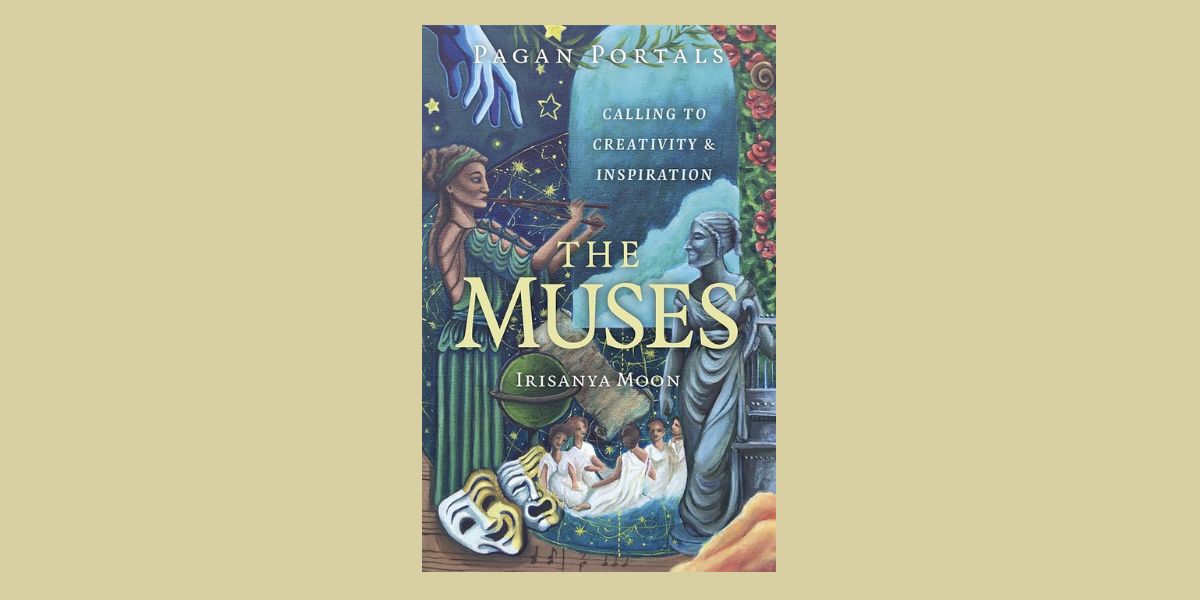
Pagan Portals – The Muses, by Irisanya Moon

Pagan Portals – The Muses: Calling to Creativity & Inspiration, by Irisanya Moon
Moon Books, 1803417463, 120 pages, March 2026

Sing me, O Muses, of the hallowed acts of creation–all descendants of Memory and delivered through divine inspiration! That is the task Irisanya Moon sets for herself in Pagan Portals: The Muses Calling to Creativity and Inspiration, a beautiful introduction to the energies and personalities of the nine Muses depicted in Greek myth and religion. Naturally, the domains of these goddesses are not fixed to the ancient past–inspiration for all manner of creative pursuits strikes us just as frequently and inexplicably today as it did for our ancestors throughout the ages.

One of the most interesting features of the Muses, both as a group and individually, is that very few stories or sources directly discuss these figures. While the Muses are invoked in almost every ancient Greek text, these deities primarily participate in the creative process itself rather than serving as the subject of the creation. Moon advises the reader that although each of the traditional nine Muses (which doesn’t mean there couldn’t be more!) is associated with certain kinds of creative activity, “it’s not necessarily about doing as they do. It’s more about being inspired by their gifts to unfold your unique kind of creativity.”3 Thus, although the reader will learn about the Muses, Moon’s focus is connecting the reader with the Muses in their own life and art.

Moon is adamant that, even if you know nothing about the Muses as deities, their inspiration will nevertheless be granted if you show up to the creative process. Whatever you are trying to create, openness to inspiration from unexpected directions and the curiosity to follow where it leads is just as important as any ritual or practice designed to call upon and connect with these mysterious figures. And further, since this openness and curiosity do not depend on any particular artistic medium or domain of life, everyone has access to the Muses’ gifts and possesses a unique creative capacity that can be shared with the world.

While Moon says it is perfectly fine for readers to skip to the final chapter(s) of her book, which are explicitly devoted to cultivating a relationship with the Muses, she also suggests that learning the “facts” and stories about these deities can create a strong foundation before embarking on a relational journey with them. Half of the book’s eight chapters are dedicated to these foundations, covering the origins of the Muses and other myths in which they appear, their relationships with other deities and humans, the creative domains traditionally ascribed to each of the nine goddesses, as well as the historical cults devoted to the Muses and their gifts. 

Although the descriptive section for each Muse is quite short, each contains a passage from a historical source, which helps set the deities in their original/mythic context. As a lover of etymology, I very much appreciated how Moon breaks down the Muses’ Greek names! E.g. Clio presides over history: her name is derived from kleos, the “imperishable glory” sought by heroes so their lives and deeds would not be forgotten. This was incredibly helpful in connecting the energy/essence of each Muse to their associated artistic expressions, physical appearance, myths, and suggestions for how to cultivate a relationship with the deity. And in the chapter elucidating more, “Stories and Myths of the Muses”, I was intrigued to learn the Muses often act as judges in contests of creative expression, and are even provoked to terrible wrath by hubristic mortals.

The very first exercise that Moon shares with us contains her preferred technique for contacting any godd (god or goddess): the use of a trance state. Unlike some guided meditations or visualizations, Moon employs neutral, trauma-informed language that affords each practitioner an experience unique to their needs. Trying this out for myself, the beautiful and evocative script helped settle me deeply into a liminal state, while the built-in pauses created the space for inspiration to alight.

Another insightful exercise centers around a question one has about a creative pursuit. By making an effort to remember this question throughout the day (not just during rituals), especially during embodied creative pursuits, one will become more open and attentive to inspiration regardless of how it happens to show up. This allows the Muse(s) to speak to us on their own terms, in their own “language,” which may be as subtle as how the light dances across the water or the feeling we have when someone speaks our name. 

Moon also takes the opportunity to address how the Muses’ gift of inspiration has become maligned, especially in light of the capitalistic, product-focused creativity we can observe in the world today. This is due in part to “Western culture’s commitment to being ‘self-made.’ One can’t claim to be inspired as it means they aren’t enough alone. Or if they aren’t making money from their inspiration or inspiring others, it’s not ‘real’… Or if someone just ‘gets’ an idea, then they aren’t really doing things on their own.”4

Although short, this critique feels extremely potent for our ego-driven world, where individuals attempt to claim sole credit for an artistic achievement or use their inspiration only in service to profit. Such denial of the Muses’ inspiring presence or putting their gifts in service to another godd (e.g. Money, Mammon) certainly tempts the wrath of the Muses, as Moon discusses earlier.

As a final note, Moon is wonderfully playful with her approaches to cultivating relationships with the Muses. She constantly invites the reader to try new modalities for opening up to the influence of these deities. Acting exercises such as Theatre of the Oppressed can broaden one’s perspective by playing different parts in the drama, or an improvised scene can be like opening a direct channel to the Muses’ creative gifts. Such methods help one come to know the Muses by playing their role as an inspiration for others: being an inspiration not just receiving it. Being an inspiration for the creative work of another may not be intentional (or even desired), but in simply following one’s own inspiration, the gifts of the Muses radiate into an ever-widening field of beauty and creation!

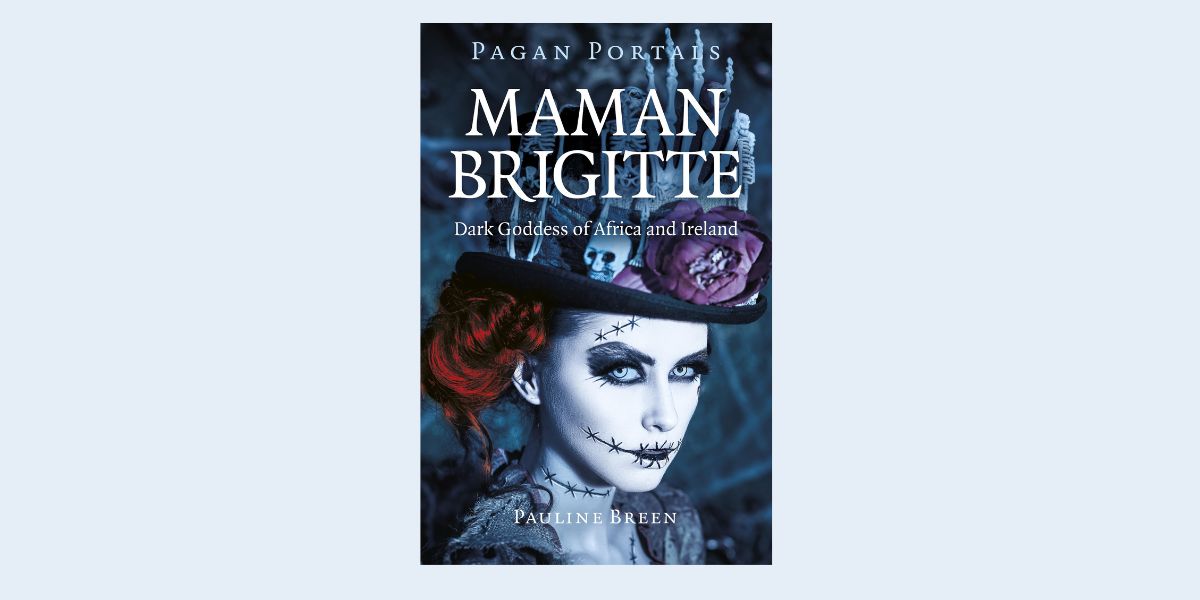
Pagan Portals – Maman Brigitte, by Pauline Green

Pagan Portals – Maman Brigitte: Dark Goddess of Africa and Ireland, by Pauline Breen
Moon Books, 1803417366, 112 pages, December 2024

I was unexpectedly and pleasantly surprised while reading Pagan Portals – Maman Brigitte: Dark Goddess of Africa and Ireland by Pauline Breen. While I’ve always been drawn to learning more about Saint Brigid from Ireland, I was previously unaware of Maman Brigitte and Brigid’s possible connection to the Lwa of Vodou.

Breen masterfully traces Brigid’s influence from Ireland to Haiti and, astoundingly, even to New Orleans in Louisiana, where I currently reside. Her research is conducted with evident respect for each culture she explores. It is profoundly interesting to observe how a goddess from Celtic culture has traversed such vast distances and touched the lives of people from completely different backgrounds, especially women who clearly needed her presence in their darkest times.

This book proved to be a truly fascinating read, resonating with me on a deeply personal level. As a woman of Irish descent, born and raised in Louisiana, and a mother currently navigating the recent loss of an infant, I felt a strong connection to Maman Brigitte. The book reveals that Maman Brigitte can be called upon for numerous purposes, but I was particularly drawn to her role as a protector of mothers, especially pregnant mothers, and children, as well as her assistance to souls transitioning from life to death.

I firmly believe that all things happen for a reason and that experiences come to us when we need them most, which is precisely how I feel about encountering this book. Unlocking knowledge of a goddess who aligns so closely with my current path has been an incredibly enlightening and humbling experience. I found myself deeply moved by the sample invocation and prayer included within the pages, which inspired me to write my own. Connecting to her energy was surprisingly effortless; I simply asked for her assistance, and I felt her presence with me. She provided me with strength and enveloped me in love, reassuring me that I would, and could, get through this challenging time.

Breen’s writing style is both engaging and accessible, making the book’s topics easy to understand. Her obvious passion for her subject matter shines through, and her dedication to her studies is evident on every page. Breen’s explanations of the historical and cultural contexts surrounding both Brigid and Maman Brigitte were clear and informative. The book is well-organized, with each chapter building upon the previous one, creating a cohesive and compelling narrative.

While I thoroughly enjoyed this book, I did find myself yearning for more in-depth exploration. Each chapter left me with a desire to delve further into the histories and struggles of women in each of the regions discussed. I would have loved for the author to have traveled to Haiti to gain more firsthand experience and speak with more practitioners and women who have a direct relationship with Maman Brigitte. While Breen does include references and quotes from other books that can guide further exploration, which I will be seeking those out to add to my library, her writing is so engaging that I found myself preferring to continue learning from her experiences and perspective.

Pagan Portals – Mama Brigitte serves as an excellent introduction to both Maman Brigitte and Saint Brigid. It is a highly informative work, and Pauline Breen demonstrates an impressive level of knowledge and devotion to her subject. I am very interested in learning and reading more from her in the future and even beginning my own research into the duality of gods and goddesses across various cultures.

This book offers a truly unique perspective that many might not connect on their own. It is a valuable read for all women, offering historical insights and a source of personal empowerment. The exploration of the connection between these two powerful figures is both fascinating and thought-provoking, and the book’s exploration of their shared aspects and their individual qualities is well-balanced.

In conclusion, Pagan Portals – Maman Brigitte is a compelling and enlightening book that offers a fresh perspective on the interconnectedness of cultures and the enduring power of feminine spirituality. It is a must-read for anyone interested in goddesses, Celtic traditions, Vodou, or the history of women’s spirituality. I highly recommend this book to anyone seeking a deeper understanding of these subjects or looking for inspiration and empowerment in their own lives. I eagerly await Breen’s future works and will continue to explore the themes and ideas presented in this captivating book.

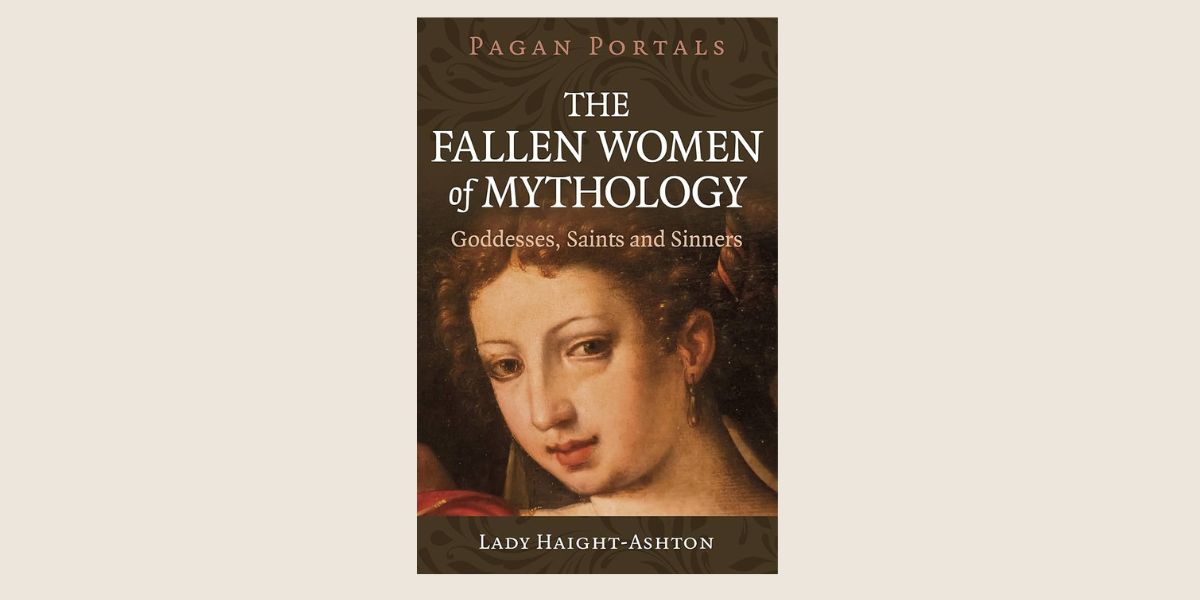
Pagan Portals – The Fallen Women of Mythology, by Lady Haight-Ashton

Pagan Portals – The Fallen Women of Mythology: Goddesses, Saints, and Sinners, by Lady Haight-Ashton
Moon Books, 180341636X, 112 pages, October 2024

Pagan Portals – The Fallen Women of Mythology: Goddesses, Saints, and Sinners by Lady Haight-Ashton is a fascinating exploration into the lives and legends of women who have been labeled as “fallen”. This book delves into the complexities and dualities of these figures, offering a nuanced perspective that challenges traditional narratives, challenging stereotypes that have boxed them into these disempowering labels. Seeking to present these women in a new light, acknowledging their strength and agency, Haight-Ashton reclaims the stories of those often misunderstood or misrepresented.

Haight-Ashton covers quite a range of women in this book, from accused witches to Greek and Hindu goddesses, along with Christian saints and women in the Bible. There’s a good mixture of mortal and divine women, sharing insight into the historical background of some, which earned them a sort of mythology based on their so-called “deviance”, and classical mythological figures who have aspects of the feminine that have been denounced, feared, or condemned.

“Using the power of the word, I have chosen a diverse cross section of remarkable women with compelling stories. Some are obscured and others known, but all of their stories are worthy of our notice.”5

The information given about each woman is relatively short. Some entries are only a few paragraphs, while others might span a page. For those looking to go deeper, additional research would be necessary. 

This book is more a compendium to honor the fallen women and introduce them to readers, commemorating their stories and offering a new perspective about their life.

There’s something sacred about taking the time to remember these women. This book might appear to be a quick read, as it’s only 112 pages, but I often found myself pausing to reflect on the women, the time period she lived, and the challenges she faced. I started to realize how connected all women are, throughout time and space, and the necessity to avoid judgement, criticism, and putting blame on others who don’t fall into our own conception of “good”.

I also started to reflect on the portrayal of women in the Bible while reading this book. I turned my back on my Christian upbringing quite some time ago, but reading about all the women classified as prostitutes, given no other reference to their personhood or character, made me angry at the sexual discrimination. Haight-Ashton does a great job showing their misrepresentation, indicating how they were misunderstood and then villainized for centuries to come.

The final chapter is filled with odes to the fallen women. There’s a liturgy, in memories, multiple odes to sinners, and three hymns to goddesses. For those also feeling the collective rage or grief that can be stirred up by this material, this chapter presents an opportunity to actively commemorate all the women who have befallen the fate of having their name smeared, lives ruined, and precious memories distorted.

Overall, I feel Pagan Portals – The Fallen Women of Mythology would be great for women who want a reminder of what has been collectively endured and put upon them throughout time. For those facing similar challenges now, such as discrimination or sexism, there will absolutely be stories of solidarity to remind you that we’ll keep on fighting no matter what. Remembering these fallen women is a testament to the strength of spirit we all have within. Honoring these women by reading their story is a wonderful way to show love to the rebel and fighter within ourselves! Lady Haight-Ashton offers a fresh perspective on well-known myths, encouraging readers to question and explore beyond traditional narratives.

Pagan Portals – Mestra the Shapeshifter, by Dianna Ryan

Pagan Portals – Mestra the Shapeshifter: Ancient Heroine of the Sacred Grove, by Dianna Rhyan
Moon Books, 1803415290, 144 pages, November 2024

Dianna Rhyan has re-animated a lesser-known, inspirational woman in Pagan Portals – Mestra the Shapeshifter: Ancient Heroine of the Sacred Grove. Often overshadowed by more famous mythological figures, Mestra was a one-of-a-kind ancient heroine, the only woman to ever figure out how to transform into different beings on her own. In this book, Rhyan opens the door to the world of Mestra through a composition of ancient texts and creative story-telling, highlighting her skills as a shapeshifter, her role within the sacred groves, her ability to defy conventional standards, and ultimately, her happy ending of freedom to come and go as she pleases.

“Mestra represents the outermost and innermost limits of human experience, a fertile capacity for radical change, that is always emergent in our psyche, even if it is something dormant or hidden away.”1

Rhyan’s writing is unique in that it weaves in historical and cultural insights that enrich the reader’s understanding of ancient Greek spirituality as it tells the tale of Mestra. Written like a literary collage, Rhyan uses text from ancient Greek and Latin sources, such as hymns to different deities, Women of Trachis by Sophocles, Metamorphoses by Ovid, and Illiad by Homer, alongside her own improvisation of the texts about Mestra to tell a story attuned to the heart of Greek zeitgeist.

Beyond being a brilliant composition of sources skillfully brought together to create an illuminating narrative, there’s also a sense of cohesion and union reflected in Mestra’s story as a whole. Rhyan shows the many separate parts of a greater whole within Mestra’s story, finding the themes and threads that unite them to give a cohesive insider look at her the forces that shaped her destiny. From the consequences of her greedy father Erysichthon cutting down Demeter’s sacred groove to the trickster suitors who pursued Mestra for marriage, there’s a web of influential forces that Mestra had to outmaneuver with her cunningness.

During a time when women’s roles were very much confined by social structure, her ability to remain in the driver seat of her life was quite a feat. And while this book is about her, Mestra seems to flee in and out of the pages as other aspects of her story offer center stage to her contemporaries. Rhyan explores Zeus’s sacred grove at Dodona, shares stories of other women (Io, Penelope, Ariadne, Arachne, Circe and more) who also mirror Mestra’s tale, and examines what it was like to be a woman of this time.

All the while, Rhyan describes divine presence, the natural beauty of the Earth, and the sensations of transformation with vivid language that makes the reader feel immersed within the story. The sacred grove, a recurring motif in the narrative, serves as both a physical and metaphysical space for readers to explore. Meanwhile, the salty sea becomes her place of refuge and transcendence. The dual natures of land and sea, male and female, human and wild animal, are integrated within Mestra’s polymorphic essence.

Rhyan skillfully brings Mestra’s shapeshifting abilities to life, portraying her as a dynamic character capable of transformation not only in form but also in spirit. This theme of transformation resonates throughout the book, inviting readers to consider the power of change and adaptation in their own lives. This was one of the most stimulating books I’ve read in a while, and there’s even journal questions at the end for readers to further reflect on.

“We have heard of the hero with a thousand faces; she is a heroine who gathers that tradition into her manifold self. . . No longer is she voiceless or shackled or by fate.”6

Overall, Rhyan provides a fresh take on Greek mythology, offering readers a chance to explore a less celebrated heroine in Pagan Portals – Mestra the Shapeshifter. Filled with historical and cultural details that enhance the reader’s understanding of ancient Greek practices and beliefs, Rhyan’s ability to blend storytelling with factual information keeps the reader engaged from start to finish. This is a compelling read for anyone interested in mythology, spirituality, or ancient cultures, as well as those who feel ready for a transformation and seeking the inspiration.

Pagan Portals – Artemis, by Irisanya Moon

Pagan Portals – Artemis: Goddess of the Wild Hunt & Sovereign Heart, by Irisanya Moon
Moon Books, 1803413212, 112 pages, March 2024

I have been lacking a clear direction lately. Seeking clarity, I did a meditation for guidance, during which I felt a call to get to know the goddess Artemis. Intrigued by her lore and the promise of empowerment she symbolizes, I turned to Pagan Portals – Artemis: Goddess of the Wild Hunt & Sovereign Heart by Irisanya Moon in hopes of learning more about how to connect with Artemis in order to discern where to point my own bow and arrow. This book promised not just background knowledge, but an introduction to a path that could potentially align me with the strength and independence epitomized by Artemis herself.

“I believe Artemis is being called into these times, like a friend and trusted ally. She can call us back to the wild hunt and claim our sovereignty (the ability to self-govern and be self-possessed). Artemis is not one of just play and delight, though She is that too, She is a being of action and alignment. She knows Her values and acts on them.”7

Moon is a seasoned Pagan Portals author whose previous titles covered Aphrodite, Iris, The Norns, Gaia, and the Reclaiming witchcraft tradition. In this book, she turns her attention towards the goddess Artemis, teaching readers Her family lineage, stories, myths, symbols, and offerings, as well as guidance on how to create and sustain a relationship with Her.

What I appreciate about Moon’s approach to Artemis is that she leaves a lot of room open for readers to cultivate their own relationship. She does not present herself as the end-all-be-all authority on Her; rather she comes across as someone who sincerely wishes to share what she has learned through her own journey alongside historical sources to reveal the many facets of this goddess. She shares references, quotes other sources, and provides a detailed bibliography at the end for readers to use as a springboard for their own research.

What Moon does do that aids readers, especially those new to working with Artemis, is call upon her experience as a witch, priestess, and teacher to guide readers in opening the pathway to cultivate a relationship with Artemis and embark on a journey of self-empowerment along the way. For instance, Moon begins the book by assuring readers there’s no right or wrong way to proceed, and that the most important thing is to cultivate self-trust. She writes:

“When you trust yourself, you build a relationship that can face all that the wild has to teach you. There is no time in the hunt to go back and forth about every decision. Claim yourself as the wise one you need when it is time to aim.”8

This was just the advice I needed to hear to get me in the right frame of mind to more deeply connect with Artemis, as well as understand on a more personal level what I had been lacking recently–determination, focus, and confidence in my vision. Moon then offers a meditation to meet Artemis in the forest to begin the journey. This is the first of many “magickal practices” that are offered at the end of each chapter for the readers to perform.

Moon’s coverage of Artemis’s birth and family helped me to situate her within my knowledge of Greek mythology. It also introduced me to new goddesses, such as Diktyanna and Eileithya, who Artemis has been linked with at times. Reading direct translation of her mythology (Hymn 3 to Artemis by Callimachus) gave me insight into her personality as someone who knows what they want from life and has the courage to ask for it directly, once again a trait that could use some cultivation in myself.

The many ways Aretmis shows up are described by Moon–nature, the moon, protection, hunting and wild beasts, maidens, sacrifice, and Amazons–painted a well-round picture. Artemis is simultaneously a provider of life and death, birthing and killing, healing and sacrificing all simultaneously. The mythological stories of Artemis further illuminate the wrath of her punishment when transgressed alongside the blessings bestowed to those devoted to her.

Chapters covering Artemis’s symbols and offerings, devotional practices, and cultivating a relationship with the wild and Artemis are perfect for beginners to become acquainted. Moon encourages readers to reflect on what they can give to Artemis beyond the traditional offerings too, suggesting readers provide service and action towards what is important to Her (nature, protecting women) to facilitate a relationship. As Goddess of the Hunt, action is important to building the trust of Artemis for those who wish to be devoted to Her for any length of time.

The chapter on devotional practices goes into detail about cults of Artemis and festivals held in Her honor. Moon also offers chants and epithets too. I particularly liked the magickal practice for this chapter where Moon leads readers through envisioning Artemis in the hunt and then moving their own bodies in the same way, infusing the wild energy in one’s own limbs.

“She knows what it takes to come back into your being. To come back to the wild from which you have been born and created and made. To come back to the sacred hunt that needs you and knows you.”9

For those ready to formalize their relationship with Artemis, Moon shares a full dedication ritual. Meanwhile, she also gives plenty of practical advice for working with a deity, Artemis in particular, for those who are new to it in their spiritual practice. Moon explains how having patience, sitting with one’s fears, and embracing the unknown, are important for readers as they cultivate their connection to Artemis. Once again, Moon’s comforting wisdom comes across as caring and friendly, lacking any hint of pretension or judgment. It’s clear Moon’s aim is to guide readers towards trusting their own instincts as a pathway to better relate to Artemis.

Overall, Pagan Portals – Artemis: Goddess of the Wild Hunt & Sovereign Heart takes readers on  a journey toward fostering a spiritual connection with the goddess Artemis by traversing ancient myths, embracing the wilderness within and without, and seeking the empowerment that comes from aligning with her fierce independence and nurturing care. Moon guides readers to not only discover Artemis in the world around us but also find pieces of Her within themselves too, recognizing our strength, our capacity for growth, and our intrinsic value as protectors of the natural world and each other.

Readers who are ready to step into the role of the hunter, listen to the wisdom of the forest, attune to the cyclic rhythm of the moon, and turn their hearts to the wild will highly enjoy getting to know the untamed spirit of Artemis through Moon’s thoughtful writing. Since finishing this book, I’ve noticed my self-trust has grown, and I am feeling more confident stating my own needs. I do feel like Artemis’s energy comes through quite well in this book, and I hope other readers find it as empowering too! In Artemis, we find not just a deity to admire, but a reflection of our deepest, most powerful selves, calling us to live with authenticity, courage, and compassion in every aspect of our lives.

Pagan Portals – Gods & Goddesses of England, by Rachel Patterson

Pagan Portals –  Gods & Goddesses of England, by Rachael Patterson
Moon Books, 1789046629, 128 pages, July 2023

I was drawn to Pagan Portals – God & Goddesses of England by Rachel Patterson because as the wife of an Englishman, I’ve traveled there quite a bit. What I love about my travels is that we don’t visit as tourists, we settle in as family and then branch out and explore the countryside. It’s a place that shares its land with small villages, larger cities such as York and Bath, and also ancient markers, all of which cohabitate beautifully. Thanks to Patterson, my knowledge of the deities of England has greatly expanded. I’m looking forward to seeing the sights with the lens of the gods and goddesses next time we visit!

Pattern is the perfect guide for this trip through the landscape of England’s deities. Her website titles her an “English kitchen witch and author” 10 Her list of other published works is impressive, including Pagan Portals – Kitchen Witchcraft, Pagan Portals – Moon Magic, and A Witch for Every Season. She is listed as one of the 100 Most Spiritually Influential Living People in Watkins Mind Body Spirit magazine.

Now, diving in, this book is divided into two broad sections: “Part I, The History of Humans” and “Part II, Gods & Goddesses”. To start the book, Patterson presents what she describes as a “very brief outline” of Britain’s timeline from Paleolithic Britain (700,000 B.C.) through the Noman conquest of 1066 A.D. She also introduces the reader to the various invading forces who settled in Britain and put their stamps on the people and the land – from the Romans to the Germanic tribes, to the Vikings. This laid the foundation for delving into the deities of England in this book. 

In Part II, before recommending how to connect with the deities, Rachel profiles numerous deities, referencing whether they were a god or a goddess, and the location where reference to these deities was found. For some she is able to share a lot of information, while for others all that remains is a reference to their name on an inscription or relic or reference in a manuscript. She covers the whole of England, though, in a concise manner. 

Of course, Britannia shows up. This time inscribed on a statue base in York. Britannia eventually became the symbol of Britain and of the resiliency of its people. She provides a lot of information on Sulis, a goddess found in Bath. As she writes, “a great number of altars, dedications and curse tablets have been found in Bath along with a large temple dedicated to her.”11 While worshiped during the Roman times as a goddess with whom they equated their goddess Minerva, Sulis seems to have been a local goddess long before the Romans invaded.

I was intrigued by the curse tablets that had been thrown into a spring. Each was made of metal and mostly all rolled up before being thrown into the spring. “All of them seem to be requesting return of stolen items, asking for revenge, or the righting of wrongs. Most of them involved what would seem to be today small items such as a stolen towel.”12 In all fairness, though, one needs their towel in Bath.

She offers ways to engage with the deities, whether one is local to you or whether you were drawn to one in the book. Ways include researching the deity, setting up an altar, connecting with the land, and, one of her favorite ways, researching food local to the area. She feels that these local recipes help her “align with the energies of the area”13 while also providing good food. 

Rachel also writes extensively as to how she connects with specific deities, Belisama, the Three Mothers/Matres, and Sabrina.  For each, she writes on myths and origins, invocations, rituals, meditations, and of course, recipes including chorley cakes (Belisama), Gloucester pancakes (The Three Mothers/Matres) and shearing cake (Sabrina). She concludes with offering further readings, if interested. 

I highly recommend Pagan Portals – Gods and Goddesses of England. It encourages one to connect with the deities rather than just providing copious amounts of information on each, helping readers to create their own relationship with these gods and goddesses. Realizing that all might not be able to visit England to connect with these deities, Patternson offers ways to do so if one feels drawn to a particular deity. I loved her final recommendation as she sent me on my way:

“What I would recommend you do is to connect with the energy of the land you live on. Research the history for your own area and get to know the land beneath your feet.”14

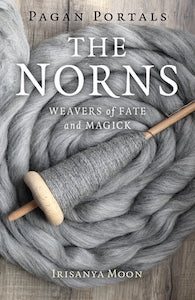
Pagan Portals – The Norns, by Irisanya Moon

Pagan Portals – The Norns: Weavers of Fate and Magick, by Irisanya Moon
Moon Books, 1789049105, 112 pages, August 2023

From the Weird Sisters in Shakespeare’s Macbeth to the three witches in Disney’s 1993 cult classic Halloween film Hocus Pocus, the Triple Goddess of Fate haunts pop culture, bewitching the masses in the form of three meddlesome hags. Fate’s commercial success in such unflattering incarnations betrays how terrifying the concept of predestination is to contemporary Westerners who tenaciously cling to the secular cult of Free Will, despite the audacious philosophers and neuroscientists like Sam Harris who have declared that free will is an illusion. According to Harris, the conscious mind may believe it’s in control, but it only acts out decisions that have already been made by the subconscious mind. 15 Some people may even become enraged by the idea that there is no such thing as free will, because our culture places such high value on accepting personal responsibility for our successes and failures in life. There is a deep collective fear of not having control over our destinies.  

In Pagan Portals – The Norns: Weavers of Fate and Magic, author, witch, and priestess Irisanya Moon reveals that the ancient Norse had a more holistic view, and saw Fate, or Wyrd, as an intricate web that both includes and transcends us. The Norns, the trio of mysterious goddesses who personify Fate in Norse mythology, are ubiquitous spirits, unseen yet all-pervasive, ever weaving the fabric of space and time. They occupy the liminal spaces, moving through us and around us, forever spinning the wheel of the Cosmos, and their spindle of Fate pricks the thumbs of both gods and mortals alike.

Because of their ubiquity, the Norns can be difficult to define. There are the primary three, named Urd, the Norn of What Was, who is associated with the past and creates the thread of life; Verdandi, the Norn of Becoming, or the present moment, who measures the thread of life; and Skuld, the Norn of What Shall Be, who cuts the thread at the end of life. The Norns also include a collective of female ancestral spirits called the dísir, who watch over humanity. Additionally, Moon points out that “a common meaning for norn in modern Icelandic is ‘witch’ or ‘hag’.”16

Instead of rehashing Norse myths that can be found in other books, Moon guides readers to discover who the Norns are by fostering intimate relationships with them. She encourages personal gnosis of these divine beings through a variety of exercises, such as “Stepping into the Worlds of the Norns”17 through trance.

As Moon invited me to travel in spirit to the World Tree and visit the Wyrd Sisters, I was flooded with vivid imagery. In an eldritch forest, I saw the World Tree Yggdrasil towering above the other trees, its evergreen boughs silvered by moonlight, dripping lunar dew over the Well of Fate, pooling in an earthen basin formed by the vast network of knotted roots. Three shadowy maidens rose from the depths of the lake, shifting shape. They coalesced into a trinity of spiders, weaving the elastic web of the Multiverse in the boughs of the World Tree. Infinite worlds were reflected in the dewdrops of their infinite eyes. I began to think of Yggdrasil as a human body, my body. My spine became the tree’s trunk, a ladder of bone that could take me up to Asgard, the realm of the gods, or down into the depths of Hel, the Norse Underworld. I realized that all the trees in the forest around me were other people’s World Trees. We live in a Multiverse where everyone is their own Yggdrasil. 

“Everyone has a part of the wyrd, like a web, like a large woven tapestry,” Moon says. “My wyrd intersects with yours, perhaps. Yours intersects and pulls on mine. And all of this is what creates fate and destiny.”18

Together, we all shape Fate as a collective. 

I was drawn to this book because I’m a fatalist. I believe that free will is an illusion, but I think that we should behave as though we have free will, and make responsible choices to the best of our abilities, even if our subconscious mind has already made them for us. It appears to me that there are too many external factors limiting any supposed free will that we mortals may have, from mental programming imprinted upon us as children by our parents and the culture in which we were raised, to societal limitations that limit our mobility as adults. I think that when we act out what we believe is our free will and pursue our dreams, we are in fact acting out our soul’s true purpose and what we are destined to do. We are coming into alignment with our True Will, which is the will of Fate. 

I believe the excessive praise of individualism in Western civilization is harmful to the collective. The emphasis on individual free will and pulling oneself up by the bootstraps blinds us to systemic abuse and allows the continued oppression of large swathes of people. Everyone’s fate is connected. The focus on individualism creates the illusion that individuals are struggling alone. In truth, their struggles are shared with other people in similar circumstances, but in isolation, they are tricked into believing they should shoulder the burden of circumstances beyond their control all on their own. 

I appreciate how Moon compassionately addresses the ways that Fate encompasses circumstances beyond one’s control.

“Dismantling the structures of oppression requires the commitment to uncovering and understanding that people do not all have the same opportunities,” Moon says. “Many are born into places that limit and seek to continue to hold them back.”19

This thought-provoking book had me pondering the shared Fate of the collective, the interconnectedness of people’s individual threads, and how great an impact any word or action, however small it may seem at the time, can have on so many people. I can recall times when the actions of others have inadvertently shifted my path, and I am sure I have had the same effect on other people as well, in ways which I am not aware. Just as Moon says, “I can choose to meet my fate in a way that is honorable and respectful of the collective versus just being out for myself.”20

My sole criticism of this work is that the author’s well-meaning efforts to be all-inclusive were superfluous to the point of distraction. For example, Moon spells the word “gods” with double ds (“godds”), to make it more gender inclusive, which I don’t feel is necessary, because I read the word “gods” as gender neutral without a second thought, and my inner editor kept flagging it as a spelling error.21 

Moon also suggests that the gender of the dísir, who are traditionally female ancestors, may make some people uncomfortable, and “it might be more inclusive to expand this to those who birth or those who mother without being attached to gender.”22 I don’t understand why seeing the dísir as female matrons would be offensive, and I feel that we can learn more about their true essence by examining the traditional perceptions of these ancient spirits instead of projecting modern gender politics upon them. It would be far more interesting to explore why the dísir were perceived as female instead of dismissing their femininity and assigning them whatever gender feels more comfortable. I personally think the focus on female ancestors is beautiful because it emphasizes matrilineal descent, as opposed to our patriarchal society, which frets over paternity and erases the maternal line by only giving children the surname of the father. I feel that dismissing the female gender of the dísir only reinforces these patriarchal views. 

It’s no accident that the maternal line is also known as the distaff line. 23 The word distaff is derived from the Old English, dis, meaning “bundle of flax” and stæf, meaning “staff,” so the distaff is a staff on the spinning wheel that was wound with flax in preparation for spinning. Meanwhile, the strikingly similar Old Norse word dís means “goddess,” and the plural form of dísir means “goddesses.”24 Spinning was traditionally women’s work, and the dísir are the spinning goddesses, the collective ancestral mothers. They are inherently feminine, and I think it would be disrespectful to change that just because their gender might make some people feel uncomfortable.

I see the Thread of Fate as the umbilical cord, which nourishes the fetus in the womb and connects the unborn child to the well of ancestral memory (the well of Urd). When the baby is born, the umbilical cord stretches out and is measured by Verdandi, in that precious and fleeting moment when mother and child are still connected. When the cord is cut by the midwife Skuld, the neonate takes their first breath of spirit, and accepts the destiny that has been gifted to them by the Norns.  

I gained some wonderful insights into my personal perception of the Wyrd Sisters by experimenting with Moon’s exercises. While I prefer a more traditional view of the Norns, I feel that my disagreement with some of Moon’s progressive views produced creative tension that helped me further clarify my own relationship with these potent spirits.

Pagan Portals – The Norns: Weavers of Fate and Magick is a book that shifts one’s perspective from fearing Fate to embracing the mystery of how our individual fates intertwine with the world’s collective Fate and the greater destiny of the Multiverse. The exercises contained within encourage developing a personal connection with these transcendent powers through journaling, self-exploration, and trance work. For those who love journal prompts and guided meditations, this book can facilitate a deeper relationship with the mysterious spirits of Fate who watch over us all and guide us towards our destinies.

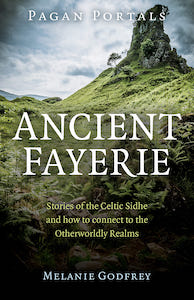
Pagan Portals – Ancient Fayerie, by Melanie Godfrey

Pagan Portals – Ancient Fayerie: Stories of the Celtic Sidhe and how to Connect to the Otherworldly Realms, by Melanie Godfrey
Moon Books, 1782794778, 136 pages, September 2022

Pagan Portals – Ancient Fayerie: Stories of the Celtic Sidhe and how to Connect to the Otherworldly Realms by Melanie Godfrey is a brilliant and enchanting book that transports readers into the mystical realm of spirit beings known as “fayerie,” distinct from the popularized fairies of Disney tales. Inspired by the renowned British folklorist Katharine Briggs, Godfrey’s heartfelt and personal account takes us on a captivating journey through her intimate encounters with Faery and the Elemental Kingdoms.

The book not only weaves captivating stories born from the author’s experiences with sacred landscapes but also serves as a profound guide for readers to deepen their connections with nature beings and the mystical places they inhabit. Divided into two sections, the book’s first part focuses on connecting with the heart of ancient fayerie, encouraging exploration of the landscapes around us and communication with the spirit guardians residing in trees and stones.

Godfrey skillfully introduces valuable techniques, meditations, and ceremonies that enable readers to access a higher state of consciousness and engage with their imaginative faculties. Through these meditations, readers encounter different types of fayerie, who offer guidance and wisdom in life’s journey.

The book further delves into the “Clair Senses,” such as Clairaudience, Clairsentience, and Clairvoyance, providing various ways to perceive and sense the fayerie world. Meditation emerges as a potent tool to connect with the subtle energies of the earth and the diverse fayerie races that inhabit it.

Pagan Portals – Ancient Fayerie sheds light on the significance of the four elements—earth, air, fire, and water—associated with different types of fayerie beings, such as gnomes, sylphs, dragons, and merfolk, respectively. Additionally, the book emphasizes the importance of understanding oneself and exercising discernment when interacting with the fayerie realms, especially during times of emotional imbalance.

Godfrey’s authoritative and delightful narration empowers readers to explore their own psyches, unlocking a deeper understanding of the multidimensional world we inhabit alongside these ancient and original nature spirits. Through dreams and visions, she guides readers on connecting with various spirits and energies in the parallel realms of the Otherworlds, intricately intertwined with our reality.

Furthermore, the book imparts a Fayerie Code of Ethics, advocating for kindness towards nature, reciprocity, belief in magic, and mindfulness of environmental impact. It beautifully reminds us of the magic and beauty surrounding us, often unseen and underappreciated. It encourages readers to open their eyes and hearts to the wonders of the fayerie world.

The second section of Pagan Portals – Ancient Fayerie treats readers to captivating tales from the Celtic Otherworld, derived from the author’s pilgrimages across the ancient lands of Albion (Ireland, Scotland, and England). Godfrey’s respect for the wisdom gained from the guardians of our world shines through the pages, instilling a sense of warmth and appreciation.

In today’s world, this book’s relevance cannot be overstated, as it encourages readers to embrace the complexity of nature and engage with its profound wisdom. With passion and dedication, Godfrey significantly contributes to our understanding of the interconnectedness of all life forms.

Each page offers a treasure trove of insights and inspiration, urging readers to cherish and learn from the intricate fabric of our world. It is a rich and immersive exploration of the spirit world, providing readers with meditative practices, enchanting stories, and ethical considerations to connect with the mystical beings that reside beyond the human eye.

Pagan Portals – Ancient Fayerie is a masterful work that captures the magic and wonder of the fayerie realm. Godfrey’s writing is captivating and illuminating, offering readers an opportunity to embrace the ancient wisdom of these elusive and powerful entities. This book is a must-read for anyone seeking to deepen their connection with the natural world and explore the mysteries of the unseen realms.

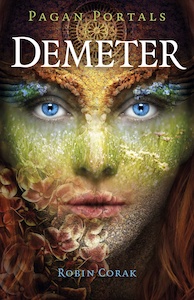
Pagan Portals: Demeter, by Robin Corak

Pagan Portals – Demeter, by Robin Corak
Moon Books, 1789047838, 128 pages, October 2022

At first glance, Pagan Portals – Demeter by Robin Corak seems like a straightforward book. The story of Demeter and her daughter, Persephone, is one that has been used to illustrate many variations of the mother-daughter dynamic in a variety of different contexts. Corak is taking that story and exploring various other themes that aren’t apparent at first glance.

A long-time practitioner of paganism, Corak is a member of the Sisterhood of Avalon where she currently serves as the Board Secretary and is the author of Pagan Portals – Persephone: Practicing the Art of Personal Power. Honestly, there’s no one more perfectly positioned to write the book on Demeter than Corak and her prose is both insightful and informative.

The book is sectioned off into specific areas that deal with Demeter’s background, specific rites and rituals, and other topics I didn’t expect to find. At the risk of outing myself as not being all-knowing about the goddesses and gods of the Greek pantheon, I had to look up two aspects of Demeter that I was not aware of that were referenced in this book: Demeter Chthonia: Grief and Loss and Demeter Chloe: Manifestation Magick. Blown away, completely and totally. Don’t get me wrong, I knew that Demeter was associated with grief (her daughter being taken away from her) and abundance (Goddess of the Harvest), I just didn’t know there were actual aspects devoted to these attributes. 

There’s so much information in this book and all of it is both relevant and timely. The astonishing realization that Demeter was still subject to patriarchy despite being a goddess was something I hadn’t considered. It was my understanding that Demeter’s power would ensure her personal agency. When Demeter is told by Helios that Hades abducted her daughter, Demeter’s opinions are not even considered as she is told that Hades would make a fine husband for her daughter. Because Demeter is dismissed, she then decides that nothing on Earth will grow until her daughter is returned to her. Her actions eventually see the return of Persephone to her, and it’s interesting to note that Demeter is the only goddess to make Zeus give in to her demands, and in a short amount of time. Underestimate an abundance Goddess at your peril!

A surprising aspect of this book is the focus on balance, something that most who identify as feminine struggle with due to the numerous stresses experienced through jobs, home, relationships, and other factors. Corak addresses this in the introduction, saying:

“Working with Demeter can facilitate a powerful journey of self-discovery resulting in a re-envisioning and reclaiming of our potential and our own lives. For those of us who may not have had a positive relationship with our own mothers, Demeter empowers us to access our own nurturing abilities so that we may provide ourselves with the quantity and quality of love that we feel we didn’t receive.”1

It took me a few days to process that, I will be honest. I do not have a good relationship with my mother and as she ages, I have had to come to terms with the very real fact that there will never be apologies or clarity around why certain events were allowed to happen. I found this book to be immensely helpful in navigating my personal grief around this, although I would be lying if I said I was able to completely resolve the anger. I took solace in a powerful sentence from Corak:

“The mother archetype is not just about loving and nurturing, it is also about protection and advocacy to ensure that that which has been given life will survive and thrive.”2

I sat with that for a moment, and realized that’s what I had been doing for myself by not engaging as deeply as I wanted to with my mother. I intuitively knew that this was something I could do to protect myself from additional harm, and this book opened my eyes to all that I have been doing for myself in this realm. 

There is so much healing in this book depending on what is required. For me, I chose to go through “Chapter 3 – Healing the Mother Wound”. Corak includes a definition of mother wound as “the loss or lack of mothering which can include abuse and neglect. Those who experience the mother wound don’t receive the love and attention they need as children and have mothers who seem to be distant and less attuned to their emotional needs.”16

This section in particular really hit me hard, as I thought I had dealt with my issues around this through extensive therapy. Clearly that was not the case, as I often found myself curled up in a ball with my cat gingerly offering me head butts and consoling licks. That is not an exaggeration, by the way. This book is excellent and devastating in a way I didn’t expect but am so glad I experienced. 

If any of this resonates with you, I would highly recommend picking up Pagan Portals – Demeter. If you have a therapist, I would also highly recommend enlisting their help for this journey because working with Demeter calls up all sorts of childhood trauma that needs to be brought out so that it can be healed.

One of the best parts of this whole process was learning that I could mother myself and did not need to rely on my emotionally unavailable mother to provide that. While seemingly heartbreaking, releasing yourself from unrealistic expectations of those who cannot possibly meet you where you need them to is freeing in a way that could potentially allow you to move on. Who wouldn’t want that?