✨ A Gathering Place for Magical Readers and Writers ✨

Author Archives: Alanna Kali

About Alanna Kali

Alanna Kali is an astrologer, numerologist, and pioneer spirit that loves to explore life through the lens of depth psychology. She has a passion for studying the humanities and social trends. Her academic work is centered upon reuniting body, mind, and spirit through eco-psychology. She loves reading, spending time in nature, and travel.
Paranormal Perspectives: PARA∙NORMALITY, by Kieran Stanislaw Mace

Paranormal Perspectives: PARA∙NORMALITY: Normalising the Paranormal, by Kieran Stanislaw Mace
6th Books, 1917704119, 128 pages, March 2026

It’s hard enough to figure out how to “live” accordingly to secure our basic human needs, but try throwing in paranormal encounters too that leave you questioning the nature of reality and just what the heck is going on! This is the predicament Kieran Stanislaw Mace shares Paranormal Perspectives: PARA∙NORMALITY: Normalising the Paranormal. Written with honesty and emotional sincerity, Mace shares his life journey and all paranormal moments that finally lead him to embrace the veiled reality existing concurrent to our own.

This book sits somewhere between a spiritual autobiography, paranormal testimony, and exploration of consciousness. Mace writes candidly about his life, not only the pivotable moments but the mundane day to day that blend together his on-going paranormal experiences with ordinary life, showing they are not two different paths, but a unified life journey. From his childhood trauma, including a near-death experience after a hit-and-run accident to the bullying, grief, and years of suppressing experiences that made him feel alienated, he brings forth a dialogue about the paranormal with this book.

Just how do you live with such extraordinary experiences happening when you are not sure how to define the events or who to turn to for advice? Unsurprisingly, you struggle quite a bit! And this is what makes this memoir quite captivating. This is NOT a book about a famed professional who “just knew” from the get-go how to converse with the entities on the other side of the veil; this is the story of a person thrown into the turbulent flow of life, a near-death-experience in childhood, earning an education, holding down a job to pay bills, finding love, having children, and still navigating the paranormal circumstances that have plagued him since childhood.

Despite Mace experiencing visions, synchronicities, hauntings, out-of-body experience, intuitive knowings, and encounters with spiritual entities, he had to fit into accepted reality. With this book, he works to break down the stigma of the paranormal and showcase how these experiences could truly happen to anyone, even an ordinary guy like himself. Mace doesn’t set out to prove anything, he just is sharing his own perspective and opening up a door for readers to reconsider the boundaries of reality.

Here’s an excerpt that I think characterizes Mace’s internal dialogue, intention for the book, and experience quite well:

“My observation supports the idea that negative energy affects the activity around us, just like during my grumpy teenage years, the sadness of losing my cat, or the anger of a miseducated manager. Maybe if I could switch my energies to emit positivity, perhaps that could affect the world in a different way. After all, every particle in the universe vibrates, bound by an energy that unifies to hold this universe in place. If we can change the frequency we emit, what happens? ‘Lie down, Kieran, you are not meant to question these things.’ That is what my programming said. When people begin to question the world that is laid out for them, they are often labelled as weird and people choose to move to sit at a different lunch table. Why is it so scary that people are forced to look down?”1

By presenting all his shortcomings and obstacles along the way, Mace’s intimate, earnest, emotional vulnerability becomes fodder for spiritual exploration of others. He is consistently reflective, offering possibilities rather than hard facts, inviting dialogue rather than argument. And for this, Mace brings to light an important aspect of paranormal experience: many people privately experience phenomena they fear discussing due to ridicule or social pressure. In having the courage to say, “I went through this”, “At times my mental health was not good.”, “I was lost and confused.”, others gain the ability to be more forthcoming about their own journey, a reminder that they are not alone.

Overall, for readers interested in psychic phenomena, hauntings, alter states, spiritual entities, and more, Paranormal Perspectives: PARA∙NORMALITY will be resonant. Mace’s memoir-driven spiritual writing and paranormal narratives rooted in personal transformation is an interesting read. Mace being so forthcoming about his experience makes for a great addition to the Paranormal Perspectives series to further provide food for thought to readers with an interest in this subject.

Ancient Spells and Incantations, by Enid Baxter Ryce

Ancient Spells and Incantations: Echoes of Magic Through the Ages and Across Cultures, by Enid Baxter Ryce
Weiser Books, 1578639026, 208 pages, April 2026

A few months ago, I was reading BonaDea’s Book of Everyday Enchantments by Patricia deSandro about creating your own enchantments. DeSandro explained how this produces an energy that was unique to the situation for which we were doing the spell. In contrast, she also talked about how when we use spells written by others, especially those used by many in a ritual fashion, we tap into the lineage, ancestry, and magical potency of those who also have worked the spell. This is something that stuck in my mind, a reminder that there’s magical depth and breadth to be discovered by seeking out ancient spells, chants, and hymns.

Did I personally have the time to do this though? Absolutely not! And it is for this reason that I was quite excited to read Ancient Spells and Incantations: Echoes of Magic Through the Ages and Across Cultures by Enid Baxter Ryce. This curated archive of magical memory draws from grimoires, church records, letters, and ancient fragments across cultures to create a nifty collection of magical texts to have on hand. The way it reads is like a poetic collection of historical magic, allowing readers to flip through and discover enchantments that otherwise likely would have been lost to time.

“As we marvel at these ancient magical words, we think of our ancestors. Thanks to them, scraps of papyrus, shards of pottery, secret books, and whispered recipes will still show themselves to those who seek them.”2

To write this book, Ryce utilized a variety of sources. She dove into libraries, archives, along with museum collections and databases. There’s a whole list of the magical texts shared in the book for those who are seeking to do their own research. Ryce explains how she consulted scholarly and popular books about ancient magic and also read about the context the magical spells were written, which are shared in the extensive bibliography. Some of the works she translated herself, but for languages she wasn’t familiar with, she used digital resources to translate that were then checked against scholarly translations.

I found her overall process interesting, about which she writes, “To create these contemporary interpretations, I stayed close to the intended meanings of the ancient incantations. After translating, I revised the language and rhythms, aiming for clarity, simplicity, and poetic impact.”3

There are five chapters, each focusing on a magical theme: manifesting and prophecy, love and lust, protection, healing, and curses, bindings, and vengeance. Additionally, Ryce includes an introduction about the written history of magic, which aptly sets the stage for what’s to come.

Aside from the general theme, there’s no real organization to the order of the spells, but there is a nice flow. Most of the spells are applicable to modern life, while others are just fun to read, such as the Mayan “Cure for Red Spider Monkey Gums (Pyorrhea)”. There’s incantations for protection from witches, as well as a spell to conjure the devils to bring love to you. There’s no telling what the next page will bring once you flip it!

This said, Ancient Spells and Incantations is definitely better suited for those with an eclectic practice that feel comfortable working with a wide range of deities across time and space. In just a few pages, the entries move from Thebes in the 12th century to China in 1200 BCE to Egypt 2nd Century BCE. There’s texts from the Scottish Highlands to traditional Yourba. In another few pages, a Babylonian text, Buddhist text, Lakota proverb, and Akkadian Magic Literature all come together to create quite an interesting mix.

All that Ryce shares is the text itself, so there’s no context about how these verses would be used in spellwork based on the lineage’s time and place. So for each chapter, it’s almost like reading a bunch of poems (in many ways that’s what spells and incantations are, right?!) related to a theme.

In regard to actually using the text, readers would have to be okay with creating their own rituals. For this purpose, Ryce includes a chapter towards the end called “Beginning a Magical Practice” where she covers working with words and objects, traditional spellcasting objects and color meanings, powerful places, and names and numbers.

Her guidance, along with my own background, would definitely be enough to piece together a ritual, but for those who prefer to create deep bonds with the lineages they work with before delving into ritual or spellwork, this book might better serve an anthropological curiosity. Similarly, for those who prefer spell craft with step-by-step instructions, this book might feel a bit too literary. Given Ryce’s multidisciplinary background in art, film, poetry, there’s no doubt her artistic sensibility has shaped the book to be a potent creative force in its own right. It can easily be enjoyed without having to perform any of the magic within.

Also worth noting, in an age where people can be quick to condone cultural appropriation, this book does not claim to be of any lineage. Ryce is a scholar, a seeker, and archivist. It’s clear she appreciates the living thread of magic woven through human history within these texts. While most of the book is simply the spells or incarnations, when Ryce does share information, her tone is always reverent, informative, and devoted to preserving the sanctity of the text. This book is done in service of magical history, allowing for these texts to be seen and valued in our modern world.

Overall, Ryce’s collection of incantations and spells inspire contemplation, bring a special energetic atmosphere to spell work, and invite intuitive connection with the past. Drawing from many traditions, Ancient Spells and Incantations is a offers snippets of occult history still relevant and useful for spellcrafting today. I quite enjoy the variety of content and I am impressed by Ryce’s artistic process in the creation of this book.

Whether you want to imbue sacred objects with these spells or chant them outloud for your magical workings, the content gives a potent, ancient foundation to start from. I’m so glad Ryce has brought these spells and incantations to print, translating them for the modern reader and lifting them out of the dusty archives of the past to fill the spells with fresh energy. A very cool and unique read!

Friendship Oracle, by Helena Elias

Friendship Oracle: Celebrating Connections, by Helena Elias
Rockpool Publishing, 1922468061, 36 cards, 128 pages, May 2026

Friendship Oracle by Helena Elias is a beautifully tender oracle deck that centers something often overlooked in spiritual tools: friendship as a sacred force. This deck brings connection, mutual care, emotional reciprocity, and the quiet magic of growing alongside others to the realm of divination–something new for me even with over ten years of reading experience!

I was immediately drawn into this deck because of the artwork. Elias hand drew each one on digital canvas, and the level of detail is truly impressive. The deck is a nice blend of enchanted femininity, cottagecore mysticism, and emotionally rich whimsical illustration. Flower crowns, natural textures, fairy wings, flowing dresses, and woodland imagery evoke a whimsical energy, honoring the beauty of the natural world.

All the imagery feels soft, nurturing, and deeply heartfelt. I love the warm, glowing color palettes, which lean into luminous golds, rose pinks, forest greens, deep burgundies, and moonlit ambers. Women and nature are one in this deck where flowers, forests, animals, and celestial imagery aren’t just decoration; they mirror the emotional tone of each card.

Many of the people are depicted in a semi-realistic fantasy style, featuring delicate detailing, glowing skin, flowing hair, and expressive faces that capture the emotional expansiveness this deck offers. Many of the cards emphasize a sacred sisterhood relationship filled with emotional intimacy, care, and connection between women across ages and identities, which is just beautiful to see come to life during a reading.

As for the guidebook, Elias provides a great perspective on friendship. For each card, there’s a meaning shared and a sowing intention ritual that offers a nature-inspired way to integrate the energy of the card. For instance, the sowing intention for the card Reach Out reads:

“Seek out flowers, paying attention to any buzzing bees nearby. Take time to exist in the present, and see if watching the bees and their path brings anyone to mind.”4

I thought that was such a great idea for tuning into who might need you to reach out! Similar to this buzzing advice, the whole guidebook feels thoughtful and intentional. There’s a good mixture of self-care mixed into the relationship-tending oracle advice too. As most know, it can be hard to figure out what to do when a friendship hits a bump in the road; sometimes the balm is more time alone, while other times it requires extra attention to heal. This advice in the guidebook covers the range of phases friendships move through, offering meaningful guidance for reflection.

At first, I wasn’t sure what kinds of questions to ask, as I don’t usually do readings about my friendships. Romantic life? Definitely. Career and money? Quite often. Family life? For sure. But my friendships?! Rarely! But then I started to think about my different friendships and get curious about what insight the deck has to share. Each reading so far has been very energetically spot on and informative for me. Here’s some examples:

I recently got back in touch with a woman who was my best friend from the age of 10 through 25–one of closest friendships I’ve ever had in my life. During our mid-twenties, life pulled us apart, placing us on different paths. There was never a fight, just relocations that reoriented our lifestyles: new friendships, new jobs, new relationships. Despite thinking about her regularly, nearly ten years had passed since we talked; with each passing year it seemed harder to bridge the gap. But then when I found out her mom passed away last month, I reached out. We ended up having a great conversation about where we are in life now, opening a doorway to a renewed friendship.

I decided to pull a card about this situation with her, and I got Soulmate! Here’s part of what Elias has written for this card:

“This is a reminder to honour those friendships that make your soul feel at home. You may be entering a time where you need each others’ strength and unconditional support. If your guiding star has been distant, perhaps this is the moment to reach out, to remind them that their light still shines in your sky.”5

This message was so validating that I did the right thing in rekindling our friendship. It highlighted for me just how valuable this rare such a soulful bond with another person is, and that I should embrace it once again.

Another reading I did was about a friend that I have known for decades but I don’t feel a deep connection to recently; our friendship seems based more on convenience than shared passions or interest. The card I got was Seeker. The first sentences of the guidebook entry made my jaw drop:

“There are times in life when our connections do not bear the fruit we anticipated. You may be at a point where you need to look outside your current garden of friends – not seeking to replace but instead to connect with those who match your current life path.”6

This message really resonated with me. I still value, love, and and appreciate this friendship, but it’s also okay for me to expand my circle to find those who feel more aligned.

Overall, Friendship Oracle feels like a refreshing addition to the oracle space. Its heartfelt messages, visually enchanting cards, and spiritual focus on the healing power of human connection make it a one-of-a-kind deck. Elias reminds us that friendship is not something casual, but rather the roots of some of our most sacred bonds that require reflection, honesty, communication, and renewal.

This deck is perfect for journaling with, doing relationship check-ins, or even working with in a community-centered spiritual practice such as a women’s circle. The emotionally nourishing and mystical nature of the deck revives the spirit and brings a clarity to our defining relationships. I really would love to see more decks from Elias!!

The Green Witchery Tarot, by Cerridwen Greenleaf

The Green Witchery Tarot, by Cerridwen Greenleaf
CICO Books, 1800655916, 78 cards, 64 pages, March 2026

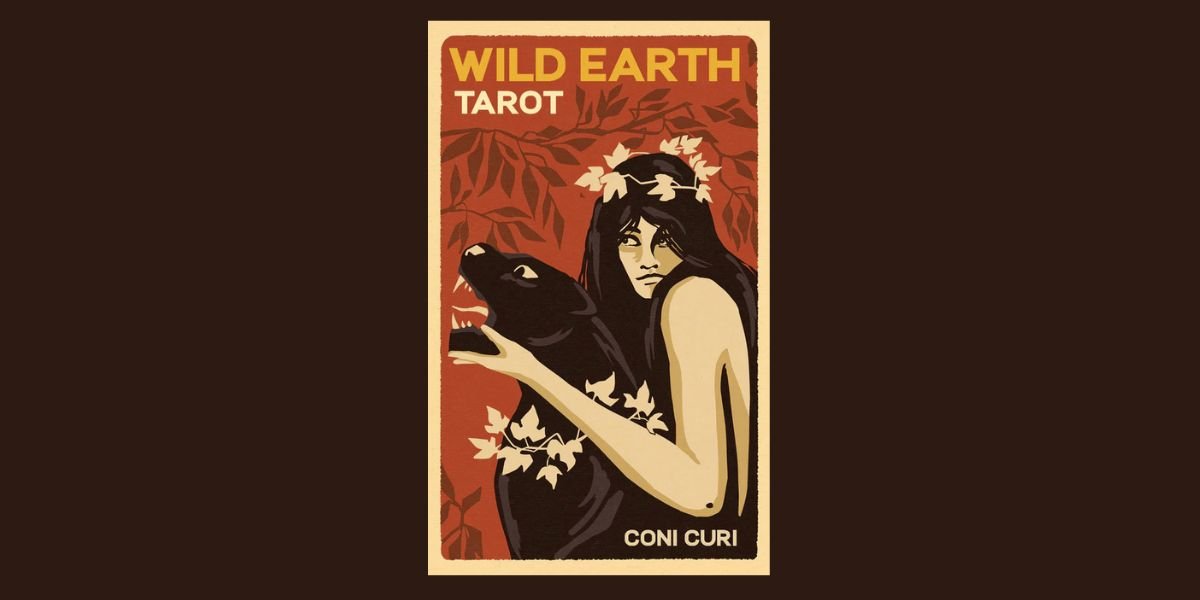
Where tarot offers a mirror for the soul, green witchcraft grounds this insight into the living world through flowers blooming in their season, herbs gathered with intention, moonlit rituals, and the steady guidance of the Earth itself. Together, they create a practice that is both mystical and deeply embodied: one that invites us not only to seek answers, but to reconnect with the rhythms of our intuition, our environment, and our own inner magic. The Green Witchery Tarot by Cerridwen Greenleaf weaves these paths together, creating a deck where the whispers of the natural world nurture the wisdom already growing within you.

Perfect for Pagan readers, The Green Witchery Tarot carries the energy of nature reverence, offering gentle guidance and botanical ritual inspiration. The design of the deck and format of the guidebook make it quite accessible for readers of all levels. There’s a simplicity to the deck, as only the Major Arcana and Court Cards have illustrations of people or animals on them. The Minor Arcana cards have a different color and plant background for each suit and feature just the number of the suit symbol (crystal (pentacles), athamae (swords), goblet (cups), and wands). I appreciated this design choice because it decenters humans and invites the energies of nature to come front and center.

As for the aesthetic, the Court Cards and Major Arcana look a bit like a storybook version of medieval tapestries. The illustrations are flat, stylized, and a little stiff in their posture, which remind me of iconography. There’s whimsy, but it’s structured. I was a little surprised by the images at first, as many nature-inspired decks tend to have softer illustrations, but there’s something about the images that works well for the energy of the deck. It gives the cards a timeless, old-world magical feeling, bringing forth unique symbols to draw from as you read the cards. 

The illustrations stick pretty close to the traditional Rider-Waite-Smith (RWS) deck though, so people already familiar with those images will easily be able to read with this deck. Similarly, this deck is a suitable one for beginners learning the traditional card imagery that isn’t the standard RWS deck, great for those who want to infuse their practice with some earth-based magic. It’s pretty neat how the Major Arcana cards are “accompanied by trees, herbs, and flowers, as well as tools of green witchery” to further bring dimensions to the meaning of each card.

Referencing the guidebook is a great way to get acquainted with the subtleties of this deck. The full-color book is nice and big, easy to hold in one’s hand and read. There’s a table of contents, so readers can quickly find the card they’re looking for. Greenleaf provides a bit of direction for working with the deck and offers spreads to get started with.

As for the card entries, for the Major Arcana cards entries Greenleaf offers insight into the symbolism, the meaning, one-sentence guidance, and a practice that can be done. This is a really nice combination because it offers practical advice, symbolism to contemplate, and an action that can be done to integrate the energy. The practices are varied too, ranging from gazing at a white flower and thinking about the good things ahead (The Fool) to creating a magical ink to boost your self-esteem (The Lovers) to removing negative energy by placing a bowl of salt and a bowl of water on your altar (The Tower).

The Minor Arcana card entries are a bit shorter, only sharing the card’s meaning and practice. However, this was more than enough to continue to work with the cards in a magical way. The Eight of Athames suggests lighting sandalwood incense, while the Ace of Goblets encourages carving a heart into a lavender-scented candle. For the magically-minded that like to do hands on crafting or spellwork, the guidebook has 78 ideas of how to incorporate the tarot into meaningful practices! This is definitely what makes the deck so valuable to me.

Here’s an example of how I utilized one of the practices recently: I had a blessing for my new daughter, which included a community maypole dance. My family and my husband’s family are both entirely Catholic, nevertheless we decided to have the ceremony in alignment with our own spirituality (opening a circle, blessing my daughter with all the elements, Pagan prayers, and of course, the maypole).

I was a bit nervous about how it would go, so I pulled a card for guidance. The card I got was Seven of Athames. Greenleaf’s guidebook entry reads:

“Customarily, this card warns of opposition and urges you to protect your beliefs with resilience. Find courage under pressure and swap doubt for determination.”7

While the message alone was enough to give me the encouragement I needed to be true to my own beliefs, it was the practice that really helped me get out of my head and back into my magical sense of trust. The practice Greenleaf suggests for this card is holding an obsidian stone and visualizing a shield around you to bolster your resolve and defend intellectual territory. Doing this practice before the blessing ritual definitely gave me the energy I needed to tune out the judgement of others (specifically my staunchly “religious” father-in-law) and be in my own high priestess energy.

Overall, The Green Witchery Tarot is a multifaceted tool that one can use for both divination and magical practices. This combination of oracle wisdom and Earth-based magic, which is reflective of the tarot energies, make for a very well-rounded deck. Readers gain insight into plant symbolism while also seeing the traditional tarot energies from a new perspective.

I would definitely recommend this deck for those interested in plant magic. It’s a deck that quickly becomes a ritual companion, as it’s easy to integrate into one’s daily life. Working with this deck attunes readers to the magic of the natural world and reminds us of the special energies we can tap into to ground our tarot readings.

Déjà Rêvé and Love at Second Sight, by Daniel Bourke

Déjà Rêvé and Love at Second Sight: The Experience of Meeting in Dreams before Meeting in Life, by Daniel Bourke
Destiny Books, 979-8888502716, 320 pages, January 2026

For those who are dream lovers, Déjà Rêvé and Love at Second Sight by Daniel Bourke is a fascinating compendium of unique dream experiences. This book explores the phenomenon of déjà rêvé (“already dreamed”), the experience of encountering something in waking life that you feel you’ve specifically dreamed before, not just vaguely recognized. The vast amount of documentation surrounding this experience makes it a worthwhile topic of exploration, especially for those intrigued by the idea of precognition.

“Is it possible to dream or otherwise mysteriously envision a future spouse, acquaintance, helper, healer, or even a shaman or saint before meeting them in life? To literally see the face, hear the voice, or sense the presence of another whom you are yet to meet and are nevertheless destined to do so? If our only witnesses were the voluminous records of legend, lyric, and lore on all corners of the globe then answer would be a resounding yes.”8

Jam-packed with hundreds of instances of déjà rêvé, Bourke has organized the chapters of this book by general themes. One of the first types of déjà rêvé covered focuses on healers, saints, sufis, and sheiks. The general focus of these stories is when people had spiritually significant dreams and then soon met the person in the dreams for healing or spiritual growth. Another chapter focuses on how dream visions aid people in making real life decisions. For instance, according to The Schism in England, translated by Pedro Calderon de la Barca, Henry VIII had a dream of Anne Boleyn before he ever met her.

Speaking of fated romances, there’s plenty of stories of dreaming of lovers before meeting them in real life. One of my favorite stories was from the biography of a 107-year-old man from Arkansas who dreamed about heading to a terminal and seeing a beautiful woman standing there who said to him, “You come to carry me home, James? I’m your wife.”9 and then he met the same woman in real life at a New Year’s Eve party later on.

Other chapters do focus on folklore surrounding divination and magic in regard to this dream phenomena, as well as the religious impact déjà rêvé had on some people after their experience. Bourke shares tidbits such as how among the Ilocano (a Filipino ethnolinguistic group), “a man sleeps with a dipper of water near his bed in order to see the reflection of his future spouse, needing to wake at exactly twelve o’clock.”10

Then there’s also a story about a man whose youth pastor encouraged him to pray to God for the person he would marry in the future. He then received a vision of the cross pendant his future wife would be wearing. Lo and behold, he met her when he went to visit a new church and the secretary was wearing the pendant. Wouldn’t you know it, the cross pendant had been a gift from her grandmother, who had told her it had special meaning related to her future husband, who would be drawn to it. Now, it might be easy to brush off these tales as romantic, exaggerated love stories that signify a relationship has a divine blessing, but the sheer number of tales Bourke shares really does expand the reader’s perception of just how common déjà rêvé has been throughout time.

One of my favorite chapters in the book is “Picture Perfect”, which had a sections like “Media and Murder in Motion” and “Death, Ghosts, and Near Death”. Can’t help it—I love thrillers! But beyond the typical dreaming of a partner or spiritual aid, these stories had practical applications, such as solving a crime or reconnecting loved ones with someone who had departed.

What makes the book stand out is its scope: it gathers hundreds of accounts from folklore, historical texts, memoirs, and modern reports, aiming to create one of the first comprehensive collections of this phenomenon. While modern society might have an unhealthy dose of skepticism, many cultures historically have accepted dreams as predictive or spiritual messages. Bourke pulls from an unusually wide range of sources (saints, shamans, historical anecdotes, and contemporary experiences) showing that dream-foretelling appears across cultures and eras. This gives the book a mythic, almost archetypal feeling, as though you’re reading a global folklore archive rather than a single-author thesis.

This said, I found reading it to be overwhelming at times. It took me a few months to make my way though, and it was mostly because I kept getting mentally overloaded. While I was drawn to Déjà Rêvé and Love at Second Sight because I wanted to be immersed in the liminal space of dreams and discover something about their ethereal nature, the content is more along the lines of reporting on this dream experience rather than providing discussion on its significance or the meaning of reality understood through the exploration of this paranormal phenomena.

I would often get a bit of whiplash with how it jumped from one story to the next, quickly spanning time periods and cultures. There’s cohesion, but it’s definitely a book that keeps you in your mind, bombarded with recorded accounts rather than tapping into the spiritual dimension. I actually found this amusing, as dream books usually make me feel a bit spacey or ungrounded, while this one made it feel too stuck in reality with names, dates, and recorded experiences spanning centuries and the whole world.

Plus, the unfamiliarity with many of the cultures or historical time periods had me grappling just to wrap my head around the context of the story, ultimately preventing me from fully engaging with the content. I am all for cross-cultural examination, but one paragraph being about a Burmese writer in the early 1990s quickly followed by another featuring a tale of an Welsh American explorer in central Africa in the 1800s, which within the same paragraph talks about another American explorer living with the Ojibwa Indians of the Great Lakes between 1763 and 1764, you can see how my head could get spinning pretty quickly. Like where am I located in time and space?! I guess in some ways, I did get that untethered dream experience, but not how I was hoping!

Overall, for readers interested in dreamwork, synchronicity, psychic or intuitive phenomena, this comprehensive text will feel quite validating, highlighting just how common this phenomena of déjà rêvé is worldwide. I would definitely recommend Déjà Rêvé and Love at Second Sight for those who enjoy gathering stories, as Bourke collects and presents rather than rigorously interrogates. The documentation of the mystical experience of already dreamed gives backing to further discussion about the nature of reality, purpose of dreams, and the way people are connected. This book is a great launching pad for further study of a very intriguing topic!

New Moon Life Design, by Yesbelt Fernandez

New Moon Life Design: Manifest the Life You Want Using Lunar Cycles, Tarot, and Astrology, by Yesbelt Fernandez
Weiser Books, 1578638747, 256 pages, April 2026

Syncing with lunar cycles, astrology, AND tarot? Talk about a powerhouse of manifestation. New Moon Life Design: Manifest the Life You Want Using Lunar Cycles, Tarot, and Astrology, by Yesbelt Fernandez covers the trifecta for those seeking to align with ever-changing energies of the universe to set intentions and see them through to fulfillment.

“This system weaves lunar cycles, tarot, and astrology into a rhythm you can actually live by. A rhythm that helps you reflect, choose, act, and grow–with clarity and meaning.”11

Following a heartfelt introduction in which Fernandez shares her background and encourages readers to have the confidence and courage to live the life they desire, the book begins with “Part One: The Big Three: Lunar Cycles, Astrology, and Tarot”. Each modality has its own chapter in which Fernandez gives an overview of the basics. While it’s a condensed version of each modality, as they can take years to study and learn on their own, Fernandez distills the most important aspects and shares enough for readers to understand the system being presented in subsequent chapters. She covers topics such as key phases of the moon and seasons; planets, zodiac signs, and houses; and the different types of cards in the tarot (Major Arcana, Minor Arcana, Court Cards, Aces).

It is within the first part of the book she also introduces us to a core concept in this tri-system: moonths. Fernandez explains these are “twenty-nine-and-a-half-day lunar cycles that offer us a cosmic way to measure time.”12 The main premise of the book is how to attune to the energy of each moonth by considering astrologically the zodiac sign, modality, element, house ruler, area of life in one’s chart, and energy of the placement, along with the corresponding tarot card.

While it seems like a lot to integrate, the way Fernandez breaks it all down in “Part Two: Synchronicity: Tools for the Spiritual Journey” grounds the wisdom of these modalities into a format that makes it streamlined to learn and apply to one’s life. She even discusses how she specifically designed this method with SMART goals in mind–specific, measurable, achievable, relevant, and time-bound.

Within four chapters based on the seasons, Fernandez guides readers through all the moonths. She associated the seasons with the four moon phases too–winter is akin to a new moon, spring the waxing moon, summer a full moon, and autumn the waning moon–once again embedding layers within layers of this spiral pathway.

At the start of each seasonal chapter, Fernandez provides an overview of this time of the year , noting the general energy, meaning of the solstice or equinox that heralds its arrival, and the corresponding tarot cards. Next, the three zodiac signs are covered that comprise the season. Each zodiac profile is very detailed, featuring a message from the sign,information about the planetary ruler, overall themes of the moon, keywords, moon progression through the cycle, meaning of the moon in each house, and tarot profiles for the sign, also featuring directives for each phase of the moon.

Throughout, there were a few times I felt the text could have used a bit more information. For instance, the system is designed based on 12 moonths, but sometimes a new moon or full moon can happen in the same sign twice in a year. While there’s only one new moon in each zodiac sign in 2026, in 2027 there’s two new moons in the sign of Virgo happening on August 2nd and August 31st. Since there wasn’t much guidance on how to accurately track the moon, readers might get confused with the placement of the moon for each moonth.

Similarly, for each zodiac sign, Fernandez describes the transits of the moon cycle with words such as “Aries Waxing Moon” and “Aries Full Moon” and this was very confusing for me as an astrologer. This wording is so off-base from an astrological point of view because the full moon is most of the time in the opposite sign as the new moon, while the waxing and waning moon also occur when the moon is in a different sign. For instance following an Aries new moon, the waxing moon would be in Cancer, full moon in Libra, and waning moon in Capricorn. However, Fernandez moves through the moon phase by describing it as “Aries Waxing Moon”, “Aries Full Moon”, and “Aries Waning Moon”, which I ultimately presumed meant the phases of the moon that occur in that particular moonth but don’t actually correspond to the astrology.

It’s for this reason that I think the book is best suited for those whose tarot and astrology knowledge is between a beginner and intermediate level. When I first learned to manifest with the moon, I only worked with the new moon sign and the phases, so there’s a lot to be gained from Fernandez’s methodology. But those who already have an astrological practice might be confused by the presentation of the information, as it’s definitely geared towards those who are new to the modality.
The final section “Part Three: The Spiritual Practice: Weaving Intentions into Life’s Cycles” is where the real exploration of manifestation occurs. Focusing on the spiral path, Fernandez discusses the eight dimensions of wellness, encouraging readers to check in and see how fulfilled they feel in each area. Then she once again moves through the phases of the moon, teaching which aligned actions to take throughout the course of each moonth, utilizing tools such as tracking the zodiac energy, setting meaningful intentions, tarot spreads, and journaling. The final part focuses on making this a group process with ideas for structuring gatherings to share in this work with others.

Overall, New Moon Life Design is a structured spiritual practice that honors the ebbs and flows of the moon cycles and seasons. Blending lunar cycles, astrology, and tarot into a cyclical system for manifestation and self-reflection, Fenandez centers on the idea that growth is not linear but spiral in nature. Instead of treating astrology, tarot, and lunar timing as separate systems, Fernandez shows how they overlap and reinforce each other, creating a cohesive framework. What’s best about it, throughout, is that it’s less about quick manifestation and more about building a relationship with time, cycles, and self-awareness, creating a meaningful practice that can truly reoriented your life.

The Beginner’s Guide to Divination, by Kirsten Riddle

The Beginner’s Guide to Divination: How to reveal the future, from crystal balls and palm reading to tarot, runes, tea leaves, and more, by Kirsten Riddle
CICO Books, 1800655908, 144 pages, February 2026

Ever feel like you have intuitive abilities or psychic sensitivity but aren’t sure how to start developing these traits? The Beginner’s Guide to Divination by Kirsten Riddle is perfect for this, providing a visually appealing, novice-friendly survey of divination systems. Think of this book as a special roadmap into the variety of ways you can hone your divination skills, intended to spark curiosity and build confidence on your magical path.

Riddle begins the book with the basics of energy work. She teaches readers how to build their psychic workspace, read for themselves and others, and tune into energy. The main divination covered in this chapter is the pendulum which can be used for yes or no answers as well as clearing energetic space.

The next chapter covers scrying, or casting your gaze into something to see what emerges while in a meditative state. Riddle covers scrying all types of objects: clouds, nature, crystal balls, mirror, smoke, and even ink! All throughout she provides tips to enhance your technique, answers common questions, and provides clear step-by-step instructions for each process.

The following chapter delves into cleromancy, which is when items are cast for divination. Riddle details the most popular items used to cast a divinatory read: runes, sticks, charms, and dice. For each rune, there is a visual of the symbol and a short description of the meaning. Riddle even shares instructions for making your own runes! I especially found the stick throwing section interesting, as this was one I hadn’t heard of before. As with the runes, Riddle shares how to make your own sticks and shares a graphic about different tree energies.

After this, Riddle moves onto body reading, writing “Each individual is unique, so it makes sense that their physical makeup could reveal facts about their personality, traits, and gifts, and also their approach to life.”13 Despite my years of magical study, this is an area of divination I know almost nothing about, so I was quite excited to dive in. The types of readings covered—all with amazing graphics!—include palmistry (the lines and mounts of the hand), solestry (foot shape and size, including what the toes can reveal), and aura reading. I’m going to be putting my new skills to use this summer once everyone’s feet come out in their sandals! Lol.

The next chapter focuses on cartomancy, divination with cards. While playing cards can be used, Riddle focuses specifically on tarot and oracle cards in this section. She offers a quick meaning for every single tarot card as well as guidance on how to do a three-card spread and manifest with tarot cards too. As for oracle cards, she offers step-by-step instructions for reading them and how to create your own oracle deck.

The final chapter covers tasseomancy, or divination with coffee and tea leaves. Riddle once again offers instructions to perform this type of divination, as well as offering how to do it with herbs rather than coffee or tea, if it’s not your thing. This was definitely something I’d never heard of being done before, so I appreciated this useful alternative approach. There’s a list of possible symbols one might see in their reading and the meaning of each.

Throughout the book, Riddle shares important techniques for doing this type of work, including grounding, breathing, and protection rituals. She also offers the ancient history of each divination technique, which is nice because it gives perspective about how long these forms of fortune-telling have existed. While each section is short, there’s a broad spectrum covered, which allows readers to dip their toes in and see what method calls out to them for further study.

Riddle’s writing style is gentle and encouraging, presenting information clearly and directly. And her text is also greatly aided visually by the illustrations in this book. The variety of colorful text boxes, designs, and figure drawings help to absorb the material presented. The aesthetic keeps the reading light, even though it’s quite descriptive content.

Overall, I’d recommend The Beginner’s Guide to Divination for beginners unsure where to start, those going through an intuitive awakening that want to learn more about different divination modalities, and people interested in casual spiritual learning. This entry-level spiritual guidebook could be likened to a “sampler platter” of divination arts, providing readers enough to get a taste of multiple methodologies for a varied and engaging practice.

No Bad Days, by Inès Duhard and Jolane Jly

No Bad Days: Daily Affirmations for a Joyful Life, by Inès Duhard with illustrations by Jolane Jly
Red Wheel, 1590035852, 96 pages, 39 cards, December 2025

Looking for a deck with some good vibes? Cue No Bad Days Oracle: Affirmations for a Joyful Life by Inès Duhard with illustrations by Jolane Jly. This fun deck brings to life the mantra “peace, love and happiness”, offering readers a chance to relax and connect with a positive message. The concept is simple, the artwork is beautiful, and I have greatly been enjoying my daily pull!

While the guidebook messages are overall short and sweet, each entry has an action-oriented exercise—something you can do to shift your energy and tap into the essence of the card. These small actions range from a breathing exercise to removing negativity from your vocab, these prompts encourage readers to enjoy their success, hype themselves up, and find empowerment in their daily life. Essentially, this deck is your ultimate wing-woman.

My favorite thing about the deck is the visually uplifting design of the cards. Illustrator Jly’s artwork is colorful, playful, and engaging, making it an inviting deck to work with. There’s no visual symbolism to decode, leaving readers to simply delight in the dynamic designs. This is so REFRESHING, especially for those of us who work with more system-heavy oracles, such as tarot. I appreciate the lack of tension, mystery, or shadow and how Jly presents positive states of mind you can immediately step into by looking at the visuals!

Many of the cards feature bold backgrounds (checkerboards, radiating strips, wavy patterns) that gives creative moment to the deck. The rounded edges in the imagery make for a gentle feeling, while the minimal shading makes for a clean, graphic look. All the figures are inclusive, expressive, and filled with vitality, embodying positivity in their postures. Plus, the color palette makes things pop: high-saturation pastels with warm brights (bubblegum pink, sky blue, sunshine yellow) give a deliriously joyful psychedelic feel. Jly really captures the emotionally-uplifting nature of the deck in her artwork!
As for reading the cards, the deck is divided into three themes: freedom (orange cards) representing the past/your roots and foundation; emergence (pink cards) representing the present and your current state of mind; and achievements (blue cards) representing the future and what you’re moving towards. Duhard offers a three-card spread based on the themes, as well as guidance on a one-card draw.
Truthfully, many times when I pull from this deck, I don’t focus on the theme, as I’m just trying to get a quick and easy message without over-thinking it. But when I have taken the time to divide the cards by theme and do the three-card draw, it’s been really insightful—the format gives more perspective to layer for those who enjoy more nuanced readings.

Each card entry includes a message, mantra, and exercise. The messages are always upbeat, focusing on the energy of the card and the value of cultivating it in your life. All the mantras are straight forward and easy to remember if you choose to use it throughout the course of the day or longer. And the exercises are quite a variety. For instance, the Travel card suggests a solo-trip somewhere, whereas Acceptance teaches readers to create an energetic bubble of protection around themselves. These different exercises keep things enliven, reminder readers of their agency and power to make a change.

This is the type of deck I’d definitely give to my girl friends as a present, especially if they were newer to reading oracle decks. As someone who loves all things esoteric and magical, there’s something so inspiring about this deck. It brings gratitude, goodness, and empowerment without coming off as too “high-vibe”. I find it very grounding, providing the little dose of emotional support that shifts the tone of the day into something positive.

Overall,  No Bad Days succeeds at what it sets out to do: create a gentle, visually appealing, action-based affirmation practice. The airy lightness of the support it offers is uplifting, leaving readers to take the dose of positivity and bring it further out into the world. It’s a gentle entry point to deeper exploration, especially for those who thrive in an optimistic mindset (hello me, Sagittarius Moon). This deck is the joy-core we need: bright, friendly, and emotionally safe. I absolutely love it!

Initiates Oracle, by Marcella Kroll and Adam Smith

Initiates Oracle: Occult Hermetic- and Egyptian-Inspired Rituals for Profound Transformation, by Marcella Kroll with illustrations by Adam Smith
Weiser Books, 1578639255, 128 pages, 40 cards, May 2026

Looking for a deck filled with esoteric symbols, Hermetic motifs, and Egyptian mysticism? Introducing Initiates Oracle: Occult Hermetic- and Egyptian-Inspired Rituals for Profound Transformation, by Marcella Kroll with illustrations by Adam Smith. Inspired by the creators’ travels through Egypt, this deck emerged as “a tool for healing, guidance, and spiritual growth.”14

The first thing I felt when I shuffled this deck and looked at the images was a sense of awe AND relief. While the imagery definitely has an air of mystery, there’s nothing pretentious or overly complex in the symbolism. The bold colors drew me in, making me want to look closer and study the cards rather than skim over them for the sake of jumping right to the guidebook meaning. Instead of dark, moody mysticism (the kind intent on showing JUST how exclusive and elusive this sacred knowledge is – ugh!), this deck leans into something much more graphic and symbolic.

I appreciated the aesthetics of the deck even more when I discovered illustrator Adam Smith has decades of tattoo artistry experience. The colors are intense and unapologetically bright—turquoise skies, golden yellows, fire reds, electric blues. Everything is outlined in thick black lines, giving it a very crisp, legible look. There’s very little shading or gradient. The look of the cards feels closer to screen-printed art or tattoo flash than painterly illustration. Shapes are simplified; figures are stylized rather than realistic.

This style aligns with the Smith’s background in tattooing, where crispness and boldness matter. The distilled symbolic imagery to create impact rather than subtlety. The imagery comes across as clear, symbolic, and declarative. And the balanced layouts, either featuring a central focal point or mirrored elements, make for a well constructed deck. The overall style is a blend of traditional occult symbolism, modern vector illustration, and retro animation simplicity–definitely something that looks great on an altar!

As for the accompanying guidebook, the content is kept pretty short and sweet. Surprisingly, there’s not too much shared about the deck’s creation process and the only advice for using the cards details is setting an intention, pulling a card, contemplating the meaning, and journaling. There aren’t any spreads offered, nor much contextual information that sets the stage for the card’s imagery and messages.

In the guidebook, for each card Kroll provides keywords, symbolism, and a divinatory meaning. Unlike many other oracle decks, there’s no key words written on the cards themselves, so the keywords are definitely helpful when getting acquainted with the deck. The symbolism is also useful because it puts the card into perspective by highlighting the illustration, further providing meaning readers can draw upon.

As for the divinatory meaning, Kroll discusses the symbolism and weaves it into the card’s meaning. Each message is pretty short overall, but so far, I’ve gotten exactly what I needed from every draw. For instance, when I questioned whether the path I was following was the right one, I pulled the card Initiation, which reads “Ultimately the Initiation card is a powerful reminder of the sacred journey you are on, calling for commitment, discipline, and the willingness to face trials with courage and wisdom.”15

Then this morning when I was quarreling with my husband about parenting styles, I decided to take a moment to pause, collect myself, and pull a card. Asking what could bring an end to our disagreement, I pulled the card Union! This card represents the alchemical marriage and “the merging of microcosm and macrocosm, reflecting cosmic unity.”16 I particularly resonated with the additional description that read “this card signifies deep connections and partnership based on mutual respect and understanding.”17 This helped me to re-approach my husband in a better mindset, ready to listen and be more receptive to his point of view.

Given my experience so far, I’d say this deck is very much attuned to the greater spiritual picture. And I think that’s due to the universal symbolism contained within it. It’s less about the little details and more about those overarching concepts that have quietly shifted and shaped our reality, and have been for as long as humanity has been around. While not intentional, it’s as though the deck quiets the ego concerns and hones in on what’s really happening in the soulful ether, offering both guidance for the conscious mind and symbols for the unconscious, bridging the two for clarity.

While the concepts in the deck might seem like advanced esoteric knowledge, Kroll’s writing and Smith’s illustrations make it accessible for readers of all levels. It’s actually kind of refreshing how the deck doesn’t try to go too deep into complex topics, leaving plenty of room for the intuition of the reader to be heard and space for further synchronicities and exploration.

Overall, Initiates Oracle offers a compelling balance between depth and accessibility, offering a visually bold and symbolically rich experience without overwhelming the reader. It’s a deck that trusts you—your intuition, your lived experience, and your ability to sit with meaning as it unfolds—rather than over-explaining or prescribing rigid interpretations.

While those seeking extensive background or structured spreads may find the guidebook a bit sparse, others will appreciate the openness it creates, allowing each draw to feel personal and alive. For readers drawn to esoteric themes, specifically Hermetic and Egyptian, but wary of gatekeeping or unnecessary complexity, this deck is a perfect bridge. Initiates Oracle honors ancient wisdom while remaining grounded, usable, and refreshingly clear for the modern reader.

Pagan Portals – Áine, by Kelle BanDea

Pagan Portals – Áine: Goddess of the Sun, Fairy Queen of Ireland, by Kelle BanDea
Moon Books, 1803419423, 104 pages, December 2025

A while back, I was at a hostel in Kalispell, Montana when another traveller offered to give me a psychic reading in exchange for reading her tarot cards. Out of all the things she told me, what stuck with me the most was how one day I would go to Ireland and deeply connect with a powerful red-haired goddess, changing my life forever. Well, I’ve yet to get myself to Ireland, nor have I pursued getting to know any Irish goddesses.

But when I first saw the cover for Pagan Portals – Áine: Goddess of the Sun, Fairy Queen of Ireland by Kelle BanDea, I was immediately drawn to the cover’s image. Who was this goddess with the flaming hair? Certainly one I’ve never heard of before! I’m so glad I followed my curiosity to read this book, as BanDea has done a wonderful job depicting Áine through stories and offering readers a multitude of ways to get to know her.

BanDea begins this book with an insightful introduction about Irish deities and fairies. Topics covered include the Tuatha Dé Danann, Fairy Faith, Irish Fire Festivals, the Celtic Revival, and Irish Travellers. This introduction is vital for someone new to Irish history, mythology, and folklore, as it situates what BanDea shares about Áine in the wider context. From cultural feelings towards fairies to understanding the Sidhe, this section attunes readers to the collective wisdom of Irish culture those on the outside might not otherwise be aware of.

“Part I – Áine in Myth and Folklore” is divided into two chapters. The first chapter, “Sun Goddess of the Tuatha de Danann”, focuses on Áine’s popular depiction as a love goddess associated with the sun. BanDea explores references to Áine in the Book of Invasions as well as mythology within Tuatha Dé Danann. What I found interesting was BanDea explaining how Áine’s name and the rituals associated with her, particularly at her hill in KnockÁiney, Ireland, highlight her association to Midsummer and land fertility.

Within this chapter BanDea also explores the associations of Áine as a Mother Goddess, Fertility Goddess, and Land Goddess. All of the information BanDea shares is well researched and provides a multifaceted approach to Áine, taking into consideration both the folklore as well as scholarly sources. She even covers her darker attributes, which potentially link her to the Morrigan and god Crom Cruach.

The second chapter, “Fairy Queen of Munster”, delves more specifically into the Áine’s folklore of being raped and then taking revenge through either murder or cutting off the man’s ear thus making him maimed and unable to be king, depending on the version. BanDea does a great job explaining how these stories of Áine, as well as countless other goddesses, were changed based on who is telling them, writing:

“Feminist theologians, noting this phenomenon of reducing goddesses to sinister spirits in many cultures, often frame this is a mythological parallel to how women’s ability to hold power in general was degraded over time, and how, under the Christian world in particular, women came to be seen as dangerously seductive; a natural temptation.”17

Therefore, she takes a measured approach in exploring Áine as a banshee and mermaid. I found these topics fascinating, especially BanDea’s exploration of the “magic wife” motif.

“Part II: Áine in Neopagan Practice” is where BanDea shifts towards offering ideas for working with Áine. First, she includes a guided journey to establish a connection. From here, BanDea shares Áine’s correspondences and folklore tips, reminding readers to use proper caution as she is a fairy. BanDea also offers insight on how Áine can support ancestral work, including a ritual to ask for her blessing on ancestral endeavours.

The next chapter focuses on Áine and seasonal workings, which is very fitting given her association with natural cycles, fertility, and abundance. BanDea shares magical workings that can be done at Midsummer, Lughnasadh, and Samhain. These range from a protection ritual to an abundance spell jar. I particularly appreciated the eco-spirituality consideration given in BanDea’s suggestion to adapt Áine’s rites “to bless the land with her protection, while making a commitment to do what you can to help both the Earth and those who will be most affected by man-made climate change.”18

Yet the chapter that stood out the most to me was “Áine in Ritual, Archetype, and Story”. As someone who has studied depth psychology for nearly a decade, it was a thrill to see BanDea include a whole chapter dedicated to working with the archetype of Áine. While I believe it’s important to not reduce deities to archetypes, this has always been how I personally connect the most with the stories and energies they hold. BanDea offers a guided journey to meet Áine as the Dark Maiden as well as meaningful questions that one might ponder or journal after working with one of Áine’s stories that resonates with them. In this context, Áine becomes a potent goddess those working through trauma can call on during their healing process.

My favorite thing overall about this book was BanDea’s perspective. She’s a feminist theologian and this shows in how she depicts Áine and offers insight into establishing a relationship with her. The mixture of healthy skepticism and honesty about the supernatural and spellwork make her a grounded voice for the subjects of such a mysterious goddess. While the content is rooted in primary sources and Irish culture, BanDea’s personal anecdotes and experience give shape to the text to make for an engaging read.

I also appreciated how BanDea acknowledges the different Neopagan approaches to working with deities. She has an appreciation for the wide variety of spiritual paths, and in turn makes the content she shares accessible without it becoming generalized, all the while encouraging respect for the culture from which Áine arises. BanDea is thoughtful as an author and guide, a wonderful attribute in someone offering an invitation to connect with a new deity.

All in all, while Pagan Portals – Áine is a quick read (I finished it front to back within the span of my daughter’s nap!), it is packed with the stories of an enigmatic goddess. BanDea’s exploration of Áine presents a well-rounded introduction for getting to know this goddess, leaving it up to the readers to discover her in her many forms: sun goddess, fairy queen, banshee, or even mermaid. The deep connection Áine has with the land of Ireland is sure to speak to those interested in eco-spirituality, while those who are seeking a protector as they heal trauma may also find solace in relationship with her.