✨ A Gathering Place for Magical Readers and Writers ✨

Tag Archives: goddess

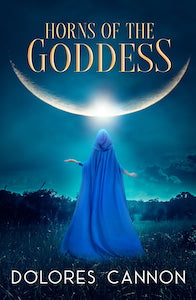
Horns of the Goddess, by Dolores Cannon

Horns of the Goddess, by Dolores Cannon
Ozark Mountain Publishing, 1956945210, 400 pages, March 2023

“At the beginning of time everybody was in tune with the mother Earth, for the souls had just begun their journey.  And they were but newly separated from her, and so they remembered how to be in harmony with her.   And they knew how to be in harmony with nature. And, so they observed the things they knew they needed to be observed in order to stay that way.1

Horns of the Goddess by Dolores Cannon is an interesting exploration of the concept of past lives, the use of past life regression hypnotherapy to gain access to the information of the past lives of clients, and the impact that information may carry within the greater scientific and spiritual communities of the present. The quote above was taken from a chapter taken from the transcription of a session of one of the three individuals who shared past lives during the time of the Druids and are the theme of focus for the title.

Cannon was a regressive hypnotherapist and psychic researcher who recorded the sessions of multiple clients and became one of the collectors of “lost” knowledge, much of which was verified by the findings of archeologists. This is an important factor of consideration as the reader moves through this title and recognizes the credibility of both technique and content Cannon brings to material that could be considered just another example of new age fluff. 

The content was compiled by her daughter, Nancy Vernon, and much of the information contained within was withheld in being made part of Dolores’ public research offerings because of the sensitive nature of the information shared by her subjects. Timing in the release of this information and its consideration as potential truths was very important to Cannon. Given the timing of Cannon’s passing while writing this book provided an opportunity for some of the more controversial information to be included.   

Horns of the Goddess is formatted into three sections with chapters of content within. Each chapter is structured as a question (from Cannon) with answer (from the individual’s past life self/ves) transcribed from the recording made during hypnosis. Dolores’ impressions and notes are interspersed throughout, giving additional insight and background to what the reader is taking in. 

The “Introduction: The Time Traveler” provides the reader with Cannon’s path that led her to the writings and research she committed herself to after her children were grown. She describes the refinements and adjustments she crafted to the techniques of hypnotherapy that allowed for a deeper level of communication between the client and past life memories and now are the choice of practice for past life regressionists. 

“Section 1: Life as a Druidess” begins the journey through timelines of Druidry and events leading up to the Inquisition. In “Chapter 1: The Druidress (Karen)” the reader is introduced to one of her subjects who offers insights throughout a good portion of the book through multiple past lives experienced.  She speaks of one of her subjects, Karen:

“During 1982 and 1983 I worked with Karen on a regular basis. I discovered the true meaning of time travel during my sessions with her. We eventually explored thirty different lifetimes, and the detailed information that poured out of her was phenomenal. She was able to so totally become the other personality that she supplied historical information as well as cultural and theological.2

“Section 2: Brenda’s Story as Astelle” is filled with some of the more controversial material and brings to light from the subject’s experiences the horrors of the Inquisition and the lengths taken by the church to tamp down the nature-based practices….

“In the beginning when she was describing the horrors of the Inquisition and the callousness of the Church, I told her in the session…… “They will hang me from the highest tree if I ….tell about the horrible things the church did in those days. They will never stand for hearing such things about their church fathers”…. There is too much explosive material contained within this story. It is probably the truth about the way the church really behaved, but I feel I must wait a while before I dare to write it.”3

The chapters contained within this section are the meat of the book and a wealth of information about how the “old ways”’ of nature based religious practices would have been carried out. Insights into the use of Pentagrams, signs, omens, communication with animals, the lore and legends of the magic of the Druids, and the inhabitants of greater earth such as the Fae, gnomes, giants, etc… are offered through the memories of Brenda/Astelle in her sessions with Dolores. Woven throughout these chapters are the specifics of how the church made use of these beliefs and the ultimate return of the Inquisition period. 

Rounding out the density of information in Section 2,  Dolores returns to her long time subject Karen and shares the impressions received as Karen travels through the subsequent time periods of her Druidic days and returns to past lives as a minstrel, a physician, a child who sees faeries and a Greek priestess. “Section 3: More Lives with Karen” provides the reader with ample opportunity to give consideration to the possibility of multiple lifetimes that are experienced by a singular consciousness/soul.   

In conclusion, I found Horns of the Goddess to be a fascinating and thought provoking read.  Regardless of your perspective on the veracity of past lives, reincarnation and the storehouse of the subconscious in maintaining information that there is no reasonable explanation for the individual to know, the content of this title is engaging and completely immersive in its reading. 

“Dolores opened our eyes to wondrous and mysterious worlds. She dared to go into the forbidden realms of what the mind contained. If it had not been for her insatiable appetite to want to know more and to ask the many, many questions we might never have known the lost knowledge she found with her sessions.”4
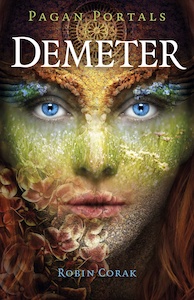
Pagan Portals: Demeter, by Robin Corak

Pagan Portals – Demeter, by Robin Corak
Moon Books, 1789047838, 128 pages, October 2022

At first glance, Pagan Portals – Demeter by Robin Corak seems like a straightforward book. The story of Demeter and her daughter, Persephone, is one that has been used to illustrate many variations of the mother-daughter dynamic in a variety of different contexts. Corak is taking that story and exploring various other themes that aren’t apparent at first glance.

A long-time practitioner of paganism, Corak is a member of the Sisterhood of Avalon where she currently serves as the Board Secretary and is the author of Pagan Portals – Persephone: Practicing the Art of Personal Power. Honestly, there’s no one more perfectly positioned to write the book on Demeter than Corak and her prose is both insightful and informative.

The book is sectioned off into specific areas that deal with Demeter’s background, specific rites and rituals, and other topics I didn’t expect to find. At the risk of outing myself as not being all-knowing about the goddesses and gods of the Greek pantheon, I had to look up two aspects of Demeter that I was not aware of that were referenced in this book: Demeter Chthonia: Grief and Loss and Demeter Chloe: Manifestation Magick. Blown away, completely and totally. Don’t get me wrong, I knew that Demeter was associated with grief (her daughter being taken away from her) and abundance (Goddess of the Harvest), I just didn’t know there were actual aspects devoted to these attributes. 

There’s so much information in this book and all of it is both relevant and timely. The astonishing realization that Demeter was still subject to patriarchy despite being a goddess was something I hadn’t considered. It was my understanding that Demeter’s power would ensure her personal agency. When Demeter is told by Helios that Hades abducted her daughter, Demeter’s opinions are not even considered as she is told that Hades would make a fine husband for her daughter. Because Demeter is dismissed, she then decides that nothing on Earth will grow until her daughter is returned to her. Her actions eventually see the return of Persephone to her, and it’s interesting to note that Demeter is the only goddess to make Zeus give in to her demands, and in a short amount of time. Underestimate an abundance Goddess at your peril!

A surprising aspect of this book is the focus on balance, something that most who identify as feminine struggle with due to the numerous stresses experienced through jobs, home, relationships, and other factors. Corak addresses this in the introduction, saying:

“Working with Demeter can facilitate a powerful journey of self-discovery resulting in a re-envisioning and reclaiming of our potential and our own lives. For those of us who may not have had a positive relationship with our own mothers, Demeter empowers us to access our own nurturing abilities so that we may provide ourselves with the quantity and quality of love that we feel we didn’t receive.”1

It took me a few days to process that, I will be honest. I do not have a good relationship with my mother and as she ages, I have had to come to terms with the very real fact that there will never be apologies or clarity around why certain events were allowed to happen. I found this book to be immensely helpful in navigating my personal grief around this, although I would be lying if I said I was able to completely resolve the anger. I took solace in a powerful sentence from Corak:

“The mother archetype is not just about loving and nurturing, it is also about protection and advocacy to ensure that that which has been given life will survive and thrive.”5

I sat with that for a moment, and realized that’s what I had been doing for myself by not engaging as deeply as I wanted to with my mother. I intuitively knew that this was something I could do to protect myself from additional harm, and this book opened my eyes to all that I have been doing for myself in this realm. 

There is so much healing in this book depending on what is required. For me, I chose to go through “Chapter 3 – Healing the Mother Wound”. Corak includes a definition of mother wound as “the loss or lack of mothering which can include abuse and neglect. Those who experience the mother wound don’t receive the love and attention they need as children and have mothers who seem to be distant and less attuned to their emotional needs.”6

This section in particular really hit me hard, as I thought I had dealt with my issues around this through extensive therapy. Clearly that was not the case, as I often found myself curled up in a ball with my cat gingerly offering me head butts and consoling licks. That is not an exaggeration, by the way. This book is excellent and devastating in a way I didn’t expect but am so glad I experienced. 

If any of this resonates with you, I would highly recommend picking up Pagan Portals – Demeter. If you have a therapist, I would also highly recommend enlisting their help for this journey because working with Demeter calls up all sorts of childhood trauma that needs to be brought out so that it can be healed.

One of the best parts of this whole process was learning that I could mother myself and did not need to rely on my emotionally unavailable mother to provide that. While seemingly heartbreaking, releasing yourself from unrealistic expectations of those who cannot possibly meet you where you need them to is freeing in a way that could potentially allow you to move on. Who wouldn’t want that?

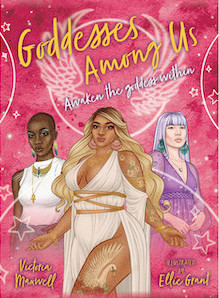
Goddess Among Us, by Victoria Maxwell

Goddesses Among Us: Oracle Deck with 36 Full-Color Cards and 128-Page Guidebook, by Victoria Maxwell and illustrated by Ellie Grant
Rockpool Publishing, 1922579319, 128 pages, 36 cards, October 2022

A goddess oracle deck that represents a diversity of women? Yes, please! Goddesses Among Us by Victoria Maxwell and illustrated by Ellie Grant portrays timeless goddesses in modern fashion and updated to make  them accessible for readers to connect with here and now.

“The goddesses featured in this oracle are from various cultures, religious, and spiritual paths, but they are all aspects of one goddess: a primal, creative force of love that really has no words and no bounds.”1

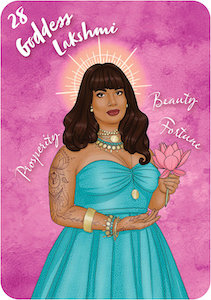
Using this deck so far, I have loved Grant’s illustrative approach because when I flip over a card, I see women of all shapes, sizes, ethnicities, and cultural backgrounds staring back at me in a way I might see them out in public. In turn, this has opened me to remembering the divinity in women I see out and about and how the goddess is within us all always, even in the ordinary and mundane moments of life. There isn’t a one-size-fits all for the goddess, but rather many, many representations of her different attributes, reflected in a variety of looks, lessons, and energy.

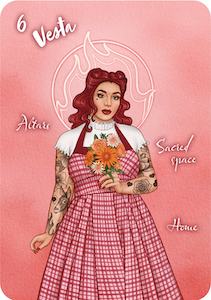
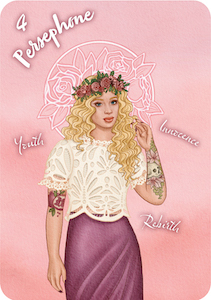
For instance, the card portraying the ancient Greek goddess Artemis doesn’t show an ancient image of her clocked in a tunic, but features a tan, brown-haired woman in a wheelchair wearing an athleisure dress with her bow and arrow primed. Kali looks like a blue-haired badass sticking her tongue out wearing her crop-top and jacket with skulls all over it; Pachamama is portrayed as a down-to-earth indigenous activist in blue jeans with beautiful gold jewelry on; while Sulis Minerva has wavy, long auburn hair, braided around the crown, with a one-shouldered blue dress that shows off a solar tattoo on the uncovered arm.

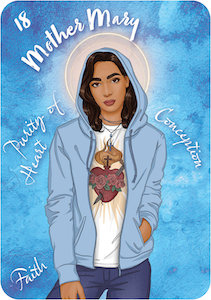
It’s nice and easy to learn which goddess is on the card, as the number of the card and name of the goddess is featured in the upper lefthand corner. There’s a symbol encompassing the image of each goddess, adding to their sense of divinity and giving more insight into the unique power of the goddess. And then there are three key words surrounding the goddess on each card. I just love the font used for this deck! The beauty of the script adds to the flowing, intuitive energy of the deck. Plus, it’s a very colorful deck, making it perfect to use the cards on an altar.

My favorite card visually is The Black Madonna. The card features a voluptuous black woman with a serious look on her face, wearing a tan romper and black jacket with stars on it. She has big hoop earrings in the shape of stars, along with a necklace with an ankh and one with a coptic cross. She’s holding a red rose and the symbol around her head looks like a moon with stars on it too. The keywords are “Cosmic mother”, “The beginning”, and “The void”. It’s also my favorite number (18!) and was the first face of the goddess I met on my spiritual journey, making it feel very special and resonate to me.

In the guidebook, Maxwell provides thorough information on how to use the cards, including how to activate the deck, prepare for a reading, ask questions, and read reversals. She also depicts four different spreads that can be used: Divine feminine activation spread, Goddess guidance spread, Advice and action spread, and Priestess path of the goddess spread.

Then for every goddess card the guidebook features the image of the card, keywords, background information on the goddess (very helpful for when the goddess is new to you!), a general oracle message, extended card meanings, and bullet point lists of what to call on the goddess for and how to embody the goddess.

The extended card meanings provide a more specific oracle message in the areas of love, prosperity, purpose, healing, creativity, and magic. I absolutely loved the deeper insight into these specific areas, especially creativity and magic, which I often forget I can glean oracle advice about. These specific messages makes the deck feel a lot more fine-tuned for readings; I enjoy knowing I can turn to the deck with a very focused questioned in mind and get precise guidance rather than receive a general oracle message that I have to extrapolate the answer to my question by discerning how it’s message relates to what I asked.

I also really appreciate Maxwell sharing what we can call on each goddess for and how we can embody her energy in our lives. Two days in a row, when I was having self-doubts and lacking in self-love, I pulled the card Aphrodite. Some of the ways Maxwell encourages readers to embody this energy are “choosing luxury”, “seeing and owning your own beauty”, and “allowing yourself to experience and receive pleasure in all forms.”7 I realized I had been doing absolutely none of that and spent the whole week doing my best to bring in Aphrodite energy to my life: splurging on fancy organic chocolate, affirming my postpartum body, and feeling more free-flowing love in my relationships.

I also really resonated with Maxwell’s sentiment in her introduction that the goddess can be found anywhere:

“When I opened my heart to her, the goddess began to show me that she was everywhere. I found her in wicca and witchcraft, paganism, the New Age, the ascension path and yogic teachings. I even spent  some time seeking out the goddess in the church, finding her secret messages hidden away in Bible passages..”8

I think the way Maxwell so earnestly sought connection with the goddess in a myriad of spiritual paths is what makes this deck so especially diverse. Many other goddess oracle decks I’ve worked with usually don’t include Christian saints. And the choice of goddesses from all different pantheons make the reader excited for each pull, eager to see which goddess has some insight for them.

The combination of the vibrant colorful cards depicting the goddess as normal women and the potent messages of guidance has made Goddess Among Us a new favorite of mine. As someone who owns approximately four goddess oracle decks, I can say with confidence this one tops them all. For those looking to connect with the goddess in all her wonderful, varied forms while also getting meaningful insight into the questions pressing on their hearts, this is absolutely the deck for you!

Reclaim Your Dark Goddess, by Flavia Kate Peters

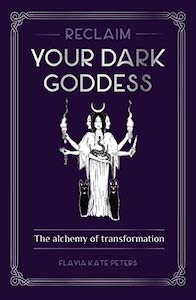
Reclaim Your Dark Goddess: The Alchemy of Transformation, by Flavia Kate Peters
Rockpool Publishing, 9781922579065, 336 pages, October 2022

Every person experiences some form of darkness at some point in their life, either from losing something or not being able to get something. But what if that darkness is something that is created by the Self, for the Self? What if the darkness isn’t the end of everything, but rather the beginning of something better, and greater, than what had been there previously? In Reclaim Your Dark Goddess: The Alchemy of Transformation, author Flavia Kate Peters examines the transformation that embracing the darkness within can trigger. 

As the UK’s leading elemental and ancient magic expert, Peters teaches her professional certification magickal courses at the College of Psychic Studies, London and is a hereditary witch and high priestess of Arnemetia and of the Morrigan. Perfectly positioned to explore this fascinating journey, Peters has given readers a complete and thorough blueprint for how to access, and how to embrace, the darkness that we all carry.

Separated into two parts, the book also includes an introduction (an absolute must read; do not skip this part!) as well an appendix showcasing the Dark Goddesses and their archetypal shadow traits. Very helpful when starting off on this journey. In Part One, Peters divulges information on how to prepare to meet the Dark Goddess and goes into significant detail as to who this mysterious entity is. Sharing her story along the way, Peters blends her personal experience with solid information and rituals designed to help ease the pain of unburdening the soul. It’s almost as if she was right there beside you, patting your shoulder as you realize your entire world is falling apart.

One of my favorite parts of this book talks about the pain of leaving behind the comfort of the known life in order to become who you are meant to be. Peters describes it perfectly:

“As you go through it life as you once knew will disappear; it will no longer be in view or, in fact, exist. But that is the old life, those old ways of doing things and those relationships that were holding you back even if you didn’t realize it. They were comfortable, known and accepted so it will take a crisis to move them on, but if you wish to overcome your difficulties in order to transform your dreams into reality and live the life you came here for then move on they must.”9

Peters also provides some basic information around the Wheel of the Year, provides guidance on how to assemble a specific altar for the purpose of calling in the Dark Goddess, and breaks down the maiden-mother-crone aspects of both the seasons and the moon phases. It’s interesting to see these concepts linked together in this way and could provide a deeper layer for those who incorporate such things into their personal craft.

The second part of the book deals specifically with the various aspects of the Dark Goddess and more importantly, how to connect with them. Peters provides a myriad of information in each Goddess’ section from an extensive background on each, messages from the Dark Goddess, how to seek Her out, reasons for working with that particular goddess, and preparing for the initiation to name a few. It’s really quite simple to invoke the Dark Goddess, but Peters cautions that awareness is a must-have prior to any sort of invocation or other work with the Goddesses. She explains:

“‘The Dark Goddess expects you to be responsible for yourself and your reactions, but it is not easy when you go through a dark night of the soul for you can be blinded by circumstance and find it hard to believe you will ever see the light again.”10

Personally, I found Reclaiming Your Dark Goddess to be a pleasure to read and the concepts in it were easy to understand and follow. I really liked the thoughtfulness that went into sorting the sections of the book and the guidance this layout provides. I would mention that if you are going to be doing this kind of work, you might want to engage with a therapist to help you unravel some of the trickier bits as they are encountered. There is no shame in asking for help, and asking for help shows the Dark Goddess that you are sincere in your supplication to her.

As someone who has done an incredible amount of shadow work and therapy, I was personally blown away by how accurately Peters described her own personal ‘dark night of the soul’. It’s not easy to discover that all the things once thought to be important mean nothing in the context of knowing who you are. The pain of losing people, habits, and other tangible and intangible things that provide comfort to us while we navigate life is almost unbearable until you catch a glimpse of what’s waiting for you on the other side. Being able to shed all that is no longer needed and emerge from the process scarred but beautiful is a wonderful part of life and this collective journey.

The Mythic Goddess Tarot, by Hannah Davies

The Mythic Goddess Tarot, by Jayne Wallace and illustrated by Hannah Davies
CICO Books, 1800651554, 78 cards, 64 pages, October 2022

Connecting with various goddesses is a key part of my spiritual practice; I’ve found the goddess in her many forms provides tough love and restorative nourishment to my soul. When I picked up The Mythic Goddess Tarot by Jayne Wallace, I was immediately drawn to its gentle, intuitive energy that radiates the power of the sacred feminine. I thought to myself, “This deck truly conveys the Goddess’s wisdom.” And since then, the advice I’ve received has helped me immensely in navigating life’s ups and downs.

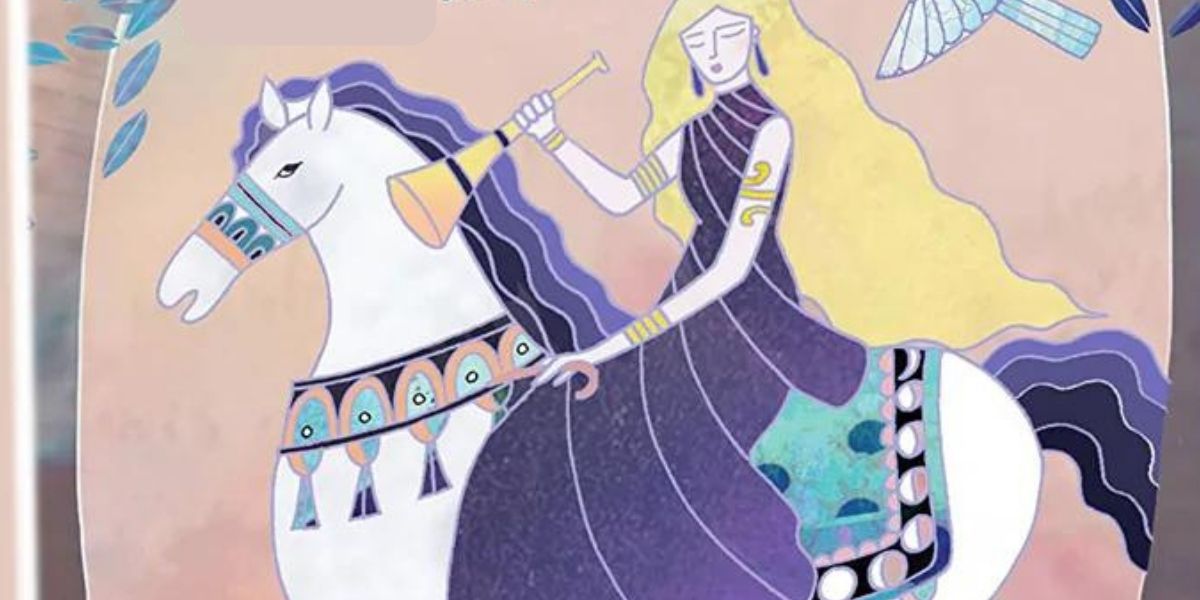
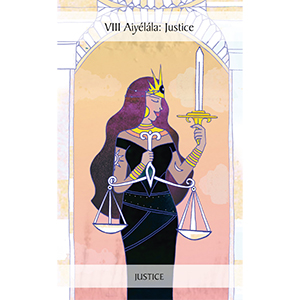
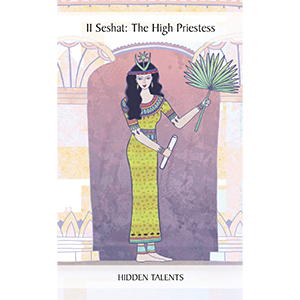
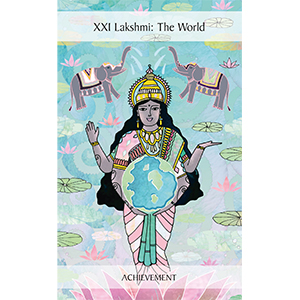
Though the feminine pastel colors of the deck might convey this deck has a gentle tone, there is plenty of strength and power to be found in the messages of the cards. Each one of the 22 major arcana cards portrays a goddess that personifies its energy, all beautifully drawn and brought to life with vivid colors, while the minor arcana cards are differentiated by color and  suit symbol (coin, sword, cup, wand). On every card is the name plus a one word meaning at the bottom. The guidebook provides more in-depth explanations of each card, but I’ve found the word at the bottom helps to quickly ascertain the card’s message.

Speaking of the guidebook, it’s a bright-colored booklet that features information on getting to know the cards, starting and finishing a reading, as well as various spreads one can use with this deck. In addition to the well-known one-card reading, past-present-future reading, and Celtic Cross spread, Wallace  offers The Power Pyramid, The Crossroad, and The Divine Truth spread, which is neat because it covers the whole year.

Then Wallace shares meanings for both the major and minor arcana cards, though the major arcana cards are a bit longer because in addition to the keywords and meaning, which is what is provided for the minor arcana, there is also a section describing the goddess depicted on the card. She describes what the goddess is ruler of or oversees, as well as her mythology and where she originates from. The major arcana cards also feature a sentence-long mantra to say, affirming the message of the card.

What I liked most about this deck was the choice of goddesses for each card. I have a ton of goddess oracle decks, yet it seems like it’s always the same goddesses appearing. While there were some well-known goddesses (Athena and her mighty lion are portrayed on the Strength card, while Aphrodite and her paramore are on the Lovers cards), this deck featured quite a few goddesses I’d never heard of before, making me excited to learn more about their mythology and their unique attributes.

There is Asase Yaa, a West African goddess, representing the Empress, Luthianian goddess Ragana representing death, and Indian goddess Dhumavati representing the Hanged Man. I appreciate that it feels like Wallace put genuine thought and creative consideration into picking each goddess for this deck and went beyond the traditional goddesses, inviting new perspectives into querenets’ reading through these cards. She writes in the introduction:

“One of the things I love about goddesses is that they are everywhere. From every corner of the globe, you will find mythologies, stories, and fables with gods and goddesses at their heart. Whether in ancient Greece, Africa, Asia, or Europe, or with any type of religion, it’s easy to see throughout history the impact these superhuman beings have had on the shaping of the world as we know today.”1

Another reason I’ve been using this deck often is because I love to display on my personal altar the serenely gorgeous artwork of this deck, which was illustrated by Hannah Davies. I’ve started a practice of shuffling just the major arcana and asked which goddess I should work with for the week. After I pick my card, I place the card on my dresser surrounded by crystals, flowers, and other little trinkets related to the goddess I’ve chosen. This helps me to connect with goddesses and feel her presence in my life daily, especially when I see the goddess of the week’s qualities coming through in my interactions with others, guiding me to embrace the energy in play.

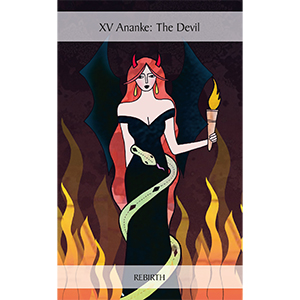
If I am having trouble connecting with the goddess’s energy, I’ll spend time gazing at the artwork on the card and meditating on the symbolism. This method is yet another way that I’ve found useful in opening myself up psychically to the wisdom of the goddess, and the beauty of the deck makes it a very aesthetically pleasing experience, even for the goddesses that tend to be more feared, such as Hekate (The Magician) or Ananke (The Devil). Wallace’s description coupled with Davies’ artwork make these goddesses feel more accessible, giving me courage to embrace their sacred teachings.

I will admit, I’m quite a fan of Wallace’s other decks, such as The Angel Tarot, The Magical Nordic Tarot, and The Moon and Stars Tarot, so I’m not surprised that I connect so well with this one too. Wallace has a unique way of translating sacred energies into her decks that resonates with me, and I have noticed the way the various themes of her decks call to me at different times based on the type of reading I need at the moment.

Aptly, in addition to creating decks, Wallace has also used her spiritual gifts to bring together a tribe of wise women by founding Psychic Sisters, a team of clairvoyant women that offer intuitive readings in London and remotely, along with a wellness line that sells reiki-energized crystals, mists, oils, candles, cosmetics, and more. It’s definitely worth checking out their website, as well as Wallace’s other decks, if you’re interested in connecting with psychic readers for more insight.

All in all, Mythic Goddess Tarot has become my favorite divination deck for working with the energy of the goddess. I’m still making my way through getting to know all the goddesses of this deck, but even in the short time I’ve been working with it, I’ve felt the potency of the goddess being woven into my life. Wallace has truly created a holistic deck, magically combining the many faces of goddesses from around the world to assist readers in connecting to the goddess within themselves when making meaningful life choices. I highly recommend this deck to those who enjoy working with goddess energy and are looking to more fully incorporate Her wisdom in their readings.

Becoming a Garment of Isis, by Naomi Ozaneic

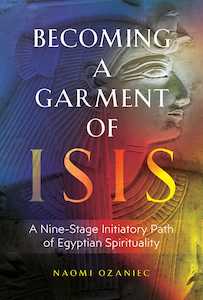
Becoming a Garment of Isis: A Nine-Stage Initiatory Path of Egyptian Spirituality, by Naomi Ozaneic
Inner Traditions, 9781644113936, 352 pages, May 2022

“What passes for an ancient Egyptian religion and is often described as such is within the temple tradition, theurgy, the divine work of being and becoming. This is essentially a mystical endeavor quite unlike modern religion.”11

Becoming a Garment of Isis: A Nine-Stage Initiatory Path of Egyptian Spirituality by Naomi Ozaneic is one of those rare reads that emanates its energy and power simply by the calling of its title and the first few words on introduction offered. When you encounter a title of that sort, the reader knows that this will be an extraordinary read with much that is held between the words on the page and how these resonate within the consciousness of the reader by way of inner transformation. 

The book begins with “Preface: Preliminary Thoughts” that speaks to the evolution of its title and includes a powerful retelling of the author’s calling by Isis to take up Her mantle of heart and illumination to better serve the world’s needs in these modern times…

“Do you hear my voice? Do you rise upon a new path? Do you desire to be among my service with all the powers of your heart? Do you turn to me with outstretched hands as a child reaches out to a mother? Do you know the love of my heart? Then come. I am not distant but nearby. I am not locked in the past but I am ever present. I am as close as your next breath.”12

“Introduction: Kemetic Sacred Science” provides the reader with context and a thorough foundation of the Kemetic philosophies and application as a very specific mindset inclusive of science, religion and art…

“The Kemetic Sacred Science is an initiatory schema not a faith, it is a gnosis not a belief, it is a technology of consciousness not a religion. Its conceptual foundation is in a cosmology and theology that embraced all of nature from stone to star as a living presence mediated through a hierarchy stretching from the Above to the Below and completing in the human person as an embodiment of the divine.”13

The rest of the book is separated into four parts and takes the reader through the minds of the heart, spirit, and soul. As the reader moves through the heart of its content the incorporation of magical practice is evident in every aspect of this title and none more so than in the way in which it is organized beyond the preface and introduction. Ozaneic makes use of the enneagram and the number nine that corresponds to its structure in the crafting of nine sections of praxis designed to encourage the application of its content. 

“Nine is the highest digit. It symbolizes comprehensiveness and culmination. The enneagram is a fusion. It’s used for the pursuit of knowledge and in the quest for cosmic deities.14

The first three parts each contain three praxis sections (for the total of nine) and are entitled “Temenos I: The Heartmind”, “Temenos II: The Spiritmind”, and “Temenos III: The Soulmind”. I was intrigued by the use of the word “Temenos” and looked at the definitions given, all of which are telling in the creation of another layer of magic that holds the words of each section as sacred sanctuaries where the reader may explore and step into the power of their Divine nature.

  1. (noun) In Greek antiquity, a sacred enclosure or precinct; a piece of land marked off from common uses and dedicated to a god; a precinct, usually surrounded by a barrier, allotted to a temple or sanctuary, or consecrated for any other reason15
  2. (noun) A sacred circle where one can be himself without fear16

Of note in “(Part 1) Temenos I: The Heartmind” are the Twelve Attitudes of Mind for Spiritual Intelligence, which are part of Praxis 1: The Power of Intelligence.  These key attitudes are taken from the book Spiritual Intelligence by Dana Zohar and Ian Marshall and form the “SQ” or Soul’s Intelligence, an integral concept in the ancient Egyptian’s life’s purpose. These twelve keys encourage the reader to cultivate self-awareness, vision, resiliency, compassion, a diverse mindset, curiosity and humility to name a few. The inclusion of the keys by Ozanaeic offers the reader another path to explore as the Kemetic principles and worldview become interwoven with modern practices of spiritual awakening.

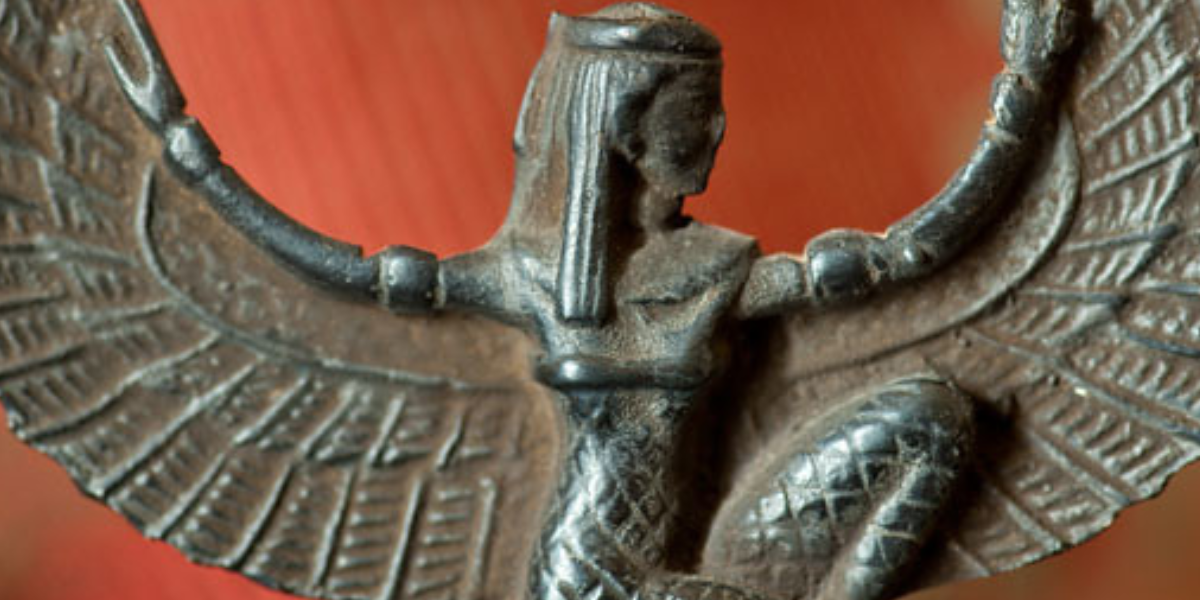
The concluding section, “Part IV: the Star of Mysteries”, refers to the nine-pointed star and each of the praxis sections that have carried the reader to the door of becoming and initiation in the ways of the Goddess, Isis and Egyptian cosmology and spirituality. In the same way that the preface shared the author’s experience in being called to writing this title, the concluding sections provide a detailed recounting of Ozaneic’s experience of embodying the Goddess Isis for her own workings as well as in attendance at the “Parliament of the Worlds”, a multifaith convention that brings together some of the most revered spiritual leaders of the world.

This chapter is an invitation to the reader to give consideration to the service and greater work of offering oneself up to devotion and expression of the ancient Kemetic ways. And, in the sharing of the author’s journey on that path, the reality of such a commitment is presented in a way that maintains the power of self-awareness and accountability and the evolution of spirit through sacrifice and service. 

This whole book is rich in history, theory, practical application and a concluding chapter “Guidance” that offers the reader a contemplative practice to deepen the work of the material offered by each praxis. I found these to prove that powerful contemplatives do not have to be lengthy and filled with unnecessary verbiage to affect the synthesis and change desired.  It is a dense read, as should be any title that takes on the task of reaching out to the most ancient of deities. Its writing is infused with the devotion and illumination of Ozaneic and, thus, exemplifies the gifts and challenges of pledging spiritual service to the Egyptian goddess, Isis. 

The primary take-away from this title is the comfort (or perhaps for some fear) that although many feel far removed from the unity and cosmological understanding of the Egyptian culture and their divine Neter (Gods/Goddesses) there is a re-awakening of the need for their universal connections. The cycles of time and events have merged and interwoven with similar events that caused the downfall and laying aside of the truths held in the Ancient Civilizations.

Becoming a Garment of Isis is a reminder that there is much value to be had in connecting to some of the elder philosophies, calling out to the Deities that held the understanding of creation within their forms and living in accord with the natural order of the world(s) and humanity’s place within it. 

“My journey into the Kemetic landscape has been a personal revelation; all journeys bring discoveries and this has been no exception. I have seen the abyss in perspective between this ancient view of life and our own. Silenced by an inability to read any symbolic language and made unconscious by glittering consumer distractions, we stand deaf, dumb and blind in a world singing to us clothed in the raiment of glory and inviting us to engage and enter into partnership.”17

Pagan Portals – The Temple Priestesses of Antiquity, by Lady Haight-Ashton

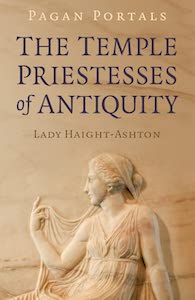
Pagan Portals – The Temple Priestesses of Antiquity, by Lady Haight-Ashton
Moon Books, 128 pages, 1803410280, August 2022

I think it’s very common for modern witches and priestesses to feel a connection to our predecessors, at least this is true for me. Reading about the lives of priestesses, oracles, and healers of the past builds a bridge between past and present, reminding me of the timelessness of the Goddess. Pagan Portals – The Temple Priestesses of Antiquity by Lady Haight-Aston was a very interesting read that took me through the cultures of priestess traditions dating back to 12,000 B.C.E. in Mesopotamia all the way to the present age.

“Whether Oracles, Seers, Psychics, and Sibyls, or Sacred Dancers and Healers, the ancient Temple Priestesses wove a narrative of both realism and mythology. They held court in every ancient civilization with their mysterious and mystical powers. These empowered women enthralled those who sought their advice while always serving the Goddess they revered.”1

Lady Haight-Aston’s resume is quite impressive. She is a Third Degree High Priestess of both Gardnerian and Cabot Hermetic Tradition, as well as High Priestess of Sacred Moon Coven and the Iseum of the Graceful Goddess. She is also a professional psychic, trance medium, Sacred Dancer, teacher, and tarot reader. In 2019, Lady Haight-Aston published Pagan Portals – The First Sisters: Lilith and Eve. The vastness of her knowledge of different traditions and forms of Goddess worship shine through every page of this book.

The most prominent priestess cultures covered in this book are those of ancient Egypt, Greece, and Rome, including Goddess cults of Isis and Hathor, the Oracle of Delphi, and the Vestal Virgins. But I was surprised to learn about other traditions that I had previously not heard of before, such as The Ank Priestesses of the Isle of Iona and the Cumaean Sibyl that presided over the Oracle of the Dead in Baia, Italy.

I will admit each section is short; this isn’t a full deep dive into any one priestess tradition, but rather a small sample of each one. But there is still plenty to learn from this book, and I found it valuable to read about all the different priestess cultures side by side. I noticed similarities and differences stand out more than when I study one priestess culture on its own. And as someone who has studied different priestess cultures previously, devouring any piece of literature I could get my hands on, Lady Haight-Aston still provided me with plenty of new revelations.

As she weaves her way through periods of the past, Lady Haight-Aston notes different speculations of academics and clearly informs readers where there is a lack of archeological evidence to make assured claims. But simultaneously, she adds her own perspective as an initiated priestess to share missing links of herstory. I deeply appreciated her point of view and am always glad for a feminist version of history, but for those who this might not be appealing, there is ample reference sources provided at the end of each chapter for readers to investigate themselves and draw their own conclusions.

I mean, if we’re being honest, priestess cultures have hardly been given the academic recognition they deserve, especially in comparison to the study of different priesthoods. To this day, putting together the pieces to better understand these cultures is still quite a challenge. As much as I value the efforts of historians and anthropologists, I feel there is value in having a modern-day Priestess share her thoughts on the significant findings too, providing an experiential interpretation of the artifacts and records.

One of my favorite chapters was “The Modern-Day Oracle Priestess” where Lady Haight-Ashton discussed prominent women that have helped to keep the Priestess tradition alive in recent times, such as Helena Petrovna Blavatsky and Sybil Leek. In this section, Lady Haight-Ashton also shares more about friends of hers that have created different communities. I was thrilled to learn about these, especially Woolston-Steene Theological Seminary (the only degree program in the United States for Wiccan ministry) and the Aquarian Tabernacle Church International.

All in all, Pagan Portals – Temple Priestesses of Antiquity was a fantastic read that expanded my knowledge of the influence Priestesses had on cultures of the past. Lady Haight-Aston’s personal path of Priestesshood helps to shine light on what the experience of these devout women of the past might have been within the context of their unique cultures. This book serves as a reminder of the spiritual and political influence women have had through time, and it inspires hope that the way of the Goddess will someday thrive again. For those interested in the pathway of the Priestess, Lady Haight-Aston provides many resources to explore as one finds their own path towards serving the Goddess in the modern world.

Goddess Luminary Leadership Wheel, by Lynne Sedgmore

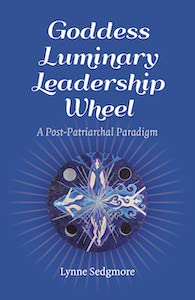
Goddess Luminary Leadership Wheel: A Post-Patriarchal Paradigm, by Lynne Sedgmore
Changemaker Books, 1785354787, 208 pages, December 2021

Empowerment through Goddess-center spirituality is something very dear to me. Attending a Catholic college, I realize just how great of an inequality there was between men and women in regard to spiritual authority. This set me off on a path of reclaiming the Goddess, from studying about matriarchal societies to obtaining a degree in ecopscyhology, studying the relationships between ecology, psychology, and feminism. Meeting Starhawk, the person who awoke me to goddess-centered magic and spirituality, is a memory I’ll always cherish fondly. Therefore, I was quite excited to begin Goddess Luminary Leadership Wheel: A Post-Patriarchal Paradigm by Lynne Sedgmore and thrilled to realize she too was deeply attuned to this paradigm shift, writing about and studying the same sources I just listed – plus more!

This book opens readers to the many facets of goddess-centered worship through sharing background knowledge on the topic, and most especially, offering a pathway to Luminary Leadership. Doesn’t it just sound radiant? Sedgemore writes:

“I use the term Luminary to replace the more masculine word leader and all its associations, and to bring about a radical shift in how it is manifested. Luminary means ‘a person who inspires and influences others, someone prominent in their field’. It also means ‘a natural light-giving body, especially the sun or moon’, someone who illuminates.”1

This is the type of leadership I aspire to! And Sedgmore has made it easy for all readers to adopt this style of leadership through the Goddess Luminary Leadership Wheel (the Wheel for short). Sedgemore draws from her extensive knowledge on the subject of leadership, including over 40 years of leadership in mainstream and spiritual organizations and a doctoral thesis on spiritual leadership, to develop this post-patriarchal model.

Sedgmore has reframed all her experience in leadership to create the Wheel, placing the Goddess within the center of it. In this way, she uniquely bridges spirituality and leadership to reposition feminine values of love, beauty, and connection at the core of communities. The Wheel incorporates both the Moon phases and elemental energies, which are two of the shamanic elements of the wheel.

The other two are Goddess Gnosis and Luminary archetypes. Sedgmore defines Goddess Gnosis as “your personal unique truth of the direct experience and knowing of the Divine as Goddess, as sacred female.”18 Then the six Luminary archetypes reflect the six cycles of the Wheel that practitioners move through. Sedgmore describes them as “valuable metaphors for self-understanding and coming to wholeness”19

Also embedded within the Wheel are radical Luminary leadership approaches: “the Luminary Leaderful Way, States of Being, Paths of Power, and Ways of Knowing”20). These are the synthesis of Sedgmore’s leadership experience, integrated into the Wheel to foster new models of leadership. For instance, Ways of Knowing focuses on embodiment and bodily intelligence as a source of wisdom, which is often overlooked as integral to leadership. Together, these shamanic elements and Luminary leadership approaches make the Wheel both practical and adaptable; there’s both stability and a sense of flow, which ultimately allows each practitioner to develop their own relationship to the Goddess, as well as their leadership potential.

While all of these integrated aspects of the Wheel might seem a bit complex, Sedgmore does a wonderful job of explaining it piece by piece. And once one delves into the practice of using the Wheel, it feels intuitive. What’s also very helpful is that Sedgmore provides a diagram of the Wheel for readers who are more visual. There’s a general outline for each Cycle, but also a very natural flow to the book that guides readers through reflections, mythology, and new ways of relating that are embodied, present, and from a place of inner power.

One of the neatest aspects of Goddess Luminary Leadership Wheel is that the reader can move through the Wheel individually or create their own group to lead with it as a manual of sorts. Reading each cycle and doing the practices, reflections, and exercises feels like a sacred ceremony. There’s a ritual in each chapter, starting with a call in and check in and ending with a chant and reflection. Sedgmore has ensured we all know how to create a safe space to do this inner work, containing this transformative knowledge in a protected circle. It makes me want to  create a group to practice the Wheel collaboratively in a circle with others.

And this is why I am impressed by Sedgmore’s own leadership style, which is reflected in the way she presents the Wheel in the book. She genuinely hopes people all over will feel a connection to her method of Luminary leadership and put it into action. I always appreciate when leaders have faith in the autonomy of others to learn and do, which is exactly what Sedgmore demonstrates in offering this model for everyone. She put out the call, even writing a Luminary Charge for those who feel called to this path.

What I really like about the Wheel is how accessible it is. First of all, Sedgmore is very clear that this is an inclusive model for everyone who identifies as a woman. The archetypes end with x, such as Illuminatrix and Connectrix to reflect this notion.  Furthermore, she delves into topics such as feminist intersectionality, gender, and cultural appropriation, offering reflection questions to assist with personal reflection and awareness.

I also really enjoyed how part of the Wheel delves into shadow and toxic leadership. Cycle V The Brilliance of the Dark Moon, whose archetype is Wisdom Keeper, is where practitioners get to connect with the Dark Goddess. We learn about how the archetypes manifest themselves through this energy, examples being Saboteur and Imposter.

The exercises help to discover these shadow characteristics in one’s self, as well as an invitation to notice what one projects on others because they can’t see it within themselves. The Wheel’s exercises assist the reader in transforming their projections into a reflection of their own positive qualities.  There’s also information on surviving toxic leadership, which I think many people could benefit from reading. 

All in all, Goddess Luminary Leadership Wheel is a wonderful book for those who are looking to do inner work around leadership but are looking for alternative models for how this might look. This is also a must-have for anyone who holds space as a spiritual leader, particularly if you’re leading a group of women. The Wheel is a powerful model that will provide a lot of insight into one’s leadership style and potential in a way that fosters growth, awareness, and connectivity. I am happy to now be thinking of myself as a Luminary, rather than the traditional leader, and have felt very empowered exploring what this term means to me while making my way through this book.

Yemaya, by Raven Morgaine

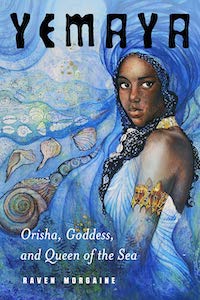
Yemaya: Orisha, Goddess, and Queen of the Sea, by Raven Morgaine
Weiser Books, 1578637430, 208 pages, September 2021

Back in May, sitting atop a small mountain in Joshua Tree National Park and meditating as the sun rose at dawn, the word “Yemaya” came through the silence. Instantly, I felt a sense of peace rush through me. I knew Yemaya was a great ocean goddess, but that was my extent of knowledge about her. When I returned home after this experience, I followed an intuitive nudge to bring some cowry shells down to the ocean and honor Yemaya, thanking her for the beauty of the ocean that I enjoy and the calmness that it brings me.

While I felt a call to continue developing this relationship and explore this quiet prompting from either my intuition or the Universe (not sure!), my summer travels took me away from my home on the California coast and into the canyons of Utah, woods of the Sequoia trees, and cities of the east coast from Philadelphia, PA to Providence, RI. Within my heart though, I kept remembering Yemaya and doing my best to connect with her energy wherever I went.

Now that I’m settled into my daily routine again, back to combing the beaches for seashells and spending my weekends reading on the beach, I felt ready to explore this budding relationship a bit more. However, I will admit I didn’t know exactly where to get started. The Orishas have always felt unreachable for me, a white American woman with European ancestry, due to their African heritage. I am well aware of the training and dedication that goes into becoming a devotee of the Orishas, and I also know how inaccessible these traditions can be to outsiders.

Therefore, you can only imagine my joy in discovering the recently published book Yemaya: Orisha, Goddess, and Queen of the Sea by Raven Morgaine. It was all I’ve been searching for and more!

Morgaine is a spiritual artist who has dedicated his life to Yemaya. He practices Candomble, New Orleans Voodoo, Santeria, and witchcraft. He also owns his own shop, Familiar Spirits, in Coventry, Rhode Island. Most of all, he’s an incredible storyteller that brought all facets of Yemaya to life in this wonderfully written book. His inclusion of practical wisdom, anecdotes, recipes, recipes for making oils and candles, along with plenty of Orisha stories made my connection to Yemaya so much more tangible and alive.

In fact, there were times reading this book when I would put it down and have my thoughts be washed away in feelings of love, tenderness, and security. It felt as though I was coming home to a mother who wanted nothing more than to make me feel loved, nurtured, and supported. While I am only in the beginning phases of building my altar and figuring out what this relationship is going to look like in my life, Yemaya assured me this pathway is open to all and that I will find my way.

Filled with his own written prayers, blessings, and spells, this entire book is imbued with Morgaine’s energy in the best way possible. His love and reverence for Yemaya streams through every word written, from warning those seeking to develop a relationship with Yemaya about what she does not like (never put metal on her altar or use it as a ritual tool, also she’s not a dog person!) to all the ways one can win her favor (beautiful combs, pearls, mirrors, white roses). Morgaine does not cut a single corner in laying out the foundation for establishing a relationship with Yemaya, and he happily delves into stories to illuminate the meaning behind why the practices are done the way they’ve always been done.

I truly loved learning more about many Orishas, from Yemaya’s younger sister Oshun to Shango and Eleggua. Morgaine’s writing was one of the most inviting introductions to the Orishas I’ve ever come across, and for the first time, I felt welcomed to partake in and honor these gods and goddesses.

Though, I will also admit, Morgaine’s solemn warning of what is involved in creating and maintaining a relationship with Yemaya is both awe-inspiring and a bit nerve-wracking all in one. More than anything, he conveys that she is not a goddess to call upon on a whim or to instantly demand quick results from. She is royalty, and thus she wants to be treated with respect, care, and devotion. She enjoys her lavish praise and will actively pursue what she wants, letting the practitioner know what does and does not please her.

The experiences shared by Morgaine of working with Yemaya for over 35 years made me realize just how misconstrued my previous assumptions of this great ocean goddess had been. I particularly enjoyed how he went through all the different facets of Yemaya, naming each one and sharing a bit of background information related to that incarnation of her, so that a more well-rounded picture of her was painted.

Morgaine openly shares trials from his own life, from despair at the end of an abusive relationship to being evicted at a very sensitive time in his life following his brother’s passing, to show readers Yemaya’s ever-present compassion for her children. Likewise, he also recounts times where she graced him with her presences, highlighting that Orisha gods and goddesses are more than just abstract energies; they are dedicated protectors, guardians, and way-showers of the natural world and humanity.

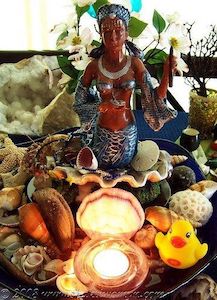
What has me most inspired is the descriptions of how to build an altar. I am looking forward to creating the time and space to do this soon. I knew I had been collecting seashells, sand dollars, and mermaid figurines for something! And thanks to the wisdom Morgaine has imparted in Yemaya, I also plan on creating cleansing and protecting my house as well.

Once again, I must impart how thorough Morgaine is in his details of doing these things. He even describes how it’s good to have an altar with drawers to store sacred objects, where to find affordable old furniture, and how to cleanse the furniture. At other times, Morgaine reminds the reader to use a dust mask or that a certain spell might smell weird, but that’s okay. His conversational writing style makes it feel like I am directly receiving this valuable information from a beloved teacher, mentor, and friend.

Somehow, Morgaine finds the perfect mixture of lightheartedness and seriousness to impart these lessons with care and consideration both of Yemaya and the well-being of the practitioner. He very much wants to ensure Yemaya is honored in a way that is pleasing to her, and he also wants to make sure practitioners don’t make foolish mistakes that can have detrimental impacts. Truthfully, he’s the perfect mediator between both, an ambassador if you will, in establishing this relationship.

And what’s so special about Morgaine’s perspective in Yemaya is that it’s inclusive. For him, having a relationship with Yemaya is not limited by one’s race, gender, sexual orientation, or cultural background. He draws parallels between Mother Mary and Isis with Yemaya, as well as acknowledging that many pagans choose to work with deities outside of their own culture’s pantheon. There’s a lovely section on how different aspects of Yemaya are protectors of people of all gender and sexual orientations — Yemaya is mother to us all.

Oh, I could keep raving about this book forever! All in all, Yemaya is a wonderful book to begin a relationship with the great mother ocean goddess. Morgaine teaches the reader how to cultivate a spiritual practice dedicated to Yemaya through telling her stories with the Orishas, sharing her many aspects of self through reincarnation, what offerings she loves and what things she dislikes, and how to establish a relationship nearby or far from the ocean. The anecdotes, recipes, magical associations, and practical wisdom from Morgaine are enough to get someone started on this path for at least a few years!

Pagan Portals – Raven Goddess, by Morgan Daimler

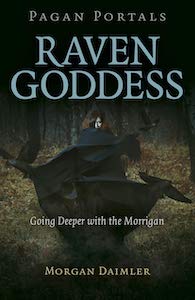
Pagan Portals – Raven Goddess: Going Deeper with The Morrigan, by Morgan Daimler
Moon Books, 1789044867, 104 pages, October 2020

Heavily researched books get a bad reputation for being stuffy, boring, or just too damn long. When something has been researched to the point where it’s just a collection of facts with no soul, that’s where I check out. Fortunately, Raven Goddess: Going Deeper with The Morrigan by Morgan Daimler provides an abundance of thoroughly researched and cross-checked facts, coupled with a flair that only an accomplished storyteller could achieve.

Having authored many books on the subject of the Irish Gods and Ungods, despite not being part of that heritage, Daimler has captured the respect of fellow authors and scholars by their clarity on the subject matter and the depth of their research on the topics. A blogger, poet, teacher, witch, priestess and the author of more than two dozen books, Daimler’s Pagan Portals – Raven Goddess is a shining example of this depth of research as this book takes you beyond the normal space of explaining who The Morrigan is and explores the mystery that surrounds her.

The Morrigan has been misrepresented in many books, mostly due to the rapid spread of misinformation through opinion-based writings. I am not in any way suggesting that people may not have an opinion on how they identify or interact with any particular God or Goddess, but I do believe having the facts should precede any sort of opinion-based writing. Having said that, while Daimler does inject their own opinion on a regular basis throughout the book, it’s done in a simple and satisfying way that adds layers to the information being presented.

The opinions expressed by Daimler are based on their exhaustive research and their ability to translate the old texts that are referred to throughout the book. Having tried learning Gaelic exactly once in my life, it is impressive to see the original text plus the various translations already made compared to Daimler’s translations. This added touch lends a layer of authenticity to the book that is both refreshing and downright amazing.

Referencing old texts, parts of poems, and scholarly writings, Daimler is able to piece together a very deep and revealing portrait of who The Morrigan is and how we can work with Her as individuals if we feel called to. Beyond the normal listing of various correspondences, Daimler provides an in-depth examination of various sources of the material from which the correspondences associated with The Morrigan are derived. This cross referencing could be tiresome for folks if it weren’t for the way Daimler writes. 

In one chapter, Daimler provides irrefutable proof that Morgen Le Fay and The Morrigan are two separate entities. They explain:

“The Morrigan and Morgen Le Fay are often associated with each other in modern paganism… both certainly were vilified and demonized over time as stories evolved, the Morrigan going from a goddess to a night spectre and Morgen from a priestess of Avalon to an incestuous and usurping sister of the king.”1

That is perhaps one the most common misperceptions of The Morrigan that I have personally come across. I didn’t think that the two shared any roots, but over the years as I did my own reading and found others who made connections, it made me wonder. The biggest point of contention is the fact that the Morrigan is Irish and Morgen La Fay is Welsh, so that should have stopped the connection there. Fortunately, this book cleared all that up as Daimler says without reservation, “there’s no evidence that the Morrigan and Morgen La Fay share any roots or that historically the two have any connection to each other..”2

There are other pieces to the book that enhance the journey through the history of The Morrigan. The correct spelling of her name, for example, as well as an explanation of why it is “The Morrigan” and not simply “Morrigan”. Daimler goes into this briefly, stating “It may help to keep in mind that her name translates to a title — either the Great Queen or the Phantom Queen, so try thinking that you are saying that.”21

References to other works abound, if you aren’t careful you will fall down a rabbit hole of personal research and cross checking. As I write this, I have four other books on the subject including Daimler’s first book on The Morrigan titled “The Morrigan: Meeting the Great Queens”. I love reading books that give you additional resources to look up your own information and this book does that perfectly. Daimler’s writing is clear and concise and carries a hint of reverence for the subject matter. This book is an absolute pleasure to read and conjures up many questions that no doubt I will spend time finding my own answers to.

For me, as someone who follows The Morrigan and has for years, this book provides a wealth of knowledge that I didn’t have and more importantly, didn’t know I was missing. Yes, it’s scholarly and a bit repetitive at times, as Daimler is constantly drawing upon their vast knowledge of Irish paganism in order to provide clarity around the Morrigan, her associations or correspondences, and her activities, but still Pagan Portals – Raven Goddess is perfect for those wishing to dive a bit deeper into the lore behind The Morrigan in order to deepen their understanding of her and strengthen their own connection to her.