✨ A Gathering Place for Magical Readers and Writers ✨

Tag Archives: moon books

Polytheism: A Platonic Approach, by Steven Dillion

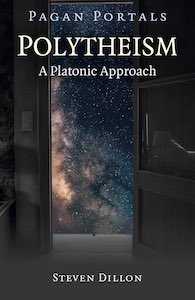
Pagan Portals – Polytheism: A Platonic Approach, by Steven Dillon
Moon Books, 1785359797, 96 pages, August 2022

In Pagan Portals – Polytheism: A Platonic Approach, Steven Dillon presents a deceptively simple argument for the position that the existence of any god, even the God espoused by one of the monotheistic religions, entails the existence of many gods. To put it simply: “theism just is polytheism.”1 What’s more, Dillon intends to do this by drawing upon classical platonist philosophy? I was immediately sold on this book. But, reader be warned: Pagan Portals – Polytheism: A Platonic Approach is not the easiest reading. It is a true work of analytic philosophy: its main argument appears easy to grasp, but the proof of each step is rigorous and highly theoretical. With two master’s degrees in philosophy myself, this book still demanded great focus and concentration. And was worth the effort!

Dillon’s main argument has massive implications – not the least of which is that belief systems based around monotheism are fundamentally self-contradictory. And a similar problem would also arise for any theistic beliefs which include a hierarchy of gods: e.g. Zeus would be no more metaphysically important or fundamental to reality than Hephaestus; or beliefs which consider one group of deities (the Norse pantheon) greater or more real than another (the Egyptian pantheon). To put it lightly: this argument has very wide consequences for religious thinking. 

Dillon attempts to make all these arguments and disagreements over different gods, detities, etc. a thing of the past. Dillon puts this all to rest by – very basically – arguing that any particular god is a revelation of the ineffable subject of divine being (which cannot be a particular thing, cannot have definite properties, cannot be quantified at all). As such, any particular god contains/implies all other gods. When the implications of this position are taken to their conclusion, Dillon finds that “all things are divinely constituted by a plurality of polycentric henads.”2

Naturally, in order to understand the intricacies of what Dillon means, you’ll have to read the book to get all the nitty gritty details yourself. But for our purposes here, I’d like to point out a couple of the major ideas underlying Dillon’s argument. 1) Dillon’s starting premise, “To be divine is to transcend Nature,”3 means that the precise notion of “transcend” is going to be extremely important. 2) One of Dillon’s key strategies in formulating his argument is relying upon the analogy between (Indo-European) grammatical structure and how beings (any entity, object, mind) possess their properties. Beings have properties like subjects have predicates.

These two points will turn out to be critical in evaluating the soundness of the main argument. While Dillon has much to say on both, it’s the reliance upon these two ideas which leaves an opening for potential problems to creep in. I am not presenting a refutation of Dillon’s argument, but I wish to raise concerns so that readers can conduct their own examination. Uniting the two issues is my overarching concern that Dillon’s interpretations of theistic ideas (e.g. the transcendence of divine being) may be overly simplified, derived from commonly-held beliefs rather than deeper theological understanding. It’s completely reasonable to rely on common notions of course, but when they are so important to the overall argument, it’s worth being extra cautious in how they are borne out.

As for (1), Dillon relies on a notion of transcendence that is fairly common: to be beyond, above, or outside of Nature. Yet, this description does not fully coincide with the notion of transcendence found in many of the mystical traditions within Abrahamic religions (which were heavily influenced by neo-platonism), for instance. The transcendence of the divine may be a transcendence into the ever-rising moreness of Reality (including Nature’s part in it), rather than transcendence above or beyond.

Secondly, Dillon gives very short attention to the consideration of immanence, which is often taken as being just as important as transcendence to the divine mode of being. Dillon requires his notion of transcendence in order to later defend his position from accusations of pantheism – if the divine is completely beyond Nature, then pantheism cannot be true. It’s unclear why he is resistant to the pantheist position, as the whole argument seems to be leading there (apart from the problematic premise I’ve indicated); but if Dillon’s interpretation of “transcendence” is put into question, it would be much more difficult to avoid the pantheist conclusion.

For (2), this grammatical analogy has been a long-standing philosophical position, especially in western analytic traditions, it is not above question. Some Asian philosophical and religious traditions would not necessarily assent to this analogy; nor do all languages function in the way described in the analogy. Process theories of Reality (e.g. those of Whitehead or Buddhist traditions), or those which hold relationships as prior to the relata (particulars, objects, henads), would likely also reject this idea.

But using this analogy will force oneself into a position where “divine being” (which should not be considered some kind of being, among other beings, as Dillon also agrees) must be considered a “thing” of sorts: an entity which plays an analogous role as the subject of a sentence, but conflicts with the ineffability of the divine. Dillon argues for the polycentricity of divine being to avoid this problem (even gesturing toward Process theories, or the divine as a mode of being), but I would suggest that the analogy may ultimately trap the argument into trying to use language to express what language cannot capture.

All that said, Pagan Portals – Polytheism: A Platonic Approach is a courageous and intricate work of philosophy seeking to bridge the differences between theistic systems regarding divine being. The book is extremely well organized, clearly leading the reader through the main argument and its implications to reach the final conclusion. Each of the early chapters is dedicated to explaining and supporting just one of the main premises, so it’s easy to keep track of where we are within the argument, as well as how we got there.

Although I have drawn upon my background as a philosopher to take issue with a few of Dillon’s points, it would require a much more thorough analysis to provide any substantive objection to his position. Despite being a challenging read, I heartily recommend Dillon’s book to anyone with philosophical-theological inclinations, and I eagerly await further developments in this line of inquiry from Dillon and those responding to his great work.

Pagan Portals – The Art of Lithomacy, by Jessica Howard

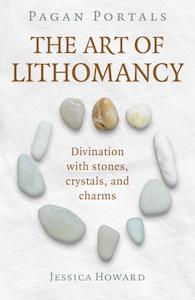
Pagan Portals – The Art of Lithomancy: Divination with Stones, Crystals, and Charms, by Jessica Howard
Moon Books, 9781789049145, 104 pages, May 2022

A few years back, I had my first lithomancy reading without even realizing it. I sat down with a  woman at a psychic fair reading small pebbles and stones, who then accurately shared insights about my past, present, and future. Even since then I’ve wanted to learn more about this art form, but there was scarce information I could find about it. Therefore, I was absolutely thrilled to discover Pagan Portals – The Art of Lithomancy: Divination with Stones, Crystals, and Charms by Jessica Howard, which has completely sparked my interest in developing my own lithomancy practice.

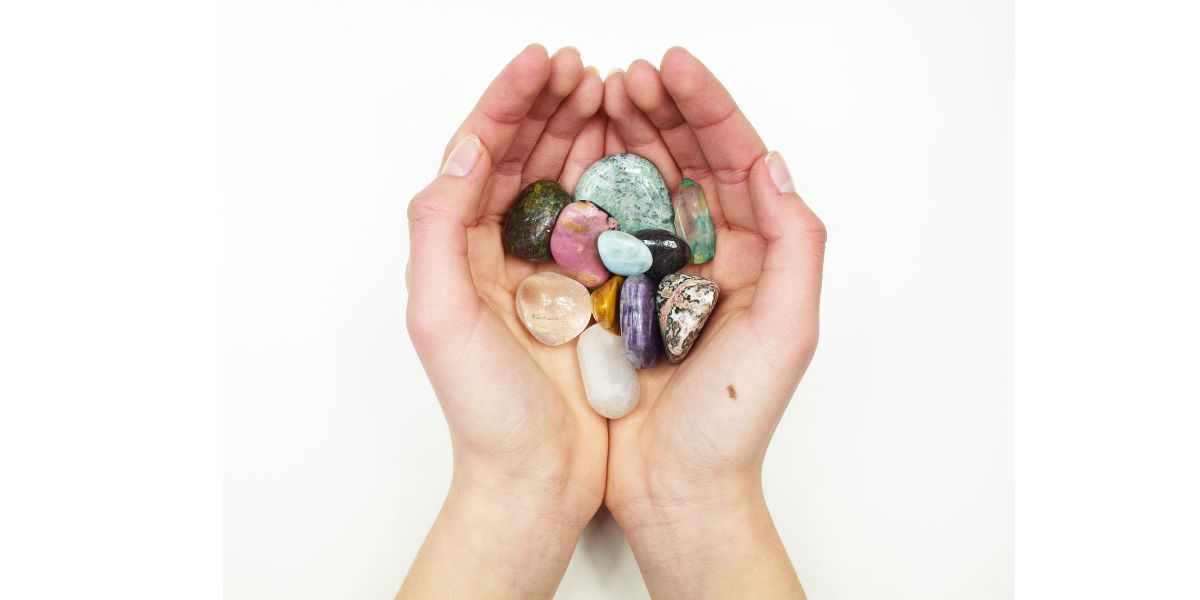
Howard is an eclectic witch, blending Water, Kitchen, Celtic, and Green Witchcraft into her practice, adding to the well-rounded approach to this topic. She explains to readers how lithomancy is the art of divination done by reading stones, crystals, charms, or even seashells. A caster, who is doing the divination, tosses the stones and then interprets the reading based on where everything falls, noticing patterns, geometric designs, and even the texture of the stones.

“So, what exactly can lithomancy tell us? Like many forms of divination, lithomancy can help us understand our past and our present. It can help us divine the future, uncover ancient knowledge and wisdom, connect with our higher selves, and unlock the secrets of our subconscious.”4

Step-by-step Howard lays out all the reader needs to know to begin their practice, prepare for a reading, and then perform the reading. There are so many little details she covers, such as how to choose your stones, followed by how to cleanse them and later ascribe meaning to each stone. I learned all about how the casting can be done with either a personal stone, imbued with your own energy, or simply by observing the stones that fall closest to the querent.

What I like about Howard’s approach is that she provides the foundation to begin a practice but emphasizes how individualized one’s lithomancy practice will be. She leaves a lot of room for the budding lithomancer to develop their own style, interpretations, and intuitive guidance along the way with just the right amount of support to make one feel confident this is a divination style they can learn to use successfully.

For instance, one of the lithomacy sets described is an “Astrological Correspondence Set” based on the planets. Howard goes through all the planets and provides readers with their keywords and meaning to help discern which stone might be best to use to represent them in a set. She also covers the additional stones included in this set, which are stones for place, love, luck, magic, life, and commitment. As an astrologer, I was fascinated by this set and felt it was one that could bridge my knowledge of astrology with lithomancy. Howard even describes how the diviner could divide the casting circle into houses for further insight – pure genius!

Another section that I found very insightful was the chapter about performing a reading. Howard covers how to cast the stones, the use of casting boundaries (or not, depending on the reading style), and reading with segments, where you divide your casting space into defined areas, such as months, seasons, or past-present-future for more insight. I loved being invited to think about all these little nuances and have options to explore as I develop my practice.

Most helpful to me as a beginner was all the information about interpreting one’s reading. Howard shares a bunch of things to take note of when determining the reading’s message, such as the distance between stones, where they fall in relation to the reader/personal stone, the meaning of various patterns and shapes (ie. square vs. circle vs. straight line), and the stone’s physical characteristics (if a jagged or smooth part of the stone is facing upward, if a pointy edge of the stone is facing a certain direction, etc). Her thoughtful details make the reader feel a lithomancy practice is quite accessible, and this section serves as a great reference when casting one’s stones for the first time.

One of the final chapters, which Howard claims she just had to include due to the good results she’s had with this type of reading, is called “The Chakra Stone Set for Healing”. Just how Howard greatly expanded my perception of what was possible with lithomacy in regard to astrology, she did once more in this section where she teaches how lithomacy can be used in combination with energy work as well. This stone set is really unique in that it has one stone for each chakra, plus one for each element, and a personal stone. She teaches how to read the stones to determine where one should direct their energy or where there is an energy blockage. The mixture of the chakras with the elements yields really interesting insights about how to realign or direct one’s energy, making this a reading that can be done daily for energy attunement.

Overall, Pagan Portals – The Art of Lithomancy is the perfect start to developing one’s own practice. Howard provides the foundation needed to get started while also empowering the reader to trust their intuition to discover for themselves the stone’s messages. After reading this book, I am feeling very inspired and eager to begin creating my own stone sets. There are so many neat directions this form of divination can take that regardless of your magical style you’re bound to find a way that lithomancy can be used to enhance your current practice.

Pagan Portals – The Temple Priestesses of Antiquity, by Lady Haight-Ashton

Pagan Portals – The Temple Priestesses of Antiquity, by Lady Haight-Ashton
Moon Books, 128 pages, 1803410280, August 2022

I think it’s very common for modern witches and priestesses to feel a connection to our predecessors, at least this is true for me. Reading about the lives of priestesses, oracles, and healers of the past builds a bridge between past and present, reminding me of the timelessness of the Goddess. Pagan Portals – The Temple Priestesses of Antiquity by Lady Haight-Aston was a very interesting read that took me through the cultures of priestess traditions dating back to 12,000 B.C.E. in Mesopotamia all the way to the present age.

“Whether Oracles, Seers, Psychics, and Sibyls, or Sacred Dancers and Healers, the ancient Temple Priestesses wove a narrative of both realism and mythology. They held court in every ancient civilization with their mysterious and mystical powers. These empowered women enthralled those who sought their advice while always serving the Goddess they revered.”1

Lady Haight-Aston’s resume is quite impressive. She is a Third Degree High Priestess of both Gardnerian and Cabot Hermetic Tradition, as well as High Priestess of Sacred Moon Coven and the Iseum of the Graceful Goddess. She is also a professional psychic, trance medium, Sacred Dancer, teacher, and tarot reader. In 2019, Lady Haight-Aston published Pagan Portals – The First Sisters: Lilith and Eve. The vastness of her knowledge of different traditions and forms of Goddess worship shine through every page of this book.

The most prominent priestess cultures covered in this book are those of ancient Egypt, Greece, and Rome, including Goddess cults of Isis and Hathor, the Oracle of Delphi, and the Vestal Virgins. But I was surprised to learn about other traditions that I had previously not heard of before, such as The Ank Priestesses of the Isle of Iona and the Cumaean Sibyl that presided over the Oracle of the Dead in Baia, Italy.

I will admit each section is short; this isn’t a full deep dive into any one priestess tradition, but rather a small sample of each one. But there is still plenty to learn from this book, and I found it valuable to read about all the different priestess cultures side by side. I noticed similarities and differences stand out more than when I study one priestess culture on its own. And as someone who has studied different priestess cultures previously, devouring any piece of literature I could get my hands on, Lady Haight-Aston still provided me with plenty of new revelations.

As she weaves her way through periods of the past, Lady Haight-Aston notes different speculations of academics and clearly informs readers where there is a lack of archeological evidence to make assured claims. But simultaneously, she adds her own perspective as an initiated priestess to share missing links of herstory. I deeply appreciated her point of view and am always glad for a feminist version of history, but for those who this might not be appealing, there is ample reference sources provided at the end of each chapter for readers to investigate themselves and draw their own conclusions.

I mean, if we’re being honest, priestess cultures have hardly been given the academic recognition they deserve, especially in comparison to the study of different priesthoods. To this day, putting together the pieces to better understand these cultures is still quite a challenge. As much as I value the efforts of historians and anthropologists, I feel there is value in having a modern-day Priestess share her thoughts on the significant findings too, providing an experiential interpretation of the artifacts and records.

One of my favorite chapters was “The Modern-Day Oracle Priestess” where Lady Haight-Ashton discussed prominent women that have helped to keep the Priestess tradition alive in recent times, such as Helena Petrovna Blavatsky and Sybil Leek. In this section, Lady Haight-Ashton also shares more about friends of hers that have created different communities. I was thrilled to learn about these, especially Woolston-Steene Theological Seminary (the only degree program in the United States for Wiccan ministry) and the Aquarian Tabernacle Church International.

All in all, Pagan Portals – Temple Priestesses of Antiquity was a fantastic read that expanded my knowledge of the influence Priestesses had on cultures of the past. Lady Haight-Aston’s personal path of Priestesshood helps to shine light on what the experience of these devout women of the past might have been within the context of their unique cultures. This book serves as a reminder of the spiritual and political influence women have had through time, and it inspires hope that the way of the Goddess will someday thrive again. For those interested in the pathway of the Priestess, Lady Haight-Aston provides many resources to explore as one finds their own path towards serving the Goddess in the modern world.

Pagan Portals – Aos Sidhe, Meeting the Irish Fairy Folk of Ireland, by Morgan Daimler

Pagan Portals – Aos Sidhe: Meeting the Irish Fairy Folk of Ireland, by Morgan Daimler
Moon Books, 9781789049374, 85 pages, August 2022

Journeys have not been easy to come by for me this summer. However, although the pandemic kept my physical travel plans on hold, I was able to journey to the Emerald Isle with Morgan Daimler to visit the land of the Fair Folk through the pages of Pagan Portals – Aos Sidhe: Meeting the Irish Fairy Folk of Ireland.

Ireland is one of my favorite places to visit but I do remember being warned not to disturb the places where the fair folk dwelled. I was surprised by this warning as we are living in the 21st century. Did people still believe in the fair folk? This book answered my question with a resounding “Yes!”

In the Author’s Note, Daimler indicates that she is “writing this book because of an aisling, a vision, I had and because I feel like this book is a necessary thing to help people sort out Irish folk belief from pop culture and fiction.”5

Aos Sidhe (pronounced Ace Shee) means “people of the fairy hills” or people of the Otherworld. According to Daimler, “They are the beings who interact with our world but exist in and come from a place that is foreign to our world, and that is the realm of the sidhe, beneath the earth, also called an Saol Eile, the Otherworld.”6 The English term for Aos Sidhe is fairy. 

Although short in length, the book is packed with various sources of information on what Morgan refers to throughout as the Good Folk or Fairy Folk which “do not exist within one cohesive grouping.”7

The book is divided into six chapters. Chapter One investigates just who the Aos Sidhe are by looking at folklore and myth. Chapter Two, “Across Belief”, provides sources of accounts with the Fairy Folk, including anecdotes of people who have had experiences with the Aos Sidhe over the last hundred years or so that they have chosen to share.

There are certain times and places, liminal points, where one could have a greater chance of encountering these beings or as Morgan writes “running afoul of the Fair Folk.”8 Samhain, the month of November, and Beltane are the strongest times. Various traditions grew around these times to appease or avoid bothering the Fairy Folk through offerings or ways to protect one’s self from the Fairy Folk. To make matters worse for us humans, the Fairy Folk cannot be seen except by choice, only manifesting in physical form if they so desire. 

Chapter Three focuses on Changelings, “a fairy surreptitiously put in the place of a human being.”9 Typically, those taken are infants, young children, newly married adults, and new mothers. They are taken to increase the number of the Fairy Folk, or for entertainment, or on a whim. She recounts four cases from 1826 – 1895 of people who were accused of being changelings and the treatments they suffered at the hands of friends and family, all of which ended in death. To aid in protecting against being taken, iron and Christian holy items were used, such as pinning a safety pin to a baby’s clothing or by the sacrament of Baptism. 

Descriptions of the types of Fair Folk are covered in Chapter 4. A few favorites stand out in this chapter for me. Having grown up watching the movie Darby O’Gill and the Little People. I was scared at a young age by the screams of the Bean Sidhe (banshee) in the movie.  This “woman of the fairy hills” is probably one of the best-known of the Fair Folk, as being one who predicts death. I was surprised to learn that there are Cat Sidhe and Dobharchu or water dogs. Other Fairy Folk include Maighdeana Mhara, or “sea maidens” or mermaids, Puce or goblins and sprites, and Ronata, seal folks who the Scottish refer to as Selkies.  The Ronata use seal skins to transform themselves. 

Of course, everyone has heard of Leprechauns whose name is thought to come from the Old Irish word, luchorpan which means a very small body10. According to Daimler, there remains debate as to whether Leprechauns are part of the ranking order of Aos Sidhe or are separate, distinct beings.

Chapter 5 is titled “Safe Dealings with the Fairy Folk or Good People” to ensure people responsibly interact with these folks. As Morgan warns:

“Throughout recorded accounts of the Aos Sidhe there have always been humans who have encountered or interacted with these beings, sometimes with good results and sometimes with bad results.”11

She cautions that there are rules to interacting with the Good People in order to promote safety but that there are “real risks of encountering or dealing with these beings.”12 The chapter covers etiquette, offerings, and protections that include things to carry on one’s person in those liminal times (such as salt or a red thread) or hanging an iron horseshoe above one’s door. 

Chapter 6 and the Conclusion deal with common misconceptions of the Good Folk. Morgan reminds us that “stories of these beings have been woven into Ireland’s very earth for well over a thousand years.”13 Daimler notes that the book is meant to be an introduction not a tome. 

Also included at the end of the book is a much-appreciated Terms and Pronunciation Guide. Though, I would have liked to see this at the beginning of the book, as I spent the entire book mispronouncing the Irish terms. 

I highly recommend this book by Daimler, an author with many books on subjects such as Fairies, Brigid, and Irish Paganism to her credit. I learned a lot in reading Pagan Portals – Aos Sidhe: Meeting the Irish Fairy Folk of Ireland, but I have to admit that it left me with an uneasy feeling. I do not want to cross these beings, or inadvertently encounter them. I avoid conjuring them up. I recently resisted the temptation of staring too long at a fairy garden because as Morgan reminds the reader,  the Aos Sidhe are “always leaving but never gone.”14

Pagan Portals – Sekhmet, by Olivia Church

Pagan Portals – Sekhmet: Lady of the Flame, Eye of RA, by Olivia Church
Moon Books, 978-1789047134, 120 pages, February 2022

“Sekhmet is a Goddess for today’s world.  She fiercely protects right order, returning balance to the world, and just as fiercely protects those who celebrate Her.  Her name means “Powerful Woman” and She symbolizes courage and strength as well as inspiration and comfort.”12

Pagan Portals – Sekhmet: Lady of the Flame, Eye of RA by Olivia Church is one of those titles that seems synchronistically to appear exactly when it is needed, much like the Goddess Sekhmet Herself.  And, I would even go so far as to say that in general, the rising interest in the ancient Egyptian deities aligns well with the societal need for a way of devotional that is powerful and terrifying all at once. Sekhmet, as Candace Kant so eloquently expresses in the quote above, is exactly that energy.

This book provides the reader with the tools of information and inspiration that allow for the cultivation of a connection to Sekhmet at multiple layers of experience. Much like the Goddess Sekhmet, the many paths that lead to Her wisdom hold multi-layers of meaning in and of themselves. And, as is the way with the Egyptian Deities–each has many epithets that only give the smallest hint of what lay hidden as you get to know them more deeply. To that end, Church has separated her book into seven chapters that take the reader from ancient knowledge of Sekhmet and the mythos surrounding her and concludes with a more modern approach of devotion and worship. 

Preceding the Introduction there a several pages containing abbreviations used throughout the book and a timeline of Ancient Egyptian history, as well as a geographical map of the more prominent Egyptian sites relevant to Sekhmet. The reader is given a very clear understanding of the the book’s intentions and what can be expected in delving into the Egyptian pantheon.

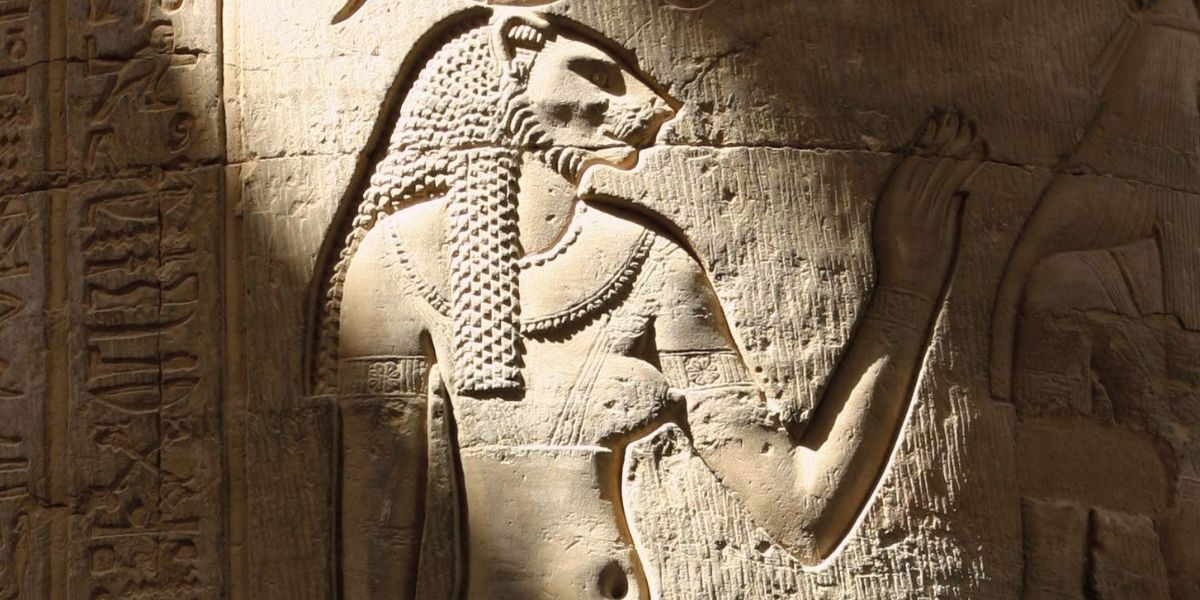
“Sekhmet is instantly recognizable today from her fierce appearance, bearing the proud head of a lioness, crowned by the sun disc and cobra, with the lower body of an Egyptian woman.  As with many Egyptian deities, Sekhmet is a complex character with a dramatic mythology and enduring influence, which continues to inspire people today…. Sekhmet is a challenging Goddess and this introductory volume will present her without airs and graces…. She is a Goddess of contradiction, sovereign over violence and sickness, as well as patron of healing and protection; she is truly the Mighty One.”13

These few sentences offered in the Introduction set the tone for what Church follows though in providing to the reader in the chapters to come. Each chapter offers the reader the ancient practices, as we know them, of devotion and interaction with Sekhmet and concludes with a section entitled “A Contemporary Pagan Perspective”. Within its writings are ways that the modern practitioner can meld together the inroads laid by the ancients and make them more relevant and accessible within a modern culture. 

As a fitting beginning of introduction to this Goddess, “Chapter 1: Mythology” tells of two myths that convey the origins of Sekhmet.  The subject of Sekhmet’s actual birth is one that exemplifies the mindset of the Ancient Egyptians and the adaptability of their Deities to evolve/spilt and become aspects of various states of being and temperaments rather than singular notions of anthropomorphic overlay.

She is one of several Egyptian Deities that have rather ambiguous beginnings, depending on who is telling the story and where the first stirrings of Sekhmet take place. In reading these myths, we see another layer typical to the Egyptian Deities, where one Deity morphs into another, not quite a hiving off into another half, but in keeping with the Ancient Egyptian psycho-spiritual perspectives, the second becomes an aspect of the first’s personality. This also speaks to the overlapping and true interconnectedness of the Egyptian Deities. 

The first myth presented is the Myth of the Eye of the Sun (The Wandering/Distant Goddess) and the second, which has come to be the more familiar regarding Sekhmet – The Book of the Heavenly Cow/The Destruction of Mankind. In the second myth, Hut-hor (Hathor) through her destructive actions against humanity at the request of RA, her father, Hathor sets out to wreak havoc on those who had turned away from the adoration of RA.  

“Send out your Eye that it may smite them for you, those who have conspired so wickedly. May it descend in the form of Hathor (B.H.C. 10-15; trans. Wente,2003) . . “I have overpowered mankind, and it was agreeable to my heart.” And so, Sekhmet came into being. (BHC.14015)”15

Hathor becomes Sekhmet as another form of being that is the perceived antithesis to the loving and regenerating nature of Hathor and drawing upon that rage and anger, Sekhmet, independent of Hathor comes into being.

“Egyptian mythology makes it clear that Sekhmet “came into being” when Hut-hor (Hathor) manifested true rage within herself.”16

As the reader progresses through Pagan Portals – Sekhmet, the chapters provide a very clear and concise image of the breadth of Sekhmet’s attributions and how important a Deity she was to the Ancient Egyptians. Chapters two to four speak to her designations as “The Devouring Flame” (chapter two), “The Great Healer” (chapter three) and as “The Eye(s) of RA” (chapter 4). And, chapters five to six provide the reader with the ways in which Sekhmet was revered in her “Temples & Cults” (chapter five), “Rituals and Festivals” (chapter six) and the “Magic and Prayers” (chapter seven) offered in adoration and supplication.  

The final chapter, “Worshiping Sekhmet Today”, speaks to some of the powers that were attributed to Sekhmet in ancient times and how these were directly affected by Egyptian culture, geographic location, and more. And, in recognition of those energies, Church encourages the reader to also see from an alternative perspective that worship is impacted by their own culture, geographic location, and worldview.

“I believe that Sekhmet’s ancient manifestations according to the Egyptian ancestors should be considered alongside the perspectives shared by their modern Egyptian descendants and contemporary Pagan experiences of her… As a contemporary polytheist I do not believe that deities remain static and frozen in their first appearances in human culture. I believe the Netjeru, like deities from other cultures, respond to their devotees and changing times…. that they travel with their devotees and are not limited to a single landscape, although they will always retain the memory and connection to their original land and culture.”17

“The Appendix: Key Egyptian Names and Words” is a welcome addition to the book and contains the Ancient Egyptian name/word and its Greek counterpart after assimilation into the Greek pantheon. The encouragement given by Church is for the reader to familiarize themselves with the original Egyptian name–a key factor in aligning with their energies. The Bibliography is a lovely blend of titles that are academic/historical in nature and those more recently written that give an expanded view of the gifts of Sekhmet and the Egyptian pantheon and cosmology in general. 

The test of a valuable title is one that can engage the reader and stimulate interest in the subject matter whether the individual has prior knowledge to build upon, is simply curious or just ordered the wrong book. Oh, and by the way about that last statement of a “wrong book” there are no coincidences! Pagan Portals – Sekhmet is definitely in the category of valuable and informative.

Regardless of what path or tradition you have your spiritual roots anchored within, it cannot be denied that most everything relates back to the Ancient civilizations. And, the Ancient Egyptian world view, their Gods and Goddesses hold a particularly vital place in that lineage. However it is that you come to this book there is a wealth of wisdom in the energies of Sekhmet. And, there is so much more to Her story than a single title could contain. Church has piqued the interest of her reader and what lay within the fires and ferocity of that interest could just be the Divine birthright that changes worlds for the better. 

Pantheon – The Norse, by Morgan Diamler

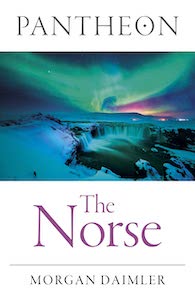
Pantheon – The Norse, by Morgan Daimler
Moon Books, 9781789041415, 152 pages, May 2022

Full disclosure: I am completely biased when it comes to Morgan Daimler. I adore her work and her no-nonsense approach to researching and writing, so much so that I end up adding her books to my already crowded bookshelves. Her latest offering, Pantheon – The Norse, is a welcome addition to my ever-expanding collection and is easily one of the best I’ve read on the subject.

Having already written two additional books in this series titled Pagan Portals – Odin and Pagan Portals -Thor, Daimler is well positioned to provide an introduction to the remainder in this latest offering, Pantheon – The Norse. The table of contents provides the reader with the information they need to determine where they will start in this book, as there is so much to choose from. Personally, I start with the Introduction.

The introduction sets the tone of the book, giving the reader the opportunity to familiarize themselves with the type of tone and language they are going to experience through Daimler’s writing. Straight forward, to the point, and without a lot of extraneous words, the introduction is the perfect set up for what the reader can expect from the rest of the book. For me, as well as many others, this is an opportunity to get a sense of who the writer is as a craftsman and what their style of writing is. 

Daimler separates the book into two parts, each part playing a role in presenting the information to the reader. She explains:

“In Part I we will be looking at the history, beliefs, and practices of Heathenry and in Part II we will explore who the Norse Gods are as well as related spirits that play an important role in the belief system. These parts are divided fairly equally in this book, as I feel that it is important to both have some basis in the beliefs as well as a solid source for information on the deities and spirits.”1

Additionally, Daimler is clear about what the book is not, and explains that her goal with the book is “not to create an in-depth, one stop resource for the subject but to offer readers a wide range of basic information to give a better understanding of the subject or help beginners seeking a starting place.”2

Being a solid source of information is something Daimler does best, as she clearly shares what she’s gleaned from her own substantial research. Honestly, reading her work is so refreshing as there is no guesswork or need to double check what she presents. While the book is a great entry into this world, it’s written in an elevated way to ensure that even the most learned person on the subject can come away with at least one golden nugget of information they didn’t have prior.

Daimler provides enough information to get you through the sections without causing too much overload. Her writing style is clear and loaded with clues that point to other paths within the topic being discussed; should you feel called to explore further there are useful endnotes included depending on how deep you want to go within the history and mythology. For many readers, the knowledge provided is enough to give the reader a sense of the overall system and while some might feel like exploring, there is no sense of pressure to do so.

The chapters are clearly laid out and sequenced nicely, with one topic naturally flowing in the next. Providing bite-sized chunks of data within the context of the overall idea of the chapter is something that not all writers are able to do with such ease. There is enough info provided to give the reader something to chew on before the next idea is presented. That is something that I look for in this type of book. Don’t just spoon feed me a few bits of trivia; make the subchapters relate back to the main idea of the chapter but also make sure they are entwined in some way. That’s storytelling within the parameters of imparting knowledge and Daimler is a master.

There are many similarities and parallels between this pantheon and others most readily seen in the section called “Celebrations and Prayers”. Many of the celebrations observed in the Norse pantheon are also part of other traditions, albeit under different names. The commonality inherent in these old “religions”, through the use of similar names, dates, and themes of the celebration, makes it easier to understand as a reader if a similar spiritual path is being followed.

I love this book for the simple reason that it has all the elements I look for when exploring different paths: beautifully presented research in bite-sized chunks that are easily understood, a robust resource section, and so much more. I didn’t even get into the sections on Gods and Goddesses, which is one of my favorite sections.

Pantheon – The Norse is perfect for those who are interested in a ground level introduction to the Norse pantheon without all the fluff. Yes, there is a lot of information to digest and sure, there might be some ideas or concepts that don’t quite make sense for a variety of reasons. That does not take away from the parts of the book that will resonate with those wanting a deeper understanding of this pantheon. As with most books in this vein, take what you like and leave the rest.

A Guide of Spirits, by Chris Allaun

A Guide of Spirits: A Psychopomp’s Manual For Transitioning The Dead To The Afterlife, by Chris Allaun
Moon Books, 9781789046601, 224 pages, October 2021

“Death is a final rite of passage of our physical life. As we know, death is not the end. There is a spiritual journey ahead for each person. Each of us must walk our own path of death and into the realm of the afterlife. Walking our spiritual path of death can be difficult and we may need the help of a guide. The psychopomp has the sacred duty of guiding the spirits of the dead back home to be with their beloved ancestors.”18 

It seemed fitting to begin this review of A Guide of Spirits: A Psychopomp’s Manual For Transitioning The Dead To The Afterlife by Chris Allaun with a quote from the first paragraph of the conclusion, as the quote beautifully states what appears to be an ending is actually a beginning in a new fashion and form. Allaun has done a marvelous job of honoring and explaining the role of those individuals who selflessly give of themselves to serve as guides for those transitioning beyond the veils of death: the psychopomp.

A Guide of Spirits is separated into nine chapters that provide the reader with an inside perspective of what being a psychopomp entails, the journeys of the spirits they guide, and practical recommendation for self-care and psychic defense. The bibliography is extensive in its diversity of source, ranging from Carl Jung to Bullfinch’s Mythology to Virgil and the work of occultist Israel Regardie to name just a few. These also included religious and spiritual texts such as The Tibetan Book of the Dead and Greek and Roman Necromancy, which are often referenced when speaking of cultural attitudes and customs regarding death. 

Allaun gives a beautiful introduction in chapter one, “The Psychopomp”, about what a psychopomp is and the service that one who takes up this calling provides:

“A psychopomp is a special type of healer. Not only do they escort the spirit of the dead to the realm of their ancestors, they also send the spirit healing energy to aid in letting go of earthly attachments that may keep them bound to the physical world. The word itself comes from the Greek language which roughly translates to “conductor” or “guide of the soul.”19

The reader is given the perspective of the psychopomp as a healer, not dissimilar to what the usual definitions of a healer may be, but in this case, one who assists the healing of release of corporeal existence so the real journey can begin.  We learn that the work of a psychopomp is not readily taken up because of its close association with death, something that many still fear. 

A Guide of Spirits is nicely balanced with theory, practical application, and exercises to develop both the reader’s psychic abilities and pathways towards communing with Spirits and the ancestors. I found these to be very useful in a variety of ways beyond whether one chooses to take up the work of becoming a psychopomp. There is a lot of general information that could serve to deepen the readers connection to their own ancestors and departed beloveds that would offer comfort and healing as death approaches or has occurred. 

Allaun provides the reader with many opportunities of encouragement in trusting and believing in the inherent skills he believes everyone possesses…

“As I said, I believe we all have the ability to see the spirits. Yes, some magical people are natural seers and do not have to try hard to see the spirits, while the rest of us have to practice daily in order to get just a little hint that the spirits are there. I want to make something very clear; just because it may be difficult for you to see spirits now, does not mean you will not grow into a powerful seer.”20

I truly found this running theme within the book to be truly empowering. Confidence builds as the reader moves through each of the chapters, practices the exercises, and deepens their awareness of perception “outside of the box”.

Chapter five, “Helping the Dying to Transition” takes the reader through the steps of death’s process and what may occur for both the individual preparing for transition and any who are assisting or witnessing that crossing. The importance of surrounding the individual with compassion and love is stressed throughout the book as a requisite for those acting as psychopomp. Through the tools of “Death Midwifery”, a term used to describe the work of the psychopomp, an energetic space of love is created for the dying to draw upon as manifest life recedes.

“The art of death midwifery is a profound and intuitive way of communing with the dying, of lending support and guidance to those making the greatest of transitions. Committing to deep spiritual work. The death midwife becomes a strong, clear conduit who directs the flow of divine love to the dying.”21

Overall, A Guide of Spirits provides a clear and thorough text of how we may become better supports for those who are in all stages of the process of death. Whether reading out of curiosity or for the purpose of serious consideration of how to assist those souls embarking on the next grand journey, the reader will come away from this reading with tools that may be applied to any spiritual pursuits. This title is rich with ritual, moments for reflection, exercises to strengthen greater self-awareness and much more. This is a book I am excited to continue working with and exploring the profound nature of death and those who support a loving transition. Perhaps it will provide you with a new perspective of death, as well.

Pagan Portals – Scrying, by Lucya Starza

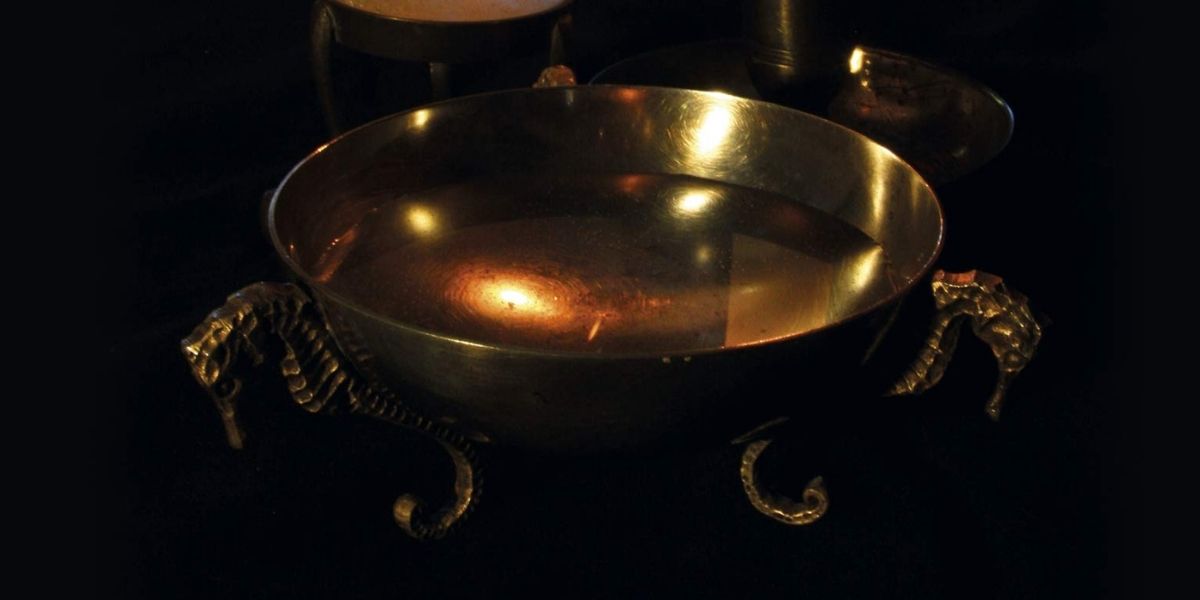
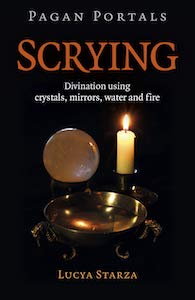
Pagan Portals – Scrying: Divination Using Crystals, Mirrors, Water and Fire, by Lucya Starza
Moon Books, 9781789047158, 104 pages, February 2022

Writing about subjective topics such as scrying is not an easy task. There needs to be an innate understanding of the topic as well as a personal link in order for the reader to feel connected to the author. Thankfully, Lucya Starza is no stranger to writing about things that are hard to pin down and define. As the author of quite a few books on such subjects as poppets, candle magic, and others, Starza is well positioned to offer her perspective on scrying in Pagan Portals – Scrying: Divination Using Crystals, Mirrors, Water and Fire.

Scrying has been difficult for me personally, as I just can’t seem to sit still long enough to allow images to form in the crystal ball, to visualize signs within flickering flames, or to see things come forth from the inner depths of a scrying mirror or pool of water. Picking up this book made me a bit nervous; I wondered how I would be able to use the content effectively. Starza says that’s completely normal, as “Scrying requires us to use our psychic senses and intuition to the full. But don’t worry if that seems a tough task, this book will teach you how to do that. It’s also okay to feel nervous at your first attempts.”22

Starza’s writing reminds you of a loving aunt who has tons of advice that actually is helpful. When scrying, she stresses the importance of not reacting immediately to whatever information is picked up and adds that there are things to do before you even think of starting to scry. Foundational advice is always welcome, and Starza offers a few pearls of wisdom in the context of scrying to help the reader understand that what they might see is completely subjective and open to interpretation. She says:

“Often what we see offers insights about ourselves that may help us with the problems we face or what is yet to come. Do not act hastily after scrying. Make notes and think about what you’ve experienced; let the meaning of any visions become clearer with time. But we’re getting ahead of ourselves; thinking about what to do after scrying. Before we even begin there’s some background to understand and preparations to do…”23

This is an important quote because not all books that discuss topics such as this actually delve into the beforehand preparations. They detail a number of pre-done how-to scenarios that aren’t based in the reality of how people might use the information being presented and wash their hands of it. This book does not do that: Starza goes out of her way to ensure that the reader is fully versed in the foundations of scrying before even getting into the art itself. There’s even a gentle suggestion of speaking with a counselor or GP prior to beginning any sort of magical work if there is a concern regarding mental health. Wonderful to read that, as some books don’t mention it at all, and I personally feel it’s vital to offer that caveat when offering esoteric information.

The introduction of the book is full of useful background information that delves into the history of scrying and where it was used. Starza gives full descriptions of various cultures using scrying for their purposes which not only builds credibility in the art but also gives an anchor in terms of who used it and why. Personally, I find that information valuable, and I love introductions, so this was a pleasure to read.

Starza writes with a practiced hand and her prose is easy to understand and approachable. For me, I would rather have a book written in a clear way without extraneous text getting in the way of the information. I have read books where I have felt that the author has fluffed up their sentences and paragraphs in an effort to pad their word count and I can say that I don’t see this here. Starza writes from the heart and it shows in the words chosen and the way the book is laid out.

My favorite chapter is the last one titled “Problem Solving and Frequently Asked Questions” because it clearly telegraphs that Starza knows her audience. She understands that not everything readers want to know will be in the book, (how could it all fit in this slim volume? Impossible.) so she cleverly has a section devoted to everything she couldn’t fit into the rest of the chapters. Brilliant.

The questions in this section include topics such as seeing scary images, how to scry for others, and what to do if you can’t scry no matter how hard you are trying. (I might have flipped to that last one first.) What I love about this chapter is that Starza repeatedly reinforces ethics, mental health, being gentle with yourself, and writing everything down to reflect back on.

These are also basic witchcraft principles that she has woven into this book, and, personally, I love seeing the overlap. Not all who scry identify as witches and not all witches scry, so seeing these cornerstones repeated throughout was refreshing. Starza’s answers to the FAQ’s are thorough and crafted to make the reader feel good about having the question to begin with, something I’ve not seen for some time in books such as these.

Scrying is difficult under the best circumstances, and if you don’t have the right mindset or the right information you can end up being very confused and feeling like you’ve failed. If you are interested at all in scrying or tea leaf readings or any other type of interpretive art this book would be an asset. Not only is it full of useful information on the actual types of readings themselves, there’s also an extensive listing of symbols and colors that relate not only to scrying but also to Tarot and other divination types. I found myself jotting down notes in my personal book on various symbols as Starza’s interpretations seemed more fulsome than some other resource material I have. 

Pick up Pagan Portals – Scrying if you are even remotely interested in scrying. Even if you never see anything in whatever medium you choose to explore in your scrying, you will have a remarkable resource book that can be used across a variety of disciplines.

Pagan Portals – Baba Yaga, by Natalia Clarke

Pagan Portals – Baba Yaga, Slavic Earth Goddess, by Natalia Clarke
Moon Books, 1789048788, 104 pages, January 2022

I recently finished season two of the Witcher, which had a prominent focus on the Deathless Mother. The chant to call her goes, “Behold the mother of forests, the Deathless Mother, nesting in dreams. Turn your back to the forest, hut, hut. Turn your front to me, hut, hut.” As I watched, the Deathless Mother started to remind me of Baba Yaga.

I had first encountered (figuratively) at Philadelphia’s der Geischderschtrutz (Parade of Spirits) annually held in dark days of winter. The purpose of the Parade of Spirits is “observance of the shadow side of the self, of the murky times in shortest days of the year, and of shady entities and liminal deities.’23 My first year there, I was challenged to enter the hut of Baba Yaga, but unsure of whether she’d want to eat me alive or provide timeless wisdom, I kept my distance. Even if it was just a custom, the energy was potent and I felt a shiver of fear every time I looked in that direction.

It’s been years since that experience, and though I continued to respect Baba Yaga (my coven’s primary focus is the Sacred Hag, of which one might say Baba Yaga is a archetypal representation of), I had yet to muster the courage to embrace Her in personal life or magical practice. But Pagan Portals – Baba Yaga, Slavic Earth Goddess by Natalia Clarke has changed my perception a bit, and I feel like I now view Baba Yaga with a new lens.

Clarke invites the reader to get to know Baba Yaga that goes beyond folklore knowledge. The book is filled with Clarke’s journal entries through the years as she established a connection with Baba Yaga and incorporated this relationship into her own spiritual practice. This presentation style of wisdom is less of a “how-to”, though some suggestions are provided for working with Baba Yaga, and more of a journey into possibility filled with rich, descriptive writing that sets the scene for the magic of this book to unfold.

I appreciated how the book integrated Clarke’s revelations and creative writing with information about Baba Yaga, as it provided a bridge towards Baba Yaga, who otherwise can feel very intimidating to connect with. I am a big fan of Clarke’s intuitive approach to spirituality as described in her book Pagan Portals – Intuitive Magic Practice. In this book, it’s as though she translates her natural intuitions about Baba Yaga into a reference for those wishing to walk Her path.

One of the most unique features of Clarke’s approach to Baba Yaga is her intention to explore Baba Yaga in the context of Earth-based spirituality, rather than fitting Her into “literary, cultural, or societal concepts and beliefs.”24 I find this approach extremely valuable, as my spiritual practice is deeply connected to nature.

In this passage, Clarke illuminates how Baba Yaga feels to her:

“She doesn’t feel like a grandmother or an old Crone with terrifying features. She’s a master shapeshifter, and her essence is that of nature itself. She’s the changing seasons, the leaves in the forest in the autumn and a smell of the coming snow storm. She’s footsteps on the ice and a cold mountain brook. She is like the wind as she flies and in the whooshing sound of a breeze she’s gone. She’s the smoke in the dark and she can be found in animal bones. She is in the smallest insect and the highest tree, the snake hiding in the undergrowth. Illusive, unobtrusive, hardly ever visible and fiercely private. Her dwelling is her own and, on her terms, where everything is just so. It is for no else to make sense of.”25

These words make me feel a spiritually tangible and embodied connection to Baba Yaga, as my senses are opened through envisioning these words. Clarke is able to convey Her essence in this book, which is no easy feat considering Baba Yaga is a deity that prefers to not bother with human affairs, preferring solitude over interruption. I think this is one of the things that in the end draws me towards Baba Yaga, based on Clarke’s experience and description of Her though.

I like that Baba Yaga isn’t for everyone, doesn’t directly answer one’s pleas for answers, and can’t be summoned on-demand. Working with Baba Yaga seems to take determination, self-awareness, and a bit of grit. There’s a chapter called “Bones, Skulls, and Skin Magic” about how incorporating Animal Magic, using bones, skulls, and skins of animals, can strengthen one’s relationship with Baba Yaga. These items aren’t just your typical herbs or crystals, and I think it speaks to the nature of Baba Yaga as a deity.

My favorite chapter in the Book was “Baba Yaga’s Apprenticeship” where Clarke prompts the reader with the question: “How well do you know nature and how you relate to it from within?”26 I thought this was a profound question, and Clarke encourages taking one’s time to find the answer. Meanwhile, to connect with Baba Yaga, Clarke details the necessity of awareness of the elements, seasons, one’s psychology, and one’s spiritual self. Clarke provides prompts on how to work within these areas to become an apprentice of Baba Yaga, leaving the reader with hope that they too can eventually be initiated into Her wisdom.

Another really interesting chapter was “Baba Yaga and Motherhood” where Clarke suggests working with Baba Yaga for “integrating your birth mother or your own inner mother when birthing and mothering you own children.”27 Baba Yaga is not a deity I would have ever considered working with for this purpose, but Clarke’s reasoning that it’s important to accept both the good and bad aspects of ourselves as mother and our own mothers was interesting. For this particular reason, I am feeling more drawn to working with Baba Yaga.

And the last thing I’ll say is that I really think The Witcher is drawing from Baba Yaga’s folklore, and especially even more so after reading the chapter “The Three Horsemen and the Masculine”. In this chapter, Clarke describes how Baba Yaga has three horsemen (red, white, and black) that “represent an archetype of the sacred masculine , in service to the sacred feminine/the Earth.”28 She then describes how the color of The Three Horsemen correspond to different stages of the alchemical process and how working with the cyclical nature of their energy can help to strength one’s bond with Baba Yaga. But red, white, and black as the colors of them? For anyone who’s watched The Witcher Season 2, this is very significant and something I thought was totally cool.

While initiating a relationship with Baba Yaga requires patience and willingness to accept hard truths, Clarke showcases the value of working with Her over time. Pagan Portals – Baba Yaga, Slavic Earth Goddess is a wonderful book to learn more about Baba Yaga for anyone considering deity work with Her. And even if Baba Yaga doesn’t seem aligned for a personal deity relationship, there’s still a lot of value in learning more about Her in general, especially if one is interested in nature-based spirituality.

Practically Pagan – An Alternative Guide to Gardening, by Elen Sentier

Practically Pagan: An Alternative Guide to Gardening, by Elen Sentier
Moon Books, 9781789043730, 143 pages, 2021

The introduction alone is worth picking up this book. Even if you don’t get past the first ten pages, the front section of Practically Pagan – An Alternative Guide to Gardening by Elen Sentier is a robust read packed with useful information. Elen Sentier is a magical woman, born of magical people, and her writing is imbued with the cunning craft of her lineage. Passing on her knowledge through writing books on British native shamanism and in magic/mystery/romance novels, Sentier also offers training in the old British ways. This book captures her experiences working with the land and is an absolute pleasure to read.

Straight out of the gate, this book is a metaphor. Does it include gardening tips? Sure, but it’s really about reconnecting with nature using the various growth, death, and rebirth cycles of the year. Sentier says this book “leads you through the eight seasons of the Celtic pagan year and gives you guidance on how to work with each season.”1 

With the number of books already on the market about this very topic, it might seem futile to add to that pile. I respectfully suggest taking those other books and throwing them in the donation bin and keeping this one on the shelf to hand down to those who come after. Being able to tie seasons and moon phases with planting and harvesting is precisely the kind of magic that resonates with me personally, and I can tell you this book is never leaving my collection.

Working with the cyclical rotations of nature is great, but what about actual plants? While it’s tempting to just go all in about the metaphoric essence of this book, I am happy to tell you that there is indeed actual information about actual plants and a very interesting bit about hedges. Completely random, I know but hear me out. Those of us who are fortunate enough to have hedges might not really understand the boon they have been given, especially if said hedges surround a garden.

Sentier explains, “Hedges work because they don’t ‘stop’ the wind but ‘filter’ it. Moving air does get through but because it’s had to fight its way through a tangle of branches and leaves it’s lost 80 or even 90 percent of its energy. So, what was an 40mph wind on one side of the hedge is barely a 5 or 10mph by the time it gets through…and has also lost its wind-chill factor.”

Not only is that practical advice, it also metaphorically dials into the fact that surrounding yourself with people who love and support you will also filter out the rest of society in a way that leaves you feeling protected, supported, and able to flourish. We all need some hedges in our spiritual lives to filter out the intensity of things going on around us. Not to block it out completely, more like a provision of space to catch our breath before moving forward. 

These are the type of books that I love discovering, when the writer seems to be leading you down one path but upon reading and absorbing the book you realize it’s about so much more. 

Sentier’s writing is comfortable, like she knows what she knows and she’s eager to pass it on to whomever is willing to listen. It also feels familiar, like a long-lost cousin that you find yourself in conversation with during a family reunion. Clear language adds to the accessibility of this book: even if the reader doesn’t identify as pagan, there is more than enough actual gardening tips included to make reading the book a pleasure. Great ideas for planting, too!

The book is laid out according to season (Midwinter Solstice, Imbolc, etc), and provides an overview of that season plus various correspondences that have been historically associated with that season. Keeping in mind that geography will dictate what can and cannot be planted, Sentier does an excellent job of using broad strokes when discussing various plants used for each season. 

She is very quick to point out that choosing what to plant very personal and that plants change just as people do: “I’m not quite the same Elen I was a moment ago, nor yesterday, nor last year, so the mental and emotional clothes I wear won’t fit now, won’t be suitable for me as I am now. And neither will the plants in my garden, nor the garden herself, be the same from one day to the next. So, there’s never any right or wrong, only what’s appropriate for Now.”24

Sentier lists a variety of herbs and their uses in their respective sections. She also continually stresses the importance of listening to the land to see what it wants. She explains, “The garden…told me in the first month after we moved in that it wanted to be a garden of the wheel of the seasons. I explored this on squared paper and offered up ideas to the garden spirit but she firmly put me in my place by telling me to go get my compass and find out where the directions are in relation to the house.”28

She sorted out where the gardens would go and what would be in them by listening to what the land had to tell her. Most of us lead such busy lives, we don’t really make the time to listen to the earth as we pull weeds or choose vegetables to put on the table. This book showed me that although I don’t have a garden physically, I could look at myself as a garden and apply the same principles. Mind-blowing.

Whether you actively garden or simply daydream about it, Practically Pagan – Alternative Guide to Gardening will not disappoint you. Being able to tie everyday actions to an overarching goal of being better people and doing better for the environment is one of the key messages I personally took away from reading this book. The magical knowledge being passed down in this book is worth picking it up, and if there is an interest in gardening, so much the better.