✨ A Gathering Place for Magical Readers and Writers ✨

Tag Archives: weiser books

Making Tarot Magic, by Briana Saussy

Making Tarot Magic: Rituals and Remedies to Transform Readings into Action, by Briana Saussy
Weiser Books, 1578638763, 248 pages, December 2025

Have you ever done a tarot reading and found yourself wondering how to actually act on the messages the cards revealed? Maybe you journal or meditate afterward, yet the practical steps still seem to allude you. Perhaps your readings have begun to feel a bit passive, keeping you circling in the “what ifs” or lost in contemplation. Enter Making Tarot Magic by Briana Saussy, a guide that reminds us tarot isn’t just a tool for insight, but a catalyst for real transformation.

Where before there was only fate, after a good reading there should be freedom.”1

Weaving together the arts of divination and magic, Saussy reframes tarot reading as an opportunity for ritual and intention work. Readers learn how to use each tarot cards’ energy for real life healing, love, protection, abundance, and more. While many tarot books teach how to read the cards, Saussy’s focuses on what readers can do with that information to practically apply it in the world, reminding readers they can make moves to either lean into or shift the story of the cards, and use magic to do it.

“A tarot reading told you a story…and told you what you needed to do to change the story, to give it a better ending, to create more spice, adventure, and depth.”2

As an experienced diviner, Saussy has organized the book into chapters based on top topics people most seek advice about: love (marriage, romance), prosperity and abundance (personal wealth), career and business success, healing, court cases and legal issues, fertility/pregnancy and manifestation, baneful work, and protection and divine blessings.

For each intention, she provides an introductory overview, special considerations to note in regard to the Major Arcana and suits, descriptive meaning for all Major Arcana and Court Cards plus corresponding magical techniques and intentions, short meaning of the Pip cards (Ace-Ten), and then tasks for further development and relevant spells.

I absolutely LOVE how Saussy goes through each chapter and provides a different interpretation of the cards based on the specific intention of the chapter. Too many tarot books give only one general interpretation for each card, leaving it up to readers to apply the energy of the card to the specific focus of either the reading in general or the card’s placement in a spread. The way Saussy goes above and beyond interpreting each card through a different lens is both an enlightening way for readers to see the mutli-faceted nature of the cards as well as a quicker way to find a more specific answer to your question by focusing specifically on the relevant interpretation.

And on top of this there’s a magical component too, of course, which opens a whole other doorway to interacting with one’s reading too. For those new to either tarot or magic, Saussy provides a great foundation in “Chapter One: Tarot and Magic Basics”. Topics covered in this chapter include how to work with tarot cards, specifically focusing in on how they relate to magic, reviewing magical intentions, exploring different magical techniques (candles, incense, spirit work, lodestones), magical timing, color magic, how to deploy and dispose of magic, and personal concerns (things that carry the DNA of a person).

One thing I will note though is that Saussy doesn’t go too much into how to do all the different magical techniques. While she lists them in chapter one, there’s not much guidance on how to actually do textile magic; the information given more describes how it involves working with knots or fabric. For those who have no idea how to work that type of magic, me for instance in regard to textile magic and sacred vessels (witch bottles, mojo bags), I would need more specific spells with exact ingredients and instructions. So while Saussy can point readers in the right magical direction, there’s definitely going to be a bit more work to do for follow up.

This might just be because I read the books back to back, but I think Tarot Spreads by Meg Jones Wall would be a great compliment to Making Tarot Magic because it teaches readers how to intentionally structure their readings to get to the heart of their question. While I absolutely love all the different interpretations of the tarot based on the overall topic that Saussy provides, I initially felt like I could only one-card pulls that corresponded with my intention to then draw on the magical insight Saussy provides for the card in the relevant chapter.

It wasn’t until I thought to put to use what I’d learned in Tarot Spreads about creating spreads that I started to see how I could layer different topics from Making Tarot Magic (ex. Healing, romance, and divine messages) into one reading. And once I started doing this, I became enthralled with mixing together the different messages from Saussy’s perspective in this book.

Here’s an example of one of my readings I did to find a way to feel unstuck. I had been creatively blocked and worrying about money. I wasn’t in a state of flow. I crafted my own spread with the intention of reading each card from the corresponding chapter in Making Tarot Magic:

Card 1 – How am I holding back my own abundance?
Four of Coins from “Chapter Three: Money, Honey! Part One: Personal Prosperity, Wealth, and Abundance”.

“The querent refuses to give up the best part of themselves and so does not have as much security or abundance as they otherwise might.”3

Card 2 – What messages are there from the divine that can help me overcome this?
King of Pentacles from “Chapter Nine: Full of Ourselves: Safeguarding Vital Energy and Opening to Divine Empowerment and Blessings”.

“There is a need to connect to family members, ancestors, and history. Personal history, world history, history of place–any or all of these are relevant now.”4

Card 3 – How can I apply my creativity to create a new path?
Three of Cups from “What Are You Expecting? Fertility, Pregnancy, and the Work of Manifesting”.

“Female friends will come around to support and bless someone so that they may go forth and be fertile.”5

Overall interpretation: I’ve been spending too much time on my own, in my head, declining social invitations, and being a bit of a grump, which is to say I haven’t been sharing myself with others much. This reading reminded me that I light up when I am around people I love, especially my good friends who have been there through thick and thin throughout the years.

Wouldn’t you know the next day one of my good friends invited me over and I gave into a day of pure relaxation. I didn’t think about work, food prepping, or the upcoming holidays. We watched Wicked, sang and danced to Taylor Swift’s new album, and got caught up on life with each other. And I was absolutely rejuvenated! It felt like a clean slate. My reading ended up being spot-on in what I needed, and I’m glad it gave me the awareness I needed to accept my friend’s invitation instead of pushing it off for the sake of productivity.

Overall, I’ve very much enjoyed Making Tarot Magic for the variety of card interpretations. For those with a magical background, there’s a lot of room to apply your craft in regard to tarot readings. Saussy provides not just tarot insights, but a magical roadmap for creating meaningful change, gifting readings the opportunity to transform their reading into practical real-life action.

Whether readers are seeking to work magic related to their relationships, healing, manifestation, money, career, legal matters, or protection,this book gives you the tools to discern the messages of your readings more clearly and then utilize magic to pave the way forward. Saussy’s guidance helps readers move from “what the cards say” to “how I can act with the cards’ energy?”. This is truly a gift of freedom, as readers ultimately hold the cards and have the ability to do what they will with the information presented. Saussy’s lists of magical ways to work with each cards’ energy is a truly a useful addition to any magician’s book collection.

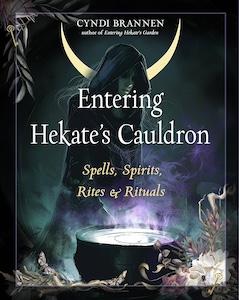
Entering Hekate’s Cauldron, by Cyndi Brannen

Entering Hekate’s Cauldron: Spells, Spirits, Rites & Rituals, by Cyndi Brannen, PhD
Weiser Books, 157863881X, 256 pages, July 2025 

Entering Hekate’s Cauldron by Cyndi Brannen, PhD, is a thorough, evocative exploration of Hekatean witchcraft that stands apart from most contemporary works on the goddess. Brannen, already well known for her contributions to modern Hekatean practice, brings an  academic precision and a deep personal devotion that gives this book both authority and soul. This beautifully structured volume blends scholarship, spirituality, and ritual praxis into a guide that is both accessible to newcomers and profoundly enriching for seasoned practitioners. 

What immediately drew me into this book was its depth. Brannen approaches Hekate not  simply as an archetype or historical figure but as a living, multidimensional goddess whose presence is felt in the liminal spaces of nature, psyche, and spirit. Her writing is grounded  in research—mythological, historical, and ritual—but also shaped by decades of personal devotional practice. This combination gives the book a tone that is both reverent and confident, offering readers a clear and coherent path into relationship with Hekate without sensationalism or oversimplification. 

One of the best aspects of Entering Hekate’s Cauldron is its organization. Brannen builds the reader’s understanding gradually, beginning with foundational mythos and historical context before moving into ritual structure, devotional work, and spellcraft. The sections exploring Hekate’s epithets are especially compelling. Brannen treats these titles not merely as poetic descriptors but as gateways into the goddess’s distinct powers and personalities. Her method of using the epithets for divination and for discerning which  aspect of Hekate is present is refreshing, innovative, and deeply rooted in traditional magical sensibilities. For practitioners seeking a nuanced relationship with the goddess, this section alone is invaluable. 

The practical material is another highlight. Brannen includes recipes, ritual components, correspondences, and offerings, each framed within a culturally respectful and historically informed understanding of Hekate’s cult. Her instructions for crafting sacred  items, preparing devotional foods, and working within the cauldron as a metaphysical space are presented with clarity and care. These recipes and rites feel both approachable and potent, offering readers tangible ways to bring Hekate into their daily or monthly spiritual rhythms.

Perhaps what resonated with me most was the way the book illuminated Hekate’s  presence not only in ancient myth and ritual but also in modern life. Brannen’s discussions  of symbolism (the crossroads, torches, keys, dogs, serpents, herbs, and moon) encouraged me to reflect on how these signs have appeared throughout my own  experiences. The book sparked a sense of synchronicity, revealing connections I had not  previously recognized. In many ways, reading this book felt like being led step by step  toward an encounter I had long sensed but never fully understood. 

Brannen writes with the voice of someone who has walked this path sincerely and  extensively. Her explanations of liminality, shadow work, and spiritual sovereignty are  clear, articulate, and grounded in both academia and lived devotion. The tone is warm yet authoritative, offering guidance without prescriptive rigidity. She emphasizes personal discernment and encourages practitioners to build a relationship with Hekate that is ethical, reciprocal, and authentic. 

The book is also visually and structurally well-designed, with thoughtful interior formatting  and an intuitive chapter progression. It is evident that great care went into arranging the  material so that readers can deepen their understanding progressively as they work  through the text. Whether used as a study manual, a ritual guide, or a devotional  companion, it adapts beautifully to the practitioner’s needs. 

Overall, Entering Hekate’s Cauldron is one of the most comprehensive and meaningful  works on Hekate currently available. It bridges scholarship and witchcraft seamlessly,  honoring both the historical tradition and the living, evolving nature of modern Hekatean  practice. Brannen’s approach is mature, thoughtful, and rooted in genuine reverence,  making it an invaluable resource for anyone wishing to cultivate a deeper relationship with  the goddess

For me personally, this book opened the door to a new level of connection with Hekate. It clarified aspects of her mythology that I had only glimpsed, illuminated her symbolism in  ways that felt personally relevant, and provided a framework for approaching her with  respect and understanding. By the time I finished the last page, I knew that Hekate would  become part of my own spiritual practice moving forward. 

I highly recommend Entering Hekate’s Cauldron to witches, spirit workers, scholars of  ancient religion, and anyone seeking to explore the mysteries of a complex and powerful  goddess. Brannen offers a guide that is both academically rigorous and spiritually  transformative—a rare combination, and one that makes this book truly exceptional.

Tarot Spreads, by Meg Jones Wall

Tarot Spreads: How to Read Them, Create Them, and Revise Them, by Meg Jones Wall
Weiser Books, 1578638550, 240 pages, July 2025

What’s your reading style? Are you a spread person or more of an unstructured reader, asking questions and pulling cards as you go along? I’m definitely more of the second type, as the typical past-present-future spread has always felt too vague and the Celtic Cross feels like too much to do for most readings, unless I’m really digging into something. If I do use a spread, it’s most likely one I’ve found online, usually for a specific zodiac season or related to the Wheel of the Year.

To be honest? I hadn’t really considered the spread as a vital part of a reading, focusing on the cards themselves, until reading Tarot Spreads: How to Read Them, Create Them, and Revise Them by Meg Jones Wall, which has given me so much more agency and empowerment in structuring my layouts and reignited my excitement for tarot readings! Within this book, Jones Walls does a deep-dive into an often under-appreciated aspect of tarot reading: the spread. From discussing the way spreads work to how to read them effectively, readers get the opportunity to learn how to read them effectively, create their own, or adapt/revise spreads to best get at the heart of the question at hand.

Jones Wall frames the spread as something that can be a personalized structure, capable of being customized and amended, rather than a rigid formula. With Jones Wall’s advice, readers can move beyond copying other people’s layouts and begin designing spreads that truly serve their unique questions and reading needs.

“What I’m saying is that a well-crafted tarot spread, regardless of its length of specificity, can deliver a very accurate, powerful, and useful reading, no matter the complexity of the situation or question. It’s all about learning how to work with the structure that the spread provides, and understanding the relationship between the cards, the positions, and the overall flow of the reading.”2

Divided into five parts, Jones Wall chronologically leads through the book, beginning with a heartfelt introduction in which she shares her journey to creating custom tarot spreads. Her empathy for others and insight to some of the struggles readers face at times is evident, making her a compassionate guide on this reading journey. Throughout the book, Jones Wall does a wonderful job of assuaging concerns, acknowledging the potential for disappointment readers face, and boosting the confidence of the reader by letting them know it’s okay to experiment, make mistakes, and do what feels right, regardless of what this book or any other has to say.

Plus, much of the content is written in an answer and response style, which adds to the feeling of being in dialogue with Jones Wall. I really like her style, as it makes for an engaging read. She has an uncanny knack for knowing just what the reader might ask next, keeping the flow of the book moving swiftly and intuitively. Truly, any question that popped in my head while reading was immediately answered within a few pages!

“Part One: Before We Begin” is an overview of tarot, which answers questions like what tarot is and how it works, along with providing a short description of the Major Arcana, numerology of the tarot, suits, and more. “Part Two: Reading Spreads” covers tips for reading cards, such as what to do if you don’t understand your reading and how to read reversals. While much of these two parts is tarot basics, I still appreciated Jones Wall’s unique perspective on the topic; every reader has their own little nuggets of wisdom, and I always enjoy hearing what insights they’ve picked up through their tarot journey.

In “Part Three: Writing Spreads”, Jones Wall teaches the art of creating your own spreads. She covers topics like why and when we might choose to create a spread ourselves, what to include in a well-written spread, and provides three different methods for crafting spreads, aptly named The Way of the Magician, The Way of the Hierophant, and The Way of the Priestess. She even offers advice for writing spreads in collaboration with others.

As much as I enjoy writing, the editor in me was thrilled to see a whole next dedicated to editing your spread. In “Part Four: Revising Spreads” Jones Wall offers insight on when to revise and when not to revise, as well as sharing where editing might be needed: adding a position, removing a position, switching the wording of a position for more clarity, etc. Along the way, in both “Part Three” and “Part Four”, Jones Wall includes examples and exercises for readers to see what she’s talking about in action as well as practice it for themselves.

Finally, “Part Five: Spreads for Every Occasion” provides tons of spread ideas that readers can use for inspiration to edit, tweak, or revise on their own. Jones Wall includes one-card spreads, three-card spreads, Celtic cross, zodiac spreads, Wheel of the Year spreads, and a bunch for different themes (love, creativity, self-reflection). For those who are a bit nervous about starting from scratch in creating a spread, the spreads in chapter are perfect as a starting point!

Tarot Spreads has really gotten me back into my tarot practice, which was feeling a bit stale; the content was exactly what I needed to feel confident in my connection with the cards again. The idea of a spread as a static, unchanging, and something that must be followed precisely for the “right results” is something I never questioned before, assuming that I couldn’t deviate from the layout formation of the cards. Yet Jones Wall made me see that making your own spreads is an opportunity to use my creativity, hone my intentions for the reading, and commune with the cards more fluently. And this has me excited about tarot again after a year-long hiatus!

It might sound silly, but I honestly needed to hear that you don’t have to use the spreads “as is”. And I like that Jones Walls teaches too how to tweak layouts, adjust prompts, and make spreads your own while also emphasizing that it doesn’t need to be overly complex. It’s okay to create a layout you enjoy and then shift it as-needed depending on the circumstances. The whole process of creatively engaging with the spread through creating, revision, and focusing on what’s most important to know for the reading helps me slow down and be more intentional in my readings. This process of making the spread myself seems to have boosted my intuitive development as well as my overall reading skills.

Overall, if your tarot work has felt stuck in limited popular spreads often promoted in guidebooks or you’re tired of screenshotting card layouts content creators are putting up, Tarot Spreads offers a fresh and much-needed pivot. Jones Wall provides readers with the language, structure, and confidence to ask: “What does this reading need right now?” and “What layout will serve that question best?” For those seeking to move beyond standard spreads, stepping into more creative and personal layout designs to deepen the link between intention and card placement, this book is a must-read.

While it’s absolutely suited for beginners, even intermediate or expert readers would gain something from this book because it’s a topic that most tarot books don’t spend much time delving into. The use (or not) of a spread is something readers don’t often consciously focus on, opting for their usual spread of choice or a premade one for reference. Tarot Spreads is a gateway to discovering how to make your readings more personalized, clarifying the intentions and focus for the reading, and speaking with the cards in a way that feels resonant. There’s so much possibility that’s unleashed when you embrace creative control of the spread!

The Witching Stones, by Nicholas Pearson

The Witching Stones: The Lore and Craft of the Essential Crystals, Gemstones, and Minerals to Empower Your Magic, by Nicholas Pearson
Weiser Books, 157863833X, 288 pages, October 2025

The Witching Stones by Nicholas Pearson is a captivating journey into the world of folklore, magic, and the sacred significance of stones. Known for his expertise in the field of crystals and their metaphysical properties, Pearson takes the reader into the historical, cultural, and spiritual roles that stones have played in the traditions of witchcraft and magic. Pearson offers readers a comprehensive blend of knowledge and practical guidance, making it an essential addition for those intrigued by both the mystical and the historical aspects of stone lore.

Nicholas Pearson has studied and worked with minerals and crystals for almost thirty years. His relationship with gems and crystals began when he was a small child. Pearson is an author, teacher, Reiki master and energy healer, who uses magic and flower essences in his practice.  He loves to show how crystals can change lives and believes he serves as a bridge between science and spirituality. Pearson appears on numerous podcasts and workshops around the country, including a tarot and divination workshop in Dallas which I attended a few years ago. Learn more about Nicholas Pearson on his website.

In this extensive work on witching stones, Nicholas Pierson has put together a guide to the 14 stones which he attests are integral to witchcraft. What follows are thirteen chapters, each one devoted to one magical stone, with the exception of amber and jet, which he combines into one chapter. He explains this pairing:

“Two particular stones that were prized by magicians and priests of prehistory, amber and jet are both organic gems of fossil origin. Because of their similar luster, comparable weight, and being found in the same kinds of environments they have developed parallel imagery as complementary stones. At several points in history, they were regarded as the same or remarkably similar substances.Today these stones have come to be known as the gemstones of the high priestess, priest, or priestess.”6

Pearson structures The Witching Stones in a way that is both accessible to newcomers and enriching for seasoned practitioners. The book begins with an exploration of the mythology and history surrounding stones, tracing their importance from ancient times through modern practices. Pearson weaves together stories from various cultures, showcasing the universal reverence for stones as sources of power, wisdom, and protection.

Next, Pearson provides detailed descriptions of individual stones, their mythology, their properties, and their traditional uses in magical and healing practices. Each chapter is well-organized, often including practical exercises, meditations, and rituals that readers can apply in their own spiritual work. This information comes under a heading that the author calls “Craft.”

Near the end of the book, Pearson recommends that the reader enjoy the book in the order in which he wrote it:

“Working through the chapters in order represents a symbolic journey of crafting the witch’s soul, of embodying magic inside and out. . . The role of the witch is to stand at the threshold of the material and the magical, learning from and partnering with the spirits of place. Let the landscape reveal its magic to you and surely you will know the witching stones residing there.”7

My favorite chapter was “Lodestone: Stone of Attraction and Direction”. Like all curious students, learning about stones and their properties is interesting, entertaining fun.  I was unaware that lodestone had magnetic properties. Pearson explains, “The earliest evidence of magnetite comes from Mesopotamia, where it was used alongside other iron ores to fashion weights and cylinder seals more than 4000 years ago.”8 Because of its magnetic qualities, lodestone has been used in magic and medicine for millennia. This stone is useful for “attracting” all types of desires:  love, money, health and happiness.

Pearson includes a lodestone manifestation and attraction spell, as well as a spell to reverse or stop unwanted attractions. He also includes a spell for when you may have lost your way and want direction or inspiration.  All of the spells are easy to conduct and most include simple ingredients.

I also really enjoyed the chapter on Jet and Amber, as I have been a fan of amber for many years. Did you know that you can create a necklace of amber and jet, representing the ultimate power of the witch? Pearson shares the history of this claim in both myth and literature.

Pearson writes in a clear and inviting style and makes complex concepts understandable, without oversimplification. His prose is educational and entertaining.  He includes five pages of notes that include references to each chapter, as well as a four-page bibliography.

The cover is beautifully designed with embossed, varnished letters and photos of three stones. On the back cover, his author photo is varnished and embossed. Inside the cover pages, the book features beautiful four-color photos of all fourteen stones. Each is shown in chapter order, which makes these photos a great reference tool. 

Overall, The Witching Stones by Nicholas Pearson is an enlightening and practical resource for anyone interested in the intersection of stones, folklore, and magic. Pearson’s expertise, combined with his passion for the subject, shines through in every chapter, making this book a valuable companion for both study and practice. Whether you are a seasoned practitioner or a curious newcomer, this book invites you to discover the ancient mysteries and enduring power of the stones beneath your feet.

“The witching stones are magic embodied. They are the tools for casting spells and carrying out rituals to commune with gods and spirits. They are part and parcel of the witch’s cabinet, the materia magica of the secret art.”9

I’ll be sure to keep The Witching Stones on hand for reference for client readings and follow up notes. I can see myself using and recommending many of the spells and potions he describes. I often recommend specific crystals or stones to clients and this book will be a valuable resource to share.

Talismans and Tarot, by Lori Lytle

Talismans and Tarot: Magical Tools to Amplify, Attract, and Manifest, by Lori Lytle
Weiser Books, 1578638755, 248 pages, September 2025

Tarot cards and talismans both serve as bridges between the seen and unseen world, one offering insight into the unknown and the other embodying mystical energy in a special object. In Talismans and Tarot: Magical Tools to Amplify, Attract, and Manifest, Lori Lytle shows how combining these two practices creates deeply personal and powerful results. Within these pages, Lytle teaches readers how to handcraft talismans to encapsulate the essence, wisdom, and energy revealed in tarot readings, transforming spiritual guidance into tangible form.

“Humans have always turned to these touchstones when fearful or in need of comfort, or when inspired and ambitious and wanting to believe that anything is possible in this life.”1

Divided into two parts, the book begins with “Part One: The Basics”. In this section, Lytle provides an overview of the foundation of talismans and tarots. She shares about amulets, popular symbols used for luck and protection, and the importance of intention when creating your own talisman. She then moves onto tarot, teaching the fundamentals of suits, structure, and numbers in the tarot, along with a bit on court cards.

A lengthy portion of this part is focused on Lytle sharing her insights on each tarot card. Moving through the whole deck, for each card there’s a picture (Rider-Wait-Smith imagery), description of the card’s meaning, talisman intention themes, affirmation, and musings to further reflect on. For those already familiar with tarot, the most novel information in this section is the guidance on cards’ themes in regard to talisman creation. For instance, intention themes for a 10 of Swords talisman include “surrender, transformation, rebirth”10, while some intention themes of Wheel of Fortune are “Good luck, good timing, risk paying off”11.

The final chapter in this part is dedicated to reading tarot cards. Lytle covers all the steps of a reading from preparing for a reading, choosing your spread, formulating questions to weaving the story that emerges together. She even shares sample readings to show readers how to interpret the cards to create a meaningful story of wisdom and guidance. While engaging, this section seems aimed for beginners, as it’s the starter information; those who have even a bit of experience reading tarot will most likely be able to move through this chapter quickly.

Once readers are familiar with the basics of tarot and what talismans are, in “Part Two: The Process”, Lytle shares how to combine the two. While I’ve worked with tarot cards for the sake of manifestation before, specifically working with the card through visualization or meditation to call in the energy of the card, Lytle’s process is different and more open to the card’s intuitive guidance. She leads readers through crafting an intention and then doing a reading about the intention. Based on the story the reading tells, whether it’s just a one card pull or a full spread, Lytle teaches how to create a talisman from “what you have discovered about your intention.”12

I love this approach because it leaves room for the wisdom and spontaneity of tarot to illuminate new information about your intention, pointing you in the best direction. Rather than someone picking the card they think is best for boosting their intentions, this method leaves room for surrender to the tarot’s wisdom, opening space for unrealized insights to emerge. Just like divination with tarot, where you don’t know what will appear but choose to trust the guidance, this process of talisman creation also lets the cards lead the way.

As far as creation of one’s talisman, Lytle shares how to choose the material that aligns with your intention. She covers a wide range of crystals for different intentions, metals, symbolic representations, animal representations, and even found objects or things with personal significance.

Once the material is picked out and prepared to be turned into a talisman, this is where Lytle brings in the tarot. She shares a spread to find clarity around one’s intention, offers multiple sample readings to study, and then details how to craft an affirmation based on the story the tarot reveals. This affirmation is then used in the ritual process to consecrate one’s talisman, which Lytle leads readers through. The final chapter then focuses on working with the consecrated talisman and what to do when it’s time to release the talisman.

While this book is filled with novice tarot information, the talisman process created by Lytle is something very unique. It invites readers to use the tarot not just for reading, but for creating, consecrating, and carrying something that extends the energy of a reading into everyday life.  By translating an intention into a physical talisman, readers anchor them in the material world, boosting the manifestation process as well as aligning their intention with the mystic wisdom of the tarot.

Overall, Talismans and Tarot is a good read for those looking to add something fresh to their magic toolkit. While the tarot content is beginner level, the talisman process is a new way to interact with the cards, making this a fun read for all levels. Many look to tarot for insights about the future, but this process of focusing on one’s intention and bringing it to life in the physical world through talismans is a way for readers to be more co-creative in the manifestation process. Plus, Lytle leaves a lot of room for personalization too, from choosing the best time for their ritual to picking out materials that feel symbolic to them, making the process both an intuitive and empowering method for creating a talisman.

I’d recommend this book to those looking for a new way to manifest their intentions. The combination of connecting with tarot and then consecration a symbolic talisman is a two-fold magical method, adding double the boost of alignment. Lytle presents an accessible  way to work tarot as a living, active magical tool. As someone with many talismans, I know the potency of being able to physically hold your imbued intentions in your hand keeps your mind focused and spirit receptive to our heart’s desires also coming into physical form.

Magic from the Hilltops and Hollers, by Leah Middleton

Magic from the Hilltops and Hollers: Folk Witchery, Superstitions, and Healing Practices from Appalachia, by Leah Middleton
Weiser Books, 1578638801, 240 pages, September 2025

Magic From the Hilltops and Hollers: Folk Witchery, Superstitions, and Healing Practices from Appalachia by Leah Middleton impressed me a lot with how informative and detailed it is. Coming from near the Alleganies, I really enjoyed how this book included all of Appalachia and not just the south! It was nice to learn more about the place I call home.

At the same time, it was interesting  to learn about Appalachia from a Southerner’s experience. I loved reading Middleton’s experiences and travels down South in addition to the history. Chapter one, “The Southern Hills of Appalachia: Welcome Home”, did an excellent job at summarizing the history of the region. Middleton provides a nice overview of the Civil War. We can never forget the history that shaped these mountains. Out of the two other books I’ve read on Appalachian magic, this is the first book I’ve read that included the Civil War. It was a great refresher for me!

Chapter two, “On Front Porches and in Garden Beds: Folkways of the Southern Mountaineer”, covers a typical homestead and gardening. One thing I’ll have to try out once I have the yard space is planting by the moon cycle! Also covered in this chapter is the kitchen, where we also get our first spell to try out. The next topic that is covered is folk art, and then faith is also discussed as well.

That brings us to chapter three, “By the Devil’s Hand: Witchery in Southern Appalachia”, which goes more in depth on faith in the Appalachians. I enjoyed all the local witch tales, especially Uncle Johnnie’s story. Chapter four, “To Help or to Harm: Southern Mountain Folk Practioners”, goes over the different types of practitioners found in the region, superstitions, and what items are used. Chapter five, “The Mountain’s Helping Hands: Folk Healing in Southern Appalachia”, goes deeper into practices such as healing, dreams, cartomancy, and even commonly used herbs!

Then that brings us to the last two chapters. Chapter six, “A Tale Worth Telling: Exploring Southern Appalachian Superstitions, Stories, and Omens” shares more stories and superstitions from the Appalachia’s, while chapter seven, “The Finished Binding” gives more insight on the practice and concludes the book.

Overall, Magic from the Hilltops and Hollers is very meaningful and well written. I didn’t get a chance to try the “From Mamaw’s Book of Spells” sections yet, but I do plan on doing some of these soon like the Apple jam and biscuits for connection. I will make this when I have company over!

I really enjoyed every last second I spent with this book. A lot of these superstitions and stories are things I was hearing for the first time, but it is true when Leah writes:

“The region is vast, with many hands involved. I have met practitioners from the same county whose work varies from my own.”13

This is all seemingly very accurate based on what I’ve personally experienced within the practice myself and what I’ve read, heard, and researched on this practice thus far. I think this is a great book for those who live in Appalachia or may want to connect with ancestors from the region, those who enjoy witchy history, or those who just want to seek out spiritual practices in America. Also, for the intermediate witch looking to expand their magical knowledge, this is a good book for you!

Feral Magick, by Denny Sargent

Feral Magick: Unleash Your Inner Animal Self, by Denny Sargent
Weiser Books, 1578638518, 208 pages, July 2025

Feral Magick: Unleash Your Inner Animal Self by Denny Sargent is an insightful read on the world of animism. The book’s title initially is what caught my attention. I have no experience with animism or with feral magic, but this book is a perfect stepping stone for those who want to have a deeper connection with the animal spirit inside of them.

“When you “wake up” to the wild world of Neo-Animism, you find yourself in a world that is filled with many amazing spirits and awesome powers.”14 

The book is divided into two parts: “Discovering Wild Nature” and “Feral Magick Practices”. “Discovering Wild Nature”, which goes through chapter six, is described as a sort of spiritual training manual, while “Feral Magick Practices” is preparing us for more complex work.

In the beginning of part one, we learn how to connect with that animalistic side by reconnecting with nature and the spirits of nature. Sargent teaches how to become more open to the wild and work alongside your spirit animal. With all of this being a very new topic for me, Sargent explained the process of getting connected and in tune with these animal spirits quite well in chapter two, “Return to Deep Nature”, and in chapter three, “Sensing Nature”. She guides you into reconnecting with nature spirits by listening and paying attention to the sounds around you, taking in the scent of the forest around you, and just simply relying on your senses to connect you on a deeper level with the animal spirit.

Then after connection comes working on intuition, instinct, and insight. Some other things covered are working with the primal spirits, how to differentiate from helpful and harmful spirits, and how to approach each one. Chapter six, “Communing with Nature Spirits” goes over learning about the spirit-kin and how to work with it. I was very excited to see Eikthyrnir being mentioned when learning about divine associations! Great example!

Then we move into part two, which gets into the nitty gritty of it all, the more complicated work. Chapter Seven covers what tools are used and what is needed for a proper altar. Then the rest of the chapters into this go into the more intermediate topics. Chapters Eight through Chapter Sixteen cover topics ranging from unleashing your animal self and discovering the Genius Loci to classifying the sacred animals, bonding and trance states, and shapeshifting.

I found it cool to learn about the Ulchi people. I’ve never heard of them before so I ended up doing my own learning adventure on the tribe. This gave me more insight on how other tribes practice animism, such as the Hopi that were also mentioned. Sargent was very helpful in providing a history lesson on animism. It’s extraordinary to think that this practice goes all the way back to 100,000 years ago!

Another thing this book taught me was how to slip into a liminal state. The method taught by Sargent really seemed to help me more than the other methods I’ve been trying. Right now, I don’t feel ready to try more advanced exercises or practices, but some of the practices I do daily are meditation and journaling. Down the line, I think trying the dream magick practice in this book down the line would be fun. I also might try out the “Recapturing Spirits of Childhood” practice too.

I would say once you are on the part of your journey where you’ve acquired the knowledge and the confidence to try a new path, this would be the time to get Feral Magick; it’s best for an intermediate witch. Additionally, if you are looking into nature-based paths, I would recommend adding this to your reading list. As Sargent writes, “Everything about feral magick and Neo-Animism is about nature. Everything.”15 The topics in this book are very interesting and worth the knowledge!

Magic Spells Oracle, by Judika Illes

Magic Spells Oracle, by Judika Illes
Weiser Books, 1578639220, 128 pages, 26 cards, October 2025

Looking to infuse your oracle readings with a dash of magic? Magic Spells Oracle by Judika Illes blends practical spellcraft with intuitive guidance, perfect for readers looking to add a bit of ritual to their reading. Illes brings her decades of experience, combining expertise in spellcraft, aromatherapy, and folklore, to this deck, offering readers an opportunity to use their divinations to set their intentions into the world through manifestation.

This deck includes 36 full-color cards along with a 128-page guidebook. Illes has structured the deck based on the elements (earth, air, fire, and water) with two additional balancing cards. Within each elemental suit, individual cards then have a magical correspondence reflective of the elemental energy. As an example, there’s Broomstick in the Air suit, Candle Magic in the Fire suit, Crystal Ball in the Water suit, and Amulet in Earth suit.

In the introduction, Illes explains:

“Magical energy radiates through everything–colors, sounds, fragrances, botanicals, natural phenomena, creatures, and human beings–including you–although how it manifests differs.”16

As someone who enjoys working with elements, believing attuning to them is a powerful way to enhance one’s spell work by grounding the ritual in the rhyme of nature, I appreciate Illes’ sentiment that magic can be found within everything.

The way Illes has offered different facets of each element by having the different cards in the suits further amplifies her explanation that everything carries its own distinct energy. By understanding these magical correspondences, readers gain the opportunity to connect with an elemental is a special way through spellwork and ritual. The cards become a bridge between the physical and spiritual world, creating a clear pathway for one to work their magic.

The deck’s aesthetic feels both enchanting and modern, blending mystical symbolism with a clean design. Each card features a central magical image—daggers, crystal balls, animals, or symbols—encircled within a dark cosmic backdrop, accented by golden details that add a touch of sacred shimmer. To me, the inner black circular design reminds me of peering through a portal! The archetypal symbols on the cards definitely open deeper layers of meaning for those who look closer.

For those who are just discovering their magical power, Illes provides ample information in the guidebook, including guidance on how magic and spellcasting works, how to prepare and cleanse one’s deck, how to create an altar space, and how to use the cards (with layouts). At the start of each elemental section, she also gives an overview of associated deities, what the element does naturally in the world, its spiritual power, and magical uses.

For each card entry, there’s an image of the card, the name and element at the top, an overview of its magical significance, and then a spell or ritual one can do. Most of the spells and rituals can be done with things on hand, but a few might require a bit of planning, prepping, and ingredient gathering.

This is definitely a deck for those seeking to learn more about magic and how they can cast spells to make desired changes rather than a deck that provides specific insight about what energies a moment in time holds. While Illes’ guidance is fascinating and practical, it is not a concrete answer like other oracle decks offer. The focus is less on inner reflection and divine wisdom and more on magical information that one can then apply in their spellwork.

Magic Spells Oracle teaches readers how to shape their own future rather than passively giving them insight into energies of their present circumstances. I’d recommend it for those looking to enhance their foundational knowledge of magic and focus on grounded inspiration about how to bring their desire to fruition. People who like traditional, straightforward oracle advice might find it hard to discern clear messages from the guidebook.

This being said, I do still think the cards can provide super accurate insights. I asked the cards what I could do to prepare for my upcoming labor and delivery (baby #2 is due any day now!) and I pulled Crocodile. This card is part of the Water elemental suit. Part of Illes’ guidebook description reads:

“Crocodiles are simultaneously deadly, dangerous creatures and magical animal allies–in particular, for pregnant and laboring women. In many legends, crocodiles have taught the birthing process to humans. Images or toys of crocodiles in a birthing room are a protection against danger.”17

I was honestly flabbergasted with the accuracy of this card pull! Can you believe the exact situation I asked about is discussed in the guidebook? Prior to this reading, I had no idea crocodiles were a magical birth ally! Now I’m planning on taking the card with me when I head to the hospital.

So, as you can see, the card didn’t give me a specific answer, such as “release fear” or “focus on gratitude” like many oracle cards. Instead, it provided me with a magical way to prepare for what I asked about. This deck calls for readers to be proactive in creating their own outcomes by believing in their magical prowess and utilizing the wisdom that comes through in the reading.

Overall, Magic Spells Oracle by Judika Illes is a well-structured oracle that stands out for its elemental clarity and practical magical guidance. The organization into four elemental suits provides clear, intuitive themes that are easy to engage with. The guidance is ideal for beginners looking to learn more about magic, especially if they have an interest in spellwork. Illes bring decades of experience to life within these cards, offering a wealth of information for those seeking to expand their occult knowledge.

Magick for All Seasons, by Marla Brooks

Magick for All Seasons: A Grimoire for the Wheel of the Year, by Marla Brooks
Weiser Books, 157863850X, 256 pages, September 2025

Looking to follow the path of the Wheel of the Year more closely to celebrate the eight pagan sabbats? Magick for All Seasons by Marla Brooks is a hands-on, welcoming guide to weaving magic throughout the year to mark the shifting energies of the seasons. Brooks’ use of multigenerational wisdom coupled with her decades of experience as a witch create the perfect blend of a traditional and modern spin on magic.

In the book’s dedication, Brooks introduces readers to her Great-Grandma Sophie, a wise woman and witch. Throughout the book, Great-Grandma Sophie offers her own insights, providing readers with an additional point of view. Brooks even warns readers they might feel Sophie’s presence as they move through the book, as the grimoire of seasonal magic is both influenced by her and dedicated to her. I enjoyed this spiritual connection and made a point to thank Sophie and welcome her energy each time I started a new chapter!

“The Wheel of the Year is a term that is used to refer to the changing of the seasons. Each season is marked by a series of holy days called sabbats to honor the qualities of each time of the year, life’s lessons as revealed through nature, and our relationship with the god and goddess.”18

Starting with Samhain and moving through Mabon, Brooks guides readers through the energies of the sabbats, along with a variety of ways to make use of the energy of each season. While every sabbat has its own energetic rhythm, as reflected in the content of each part, Brooks has a general format that stays consistent throughout.

She begins by sharing background information about the sabbat, including its significance, history, and magical practices good to do at that time. She also includes a list of symbols, activities, incense, spell works, deities, gemstones, trees/fruits/herbs, animals, and colors associated with the sabbat. From here, she further goes into seasonal activities, spells, and concludes with recipes.

My style is quite mix and match eclectic, so I especially appreciate the variety of ideas Brooks shares. Her multi-faceted approach to working with seasonal energies, from practical things to cleanse the home to delicious treats that can be made, provides plenty of avenues for magical practitioners of all kinds to find something that resonates with how they want to honor the sabbat. With so many options, readers will easily be able to draw new inspiration year after year, picking out what’s speaking to them most at that time.

I began reading this book right before Lughnasadh/Lammas, so it was this part I dove right into. In this section, Brooks guides readings in crafting a magical wand, offering the personality and use of many types of bark, along with how to make a manifestation box. Aligned with the energy of this season, many of the spells focus on attracting money and decluttering one’s mental/energetic space.

As I mentioned before, Brooks has a playful sense of humor and often incorporates modern holidays into the spellwork. Apparently, August 26th is National Toilet Paper Day in the United States, so she shares a spell to flush your troubles away! I absolutely plan on doing that one tomorrow!!

As a natural planner, I’ve also picked out some of the spells from the book that I am excited to do now through the end of the year (trying not to get too ahead of myself!):

Mabon 🍂

The Magickal Apple (to welcome the season)
A Nutty Prosperity Spell
Autumn Leave Wishes
Keeping House Spirits Happy
Bake Saint Jan’s Bewitching Banana Nut Tree Bread

Samhain 🎃

Jack-O’-Lantern Spell
Samhain Renewal
Thanksgiving Spell of Appreciation
Create an Ancestor Candle

Yule 🎄

Wish upon a Pinecone
Holiday Protection
Throw the Snow!
Leave the Year Behind

And all of my current picks are only a few choices within each section, leaving plenty of other things to try out another year!

What I really appreciate about this book too is how Brooks writes about different topics throughout, so it’s an interesting read even if you’re not in the current season. For instance, all the birthday magic spells are in the Samhain section (I’m guessing because it’s the first section?). I was glad that I took the time to go through all the sections, even though I’m in a different time of the year, to discover the gems hidden within.

For instance, at the end of the Mabon section, there’s a few pages dedicated to historical witches where Brooks shares a mini-biography of these spiritual ancestors. Within Samhain, Brooks covers different types of divination, such as cartomancy, and offers an overview of astrological signs. Ostara teaches how to cleanse, consecrate, and charge magical tools. And Yule has a whole list of birthstones for readers to find out more about theirs. These magical insights are useful year-round, so the text makes for a good read regardless of season.

Overall, Magick for All Seasons shines as a warm, accessible, and inspiring seasonal grimoire. Brooks strikes a lovely balance of infusing folklore, magical activities, and ready-to-use spells with seasonal depth. Almost all the ideas in this book can be done with a few tools or ingredients, making it easy to integrate magic organically into daily life and seasonal observances. The approachable recipes, spellwork, and exercises offer a fresh take on natural alignment, providing inspiration on how to make the most of each sabbat.

This book is definitely a kitchen-table companion: one reader can return to again and again as your seasons shift and your practice evolves. I know it’s going to continue to be one of the books I reference each sabbat when planning out my magical intentions for celebrating and working with the energy of each season.

The Tarot Architect, by Lon Milo Duquette

The Tarot Architect: How to Become the Master Builder of Your Spiritual Temple,  by Lon Milo DuQuette
Weiser Books,  978-1578638543, 368 pages, May 2025

“Who is this book for? It is for those who desire a set of seventy-eight cards that serve, not just as pieces of cardboard, but as vital forces embodying the mystery and magic of the universe within and without. Such a set can be used to both mirror and manipulate one’s own experience and even the world around you. It serves as the key that unlocks the ability to create change in accord with will.”19

The quote above by renowned Tarot master and author, Mary Greer, summarizes the intention of The Tarot Architect: How to Become the Master Builder of Your Spiritual Temple by Lon Milo DuQuette. This is not a book an easy pass for a quick study of Tarot, and does not reduce Tarot to its use as only a tool for divination and oracular arts. Rather, it takes the foundational basics of Tarot and expands its reach to be inclusive of the magic of creation, leaning into the Qabalistic, Ceremonial Magick, Enochian systems and more.

The Tarot Architect is organized into eleven chapters contained within two sections: “Book 1: Laying the Foundations” and “Book II: Creating Your Own Deck”. In the style that is uniquely that of Lon Milo DuQuette, there is also “Prologue – A Job Offer” and “Epilogue-The Job is Yours” as the start and finish to the  depth of information in-between. The Appendices 1, 2, and 3 provide the reader with quick look interpretations of the cards, correspondence tables for the Trump (Major Arcana ) cards, and an extra offering for those familiar with Enochian magic: an Enochian Tablet of Union.

Throughout the book, there is a plethora of graphics adding to the visual approach of absorbing the information contained. As a nice addition, large black and white images of the tarot cards discussed can be colored as part of the suggested modality of study and engaging the visual kinesthetic approach. Of note, the cards are not the traditional Rider-Waite, which allows for suspension of pre-ordained interpretation based on imagery and prescriptive colors.

As the title alludes, each section of the book uses as analogy the process much like an architect or builder would go through in steps towards the masterful creation of a building of great value. “Book I: Laying the Foundations” does exactly that, preparing the reader for crafting their own scaffolding using Qabalistic principles overlayed and underpinning the Tarot keys themselves. Use of the Tetragrammaton and the Cube of Space round out the concept of having Working Tools of the finest quality as any skilled builder would. This section is replete with meditations and ritual to begin the process of crafting a skillset and the necessary knowledge to inform your crafting of a spiritual Temple.

“Book II: Creating Your Own Deck” comprises more than half of the title and is the deep dive into Tarot from a lens most will not even consider in application. This section begins with “ A Little Background Information” that provides the reader with just enough of the relevant history of Tarot and the overarching revelation of the inherent link of creative reciprocity between the seventy-eight cards of the tarot as alternate expressions of the Hermetic Sephira and paths of the Tree. Discussion  of the impact of human consciousness in directing the formation of the cards aligned with  specific patterns offers a thoughtful approach to the journey you are embarking on.

This section is a quintessential text book of instruction, theory, practicum, ritual, meditation, and more. Black and white large images of specific cards are displayed, ready to be colored as reinforcement of what you are internally building as a solid foundation for all of your magical endeavors. Each chapter holds a deeper mystery of synthesis contained within the cards of focus and their use in creating a sustainable and evolving magical practice inclusive of more than just Tarot. 

Would I Recommend?

The Tarot Architect is a difficult book to review because it’s hard to provide a full impression of the magnitude of the material contained within its pages. And, let me qualify that statement by saying that it is not because of any lack within this title. Actually, quite the opposite, in that this title is exactly what would be expected of a Lon Milo DuQuette book.

The text is steeped in a knowledge base that is expansive in its approach and thoroughly grounded in sound technique honed from years of dedication and study of the hermetic arts, Tarot, Qabalah, and Enochian Magic, to name a few. I would not entirely agree that this is a book that is reader-ready for the complete novice, but that being said, it is valuable at every turn in allowing for exposure to more complex ways of thinking around Tarot and its related hermetic companions.

It is structured in a way that it would be difficult to “avoid” the exercises, meditations, and homework to simply skip around. As is true of any magical discipline of worth–“discipline” being the key word here–you will dramatically short change yourself by not putting in the work, of which there is a substantial amount.

The greater lessons of take away are not only the overt lessons and information, but more importantly, the author’s subtle lessons of guiding the reader towards questioning, exploring, and finding the suitable roads that will be of their own creation, regardless of magical focus. For those reasons, this is a title that should be in every magician’s library and work to aspire towards.

About the Author: Lon Milo DuQuette

Lon Milo DuQuette is a bestselling author who lectures worldwide on such topics as magic, tarot, and the Western mystery traditions. He is currently the US Deputy Grand Master of Ordo Templi Orientis and is on the faculty of the Omega Institute and the Maybe Logic Academy. His books include The Magick of Aleister Crowley, Understanding Aleister Crowley’s Thoth Tarot, and The Chicken Qabalah. Visit him at londuquette.com.