✨ A Gathering Place for Magical Readers and Writers ✨

Tag Archives: rockpool publishing

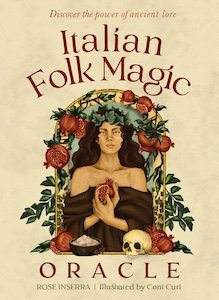
Italian Folk Magic Oracle, by Rose Inserra and Coni Curri

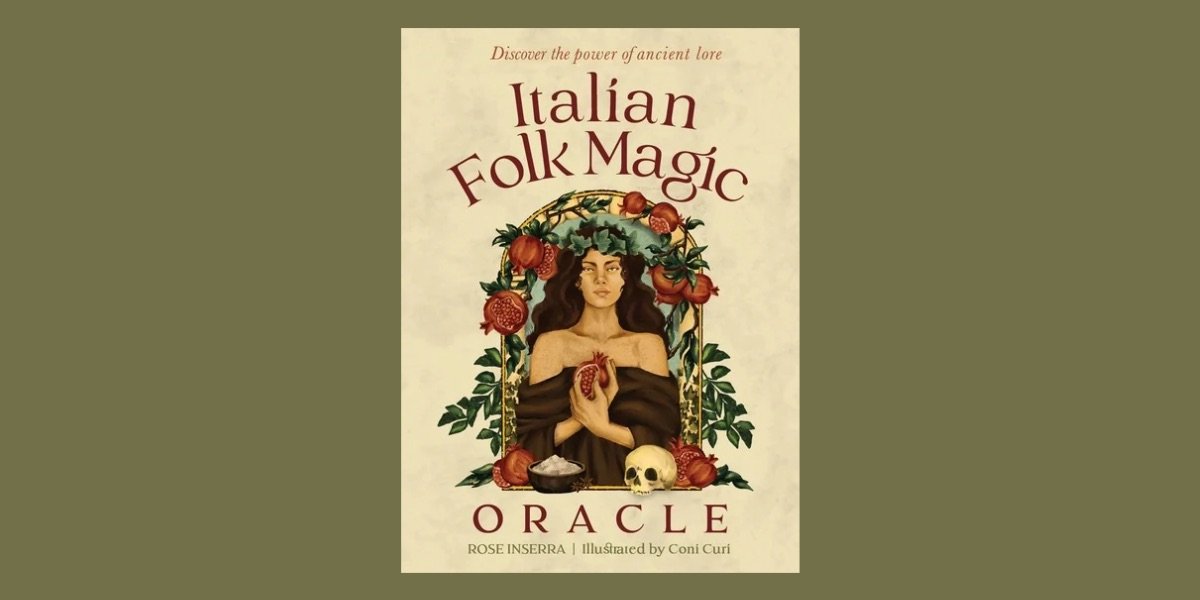
Italian Folk Magic Oracle, by Rose Inserra with illustrations by Coni Curi
Rockpool Publishing, 1922468002, 128 pages, 36 cards, November 2026

As an Italian-American, I love learning about folk magic from my heritage. From the moment I heard about Italian Folk Magic Oracle by Rose Inserra with illustrations by Coni Curi, I knew it would be one I’d add to my collection. From protective charms and herbal remedies to sacred figures and seasonal celebrations, the deck celebrates and shares guidance from generations of Italian folklore and ancestral wisdom

Inserra brings a personal connection to these traditions. Born in Italy and raised with an appreciation for the natural world, food, herbs, and family customs, she draws upon her Italian heritage to introduce readers to the spiritual practices of her ancestors. For those interested in learning more about what’s featured on these oracle cards, I suggest her previous book, The World of Italian Folk Magic, which explores these traditions in greater depth.
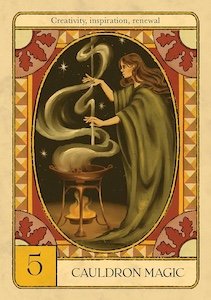
The first thing I did when opening the box was looking through the cards. From Saints to The Spider Dance, I was glad to see that Inserra captures the intersection of folk Catholicism, ancient pagan traditions, and regional spiritual practices that characterize aspects of Italian folk magic. Figures such as Saint Michael, Hecate, and Diana appear alongside the protective Evil Eye and The Black Madonna, offering an introduction to the diverse spiritual influences that have shaped Italian magical traditions through time and place.

The artwork by Curi especially fits the theme of the deck. Known for its art and frescos, Italian art has a distinct style, and Curi does a great job of highlighting the culture within her imagery. Her distinctive vintage-inspired style creates an atmosphere that feels simultaneously mystical and richly symbolic. Ornate borders frame detailed scenes filled with flowers, foliage, celestial imagery, and figures whose clothing and surroundings evoke a feeling of being connected to those that have come before, a cultural nostalgia. Meanwhile, the name of the card is at the bottom, while there’s keywords related to the meaning of the card at the top.

The color palette also contributes to this aesthetic. Warm golden yellows, deep botanical greens, muted reds, and earthy browns establish a sense of antiquity, while carefully placed brighter colors bring energy and movement to the compositions. Decorative patterns and intricate details along the border give the cards an elegant quality without overshadowing the central illustration. And oh how gorgeous the illustrations are, ranging from the witches of Benevento dancing around a tree to a woman riding a broomstick for the card Flying Ointment. I feel like browsing the illustrations is like walking through a museum.
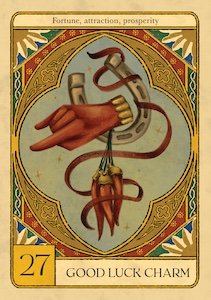
As for the guidebook, Inserra offers a short introduction along with a few card spreads. For each card, there’s the name in both English and Italian at the top. There’s also an image of cards and keywords. The next section is the meaning, where Inserra provides meaningful guidance related to the energy of the card. Finally, there’s a folk wisdom section, which details the significance of the card, and a mantra.

As an example, the card I pulled today was Olive Oil. I simply love the image on the card, featuring a woman with her eyes closed, a bottle and dish filled with olive oil in front of her and a hand anointing her forehead. The key words for this card are “Longevity, vitality, healing”. Within the guidebook, Inserra writes:

“The Olive Oil card is asking you to recognize your own sovereignty and follow your spiritual path. You are encouraged to trust that the universe will return what you give abundance.”1

The folk wisdom about olive oil details how it’s long been used for protection, health, and blessings. I appreciate how the card makes me so much more attune to the magic in something I use daily.

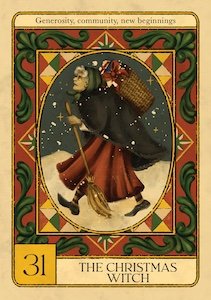
While I haven’t pulled it yet, another card I love in the deck is The Christmas Witch. La Befana, the witch who brings candy on the eve of the Epiphany, is one of my favorite traditions to share with my family.
My favorite thing about this deck is how it makes me feel close to my ancestors and reminds me of family memories. For those who are interested in ancestral magic, using an oracle deck based on your heritage is a great way to foster connection. The Italian themes of heritage, protection, nourishment, and belonging really come through in this deck.

Ultimately, Italian Folk Magic Oracle stands out for its celebration of a magical tradition deeply connected to home, nature, family, and cultural heritage. Inserra’s magical perspective and Curi’s rich artwork complement one another, creating a deck that feels both historically meaningful and relevant to modern spiritual practice.

I highly recommend this deck for those interested in folk witchcraft, ancestral spirituality, and the magic of everyday living, particularly if you are of Italian heritage. This oracle is a great reminder that the traditions and everyday practices that continue today connect us to those who have come before, encouraging readers to explore their relationship with ancestral heritage. 

Divine Motherhood Oracle, by Marie Brandon

Divine Motherhood Oracle, by Marie Brandon
Rockpool Publishing, 1922468509, 128 pages, 36 cards, November 2026

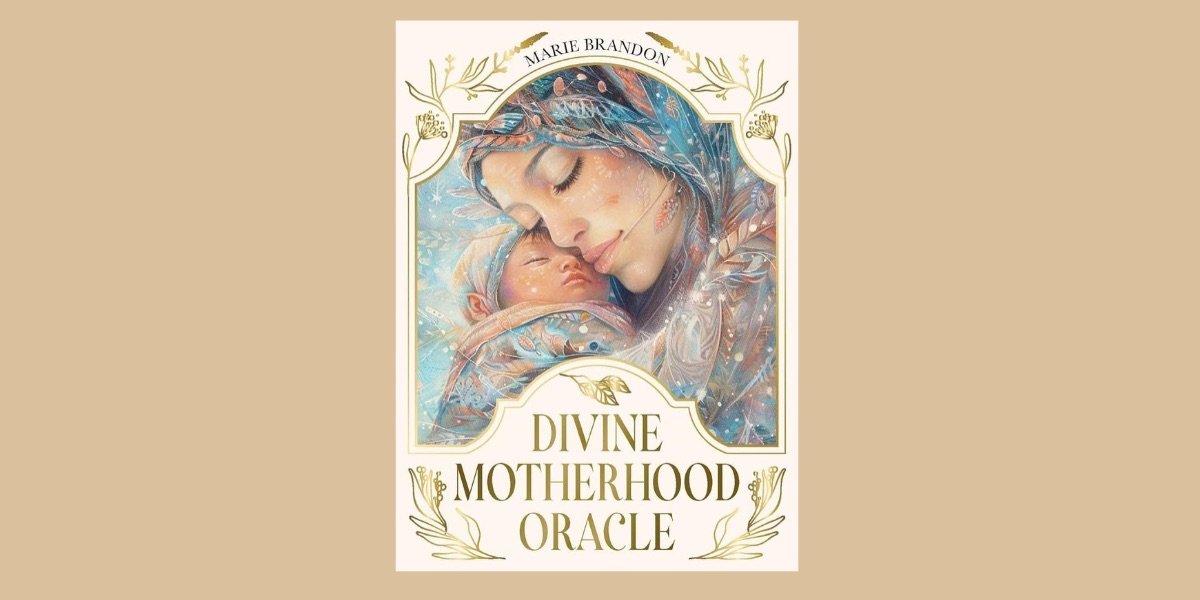
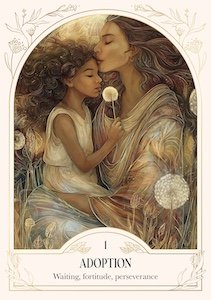
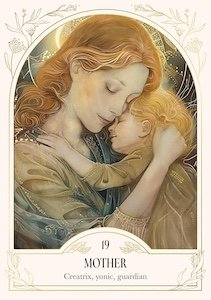
I am at a phase in life where many friends and family are having new babies – quite exciting! I’ve noticed that oftentimes motherhood is  described as a beautiful journey filled with unconditional love, joy, and wonder. Yet, beneath these sentiments lies a much more complex experience of transformation, vulnerability, surrender, and self-discovery. In Divine Motherhood Oracle, Marie Brandon invites mothers to recognize the sacredness of this transformation, honoring not only the life they are nurturing but also the person they are becoming in the process.

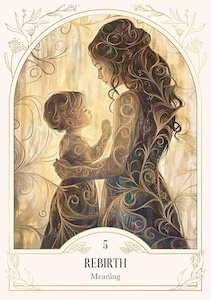
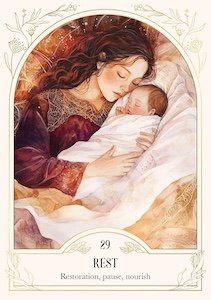
As soon as I opened this deck, l looked through the heartwarming images on the cards.  Brandon’s digital illustrations have an ethereal, dreamlike quality, blending intimate scenes of motherhood with celestial symbolism, delicate botanical embellishments, and luminous golden accents. The color palette moves between warm creams, soft blush tones, deep blues, and rich earthy hues, creating an atmosphere that feels simultaneously nurturing and mystical. Each card features a title and accompanying keywords, providing an accessible entry point for interpretation. The ornate borders and botanical flourishes give the deck a cohesive aesthetic, while the individual illustrations offer a sacred scene for contemplation.

Most of the images depict mothers and children in moments of tenderness, their figures surrounded by flowing patterns that remind me of the interconnectedness of life. There is a softness to the imagery, along with a sense of grace and boundless love that comes through in the way the women depicted are stylized. However, the women in this deck do not feel passive. The swirling forms, radiant halos, and symbolic details give the illustrations a quiet strength, elevating familiar experiences of motherhood into something mystic. Readers simultaneously can identify their own essence within the cards while also feeling connected to a higher power. I could feel my heart chakra expanding as I gazed at the images, and I instantly knew I would be putting cards from this deck on an altar space in addition to doing readings with them.

After looking through the deck, I opened the guidebook and was nearly moved to tears with Brandon’s authentic introduction. She describes how the deck was “born from her own journey through conception, pregnancy, birth, and the raw, beautiful unravelling of early motherhood.”2 I was particularly moved by how she explained that while drawing the illustrations she “felt the presence of the mothers who came before us: those whose names we may never known, whose wisdom was carried silently, whose resilience lives in our bones.3 This deck became not only a divine messenger, but also a living connection to the special journey of motherhood and the countless women who have carried humanity forward.

The focus on matrescence (the psychological, emotional, and identity transformation that accompanies becoming a mother) is much needed in the world of oracle cards. Just as adolescence marks a significant developmental transition, matrescence involves profound changes in how a woman understands herself. Motherhood does not simply add another role to one’s identity; it can fundamentally alter one’s priorities, relationships, boundaries, and sense of purpose. From experience, it’s been the most transformative experience in my life, and yet I’ve rarely been able to find specific divine guidance for such a comprehensive and consuming experience.

I really appreciate how Brandon has designed the deck to be a spiritual guide from all phases of motherhood, from conception and pregnancy to birth, raising children, and beyond. While many of the images do show women with little babies, the wisdom of the deck is versatile. Additionally, I value how Brandon brings a multidimensional approach to motherhood. Rather than approaching motherhood solely through the lens of caregiving, she presents it as a journey that continually reshapes a woman’s relationship with herself, her body, and the world around her. It’s so comforting to work with a deck that embraces the full spectrum of life as a mother.

As for the guidebook, Brandon offers reassuring messages, applying the wisdom of the card to pregnancy, birth, postpartum periods, allowing readings to resonate it based on where they’re at in their motherhood journey. There’s always an invitation she presents, which is a nice way to integrate the energy into your daily life. Here’s part of the meaning from the card I pulled today, “Light”:

“Light is both the path and the flame that leads you home. Connect with the elemental pull that connects you to this earth by lighting a candle or sitting in sunlight. Or spend some time with your child, watching for the moment the light in their eyes connects with yours.”4

Ugh, so sweet! And also a reminder to appreciate the light my children bring to my life. In the  midst of chaos, tears, and meltdowns, it’s nice to have this deck to remind me of the divinity within motherhood. Brandon brings a higher perspective to motherhood that embraces the beauty in it without over romanticizing the experience.

Drawing a card in the morning, for example, could provide an opportunity to consider what emotional or spiritual support is needed that day. Likewise, incorporating a card into an evening journaling practice could help illuminate feelings that have been pushed aside amid the demands of family life. So much attention is placed on children’s developmental milestones, while the inner growth of the parent can go largely unnoticed. Divine Motherhood Oracle shifts that focus, encouraging mothers to acknowledge their own evolution with the same wonder and tenderness they extend to their children.

Overall, I highly recommend Divine Motherhood Oracle for those on the motherhood journey. There’s great value in using this oracle during periods of transition, when the familiar structures of life are shifting and you’re navigating new aspects of identity.  Through its luminous artwork and reflective themes, Brandon has created a guide for honoring the beauty, challenges, and transformative possibilities of maternal life.

This deck serves as a gentle reminder for mothers that the journey is just as worthy of attention as the lives they nurture. Mothers seeking a way to connect with their intuition and self during a time when it’s easy to lose sight amid the changes will appreciate the soothing messages that anchor the experience in divine wisdom. I am absolutely going to start giving this deck as a baby shower present!!

Witch’s Homestead Oracle, by Hadas Knox and Giada Rose

Witch’s Homestead Oracle, by Hadas Knox and Giada Rose
Rockpool Publishing, 1922468452, 160 pages, 44 cards, October 2026

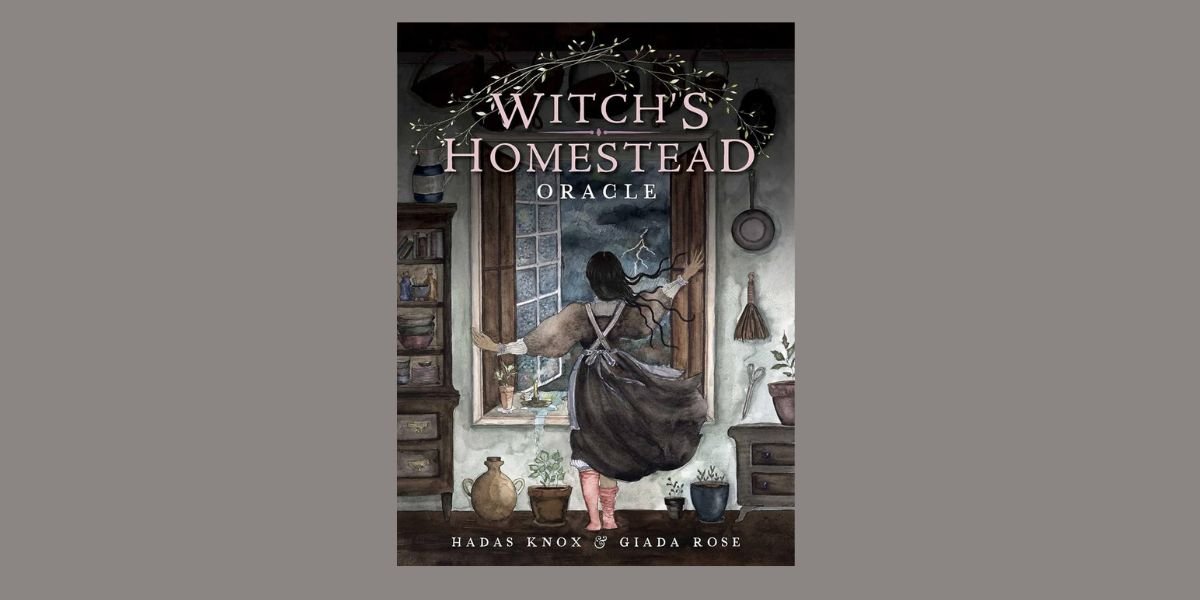
There is a particular kind of magic that emerges when the ordinary rhythms of home become sacred: tending a garden, preparing food, watching the seasons shift outside the window, preserving what has been harvested, or simply noticing the plants and creatures sharing the land with us. Witch’s Homestead Oracle by Hadas Knox, with illustrations by Giada Rose, builds an entire divinatory world around this expression of witchcraft.

It’s truly beautiful to tap into this essence, but to be honest, I didn’t know what to make of this deck when I first opened the box. I absolutely love Giada Rose’s illustration style, which is undoubtedly what drew me to the deck. But despite enjoying household magic, I was getting a bit paranoid it had a “trad wife” essence glamourizing the domestic routines instead of liberating the spirit. But the more I worked with this deck, I discovered what this deck really is: a portal to a world where the witch’s spirit is brilliantly alive and thriving in home and hearth, keenly attuned to the rhythm of life, whether it be seasonal tasks, rest vs activity, or creation vs. destruction.

“The homestead is more than sun-dappled routines and kitchen witchery. There is a second life there – quieter, more urgent. After the bread is baked and the jars are sealed, the witch returns to herself. A candle flickers. A journal opens. She writes by the fire, aching and alive. The same hands that gather eggs also ink spells into the margins of well-loved books. This is where outer and inner lives meet, intertwining like ivy across old stone.”5

Allowing myself to slip into this magical landscape, I opened up to embrace the wisdom of this “ever-shifting spirit of time, memory, and season”6 presented in Witch’s Homestead Oracle, which feels like a living magical landscape. This deck feels very fantastical with its mysterious farm, blending cottagecore imagery with themes of nature, domestic life, folklore, and mystery. Yet within the depictions, I still was able to glimpse parts of my own path, living in a small condo in modern day, unfortunately lacking my own Hutch, Livestock, or Secret Staircase.

The Victorian theme also gives the deck an interesting edge, and I feel like I resonated with it more once I understood Knox’s style by looking at her Instagram. First of all, it’s just an incredibly curated profile. She makes the cards’ artwork into very funny and very relatable images, and it was through this way of relating to the cards that I started to feel a connection. Knox is a pretty cool witch, and she’s got her own unique vibe, which is depicted in her eclectic humor and vintage style. Never so much has discovering the creator of the deck given shape to my relationship with it, but to me, this speaks to how imbued it is with her authentic energy.

Indeed, this is not bright, whimsical homesteading, such as my initial worry about the “trad wife” element. Knox’s Instagram describes her as a “haunted house dweller” and that essence, of being attuned to the spirits and secrets within the walls, is more aligned with this deck’s energy. That slight darkness makes the concept considerably more interesting. Suddenly, the farm feels less like an idealized escape into rural life and more like a place that has accumulated memories, stories, work, loss, abundance, and mystery over time.

And Rose does an amazing job bringing this atmosphere to life with her illustrations. Her artwork finds special meeting points between nature, femininity, and witchcraft, with the imagery speaking to the way landscapes and homes can themselves function as oracles. The colors are vivid, arresting, and cozy all at once. The textured, painting quality is reminiscent of illustrations in storybooks, leaving plenty of room for the mind to wander beyond the scene at hand.

For the interior home illustrations, the slightly imperfect lines, shadowy interiors, and vintage furnishings give each scene a nostalgic, lived-in feeling to the scenes on the cards. Meanwhile, the images depicting scenes from outdoors bring to life the enchantment of nature, the beauty in the seasons, and magic of the elements. Together, the indoor and outdoor illustrations create a cohesive visual world in which the witch’s homestead encompasses both the sanctuary of the home and the living landscape surrounding it. I also just adore the purple gilded edges of the deck!

As for the guidebook, Knox has a poetic way of bringing to awareness aspects of the inner world readers can explore. Each entry has two parts: the meaning and the story. The meaning section is not overly divinatory, rather Knox poses questions for the readers for further exploration and contemplation.

Knox weaves together the special essence of the image on the card, ranging from the Hayloft to Tea Kettle, and conveys their meaning in a comforting, gentle way. This is a great deck for sinking deeper into the present energies at hand, noticing what is bubbling up to the surface for acknowledgement or swirling around you in need of tending. One of my favorites, Nightgown, reads:

“To don the nightgown is to slip into the realm of rest, dreams, and the unique power of liminal time. Sleep is not blankness, but a veil thinned by darkness, where healing stirs and messages rise. What memories, emotions, or energies might your garments hold?”7

Mmm, so potent! Then the story aspect of the guidebook ignites the imagination, aiding readers in putting themselves into the scene. Written in second-person (“you”), Knox brings to life the scents, feelings, and inner knowing that comes through the encounter depicted on the card. Here’s a sample from another card I love, Quill & Ink:

“Quill scratches and worn wood notwithstanding, your writing desk is sacred. You’ve placed it beneath the dormer window, which always catches a cool breeze and the most golden morning light. An inkwell rests atop your desk, beckoning like a dark mirror. Pages are everywhere: half-written sheets beside the inkwell, discarded drafts curled on the floor, some crumpled in frustration. Your cat has made a bed of them, purring softly among stacks of unshelved books.”8

Transport me, please! Because my reality is a hyper toddler shouting and jumping on the bed, while my happy baby babbles and tries to get up to join her brother. For a few delicious minutes, this deck brings me into a different world, allowing a special part of me a reprieve as it sinks into the delicately crafted homestead of Knox and Rose. I love all the realms this deck moves me through.

Overall, Witch’s Homestead Oracle offers a vision of witchcraft rooted in a solitary connection to the rhythms of nature and features of the home life: the feeling of the sunlight or moonlight shining in the window, the plants that need picking or cooking or canning, the festivities or responsibilities of daily life. Most of all, this deck is a way to reconnect with the inner witch within who tracks these patterns, even if subliminally, in the modern world, and needs a moment to pause, breathe, and embrace these liminal places created for our spirits to rest, contemplate, and rise again from.

For witches who find magic in gardens, kitchens, creaky stairs,  jars on pantry shelves, herbs drying from rafters, and the quiet repetition of everyday rituals, this is your type of oracle deck! And even if you don’t typically consider yourself a homey witch, such as I initially felt, the magic of immersion is powerful with this deck. You might not initially recognize yourself in its imagery, but I feel confident that you’ll discover new aspects of yourself in the unfolding scenes. I will continue to return to this deck for daily card pulls, journaling, altar work, and sabbat celebrations.

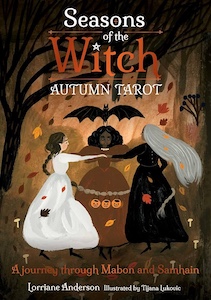
Seasons of the Witch Autumn Tarot, by Lorraine Anderson and Tijana Lukovic

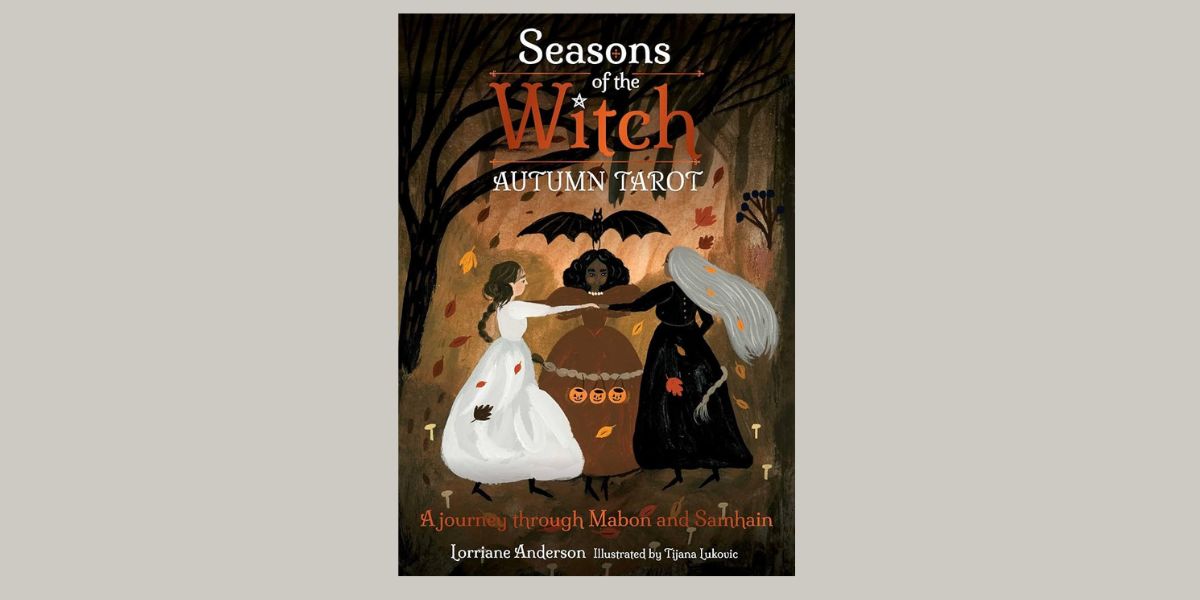
Seasons of the Witch Autumn Tarot: A journey through Mabon and Samhain, by Lorraine Anderson with illustrations by Tijana Lukovic
Rockpool Publishing, 1923208748, 128 pages, 78 cards, August 2026

There is something inherently magical about the transition into autumn: the world seems to slow down, the days grow shorter, and nature begins its beautiful process of letting go. It’s my favorite time of the year! Seasons of the Witch Autumn Tarot: A Journey Through Mabon and Sanhaim by Lorriane Anderson with illustrations by Tijana Lukovic captures the season’s liminal quality beautifully, inviting readers to experience the traditional tarot through the shifting energies of autumn.

This 78-card tarot deck is a continuation of the beloved Seasons of the Witch collection. Anderson reimagines the Rider-Waite-Smith (RWS) system through the themes of Mabon and Samhain when the Wheel of the Year turns to the darker times. Harvest, gratitude, balance, transition, release, shadow work, death, rebirth, and the wisdom that comes from turning inward all become part of the reading experience, fostering new insights within the structure of traditional tarot meanings.

From the second I held this deck, I felt a magnetic pull towards it. The energy was just radiating the essence of fall. And while I am enjoying the end of summer, this deck has gotten me so excited for the shift of summer into autumn. For me, this is the magic of the Seasons of the Witch collection; the decks really foster an alignment with the season.

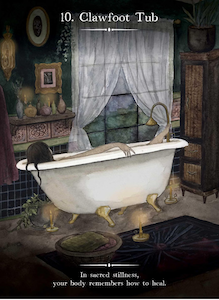
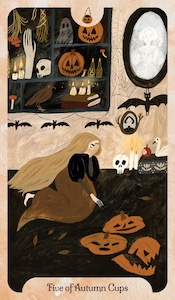
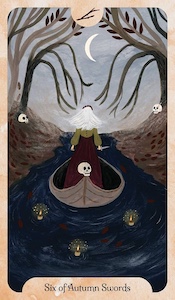
As soon as I opened the box, I was absolutely taken with the gilded orange edges filled with captivating images that are much more relatable for me than the traditional RWS imagery. The artwork by Tijana Lukovic highlights the warmth and coziness of Mabon with the mysterious, rustling atmosphere associated with Samhain. The palette of warm oranges, reds, browns, and autumnal golds makes the deck feel like stepping into a crisp October evening.

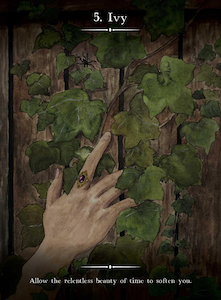
Shuffling through the deck, there are golden leaves, pumpkins, candles, woodland settings, witches, spirits, ghosts, and shadowy figures, which transport readers into the liminal space of autumn. There’s spookiness, enchantment, solace, and magic all within the artwork.

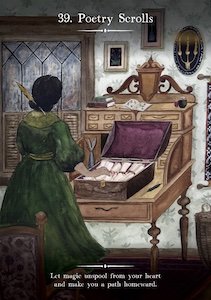
I see cards with a woman grieving, women together doing a spell, a woman gazing out the window reading a book, and one simply enjoying a steaming cup of something delicious I’m sure. Essentially, I see many versions of myself in the deck, which is why I feel like I resonate with it so readily.

Yet at the same time, there’s an otherworldly, fairy-tale-like quality to the deck that invites a feeling of whimsy too. This dance between the mundane and the mystical, where daily ritual becomes a portal for wider connection is so apparent in this deck. Lukovic just has a truly remarkable ability to capture the soulfulness of each season. I can’t get enough of all her expressive images!

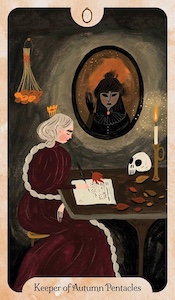
Further reflecting the autumn energy is the revisioning of the suits, which puts the tarot cards into a different archetypal perspective. Cups become jack-o’-lanterns, representing emotional warmth and light in the darkness; Wands become broomsticks, emphasizing cleansing and sweeping away what is no longer needed; Swords take the form of branches, connecting the suit with resilience and nature’s wisdom; and Pentacles become mirrors, turning attention toward self-worth, material relationships, and the reflection between our inner and outer worlds.

Anderson also makes some changes to the traditional tarot terminology to further immerse the reader in the seasonal world of autumn. For instance, the Sun becomes Sunset, the Moon becomes The Waning Moon, the World becomes Descending Into Winter.  The last change to the traditional RWS design is reimaging the Court Cards. Anderson calls Initiates (Pages), Seekers (Knights), Shepherds (Queens), and Keepers (Kings). According to the guidebook, this terminology will continue for all of the Seasons of the Witch tarot decks. These changes give the familiar tarot symbolism an entirely new atmosphere while maintaining recognizable connections to the familiar system.

All of the deck descriptions I’ve mentioned can be found in the guidebook, which is quite informative. Following an introduction by Anderson, there’s a page with themes for autumn, along with a passage about the seasons as archetypes. Anderson offers guidance for working with the deck, including how to do cleansing and dedication, situations to use the deck beyond the time of Autumn, and combining tarot with oracle cards. I especially appreciated her method for reading reversals with the deck, which was an emphasis on the card rather than an inverted meaning. From here, Anderson shares spreads for readers. They range from one-card pulls to a full 10-card spread to get to know the deck.

As for the cards’ guidebook entries, all of them follow the same format. First, there’s an image of the card followed by a description of the artwork. This is very valuable because it highlights the imagery, giving readers’ perspective they might have otherwise not noticed. This is followed by a divinatory message, which I noticed aligns with the message from the traditional tarot card represented. The final section of the entry is a list of additional meanings for the cards; this is very helpful for expanding the message for readers to consider alternative possibilities.

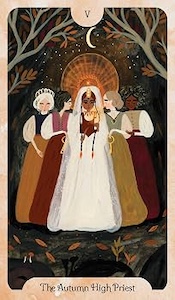
As an example, I was doing a one-card pull and drew The Autumn High Priest. This is one of the cards that differs a bit from traditional tarot, making it much more resonant and approachable for me. The imagery shows women whispering counsel into the ear of a woman veiled in a white gown. The description reads, “The presence of each of these women emphasizes community, tradition, and the transfer of knowledge from teacher to student.”1 What a wonderful framing of the energy!

Anderson does go on to explain the energy, mentioning how it relates to the traditional Hierophant card, while also keeping a nature-based, spiritual connection present in the message. The additional meanings include things such as honoring seasonal practices that keep us rooted, working within a hierarchy, formal study or initiation into a new discipline, and family influence on one’s love life. The different ways this card can be read allow for plenty of flexibility, allowing for readers to apply the essence of the card to find meaningful insight into their personal situation.

All in all, for readers who already love the Seasons of the Witch oracle decks, Autumn Tarot feels like a natural expansion of the collection. Though, it also works beautifully as a standalone deck for anyone who loves seasonal spirituality, witchcraft, nature-based practices, or tarot with a strong archetypal atmosphere. For those who find spiritual meaning in the turning of the Wheel of the Year or simply love the introspective magic of autumn, this is a beautiful invitation to slow down, look inward, and listen to what the season has to teach us. I love it so much!!

2027 Astrology Planner Calendar, by Patsy Bennett

2027 Astrology Planner Calendar – Northern Hemisphere, by Patsy Bennett
Rockpool Publishing,1922786349, 160 pages, May 2026

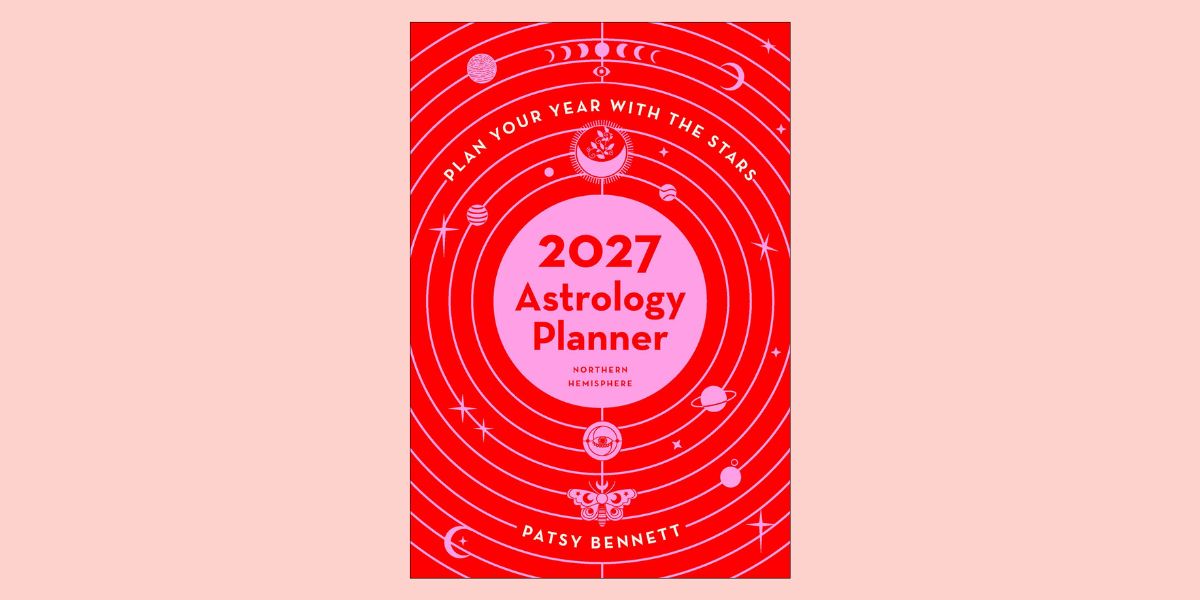
I’m a huge believer that the best way to learn astrology is by being aware of the current transits and keeping a day to day record of events. Oftentimes it’s hard to really understand the bigger patterns happening due to the influence of the planets until we connect the dots over a period of time. 2027 Astrology Planner Calendar – Northern Hemisphere by Patsy Bennett is perfect for this, blending practical scheduling with astrological timing.

Admittedly, my initial thought was that red wouldn’t have been my choice of color for a planner I was going to work with so closely for a year (I’d have preferred a more celestial blue or purple! But navy blue is the color of the 2026 one, so I guess Bennett wanted a different color this year. I *can* be open to change!!)

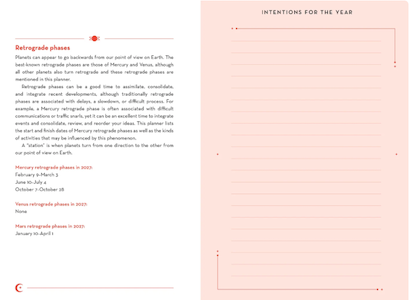
Once I got past this aesthetic preference, I did start to appreciate the durable cover, flexible spine, and pink bookmark ribbon. Bennett begins with a nice overview of the year, grounding readers in the major astrological transits. She also highlights for everyone how to use the planner, including an overview of moon sign energies and description of the astrological aspects. There’s also a page noting the dates of the retrograde periods for Mercury, Venus, and Mars this year. This general guidance makes the planner translatable for those who are new or still learning the basics of astrology, allowing the wisdom of the planner to be accessible.

The planner begins with December 31st, 2026 and moves through January 2, 2028, encapsulating all of 2027! At the start of each zodiac season, Bennett gives an overview of the astrological energy in play, highlighting the major events, and provides a special forecast for those who have that sun sign. It’s nice to have the “announcement” of the sign switching built into the format of the planner, rather than a mundane one that never delineated such a meaningful event!

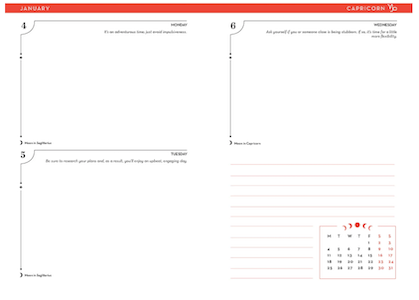
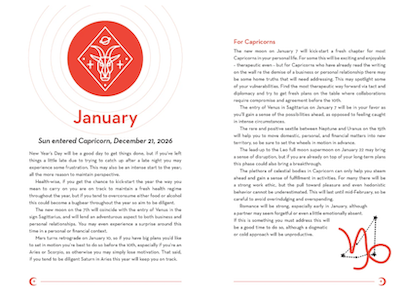
As for the planner portion, there’s a big blank space for two days or one day with lines and a general calendar below (best to look at the images in this review for explanation!). The clean layout balances usable planning space with just enough astrological insight to make each week feel connected to the larger cosmic picture. At the top of the blank space for the day is a general horoscope-esque advice and at the bottom is the sign of the moon and any significant planetary aspect. For instance, April 4, 2027 at the top reads:

“This is a good day to make a commitment to someone, and also for formulating long-term, positive plans. You will enjoy relaxing and allowing your mind to unwind, so ensure you find some space for yourself.”6

The planetary aspects for this day are Saturn trine Jupiter and Moon in Pisces. And, oh, there’s just so many things I love about all these details! First, as someone who embraces a lunar life, having the moon sign right there in a planner is so useful when making plans. Do I really want to go rock climbing with the moon in Cancer, or might it be best a few weeks later with the moon in Capricorn? If you consider things like this, as I do, then you’ll love having it written right there without having to pull up an app!

Then the even more nuanced astrological energy comes through in the transits too, which I often tend to… not pay attention to in my daily life. Without this planner, I am not always paying attention to the transits, such as when the Sun trines Pluto or Mars is sextile Jupiter, but with the planner laying it out so clearly so me, I have so much more astrological awareness in my daily life, which is valuable because now I actually pay attention to and gain insight into those days where the planets are interacting.

For those who truly love aligning with the planets, this planner has all you need. And the additional little snippets of advice by Bennett are a true bonus. Sure, I can translate the aspects myself, but it’s nice to have someone else give the guidance, making my mind not work as hard. And it’s truly a gift for those who are just learning astrology because they can gain the insight through Bennett while also seeing how the transits shape the guidance for the day.

The planner really helps everyone consciously align their goals, projects, and personal growth with astrology. And it’s so nice that the astrological guidance is practical rather than prescriptive, helping us all understand certain energies without becoming overly technical. In this way, the planner allows intentional living and personal reflection, deepening one’s astrological awareness and harmony with the year’s celestial rhythms.

Overall, 2027 Astrology Planner Calendar – Northern Hemisphere is a thoughtful blend of planner and astrological companion. Whether you’re setting weekly intentions, structuring daily life, or simply hoping to become more aware of the rhythms of the sky, Bennett offers an approachable resource that makes weaving astrology into everyday life both simple and enjoyable. Those who already enjoy tracking moon cycles, manifesting with lunar phases, or planning rituals around planetary movements will especially appreciate having everything gathered in one place.

Tarot Divinatorium, by André Sanchez

Tarot Divinatorium, by André Sanchez
Rockpool Publishing, 1923208470, 176 pages, 76 cards, April 2026

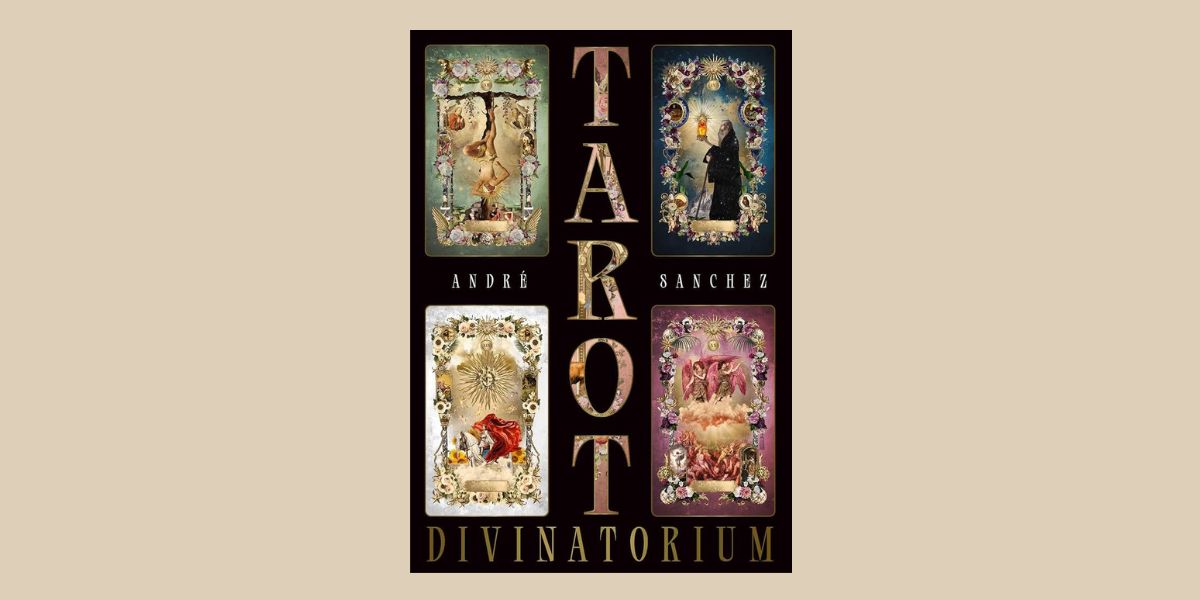
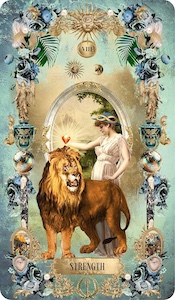
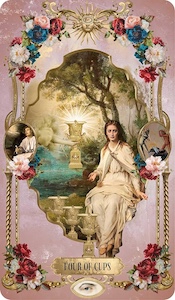
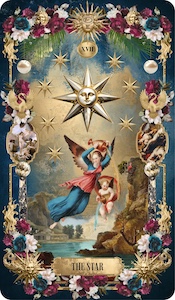
Art lovers rejoice in the stunning Tarot Divinatorium by André Sanchez! This elegant deck, designed to honor the history of tarot, transforms the traditional Rider-Waite-Smith (RWS) structure into a lavish visual language of art, symbolism, and beauty. Through intricate digital collage and classical art aesthetics, Sanchez invites readers into a time “where gentle noblemen and women await your queries with open hearts and reassuring insights.”1

At first glance, the deck is breathtaking. Rich gilded borders frame each card like museum masterpieces, while layers of Renaissance and Baroque imagery create an atmosphere that feels both timeless and surreal. Rather than simply reproducing Pamela Colman Smith’s iconic scenes, Sanchez reconstructs them using fragments of historical paintings, religious iconography, botanical motifs, and celestial symbolism. The result is a deck that feels luxurious and elegant.

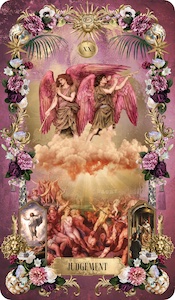
What’s even cooler is that Sanchez had depicted classical paintings into every card. On the border, there are two paintings, representing the positive aspects (left side) and negative aspects (right side). These painting vignettes give readers a whole other layer of symbolism to work with, as you can go learn about the painting/artist, research it, and look at that too for further intuitive insights. For those who love art or art history, this is an amazing element of this deck; it’s something I’ve never seen done before.

I find it very fascinating to think about the time and dedication Sanchez put into creating this deck, meditating on the different meanings of the tarot cards and finding not just one but two paintings to represent the polarities of the cards’ meanings. It’s so neat to see these little paintings within Sanchez’s own original artwork, bringing such fascinating layers of meaning to the deck. This is definitely one of the most creative interpretations of tarot that I’ve seen.

Looking at this deck gives me the same feelings I felt walking around Philadelphia Museum of Art just the other day: awe and inspiration. The energy of this deck is regal, majestic, romantic, opulent, contemplative, and sacred all at once. There’s a luminous, timeless feeling that comes from gazing at the tarot archetypes depicted with Sanchez’s artistry, with each card hinting at hidden wisdom and every frame inviting closer inspection. I like how Sanchez didn’t do all borders the same way, so placement of the painting vignettes varies, giving the eyes an adventure of finding the little details. I could gaze at these cards all day long!

As for the guidebook, it’s well illustrated, colored, and easy to hold in one’s hand. For each entry, Sanchez provides insight into the meaning while also explaining the card’s imagery for further clarity. He also shares information about the left and right vignette, so readers know the paintings depicted and gain knowledge about how it represents the message of the card.

There’s a headlined subtext for each card too, which is useful for those who want quick guidance. For example, it reads “New Spiritual Power”9 under the Magician, and “Exciting Invitations”10 under the Knight of Cups. I appreciate these quick descriptions because they make it easy to piece messages from spreads that have multiple cards.

This goes to show that while there’s a lot of artistic complexity and symbolism within the deck,  the guidebook distills it quite nicely, making it accessible for all readers to find meaning. The familiar RWS framework ensures that experienced tarot readers will immediately recognize the narrative and symbolism of each card, while newcomers could still comfortably learn the traditional system without feeling overwhelmed. The imagery expands upon the original card meanings rather than obscuring them, making the deck equally suitable for intuitive readings and deeper symbolic exploration.

One of my favorite cards in the deck is The Devil. In the card, a semi-transparent veiled naked woman looms standing on a crescent moon with a black goat at her heels and snake wrapping around her leg. She has black wings and a crown of black and red flowers. Looking at it carefully, one notices black candles burning on each side too. Sanchez highlights all these symbolic elements in the guidebook entry, writing:

“There is an energy of obsession and jealousy surrounding this situation: the need for others to be obedient and bow to your will and the need to control. An element of weakness when faced with temptation is indicated.”11

Very potent! And the paintings associated with it are Portrait de Bacchus by Peter Paul Rubens (positive aspect) and Temptation of Saint Anthony by Joos van Craesbeeck (negative aspect). I really enjoyed going and spending time looking at these images as well.

Overall, this riveting deck is filled with avenues to explore. Sanchez preserves the symbolic integrity of the RWS system while presenting it through a contemporary artistic lens rooted in classical mastery and beauty. The result is a tarot deck that feels both familiar and refreshingly original. This is a collector’s deck that is equally capable of serving as a practical reading tool.

Whether displayed as an art piece or used for daily divination, Tarot Divinatorium offers an immersive experience that reminds us tarot is not only a system of symbols but also a visual language capable of transcending time through artistic legacy. Readers who appreciate fine art, layered symbolism, and intricate design will enjoy this deck. There’s so much to explore, and it’s a very compelling deck to work with time and time again for inspiration, creative appreciation, and discerning wisdom.

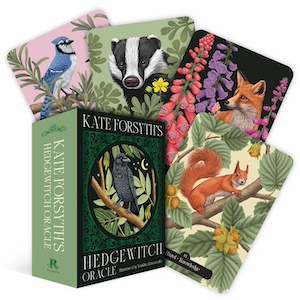
Kate Forsyth’s Hedgewitch Oracle, by Kate Forsyth

Kate Forsyth’s Hedgewitch Oracle, by Kate Forsyth
Rockpool Publishing, 1923208136, 144 pages, 44 cards, May 2026

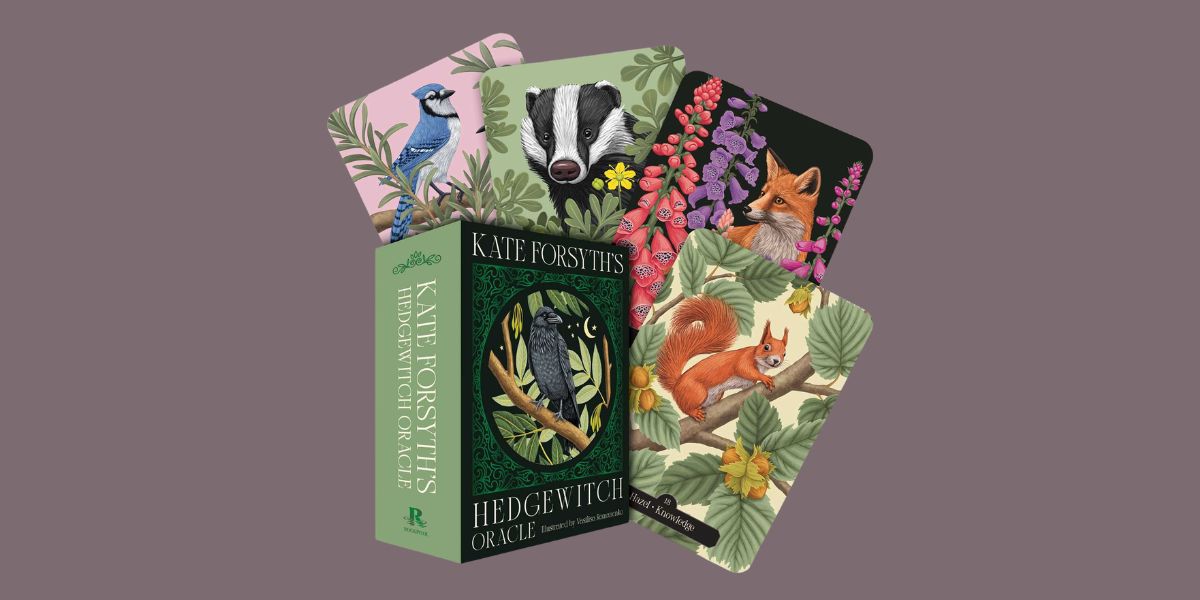
Hedgewitchery is a nature-based magical practice centered on cultivating a deep relationship with the land, the seasons, and the liminal spaces between the ordinary and the mystical. Rooted in folk traditions, it encourages practitioners to develop intuition, mindfulness, and a strong connection to the natural world through observation, herbal wisdom, divination, and everyday acts of magic. Kath Forsyth’s Hedgewitch Oracle celebrates this craft, sharing wisdom and beauty in the cards.

Kath Forsyth’s Hedgewitch Oracle is a 44-card oracle deck centered on magical herbs, folklore, and the hedgewitch tradition. Raised close to the Earth, Forsyth shares her knowledge about herbal magic, plant spirits, and folk witchcraft. Her skills as a storyteller ground the herbs in a wider context, inviting readers to truly develop an allyship with them.

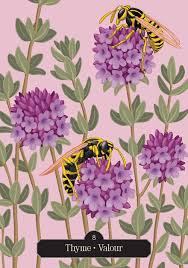
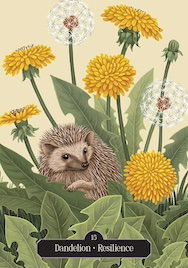
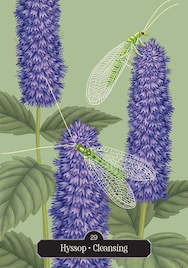
The deck itself is absolutely gorgeous. The cards have a feeling of naturalist botanical art, where the plants are depicted with the accuracy and detail of a vintage field guide or herbal compendium. Every leaf, flower, and stem appears carefully observed rather than stylized, showcasing its natural vitality and essence.

There’s a beautiful simplicity to the cards, as they’re all natural with no ornate symbols or extravagant patterns. The magic in the cards comes from the wildlife featured, giving the deck an animistic feeling. Meanwhile, the gentle energy of the cards still lends a bit of whimsy while remaining educational, contemplative, and rooted in traditional plant lore. The vivid colors and engaging detail make for an attractive addition to an altar space.

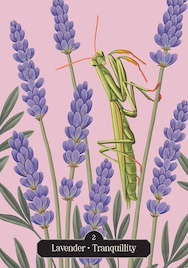
The depiction of animals or insects in nearly all the cards evoke the old belief that plants, animals, and spirits exist in relationship with one another. Plus, the animals are symbolic, adding to the layers of meaning for each card, such as an owl on the card Apple representing wisdom and the lady bug in the card Verbena for blessings. This is definitely a great deck for bird lovers, as there’s many cards with them!

As for the guidebook, Forsyth shares guidance on how to use the cards and provides a few spread options. The cards are grouped into four categories, which is indicated by the background color of the card’s image. They are as follows:

❁ Pink – Herbs for love, tenderness, strength and tranquility

❁ Yellow – Herbs for friendship, happiness, optimism and vitality

❁ Green – Herbs for fresh beginnings, healing, intuition and transformation

❁ Black – Herbs for banishing, guarding boundaries, mystery and shadow

This mixture of categories makes for a varied deck, offering meaningful insight into different facets of life. Each entry has the name of the herb, its scientific name, and the key word at top. Forsyth provides a one sentence meaning for the card and then a section about the wisdom of the card, which tells the historical use and folklore. The final section is “Spell of the Day” where Forsyth shares a magical way to use the plant, often including an incantation.

Most of the spells are easy to do with things on hand, though some might require a bit of material gathering. For instance, the spell for the card Comfrey suggests taking a bath with comfrey-infused oil and mineral salts, while the dandelion card calls for a yellow candle. What’s nice about the spells though is how Forsyth encourages collecting herbs from the wild. This isn’t something I usually do, but it has spurred me on to take more interest in where these herbs might be found locally, which will obviously differ by region.

And while Forsyth does offer a message for each card, in the style of a traditional oracle deck, I’ve found this deck to be more useful for the spellwork aspect than divination. I also think readers could definitely use the guidebook to enhance their herbalism knowledge without even needing to work directly with the cards. Though, it is so fun to do spreads and see if any themes emerge in regard to the different card categories. Sometimes, I even divide the cards into categories and specifically draw a card from one based on the type of magical support I am seeking.

So far all my readings have felt very aligned. A few days ago, I felt a bit of negative energy in my energy field, so I decided to pull a card. I got Sage, which Forsyth has given the keyword “Purification”12 The meaning for the card reads:

“Every now and again you need to stop and take a moment to reflect on your life and yourself, take stock of what is beneficial to you and let go of anything that may be doing you harm.”13

I resonated with this, and it encouraged me to be proactive in assessing where the negativity was coming from and creating a boundary. The spell Forsyth shares is creating a smudge stick and using it while repeating an incantation. I plan on doing this soon!

Overall, Kate Forsyth’s Hedgewitch Oracle is great for readers who enjoy herbal magic, nature-based witchcraft, and working with plant allies. Forsyth’s approach to plants as both a folklorist and hedgewitch brings a unique combination: readers get the practical knowledge along with magical lore. By weaving spiritual practice into daily life, this deck fosters a sense of grounding and belonging, reminding us that magic is not separate from the world around us but woven into the rhythms of the living earth. I love the reverence she holds for the natural world as well as the enchanted well she invites readers to perceive these herbs.

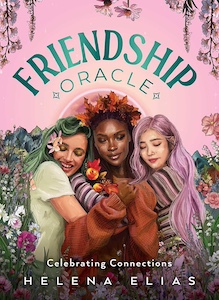
Friendship Oracle, by Helena Elias

Friendship Oracle: Celebrating Connections, by Helena Elias
Rockpool Publishing, 1922468061, 36 cards, 128 pages, May 2026

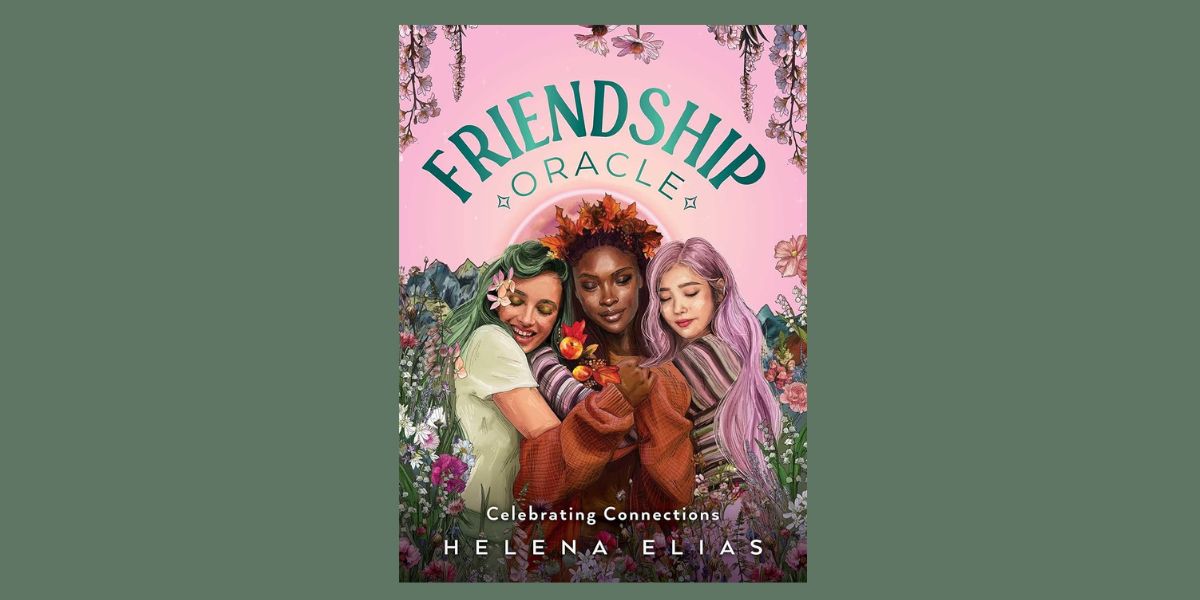
Friendship Oracle by Helena Elias is a beautifully tender oracle deck that centers something often overlooked in spiritual tools: friendship as a sacred force. This deck brings connection, mutual care, emotional reciprocity, and the quiet magic of growing alongside others to the realm of divination–something new for me even with over ten years of reading experience!

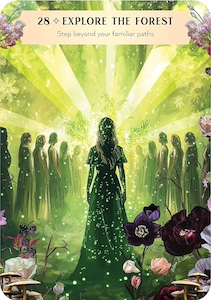
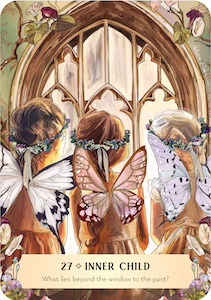
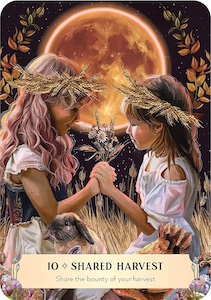
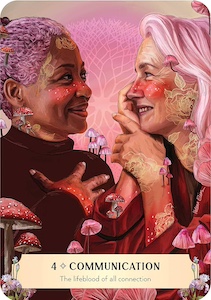
I was immediately drawn into this deck because of the artwork. Elias hand drew each one on digital canvas, and the level of detail is truly impressive. The deck is a nice blend of enchanted femininity, cottagecore mysticism, and emotionally rich whimsical illustration. Flower crowns, natural textures, fairy wings, flowing dresses, and woodland imagery evoke a whimsical energy, honoring the beauty of the natural world.

All the imagery feels soft, nurturing, and deeply heartfelt. I love the warm, glowing color palettes, which lean into luminous golds, rose pinks, forest greens, deep burgundies, and moonlit ambers. Women and nature are one in this deck where flowers, forests, animals, and celestial imagery aren’t just decoration; they mirror the emotional tone of each card.

Many of the people are depicted in a semi-realistic fantasy style, featuring delicate detailing, glowing skin, flowing hair, and expressive faces that capture the emotional expansiveness this deck offers. Many of the cards emphasize a sacred sisterhood relationship filled with emotional intimacy, care, and connection between women across ages and identities, which is just beautiful to see come to life during a reading.

As for the guidebook, Elias provides a great perspective on friendship. For each card, there’s a meaning shared and a sowing intention ritual that offers a nature-inspired way to integrate the energy of the card. For instance, the sowing intention for the card Reach Out reads:

“Seek out flowers, paying attention to any buzzing bees nearby. Take time to exist in the present, and see if watching the bees and their path brings anyone to mind.”13

I thought that was such a great idea for tuning into who might need you to reach out! Similar to this buzzing advice, the whole guidebook feels thoughtful and intentional. There’s a good mixture of self-care mixed into the relationship-tending oracle advice too. As most know, it can be hard to figure out what to do when a friendship hits a bump in the road; sometimes the balm is more time alone, while other times it requires extra attention to heal. This advice in the guidebook covers the range of phases friendships move through, offering meaningful guidance for reflection.

At first, I wasn’t sure what kinds of questions to ask, as I don’t usually do readings about my friendships. Romantic life? Definitely. Career and money? Quite often. Family life? For sure. But my friendships?! Rarely! But then I started to think about my different friendships and get curious about what insight the deck has to share. Each reading so far has been very energetically spot on and informative for me. Here’s some examples:

I recently got back in touch with a woman who was my best friend from the age of 10 through 25–one of closest friendships I’ve ever had in my life. During our mid-twenties, life pulled us apart, placing us on different paths. There was never a fight, just relocations that reoriented our lifestyles: new friendships, new jobs, new relationships. Despite thinking about her regularly, nearly ten years had passed since we talked; with each passing year it seemed harder to bridge the gap. But then when I found out her mom passed away last month, I reached out. We ended up having a great conversation about where we are in life now, opening a doorway to a renewed friendship.

I decided to pull a card about this situation with her, and I got Soulmate! Here’s part of what Elias has written for this card:

“This is a reminder to honour those friendships that make your soul feel at home. You may be entering a time where you need each others’ strength and unconditional support. If your guiding star has been distant, perhaps this is the moment to reach out, to remind them that their light still shines in your sky.”14

This message was so validating that I did the right thing in rekindling our friendship. It highlighted for me just how valuable this rare such a soulful bond with another person is, and that I should embrace it once again.

Another reading I did was about a friend that I have known for decades but I don’t feel a deep connection to recently; our friendship seems based more on convenience than shared passions or interest. The card I got was Seeker. The first sentences of the guidebook entry made my jaw drop:

“There are times in life when our connections do not bear the fruit we anticipated. You may be at a point where you need to look outside your current garden of friends – not seeking to replace but instead to connect with those who match your current life path.”15

This message really resonated with me. I still value, love, and and appreciate this friendship, but it’s also okay for me to expand my circle to find those who feel more aligned.

Overall, Friendship Oracle feels like a refreshing addition to the oracle space. Its heartfelt messages, visually enchanting cards, and spiritual focus on the healing power of human connection make it a one-of-a-kind deck. Elias reminds us that friendship is not something casual, but rather the roots of some of our most sacred bonds that require reflection, honesty, communication, and renewal.

This deck is perfect for journaling with, doing relationship check-ins, or even working with in a community-centered spiritual practice such as a women’s circle. The emotionally nourishing and mystical nature of the deck revives the spirit and brings a clarity to our defining relationships. I really would love to see more decks from Elias!!

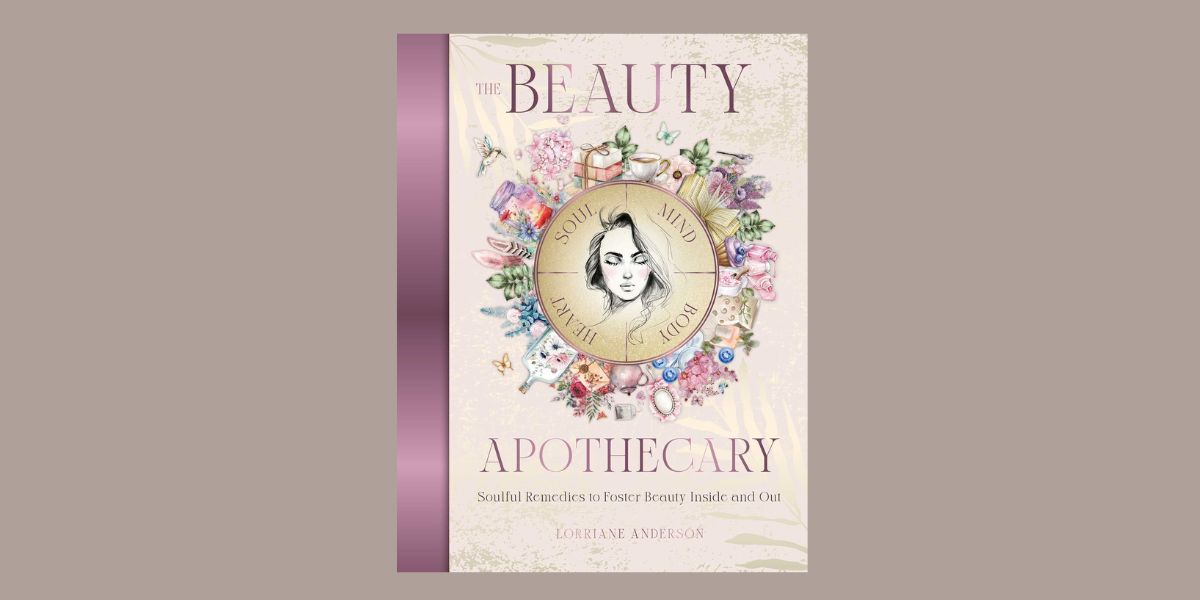
The Beauty Apothecary, by Lorraine Anderson

The Beauty Apothecary: Soulful Remedities to Foster Beauty Inside and Out, by Lorraine Anderson
Rockpool Publishing, 1923208012, 224 pages, March 2026

Beauty brings a quiet but powerful richness to life, shaping how we experience the world and ourselves within it by fostering presence and inviting us to slow down, notice, and connect more deeply. The Beauty Apothecary: Soulful Remedies to Foster Beauty Inside and Out by Lorraine Anderson highlights the value of fostering beauty in one’s life and presents a multitude of ways to enhance it day to day. Anderson shows that beauty is not a luxury, but a form of nourishment that restores, inspires, and reminds us that there is something worth savoring.

This sacred beauty bible invites readers to embrace beauty inside and out, blending self-care, spirituality, and ritual into a holistic approach to beauty. Rather than focusing on external aesthetics alone, the book emphasizes inner nourishment—mind, heart, and soul—as the true foundation of radiance. Anderson explores themes like self-love, self-awareness, and self-soverignty, while also offering recipes for more tangible beauty products for everyday use.

“It’s a metaphorical apothecary if you will, meant to address both a tangible sense of beauty through your physical body and environment, as well as an intangible sense of beauty through your emotions and spiritual connection.”1

Divided into three parts, the book begins with an exploration of beauty archetypes. Anderson has designed a quiz for readers to discover which of ten beauty archetypes they embody. The multiple choice questions get you reflecting upon things like what self-care means to you and when you feel most beautiful. I was quite surprised to realize how  much I enjoyed sharing beauty with others by my answer choices, revealing the Lover archetype as my most dominant!

For each of the archetypes, Anderson provides a whole profile. She details how each archetype fosters beauty as well as what drains their beauty. She provides insight into their approach to both inner and outer beauty, offering the best beauty strategies, restoration methods, and remedies for them. I gained a lot from my Lover profile, and I also really enjoyed reading through the different archetype profiles to learn about their essence and explore the many ways beauty shines in others. I’m sure my archetype might change, so I appreciate having this quiz and profiles handy to check in from time to time.

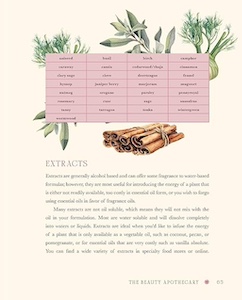
The other chapter in “Part I: The foundation of beauty” is an introduction to the items used for natural beauty products: plants and herbs, fragrance oils, essential oils, carrier oils, extracts, creams and lotions, salts and sugars, waters, and alcohols and witch hazel. While there are whole books written on these topics, Anderson gives enough information to make readers feel knowledgeable enough about these products to feel comfortable trying out the recipes later in the book.
“Part II: Nurturing Inner Beauty” has three chapters focusing on mind, heart, and soul. For each aspect of inner beauty, Anderson provides an overview, three aspects of “self” related to the principle (ex. Self-compassion for heart, self-awareness for mind), a chart of natural allies (essential oils, plants, and carrier oils), and rituals and recipes. From special Venusian candles to bath scrubs, yummy moon milk to grounding bed sheet powder, there’s so many neat DIY possibilities offered for fostering inner beauty.
In the last section, “Part III: Nurturing Outer Beauty”, Anderson offers a balanced approach to beauty, sharing her best beauty tips while also cultivating a grounded spiritual aspect to her approach too. Suggestions like building a beauty altar and performing a sacred adornment ritual set the stage for the wide variety of recipes to follow.

The chapters focus on everyday beauty and then beauty for hair, body, and fragrances. In this part, the recipes are a bit more elaborate, guiding readers to work with base products (carrier oils, lotions), specific ingredients (herbs, essential oils), and tools (double broiler or crock pot, the right containers for the items). These acts of cultivating beauty often require time and intention, asking us to pause in a world that rewards speed, but the investment is a worthwhile one.

All throughout, Anderson’s writing tone is gentle, affirming, and spiritually infused. Her style imparts wisdom while also engaging the intuitive, emotional side of readers too. While informative, Anderson presents content that is calming and reflective, reading less like a manual and more like a guided self-devotional text. Her holistic approach to beauty is refreshing, opening up readers to the energetic state of beauty in addition to the physical appreciation of it.

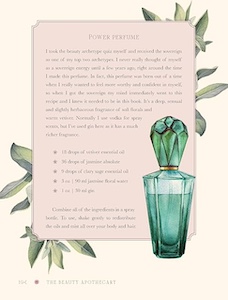
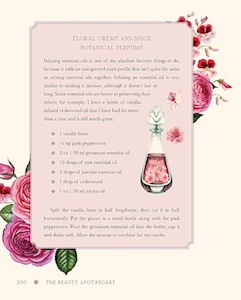
And given the topics covered, it only makes sense the book itself is balanced, beautiful, and visually alluring. Different texts and fonts, bullet points, and soft color tones make the content easy to absorb. The illustrations infuse the text with the beauty of the natural world and provide a place for your eyes to rest while your mind wanders.

So far, I’ve mostly focused on bath salts and sugars–my favorite type of beauty care. But I am looking forward to branching out to try more of the recipes this summer when I have a bit more time on my hands. For now, the reflective questions in the inner beauty sections are serving as guides for my spirit, inviting me to explore more deeply what beauty means to me and how I can cultivate it in my life.

Overall, I highly recommend The Beauty Apothecary for those seeking a bridge between beauty rituals and spiritual practice. Anderson’s approach honors and highlights beauty in ways that feel interactive rather than just conceptual. Readers who view self-care as sacred or who want to deepen that perspective are sure to appreciate the blend of embodied practices, recipes, and inner exploration, making for a variety of ways to connect with the material. The integration of emotional well-being, spiritual alignment, and self-perception into the concept of beauty is a welcomed approach to wellness.

About the Author

Lorriane Anderson is a tarot reader, astrologer, spiritual teacher, and entrepreneur whose work centers on intentional living and spiritual transformation. She is best known for her Seasons of the Witch oracle series, though her other titles are amazing too, such as Moon Apothecary and Witching Hour Oracle. Anderson also operates spiritual education and product-based businesses, including Spirit Element and Made with Stardust. Her writing is deeply informed by ancestral practices and modern spiritual frameworks, aiming to make ritual and energetic work accessible in everyday life.

Coven, by Fiona Horne

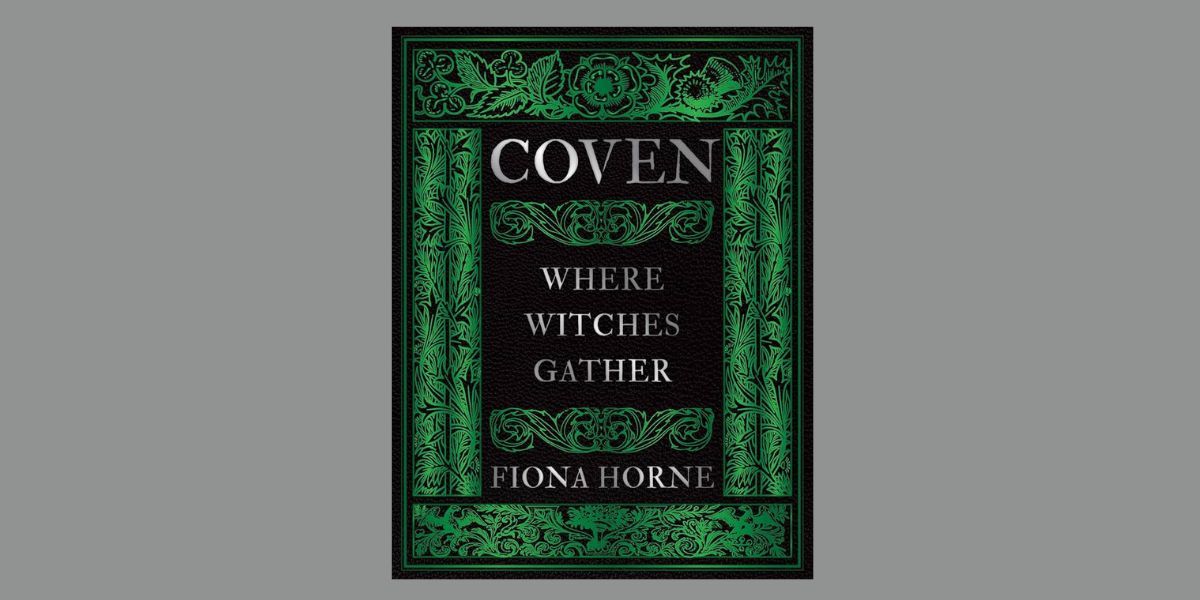
Coven: Where Witches Gather, by Fiona Horne
Rockpool Publishing, 1923208462, 272 pages, March 2026

For many witches, the path begins in solitude – a quiet unfolding of intuition, ritual, and personal power. Yet there is a different kind of magic that awakens when practice becomes shared. Being part of a coven offers more than companionship; it creates a living current of collective energy where wisdom is exchanged, strengths are amplified, and individual blind spots are gently illuminated. Within a trusted circle, ritual deepens, accountability strengthens intention, and transformation becomes both witnessed and supported. Coven: Where Witches Gather by Fiona Horne explores how magic can be enhanced through group relationship, becoming shared sacred work, and offers guidance for creating or finding your own magical community.

Author Fiona Horne is an Australian witch, author, musician and teacher who emerged publicly in the 1990s as one of the first modern practitioners to openly identify as a witch in mainstream media. Raised with an early interest in mysticism and the occult, she later helped popularize contemporary witchcraft through bestselling books that reframed it as a nature-honoring, self-empowered spiritual path rather than something secretive or sensationalized. Over the decades, her work has focused on making witchcraft accessible, community-oriented, and aligned with modern life, encouraging practitioners to claim their identity openly and practice with confidence. This book is a revised and updated version of her previous publication The Coven: Making Magick Together (2003).

I was immediately impressed with the smooth texture of this book and gilded green edges. Though light in weight, there is a feeling of spiritual significance that comes through the book’s design. There’s a sensory elegance to it; the surface feels deliberately textured with care, as if it was made to be handled slowly. Instantly, I recognized this as a potent grimoire.

Peeking inside, I noticed the enchanting design continues within too. The interior pages all have an intricate border design, adding a feeling of elegance. The text is well structured and neatly organized with plenty of headings, bullet points, and different size and style of fonts. There’s also a nice ribbon for bookmarking your place. All throughout illuminating black and white images that contribute to the magical resonance, infusing the text with visual prompts too.

As for the content, Horne begins with a chapter introducing witchcraft, including what witches believe and laws of witchcraft (many from traditional Wicca), followed by a chapter on witchcraft in the past, present, and future. The information in these sections sufficiently grounds readers in the wider context of witchcraft, a base from which they can then go and explore covencraft.

“A coven is a sacred space – but it’s also a shared space, and that means it comes with all the beauty and complexity of human interaction.”16

There’s so many elements to a coven, and Horne covers the different aspects and layers of this joint interaction in the following chapters. From the get-go she distinguishes the type of coven this book is aimed for is different from traditional Gardnerian and Alexandrian witchcraft ones. Some of the differences in modern covens that Horne values are things such as shared leadership, inclusivity, environmental focuses, and rapid adaptation and flexibility. Meanwhile, she also shares different types of covens, ranging from eclectic ones with members who have a mixture of magical backgrounds to “working” covens that are more focused on learning and discussion, and noting how some covens meet in-person while others are virtual. The main emphasis is on the variety of ways a coven can exist, giving readers plenty of room to feel into what would be best suited for them.

As for actually forming or finding a coven, Horne provides plenty of advice for where one might connect with other like-minded souls, even providing an attraction spell. She also shares how to know if someone is a good fit for a coven. Once the group is established, Horne guides readers through the process of establishing responsibilities, picking deities, naming the coven and choosing a magical name for one’s self, and deciding where to gather. She also covers topics such as choosing which tools to use within the coven as well as wardrobe when gathering, noting the financial element of these decisions too. All of these small decisions laid out clearly provide a good roadmap for beginning a coven’s journey.

Horne has a whole chapter dedicated to how to run a coven meeting, including preparation, casting a circle, element invocation, inviting the deities,raising energy, and closing the circle. This chapter is a great resource for those familiarizing themselves with group magic. Subsequent chapters then cover topics such as sabbats, spellwork, group meditation, magickal gathering (open to those outside the coven too), sacred play, sex within the craft, and healthy living.

One chapter that I think is very valuable is “The Art of Coven Keeping” because I’ve seen SO many covens fall apart from disagreements, gossip, jealousies, misunderstandings, and simple lack of energy or interest in maintaining them. There’s usually a potent energy at the formation of a coven, but sustaining this energy takes work. In addition to this information in this chapter, Horne also has created an oracle deck, Coven Oracle, to provide insight into group dynamics that I think is a great tool for any group work.

I really resonated with her approach to covens, making it feel much more accessible than the traditional, “hidden” covens that require much more rigid adherence to a belief system and thorough initiation. In fact, Horne’s approach to the coven dispelled many long-standing beliefs I had about covens. For the first time, I believed it was possible I could create my own or find an aligned magical community. Not only does Horne provide an overview of how to do this, but she leaves so much room for personalization, especially considering every coven will have unique energies. I enjoy how she honors the art of covencrafting, rather than trying to make it fit in specific and outdated boxes.

At the same time, Horne takes a very practical approach to covens. The chapter dedicated to legally incorporating a coven as a spiritual organization was all novel for me. I had never really thought about this approach, but it makes sense in that the organization becomes tax exempt and is eligible for grants. I appreciate how Horne offers this, in addition to all her magical advice, because it grounds the potential of each coven in our structured reality.

“Because beneath the hashtags and highlight reels there is still a living, breathing mystery – a sacred, subversive truth that belongs to witches; a truth about power, connection, and the unseen forces that shape our world. This book isn’t just a how-to. It’s a lived testament to community, courage, and the magick we create when we gather in trust and intention.”17

Overall, Coven stands out as a thoughtful and practical resource for witches drawn to group magical working. Horne offers meaningful insight into not only how to form a coven, but how to nurture, protect, and sustain its energetic integrity over time. By weaving foundational witchcraft principles with guidance on leadership, harmony, and shared intention, she creates a framework that feels both accessible and purposeful. For those seeking to move beyond solitary practice and into the alchemy of collective magic, this book serves as a steady and encouraging guide. There’s so much to explore within a group witchcraft practice, and Horne has truly provided the community with a valuable tool for navigating this special type of magic.