
✨ A Gathering Place for Magical Readers and Writers ✨

Tag Archives: weiser books

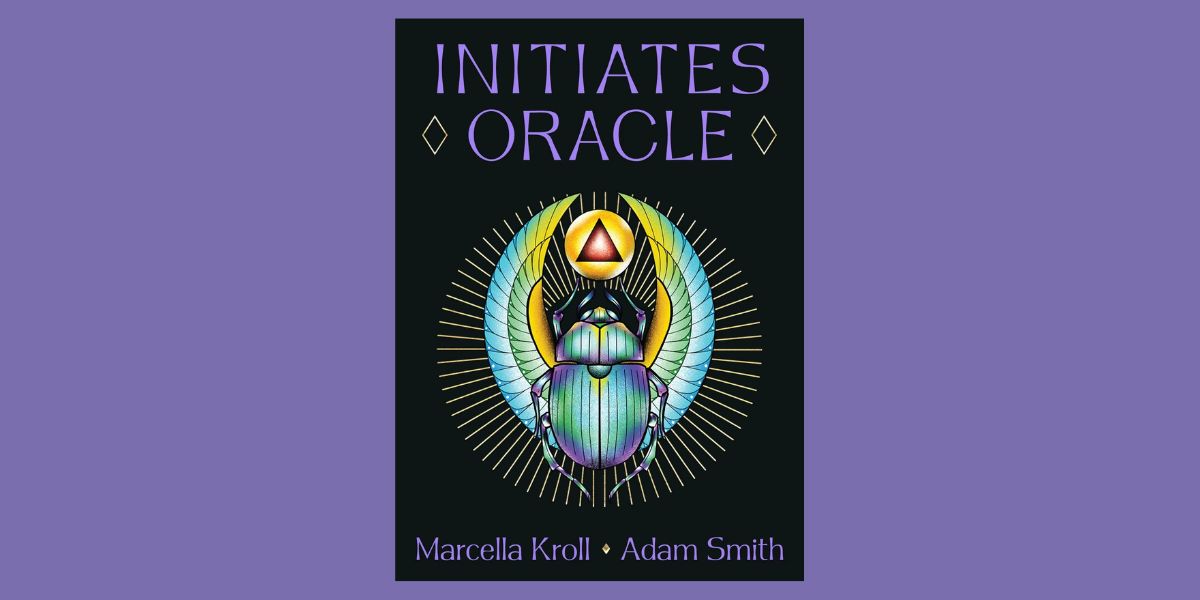
Initiates Oracle, by Marcella Kroll and Adam Smith

Initiates Oracle: Occult Hermetic- and Egyptian-Inspired Rituals for Profound Transformation, by Marcella Kroll with illustrations by Adam Smith
Weiser Books, 1578639255, 128 pages, 40 cards, May 2026

Looking for a deck filled with esoteric symbols, Hermetic motifs, and Egyptian mysticism? Introducing Initiates Oracle: Occult Hermetic- and Egyptian-Inspired Rituals for Profound Transformation, by Marcella Kroll with illustrations by Adam Smith. Inspired by the creators’ travels through Egypt, this deck emerged as “a tool for healing, guidance, and spiritual growth.”1

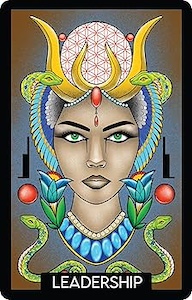
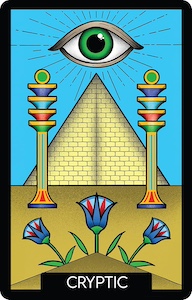
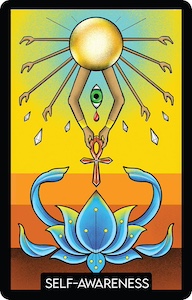
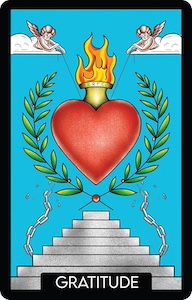
The first thing I felt when I shuffled this deck and looked at the images was a sense of awe AND relief. While the imagery definitely has an air of mystery, there’s nothing pretentious or overly complex in the symbolism. The bold colors drew me in, making me want to look closer and study the cards rather than skim over them for the sake of jumping right to the guidebook meaning. Instead of dark, moody mysticism (the kind intent on showing JUST how exclusive and elusive this sacred knowledge is – ugh!), this deck leans into something much more graphic and symbolic.

I appreciated the aesthetics of the deck even more when I discovered illustrator Adam Smith has decades of tattoo artistry experience. The colors are intense and unapologetically bright—turquoise skies, golden yellows, fire reds, electric blues. Everything is outlined in thick black lines, giving it a very crisp, legible look. There’s very little shading or gradient. The look of the cards feels closer to screen-printed art or tattoo flash than painterly illustration. Shapes are simplified; figures are stylized rather than realistic.

This style aligns with the Smith’s background in tattooing, where crispness and boldness matter. The distilled symbolic imagery to create impact rather than subtlety. The imagery comes across as clear, symbolic, and declarative. And the balanced layouts, either featuring a central focal point or mirrored elements, make for a well constructed deck. The overall style is a blend of traditional occult symbolism, modern vector illustration, and retro animation simplicity–definitely something that looks great on an altar!

As for the accompanying guidebook, the content is kept pretty short and sweet. Surprisingly, there’s not too much shared about the deck’s creation process and the only advice for using the cards details is setting an intention, pulling a card, contemplating the meaning, and journaling. There aren’t any spreads offered, nor much contextual information that sets the stage for the card’s imagery and messages.

In the guidebook, for each card Kroll provides keywords, symbolism, and a divinatory meaning. Unlike many other oracle decks, there’s no key words written on the cards themselves, so the keywords are definitely helpful when getting acquainted with the deck. The symbolism is also useful because it puts the card into perspective by highlighting the illustration, further providing meaning readers can draw upon.

As for the divinatory meaning, Kroll discusses the symbolism and weaves it into the card’s meaning. Each message is pretty short overall, but so far, I’ve gotten exactly what I needed from every draw. For instance, when I questioned whether the path I was following was the right one, I pulled the card Initiation, which reads “Ultimately the Initiation card is a powerful reminder of the sacred journey you are on, calling for commitment, discipline, and the willingness to face trials with courage and wisdom.”2

Then this morning when I was quarreling with my husband about parenting styles, I decided to take a moment to pause, collect myself, and pull a card. Asking what could bring an end to our disagreement, I pulled the card Union! This card represents the alchemical marriage and “the merging of microcosm and macrocosm, reflecting cosmic unity.”3 I particularly resonated with the additional description that read “this card signifies deep connections and partnership based on mutual respect and understanding.”4 This helped me to re-approach my husband in a better mindset, ready to listen and be more receptive to his point of view.

Given my experience so far, I’d say this deck is very much attuned to the greater spiritual picture. And I think that’s due to the universal symbolism contained within it. It’s less about the little details and more about those overarching concepts that have quietly shifted and shaped our reality, and have been for as long as humanity has been around. While not intentional, it’s as though the deck quiets the ego concerns and hones in on what’s really happening in the soulful ether, offering both guidance for the conscious mind and symbols for the unconscious, bridging the two for clarity.

While the concepts in the deck might seem like advanced esoteric knowledge, Kroll’s writing and Smith’s illustrations make it accessible for readers of all levels. It’s actually kind of refreshing how the deck doesn’t try to go too deep into complex topics, leaving plenty of room for the intuition of the reader to be heard and space for further synchronicities and exploration.

Overall, Initiates Oracle offers a compelling balance between depth and accessibility, offering a visually bold and symbolically rich experience without overwhelming the reader. It’s a deck that trusts you—your intuition, your lived experience, and your ability to sit with meaning as it unfolds—rather than over-explaining or prescribing rigid interpretations.

While those seeking extensive background or structured spreads may find the guidebook a bit sparse, others will appreciate the openness it creates, allowing each draw to feel personal and alive. For readers drawn to esoteric themes, specifically Hermetic and Egyptian, but wary of gatekeeping or unnecessary complexity, this deck is a perfect bridge. Initiates Oracle honors ancient wisdom while remaining grounded, usable, and refreshingly clear for the modern reader.

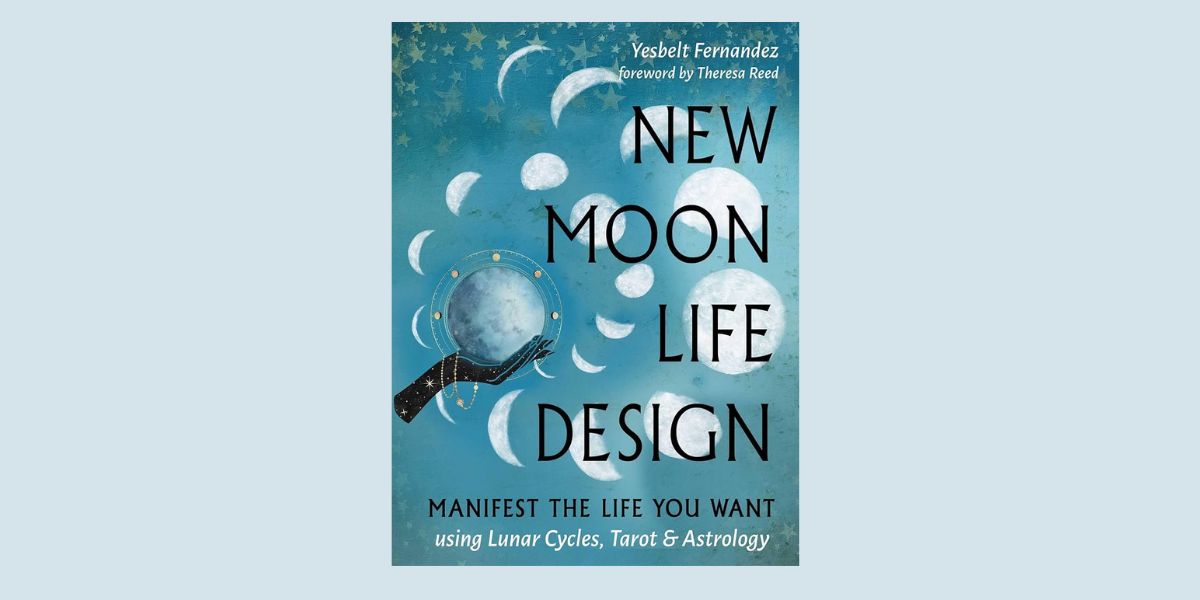
New Moon Life Design, by Yesbelt Fernandez

New Moon Life Design: Manifest the Life You Want Using Lunar Cycles, Tarot, and Astrology, by Yesbelt Fernandez
Weiser Books, 1578638747, 256 pages, April 2026

Syncing with lunar cycles, astrology, AND tarot? Talk about a powerhouse of manifestation. New Moon Life Design: Manifest the Life You Want Using Lunar Cycles, Tarot, and Astrology, by Yesbelt Fernandez covers the trifecta for those seeking to align with ever-changing energies of the universe to set intentions and see them through to fulfillment.

“This system weaves lunar cycles, tarot, and astrology into a rhythm you can actually live by. A rhythm that helps you reflect, choose, act, and grow–with clarity and meaning.”4

Following a heartfelt introduction in which Fernandez shares her background and encourages readers to have the confidence and courage to live the life they desire, the book begins with “Part One: The Big Three: Lunar Cycles, Astrology, and Tarot”. Each modality has its own chapter in which Fernandez gives an overview of the basics. While it’s a condensed version of each modality, as they can take years to study and learn on their own, Fernandez distills the most important aspects and shares enough for readers to understand the system being presented in subsequent chapters. She covers topics such as key phases of the moon and seasons; planets, zodiac signs, and houses; and the different types of cards in the tarot (Major Arcana, Minor Arcana, Court Cards, Aces).

It is within the first part of the book she also introduces us to a core concept in this tri-system: moonths. Fernandez explains these are “twenty-nine-and-a-half-day lunar cycles that offer us a cosmic way to measure time.”5 The main premise of the book is how to attune to the energy of each moonth by considering astrologically the zodiac sign, modality, element, house ruler, area of life in one’s chart, and energy of the placement, along with the corresponding tarot card.

While it seems like a lot to integrate, the way Fernandez breaks it all down in “Part Two: Synchronicity: Tools for the Spiritual Journey” grounds the wisdom of these modalities into a format that makes it streamlined to learn and apply to one’s life. She even discusses how she specifically designed this method with SMART goals in mind–specific, measurable, achievable, relevant, and time-bound.

Within four chapters based on the seasons, Fernandez guides readers through all the moonths. She associated the seasons with the four moon phases too–winter is akin to a new moon, spring the waxing moon, summer a full moon, and autumn the waning moon–once again embedding layers within layers of this spiral pathway.

At the start of each seasonal chapter, Fernandez provides an overview of this time of the year , noting the general energy, meaning of the solstice or equinox that heralds its arrival, and the corresponding tarot cards. Next, the three zodiac signs are covered that comprise the season. Each zodiac profile is very detailed, featuring a message from the sign,information about the planetary ruler, overall themes of the moon, keywords, moon progression through the cycle, meaning of the moon in each house, and tarot profiles for the sign, also featuring directives for each phase of the moon.

Throughout, there were a few times I felt the text could have used a bit more information. For instance, the system is designed based on 12 moonths, but sometimes a new moon or full moon can happen in the same sign twice in a year. While there’s only one new moon in each zodiac sign in 2026, in 2027 there’s two new moons in the sign of Virgo happening on August 2nd and August 31st. Since there wasn’t much guidance on how to accurately track the moon, readers might get confused with the placement of the moon for each moonth.

Similarly, for each zodiac sign, Fernandez describes the transits of the moon cycle with words such as “Aries Waxing Moon” and “Aries Full Moon” and this was very confusing for me as an astrologer. This wording is so off-base from an astrological point of view because the full moon is most of the time in the opposite sign as the new moon, while the waxing and waning moon also occur when the moon is in a different sign. For instance following an Aries new moon, the waxing moon would be in Cancer, full moon in Libra, and waning moon in Capricorn. However, Fernandez moves through the moon phase by describing it as “Aries Waxing Moon”, “Aries Full Moon”, and “Aries Waning Moon”, which I ultimately presumed meant the phases of the moon that occur in that particular moonth but don’t actually correspond to the astrology.

It’s for this reason that I think the book is best suited for those whose tarot and astrology knowledge is between a beginner and intermediate level. When I first learned to manifest with the moon, I only worked with the new moon sign and the phases, so there’s a lot to be gained from Fernandez’s methodology. But those who already have an astrological practice might be confused by the presentation of the information, as it’s definitely geared towards those who are new to the modality.

The final section “Part Three: The Spiritual Practice: Weaving Intentions into Life’s Cycles” is where the real exploration of manifestation occurs. Focusing on the spiral path, Fernandez discusses the eight dimensions of wellness, encouraging readers to check in and see how fulfilled they feel in each area. Then she once again moves through the phases of the moon, teaching which aligned actions to take throughout the course of each moonth, utilizing tools such as tracking the zodiac energy, setting meaningful intentions, tarot spreads, and journaling. The final part focuses on making this a group process with ideas for structuring gatherings to share in this work with others.

Overall, New Moon Life Design is a structured spiritual practice that honors the ebbs and flows of the moon cycles and seasons. Blending lunar cycles, astrology, and tarot into a cyclical system for manifestation and self-reflection, Fenandez centers on the idea that growth is not linear but spiral in nature. Instead of treating astrology, tarot, and lunar timing as separate systems, Fernandez shows how they overlap and reinforce each other, creating a cohesive framework. What’s best about it, throughout, is that it’s less about quick manifestation and more about building a relationship with time, cycles, and self-awareness, creating a meaningful practice that can truly reoriented your life.

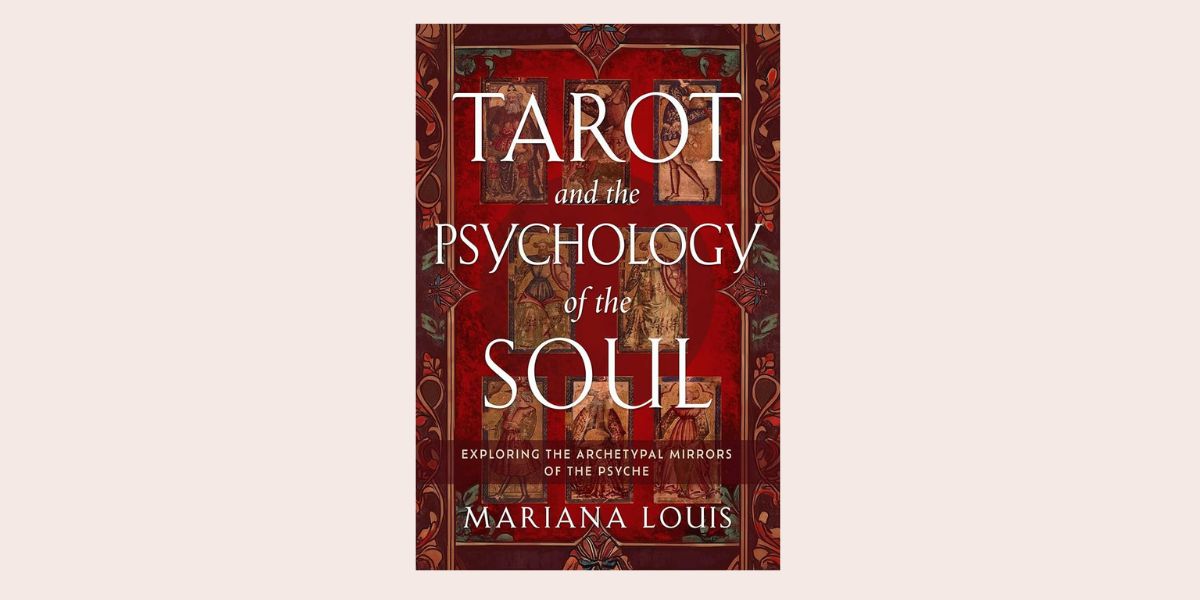
Tarot and the Psychology of the Soul, by Mariana Louis

Tarot and the Psychology of the Soul: Exploring the Archetypal Mirrors of the Psyche, by Mariana Louis
Weiser Books, 1578638984, 320 pages, March 2026

People are drawn to tarot cards for all kinds of reasons. Some come to tarot out of curiosity or a desire for guidance during uncertain moments, while others are pulled in by the imagery, symbolism, or a deeper spiritual calling. That range of motivations is exactly what makes tarot such a versatile tool, and Tarot and the Psychology of the Soul by Mariana Louis takes this a step further by redefining what the cards can offer.

In Tarot and the Psychology of the Soul, Louis  does not position tarot as an oracular tool, but rather as a mirror of the inner world. Coming from the lens of depth psychology, she frames the cards as archetypal symbols that reflect both conscious patterns and unconscious material, inviting readers into ongoing inner work rather than one-off readings.

“In this approach, which you will be guided through in this book, we do not read the cards for predictive divination or even encouraging self-care, but as a tool to support our individuation, the psych-spiritual process of self-becoming.”6

Following an engaging introduction that establishes the foundation of the book, the content is divided into four parts. “Part 1: Depth Psychology and the Analytical Approach” covers the basics of depth psychology: individuation, the strata of psyche, and archetypes, synchronicity. Louis also presents the framework for working with the cards archetypally, teaching readers how to build a relationship with the cards, strengthen their intuition, and form questions that draw the best response. Techniques shared, such as active imagination and shadow work, are portals for deeper self-excavation. Louis has a knack for making these complex topics approachable, ensuring concepts are well defined and clear to readers before building on the information she’s presenting.

“Part 2: The Minor Arcana” begins to get deeper into the cards themselves. Louis explains, “the Minor Arcana show us the dynamics of our psyches, revealing its inner conflicts, strengths, processes, and neuroses.”7 She draws a parallel between the four suits and Carl Jung’s theory of personality which focuses on the four functions we all possess (thinking, feeling, sensation, and intuition). She then proceeds to delve into archetypal numerology and applies Joseph Campbell’s hero’s journey to the Pips, which was totally fascinating in my opinion and one of my favorite sections!

From here, Louis moves through both the Minor Arcana and Court Cards, providing insights of the traditional meanings from the perspective of depth psychology. She moves suit by suit, she covers both the upright and reversed guidance the cards have to offer. As mentioned prior, Louis’ insights are not predictive, so the focus is on the inner workings of the reader. For instance, part of the Five of Wands entry reads:

“We often find ourselves involved in a battle between our contrary drives, perspectives, and complexes. One part of us fights to focus on career, while another demands we face our self-doubt, while yet another begs for relaxation. Rather than be riled to the point of explosive frustration, we must make room for each of the voices within us to speak and release its energy.”8

Before covering the Court Cards, the chapter “The Many Faces of the Tarot Court” covers additional depth psychological concepts, such as projection, persona, typological maturity, and complexes. Whereas the interpretations for the Minor Arcana cards are written in the first-person “we” form, the Court Card descriptions are in third person, presenting each one as an individual to be identified as a part of our whole self. Louis uses mythology and fairy tales to highlight the nature of the Court Cards, further providing a way for readers to connect with each card’s archetypal energy.

In “Part 3: The Major Arcana”, Louis shows readers how the Major Arcana reflects the entire journey of individuation. Beginning with the Magician and ending with the Fool (such an illuminating layout), she guides readers through the archetypal tarot framework. For each card, she gives an overview of the symbolism, often relating it to alchemy, mythology, and even pop culture (Yoda and Gandalf energy comes through!) as well as including insights from well known depth psychologists (James Hillman, Marion Woodman).

The whole archetypal journey moves from the primordial powers to the birth of the Self through the emergence of the shadow to finally arrive at wholeness. Simply reading this section is very inspiring, introducing a deeply meaningful philosophy of life as mirrored in the Major Arcana. The interpretations Louis provides for the card appearing in a reading–both upright and reverse–shed light on the parts of yourself and life journey that are calling for acknowledgement, pointing the way towards integration of the energy.

Louis’ presentation of each card from a psychological lens really hits home. She perfectly captures the balance between esoteric and mundane, honoring the liminal spaces where the psyche speaks. I could feel the messages in the heart as I read them, and some even brought me to tears. Here’s a few lines from one of my favorite cards, the Star, when it appears in a reading:

“The Star comes to remind us of our potential and higher purpose. Now is the moment to claim–without a word of rebuttal–I am special and I have meaning in this world. With the Star risen before us, we are invited to develop the security that only comes when we are at peace with ourselves.”9

The final part, “Reading with a Psycho-Spiritual Lens”, guides readers through the ritual of reading tarot and offers archetypal spreads. Louis lists steps for preparing for a reading and then interpreting the cards. The spreads offered focus on synthesizing this content in the book thus far, offering card placements that reflect depth psychology themes: tension of opposites, inner work, and unconscious/conscious/higher calling. While there’s many directions one could build from with this book, this section is a great starting point for the journey.

Overall, Tarot and the Psychology of the Soul is just a true gem for cultivating a relationship with the psyche. Rather than teaching how to memorize rigid meanings or predict the future, Louis teaches readers how to use tarot as an access point into the on-going, life-long work of becoming whole. She gives structure to inner work practices that can often be abstract, helping readers engage with their psyche in a tangible way.

As someone who spent many years studying both depth psychology and tarot, I was genuinely impressed by the scope and content of this book. Louis’ insightful intelligence shines through every page. The time she’s dedicated to cultivating this approach, bridging these two potent systems for self-reflection, is evident.

Those with an interest in psychology, particularly archetypal studies, will find a wonderful introduction to the tarot cards, while people with a tarot background are in for a real treat with the comprehensive approach Louis offers, sure to enhance anyone’s reading style. By grounding tarot in archetypal and depth psychology concepts, Louis offers a language that will resonate with modern spiritual seekers who want to explore their inner workings more fully. This style of working with the tarot is perfect for self-guided healing and introspection.

About the Author

Mariana Louis is a contemporary tarot teacher and scholar known for her psychologically oriented approach to the cards. She transitioned from a background in musical theater into the world of tarot, eventually becoming a recognized voice in the space, with a strong online following and teaching presence. Her work is deeply influenced by depth psychology and archetypal studies. Beyond this book, Louis shares offerings through her platform Persephone’s Sister and spreads her wisdom on her podcast Soror Mystica, co-hosted with Cristina Farella. I definitely recommend checking it out if you’re interested in this topic. I did a deep dive into the podcast and loved it!

Crystal Keys Tarot, by Dina Rosenberg and Amalia Drewes

Crystal Keys Tarot, by Dina Rosenberg with artwork by Amalia Drewes
Weiser Books, 1578639050, 176 pages, 78 cards, April 2026

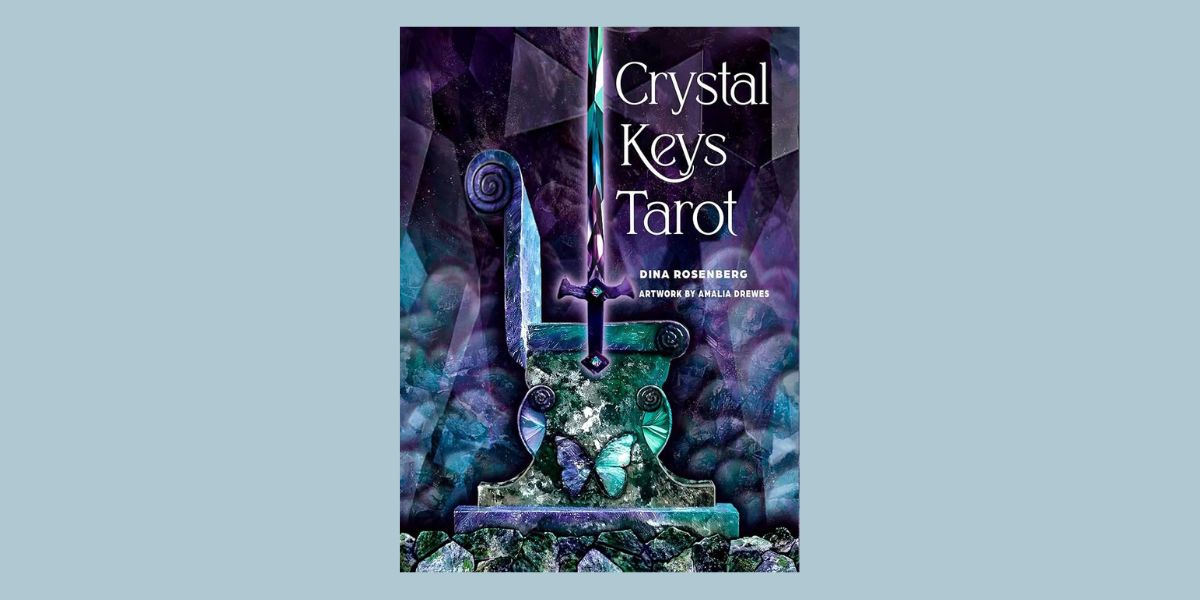
If you’ve spent any time working with both tarot and crystals, you already know how naturally those two energy systems speak to each other. Crystal Keys Tarot by Dina Rosenberg with artwork by Amalia Drewes leans fully into that intersection, offering a tarot deck that doesn’t just reference crystal energy, but builds its entire interpretive structure around it. The result is an oracle system that feels familiar on the surface, yet slightly refracted, like looking at classic tarot through a mineral lens. I love it!!

Creator Dina Rosenberg brings decades of tarot experience to this deck, along with a strong grounding in metaphysical practices as the co-owner of Amityville Apothecary and The Anenaeum of Amityville Apothecary in Long Island, New York. Amalia Drewes, an illustrator inspired by nature, spirituality, and myth, contributes artwork that aligns closely with themes of energetic resonance and transformation . Her artistic voice plays a major role in shaping the deck’s identity, especially in how the cards visually embody crystal forms and textures.

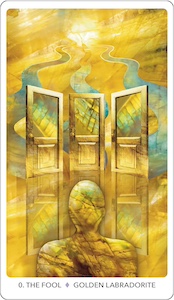
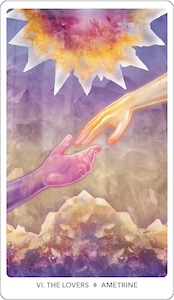
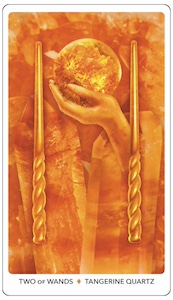
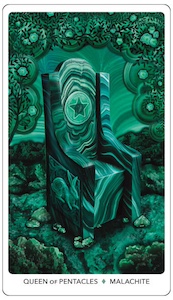
The deck follows the traditional Rider–Waite-Smith (RWS) tarot framework, making it immediately readable for most tarot users. Each of the 78 cards is paired with a specific crystal energy that aligns with the card’s energy, adding an extra symbolic layer to interpretations. However, the crystal for each card isn’t reflective of traditional correspondences for the cards; rather, Rosenberg spent an entire year feeling into the energy and channeling each card’s crystal. The deck integrates the crystal into the identity of each card, making for an intuitive symbiosis that brings new facets of the tarot archetypes to light. Rosenberg explains:

“You will see that our focus is about the energy and feeling of the cards, infusing the tarot archetype with the crystal, and vice versa, more so than fitting all the traditional symbols, colors, and images into each card. The goal is to distill each of the seventy-eight cards into a feeling that is truly relatable and pair that feeling with a crystal that supports the specific energy.”10

The cards are standard playing card size, allowing them to fit nicely in your hands while shuffling, with gilded purple edges. Each card leans heavily into a single dominant color family, mirroring the crystal it represents: cool aqua blues (Amazonite), golden yellows (Golden Labradorite), warm orange ambers (Tangerine Quartz). The tone variation within each color gives a dynamic feel to the imagery, making the imagery look slightly hypnotic.

While some cards have a non-descript figure, most feature animals, crystals, or simply the card symbol (Swords, Pentacles, Wands, and Cups). There’s a dreamlike, slightly surreal quality, but it’s not chaotic or symbolic-heavy like some decks. Rather, edges are softened, forms blend into each other, and perspective feels fluid rather than fixed. It gives me the fantastic feeling of entering the crystal realm, as the imagery seems like it has emerged from the crystal itself, emphasizing texture, aura, and energetic presence rather than narrative scenes.

Figures, symbols, and landscapes are etched in crystal, shifting the reading style from story-based interpretation to something more vibrational and intuitive. I would liken the cards more to  energetic imprints than “scenes” being depicted in more traditional tarot such as RWS deck. I personally love how it de-centers human representation and taps into the energy of the natural world instead. I can see how Drewes is portraying the essence of each crystal in the card while also capturing the card’s meaning as well; it’s truly spectacular artwork.

As for the guidebook, it’s nice and big (about 4 x 5 inches), easy to keep open to read, and has full-color illustrations. For each card, Rosenberg provides an overall description of the card, covering both the tarot meaning and the energy of the crystal plus how they come together, an affirmation, and a few-word summary of what pulling the card meanings in a reading.

I really like her voice in the guidebook, as she sometimes shares her own experiences in life, ranging from the heartbreak of divorce to opening and running her shop, while also explaining what the card is asking of the reader and how the crystal energy can be used for support. I appreciate the infusion of her energy into the wisdom in the guidebook. While Drewes’ imagery is quite dreamy, Rosenberg’s perspective is much more “tell it like it is”, which I always appreciate when it comes to spiritual matters and divination (it’s the East Coaster in me – made sense when I saw that Rosenberg lives in New York!). I’m not left with more questions and an invitation for more reflection when I come seeking guidance; I get a clear answer, practical advice, and affirmation, and a crystal energy to work with further.

Here’s an example of how Rosenberg blends both tarot wisdom and crystal energy in the guidebook:


“The Eight of Cups is confirmation that you’re right–the vibes are off. Maybe on the outside everything looks fine. And sure, you could ignore that whisper inside, push it down, keep going. But you know. Deep down, you know. This phase of your life has run its course. . . .

Pink Opal assists in following the whispers of the heart towards your true, authentic path. As a crystal of renewal, it reconnects you with yourself and what you truly want on a soul level. While it reminds you of who you are, it brings peace, soothing calm, and relaxation so as to not overwhelm the nervous system when difficult choices must be made.”11

I just love how Rosenberg speaks to the reader in the guidebook, dialoguing directly with their spirit instead of just reciting a generic message for the tarot. This guidebook is truly one of a kind in how she blends different energies into something meaningful, potent, and insightful for the reader. More than a route interpretation, a living exchange unfolds on the page—one that invites reflection and personal resonance rather than passive consumption. It feels less like being told what a card means and more like being guided toward discovering how that meaning already exists within you.

Overall, Crystal Keys Tarot is less about reinventing tarot and more about reframing it. This deck takes a familiar system and filters it through the language of crystals, creating a deck that feels grounded, intentional, and energetically focused. Drewes’ artwork brings the crystal world to life, perfect for readers who are seeking an intuitive deck that taps into an energy that goes beyond the personification of court cards and the major aracana cards with people on them. There’s plenty of room for intuition to piece together the story with these cards.

Similarly, those drawn to working with crystals will also really appreciate the aesthetic and guidance from this deck too. Rosenberg has done such a wonderful job weaving together the energies of tarot and crystals in this deck, aptly capturing the unique wisdom this combination brings for the message of each card. So far, this has been my favorite deck of 2026 and I look forward to continuing to work with it!

Ogham, by Jane Matthews

Ogham: Divining in the Celtic Way, by Jane Matthews
Weiser Books, 1578638909, 192 pages, 25 cards, March 2026

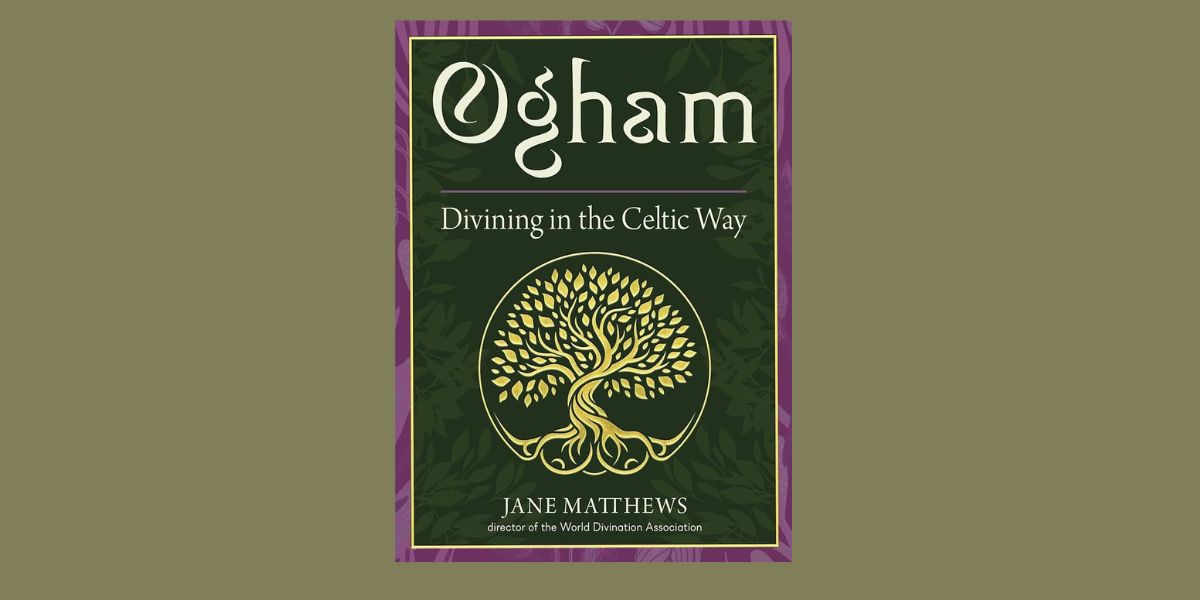
Ogham: Divining in the Celtic Way by Jane Matthews is a beautiful way to connect with powerful Celtic knowledge. Based on the earliest Irish written script, Ogham is rooted in the Celtic belief system. While most associate Ogham with corresponding trees–Matthews notes these correspondences were added later for Druids and Bards to remember the meanings of each letter–there’s plenty of wisdom within the letters themselves. She writes of the Ogham:

“The meanings all bring a duality with them. There is light and dark in each, and this makes them truly unique in how they present themselves.”12

This 25-card oracle deck is divided into four “families” called aicme, which are similar to the Futharks in the runes system for reference. Within each aicme is five fedha, or characters of the Ogham alphabet. At the start of each section, Matthews describes what each aicme deals with, illuminating the overall theme of the fedha in that section. The other five cards in the deck are the forfeda, which are the “additional letters”13.

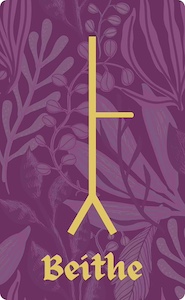
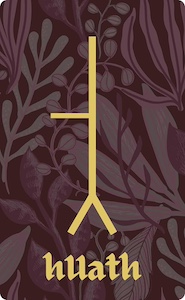
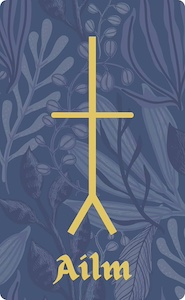
Each one is color-coded, so once a reader is familiar with the deck, they will be quickly able to discern which aicme the card is from. The fedha cards are dark blue, violet, indigo, and dark, while the forfeda cards are a contrasting bright white. All the cards have the same layered botanical pattern in the background, making the focus the golden Ogham glyph in the center and name at the bottom of the card.

Aside from the shift in color and Ogham glyph, there’s not much variation in the visuals of the cards, giving a clean and simple aesthetic. It’s a restrained design overall, but it works well for a system like Ogham where the power of the symbol is meant to stand on its own. It makes me imagine how these symbols would have appeared carved into wood or stone.

There are no corresponding numbers, so when first working with the deck, readers will most likely have to reference the table of contents in the guidebook to find the page of entry.

As for the guidebook entries, for each fedha card listed is the associated tree, keyword, letter, stroke bearing, and pronunciation. Matthews then gives insight about the Ogham’s particular message, providing further specific information within the context of a relationship, work, and health. I really enjoy all of Matthew’s insights, particularly into health, an area of life that I had never considered to engage with the Ogham’s energy. All of the advice she provides is very grounded, acknowledging the energies in play with clarity and directness.

What surprised me the most was how the messages did not at all focus on the aspects of the trees associated with each Ogham. I actually really enjoyed this because all I’ve read about Ogham previously is specifically focused on the spiritual properties of the corresponding tree, rather than the symbols themselves. Getting to know the symbols on their own has been quite illuminating, particularly Matthew’s insight into the brush strokes that highlight the pathways to the Underworld, World, and Otherworld.

“When you’re looking at the fews in this way, it is easy to see how all paths come through our world, and that means that we have the answers to all that has been and all that will be–it is all at our fingertips, in this world for us to seek and understand. This world is a portal to all worlds and all the information that all worlds possess.”14

I also really enjoyed learning about the forfedha, which Matthews describes as “important on an esoteric point as they provide cosmological and directional signs.”15 They provide a map of the cosmos that can be then arranged as a casting mat or placement holder for reading with the deck. Matthews shares quite a bit about working with the forfedha, including using them in spreads (What Am I Spread, Spiral Spread, The Four Directions, and Celtic Cross) and in casting one’s own Ogham set.

Additional sections in the guidebook focus on using Ogham for magical purposes and a meditative framework for understanding Ogham, which provides a journey through The Underworld, This World, and The Otherworld. I definitely would recommend doing these meditations before working with the deck, as it really helps to center oneself within the belief system from which the Ogham emerged.

My only gripe with this deck is the guidebook is very tiny and hard to hold open and read. I kept trying to reference the spreads, but the book would close and then I’d have to flip it open again and try to keep the pages open. And whenever I use some force to do this, the binding then gets a bit messed up, creating a gap in those pages.

Overall though, Matthews has provided a wonderful resource for those who are seeking to connect with the Ogham, especially in a way that goes beyond the nature-based perspective that all too often focuses exclusively on the tree associations. The content in the guidebook offers both spiritual reflection and practical direction, providing a great balance for wisdom seekers. And, quite notably, the additional information about the forfedha is a real bonus for deepening one’s work with the Ogham.

The Left-Hand Path of Tarot, by Cherry Parra

The Left-Hand Path of Tarot: Breaking Taboos, Confronting Shadows, and Achieving Self-Love, by Cherry Parra
Weiser Books, 157863878X, 248 pages, February 2025

The Left-Hand Path of Tarot: Breaking Taboos, Confronting Shadows, and Achieving Self-Love by Cherry Parra teaches that tarot is not meant to simply soothe the ego or wrap us in spiritual platitudes. She asserts that at its deepest level, tarot is a mirror that reflects what we might prefer not to see. When approached with honesty, the cards cut through wishful thinking and invite us into radical self-responsibility. They illuminate patterns we perpetuate, desires we hide, grief we avoid, and truths we sense but hesitate to claim.

This kind of practice asks for courage and the willingness to sit with discomfort rather than reaching for quick reassurance. Parra invites readers to work with the tarot in this way, demonstrating how tarot can be a tool for maturation, shadow integration, and self-catalyst. Having the agency to choose differently or act with clarity comes from the willingness to wade in the chaos, ask the tough questions, and pivot when necessary.

“First and foremost we deal in truth, and it is often uncomfortable and usually brutal. If we want the truth, we must ask true questions. Tarot is not a hiding place. There should be no room for shame, self-deception, or hide-and-seek dynamics.”1

Divided into three parts, Parra leads readers through viewing the tarot from the lens of the Left-Hand Path, interpreting the cards to offer a wider perspective (sometimes even challenging or subverting card meanings), and then how to put into practice the Left-Hand Path of tarot.

“Part 1: Welcome to the Left-Hand Path” provides an introduction to the overall topic of using tarot for confronting uncomfortable truths and reclaiming marginalized aspects of the self. Parra shows how tarot is a guide to outsiders, those who are outcast, marginalized, and nonconforming. When challenging social norms as a healer, visionary, artistic, or activist–all vital roles amid chaotic times–tarot can be used dually as a weapon and as a tool for self-alchemy. The chapters on shadow work and manifestation give insight into how readers can learn to embrace the “not positive” aspects of the cards for growth, revelation, and ultimately more personal agency.

“Part 2: Left-Hand Path Interpretations” is where Parra delves into the meaning of the cards. For each Major Arcana card, she shares about two pages of insight. While the general traditional meaning shines through, Parra definitely infuses the cards with meaning reflecting the philosophy of a Left-Hand Path journey. This is to say, she strips a lot of the BS away and gives a straight-forward message that acknowledges what’s really going on beneath the surface. What I appreciate about her approach is that there’s no doom and gloom, rather, it’s very grounded and “tell it like it is” for optimum clarity.

As for the Minor Arcana, Parra deconstructs the traditional idea of each suit corresponding to only one element. She writes, how “every Minor Arcana card, regardless of which suit it belongs to, carries wisdom from more than one element of nature.”15 This was the first time I’d ever come across this notion in my tarot studies, and the idea felt supremely liberating, a deviation with plenty of potential to explore on my own. In this chapter, Parra provides interpretations for each suit and then uses tables to provide short meanings (upright and reversed) for the Minor Arcana cards. 

In the final section, “Part 3: Walking the Left-Hand Path with Tarot”, Parra takes the information shared thus far and casts it out into the wider world. She likens the Left-Hand Path to the “Path of Doubt”16, which “deals with uncertainty, contradictions, mysteries, and even riddles.”17. Here, Parra reminds readers to embrace their own flavor of reading, embracing their “out-of-the-box”18 interpretations when they arise. Infusing anarchy, challenging the trickster, and lingering in the unknown are all aspects of the Left-Hand Path that tarot can help cultivate. She offers ideas for shuffling, dialoging with the cards, and personalizing your decks.

Plus, Parra includes so many spreads! Spreads for money and business, self love, body image, mommy/daddy issues, psychic battles, transmutation and more. It’s like Parra has attuned to the multi-faceted shadow aspects and taboo topics that could use a reading for more insight and crafted meaningful spreads to mine the information with ease. Furthermore, she covers tarot rituals, such as opening/closing the reading and protection, offering readers a well-rounded approach to doing these readings.

All throughout, I really enjoyed how Parra shares her tarot wisdom. It’s very evident she’s gained a ton of experience as a reader, both for herself and others, and does a great job synthesizing what she’s learned into practical advice. From offering tips to both beginners and pros to framing the mindset of querents to better understand their position to how to handle readings honestly when cards reveal things aren’t peachy keen, Parra provides a lot of value for those interested in reading for others. The epilogue, “The Ethics of Tarot”19, also is great food-for-thought.

I also just gained a lot of perspective from Parra’s Left-Hand Path interpretations of the cards. In addition to enjoying her liberation of the Minor Arcana from the elemental suits previously discussed, her depictions of the Major Arcana were a breath of fresh air. It was SO nice to read novel interpretations of the cards, especially from Parra’s first-hand perspective. From linking the Hierophant with personal discipline to saying sometimes the Hermit can point towards needing a good old bed-rot, her lens was modern, relatable, and still deeply meaningful.

“Very few people actually discuss and practice the art of leaning into catastrophe, of riding the lows with as much attention and enthusiasm as they surf the highs, and of finding the potential within imbalance.”20

Overall, The Left-Hand Path of Tarot offers an approach to tarot that emphasizes the nitty gritty truth. Emphasizing the shattering of social taboos and upholding personal empowerment, readers will appreciate the originality of Parra’s interpretation of the cards. Within this framework, tarot becomes a method for choice, conformation, and cultivating personal agency (and responsibility!). Accessible for tarot readers of all levels, this book is best for those ready to question their spiritual conditioning, subvert traditional tarot meanings, and discover methods to bring more active questioning into their practice.

Dark Shadow, Golden Shadow, by Shannon Knight

Dark Shadow, Golden Shadow: Magickal Tools and Tarot to Confront Your Fears and Free Your Potential, by Shannon Knight
Weiser Books, 1578638925, 208 pages, December 2025

Dark Shadow, Golden Shadow: Magickal Tools and Tarot to Confront Your Fears and Free Your Potential by Shannon Knight is a wonderful introductory text for those looking to discover more about their inner world. This book blends depth psychology with tarot to lead readers in shadow work. The framework Knight shares guides readers through the process of engaging with their hidden, repressed, or disowned self-aspects in order to integrate them and unlock greater potential.

Knight, a trained therapist and tarot practitioner, grounds her work in both psychological theory and symbolic intuition. She explains shadow (“the parts of ourselves that we suppress, deny, or repress”17) as well as the golden shadow (suppressed strengths that can be reclaimed), and uses tarot archetypes as a mirror into the psyche. Each chapter mixes concept with practice, structured around clear explanation, tarot archetypes, exercises, and journal prompts designed to deepen self-knowledge and self-acceptance.

“By inviting our shadows to the forefront for a moment, we can decrease the unconscious power they may have over us. This process isn’t about silencing or banishing these parts of ourselves, but about understanding their origins and the roles they play in our lives and how they impact our relationships, actions, and thought processes.”21

Unlike many traditional shadow work books, this one utilizes tarot as a dialogue tool with the subconscious, helping readers frame internal themes through archetypes and symbolism rather than just theoretical text. For those magically minded, this is a very appealing approach, offering a chance to deepen your connection with the wisdom of the tarot in this process.

Knight begins the book by preparing readers for their shadow work journey. Once readers have techniques to utilize and a safe space to proceed, the next chapter delves into the roots of the shadow, explaining what the shadow is, how it is formed, and the relationship to mental health. Then Knight moves into the magical tools that can be useful for shadow work, including sigils, tarot, and ritual.

“By utilizing tarot for shadow work, we can uncover the hidden parts of us that lie within these archetypes and learn how to integrate, or assimilate, these shadows so we better understand ourselves and others.”22

The chapter “Identifying the Shadow through Tarot” is very useful for understanding both the dark and golden shadow meanings of the cards. For each Major Arcana card, Knight explains the dual shadow qualities and offers four reflection questions to further engage with the energy of the card. Then there’s also an explanation of the shadow of each suit. However, there’s no information on the Minor Arcana cards or how to really integrate them into tarot shadow work beyond working with the energy of the suit. This was one area of the book I felt was a bit lacking, as it doesn’t tap into the energy of the majority of the deck.

After this, Knight covers ancestral shadows, which teaches how to overcome generational shadow patterns. She only offers a small glimpse into this topic though– it could certainly be a whole book on its own–but it’s enough information to get the introspective wheels turning, adding dimension to this practice. The final chapters focus on integration of the shadow and exercises to engage the shadow work process.

Throughout the book, there is space to pause, reflect, and write down your thoughts. The inclusion of these “journal” pages makes this book a supportive companion for your shadow work journey, allowing you to record insights, emotions, and revelations directly alongside your reading. Sometimes, there’s even a rating scale where readers can gauge their feelings, offering even more introspective prompting. Additionally, there’s space to journal about tarot readings Knight shares right in the book too, making it a good place to record what comes through.

Knight then deepens this immersive, hands-on experience for readers by offering a six-week process of reflection, offering thoughtfully crafted prompts that guide you into meaningful self-exploration. Readers can pull cards for the prompts or simply journal their feelings. Each week focuses on a specific topic, ranging from vulnerability and shame to connection and support, and Knight designed it as five prompts a week, so there’s some room for reflection and integration. I love this because sometimes when I decide to do something every day but then accidentally miss a day, it becomes hard to get back on track. This design provides structure with flexibility.

One thing I enjoyed in reading this book is how Knight often references different psychological models. For instance, she likens the shadow to the “exiles” in the Internal Family Systems model and also explains concepts using Cognitive Behavioral Therapy. She also draws from psychoanalysis too, teaching about the ego, id, persona, and other elements of these models. Despite a focus on magical tools, Knight does pack in a lot of psychological insight too, which I feel has the beneficial effect of transforming shadow work from mysterious and esoteric exploration into a tangible, practical psychological practice.

Another aspect of this book is how Knight introduces readers to the golden shadow. Shadow work can feel really daunting and dreary, but the reminder that within this landscape lives our golden shadow too is a motivator to do this inner work. I felt relief in knowing that I might find some positive attributes long buried within, pushed aside for too long, to radiantly recover and welcome back in my life. In this way, Knight shows that shadow work is not simply about healing what hurts, but about remembering the fullness of who we are. In embracing both shadow and gold, we step into a deeper wholeness where our truest selves can emerge.

Overall, Dark Shadow, Golden Shadow is a grounded, engaging guide that encourages honest reflection and creative exploration for those interested in self-discovery, spiritual psychology, or tarot as a tool for inner work. Shadow work is often misunderstood as a journey only into our darkness, yet Knight teaches it is equally a path toward reclaiming the hidden brilliance within us. Her hands-on approach to journeying into the shadow realm invites readers to move beyond theory and into lived transformation. While I do think it could be more focused on tarot specifically, the exercises and psychological insight are useful in discovering hidden parts of the psyche and integrating them for greater awareness.

Financial Sorcery, by Jason Miller

Financial Sorcery: Magical Strategies to Create Real and Lasting Wealth, by Jason Miller
Weiser Books, 1578639034, 256 pages, December 2025

Jason Miller’s Financial Sorcery: Magical Strategies to Create Real and Lasting Wealth (2012) completely shifted how I approached money when I read it in 2019. Among all the chatter about prosperity magic and abundance, this book got straight to the heart of things, combining practical, mundane financial advice with magical expertise. I saw results quickly. I credit the information in this original book as the starting point of my financial journey of paying off debts, building a buffer of savings, gaining new clients, and increasing hourly rate.

When I heard there is a revised and updated version coming out, Financial Sorcery: Magical Strategies to Create Real and Lasting Wealth (2025), I could not wait to delve in! For those new to Miller, his magical experience spans 35 years. Within this time he’s written six books, including well-known Protection and Reversal Magick. He currently teaches courses and classes online, such as Strategic Sorcery, Level Up, and The Sorcery of Hekate. I highly recommend checking out his website and joining his email list, as he sometimes does community magical ventures free of charge that I’ve always benefited (practically and experientially) from participating in.

One thing to note about Financial Sorcery is that Miller doesn’t teach magic as a way to escape the reality of our material world. A good portion of this book is pragmatic advice. This said, Miller also discusses the metaphysics of money too, making for an interesting opportunity to reflect on what money is and the way you relate to it. Readers get a well-rounded education in sensible strategies for navigating the market and magical underpinnings that help to support their financial foundation.

Chapter topics vary from mundane to magical with ease. To begin, Miller grounds this reading experience by encouraging readers to acknowledge perspective. Topics like rich vs. wealth and what financial magic can and cannot do are explored. Miller highlights why sometimes things don’t work, especially when relying on the lottery or emergency magic. In the next chapter, he explores the spirit of money, noting what money does and does not like. Then it’s onto a discussion of the four stages of financial circumstances most people find themselves in. These first chapters definitely set the stage for understanding your own financial situation and attitudes and behaviours you have in regard to money.

From here, the more magical aspects are covered. Miller shares core skills (meditation, breath, maintaining an altar) and dedicates a whole chapter on working with spirits, planetary powers, and deities. I personally loved that he focuses a whole chapter on Jupiter, as I’m in the midst of my Jupiter return and intentionally working more in-depth. This chapter features over a dozen sigils for a variety of purposes that are big and bold, making it easy to copy them onto a piece of paper or other material for ritual use.

Whole chapters are dedicated to getting rid of debt, managing money, finding a job, getting a promotion, entrepreneurial magic, emergency magic, and passive income. Many of these chapters include step-by-step guidance for fostering the results you wish to see, and not all of the steps are magical. From writing a simple thank-you card after a job interview to knowing when it’s time to fold an entrepreneurial venture, Miller provides grounded, meaningful advice.

There’s three appendices at the back of the book: “Meta Glyphs”, featuring glyphs for binding, distributing, manifesting, and a seal of power for a glyph table, “A Rite of Juno Moneta”, and “Helios for Solar Success”.

Miller has a way of keeping readers engaged in the content. He speaks candidly with the reader, often sharing his own experience, and never undermines the reader’s intellect. Rather than over-explaining or spoon-feeding conclusions, Miller trusts readers to connect the dots, absorb the guidance, and engage actively with the text; he writes with the assumption readers are capable. This respect for the audience creates a more rewarding experience that feels like a conversation between equals, never condescending and never reductive. While reading, Miller makes me feel like I’m in the driver’s seat, even as he pours all his wisdom into my mind via the text.

As mentioned before, this book is an updated edition of Miller’s previously published work. How does this compare to the first printing? Pretty much every chapter has new additional commentary at the end of the chapter. Honestly, it’s not too much more information–Miller sticks to tried and true financial acumen for the most part–but it does take into account modern financial trends, such as cryptocurrency, and adds more examples for greater clarity and depth.

Early on in the book, Miller writes “I am not saying it’s how things should work. I’m saying it’s how things do work.”23 For those seeking for a praxis that is soundly situated within the reality of the material world, Financial Sorcery is a fantastic resource.

Moving through the book is part financial therapy (an honest, grounding process of taking stock of your current beliefs and circumstances) and part magical enhancement, where intention, symbolism, and ritual are used to expand what feels possible. It asks you to tend both the practical roots and the energetic currents at the same time, so change happens not just in spreadsheets or plans, but in the way you feel when you claim abundance. The result is a recalibration where money becomes less fraught, more conscious, and quietly enchanted.

To me, the book remains as relevant and motivating as it was when I read it nearly seven years ago. The additional commentary is a real bonus and makes it well worth re-reading and including in my book collection. And for first time readers, this is the kind of book you read knowing it’s going to change you in the best way, rearranging how you think about money, power, and possibility while you’re busy enjoying the ride. Pick it up when you’re ready for things to shift, because once you do, life has a funny way of responding. That’s magic for you, right?

Tarot in Other Words, edited by Cassandra Snow

Tarot in Other Words: An Essential Anthology by Leading Queer Tarot Writers, edited by Cassandra Snow
Weiser Books, 1578638445, 208 pages, May 2025

As a professional tarot card reader and teacher, writer, and theatre maker, Cassandra Snow is well versed in the art of creating. In this book, Tarot in Other Words, Snow has pulled together well-known queer Tarot writers with a view to showcasing their unique perspectives on tarot through essays. 

The introduction is robust, with many pages devoted to Snow talking about the hows and whys of matching tarot with queerness and providing historical links between the two. She explains, saying:

“This isn’t a history book, but I do want to bring some lesser discussed history and trivia to the table that ties queerness and tarot. One of the biggest reasons I think of tarot and queerness together is this: for a lot of cultures, such as the Romani and other oppressed groups forced into nomadic lifestyles, fortune-telling using cards and other tools was and is to this day survival work… We take it up for survival, and to feel as free as we can while we earn money to survive.”24

Snow’s dedication to showcasing queer writers in the realm of tarot is both timely and necessary, as queer voices in any context are currently undergoing a type of censorship. I’m not going to delve into my personal feelings on that topic specifically as it has no place here, but one could take my writing a review about queer voices as a hint as to where my allegiance falls. 

The anthology separates essays into two sections: in part one, we read writings about “Finding Ourselves in the Tarot” and in the second part, the writings are focused on “Finding the Tarot in Ourselves”. Snow says that she found the essays received “…fell into one of two camps: personal storytelling that highlights the powerful ways tarot can move through and transform us, and instructional materials highlighting techniques and opportunities for you to look at tarot in new and inclusive ways… Even that attempt at classification and noticing the overlap plays with the theme of fluidity, being, and what we owe to each other that are so important in both queer and radical theory.”25

Nothing excites me more in the realm of tarot than learning how others use the cards and interpret them. Of the dozens of books I have on the subject, there are a few that I consistently reach for. Snow’s book, with this amazing collection of insights and personal experiences with the cards, has been added to that short list. “The High Priestess as Black Femme Memory” by Junauda Petrus is a beautifully sensual piece devoted to the High Priestess, one of my favorite cards, and after reading it, I don’t think I will look at that card the same way. *fans self*

There are spells, card spreads, recipes, and meditation prompts. There is an in-depth how-to on building altars and suggestions on what could be included on that altar. There is an essay by Maria Minnis that links lichens with tarot, specifically the suit of Cups, and uses the symbiotic nature of lichen as a focus to illustrate how everything is connected. This book is an absolute feast for the soul and opens the cards up to new ways of thinking and viewing ourselves, no matter who/what we identify as. I have never felt so seen as I was reading this book.

I love the variety of voices in this collection, and the different ways they approach the cards. The idea of reciprocity within the craft of reading tarot is something I haven’t seen discussed so thoroughly before. The essay “Queering the Numbers” by Meg Jones Wall is one of my favorites as she tackles the heteronormative system of numbers as applied to tarot. In this essay, Jones Wall takes the reader through the usual numerology meanings and expands on them, inviting the reader to look deeper and challenge the typical meanings of the numbers. This was definitely one of the more jarring parts of this book, as I realized I was still subscribing to the traditional numerological concepts as it refers to the minor arcana. This essay gave me an opportunity to explore what information I already possessed was still relevant for me as a reader in this context, while making space for new interpretations and meanings.

Whether you identify as queer or not, if you read tarot, pick up Tarot in Other Words. There is literally something for everyone in this collection of essays and the different viewpoints illustrated within make this a fascinating read.

Charm Casting, by Tina Hardt

Charm Casting: Divining with Trinkets, Trifles, Baubles, and Bits, by Tina Hardt
Weiser Books, 1578638720, 208 pages, November 2025

Charm Casting: Divining with Trinkets, Trifles, Baubles, and Bits by Tina Hardt is a great start to anyone’s charm casting journey. This form of divination is so much fun and it brings a lot of whimsy to your craft! If this sounds up your alley then this is the book for you, my dear friend!

This book was a very fun read. Hardt encourages developing your intuition through play, encouraging creative spiritual exploration. She teaches not only how to build your charm kit but also how to apply the wisdom of the reading to different areas of life. All throughout, I enjoyed the prompts, charts, and checklists. (I always love books that allow you to write in.)

Hardt really opened my eyes to the possibilities of what else I could be adding into my charm casting bag. She encourages readers to personalize their charm set by selecting objects that resonate uniquely with you She also gives very thoughtful tips, such as not adding glass items to your charm casting kit. I made this mistake with a small glass cat charm I had, and it ended up getting chipped in the process of my readings. We live and learn! But having Hardt’s warning prior would have been beneficial.

This said, the information covered will come in handy for beginners and for those who are way past the beginner stage of charm casting. You may find yourself reading and going “Why didn’t I think of that?!” because I sure was! This book is a very quick read too. It dives right in with all of the useful information you need to build up and read your kit, coming up with meanings, what charms you should add, how to store them, where to find these charms, how to read them and so on. I was very impressed with the knowledge Hardt has packed into this book.

I also found myself learning about other items that can be used for charm casting, such as Go stones. I wasn’t familiar with what those were until I read this book. But apparently the black and white pieces that make excellent yes and no charms! Hardt gives many great ideas for themed kits too, ranging from people, to themes (ex. love), and to even sports. All of the ideas for different themed kits really got my creative juices flowing on creating some different sets for myself. Currently, I only have two basic sets I use but the ideas given to me opened up a world of possibilities.

Another interesting concept presented by Hardt is to let the pieces you’re bonding with to “perform” for you. I have struggled to connect with some of my charms, but hard reminds readers, “You’re the director.”25 This helped me get clarity on some of my more elusive charms that I’ve been trying to understand their meaning for sometime. Letting them perform really helped me understand them more.

Overall, Charm Casting is a fun and engaging read. It helped me understand a lot more about charm casting, with Hardt going in depth and providing a lot of helpful advice and information. She has done a great job encouraging readers to trust their intuition and build their own personal relationship with their charms. Beginner or not, if you’re a charm caster you’ll appreciate Charm Casting, especially if you’re ready to jump in and practice right away as a hands-on approach is best suited for this book.