✨ A Gathering Place for Magical Readers and Writers ✨

Tag Archives: oracle review

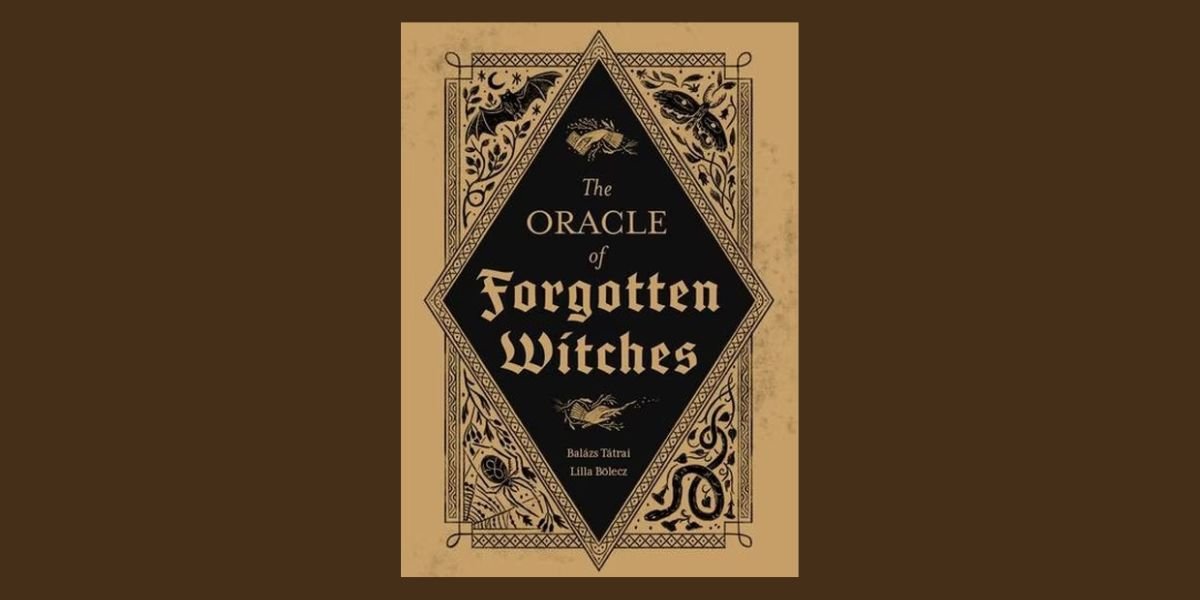
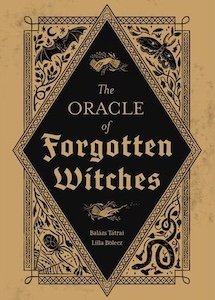
The Oracle of Forgotten Witches, by Balázs Tátrai with illustrations by Lilla Bölecz

The Oracle of Forgotten Witches, by Balázs Tátrai with illustrations by Lilla Bölecz
Watkins Publishings, 978-1-83681-042-1, 192 pages, 60 cards, August 2026

There is something deeply compelling about potent magic of the past. The Oracle of Forgotten Witches by Balázs Tátrai and illustrated by Lilla Bölecz, invites readers to encounter tales of mystery, exploring the enduring relationship between witchcraft, folklore, and magical power.

This deck expands upon the content introduced in Tátrai and Bölecz’s earlier collaboration, The Book of Forgotten Witches: Dark and Twisted Folklore Stories from Around the World. While familiarity with the original book can enrich the oracle experience, the deck offers its own system for exploring these figures through personal reflection and creative storytelling, so you can definitely work with it individually.

The structure of the deck is quite interesting. The 60 cards in the deck are divided into 10 suits: Curse-bringers, Shape-shifters, Survivors, Avengers, Mesmerizers, Well-wishers, Alchemists, Revenants, Nature Witches, and Fate-turners.
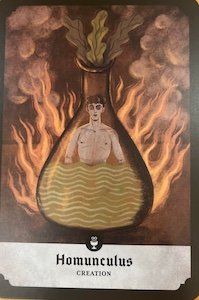
The guidebook details the general energy of each type, noting how Mezmerizers “See through every trick, even those you use to deceive yourself.”1, while Nature Witches help readers to “Find your pace in the intricate web of nature and society.”2.

Then within each of the 10 suits, there are 6 cards: witch, familiar, spirit, deity, magical item, and magical place. You can tell which the card is from by looking at the symbol on it. The cards also feature a keyword too, which is helpful for learning to read with the cards.

And in case the variety of suit types didn’t tip you off, this deck has a range of energies! This makes for some elaborate readings that don’t shy away from darker elements. The Oracle of Forgotten Witches makes room for vengeance, curses, death, and other unsettling aspects of folklore. This provides an opportunity to engage with the complexity of magical traditions rather than reducing the witch archetype to a purely comforting or nurturing presence, which OFTEN happens with oracle decks, so I really enjoy working with it for this reason.

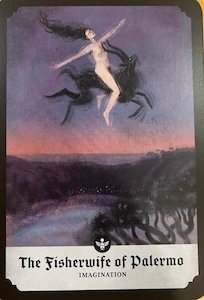
Bölecz’s illustrations beautifully complement this darker atmosphere. Her artwork brings to life through visual language enchantment, mystery, and hidden realms. The cards feature richly atmospheric colors, intricate details, and a distinctly gothic vibe. The black borders and black-edged cards further contribute to the deck’s shadow element, inviting all energy into the oracle conversation, not just the bright and shiny aspects of witchcraft.

It’s very cool how the imagery extends beyond portraits of witches to include mythical creatures, spiritual beings, enchanted objects, and fantastical landscapes. This diversity encourages readers to consider how the setting, symbolism, and accompanying keyword of each card contribute to its message. Additionally, the illustrations serve not only as visual representations of the stories they’re related to but also as imaginative starting points for personal interpretation or storyweaving (more on this to come).
As for the guidebook, Tátrai offers an amazing balance of esoteric knowledge and spiritual guidance. Each entry shares the category, key words, an overview of the historical relationship the card has to witchcraft (whether it’s how an item is used or the mythological origins of a tale), a whisper from the card, which is as though is it speaking directly to the reader, and finally reflection questions. While I haven’t read The Book of Forgotten Witches, it seems like Tátrai has done a great job distilling and condensing vital information and transforming it into oracular guidance.

Tátrai also includes various spreads readers can do with the deck. In addition to the standard one-card and three-card readings, she also shares Hecate Spread and Magnum Opus Spread. The latter is very interesting because it uses a card from each suit to lead readers through the alchemical process of transformation. The final spreads are focused on storyweaving, both individually and collectively. 

And I think the storytelling element is my favorite aspect of this deck! The Storyweaving Spread that encourages readers to create their own folktales using the characters, objects, and places depicted on the cards. By examining the narratives that emerge, readers can explore the symbolic connections between the stories they create and their personal experiences.  Through its combination of storytelling and symbolism, it offers an opportunity to reflect on what these elements of witchcraft might reveal about your own relationship with intuition, autonomy, and the unseen. There’s even a spread for collective storyweaving, which I look forward to doing with friends!
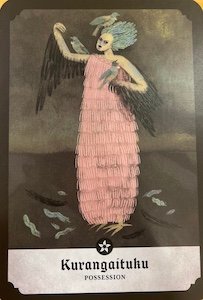
When using the cards for storyweaving, you get the chance to imagine yourself on a journey, encountering the cards and developing your own sense of how they fit together. Is Spinning Wheel an opportunity for rebirth or something to avoid pricking your finger on? Is your encounter with Deer Woman meant to help you embrace your wild nature or lead you down a path of seduction? While you can go by the guidebook definitions, it’s also an opportunity to expand your senses and practice discernment: what do you feel the energies and the tale being told?

Here’s an example of a storyweaving I recently did:

My first encounter was with Sirona, a well-wishing deity, who offers vitality by connecting to the life source, encouraging natural medicines like laughter and water to boost one’s overall health and well-being. I felt immediately rejuvenated when I pulled this card, especially because I had felt a little melancholy and out of sorts. It was a sign that following my intuition to take the magical path was giving me the restoration my soul needs.

Believe it or not, the second card I pulled was The Sibyl’s Grotto, also within the suit of well-wishing, though this is a magical place. It felt amazing to venture further into this healing journey to enter such a sacred space, especially since I specifically went to my special spot for solitude (my favorite Barnes and Noble cafe) in order to have some alone time to refresh my energy.
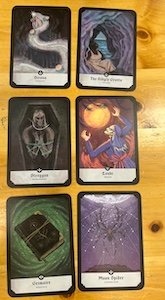
BUT ALAS, here in the grotto, I encounter Strzygon, a vampiric spirit from Polish folklore that indicates too much attachment to material things and people. Alone, I must reflect on these unhealthy attachments draining my energy and rectify them. I am grateful for the extra vitality that Sirona has given me and the healing properties of Sibyl’s Grotto during this process,

Here, Louhi, a Finnish deity filled with wrath, comes to show how I can use my anger constructively to sever these ties. She reminds me that it’s okay to speak up for myself and anger can be a reminder of where my boundaries have been over-stepped. As I release a primal scream, bringing forth all that I’ve held inside, suddenly a magical object appears before me: Grimoire.

The Grimoire is filled with spells from my heritage, reminding me of the special knowledge passed down through time that links me to those who have come before and those who will come after. I am but one link in a long line of ancestry, never alone yet still with my own unique purpose.

With this revelation, I am graced with the presence of a new familiar: Moon Spider. The guidebook reminds me, “We can’t escape all the hardship in our lives by shutting ourselves off from the world completely. Some form of human interaction is vital for our mental wellbeing. To grow as individuals, we need to express ourselves, share ideas and listen to others.”3

This storytelling session showed me that I can regain my vitality by taking time for myself in healing spaces to do the inner work of examining my attachments and where I might need to speak up more, express my true feelings, and address imbalances by acknowledging my anger. I have the resources and spells needed to do this with sovereignty. When I am ready, I can remerge to communicate and connect again.
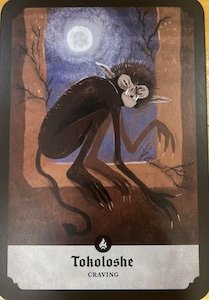
Overall, The Oracle of Forgotten Witches offers an imaginative exploration of the witch archetype, bringing together the wisdom of folklore, the symbolism of alchemy, and the transformative potential of storytelling. Tátrai’s narrative approach and Bölecz’s atmospheric illustrations create a richly developed magical world that encourages readers to engage with all aspects of witchcraft. For those drawn to the mysterious figures who inhabit the magical margins of history and mythology, this oracle provides an intriguing opportunity to encounter their stories and discover what they might illuminate within our own lives.

I recommend this deck to those interested in mythology, folklore, shadow work, and storytelling. Its layered structure and accompanying stories make it especially suited for those who want to learn more about cultural narratives and historical experiences that have shaped our understanding of the witch. Connecting with figures associated with curses, survival, vengeance, and transformation, alongside healing, connection, and inner wisdom makes for a comprehensive reading.

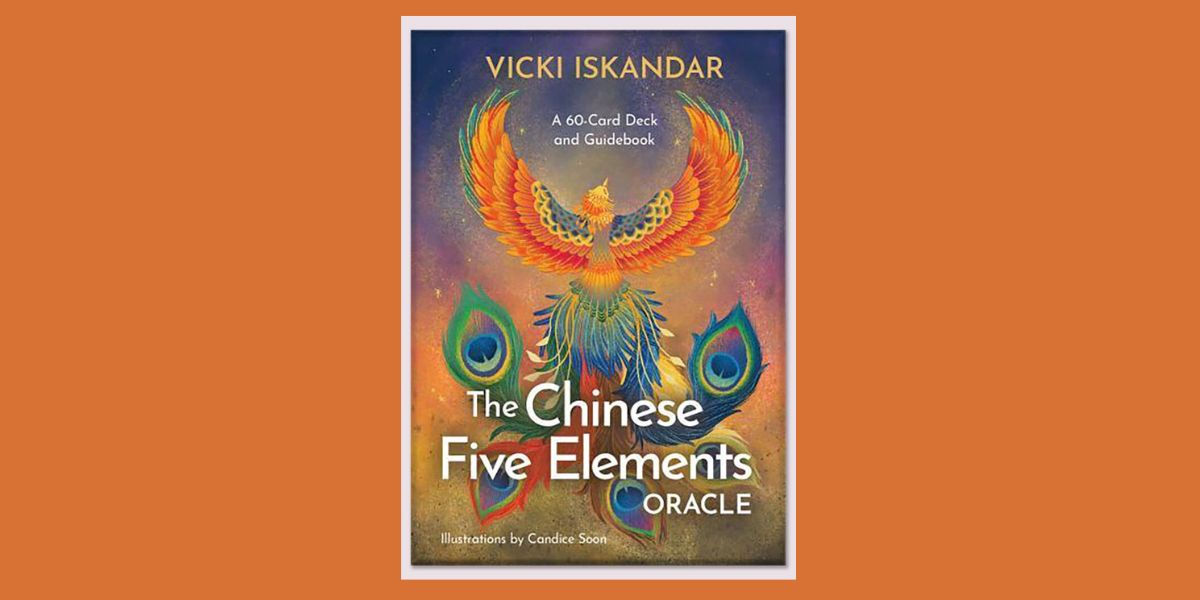
The Chinese Five Elements Oracle, by Vicki Iskandar

The Chinese Five Elements Oracle: A 60-Card Deck and Guidebook, by Vicki Iskandar and illustrated by Candice Soon
Hay House LLC, 140197063X, 192 pages, 60 cards, October 2023

In Taoism, the five elements of Wood, Fire, Earth, Metal, and Water are the building blocks of the universe. The elements present at birth shape our personalities and desires. Through Chinese astrology, we can attune to our own personal elemental compositions, promoting deeper self-awareness, growth, and healing. 

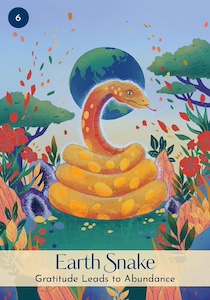
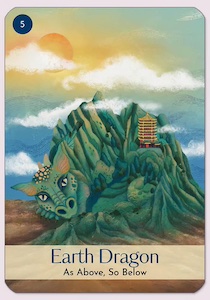
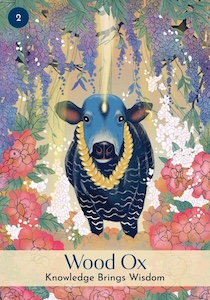
The Chinese Five Elements Oracle combines the five elements with the twelve zodiac animals to create all sixty possible pairings. This deck was created by Indonesian-born Chinese Feng Shui consultant and astrologer Vicki Iskandar, and illustrated by Candice Soon, a self-taught artist from Singapore. It consists of sixty cards and a 185-page guidebook, representing Iskandar’s unique vision of the sixty Pillars, brought to life through Soon’s gorgeous illustrations. In her personal practice, Iskandar blends Chinese and Western astrology. Since 2012, she has shared daily astrological guidance on Twitter under the handle @5elementsoracle.

This deck is beginner-friendly, with the accompanying guidebook offering a comprehensive introduction to Chinese metaphysics, Taoism, and astrology. According to Chinese mythology, the ordering of the animal signs was established based on the outcome of a Great Race. The Rat hitched a ride on the Ox and leaped across the finish line first, winning the race and being awarded the position of first sign in the Chinese zodiac by the Jade Emperor, the Taoist ruler of the Universe. 

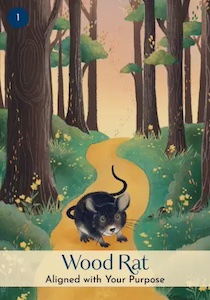
The sixty cards, or Pillars, are divided into six cycles of ten Heavenly Stems, and the opening cycle explores the themes of Wisdom and Communication, beginning with the Wood Rat, the deck’s inaugural card and leader of the first cycle. I was born in the year of the Wood Rat, so I was thrilled to discover it was the first card in the deck when I opened the box. 

Iskandar explains that the sixty cards are organized into a cyclical pattern known as the “great sexagenary cycle.”2 Each ten-card cycle begins with Yang Wood and concludes with Yin Water, while the twelve animal signs follow their traditional order: “The Rat, the Ox, the Tiger, the Rabbit, the Dragon, the Snake, the Horse, the Sheep (also called Goat or Ram), the Monkey, the Bird (or Rooster), the Dog, and the Pig (or Boar).”3

Iskandar substitutes the more familiar Rooster with the Bird, often depicted as a phoenix, due to the sign’s Yin Metal elemental energy. The Rooster, with its masculine connotations, doesn’t accurately reflect the sign’s feminine nature. Iskandar emphasizes the importance of understanding the elemental composition of each animal sign rather than relying on superficial characteristics. 

Intrigued by the potential insights offered by this oracle, I immediately began exploring the Pillars associated with my family, friends, and pets. I wanted to familiarize myself with the individual qualities of each sign before delving into divinatory use of the cards. 

2024 is the year of the Wood Dragon, and I examined the corresponding card in this deck to contemplate how this energy might be influencing the collective. The wise Wood Dragon is the first of the “Power and Authority Cards,” and according to Iskandar, it “represents tremendous strength and faith in a positive outcome, even in the midst of adversity.”4 This card advises us to lead authentic lives, act with integrity, and use our personal power and influence for the greater good. 

Feeling prepared to delve into the oracle’s divinatory potential, I turned my attention to the suggested practices outlined in the guidebook. Iskandar emphasizes the importance of a clear and receptive mindset, recommending a brief meditation before each reading. She also advises against using the cards during the energetically potent periods of the New and Full Moons, which are either too Yin or too Yang, as well as during stormy weather. 

Iskandar offers a variety of oracle spreads, and I decided to start with the one card draw, which is called “One with the Tao.”5

“Taoism is about simplicity, and the simplest way to ask for guidance is to draw a card from the deck, especially when you’re seeking a quick answer, an insight into a specific matter, or an affirmation from your guides,” Iskandar says. “If a card jumps out before you pick one, it’s the Tao picking a card for you.”6

Turning the cards facedown to shuffle, I was dazzled by the beauty of the card backs, which depict the yin-yang dalliance of a phoenix and a dragon, the ultimate power couple in Feng Shui. They swirl in a galaxy of color, before a backdrop of stars. The phoenix has a rainbow of tail feathers with peacock eyes, while the dragon coils around her with sea green hair and a blur of pastel scales. 

I didn’t have a specific question in mind, so I just asked for general guidance from the Tao. While I was shuffling, I saw a dragon’s head appear before my mind’s eye, signifying Yang energy. After I spent some time thoroughly shuffling the deck, the Tao flipped over a card for me: “Wood Horse: Live and Love Joyfully,” which depicts a horse galloping through a forest with sunlight streaming down through the canopy of branches and leaves.

This energetic card carries the elemental energy of Yang Wood, symbolizing expansion and growth, and the Horse is a harbinger of “unbridled joy.”

“Heaven is there to guide you to a bright future, while Earth stands ready to bring you opportunities,”7 Iskandar says.

What a beautiful and reassuring message!

This versatile deck is a wonderful tool for exploring Chinese astrology, delving into natal charts, and seeking oracular wisdom from the Tao. For those eager to dive deeper into Chinese astrology beyond their year Pillar, Iskandar’s website offers a BaZi chart calculator to reveal your Four Pillars of Destiny and more. There’s also Jade Almanac, which shares tons of free information about one’s BaZi chart.

The Chinese Five Elements Oracle is a treasure trove of wisdom and beauty. This is the first deck of its kind that I’ve seen, and it will be a valuable tool for both beginners and experienced practitioners of Chinese astrology.

The John Dee Oracle, by John Matthews and Will Kinghan

The John Dee Oracle: Wisdom from Queen Elizabeth’s Magician, by John Matthews with illustrations by Will Kinghan
REDFeather, 0764369768, 112 pages, 29 cards, September 2025

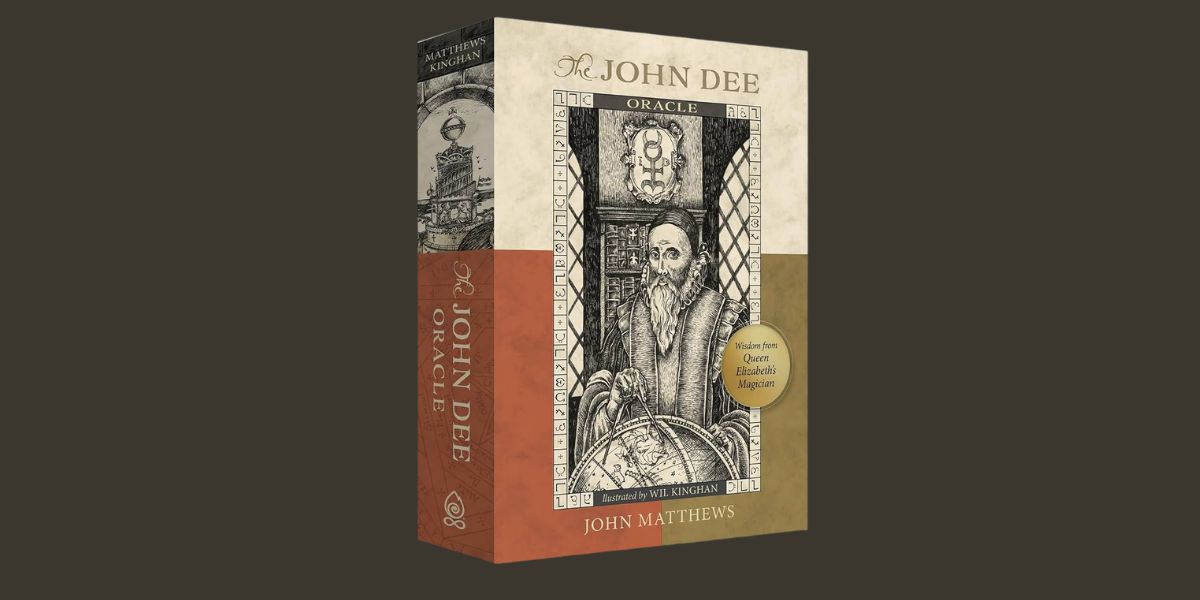
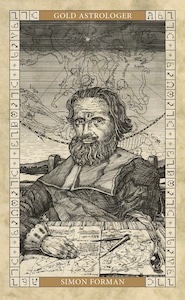
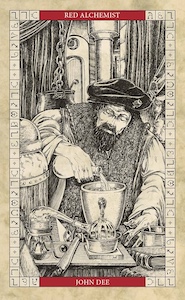
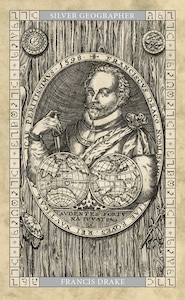
John Matthews’ The John Dee Oracle: Wisdom from Queen Elizabeth’s Magician, illustrated by Will Kinghan, is a fascinating and highly specialized divinatory work that draws readers into the intellectual, magical, and symbolic  universe of one of the Renaissance’s most enigmatic figures. John Dee—astrologer,  mathematician, alchemist, historian, advisor to Queen Elizabeth I, and architect of a vast  esoteric system—has long occupied a singular place in Western occult history. This oracle seeks to translate that world into a modern tool for contemplation and guidance, and in many respects, it succeeds admirably. 

From the outset, this set distinguishes itself through atmosphere and scholarship. The  presentation is elegant and historically evocative with a handsome box design that reflects the Renaissance palette of parchment, crimson, and gold. Included with the deck is a folded reading diagram based on the four watchtowers, a visual element that immediately signals that this is not a casual or generic oracle, but one grounded in a very specific magical worldview. The accompanying guidebook further reinforces this impression, offering not only card meanings but substantial historical and symbolic context. 

The cards themselves are beautifully produced. Each image is framed by the Enochian alphabet, instantly establishing the deck’s connection to Dee’s angelic and ceremonial  system. At the center of each card is a richly detailed illustration rendered in a woodcut inspired style that feels entirely appropriate to the period being invoked. The artwork by  Will Kinghan captures the texture of Renaissance engraving and manuscript illustration while remaining clear and readable for modern users. There is a gravity to these images— an atmosphere of libraries, observatories, hidden chambers, royal courts, and sacred  diagrams.

One of the deck’s greatest strengths is the density of symbolism embedded in its design. Planetary magic, alchemical process, sacred hierarchy, and esoteric correspondences are  woven throughout the imagery and structure of the cards. Readers with a background in  ceremonial magic, astrology, Renaissance occult philosophy, or Western esotericism will  find layer upon layer to appreciate. This is not symbolism added for decoration; it is integral to the architecture of the oracle itself.

Matthews also deserves praise for the scholarly dimension of the guidebook. His historical  treatment of John Dee and the figures surrounding him adds depth and humanity to what  could otherwise remain abstract. The presence of Queen Elizabeth I—Gloriana within the  deck’s symbolic language—along with other notable historical personalities, gives the  oracle a lived historical texture. Rather than presenting Dee as a mythic stereotype, the  book situates him within the political, intellectual, and spiritual currents of his time. 

Especially noteworthy is the inclusion of Dee’s original Enochian Calls in a new translation  by Matthews. This alone gives the set value beyond divination. Readers interested in  primary-source inspired esotericism, textual history, or ceremonial tradition will find this material deeply engaging. Matthews has long been respected for his work with mythic and magical source texts, and that experience is evident here. 

Where this oracle may divide readers is in its practical accessibility. Unlike many modern oracle decks that encourage broad intuitive use through multiple layouts and flexible daily draws, The John Dee Oracle is more precise and structured in its application. Its method of consultation is rooted in the logic of Dee’s own system, where order, placement, hierarchy, and timing matter. Contextually, this makes complete sense. Dee’s world was  not one of casual inspiration cards, but of disciplined inquiry into cosmic law and divine intelligence. 

However, for the average everyday user seeking a quick, fluid, or emotionally oriented oracle experience, the deck may feel more formal and less immediately adaptable. Its use is better compared to consulting a specialized instrument than pulling a daily affirmation card. This is a deck one reaches for with intention during significant questions, crossroads, periods of study, or moments requiring careful reflection. In that sense, it  mirrors how Queen Elizabeth herself might have sought Dee’s counsel: not constantly, but  strategically. 

That limitation, however, is also part of the deck’s integrity. It does not dilute its source  material in order to become universally marketable. Instead, it remains true to the spirit of Renaissance magic: exacting, symbolic, hierarchical, and profound. Readers willing to  meet it on those terms will be richly rewarded. 

Overall, The John Dee Oracle is an impressive achievement. It is beautiful, intellectually  serious, historically rich, and spiritually distinctive. While it may not become an everyday  deck for all readers, it stands as an exceptional collector’s piece and a deeply rewarding oracle for those drawn to alchemy, astrology, ceremonial magic, and the hidden traditions  of the Renaissance. For students of John Dee and lovers of Western esotericism, it is not merely recommended, it is indispensable.

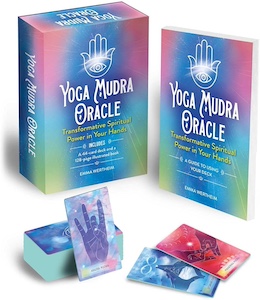
Yoga Mudra Oracle, by Emma Wertheim and Stephen Denham

Yoga Mudra Oracle, by Emma Wertheim with illustrations by Stephen Denham
Sirius, 1398849863, 128 pages, 44 cards, March 2026

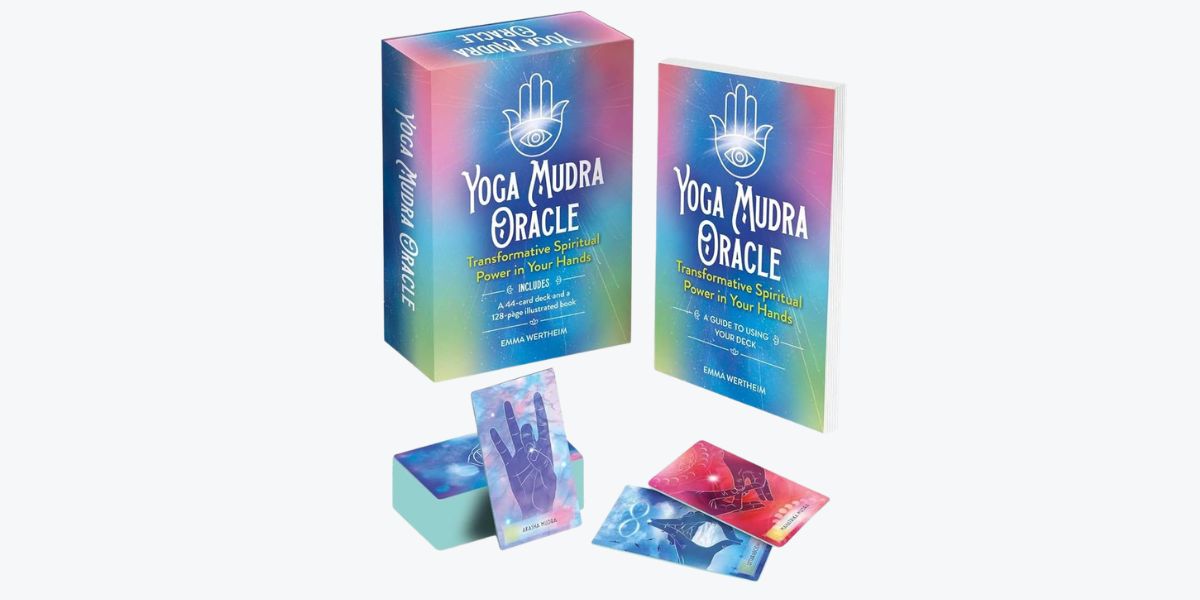
I am a huge proponent of connecting to the body’s wisdom, specifically through touch and movement. This concept is even what I wrote my master’s degree thesis on: the importance of including a kinesthetic approach to education. Yoga has been a steady practice for me to connect with my inner wisdom, but I don’t always have time to do a full series of poses. As soon as I saw the brightly colored Yoga Mudra Oracle by Emma Werthheim with illustrations by Stephen Denham, I was instantly intrigued! What insights might this deck reveal and could I embody it through my body?

The answer is yes, and it has beautiful messages too! This is a hands-on deck, quite literally offering mudra poses as well as meaningful guidance. This deck contains 44 mudra cards and a 128-page guidebook designed to bring ancient yogic hand gestures into contemporary spiritual practice.

While most oracle decks work through symbolism, intuition, and reflection, Yoga Mudra Oracle adds a physical component too with each card and invites readers to form a specific mudra with your hands while contemplating its message. Instead of simply receiving guidance, you’re asked to participate in it through gesture, breath, and awareness, deepening divination through embodiment. Needless to say, I’m obsessed!

For those new to mudras, Wertheim describes them as this:

“Yoga mudras are simple, sacred postures from an ancient yogic tradition. They permit you to redirect, shape and “seal” the flow of pranic energy within the body, which can unite us with cosmic intelligence and help manifest change on a physical and soul level.”8

An example of working with a mudra is at end of a yoga session when you put your hands together to “seal” the practice. I love the idea of intentionally encapsulating the energy within ourselves, creating a connection between mind, body, and spirit.

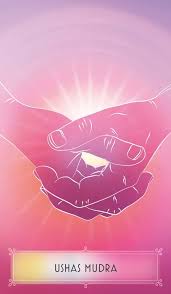
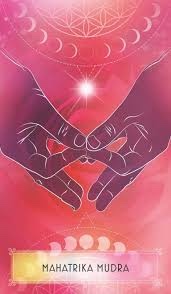
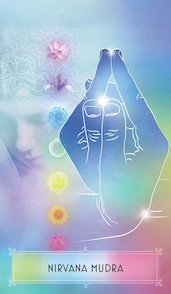
The artwork in this deck blends hand imagery, bright color fields, spiritual symbolism, and luminous energy depictions. The pair of hands on the cards are outlined in white, making it easy for the reader to copy the same pose. The aesthetic has a feeling of serenity, spaciousness, and energetic alignment. There’s a feeling of “containment” in each mudra, perfectly holding the energy of each gesture in a balanced way that brings the sensation inward for the reader to experience.

In addition to the mudras, there’s often a symbol that adds further intuitive resonance for the reader to gaze at while working with the card. I feel like this deck is perfect for both meditation as well as creating an altar space. It’s as though the dynamic energy of the mudra on each card gently radiates outward, infusing the reader with its energy through visual contemplation. The deck is also easy to hold in one’s palm and shuffles quite easily. I very much enjoy simply holding the deck and feeling its spiritual energy.

Rather than be numbered, at the bottom there is the name of the mudra. It’s up to the reader to find the entry in the guidebook for further oracle insight, but the entries are listed alphabetically, so it’s pretty easy to navigate. There’s also an index at the back if you don’t want to flip through and prefer finding an exact page number. While most of the mudras in the deck are traditional yoga ones, there are a few non-traditional ones that Wertheim intuited; she notes which ones these are so readers are aware when working with the deck.

The guidebook begins with an introduction by Wertheim, where she talks about her interest in mudras and the study she’s put into working with them. She then provides a very interesting introduction to mudras, explaining the vitality of the hands and ancients of this practice. I was fascinated to realize how “Similar to foot reflexology, all areas of the hands are thought to connect to corresponding organs, glands, nerves, and meridians throughout the body.”9. She presents mudras as an accessible way to work with energy, which is perfect for those of us who don’t always have the time for a longer practice.

Wertheim lays a great foundation for beginners in the guidebook too. She explains how to prepare your hands for mudra, how long to hold them, and what to do if one doesn’t resonate or your hand can’t hold the shape. She covers chakras. And there’s even guidance on preparing to work with the deck (cleansing, how to consult the deck, and layout options). All throughout, Wertheim’s tone is gentle and encouraging. While she’s clearly sharing her passion with readers, she also encourages everyone to do what works best for them, pausing to stop and enjoy the experience. I appreciate her dedication to making this deck useable for all, as well as her heartfelt consideration for readers’ experience.

As for the entries in the guidebook, they’re beautifully crafted. The title is in big letters and there’s an image of the card. Beneath is a subtitle, further explaining the card and keywords or symbolisms. It is here that Wetheim notes if the mudra has been intuited too. The opposite page explains the mudra—what it calls you to do or invites into your energy field. There’s also directions for how to do the mudra, which is helpful for people like me who like specific instructions. Finally, Werthiem includes an affirmation. Occasionally, there’s also a quote that reflects the energy of the mudra.

The first card I pulled when working with this deck was Naga Mudra, subtitled Goddess Rising. Instantly, I felt the activation just looking at the card. I had just come from meeting with a long-time spiritual mentor for the first time in person. I had connected with a great group of people and was really feeling my divine feminine leadership; I was still tingling from the experience. Aptly, this card immediately brought awareness to this fire burning within, noting “The energy is rising through your chakras now”.10 Wertheim further writes:

“The symbols used in this card—such as Naga (the snake goddess—represent wisdom, fertility, and creative force. The ancient Egyptians ankh symbol is known as “the key of life”. Fire represnts the pure fire of insight and the awakening of potent energy within you.”11

Not only did it feel aligned to draw this card, but it was so amazing to have the mudra to ground the energy. Holding the mudra channeled this energy throughout my body, infusing my spirit with it and embedding it in my physical form. Instantly, I was hooked on the power of mudras!

While all can enjoy the experience of connecting with their embodied wisdom through mudras, I highly recommend this deck to those who enjoy meditation, yoga, energy practices, or are seeking a unique oracle deck. This deck is a great one for attuning to the energy of the present moment, and I’ve enjoyed pulling a card before creating a ritual space to set the tone and find center. Pulling a card, holding the corresponding mudra, and sitting with the guidance for several minutes turns a reading into a contemplative practice.

Overall, Yoga Mudra Oracle does a wonderful job combining sacred mudra practice, oracle wisdom, and uplifting artwork to create a thoughtful spiritual tool that feels both modern and rooted in ancient traditions at the same time.  The alignment that comes from working with the mudras is sensational. And Werthheim’s inspired wisdom is perfect for a gentle reading, one that encourages you to slow down and enter a contemplative state. This deck isn’t so much for knowing what’s to come but rather honoring what is appearing in the moment. The physical component with the energetic resonance makes for an impactful reading!

Friendship Oracle, by Helena Elias

Friendship Oracle: Celebrating Connections, by Helena Elias
Rockpool Publishing, 1922468061, 36 cards, 128 pages, May 2026

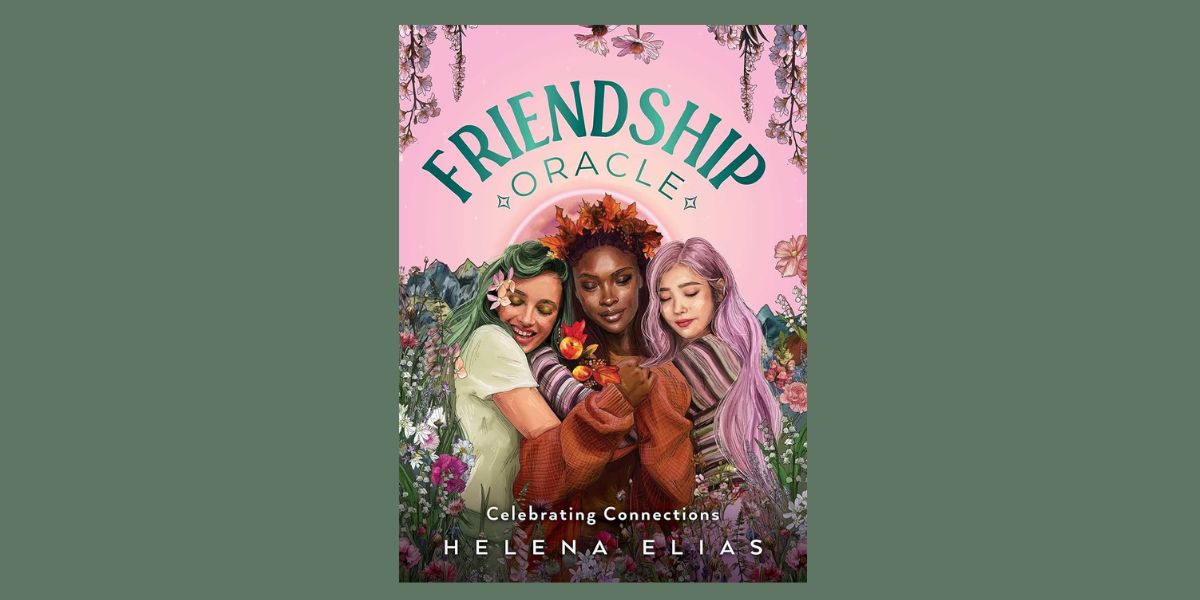
Friendship Oracle by Helena Elias is a beautifully tender oracle deck that centers something often overlooked in spiritual tools: friendship as a sacred force. This deck brings connection, mutual care, emotional reciprocity, and the quiet magic of growing alongside others to the realm of divination–something new for me even with over ten years of reading experience!

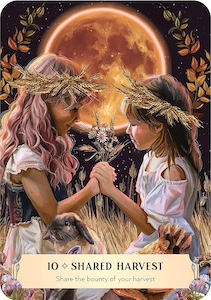
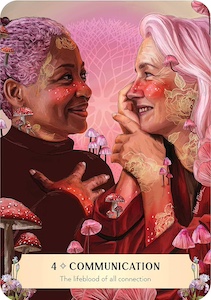
I was immediately drawn into this deck because of the artwork. Elias hand drew each one on digital canvas, and the level of detail is truly impressive. The deck is a nice blend of enchanted femininity, cottagecore mysticism, and emotionally rich whimsical illustration. Flower crowns, natural textures, fairy wings, flowing dresses, and woodland imagery evoke a whimsical energy, honoring the beauty of the natural world.

All the imagery feels soft, nurturing, and deeply heartfelt. I love the warm, glowing color palettes, which lean into luminous golds, rose pinks, forest greens, deep burgundies, and moonlit ambers. Women and nature are one in this deck where flowers, forests, animals, and celestial imagery aren’t just decoration; they mirror the emotional tone of each card.

Many of the people are depicted in a semi-realistic fantasy style, featuring delicate detailing, glowing skin, flowing hair, and expressive faces that capture the emotional expansiveness this deck offers. Many of the cards emphasize a sacred sisterhood relationship filled with emotional intimacy, care, and connection between women across ages and identities, which is just beautiful to see come to life during a reading.

As for the guidebook, Elias provides a great perspective on friendship. For each card, there’s a meaning shared and a sowing intention ritual that offers a nature-inspired way to integrate the energy of the card. For instance, the sowing intention for the card Reach Out reads:

“Seek out flowers, paying attention to any buzzing bees nearby. Take time to exist in the present, and see if watching the bees and their path brings anyone to mind.”9

I thought that was such a great idea for tuning into who might need you to reach out! Similar to this buzzing advice, the whole guidebook feels thoughtful and intentional. There’s a good mixture of self-care mixed into the relationship-tending oracle advice too. As most know, it can be hard to figure out what to do when a friendship hits a bump in the road; sometimes the balm is more time alone, while other times it requires extra attention to heal. This advice in the guidebook covers the range of phases friendships move through, offering meaningful guidance for reflection.

At first, I wasn’t sure what kinds of questions to ask, as I don’t usually do readings about my friendships. Romantic life? Definitely. Career and money? Quite often. Family life? For sure. But my friendships?! Rarely! But then I started to think about my different friendships and get curious about what insight the deck has to share. Each reading so far has been very energetically spot on and informative for me. Here’s some examples:

I recently got back in touch with a woman who was my best friend from the age of 10 through 25–one of closest friendships I’ve ever had in my life. During our mid-twenties, life pulled us apart, placing us on different paths. There was never a fight, just relocations that reoriented our lifestyles: new friendships, new jobs, new relationships. Despite thinking about her regularly, nearly ten years had passed since we talked; with each passing year it seemed harder to bridge the gap. But then when I found out her mom passed away last month, I reached out. We ended up having a great conversation about where we are in life now, opening a doorway to a renewed friendship.

I decided to pull a card about this situation with her, and I got Soulmate! Here’s part of what Elias has written for this card:

“This is a reminder to honour those friendships that make your soul feel at home. You may be entering a time where you need each others’ strength and unconditional support. If your guiding star has been distant, perhaps this is the moment to reach out, to remind them that their light still shines in your sky.”11

This message was so validating that I did the right thing in rekindling our friendship. It highlighted for me just how valuable this rare such a soulful bond with another person is, and that I should embrace it once again.

Another reading I did was about a friend that I have known for decades but I don’t feel a deep connection to recently; our friendship seems based more on convenience than shared passions or interest. The card I got was Seeker. The first sentences of the guidebook entry made my jaw drop:

“There are times in life when our connections do not bear the fruit we anticipated. You may be at a point where you need to look outside your current garden of friends – not seeking to replace but instead to connect with those who match your current life path.”12

This message really resonated with me. I still value, love, and and appreciate this friendship, but it’s also okay for me to expand my circle to find those who feel more aligned.

Overall, Friendship Oracle feels like a refreshing addition to the oracle space. Its heartfelt messages, visually enchanting cards, and spiritual focus on the healing power of human connection make it a one-of-a-kind deck. Elias reminds us that friendship is not something casual, but rather the roots of some of our most sacred bonds that require reflection, honesty, communication, and renewal.

This deck is perfect for journaling with, doing relationship check-ins, or even working with in a community-centered spiritual practice such as a women’s circle. The emotionally nourishing and mystical nature of the deck revives the spirit and brings a clarity to our defining relationships. I really would love to see more decks from Elias!!

No Bad Days, by Inès Duhard and Jolane Jly

No Bad Days: Daily Affirmations for a Joyful Life, by Inès Duhard with illustrations by Jolane Jly
Red Wheel, 1590035852, 96 pages, 39 cards, December 2025

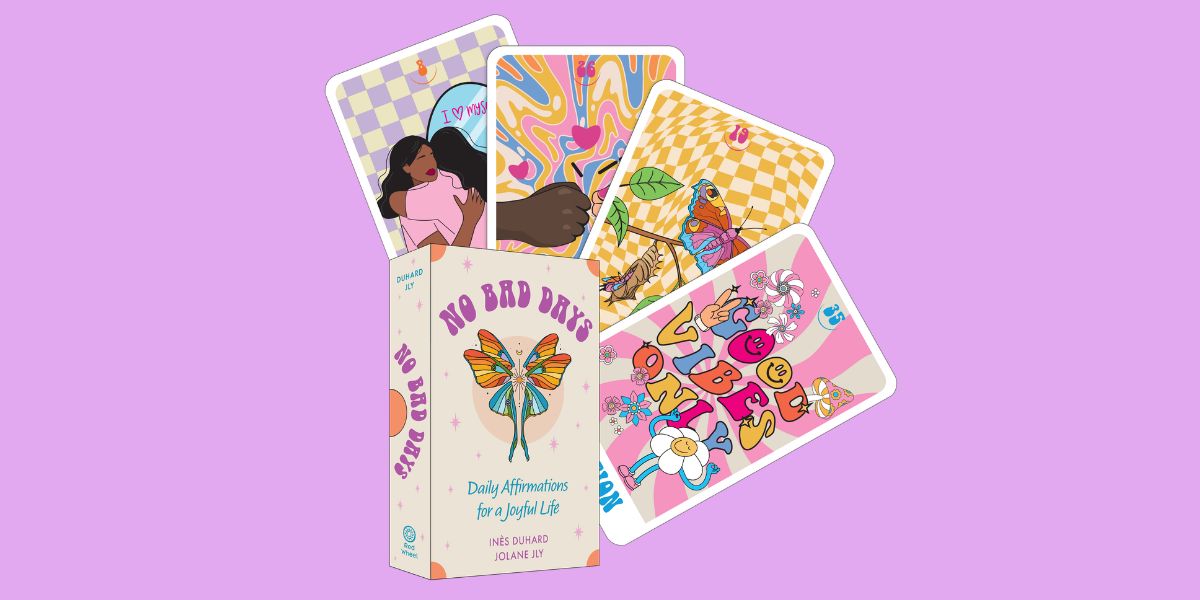
Looking for a deck with some good vibes? Cue No Bad Days Oracle: Affirmations for a Joyful Life by Inès Duhard with illustrations by Jolane Jly. This fun deck brings to life the mantra “peace, love and happiness”, offering readers a chance to relax and connect with a positive message. The concept is simple, the artwork is beautiful, and I have greatly been enjoying my daily pull!

While the guidebook messages are overall short and sweet, each entry has an action-oriented exercise—something you can do to shift your energy and tap into the essence of the card. These small actions range from a breathing exercise to removing negativity from your vocab, these prompts encourage readers to enjoy their success, hype themselves up, and find empowerment in their daily life. Essentially, this deck is your ultimate wing-woman.

My favorite thing about the deck is the visually uplifting design of the cards. Illustrator Jly’s artwork is colorful, playful, and engaging, making it an inviting deck to work with. There’s no visual symbolism to decode, leaving readers to simply delight in the dynamic designs. This is so REFRESHING, especially for those of us who work with more system-heavy oracles, such as tarot. I appreciate the lack of tension, mystery, or shadow and how Jly presents positive states of mind you can immediately step into by looking at the visuals!

Many of the cards feature bold backgrounds (checkerboards, radiating strips, wavy patterns) that gives creative moment to the deck. The rounded edges in the imagery make for a gentle feeling, while the minimal shading makes for a clean, graphic look. All the figures are inclusive, expressive, and filled with vitality, embodying positivity in their postures. Plus, the color palette makes things pop: high-saturation pastels with warm brights (bubblegum pink, sky blue, sunshine yellow) give a deliriously joyful psychedelic feel. Jly really captures the emotionally-uplifting nature of the deck in her artwork!

As for reading the cards, the deck is divided into three themes: freedom (orange cards) representing the past/your roots and foundation; emergence (pink cards) representing the present and your current state of mind; and achievements (blue cards) representing the future and what you’re moving towards. Duhard offers a three-card spread based on the themes, as well as guidance on a one-card draw.

Truthfully, many times when I pull from this deck, I don’t focus on the theme, as I’m just trying to get a quick and easy message without over-thinking it. But when I have taken the time to divide the cards by theme and do the three-card draw, it’s been really insightful—the format gives more perspective to layer for those who enjoy more nuanced readings.

Each card entry includes a message, mantra, and exercise. The messages are always upbeat, focusing on the energy of the card and the value of cultivating it in your life. All the mantras are straight forward and easy to remember if you choose to use it throughout the course of the day or longer. And the exercises are quite a variety. For instance, the Travel card suggests a solo-trip somewhere, whereas Acceptance teaches readers to create an energetic bubble of protection around themselves. These different exercises keep things enliven, reminder readers of their agency and power to make a change.

This is the type of deck I’d definitely give to my girl friends as a present, especially if they were newer to reading oracle decks. As someone who loves all things esoteric and magical, there’s something so inspiring about this deck. It brings gratitude, goodness, and empowerment without coming off as too “high-vibe”. I find it very grounding, providing the little dose of emotional support that shifts the tone of the day into something positive.

Overall,  No Bad Days succeeds at what it sets out to do: create a gentle, visually appealing, action-based affirmation practice. The airy lightness of the support it offers is uplifting, leaving readers to take the dose of positivity and bring it further out into the world. It’s a gentle entry point to deeper exploration, especially for those who thrive in an optimistic mindset (hello me, Sagittarius Moon). This deck is the joy-core we need: bright, friendly, and emotionally safe. I absolutely love it!

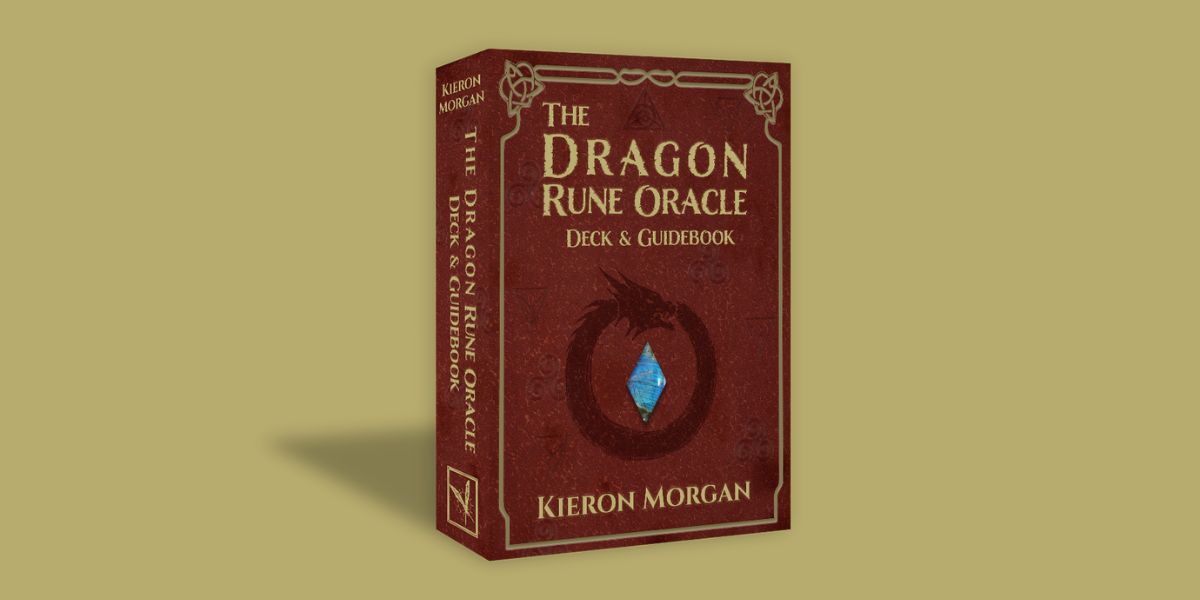
The Dragon Rune Oracle, by Kieron Morgan and Isedon Goldwing

The Dragon Rune Oracle, by Kieron Morgan and Isedon Goldwing
Crossed Crow Books, 1964537290, 108 pages, 28 cards, August 2025

The Dragon Rune Oracle is a rich and imaginative system that blends Welsh and Celtic myth, dragon lore, and runic symbolism into a divination tool designed to deepen one’s  connection with primordial dragon energies. Created by Kieron Morgan with rune design by Isedon Goldwing, this oracle aims to help practitioners communicate with dragon guides, receive counsel from ancient dragon clans, and even tap into the voice of Tiamat, the  Queen of Dragons.

One of the best aspects of this deck is the guidebook itself. The deck includes a 107-page guidebook that lays a strong foundation for working with dragon magic in a grounded and structured way.

Morgan provides an impressively comprehensive framework for dragon-based spiritual practice, beginning with preparations for entering ritual space and moving into methods of calling, communicating  with, and releasing dragon energies. He outlines what to do before, during, and after a  reading, and offers contextual lore on the Celtic veneration of land, sea, and sky—an  animistic worldview that situates dragons not as fantastical creatures but as ancient  intelligent forces woven into the fabric of creation. The writing is both accessible and reverent, making the system feel alive and usable for practitioners at any level. 
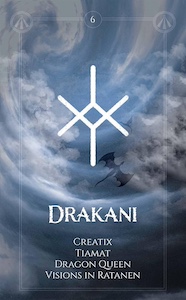
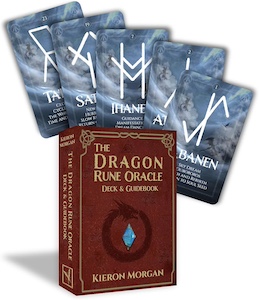
The organization of the deck is also noteworthy. The runes, each created by Goldwing, are elegant, angular symbols that feel simultaneously modern and archaic. They are  presented through the lens of several dragon clans, each representing a unique energetic signature and philosophical lesson. Cards like Sha’oren (discernment, Akashic memory),  Ratanen (chaos and infinite possibility), and Kaegos (balance through transformation)  illustrate the breadth of perspective offered by these primordial beings.

The spreads included in the guidebook are thoughtful and surprisingly profound in practice, and in my own readings the messages that surfaced, particularly those attributed to Tiamat and to  personal Dragon Guardians, carried a clarity and emotional resonance that felt deeply  authentic.

Where this deck also truly excels is in its metaphysical architecture. Morgan draws heavily from  Welsh and Celtic lore, weaving subtle threads of bardic tradition, ancestral magic, and  poetic inspiration into his descriptions. The runes feel connected to a lineage that values wisdom, transformation, and communion with the unseen realms. The book’s section on  glimpsing the dragon’s realm—a mist-filled, luminous space between worlds—was  especially evocative, providing a mythic backdrop that enhances the reader’s intuitive  engagement with the cards.

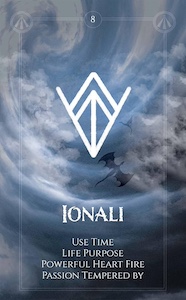
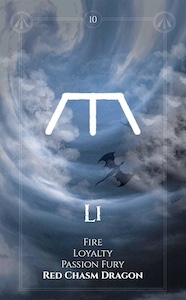
However, the artistic choices for the deck itself present a mixed experience. The cardstock is excellent: smooth, sturdy, and comfortable in the hand. The rune symbols are clear and beautifully rendered. Yet every card features the same cloudy gray background with identical lighting, coloration, and dragon-silhouette overlay. While aesthetically pleasing in isolation, the repetition across the entire deck can make the cards feel visually flattened during readings.

The richness of the lore, full of sea-dragons, sky-dragons, deep-ocean  clans, fiery transformative forces, and the ancient cosmic presence of Tiamat, cries out  for more variation in imagery, palette, or environmental cues. Even subtle changes in color tone, texture, or clan-specific motifs could have helped reinforce the distinctions so  thoroughly articulated in the guidebook. 

There are also symbolic omissions that feel like missed opportunities. The guidebook  references the Dragon’s Eye rune, yet this powerful symbol does not appear as its own  card. Likewise, the Welsh druidic symbol Awen, representing the triple rays of divine  inspiration and a central motif in Celtic bardic tradition, seems perfectly aligned with the deck’s thematic focus but is absent from the card set.

Including Awen, or even additional  cards honoring key Welsh mythic figures such as Cerridwen, Gwion, or archetypes of the  Maiden-Mother-Crone, could have further anchored the system in the cultural and  mythopoetic soil from which it draws inspiration. More references to the Celtic triad of  Earth, Sea, and Sky, which are so foundational to indigenous Celtic cosmology, would also have  added coherence and depth. 

Despite these artistic and symbolic limitations, The Dragon Rune Oracle remains a  meaningful and insightful tool. The clarity of Morgan’s writing, the strength of the rune  system, and the structure of the guidebook itself create a pathway into dragon wisdom that  feels both reverent and grounded. The spreads are thoughtfully constructed, the energy work instructions are practical, and the tone of the entire system encourages a sense of  respect and reciprocity between practitioner and dragon guide. For those seeking to  deepen their connection to Welsh and Celtic metaphysics, or to explore dragon magic in a structured and spiritually authentic way, this deck offers a valuable entry point. 
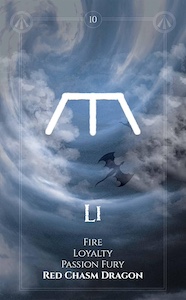
For me, working with the deck produced moments of genuine resonance. The messages  that emerged in readings were potent, often arriving with a sense of mythic clarity— reminders of sovereignty, creativity, personal transformation, and the untamed forces within. While I wished for more visual variety and a fuller embrace of Celtic symbolic traditions, the underlying system is strong enough that the deck still functions beautifully  for meditation, divination, and spiritual communion. 

I recommend The Dragon Rune Oracle to readers who feel called to dragon magic, to  practitioners of Celtic spirituality, and to those seeking a structured yet intuitive approach to working with primordial beings. Its guidebook alone is worth the investment, and with mindful practice, the deck can become a powerful companion on the path of mythic exploration and personal empowerment.

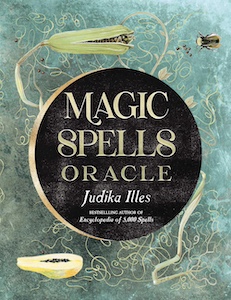
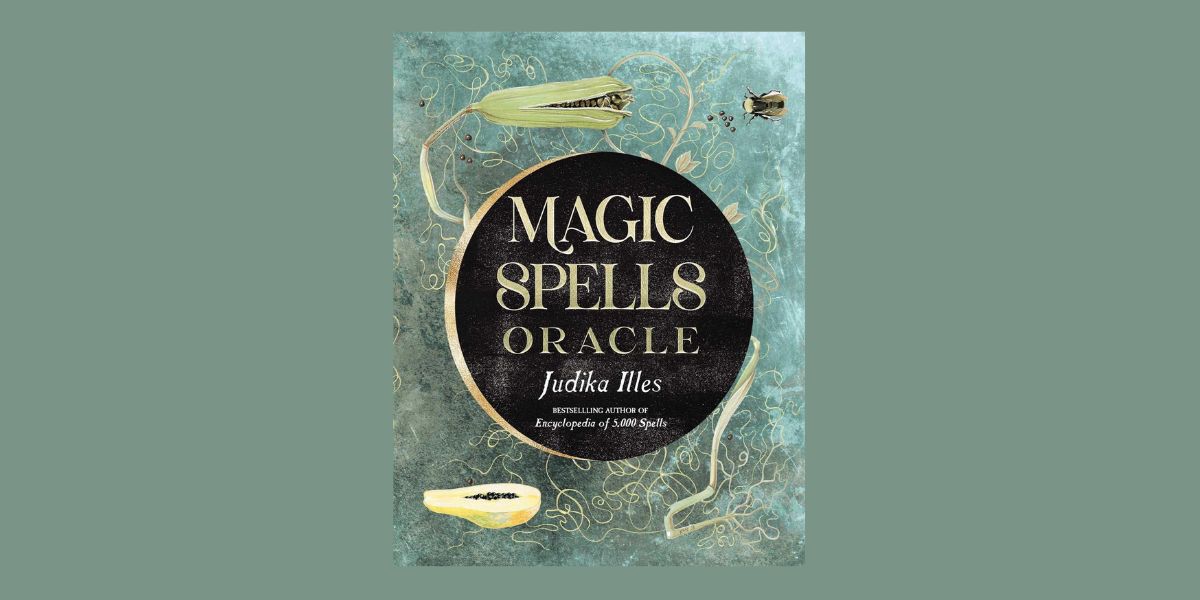
Magic Spells Oracle, by Judika Illes

Magic Spells Oracle, by Judika Illes
Weiser Books, 1578639220, 128 pages, 26 cards, October 2025

Looking to infuse your oracle readings with a dash of magic? Magic Spells Oracle by Judika Illes blends practical spellcraft with intuitive guidance, perfect for readers looking to add a bit of ritual to their reading. Illes brings her decades of experience, combining expertise in spellcraft, aromatherapy, and folklore, to this deck, offering readers an opportunity to use their divinations to set their intentions into the world through manifestation.

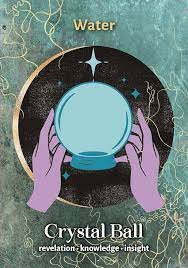
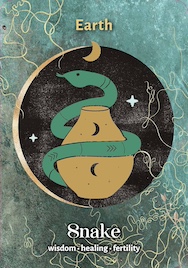
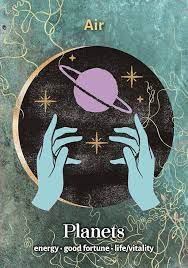
This deck includes 36 full-color cards along with a 128-page guidebook. Illes has structured the deck based on the elements (earth, air, fire, and water) with two additional balancing cards. Within each elemental suit, individual cards then have a magical correspondence reflective of the elemental energy. As an example, there’s Broomstick in the Air suit, Candle Magic in the Fire suit, Crystal Ball in the Water suit, and Amulet in Earth suit.

In the introduction, Illes explains:

“Magical energy radiates through everything–colors, sounds, fragrances, botanicals, natural phenomena, creatures, and human beings–including you–although how it manifests differs.”13

As someone who enjoys working with elements, believing attuning to them is a powerful way to enhance one’s spell work by grounding the ritual in the rhyme of nature, I appreciate Illes’ sentiment that magic can be found within everything.

The way Illes has offered different facets of each element by having the different cards in the suits further amplifies her explanation that everything carries its own distinct energy. By understanding these magical correspondences, readers gain the opportunity to connect with an elemental is a special way through spellwork and ritual. The cards become a bridge between the physical and spiritual world, creating a clear pathway for one to work their magic.

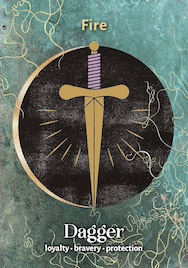
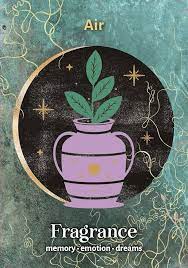
The deck’s aesthetic feels both enchanting and modern, blending mystical symbolism with a clean design. Each card features a central magical image—daggers, crystal balls, animals, or symbols—encircled within a dark cosmic backdrop, accented by golden details that add a touch of sacred shimmer. To me, the inner black circular design reminds me of peering through a portal! The archetypal symbols on the cards definitely open deeper layers of meaning for those who look closer.

For those who are just discovering their magical power, Illes provides ample information in the guidebook, including guidance on how magic and spellcasting works, how to prepare and cleanse one’s deck, how to create an altar space, and how to use the cards (with layouts). At the start of each elemental section, she also gives an overview of associated deities, what the element does naturally in the world, its spiritual power, and magical uses.

For each card entry, there’s an image of the card, the name and element at the top, an overview of its magical significance, and then a spell or ritual one can do. Most of the spells and rituals can be done with things on hand, but a few might require a bit of planning, prepping, and ingredient gathering.

This is definitely a deck for those seeking to learn more about magic and how they can cast spells to make desired changes rather than a deck that provides specific insight about what energies a moment in time holds. While Illes’ guidance is fascinating and practical, it is not a concrete answer like other oracle decks offer. The focus is less on inner reflection and divine wisdom and more on magical information that one can then apply in their spellwork.

Magic Spells Oracle teaches readers how to shape their own future rather than passively giving them insight into energies of their present circumstances. I’d recommend it for those looking to enhance their foundational knowledge of magic and focus on grounded inspiration about how to bring their desire to fruition. People who like traditional, straightforward oracle advice might find it hard to discern clear messages from the guidebook.

This being said, I do still think the cards can provide super accurate insights. I asked the cards what I could do to prepare for my upcoming labor and delivery (baby #2 is due any day now!) and I pulled Crocodile. This card is part of the Water elemental suit. Part of Illes’ guidebook description reads:

“Crocodiles are simultaneously deadly, dangerous creatures and magical animal allies–in particular, for pregnant and laboring women. In many legends, crocodiles have taught the birthing process to humans. Images or toys of crocodiles in a birthing room are a protection against danger.”14

I was honestly flabbergasted with the accuracy of this card pull! Can you believe the exact situation I asked about is discussed in the guidebook? Prior to this reading, I had no idea crocodiles were a magical birth ally! Now I’m planning on taking the card with me when I head to the hospital.

So, as you can see, the card didn’t give me a specific answer, such as “release fear” or “focus on gratitude” like many oracle cards. Instead, it provided me with a magical way to prepare for what I asked about. This deck calls for readers to be proactive in creating their own outcomes by believing in their magical prowess and utilizing the wisdom that comes through in the reading.

Overall, Magic Spells Oracle by Judika Illes is a well-structured oracle that stands out for its elemental clarity and practical magical guidance. The organization into four elemental suits provides clear, intuitive themes that are easy to engage with. The guidance is ideal for beginners looking to learn more about magic, especially if they have an interest in spellwork. Illes bring decades of experience to life within these cards, offering a wealth of information for those seeking to expand their occult knowledge.

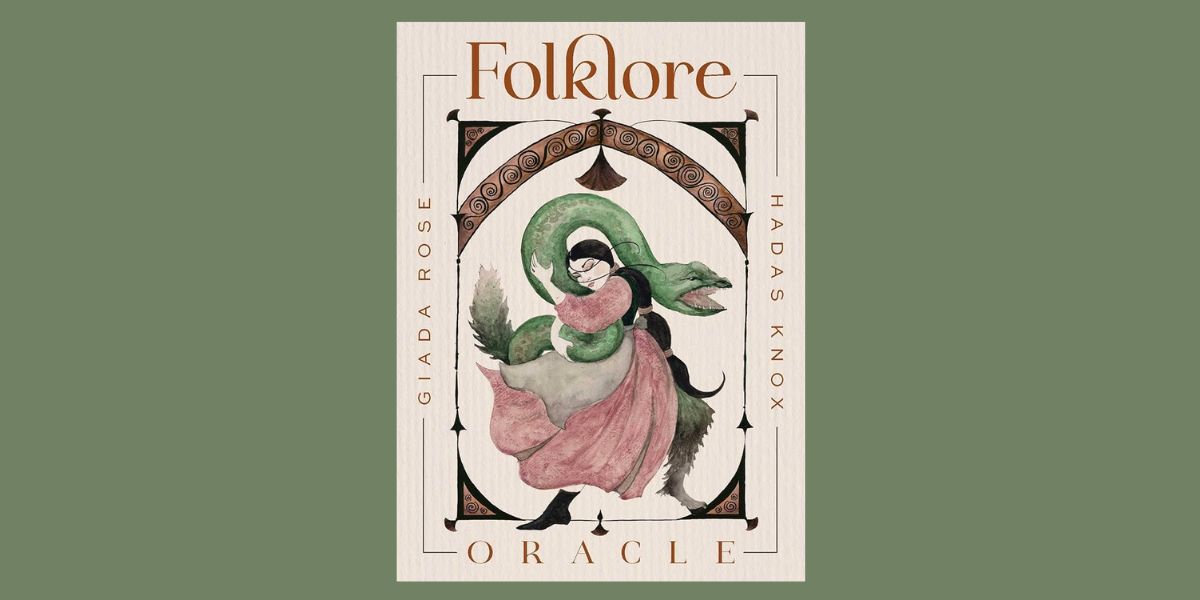
Folklore Oracle, by Hadas Knox and Giada Rose

Folklore Oracle, by Hadas Knox and illustrated by Giada Rose
Rockpool Publishing, 1922786160, 112 pages, 44 cards, July 2025

Ready for charming yet profound insights? If so, Folklore Oracle by Hadas Knox and beautifully illustrated by Giada Rose is a swoon-worthy deck that you’ll want to add to your collection! This oracle is a perfect blend of folklore, symbolism, and wise guidance, bringing together themes from the age-old stories that capture one’s imagination and sing to the soul. The mixture of lore and art invites readers to divine through the enchantment of beloved cross-cultural stories that have taken on a life of their own, retold again and again to each generation.

“Using the language and imagery of folklore and folk wisdom that stretches back through recorded time to a numinous past, when each object not only possessed its own practical function but was the embodiment of an archetype with the force of collective wisdom behind it, this deck asks you to explore how you might lean more deeply into the questions in your life.”15

“Using the language and imagery of folklore and folk wisdom that stretches back through recorded time to a numinous past, when each object not only possessed its own practical function but was the embodiment of an archetype with the force of collective wisdom behind it, this deck asks you to explore how you might lean more deeply into the questions in your life.”16

As for the oracle images on each card, they all draw readers deeper into the story, theme, motif, or symbol being portrayed. The deck is rich with symbolism, both in the choice of card names and imagery, which Rose had brilliantly visually translated for readers to further explore the depths of their psyche while gazing at the card drawn. The mixture of black and white with vivid, bold colors adds further layers of contrast, jaxapositioning where the card lands and the insights spurred on by the process of absorbing the card’s details. At the bottom of each card is a question one can ponder, making it so there’s some reflection before moving onto the guidebook.

In the beginning of the guidebook, Knox provides an introduction along with guidance on how to use the cards, sharing three different spreads for inspiration. Each entry features the card’s name and number along with an image of the card and the question it asks readers. There’s then sections The Lore, Meaning, and Diving Deep, where Knox further illuminates the message coming through. The lore section provides contextual information about the card, which ranges from how the card often appears in folklore to history to superstition. The meaning section gives an overall message, and then the deeper dive goes just a bit further for insight and reflection. All together, the entry provides plenty of revelation and food for thought.

I do appreciate Knox’s style and approach to the guidebook entries. They’re a nice blend of folklore tidbits coupled with insightful commentary on the divinatory message. The meanings are not superficial; they call for readers to have courage and truly delve into the questions on their mind, taking stock of where they’re at within. In the introduction, Knox notes the cards avoid “shying way from the darker aspects of humanity’s shared past”17, and thus the messages reflect the full range of emotions that come through in the potent stories told through the ages. Knox’s insights into the meaning and symbolism of the cards in the guidebook is thoughtful and thought-provoking, encouraging readers to reflect on their own beliefs and experiences, fostering new revelations.

I also really enjoy the variety of cards: The Well, Stolen Child, Mirror, Ghosts, Broomstick, Curse, Salt, Garden. All of them call to mind aspects of a myriad of folklore stories I can recall having an impact on me. Knox does a great job weaving the symbol or motif into the broad archetypes of these stories while also pinpointing the message they have to share with us in oracle form. This spectrum of grand life lessons absorbed by vast populations to meaningful insights meant just for us is a really neat aspect of the deck, as these folktales resonate differently with each of us while still appealing to the collective psyche.

So far, all the readings I’ve done with this deck have been very insightful. After a particularly stressful few days, I asked the cards for spiritual guidance. The card I pulled was Fever. This card asked me, “What needs to be burned away?”18 And the folklore Knox shares about fevers is that they can be a “catalyst for an alchemical transformation.”19 As for the meaning of the card, Knox notes this might be a time of suffering but that within the flames it is possible to “stand in the games and let them wash over you”20 to “rise from the ashes and be born anew.”21. I especially loved this quote from the Deeper Meaning section of the guidebook:

“What if, instead of a force responsible for your undoing, the fire you stand in is evidence of your strength, your capacity to emerge with a purged soul and renewed faith in your own ability to heal?”22

I felt a burst of strength from reading this card. The message of guidance shook me out of a funk and made me feel bold and empowered amid the heat I was feeling. I really appreciated the shift in perspective Knox’s word provided, and it instantly shifted my internal monologue from a woe-is-me floundering stress-ball to courageous alchemist in the midst of a transformation. Powerful stuff!

Overall, Folklore Oracle is a beautifully crafted deck that invites readers into a world where the magical and the mundane are intertwined, leaving a lasting impression on the imagination and the soul just like the folklore symbols and motifs featured in this deck. Knox’s guidance goes deep and brings forth meaningful messages for the readers, while Rose’s enchanting illustrations stimulate the psyche and provide beautiful oracle visions. Those who enjoy folklore, fairy tales, and mystical enchantment will appreciate this deck, as well as readers who enjoy detailed introspective guidance for self-reflection and transformation. This deck is a real work of art!

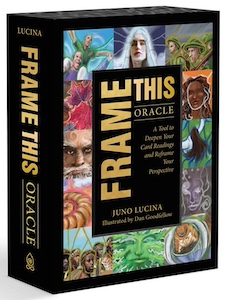
Frame This Oracle, Juno Lucina and Dan Goodfellow

Frame this Oracle: A Tool to Deepen Your Card Readings and Reframe Your Perspective, by Juno Lucina and illustrated by Dan Goodfellow
REDFeather, 9780764368271, 144 pages, 25 cards, December 2024

With Frame this Oracle, Juno Lucina and Dan Goodfellow have created a unique divinatory tool that takes the reader deep into the realms of imagination, artistry, and magic. From the moment you open the box, you are drawn into a world of layered meanings, evocative visuals, and profound themes.

Juno Lucina is the pen name of a talented tarot master, who has created two tarot decks and written a definitive book on tarot. Her articles appear in numerous online journals, and she is a popular speaker at tarot and divination seminars around the US.   She also writes fiction under the pen name Rose Guildenstern. Lucina lives in Connecticut, and you can learn more about her on this website.

Dan Goodfellow is an artist with a wide range of skills, from pen and ink to digital art.  As a professional artist, he also considers himself a “Druid Shaman, Storyteller and Healer.”16 He has illustrated several tarot decks and lives in Bath, England.  Connect with him on his website.

The primary strength of Frame this Oracle lies in its concept. It invites the reader to interpret and re-interpret its layers, much like an oracle delivering cryptic wisdom. This title alone is a clever play on words, suggesting a duality: the act of framing as a literal boundary and the broader act of understanding. This oracle evokes mystery, prophecy, and insight, setting the stage for an exploration of more than a tarot or oracle card alone can divine.

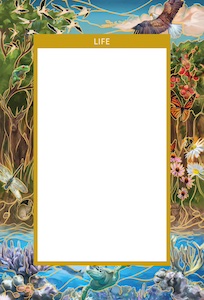
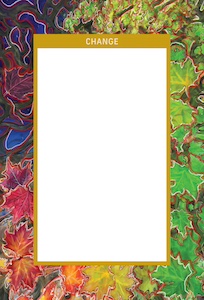
The cards themselves are deceptively simple: a frame that features artwork along a certain concept. These concepts are grouped together in collections of five cards that fall under a specific theme, such as Living, Inspiration, or Mysteries. Within twenty-five cards, Lucina and Goodfellow have created twenty-five jewels of art and wisdom. When you place one of the frames on top of a tarot or oracle card, you add another layer of insight and a new type of divination tool:

“This Oracle is full of pointed edges – boundaries that point the way. Each card is a threshold to focus you, direct you to see what you’re missing, to understand what’s vital. These edges will poke you… bother you… wake you up in the wee small hours of the morning and wriggle around in your mind, heart, and soul to infiltrate all those heart crevices, cracking wide open those walls to let in… not what you think you want … but what you know you need.”17

The guidebook is a masterpiece! After her extensive introduction, Lucina explains how to best use the card frames, including how to combine them with other objects, such as crystals or meditation. Next, she explains why she makes use of questions as part of the guidance:

“Questioning makes you open. It forms new patterns in the brain instead of reverting to old patterns of bias.”18

In addition to suggesting that you select a card at random, she also says that you might look through the frames and choose a frame that calls to you. Or you may use the lists of frames to select a topic that may pertain to your query. Lucina also shares ideas for spreads and how to use the frames for maximum results. 

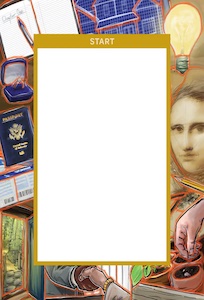
To test this deck, I took it to my Friday Coffee & Cards group and my friends utilized various decks in tandem with Frame This Oracle. One friend paired #6 Start with her 2 of Pentacles from Thoth Tarot.  From the guidance and her own intuition, my friend came up with this affirmation: I am starting something new, and I am adaptable and flexible. The question from Lucina’s guidance that spoke to her was “What is starting around me that I may be missing?”20

Another friend pulled the 10 of Cups from the Rider-Waite-Smith deck and then selected #20 Divinity from Frame this Oracle. She almost began to cry as she read the guidance from Lucina and spoke briefly about letting go of shame and embracing the happiness of her beautiful family. She also shared that she will be journaling daily to listen more to the Divine and allow a more compassionate Goddess to guide her life. 

Frame this Oracle trusts the reader’s intellect and emotional depth, allowing each person to derive their own understanding. This approach not only makes it highly engaging but also ensures its lasting impact, as different viewers uncover new meanings with each encounter.

I really enjoyed the ease of using these frames. Not only does it add a layer to your usual tarot or oracle reading, but it also invites you to be creative and daring in using your intuition. My favorite frame in the deck is #8 Stop. This card features lots of visuals that are jarring and somewhat frightening. Yet, as I sat with the frame and the guidance from Lucina, I began to see what needs to STOP in my life.  And this knowledge provides direction and healing.

Lucina also includes a blank frame, which she calls Void and poses amazing questions and exercises to expand your vision and open your mind.  Finally, she invites you to turn over the frame and use the back of the frame, which looks like a wooden window, with side panes of glass. She calls this the Open Window and asks you to:

“Contemplate the contents of the open window to see the focal points of your own personal frame reflected. What frames that you’re creating for yourself are revealed within your open window?”21

I plan to keep Frame This Oracle on hand to enhance client readings and share Lucina’s insightful questions for journal exercises. The novel approach of this divinatory tool makes it fun to use and brilliant to bring into readings for others and myself.  As Lucina says in the conclusion:

“Frame This Oracle will refocus the almighty power of your attention away from what generally engrosses you, whether mindlessly or obsessively – away from virtual media, what other people think, what you’ve been taught to believe, what you’ve decided must be so (or mustn’t be), what seems to matter – and allow you to perceive what you’ve been missing.”22