✨ A Gathering Place for Magical Readers and Writers ✨

Tag Archives: weiser books

Twist Your Fate, Theresa Reed

Twist Your Fate: Manifest Success with Astrology and Tarot, by Theresa Reed
Weiser Books, 1578637686, 272 pages, August 2022

Astrology and tarot go hand-in-hand if you ask me, but prior to Twist Your Fate: Manifest Success with Astrology and Tarot by Theresa Reed, I had never seen a book that combined the two. Twist Your Fate does a wonderful job of synthesizing the intricacies of these two mystical systems into easy to practice exercises and inquiries that are sure to have a lasting impact on one’s spiritual journey. Beginners and experts alike have something to gain from this book, which is bound to call in the magic that happens when you align will with the forces at play.

Reed, also known as The Tarot Lady, has formerly published books on both tarot and astrology, including Tarot No Questions Asked: The Art of Intuitive Reading and Astrology for Real Life: A Workbook for Beginners, making her the perfect writer to introduce readers to the dual-system of using astrology and tarot in combination. Her other works include Tarot for Troubled Times, The Tarot Coloring Book, and Create Your Own Tarot Cards for those who are inclined to get creative with the tarot.

It often seems the amount of studying and dedication that goes into learning tarot and astrology make people pick one or the other to focus on. It’s common for expert astrologers to only have a basic knowledge of the tarot, and vice versa with skilled tarot readers only knowing their Sun sign. Plus, even for those who are drawn to both, there’s little information about how to use the two in combination. But with Twist Your Fate, Reed helps readers go beyond the either/or and do a deep-dive into both astrology and tarot before integrating the two together, opening a whole new world of possibilities.

Divided into four parts, Reed leads readers through lessons on astrology, tarot, listening to their intuition, and bringing it all together in the end. The longest section of the book is the first one, humorously named “Part One: Cover Your Ass-trology”. I was pleasantly surprised with the range of astrology topics Reed included: the midheaven, nodes, transits, retrogrades, influence of the moon, and even vocation and life calling. She did a wonderful job of making these astrological concepts approachable, and it’s for this reason this has become the book I would recommend to beginners to astrology above all other books on the topic.

Even if the astrological terms or process of reading the chart feels intimidating, Reed’s gently direct approach helps readers to gain their own footing. She provides her own interpretations for all the different astrological placements, feeding reader’s insight about their own chart, but also leaves plenty of room for everyone to connect with the chart in their own way and form interpretations from within. Throughout the chapters there are plenty of “astrocises” which are exercises intended to help the reader examine their chart further to facilitate integration of the chapter topic.

These astrocises are quite creative and are good for creatively engaging with one’s astrological chart. I’ve been a professional astrologer for many years, and sometimes I’m tempted to gloss over others’ interpretations of the houses, signs, or different planetary energies. But Reed caught my attention and kept it through and through. Even though the astrological topics covered are something I am quite familiar with, her approach was novel and engaging. The way she presents the material was an invitation for me to do a check in and truly deep dive into my astrological chart, which I honestly hadn’t done for quite some time. As I worked through the astrocises, certain patterns coming up for me right now were illuminated, and I felt like I gained a better perspective about the blessings and challenges emerging in my life at this time.

Then the tarot section was just pure gold because Reed has been reading cards for over 30 years! She shares her interpretation of the 22nd Major Arcana cards and the 56 Minor Arcana cards – both upright and reversed. Additionally included is the numerology and planetary correspondence of each card. The images used are the traditional Rider-Waite-Smith deck, which I think helps readers, especially beginners, to see all the subtleties of the cards since it’s a very popular deck that many other decks are based on.

My favorite chapter in the tarot section was “Taking Your Cards to Work” where Reed guides readers through asking the right questions and using spreads to get the most out of one’s reading. Some of the spreads she shares are The Astrological Wheel, The Horseshoe Spread, and The Options Spread, which I found to be great for decision-making! A real perk of the chapter is how Reed uses sample readings so the reader gains an understanding of how she puts it all together to come to an interpretation of the cards. Plus, along the way there’s plenty of “tarotcises” that once again facilitate an opportunity to connect with the lessons of the chapter.

“I have always said that astrology creates the map; Tarot shows you the detours. But there is one more crucial element – your intuition.”1

Before the culminating section, Reed binds astrology and tarot together with insight on how to discover, develop, and trust one’s intuition. This section is essential for all readers, as astrology and tarot both ask you to learn to have confidence in the answers you receive, both from your chart, cards, and most of all, from within. I appreciate that in this section Reed doesn’t sugarcoat the intuitive journey though, making it all “love and light”, rather she provides advice about what to do if your intuition is wrong or if there’s no meaningful insight coming through in a reading. This section definitely helps readers to feel better about the bumps in the road on their intuitive journey, while providing guidance and advice about how to make it a bit smoother.

The final section invites the reader to grab their chart, get their cards, and use their intuition to divine insight into a present situation. Reed aptly calls it an “astro-tarot-intui-cise”2 To be honest, I haven’t worked my way up to this fully comprehensive spread yet! I wouldn’t say I’m intimidated, as Reed has prepared me well, but I feel like this is going to be a meaningful reading, so I want to give it the time and space it deserves to truly delve into the reading. I like knowing I can pull out the “big guns” aka this thorough reading when it’s needed most, and I’m trusting the time to use it will present itself sometime down the line!

All in all, Twist Your Fate is a fantastic resource for deepening one’s connection to astrology, tarot, and intuition. Reed’s experience and wisdom shines through the text as she guides readers on the journey of learning how to manifest success, which many agree is no easy feat! Without even realizing it’s happening, readers will start to gain confidence in themselves as they reveal new facets of their astrological make-up and gain the ability to interpret what life presents through a lens of empowerment, rather than discouragement. The tools taught in this book are sure to have life-long value, especially the more you practice and trust the messages you receive.

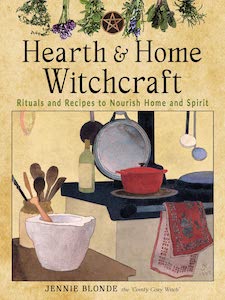
Hearth & Home Witchcraft, by Jennie Blonde

Hearth & Home Witchcraft: Rituals and Recipes to Nourish Home and Spirit, by Jennie Blonde
Weiser Books, 1578637737, 211 pages, September 2022

A balm. A comfortable chair that offers you the ability to relax in order to dream, to conjure, to recharge. A friend, a companion, a motivator. This is what Hearth & Home Witchcraft: Rituals and Recipes to Nourish Home and Spirit by Jennie Blonde, the self-proclaimed “Comfy Cozy Witch”, was to me. I’m sure it will be the same for you.

Blonde succeeds in combining witchcraft for the hearth and home with hygge, the Danish and Norwegian lifestyle concept that translates loosely into “hug.” I’ve often written on the topic of hygge, so it was a quite “coincidence” to begin the book by reading how Jennie incorporated hygge into her practice to create something “comfy, cozy, and witchy.”3

This wonderful, informative book guides the reader into finding and practicing comforting and nourishing hearth and home magic for every season. As with hygge in general, one is asked to keep in mind that what is comforting and cozy to you may not be the same to another person. You are called to create a home and hearth that reflects you, that nourishes you, and comforts you. Jennie also reminds the reader that “everyone’s idea of comfort within witchcraft differs.”4

Blonde has been practicing witchcraft for over two decades. In addition to this book, she has a podcast called… you guessed it: Comfy Cozy Witch. She writes in a way that is both informative and casual; she writes as if we are sitting in her kitchen talking over a cup of tea. The book is “a blend of story-telling, witchcraft, and warmth…accessible to any witch, at any point of their journey. A book filled with information, personal anecdotes, rituals, spell work, and recipes to nourish yourself, nourish your home, nourish your spirit.”5

Hearth & Home Witchcraft is divided into seven sections, each focusing on places (hearth and home, kitchen, garden and nature), one’s self, and everyday rituals. Also included is a reference to the book’s rituals and recipes as well as a glossary of terms and references for future reading. The Wheel of the Year is detailed with corresponding delicious, easy to make recipes including mini bread loaves (Lughnasadh), honey butter (Imbolc), and sangria (Litha). The recipes ensure this is a book to keep out year-round.

Readers are introduced to the concept of choosing a household deity (if one feels so inclined) to work with. Blonde offers a few suggestions for household deities, such as Hestia, Vesta, and Brigid but leaves open to choice what resonates with the reader, noting it could also be a spirit of local lands of an animistic deity. There is a corresponding house goddess ritual too. 

There are also suggestions on ways to make one’s home both magical and homey, inviting and nourishing. There are magical cleaning tips, everyday magical items with which to “work,” and suggestions for making areas of your home both reflect and sustain you. Here Blonde focuses on the basic tenants of the home of a hearth witch:

“Hearth craft begins and ends in the home, there is a focus on cleanliness, there is positive nurturing energy with subtle touches of magic, and there is a respect for all of nature.”6

In turning one’s attention to the hearth, or kitchen, Jennie writes about the kitchen altar, herb and tea magic, as well as kitchen rituals for meditation and balance. There is a large focus on food and recipes, for as she writes, “the kitchen of a home is a place of gathering. Food, in and of itself, is magic.”7 Some of the ones I’ve tried so far are the pumpkin chocolate muffins and herby biscuits, which were both delicious.

Imagine tales in which the witches toil over a cauldron to create magic – Blonde helps the reader create similar magic in a modern kitchen with tried and true items such as tea, cinnamon, honey, and mint. There are sprays and rituals for things such as energy cleansing and lessening anxiety, which I made for one of my daughters. It was simple to make, yet I felt the potency of the mixture as I blended it together. So far, she’s loved the calming effects.

Blonde encourages the reader to set up one’s own sacred space – be it in the home itself or on the property surrounding the home. “A sacred space is personal in nature and the location varies depending on who you talk to.”8 One can engage in “witchy self-care” in these sacred spaces – ways to ground, relax, recharge, and reconnect. For extending the interior space to the natural world, there are tips for setting up a witch’s garden, and working with Fairies. I am especially looking forward to trying out the Ancestor Honoring Ritual for Samhain.

Overall, Blonde helps the reader identify ways to find “magic in the everyday things, no matter how big or small.”9 The biggest suggestion is to find time – no matter how small – to participate in one’s rituals. She reminds us to find the magic that surrounds us, and that “It isn’t the length of a ritual that matters, it’s the quality.”10  To settle into the magic so that it supports us, comforts us, grounds us and activates us, Hearth & Home Witchcraft is the book to read. It’s the small things we do with meaning that matter. I highly recommend this book to settle into the comfy, cozy routines of your life that make it magic.

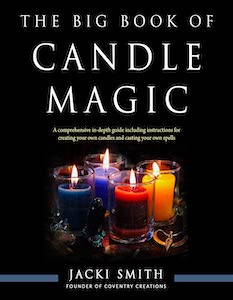
The Big Book of Candle Magic, by Jacki Smith

The Big Book of Candle Magic, by Jacki Smith
Weiser Books, 9781578637638, 309 pages, July 2022

Jacki Smith, founder of Coventry Creations, the largest magical candle company in North America, has written the most enlightening (!) book on candle magic, aptly titled The Big Book of Candle Magic. Described as a “comprehensive, in-depth guide including instructions for casting your own spells”11, this book opens with the most important question to consider before delving into the material: Do I really need a spell?

I loved being challenged by this question at the opening, as it made me sit up and take notice. I was no longer a passive reader, I was a participant. “Aunt Jacki”, as she refers to herself throughout the book, creates a conversational atmosphere in which she engages the reader and guides them through candle magic. How can you be intimidated into delving into this topic when Aunt Jacki is right there beside you?

She provides guidance on defining what a spell is – a “shifting of energy toward an intended goal.”12 She continues by writing that “the impact of that spell depends on your prep work, your intention, and your commitment to a shift in energy”13, while reminds the reader that “magic at its core is healing.”14 To help you answer her original question as to whether you need a spell, she writes that “if you are ready to manifest a change and heal a need both in yourself and in the wider world, then yes!”15

The book is divided into four sections, all providing guidance, tools, suggestions, and exercises including, most importantly, getting clear on whether you need a spell or a reality check. Again, your Aunt Jacki is going to lovingly help set you straight.

“Law of Attraction and magic. Is there a difference? If so, what is it? When you add the ritual of magic to your intent…your intent will manifest faster and cleaner. And that is where candle magic comes in. Candles provide an easy, powerful ritual within themselves.”16

Section One, The Magic Hour is Now”, provides exercises such as the “Why is That?” exercise. She encourages the reader to start and maintain a Candle Magic Journal, again with instructions provided. She details the difference between basic candle magic of lighting a candle versus advanced candle magic that includes casting a spell. Other topics included in the section include setting intent and casting for guidance.

Section Two, “Joy of Spellcrafting”, provides guidance on choosing a candle, prepping your candle for magic, and accessorizing your spell. Jacki delves into different types of candles (such as pillars, votive, and tea lights), blessed and dressed candles, sigils, color, and casting. I tend to not speak my spells out loud, but Jacki writes that a candle spell needs words to activate it and these words must be spoken out loud. She provides different phrasings of a spell, showing how one way is more valuable than another. Jacki prompts the reader to include boundaries of a time frame in the spell with an attainable due date, or else the spell is just a wish. 

Section Three, “Art of Cocreation”, focuses on inviting in the divine energies in the Universe. She encourages the reader to co-create with the spiritual realm. There is focus on setting up an altar and the types of altars such as an ancestor altar (my favorite), a purpose altar, nature altars, garden altars, divinity altars, and big magic altars – whatever you’re drawn to. She provides information on lighting the candle and ceromancy, the spiritual language of candles. Wondering how to “read” a candle? It’s in the book! And again, in this section she prompts the reader to return to their Candle Magic Journal with a list of questions on which to focus. 

Section Four, “Index of Inspiration”, is the reference section of the book. It provides a sample candle spell index (prosperity, love and relationships, protection, and clearing) that includes candle colors, candle types, dressing oils, and accessories such as stones or photographs.  There is a moon sign index as well as a color index, a magic herb index, a crystal and stone index, a tarot index, and a Magic 5 index of ingredients. While the first three sections are more conversational and action-oriented, this section is more informational and one that you’ll turn for reference as you delve into candle magic. 

Plus this book contains guidance, exercises, prompts, and recommendations on things such as creating a spell (the best spells rhyme!), different types of spells, use of color, stones, and tarot. Encyclopedic in the best way to describe some of the chapters.

In addition to its wealth of information, what is also unique about the book is its conversational tone, with craft projects, confessions, clarification, musing, and tips from our Aunt Jacki. What I most valued about Jacki’s writing was that it challenged me through prompts, journaling, and exercises to commune with the candles.

I was invited to set intentions, get clear about what I was calling into my life and why. Aunt Jackie helped me to define what I want and what I’m willing to do to get clear, as well as helping me to tune into if I was truly ready to act when I cast a spell. All of this was new terrain for me. To be honest, I never gave these questions much thought. But as Aunt Jackie reminds the reader, spells are actualized by my action. “Build your spell with clear intent and then pay attention to the outcomes. And there is always an outcome.”17 

“The goal of candle magic – or any magic of that matter – is to move your own limitations, fears, blocks, and beliefs out of the way so your intention can become real. “18

After reading The Big Book of Candle Magic, I continue to carry with me Aunt Jackie’s words that magic demands change. She reminds us if there is no need for change, there is no need for magic. I highly recommend this book if you are ready and willing to change. It will light the way for a new way of living with the magic of candles for years to come!

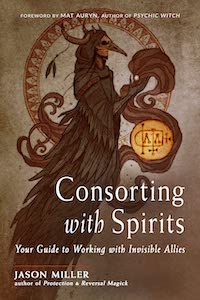
Consorting with Spirits, by Jason Miller

Consorting with Spirits: Your Guide to Working with Invisible Allies, by Jason Miller
Weiser Books, 9781578637546, 216 pages, May 2022

Within minutes of reading the introduction to Consorting with Spirits: Your Guide to Working with Invisible Allies by Jason Miller, I went online and bought two additional books by the author, Protection & Reversal Magick and The Sorcerer’s Secrets. I was so impressed with the writing style and information offered in the introduction, that more books from this author were needed immediately. 

With this book, Miller has written a manual that assists the reader in creating or strengthening bonds with dwellers of another realm, such as angels, spirit allies, or deities, and he does it in a way that feels completely accessible to everyone who is willing to put time into the effort. A devotee to practical magic for over 35 years, Miller is well versed in the occult and the various ways of application, yet trying to assign a specific path that he follows is near impossible. The author of six books and a variety of courses, Miller regularly shares his knowledge through emails to his subscriber list, of which I am part of. Full disclosure here: I am a fan of this writer.

Miller is clear and to the point and states that habitual company with spirits is the key to working with them. He says:

“…it’s the relationship that really matters, not whether the spirit is in the correct column for the planet or whether the description in the book fits your needs. Those things matter for choosing spirits to make initial contact with, but that’s just the starting point.”1

What I love about this book is the way it’s written: clear, easy to understand, with ideas presented that could be challenging for some. For me, the notion that once you do the research into which spirit you want to build a relationship with and set the stage for that relationship, you are then free to work with them whenever is mind blowing. I don’t know where I got the idea that there needs to be a high ceremony each time I wanted to interact with spirits, but I know that idea prevented me from contacting spirits doing so as I thought it would be unsafe without all the trappings.

While there is no warning attached to this book, Miller does have a caution to those who choose to pick it up. Miller writes in bold: ‘THIS SHOULD NOT BE YOUR FIRST BOOK ON MAGIC’ and I appreciate that. He explains:

“…this should probably not be your first book on magic. It’s not that this is an advanced book, I plan on making things as simple and as straightforward as possible. It’s simply that knowing some methods of protection, some basics of spellcraft, and having some competency at divination will make the work presented go a lot smoother.”14

I love the fact that Miller calls out that there needs to be basic understanding prior to picking up this book. In fact, that was the line that drove my impulsive purchases. When you set the foundation and ask that those participating have a working knowledge of basic concepts and practices, it makes for a much easier read. I’ve always thought that some books need to have some sort of paragraph explaining what you need to know before you start, and this book does just that.

The fact that Miller calls upon all sorts of spirits, including angels and demons, might seem a bit shocking to those who have had unpleasant experiences with organized religion. As a cult survivor, I completely identify with these people and understand that references to angels and demons might be triggering. I will be honest, I thought that I would stumble on that part but Miller’s openness and honesty about his experiences completely negates those feelings and instills a sense of wonder. That might not be what everyone experiences, but for me I was surprised to find myself contemplating contacting an angel for help.

The book is divided into twelve chapters ranging in topics from “What is a Spirit?” to “Relationships and Pacts” and everything in between. One of my favorite parts of the book deals with local spirits and how to contact them. This chapter is about how most sorcery is local. Miller explains: 

“…most Sorcery and Witchcraft are local. There are vast and ancient Gods and Goddesses contactable from anywhere in the world, as well as saints and all manner of spirits, but when it comes to getting stuff done, it’s not always who is the most powerful, but who is the most local.”15

Miller says that making a map that details important locations for magic is useful and provides a clear connection to spirits in that area. Researching the natural geography of the land is also helpful, as certain aspects lend themselves to amplifying magical activities. Finding specific places that feel more magical provides an extra layer of help when contacting local spirits, especially when it comes time to sit in communion with them and listen. Miller also suggests doing research on the history of the land as well, as that could potentially provide more information on who the local spirits are and how to contact them. So many great ideas for establishing contact with local spirits, and I can’t wait to try it out.

One of the best parts of this book is the blending of Christianity, Paganism, and Luciferianism in the rituals presented. Miller does this flawlessly and explains that to him, magic is magic. On the reasoning behind including three different perspectives he says, “These three approaches – The Christian, the Pagan, and the Luciferian – represent major streams of thought in the occult world that would benefit from a book like this. Other streams exist… the magic in this book could be adapted to those lines of practice if one were clever.”19

I would absolutely recommend Consorting with Spirits to anyone who is looking to establish a relationship or deepen an existing connection with spirit. Personally, I have used the information to strengthen my bond between myself and my ancestors with great success. This is not a book for someone who is dabbling though. This is a blueprint for finding and connecting to spirit in a careful and respectful manner. If that resonates, I urge you to pick it up. 

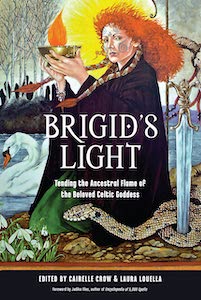
Brigid’s Light, edited by Cairelle Crow and Laura Louella

Brigid’s Light: Tending the Ancestral Flame of the Beloved Celtic Goddess, edited by Cairelle Crow and Laura Louella
Weiser Books, 1578637694, 256 pages, March 2022

Ancient Pagan goddess or Catholic saint? Brigid brings her power and wisdom in many guises for the benefit of all. In her guise as the Goddess of the Flame, her head surrounded in a halo of fire, “she stands with us at the in-between parts of our lives, calling us to her so we can learn how to face the moment.”20  As the Lady of the Well, Brigid is also very much associated with the waters, often known for bringing inspiration and creating a flow of ideas. Brigid is most associated with Ireland where one finds the earliest documentations of her. Her wells in Kildare (one known to the public and one a bit more hidden and off the tourist path) are visited by those seeking aid. The Saint Brigid’s monastery is also in Kildare, not too far from Dublin. 

Brigid’s Light: Tending the Ancestral Flame of the Beloved Celtic Goddess, edited by Cairelle Crow and Laura Louella, is an anthology with writings from a diverse pool of authors, each opening up to their encounters with Brigid, whether through prose, poetry, art, and even recipes. In their selection of contributors, Crow and Louella sought to “reflect Brigid’s diversity in a wide variety of experiences of her power, a number of unique portrayals of her divinity, and even in different writing styles and spellings of her name.”21 Because Brigid’s influence is far-reaching, many of the contributors come from places other than Ireland.

The authors provide insight into the various ways that Brigid is celebrated and called on for assistance and sustenance, both physical and non-physical. Each writer encourages the reader to allow the “light of her flame always to guide you to your highest purpose.”22 There is a short bio of each of the contributors at the end of the book that allows the reader to further connect with those whose writings resonated with them.  

The book is divided into six parts, each dealing with a specific theme: “The Many Faces of Brigid”, “Goddess in Nature”, “Rituals Practices and Prayers”, “Goddess of Hearth and Home”, “Mothers and Daughters”, and “Circle of Life and Death”. 

The poetry found in each section was inspiring and melodious, each an offering to Brigid. The words flowed like the water surrounding her. They write of “finding” Brigid whether she met them in Canada or on a shoreline at sunrise. One poem leaves offerings to Brigid in the form of tears. A couple poems speak to Brigid the shapeshifter – as Maiden, Mother, and Crone. One connects with her as a midwife. 

The works resonated with me on so many levels, in their diversity, some personal and some more “educational,” but through all of the words and images, one cannot deny the honor and love dedicated to Brigid. 

In the “Goddess in Nature” section, I especially liked the piece on Brighid as Water Goddess (spellings of her name vary), detailing the Irish folk practices dedicated to her at the site of sacred springs and wells that continue to this day. Clooties, or strips of fabric are dipped in these waters and hung nearby in a tree with the belief that through the process of magical healing the illness would transfer from the person to the cloth which would eventually disintegrate. The author, Annwyn Avalon also writes on how one can create their own sacred well to place on an altar to Brigid. 

In the section “Rituals Practices and Prayers”, I was drawn to the “Honey and Beeswax Healing Spell” by Cairelle Crow. I look forward to doing the spell for myself and also for a few loved ones, with their consent, of course. “The Bed Blessing Before Sleep” by H. Byron Ballard (adapted from Carmichael) is a beautiful and soothing blessing that I have begun saying at bedtime. 

I loved “Cooking for Brigid” by Dawn Autora Hunt, which is in the “Goddess of Hearth and Home” section. I related to her telling of first encountering Brigid as a saint, growing up in and Italian Catholic family. As Dawn found a “pagan path” she writes of her honoring Brigid at Imbolc, lighting candles and cooking hearty foods. I will try her accompanying recipe of Shepherd’s Pie when the Wheel turns to Imbolc in February. 

In the “Mothers and Daughters” section, I particularly loved the story of the “Granddaughter of the Well” by Yeshe Matthews which recounted her serendipitous trip to Ireland when she was in graduate school. Her “knowingness” of how to arrive at places that she had never before visited brought her to Kildare, to Brigid’s well and the monastery. 

The book concludes with a prayer “written over shared cups of tea and tales of ancestors, and is infused with our deep love of the goddess.”23 The editors, Cairelle Crow and Laura Louella, leave the reader with the hope that the concluding prayer and the words within the book, “bring you bright blessings.”24

I highly recommend Brigid’s Light, both as a way to get to know the multi-faceted Brigid and also for the many ways that you can invite her to walk life’s path with you. Blessed Be.

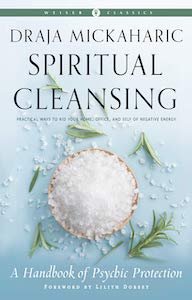
Spiritual Cleansing, by Draja Mickaharic

Spiritual Cleansing: A Handbook of Psychic Protection (Weiser Classic Series), by Draja Mickaharic
Weiser Books, 1578637287, 144 pages, February 2022

I’ve been on a deep dive into research on spiritual protection lately, and therefore was thrilled to come across Spiritual Cleansing: A Handbook of Psychic Protection by Draja Mickaharic. Originally published in 1982, this Weiser Classic Services book is just as relevant 40 years later. The added foreword by Lilith Dorsey, author of Orishas, Goddesses, and Voodoo Queens, is an added bonus. I value magical wisdom that stands the test of time. Sometimes it seems like recent and best books are merely repeating the same things based on current readers’ taste and market trends. But this book stood out to me from the get-go, and I knew I wasn’t going to be getting the same old while reading it.

Mickaharic’s experience as a magical practitioner grants him the ability to convey expertise tips and tricks that are both practical and reliable. He’s definitely tried, tested, and witnessed the many outcomes of spellwork gone awry and implemented to success; as a result, he feels like a guide I can trust.

“All of the procedures in this book are simple, safe, and effective, when the directions are followed. They are all natural in their operation, and no special training or capacity is required on the part of the user. All of these cleansings have been tested in my personal practice, as well as in the work of others.”1

Before delving into the many methods of cleansing and protection, Mickaharic provides readers with an understanding of the need for them. He notes the physical and spiritual nature of life on Earth, the latter which often is dismissed in favor of the tangible senses. But we all have felt the lingering sense of a negative energy present after interactions with certain people or being in a specific location.

“The spiritual energy field, like the quality or vibration of people, places, and things, is not detectable through the physical senses. Once we can make a distinction between the physical and the spiritual parts of the human constitution, it becomes easy to understand just how spiritual cleansing works.”22

He further goes on to explain how religious rituals have their own methods of cleansing, but that this book can be used whether one has a religious practice or not. If one does, Mickaharic suggests that the practices in the book do not interfere but rather enhance it. And I might add this book does refer to Bible passages and Psalms as part of some of the recommendations for spiritual cleansing. I have no problem with this, as for over a decade I’ve explored the intersection of Christianity and spellwork, but others who take a more firm stance against Christianity should take note prior to reading. There’s still plenty to gain though, and much of the content is independent of any religious connotation.

The four main types of cleansing focused on in this book are cleansing with baths, water, eggs, and incense, which all have their own detailed chapter. There’s also chapters on the malocchio (evil eye), protection while asleep, quieting one’s mind, and finding a mentor. And all together, this book has become my go-to for spiritual cleansing. Rather than sharing all the potent cleansing practices Mickaharic covers, I will share some of the really interesting things I learned, what stood out to me most, and my favorite parts that I feel distinguish this book from others.

First of all, there is a ton of information on ritual baths! Many times, I see a list of ingredients for cleansing or spellwork bath, but Mickaharic goes into full detail about how to prepare for a ritual bath, history of ritual bathing, and even words of caution. Plus, there’s so many sugged: Psychic Tension Bath, Coffee Hard Work Bath, The Money Cinnamon Bath. And the majority of the baths include household items that one wouldn’t have to go on a goose chase to find.

I learned a lot about properties of different types of water from the chapter “Cleansing with Water”. Mickaharic describes the different energy and usage of sea water,  rain water, waterfalls, spring water, and lake water. For those who regularly use water in their practice, this information would be useful to know what is best for which type of magical working one is doing. Also included are different herbs that can be added to water to achieve a desired effect.

Eggs are something that I’ve used for over a decade to cleanse a new home, but Mickaharic showed me new ways to use eggs for spiritual healing. He suggests ways to use them for physical and emotional healing, ending a relationship, protection while asleep, and cleansing your pets or the sick. I love this method of cleansing because I nearly always have eggs on hand, and they are a quick and easy way to shift energy.

Of all the sections, though, incense cleansing had the most insight into how I could enhance my practice of burning incenses. I had never realized that certain smells attracted specific spirits, nor that some incenses are good for banishing spirits, while others are intended to call them in.

“When we use incense to clean a place, we are calling those forces of the astral universe which regularly act to remove negative influences. We are simply calling them and asking them to work in a particular area. When we burn incense to improve the vibration  of a place, to give the place a more “spiritual” vibration, we call on those forces which naturally act to improve spiritual vibrations. Each incense, or blend, is a sort of “telephone number” which is answered according to the sincerity of our request. If we burn incense with no real purpose, we may find the forces decide we are calling a wrong number–and they will not act in harmony with our desires.”24

Mickaharic gives instructions on how to properly burn incense and offers many suggested blends. He describes cones and sticks and even how to fumigate oneself. I really liked learning about frankincense and myrrh; I had never previously heard about their connection to the astral realm, and it was interesting to learn in light of their significance to infant Christ.

Finally, I was thrilled for a whole section on the malocchio. My Italian family often spoke of it, and my great-grandmother knew the method for removing it at the strike of midnight on a new year. But I have rarely been able to find additional information about how to remove it. Not only does Mickaharic go into detail about the history of the malocchio and how it is transmitted, he also offers a Beer Bath to remove it, along with suggested charms and amulets to keep it at bay.

All in all, Spiritual Cleansing has been a great aid in my spring cleaning this year. When I am seeking to cleanse myself or my home, I’ve been able to find quick suggestions to shift the energy. Plus, the ritual baths are sure to make any water-lover eager to perform some spellwork. There’s so much value in knowing not only how to protect yourself, but cleanse yourself too. Spiritual hygiene is a practical, and honestly essential, craft for all those who perform energy work. But quite frankly, we can all benefit from a good energetic sprucing up!

Blackthorn’s Protection Magic, by Amy Blackthorn

Blackthorn’s Protection Magic: A Witch’s Guide to Mental & Physical Self-Defense, by Amy Blackthorn
Weiser Books, 1578637619, 208 pages, March 2022

My spirit journey took an unexpected twist recently. After spending a year delving into the realm of mermaids, I suddenly felt very called to explore the world of superheroes, self-defense, and protection magic. For the first time ever, I watched all the Marvel movies, and I became inspired to increase my physical strength and psychic defenses. This is what led me to reading Blackthorn’s Protection Magic: A Witch’s Guide to Mental & Physical Self-Defense by Amy Blackthorn. It has been a game-changer, awakening so many new ideas with practical tips I can immediately incorporate into my practice.

I had heard of Blackthorn because of her best-selling books Botanical Magic, Sacred Smoke, and Blackthorn’s Botanical Brews. But I was very surprised to discover Blackthorn also has a background in security. She holds a bachelor’s degree in Criminal Justice, is a blackbelt martial artist, and shoots pistols competitively in addition to teaching women self-defense. How freaking badass can only possibly be? I would have never guessed! Her experience in both magic and security makes for one all encompassing, hell-of-a read.

The book is divided into four parts and covers mind, body, and spiritual protection. Then the last part is the additional information section that shares information about timing work according to the day of the week/moon phase, color correspondences, and plants to use for different types of spellwork. Plus, Blackthorn provides a fantastic introduction into the topic of protection magic, writing about ethics, boundaries, and her own magical point of view. Her very straightforward approach made me more comfortable with the idea of using protective magic, and I especially liked how she clearly defined magic, curses, hexes, and jinxes for readers. There’s even a curse assessment for readers – how cool is that?

This book is the perfect blend of practical advice for self-defense and instruction on how to perform protection magic. What really stands out about Blackthorn’s writing is her conversational tone. She uses anecdotes to illuminate the content, such as bravely sharing her story of dealing with a stalker, and also ensures readers are taking the utmost precaution with their supplies. For instance, she continually reminds readers essential oils should never be used on infants and notes when certain herbs or essential oils are not appropriate to use. It feels like Blackthorn has your back as you read, which is such a reassuring feeling.

Blackthorn even wants to protect us from getting scammed! I really enjoyed the section of the book where Blackthorn shares how to determine the quality of essential oils and crystals. She goes into depth about how one can determine if they have a diluted essential oil or if it’s using low-quality ingredients. Then she discusses how to know if a crystal is legit, which I’ve always struggled to figure out. I will absolutely now be testing the quality of my essential oils and more discerning in my crystal selection.

I also now want a tactical pen to carry around with me. And I convinced my husband we should practice Blackthorn’s advice on how to get out of being tied up. I also looked into going to a shooting range because for the first time ever I saw the value in being able to defend myself. And all of this is so out of my typical lifestyle in so many ways, but it’s exactly what my hippie-heart needed to read to remember we can be loving and badass at the same time.

Another great thing about the book is that Blackthorn offers so many suggestions of how to incorporate protection magic into your practice that every reader is bound to find something that works for them. From energy practices (breathing, grounding, shielding) to outdoor gardening, the options offered seem limitless. And Blackthorn is thorough! The section on crystals did a great job of explaining their properties and it came in handy later when she talked about creating a crystal grid for protection. Her information on gardening, both indoor and outdoor, for home protection was wisdom I’ve never read elsewhere. There’s incense recipes, tarot spells, mirror boxes, and so much more.

The energy practice that I’ve been using most (and with great success) is one where she discusses visualizing oneself in an eggshell. Visualization practices usually never stick for me, but the way Blackthorn teaches it, including customizations one can make to their eggshell, has really stuck for me. I feel so much less anxious being around a lot of people now and haven’t felt “pulls” on my energy since I’ve started practicing this energy technique.

The only thing missing that I wish was included in the book is information about protecting oneself online, such as insights on tech-defense and thoughts on how to protect one’s energy in the digital world. Society is becoming more reliant on technology, most people use the internet daily, but with the amount of animosity, hate, and confusion that spreads like rapid fire nowadays, it can be tough to know how to protect one’s energy online.

I have developed my own practices, and based on the wealth of information given by Blackthorn, readers could definitely piece together a spell for online protection. But I just value Blackthorn’s insights so much that I wish I could learn her thoughts on digital safety and protection too. However, this in NO WAY detracts from the immense amount of information provided in the book for day to day protection.

All in all, Blackthorn’s Protection Magic is the best book I’ve ever read on the topic. Blackthorn gives her readers the low-down we all need to stay safe, strengthened, and shielded from harm. Her unique blend of practical and magical wisdom make for a comprehensive how-to guide when it comes to protecting oneself on all levels: mind, body, and spirit. I feel strong after reading this book – and more street smart. I highly recommend this one for your collection!

The Witch at the Forest’s Edge, by Christine Grace

The Witch at the Forest’s Edge: Thirteen Keys to Modern Witchcraft, by Christine Grace
Weiser Books, 9781578637584, 224 pages, November 2021

“I stand in the meadow, at the forest’s edge. One step forward and I will straddle the boundary between fading light in the swaying grass and rich darkness in the woods. One more step and I will be immersed in the nighttime world of southern, hardwood forest. My home lay behind me, the wild magic ahead. I am the witch at the forest’s edge.”1

The Witch at the Forest’s Edge: Thirteen Keys to Modern Witchcraft by Christine Grace is an immersive and deep dive into the world of the modern witch. Grace’s theology studies shine through with informed practices and cross section references to other spiritual practices. The philosophies and method of study contained within this book provide the reader with a sampling of the tried and tested teachings that are foundational within The Forest’s Edge Tradition, co-founded by Grace in 2011. 

“The essence of the Forest’s Edge way is to honor the specificity of the individual, while holding that each witch is fully themselves only within the web of human and other relationships in which we live and have our being.”2

I appreciated the “How to Use This Book” and “Self-Assessment” sections of the Introduction. Knowing the “how” and the “why” align deeply with the overall intentions of this book. These emphasize the ultimate goal of the modern witch to develop as one who finds their way through deep reflection, deep practice and a slow and often self-guided approach to cultivating the individual’s personal growth in the practice of witchery. All of the tools required for that intention are found within the pages of The Witch at the Forest’s Edge: Thirteen Keys to Modern Witchcraft.

The book is separated into thirteen chapters. The formatting of these chapters allows the reader to flow easily through a methodical and well-designed approach towards cultivating their own practice of modern witchcraft. “Communing with Spirits” (chapter two), “Cultivating Spirit Senses” (chapter four), “Divination” (chapter eight) and “Spellcraft” (chapter twelve) are some of the topics included for deeper exploration.

Additionally, each chapter contains sections with related content for reflection and another for actual practice. The “Resources” that conclude the book are thoughtfully aligned by chapter and rich in specifically curated titles of depth and substance.

Grace offered some practical insight in chapter one, “Worldview and Spirituality”, which spoke as a lovely fusion of her spiritual practice and her training as a counselor:

“It is one thing to give an intellectual assent to the ideas and practices outlined in this book. But will you do the work? . . . In order to identify and develop perceptions of the sacred and the many influences at work in ourselves, and our environment, we need both study and practice.  Once a practitioner has actually experienced something that they learned or formed in study, it takes on new life and deeper meaning unique to that individual. Without study, we may not be inspired to practice with depth; without practice, we cannot fully understand our study.”25

This approach is clearly evident throughout the pages of The Witch at the Forest’s Edge; each chapter is complete with opportunities for study of the related skills and guidance for practice of these newfound concepts. As stated by Grace, the power lay in the interweaving of the two as the reader begins to build a strong foundation of witchery. 

I was particularly drawn to chapter seven, “Hedgeriding”.

“Hedgeriders follow in the ancient tradition of magical practitioners who live with one foot in this world and one foot in the Otherworld. The Otherworld is the multilayered realms of fae, ancestors, gods and innumerable other spirits. Hedgeriding is a means to release part of our consciousness from this world and travel, spiritually, into the Otherworld to engage with spirits, gather new knowledge, hone magical skills and create change.”26

There is an abundance of information about the use of the word “hedgeriding” in this chapter, both in general terms and as it applies to The Forest’s Edge tradition. And, with the primary focus being that of moving between the worlds and liminal space, this chapter is ripe with suggestions for the practice of hedgeriding through guided meditation and visualization and incorporates a step by step process to allow the reader to find their correct path of resonance into the astral:

“At its core, hedgeriding is a deeply altered state of consciousness and both mental and physical.”27

Another chapter of note was chapter thirteen, “Magical Ethics”. There is much debate in the pagan community about the ethics of baneful magic and the harm or healing it may do, if thought ethical to practice at all. This chapter speaks clearly to what the responsibilities and the allowing of free will, individual power and choice are for those who embrace a witchery that is rooted in traditional witchcraft as practiced by The Forest’s Edge tradition.

“Traditional witchcraft does not forbid any spellcraft or magical practices. We cultivate the skill to both hex and heal as needed, as all of existence contains this sort of ebb and flow.”28

There is a generous amount of thought provoking statements and the “Reflection” section of this chapter is one that should be given deep consideration in the formation of the individual’s personal ethics. This is preceded by Grace providing the reader with “An Ethical Structure”, that allows for a methodical approach to ethics within the craft and ways of organizing your thoughts.  

The closing section of the book feels like a loving gift of support and encouragement from Grace to the reader. She offers a bolster of confidence that is infused with the underpinnings of some of the philosophies presented throughout her book; there is no right or wrong way of practice, the work of the craft is demanding and difficult, and although at times progress may feel slowed, the path of the witch is always rewarding when you remain true to yourself. 

“Don’t fear the cycles of practice. The time and energy that you devote to your craft will wax and wane and shapeshift through the seasons of your life.  It doesn’t make you less of a witch. You are just living the cycles, like the rest of nature. The magic is yours, a witch unto yourself. You are beholden to no one but connected to many as you stand at the forest’s edge.”29

The Witch at the Forest’s Edge is a handbook into the world of modern witchcraft founded on the teachings of a practicing tradition. Regardless of what or if the reader claims as their own practices within the craft to explore and build upon, the take away from the reading of this title is one of greater clarity about the possibilities of taking the journey of the Witch.

As is true of the mysteries of weaving one’s magic, the content is layered between word and practice, between experience and integration; and, as such it should also be understood that a single reading of The Witch at the Forest’s Edge provides only one layer of understanding. This is a title that will become the reader’s reference guide. Much like fine wine, as the studies age, so does the deepening of the practice, becoming the way in which (Witch) the practitioner lives their magical and mundane life.

The Wanderer’s Tarot, by Casy Zabala

The Wanderer’s Tarot, by Casey Zabala
Weiser Books, 1578637597, November 2021

There is room for everyone to improve in life, but sometimes we don’t know where to start. The Wanderer’s Tarot by Casey Zabala appears to be an amazing jumping-off point for this particular activity; only time will tell, and I doubt time will prove this observation wrong. Casey Zabala is a creator after my own heart, believing in divination as a means of healing self-discovery and personal empowerment. Her deck, The Wanderer’s Tarot, is a tool I will be keeping in rotation for a long time.

This box is just superb! The design is simple, but the sleek all black design with white text is inviting. The artwork present is barebones, but alluring. The picture on the back made me immediately paw through the cards to see which card art inspired it (it’s the Wanderer of Stones).

The spine is completely blank: there’s no name, no doodles, just black inky nothingness, which I only see as an issue if you display your decks on a shelf of any kind with spines facing out. But then again, you could resolve this issue with a sticky tab or, dare I say, writing on the box yourself! The opening mechanism is a hinge style clam-like lid. Now, I wouldn’t go shaking it about, but it stays quite secure. I would trust this box to protect the cards on the go if you take a deck with you.

Now onto the cards themselves. The card stock is great. They have a good amount of give without feeling thin and aren’t obnoxiously thick, I have small hands so card sizing is very important to me in a deck. If I can’t shuffle the deck, I’m less likely to use it and will then feel bad about neglecting it.

The cards were thankfully held together not by plastic but rather by a simple black paper band that I was able to slide back on after removing if I was careful… up until the point where I stepped on the band like a goofus. Off topic, so let’s get back on track with the edges of these bad boys. They are so shiny! I have in the past gone out of my way to color the edges of some of my other decks, but these cards came pre-treated with a shiny silver, and I am in love to a degree.

On flip through, the cards stuck together much more than usual, and my hands came away with a faint dusting of silver the first few times of handling. This silver is a gorgeous contrast to the solid black background of these cards. The backs lend themselves well to reading reversals. The circle in the middle with lines radiating off of it gives me “light at the end of the tunnel” vibes, and I like that a lot. These cards are a bit wider than your standard deck but it is still very shuffle-able.

Reading with these cards is a bit tricky though. The numbering for both the majors and the minors are not consistently placed, so I find myself looking for the numbers or names on some cards. I do, however, appreciate that the majors don’t use the traditional roman numerals and the minors are denoted by tally marks only.

It makes you think a little when doing a reading, and that’s kind of the whole point of the deck: diving deeper into the mind and self to better your existence. The minor arcana is drawn in a very pip like style which, in my mind, would prove a bit hard for a new reader to understand as there isn’t any of the traditional RWS context images to help them out.

We’re gonna talk about that smell now. This is my biggest problem with this deck. Trying to riffle shuffle them the first time made it more obvious than when just holding it. If smells trigger any issues of yours, let these cards air out. Set them on a window sill or a table spread out for a few days, otherwise you will not have a fun time. Do the same with the box, leave it open before storing them.

Enough tough talk, let’s look at the guidebook. The book isn’t so much a book as it is a pamphlet with quick info on the cards. Zabala makes it pretty clear that we’re supposed to sit with these cards and come up with our own personal meanings and really suss out how these cards make us feel when they come up, rather than treat the guide like it’s some kind of god.

Our major arcana cards get a few keywords apiece, which is pretty standard fare. The minor arcana got an interesting treatment though. The only bits that get any kind of in-depth meaning is the suits and court cards, as they were changed for this deck. Pentacles are now Stones, Swords are Knives, Wands to Feathers, and Cups to Moons. There is a short explanation of each of the suits on their own panel.

But the truly interesting part is how the numbered minor arcana are treated. We get a numerology cheat sheet of sorts that we have to pair with the traits of the suits to get our meaning. The courts are a bit tricky; they feel like their own entity completely divorced from the RWS courts. I couldn’t figure out a one-to-one correspondence, so here they are for you to decide: Philosopher, Goddess, Prophet, and Wanderer. I won’t say anymore on them as I feel you should pick up this deck to sate that curiosity and support the creator yourself.

There is an option to purchase a more in-depth book from their shop for $20 USD. I would suggest picking up the book with this deck, even though I haven’t had a chance to read it yet. In the description of the item it says there are spreads, in-depth meanings plus reversals, and a brief history of the tarot in the big book. As of writing this, the full guidebook is out of stock on Zabala’s shop, but here’s a link to the book itself anyway for your viewing pleasure.

The sheer amount of self-reflection I’ve been forced to do with this deck is unreal. From the moment I pulled my first card, it was already reading me to filth. There is a brutal honesty in these cards that most of my other decks also have with me, so I guess that’s just how I get messages best. Tell me straight up — no sugar coating, hit meh!

While I don’t feel any more connected to the wider world around me through the work I’ve done with these cards, I feel more grounded in myself. I’m setting down roots that I need to start reaching for the cosmic truths this deck wants to throw at me. So, if you pick this one up, get ready for a journey cause you’ll be going on one whether you think you want to or not.

The Wanderer’s Tarot holds lessons that I think everyone should hear regardless of how you identify, and I would love to say everyone should pick up a copy, but I can’t. Are you open to looking into yourself? Can you admit to yourself that things need to change and are you capable of enacting those changes? If the answer to any of those questions is “no”, then this is not for you at this time. This change is what the deck wants for me and what it will want for you. It will make you think, it will tell you the same thing as many times as it takes to get you to do something about it. It will fight you FOR you to ensure growth is happening.

Wild Soul Runes, by Lara Veleda Vesta

Wild Soul Runes: Reawakening the Ancestral Feminine, by Lara Veleda Vesta
Weiser Books, 9781578637393, 208 pages, May 2021

Lara Veleda Vesta’s book Wild Soul Runes: Reawakening the Feminine is not just another book that lists the various runes and provides meanings for them. Well, it does, but don’t let that fool you into thinking that this is “just another book” about runes, because it isn’t. This, my friends, is a 33-week course disguised as a book and is almost impossible to put down.

Vesta is an artist, author, storyteller and educator transforming chronic illness into a path of healing and reclaiming. The author and illustrator of The Moon Divas Guidebook and The Moon Divas Oracle, Vesta is currently working toward her PhD in Philosophy and Religion while exploring ancestral connection and disability as initiation. Wild Soul Runes is a journey towards a deeper understanding of runes and their magic, as well as an opportunity to reconnect with ancestral energy while exploring personal sovereignty within the framework of spirituality.

Personally, runes have always both fascinated and bewildered me. I want very much to connect with them but have found it difficult, as there are so many books and courses that provide conflicting information on how to interpret, when to read, and even how to choose a set. Vesta’s book doesn’t provide a set series of steps to follow; instead, she offers “a scaffold, information, recommendations, and a theory based in my own ritual relationship with the runes.”1 How refreshing!

What I love about this book is the sense of inclusion: Vesta believes that all people should have access to runes and their teachings:

“The basis for this practice is the belief that we can all receive direct, divine information. It is not just for a few special people – it is the birthright of all humans. We are so inured to the idea that information must come through specific authorities, we have forgotten how to cultivate our own inner knowing, activate our ancestral magic, and believe in this direct communication.”2

The first section of the book is simply titled “Beginning the Work” and sets out the framework for the teachings. Set over the course of 33 weeks, Vesta recommends working with one rune per week and describes the practice as something that “consists of building a rune altar each week, examining the ancient rune poems, investigating personal translation, employing meditation and sacred art practice, and toning the runes in a rhythm.”3

Vesta also speaks to the importance of a daily ritual and recommends starting with ten minutes a day. She says that this amount of time can expand as needed but starting with a non-negotiable time frame of ten minutes is necessary for consistency. She also acknowledges that working with the runes requires a certain amount of personal alignment and clarifies:

“If you have things in your life that are out of integrity, places where you are not being honest; are resisting change; or are not letting go based on fear, guilt, shame, or another patterned emotion, the runes will seek to clarify your path before deepening into relationship.”4

That gave me pause. When I looked back at the times I tried working with runes, I realized that those were the times in my life where I was struggling to bring an aspect of my life back into balance. In one case, I was working a job that paid well but didn’t fulfill me. I felt heavy each day going into work, and while I was good at my job, I felt empty. Looking back now, it makes sense that the runes would want a safe foundation upon which to build, something I didn’t have at that time.

In writing this book, Vesta felt called to look up certain words to get a sense of what the runes were trying to say. This is partly where some of the confusion comes from across multiple sources of information, as there is no dictionary and the language most of the reference materials are written in does not exist anymore. Vesta explains:

“There is no definitive source that spells it out clearly. We are missing the historical context of the runes, the culture and society from which they came. Our source materials have been mostly rewritten and translated. Those translators – even those with a deep understanding of ancient grammar and culture – still rely on inference and, like so much in translation, judgment. In translation a word may have many meanings, so a translator makes a judgment based sometimes on deep knowledge but other times for poetic purpose or personal interpretation. When we read a translation, especially of an ancient primary source in a language no longer spoken – like Old Anglo-Saxon – we are reading such an interpretation.”27

This book has done a lot to dispel some of the confusion I’ve had around runes and why I’ve felt that they don’t like me. While I haven’t had a chance as yet to go through the 33-week course, I do plan on doing that, as I feel a pull to access some of my deeper ancestral knowledge and recognize this path might be a good way to establish a connection. 

Written in a comfortable, easy to read voice, Vesta has done a great job in making the sometimes confusing and temperamental divination system known as runes more accessible. For me, Wild Soul Runes has opened my eyes to a gentler way to access my personal gnosis and to not take it personally when the runes decide that today isn’t the day to solve every single one of my problems. This book is perfect for someone who seeks to connect to the runes and wants to explore that possibility using a slow-paced, buildable process that empowers as well as educates.